
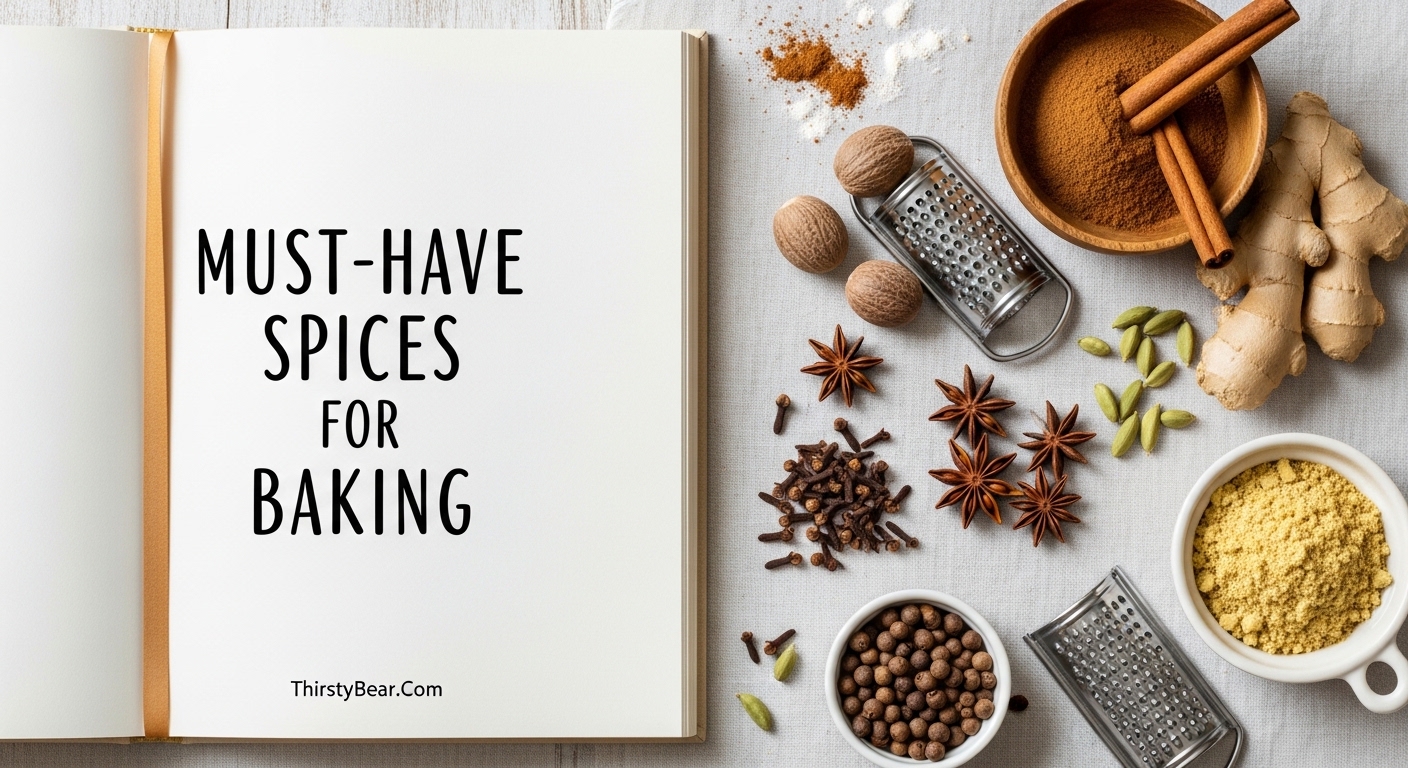
Building your baking spice collection is one of the most rewarding investments you can make as a home baker. The right must have spices for baking transform basic recipes into extraordinary treats that fill your kitchen with irresistible aromas and deliver complex, memorable flavors.
When I started baking, I made the mistake of buying dozens of spices I rarely used. After years of experimentation and countless batches of cookies, cakes, and breads, I’ve learned that a focused collection of quality spices serves you better than quantity. This guide focuses on the essential spices that will cover 80% of your baking needs.
Whether you’re just starting your baking journey or looking to refine your spice cabinet, these are the aromatics that deserve a permanent place in your pantry. For inspiration on how to use these spices in your baking, check out our beer bread recipe that benefits from warm spice additions.
Table of Contents
Must Have Spices for Baking: The Essentials
The following six spices form the foundation of a well-stocked baking pantry. These essential baking spices appear in countless recipes and provide the versatility needed for everything from everyday treats to holiday specialties.
Cinnamon: The Ultimate Baking Staple
Cinnamon is hands down the most important spice in your baking arsenal. This warm, sweet, and slightly spicy bark appears in everything from breakfast treats to elegant desserts.
There are two main varieties you’ll encounter. Ceylon cinnamon, often called “true cinnamon,” has a delicate, sweet flavor with subtle citrus notes. Cassia cinnamon is what you’ll find in most grocery stores, with a stronger, spicier profile that holds up well in baked goods.
Best uses: Cinnamon rolls, snickerdoodles, coffee cake, apple pie, banana bread, and oatmeal cookies. It’s also essential in spice blends and pairs beautifully with fruits like apples, pears, and stone fruits.
Whole vs. ground: I recommend keeping both on hand. Ground cinnamon offers convenience for everyday baking, while cinnamon sticks are perfect for infusing liquids like milk or cream for custards and puddings. When buying ground, look for Ceylon if you can find it, but Cassia works perfectly for most recipes.
Nutmeg: Warm and Nutty Elegance
Freshly grated nutmeg is one of those ingredients that makes people wonder what secret ingredient you added. This warm, nutty spice with subtle sweetness adds depth to both sweet and savory baked goods.
The difference between pre-ground and fresh nutmeg is remarkable. Whole nutmeg seeds retain their potent oils for years, while ground nutmeg loses its character within months. A small microplane grater is all you need to grate fresh nutmeg as needed.
Best uses: Eggnog, beignets, spice cakes, pumpkin pie, cream pies, custards, and fruit crisps. Nutmeg shines in dairy-based recipes and is essential in classic bechamel sauce for savory dishes.
Storage tip: Buy whole nutmeg seeds and store them in a cool, dark place. They’ll stay potent for 2-3 years, making them an excellent investment for your spice collection.
Ginger: Sweet Heat and Zing
Ginger brings a unique combination of sweetness and warmth that can’t be replicated by any other spice. Its zesty, slightly peppery character adds brightness to baked goods and cuts through rich ingredients.
You’ll encounter both ground ginger and crystallized ginger in baking recipes. Ground ginger provides consistent heat throughout your batter or dough, while crystallized ginger offers concentrated pockets of sweet-spicy flavor.
Best uses: Gingerbread cookies, gingersnaps, carrot cake, pumpkin bread, molasses cookies, and fruit pies. Ground ginger is essential in many spice blends, while crystallized ginger makes an excellent addition to scones and muffins.
Pro tip: Look for ground roasted ginger if you can find it. The roasting process deepens the flavor and adds a caramel-like sweetness that enhances baked goods beautifully.
Cloves: Intense Aromatic Power
Cloves pack an incredible amount of flavor into their tiny, nail-like form. This intensely aromatic spice brings warmth, sweetness, and a distinctive note that signals “holiday baking” like nothing else.
A little goes a long way with cloves. Their potent flavor can easily overpower other spices if used heavily, which is why they’re typically used in combination with cinnamon, nutmeg, and allspice rather than as the primary spice.
Best uses: Gingerbread, spice cookies, pumpkin pie, fruit cakes, glazed ham, and mulled beverages. Whole cloves are excellent for studding hams or infusing into poaching liquids for fruits.
Usage tip: When a recipe calls for cloves, measure carefully. It’s better to start with less and adjust than to risk overwhelming your baked goods with their intense flavor.
Allspice: The Versatile All-in-One
Despite its name, allspice isn’t a blend. It’s a single spice that tastes like a combination of cinnamon, nutmeg, and cloves, which is how it got its confusing name. This makes it incredibly useful when you want complexity without measuring multiple spices.
Allspice berries are the dried unripe fruit of the Pimenta dioica plant, native to the Caribbean. Its warm, sweet-spicy flavor with peppery notes makes it a year-round essential, not just for holiday baking.
Best uses: Pumpkin pie, carrot cake, spice cakes, Jamaican jerk seasoning (for savory baking), gingerbread, and fruit desserts. It’s particularly good with root vegetables in breads and muffins.
Whole vs. ground: Ground allspice is convenient for most baking, but whole berries stay fresh longer and can be ground as needed. They’re also excellent for infusing into warm beverages or pickling liquids.
Cardamom: Sophisticated Floral Notes
Cardamom brings a complex, sophisticated flavor profile that elevates baked goods from ordinary to exceptional. Its unique combination of citrusy, floral, and slightly minty notes with a warm finish makes it a favorite among experienced bakers.
This expensive spice is worth the investment. A little goes a long way, and its distinctive flavor creates memorable treats that stand out. Cardamom is particularly popular in Scandinavian and Indian baking traditions.
Best uses: Swedish cardamom buns, krumkake, sugar cookies, shortbread, chai-spiced treats, and fruit breads. It pairs exceptionally well with vanilla, cinnamon, and citrus flavors.
Buying tip: Cardamom comes in green pods (most common for baking), black pods (stronger, more smoky), and ground. For baking, buy whole green pods and grind the seeds as needed for maximum flavor, or keep high-quality ground cardamom for convenience.
Secondary Must Have Spices for Baking
Once you’ve mastered the essentials, these secondary spices add specialty flavors that expand your baking repertoire and allow you to explore more complex recipes. If you’re investing in quality bakeware, you might also want to explore cake pan deals to complement your growing spice collection.
Star Anise: Licorice-Like Elegance
Star anise brings a beautiful, star-shaped visual element along with its distinctive licorice-like flavor. Its sweet, aromatic profile with notes of anise and fennel adds sophistication to both sweet and savory baked goods.
This spice is particularly effective when infused into liquids. The whole stars can be steeped in cream, milk, or syrups to extract their flavor, then removed before the final preparation.
Best uses: Poached fruits, custards, ice cream bases, fruit tarts, and Asian-inspired baked goods. It’s excellent in holiday baking and pairs beautifully with cinnamon, cloves, and citrus.
Mace: Nutmeg’s Subtle Sibling
Mace is the bright red, lacy covering that surrounds the nutmeg seed. It offers a similar flavor to nutmeg but with a more delicate, slightly sweeter profile that’s perfect when you want nuance rather than intensity.
Many professional bakers prefer mace to nutmeg for certain applications because its flavor is more refined. It’s particularly good in delicate baked goods where nutmeg might overpower other flavors.
Best uses: Donuts, pound cakes, cookies, cream puddings, and light fruit desserts. It’s excellent in doughnuts and other fried treats where its subtle sweetness shines.
Vanilla: The Essential Extract
While technically an extract rather than a spice, pure vanilla extract is absolutely essential for baking. Its warm, sweet, floral flavor enhances and rounds out other ingredients, making it the most frequently used flavoring in the baker’s pantry.
Quality matters enormously with vanilla. Pure vanilla extract is worth every penny compared to imitation versions, which taste harsh and artificial. For special occasions, vanilla bean paste or whole vanilla beans offer even more intense flavor and those beautiful vanilla specks.
Best uses: Almost every sweet baked good. Cookies, cakes, brownies, custards, frostings, and more. Vanilla is the universal enhancer that makes everything taste better.
Essential Spice Blends for Baking
Many recipes call for pre-made spice blends, but creating your own ensures freshness and allows you to adjust the ratios to your taste. Here are the essential blends every baker should know.
Pumpkin Pie Spice
This quintessential fall blend combines the warm spices that complement pumpkin and other winter squares perfectly. While you can buy it pre-made, homemade is infinitely fresher and more flavorful.
Classic ratio: 3 tablespoons ground cinnamon, 2 teaspoons ground ginger, 2 teaspoons ground allspice, 1 teaspoon ground nutmeg, 1 teaspoon ground cloves.
Mix these together and store in an airtight container. Use in pumpkin pie, pumpkin bread, pumpkin muffins, and any recipe that benefits from warm, autumnal spices.
Apple Pie Spice
Similar to pumpkin pie spice but with a different balance that complements apples perfectly. This blend highlights the natural sweetness of apples while adding warming spices that make apple pie the comfort food classic it is.
Classic ratio: 3 tablespoons ground cinnamon, 1 tablespoon ground nutmeg, 1 tablespoon ground allspice, 1 teaspoon ground cardamom (optional).
This blend works beautifully in apple pie, apple crisp, apple cakes, and any baked treat featuring apples or pears.
Creating Your Own Blends
Once you’re comfortable with classic blends, experiment with creating your own signature combinations. Consider adding black pepper for warmth, citrus zest for brightness, or different spice ratios to suit your preferences.
Keep notes on what works well so you can replicate successful blends. Some of my best baking discoveries came from custom spice blends tailored to specific recipes.
Spice Storage and Freshness: Keeping Your Must Have Spices Potent
Proper storage is essential for maintaining the potency of your baking spices. Nothing is more disappointing than reaching for a spice mid-recipe only to discover it’s lost its flavor.
Whole vs. Ground Spices: The Freshness Factor
Whole spices stay potent significantly longer than ground spices. The protective outer structure of whole spices preserves their essential oils, while ground spices expose more surface area to air, accelerating flavor loss.
Shelf life guidelines:
- Whole spices: 2-4 years when stored properly
- Ground spices: 6-12 months for optimal flavor
- Spice blends: 4-6 months (due to already being ground)
My rule of thumb: buy whole whenever possible for spices you use infrequently, and keep ground versions of your daily essentials for convenience. Grind whole spices as needed for maximum flavor impact.
Proper Storage Conditions
Spice enemies are light, heat, humidity, and air. Protect your investment by storing spices in a cool, dark place away from your stove and dishwasher.
Storage best practices:
- Choose airtight glass containers over plastic (glass doesn’t absorb flavors)
- Keep spices away from direct sunlight and heat sources
- Store in a consistently cool, dry location (not above the stove!)
- Label containers with purchase dates to track freshness
- Avoid storing spices in the refrigerator (condensation causes clumping)
I’ve found that a dedicated drawer or cabinet away from cooking equipment works best. If you display spices on a counter, keep only small amounts that you’ll use quickly, and store the bulk of your collection in protected storage.
Testing Spice Freshness
Before committing to a recipe, test your spices to ensure they’re still potent. There’s nothing worse than ruining a batch of cookies with stale spices.
Freshness test: Crush or rub a small amount of the spice in your palm. If the aroma is strong and immediate, the spice is still good. If the scent is faint or musty, it’s time to replace it.
For ground spices, you can also do a visual inspection. If the color has faded significantly or the spice has clumped together (unless it’s naturally cakey like ginger), it’s past its prime.
Spice Pairing Guide: What Works Together
Understanding which spices complement each other helps you create harmonious flavor profiles and avoid clashing combinations. This knowledge also allows you to customize recipes to your taste.
Classic Spice Combinations
The Warm Trio: Cinnamon, nutmeg, and allspice form the backbone of most fall and winter baking. These three work together beautifully in pies, cakes, and cookies featuring fruits like apples, pears, and pumpkin.
The Holiday Blend: Cinnamon, cloves, ginger, and allspice create the classic gingerbread profile. This combination appears in everything from gingerbread cookies to fruit cakes and is synonymous with holiday baking.
The Sophisticated Mix: Cardamom, cinnamon, and ginger offer a more nuanced flavor profile. This combination is excellent in Scandinavian baked goods, chai-spiced treats, and sophisticated cookies where you want complexity.
The Bright Blend: Ginger, cardamom, and citrus zest create a bright, lively flavor combination perfect for spring and summer baking. This works particularly well in fruit tarts, light cakes, and delicate pastries.
Spice Pairing Quick Reference
- Cinnamon: Partners with almost everything, especially apples, bananas, chocolate, nuts, and vanilla
- Nutmeg: Excellent with dairy, root vegetables, apples, and other warm spices
- Ginger: Pairs beautifully with molasses, pumpkin, carrots, citrus, and chocolate
- Cloves: Best used with other warm spices, fruits, and in moderation due to intensity
- Allspice: Versatile partner to fruits, root vegetables, and other baking spices
- Cardamom: Outstanding with vanilla, citrus, almonds, and other warming spices
For practical applications, try adding a pinch of cardamom to your favorite pancake recipes or experimenting with cinnamon-nutmeg combinations in your morning muffins.
Measurement Tips and Conversions
Accurate measuring is crucial in baking, and this applies to spices as much as flour and sugar. Understanding conversions and proper technique ensures consistent results.
Fresh to Dried Conversions
Many recipes specify fresh spices when dried are more readily available. Here are the conversions you need:
- Fresh ginger to ground: 1 tablespoon fresh grated ginger = 1/8 teaspoon ground ginger
- Whole to ground general rule: 1 whole spice = approximately 1/4 teaspoon ground (varies by spice)
These are approximate conversions, so start with less and adjust to taste. Fresh spices are typically more potent than their dried counterparts, so less is needed.
Whole to Ground Ratios
When substituting whole for ground spices, remember that whole spices need time to release their flavors. They’re best used in recipes with longer cooking times or for infusing liquids.
General guidelines:
- Whole cinnamon sticks: 1 stick = 1 teaspoon ground cinnamon
- Whole cloves: 6-8 whole cloves = 1/2 teaspoon ground cloves
- Whole allspice berries: 6 berries = 1/2 teaspoon ground allspice
- Whole cardamom pods: 10 pods = 1 teaspoon ground cardamom
FAQs
What are the essential spices for baking?
The essential spices every baker needs are cinnamon, nutmeg, ginger, cloves, allspice, and cardamom. These six spices form the foundation of baking and appear in countless recipes. Cinnamon leads as the most versatile, followed closely by nutmeg and ginger. With just these spices, you can create everything from chocolate chip cookies to pumpkin pie.
How many spices should a beginner baker start with?
Start with five core spices: cinnamon, nutmeg, ginger, allspice, and cloves. This collection covers 80% of home baking needs and costs approximately $25-35 total. Build your collection gradually rather than buying dozens of spices at once. Master these essentials first, then expand to specialty spices like cardamom and star anise as you gain confidence and try more complex recipes.
Should I buy whole or ground spices for baking?
Buy whole spices for longevity and grind as needed for maximum flavor, but keep ground versions of frequently used spices for convenience. Whole spices stay potent for 2-4 years while ground spices lose intensity after 6-12 months. For beginners, start with ground versions of your core spices (cinnamon, nutmeg, ginger) and invest in a small spice grinder or mortar and pestle for grinding whole spices as you expand your collection.
How long do baking spices last?
Ground baking spices maintain optimal flavor for 6-12 months when stored properly in airtight containers away from light and heat. Whole spices stay potent for 2-4 years. While spices don’t spoil, they gradually lose flavor intensity. Test freshness by crushing a small amount in your palm and smelling—if the aroma is strong and immediate, the spice is still good. If faint or musty, it’s time to replace.
What are the 7 super spices for baking?
The seven super spices every baker should master are cinnamon, nutmeg, ginger, cloves, allspice, cardamom, and vanilla. While vanilla is technically an extract, it’s essential for baking. These spices offer the most versatility, appear in the most recipes, and provide the foundation for creating custom spice blends. Master these seven, and you can handle virtually any baking recipe that comes your way.
What spices work well together in baking?
Classic spice combinations include the warm trio (cinnamon, nutmeg, allspice) for fall baking; the holiday blend (cinnamon, cloves, ginger, allspice) for gingerbread; and the sophisticated mix (cardamom, cinnamon, ginger) for Scandinavian-style treats. Cinnamon pairs with almost everything, while cloves work best when balanced with other warm spices. Cardamom excels with vanilla and citrus flavors.
Building Your Must Have Spices for Baking Collection
Creating a well-stocked baking spice collection doesn’t happen overnight, and it shouldn’t. Start with the essentials and build gradually as you discover new recipes and expand your baking repertoire.
Begin with cinnamon, nutmeg, and ground ginger. These three will carry you through most basic baking recipes and cost less than $15 total. Once you’re comfortable with these, add allspice and cloves to unlock holiday baking possibilities. Finally, invest in quality vanilla extract and consider cardamom for more sophisticated flavor profiles.
Remember that quality matters more than quantity. Small amounts of high-quality spices from reputable sources will produce better results than large quantities of stale, low-quality alternatives. Buy in small quantities that you’ll use within 6-12 months, and replenish regularly for maximum freshness.
Whether you’re baking simple cookies for a weekday treat or creating an elaborate holiday dessert, these must have spices for baking will serve you well. Experiment with combinations, trust your taste buds, and don’t be afraid to adjust recipes to suit your preferences. After all, the best baking happens when you make it your own.