
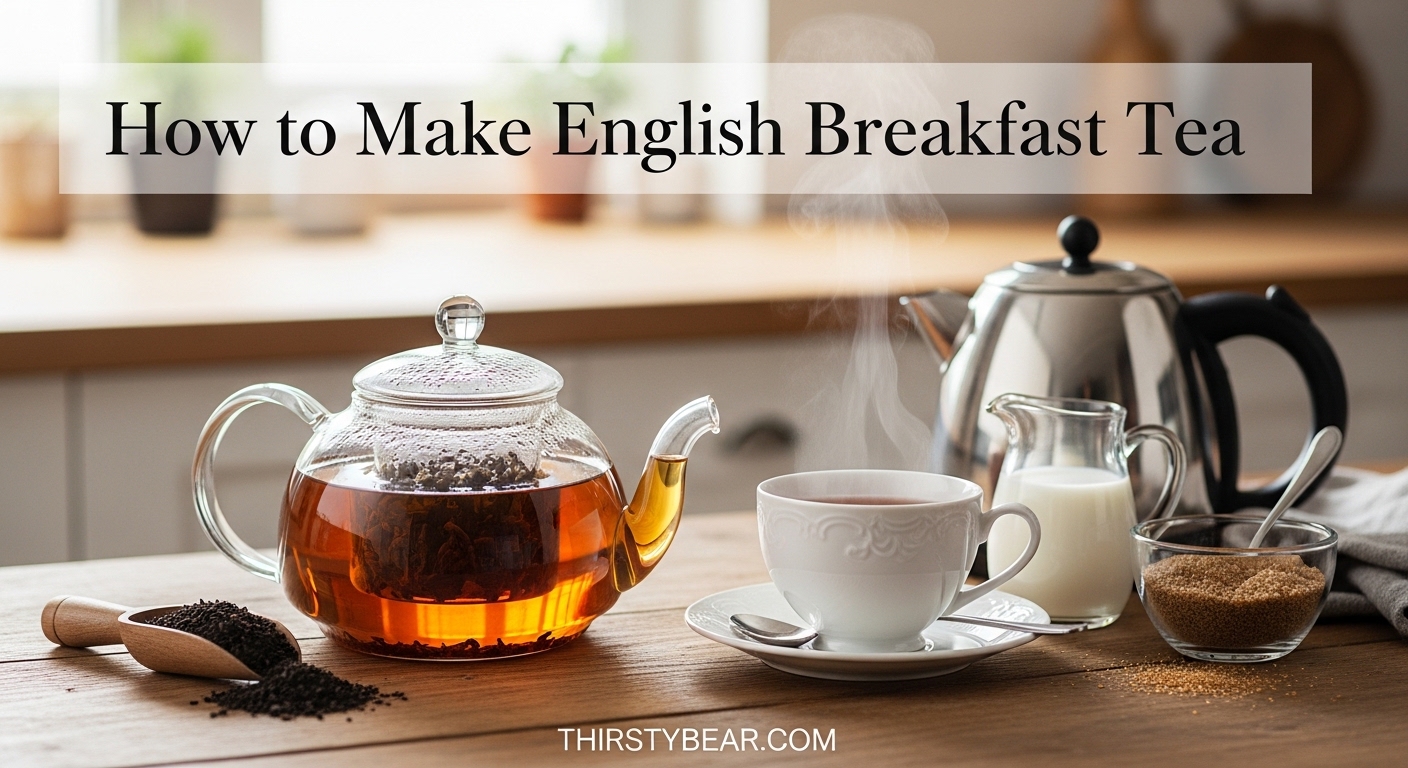
Learning how to make English Breakfast tea the right way transforms your morning routine. I spent weeks testing different methods, temperatures, and timing to find what actually produces that rich, robust cup British tea drinkers rave about.
This guide covers everything from water temperature to the controversial milk-first debate. Whether you use tea bags or loose leaf, you will brew a proper cup by the end.
Table of Contents
What Is English Breakfast Tea
English Breakfast tea is a traditional black tea blend originating from British tea culture. It combines several black tea varieties, typically Assam, Darjeeling, Ceylon, and Kenyan teas, to create a bold, full-bodied flavor profile.
The blend produces a rich, malty taste with a brisk finish that stands up well to milk and sugar. Unlike Earl Grey, which contains bergamot oil, English Breakfast tea is unflavored, allowing the natural characteristics of the black teas to shine through.
Historically, this blend became popular in the 1800s as a hearty morning beverage to accompany the traditional English breakfast. Its higher caffeine content compared to other teas made it ideal for starting the day.
How It Compares to Other Breakfast Teas
Irish Breakfast tea tends to be stronger and more malty, often featuring more Assam in the blend. Scottish Breakfast tea is typically even bolder with a smokier character.
English Breakfast strikes a balance that appeals to a wide range of palates. It is robust enough for morning energy but smooth enough to enjoy throughout the day.
Ingredients and Equipment You’ll Need
Great tea starts with quality ingredients and the right tools. Here is what you need for brewing authentic English Breakfast tea:
Essential Ingredients
- English Breakfast tea (tea bags or loose leaf)
- Fresh, cold water
- Milk (whole, low-fat, or cream)
- Sugar or sweetener (optional)
Equipment Needed
- Electric kettle or stovetop kettle
- Teacup or mug
- Teapot (optional but recommended)
- Tea infuser or strainer (for loose leaf)
- Timer
Our team found that using a ceramic or porcelain teapot produces better results than brewing directly in a cup. The material retains heat more evenly, allowing for proper extraction.
How to Make English Breakfast Tea?
Follow these exact steps to brew English Breakfast tea that rivals what you would find in a British tea room.
Step 1: Heat Water to the Proper Temperature
Bring fresh, cold water to a rolling boil. The ideal temperature for English Breakfast tea is 205-212°F (96-100°C). Black teas need near-boiling water to fully extract their flavor compounds.
Avoid using reboiled water or water that has been sitting in the kettle. Fresh water contains more oxygen, which helps release the tea’s full flavor profile.
Step 2: Preheat Your Cup or Teapot
Pour a small amount of hot water into your cup or teapot, swirl it around, then discard. This step, often skipped by American tea drinkers, maintains brewing temperature and prevents heat loss.
I learned this from a British friend who explained that cold porcelain shocks the tea and lowers the water temperature too quickly.
Step 3: Add Your Tea
Place one tea bag per cup into your vessel. For loose leaf tea, use one teaspoon of leaves per 8-ounce cup.
If using a teapot, add one extra teaspoon for the pot itself. This ensures the strength remains consistent even as the tea sits.
Step 4: Pour and Steep
Pour the boiling water directly over the tea. Steep for 3-5 minutes depending on your strength preference.
- 3 minutes: Lighter, more delicate flavor
- 4 minutes: Balanced, traditional strength
- 5 minutes: Bold, robust cup
Do not squeeze the tea bag against the side of the cup. This releases excess tannins that create bitterness.
Step 5: Remove Tea and Add Milk and Sugar
Remove the tea bag or strain the loose leaves. Add milk and sugar according to your taste preferences.
Traditional British preparation uses about 1-2 tablespoons of milk per cup. Start with less and adjust to find your perfect balance.
Tea Bag vs Loose Leaf: Which Should You Use
Both methods produce excellent English Breakfast tea, but they offer different experiences.
Tea Bags: Convenience and Consistency
Tea bags offer convenience and consistent results. They are pre-measured, mess-free, and perfect for busy mornings.
However, our testing revealed significant differences between brands. British supermarket brands like Yorkshire Tea or PG Tips produce stronger cups than many American brands. If your tea tastes weak, try using two bags or switching brands.
Loose Leaf: Superior Flavor and Value
Loose leaf tea generally offers better flavor because the leaves have more room to expand and release their oils. You also get better value per cup since loose leaf can be re-steeped once.
The downside is the need for an infuser or strainer and the slightly more involved cleanup process.
For most people, we recommend starting with quality tea bags. Once you develop your palate, experiment with loose leaf to discover the subtle differences.
Pro Tips for the Perfect Cup
These expert tips will elevate your English Breakfast tea from good to exceptional.
The Milk Order Debate
The age-old question: milk first or last? Traditionally, milk was added first to prevent fine china from cracking due to thermal shock. With modern mugs, this is less of a concern.
Adding milk last allows you to control the strength better, as you can see the color change. Adding milk first creates a smoother integration but makes it harder to adjust strength.
Our team prefers milk last for the control it offers. Try both methods and decide what works for your taste.
Water Quality Matters
Water makes up 99% of your tea, so its quality dramatically affects the final cup. Hard water areas may notice more bitterness, while soft water produces a smoother brew.
If your tap water has strong chlorine taste or mineral content, use filtered water for better results.
Proper Storage
Store tea in an airtight container away from light, heat, and strong odors. Tea absorbs smells easily, so keep it away from spices or coffee.
When stored properly, black tea stays fresh for up to 18 months. After that, it loses its aromatic oils and tastes flat.
Common Mistakes to Avoid
Even experienced tea drinkers make these errors. Here is how to fix them.
Bitter Tea
Bitterness usually comes from over-steeping or water that is too hot. Stick to the 3-5 minute range and remove the tea promptly.
Also avoid squeezing the tea bag, which forces out bitter tannins.
Weak or Watery Tea
Weak tea often results from using water that has cooled too much or not using enough tea. Ensure your water is actively boiling when it hits the tea, and do not skimp on the leaves or bags.
Some American tea bags are simply weaker than their British counterparts. If your tea consistently lacks body, try a different brand or use two bags.
Not Preheating Your Vessel
Skipping the preheating step drops your brewing temperature significantly. That 30 seconds of swirling hot water makes a noticeable difference in extraction and final flavor.
Variations and Serving Suggestions
While traditional English Breakfast tea is served hot with milk, there are delicious variations to explore.
Iced English Breakfast Tea
Brew double strength tea using half the water, then pour over ice. Add lemon slices and simple syrup for a refreshing summer drink.
With Lemon Instead of Milk
For an afternoon version, skip the milk and add a slice of lemon. The citrus brightens the malty notes beautifully.
Pairing with Food
English Breakfast tea pairs wonderfully with traditional breakfast foods, scones, biscuits, or afternoon tea sandwiches. Its robustness cuts through rich foods without overwhelming them.
Frequently Asked Questions
Is English Breakfast tea ok for diabetics?
English Breakfast tea is naturally sugar-free and contains zero carbohydrates, making it suitable for diabetics when consumed plain. However, be mindful of milk and sugar additions, which affect blood sugar levels.
Does English Breakfast tea have L-theanine?
Yes, English Breakfast tea contains L-theanine, an amino acid found in all true teas. This compound works with caffeine to provide steady energy without the jitters associated with coffee.
Does English Breakfast tea help with headaches?
The caffeine in English Breakfast tea may help relieve certain types of headaches by constricting blood vessels. However, excessive caffeine can also trigger headaches in sensitive individuals.
How long to steep English Breakfast tea?
Steep English Breakfast tea for 3-5 minutes depending on desired strength. Three minutes produces a lighter cup, while five minutes creates a bold, robust brew. Avoid steeping longer than five minutes to prevent bitterness.
What temperature for English Breakfast tea?
English Breakfast tea requires water heated to 205-212°F (96-100°C). This near-boiling temperature extracts the full flavor from the black tea leaves. Use fresh water brought to a rolling boil for best results.
Conclusion
Now you know how to make English Breakfast tea that rivals traditional British preparation. The key is using fresh boiling water, steeping for the right amount of time, and not skipping the preheating step.
Start with these basics, then adjust to your personal taste preferences. The perfect cup is the one you enjoy most.