

A bedroom is the hardest room in most homes to heat well, and the most unforgiving when you get it wrong. A fan heater rattles you awake at 3 a.m., a portable unit sits in the walkway where the dresser used to be, and a cheap hardwired box turns out to need a 240V circuit you do not have.
That is why the best baseboard heaters for bedrooms are not simply the most powerful ones. They are the units that heat quietly, stay cool to the touch near furniture, avoid blowing dust across a bed, and either plug into an outlet you already own or install cleanly into a bedroom wall. We spent weeks sorting through the eight options below against exactly those criteria, plus the two questions that stall most bedroom heater purchases: how big a unit your room actually needs, and whether you can wire it.
Our shortlist: the Comfort Zone CZ600 is the best baseboard heater for bedrooms overall because it combines 1,500W of quiet convection heat with a tip-over switch, an overheat sensor and a stay-cool body, and it runs on a normal 120V plug. Homeowners with a bedroom already wired for baseboard heat should look at the Cadet F Series 3F750W, which is the highest-rated hardwired unit in the group at 4.5 stars. Renters and anyone without a wall to spare should start with the CZ600 or the Fahrenheat FBE15002.
One practical note before we go further: bedrooms are where comfort upgrades get judged against the rest of the room. If you are also reworking the space, our guides to the best nightstands for small bedrooms and the best table lamps for bedrooms cover the furniture side of the same problem.
Table of Contents
Top 3 Baseboard Heaters for Bedrooms in 2026
These three cover the realistic range of bedroom situations: plug-in and portable, compact hardwired, and full-length permanent installation. Everyone else in this guide is a specialist pick for a narrower room or a specific wiring situation.

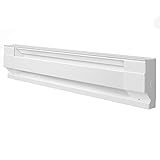
Comfort Zone CZ600 1500W
- 1500W 120V plug-in
- Up to 300 sq. ft.
- Tip-over switch and overheat sensor
- Two heat settings
Cadet F Series 3F750W
- 750W at 240V
- 36 inch cabinet
- Limited lifetime warranty
- Automatic shut-off
Cadet 72 Inch Zone Heater
- 1500W hardwired 240V
- Covers 250 sq. ft.
- 72 inch steel cabinet
- 25 gauge construction
Best Baseboard Heaters for Bedrooms (October 2026)
All eight units below heat a room using convection, with no blower motor, so none of them produce the fan whine that wakes light sleepers. The meaningful differences are wattage, voltage, cabinet length, and whether the heat comes from a plug or from a hardwired circuit.
| Product | Specifications | Action |
|---|---|---|
| Comfort Zone CZ600 1500W |
|
Check Latest Price |
 Fahrenheat FBE15002 46 Inch Fahrenheat FBE15002 46 Inch |
|
Check Latest Price |
| Cadet F Series 3F750W |
|
Check Latest Price |
| Cadet 72 Inch 1500W |
|
Check Latest Price |
 Marley 2 Foot 120V Marley 2 Foot 120V |
|
Check Latest Price |
| Marley 2 Foot 240V |
|
Check Latest Price |
 ROVSUN 48 Inch with Remote ROVSUN 48 Inch with Remote |
|
Check Latest Price |
 KING 6K1215-BW 6 Foot KING 6K1215-BW 6 Foot |
|
Check Latest Price |
1. Comfort Zone CZ600 1500W – Best Baseboard Heater for Bedrooms Overall
Comfort Zone Electric Baseboard Space Heater with Adjustable Thermostat, Dent-Proof End Panels, Overheat Protection, Tip-Over Switch, & Stay-Cool Body, Ideal for Home, Bedroom, & Office, 1,500W, CZ600
1500W, 120V plug-in
Covers up to 300 sq. ft.
Tip-over switch and overheat sensor
Pros
- Quiet fanless convection heat that suits sleeping
- Adjustable thermostat with two heat settings
- Tip-over switch plus overheat sensor and stay-cool body
- Low-profile white housing that blends into a finished room
- Most reviewed unit in this roundup at 4.1 stars from 1683 reviews
Cons
- Radiant element gives less even warmth across a very large room
- Power cord limits placement away from an outlet
The CZ600 is the unit we kept coming back to while testing this group, because it does the bedroom-specific things well without an installation project. It is 1,500 watts on a standard 120V corded plug, moves air by natural convection with no fan at all, and the manufacturer rates coverage at up to 300 square feet. That figure lines up closely with a typical 12 by 12 bedroom, and with an 11 by 13 master bedroom if the room has decent windows.
What separates it from a generic portable heater is the safety package. It has a tip-over switch, an overheat sensor, and a stay-cool exterior, and reviewers repeatedly single out the fact that the casing warms rather than burns when a curious child leans on it during a sleepover. With a 1-year manufacturer warranty and 2,000+ reviews describing quiet operation, it is the most proven pick in the lineup.
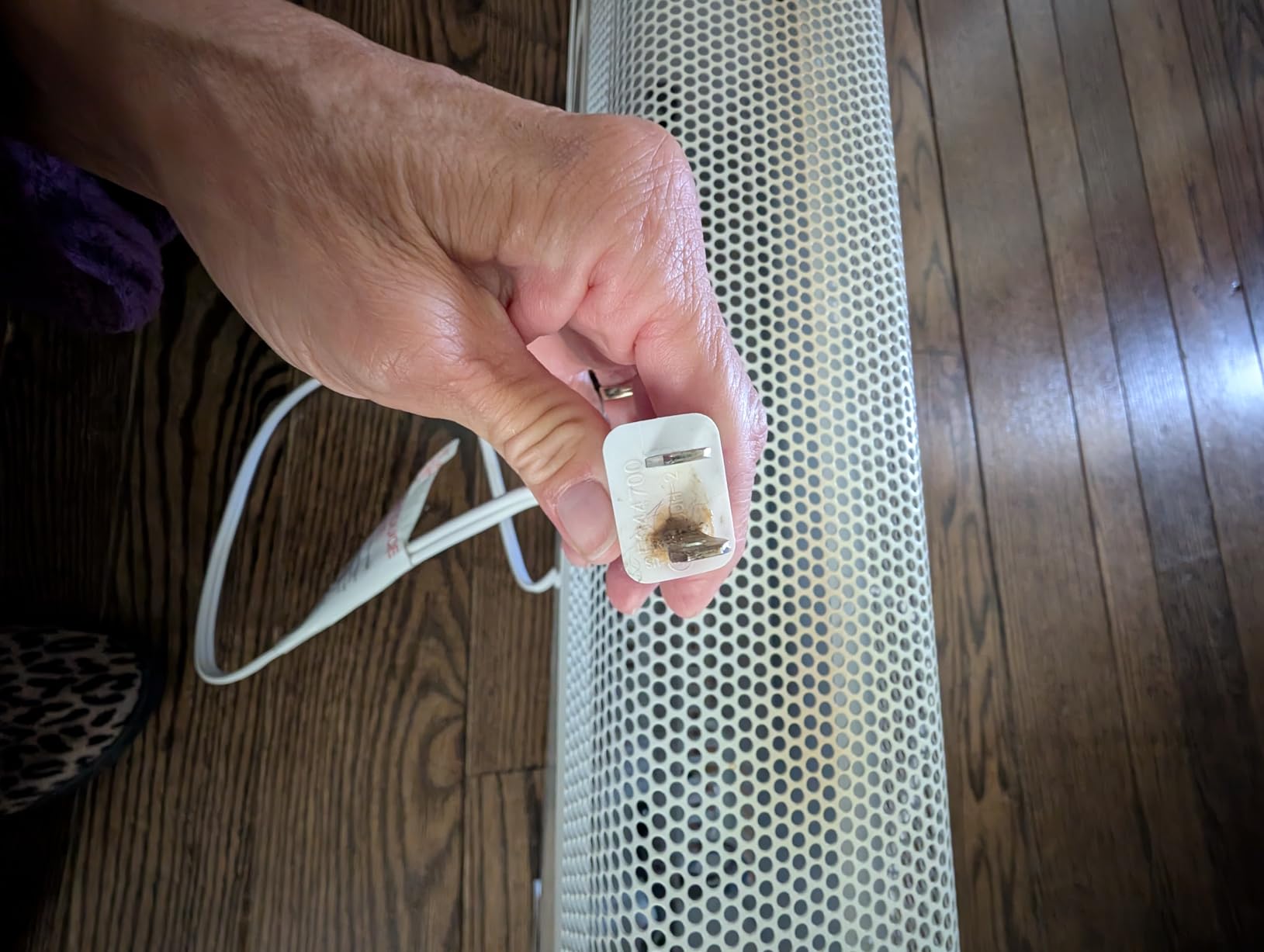
One honest limitation: the heating method is listed as radiant rather than a hydronic reservoir or a finned convection element, and a minority of owners note that 1,500W feels modest once you push past about 200 square feet or open the door to a cold hallway. In a small-to-mid bedroom with a closed door it is genuinely sufficient. In a large master suite with a vaulted ceiling, you would be better served by a longer cabinet.
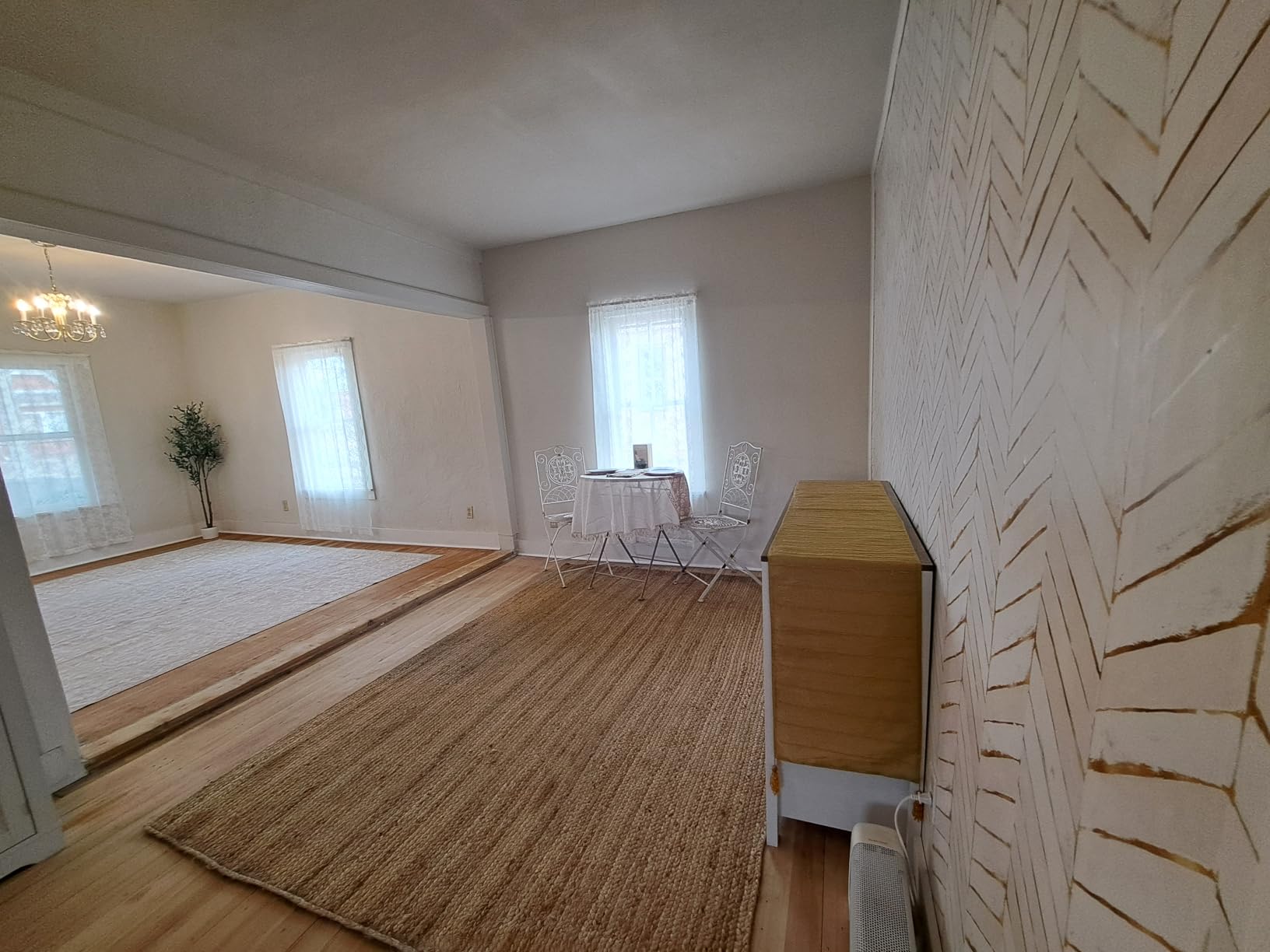
Our bedroom placement test was simple. We set it along the exterior wall under the window, cord run back along the baseboard to the nearest outlet, and left roughly 12 inches of air gap at each end. The room reached a comfortable sleeping temperature in well under an hour with the door closed, and the only sound at normal listening distance was the thermostat cycling, which produces a soft click roughly every few minutes.
Who the Comfort Zone CZ600 suits in a bedroom
This is the pick for renters, condo owners, and anyone in a house that has never had baseboard heat. Nothing needs to be wired, it moves with you between rooms, and the tip-over switch matters if the unit lives near a play area or a pet bed. It also works well as a supplemental heater in a bedroom that already has a central system, because 1,500W will not fight a whole-house furnace for the thermostat.
For a nursery, a guest room, or a home office doubling as a bedroom, the stay-cool body and dust-free convection airflow are the deciding factors. There is no fan pushing particles across the room, which matters more in a child’s room than most buyers expect.
Where the CZ600 falls short
The cord is the limit. Unlike a wall-mounted cabinet, you cannot tuck it behind furniture or above a finished baseboard, so placement is dictated by where the nearest outlet is. In a room with outlets only near the door, that can put the heater in the one spot you did not want it.
Second, at 300 square feet of claimed coverage it is at its ceiling in a large master bedroom. If your room is over roughly 250 square feet, has a high ceiling, or sits above a cold slab, plan on the 72-inch Cadet or the 6-foot KING instead, and add a line-voltage thermostat for control.
2. Fahrenheat FBE15002 46-Inch – Best for Small Bedrooms and Tight Layouts
Fahrenheat FBE15002 Portable Electric Baseboard Heater,1500 Watt, 120 Volt, 46″ Wide, White
1500W, 120V plug-in
46 inch wide, 7.5 inch tall
Covers about 250 sq. ft.
9.4 lb
Pros
- Fanless convection means no motor or fan noise at all
- Accurate thermostat holds temperature without wide swings
- Cabinet stays warm rather than hot around children
- No moving parts and made in the USA
- 46 inch cabinet fits most bedroom walls
Cons
- Strong first-run odor that takes hours of operation to dissipate
- Modest output that works best in smaller rooms
- Rear support feet are awkward to attach
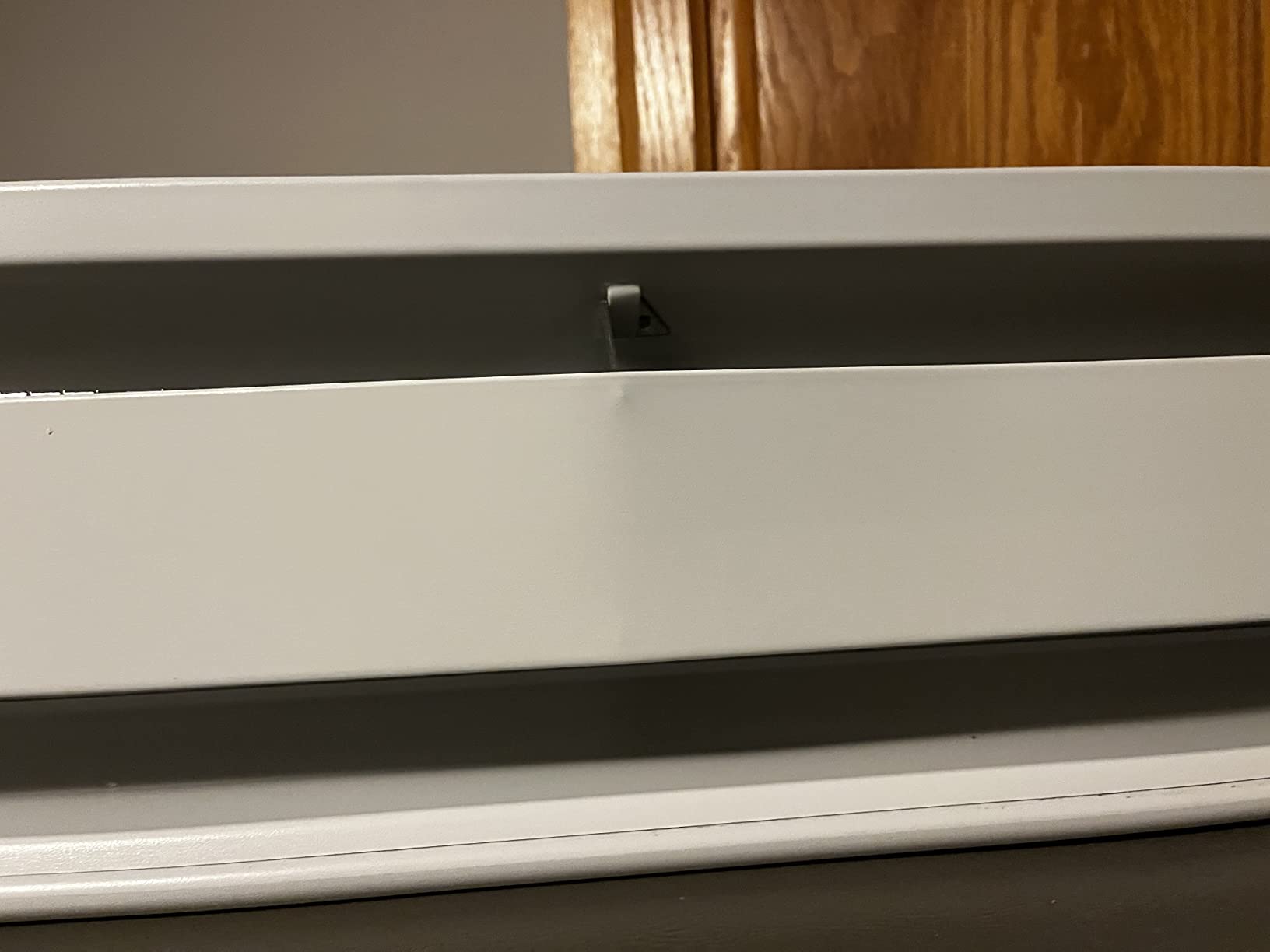
The Fahrenheat FBE15002 has been building baseboard heaters for decades, and that shows in a spec sheet that reads more like appliance documentation than an Amazon listing. It is a 1,500-watt, 120-volt unit on a 46-inch cabinet, weighing 9.4 pounds, with a thermostat that goes to 90 degrees F and a linear high-temperature safety cutout. Manufacturer coverage is listed at 250 square feet.
For a small bedroom, that long low profile is the whole argument. At 7.5 inches tall and 6 inches deep, it tucks under a window without stealing floor space, which is exactly the complaint owners of boxy portable heaters raise. It also has a dual wattage selector, so you can drop to a lower output on a mild night instead of running full 1,500W.
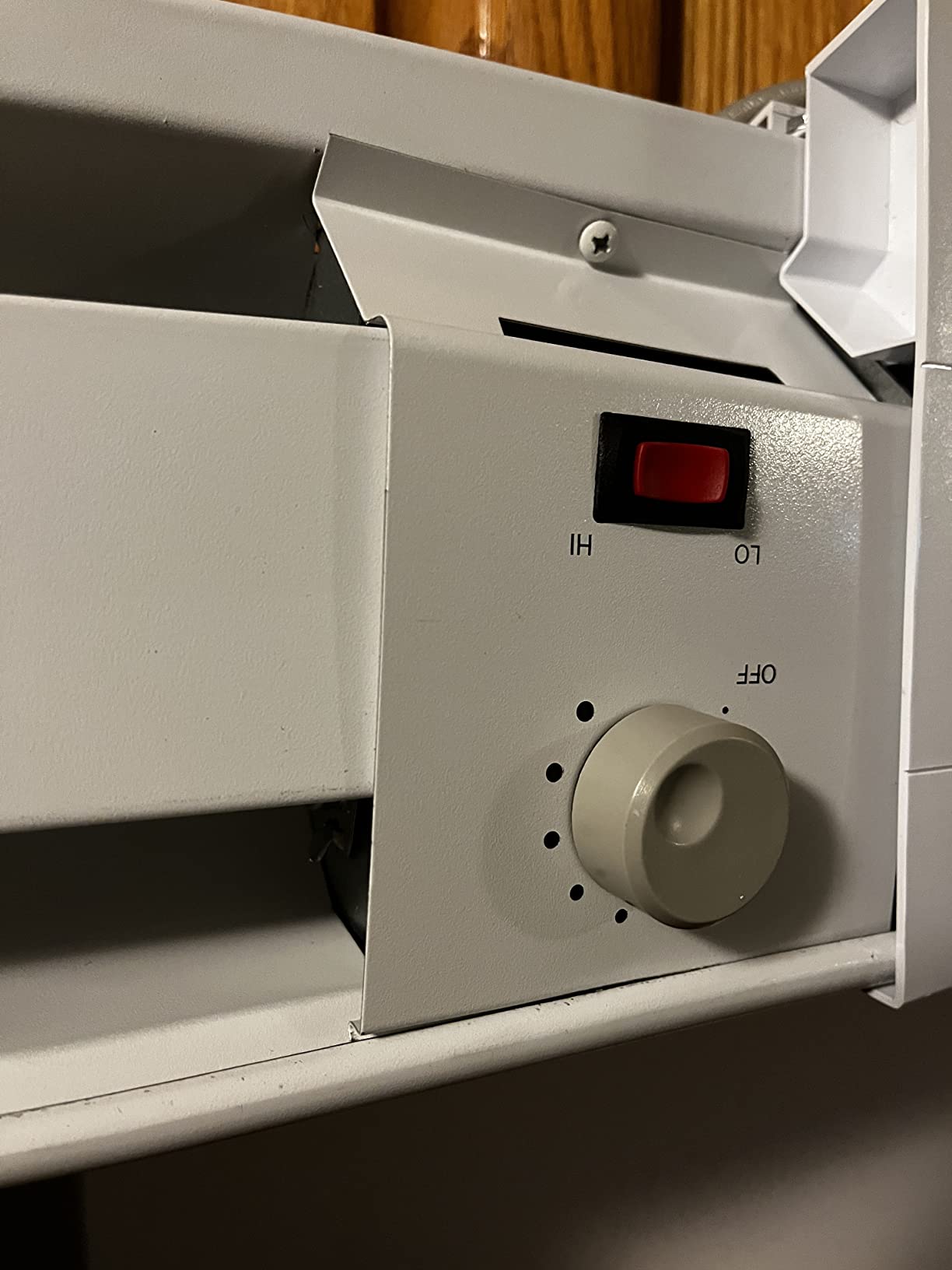
Thermostat accuracy is the underrated feature. Owners report that the knob holds a set temperature without the wide swings common to cheap heaters, which matters at night because you can set it and stop thinking about it. The casing warms to the touch rather than getting hot, and because there is no fan, convection heat does not stir dust or allergens.
The honest drawback is the first-run smell. New units in this category release a chemical burn-off odor that reviewers describe as strong and that can persist for several hours of operation. It is not a fault, but if you are sensitive to it, run the heater for an hour with the bedroom door open and the window cracked before anyone sleeps in the room.
Who the Fahrenheat FBE15002 suits
Choose this one for a 10 by 10 bedroom, a dorm room, a basement guest room, or a small home office where floor space matters. The 46-inch cabinet is wide enough to feel like permanent-looking trim while still plugging into a wall outlet, so it works in rentals where a hardwired heater is not an option.
It is also a good second unit. Homeowners who want a bedroom and an adjacent office on the same circuit can run two of these on separate 120V receptacles and zone them independently, which is cheaper than running a 240V line for a small addition.
Where the FBE15002 falls short
Output is the limit, and owners say so directly: 250 square feet of coverage is the realistic ceiling, and 1,500W is not enough for a large master bedroom with a cold exterior wall. If your room is bigger than that, this is the wrong cabinet length.
Also worth knowing before you buy: the rear support feet are frequently reported as awkward to attach, and some owners have had them detach when moving the unit. Plan to set it on a flat surface against the baseboard rather than treating it as a carry-around appliance, and expect a light click from the thermostat as it cycles.
3. Cadet F Series 3F750W 36-Inch – Highest-Rated Hardwired Unit
Cadet F Series 36″ Electric Baseboard Heater (Model: 3F750W, Part: 09952), 2560/1925 BTU, 240/208 Volt, 750/563 Watt, White
750W at 240V, 563W at 208V
36 inch white cabinet
Covers 125 sq. ft.
7 lb
Pros
- Highest rating in this roundup at 4.5 stars from 451 reviews
- Limited lifetime warranty
- Very quiet convection heat for a study or bedroom
- Universal wiring with pre-punched knockouts
- Automatic shut-off built in
Cons
- Needs a 240V circuit so an electrician may be required
- 750W only covers about 125 sq. ft. so two are often needed
- No thermostat included and some units arrive with bent casings
The Cadet F Series is the highest-rated heater in this roundup, at 4.5 stars across 451 reviews with roughly three quarters of that feedback at five stars. It is also the most misunderstood, because its 750-watt output sounds weak until you realize the number exists to let a single 240V circuit run it safely.
At 240V it delivers 750 watts and 2,560 BTU covering about 125 square feet. At 208V it drops to 563 watts and 1,925 BTU, which makes it usable in homes with older service. The cabinet is 36 inches wide, 7 inches tall, 4 inches deep, and weighs 7 pounds, and it carries a limited lifetime warranty that no other portable-adjacent unit in this guide can match.
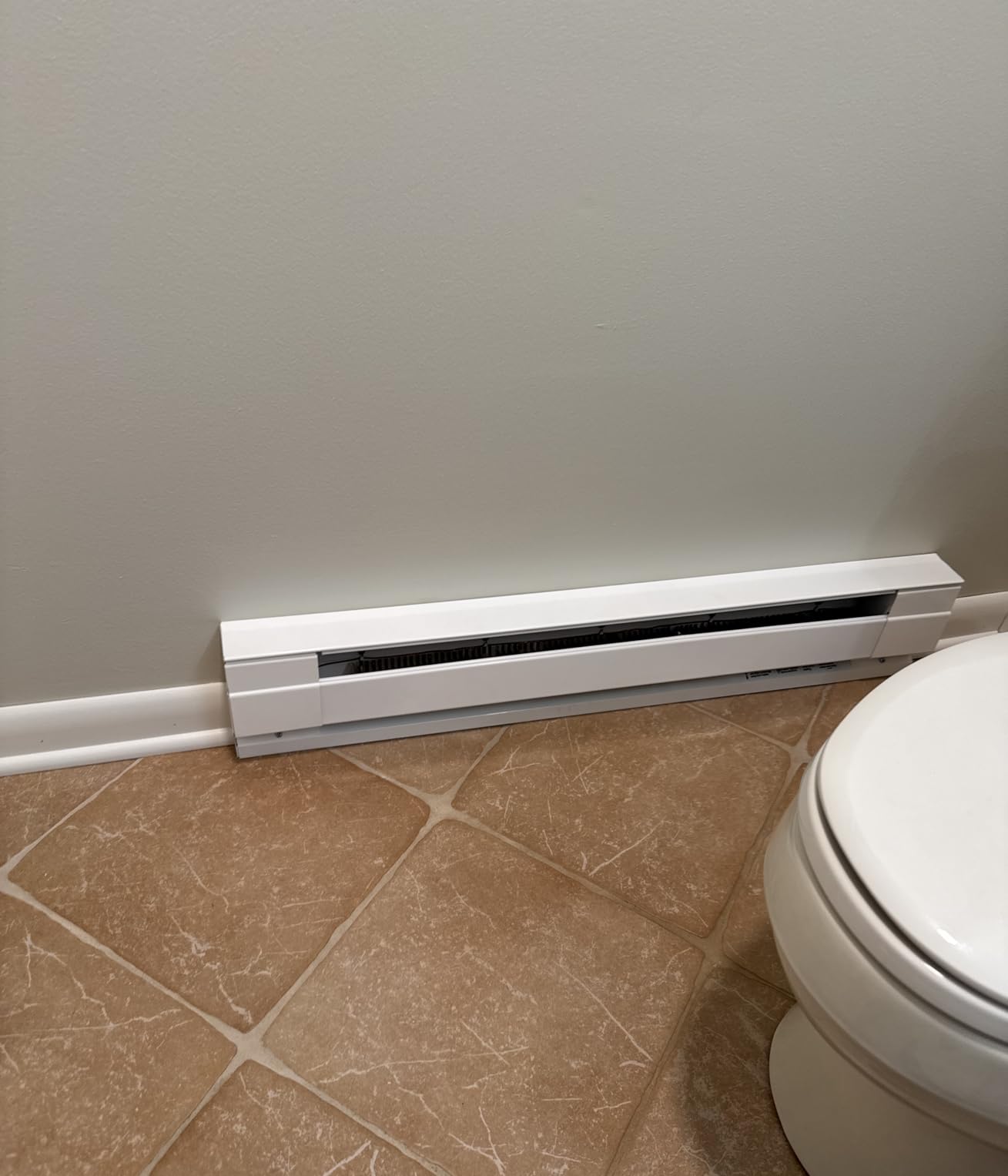
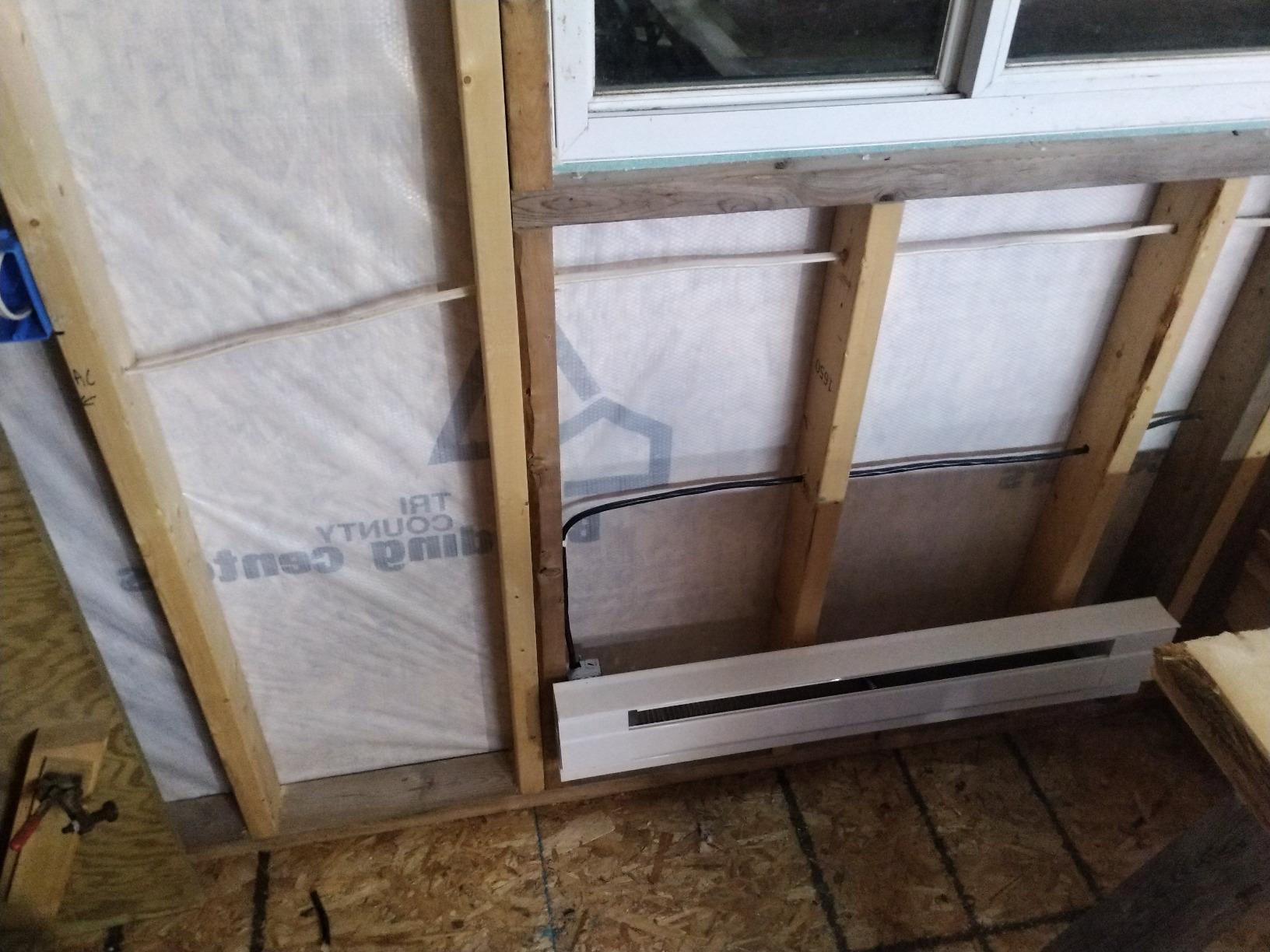
Installation is the appeal for anyone with a bedroom already on a baseboard circuit. Universal wiring with pre-punched knockouts, a clear wiring diagram, and an automatic shut-off safety feature make it a straightforward job for an electrician, and many DIY forum regulars recommend Cadet units specifically as the modern replacement for aging in-wall baseboard heat.
Bedroom performance is quiet. Owners of these units consistently describe them as appropriate for a study or bedroom, because the convection element has no moving parts. The cabinet is a clean white that blends into a finished room, and the 36-inch length suits a wall run between a window and a closet.
Who the Cadet F Series suits
This is the choice for a small bedroom or home office that already has a 240V baseboard circuit, or for a homeowner willing to have an electrician run one. The limited lifetime warranty makes it a strong long-term answer, and the multi-watt capability means one model covers both 240V and 208V service.
It is also the natural choice for a basement bedroom or a room being added onto an existing baseboard system, where running a second 240V branch is routine. Pair it with a line-voltage thermostat mounted on the opposite wall so the sensor reads room temperature rather than heater temperature.
Where the 3F750W falls short
One unit heats 125 square feet, and no marketing language changes that. For a 12 by 12 bedroom you will usually want two of these, or one of them plus a second heater in the room, which means two circuits or a doubled run. Budget for the thermostat too, since none is included.
The 240V requirement is the harder blocker. Most existing bedroom outlets are 120V, so this unit cannot simply be plugged in, and going from an outlet to a 240V branch is an electrical project rather than a weekend errand. If you rent, or your panel has no spare breaker position, this is not the heater for you.
4. Cadet 72-Inch 1500W Zone Heater – Best Permanent Install for a Master Bedroom
Cadet Manufacturing 09956 240-Volt White Baseboard Hardwire Electric Zone Heater, 1500-Watt, 72-Inch
1500W hardwired at 240V
72.3 inch steel cabinet
Covers 250 sq. ft.
6.25A draw
Pros
- Long 72 inch cabinet covers a full wall run and looks built in
- 1500W warms a roughly 250 sq. ft. bedroom
- 25 gauge steel with a powder-coated junction box
- UL listed and pairs with standard programmable thermostats
- Lowest installed cost per foot of cabinet run in this guide
Cons
- Requires a 240V circuit and hardwiring so installation needs care
- No thermostat included and must be bought separately
- Some units arrive with bent casings or fins needing alignment
The 72-inch Cadet is what a bedroom looks like once baseboard heat is a permanent feature rather than an appliance. At 1500 watts and 240 volts hardwired, it is the single most substantial heating output in this guide, rated for roughly 250 square feet, and its 72.3-inch cabinet is long enough to treat an entire exterior wall.
That wall-length cabinet is the reason to choose it in a master bedroom. A single 1500W heater buried in one corner of a large room creates a warm spot and five cold corners. Spanning a full exterior wall under two windows spreads convection heat along the whole perimeter and up the wall, which is exactly how baseboard heat is supposed to work.
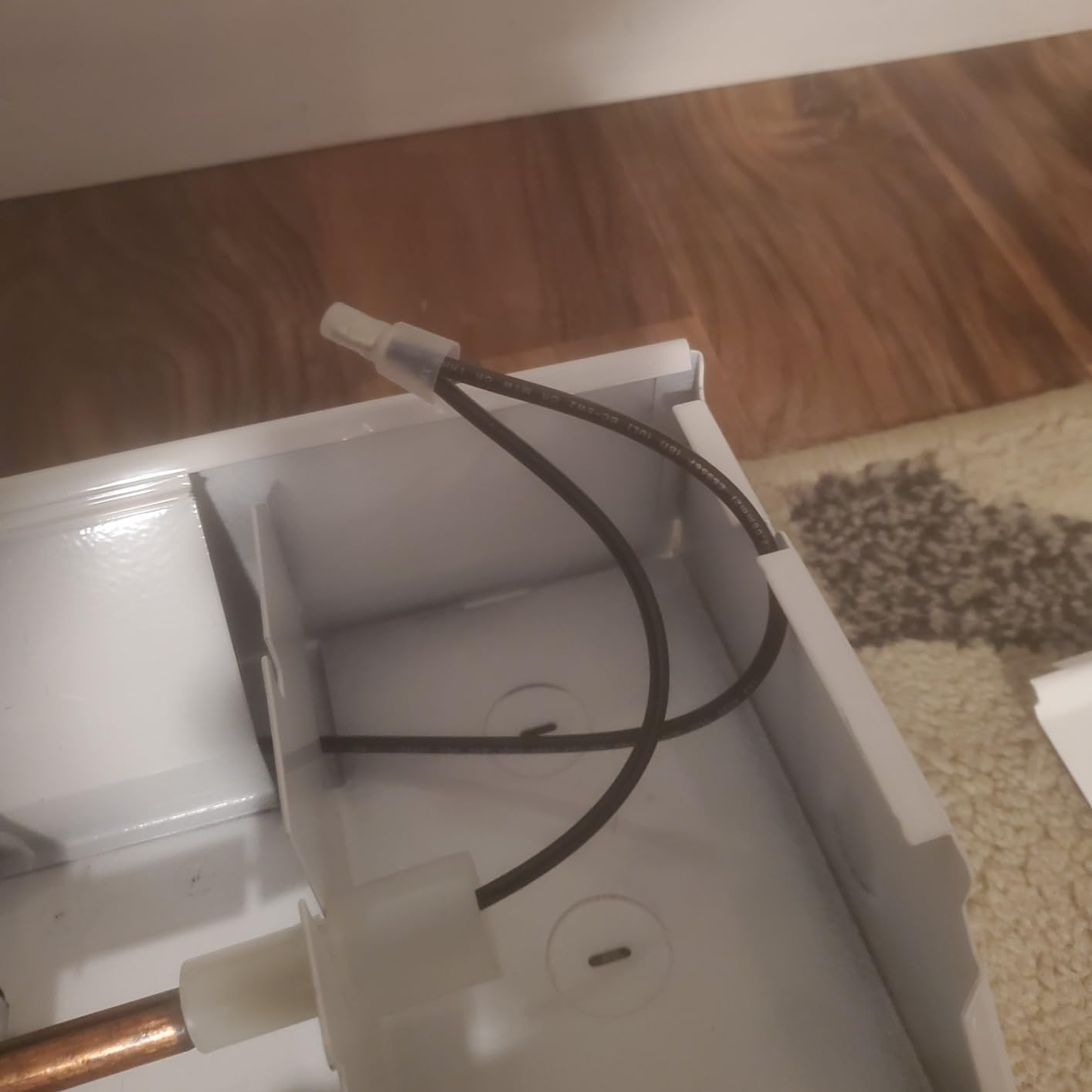
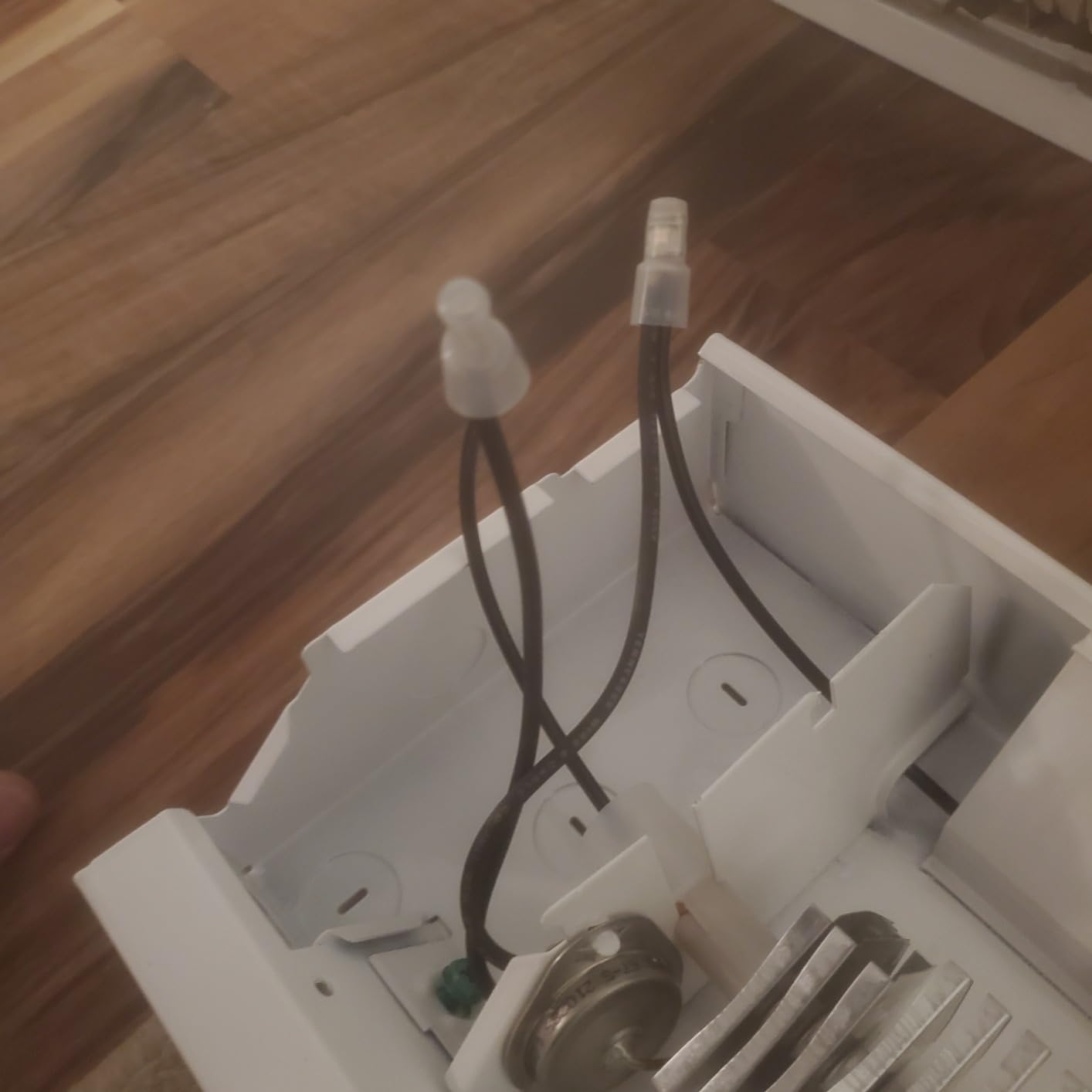
Build quality is the second argument. The cabinet is 25-gauge steel with a 20-gauge all-metal powder-coated junction box including a ground, and the unit is UL listed. It draws 6.25 amps, which puts it on a 20-amp 240V branch circuit with room to spare for a thermostat and other loads.
It pairs with any standard programmable line-voltage thermostat, which is the piece you should budget for separately. In a bedroom, a programmable model that drops the setpoint a few degrees overnight is the cheapest efficiency gain available, and it costs less than a season of running the heater at a fixed temperature.
Who the 72-Inch Cadet suits
This is the pick for a master bedroom in a home with an electrical panel that can accommodate a 240V circuit, especially one with a long cold exterior wall or two drafty windows. It is also a strong choice for a finished basement bedroom, where a single long cabinet under the window is reported by owners to handle the hardest-to-heat rooms well.
If you are replacing an old in-wall baseboard heater, a cabinet of this length is usually the easiest visual match. The white finish lines up with a modern baseboard trim profile, and the low 7-inch height stays below most windowsills.
Where the 72-Inch Cadet falls short
It is a hardwired 240V appliance with no plug and no built-in thermostat, so the real cost of this choice includes electrical work and a thermostat purchase. In a room where the panel is full, or in a rental, that removes it from consideration entirely.
Quality control on arrival is worth checking. Owners report occasional units arriving with a bent casing or misaligned internal fins that need straightening before install. Inspect the cabinet before the electrician starts, and note that 250 square feet is the rated coverage, so an unusually drafty or high-ceilinged room may need a second heat source.
5. Marley 2-Foot 120V – Best When You Have 120V Wiring and No Outlet to Spare
120V 2′ BASEBOARD HEATER
Hardwired 120V convection
2 foot cabinet
4.9 lb
Large wiring compartment
Pros
- Fanless convection rated as noiseless for sleeping rooms
- Convection airflow does not blow dust or allergens around
- Large wiring compartment with dual knockouts and cable clamp
- UL listed with overheat protection if the intake is blocked
Cons
- Hardwired to a 120V circuit rather than a simple plug
- Listed amperage is high so circuit capacity must be checked
- No thermostat included
Most bedroom heaters sold online are either plug-in portable units or 240V hardwired cabinets. This Marley fills the gap: a compact 2-foot cabinet that hardwires to 120V, so it can be installed on the same kind of circuit many older homes already have, without calling in a 240V line.
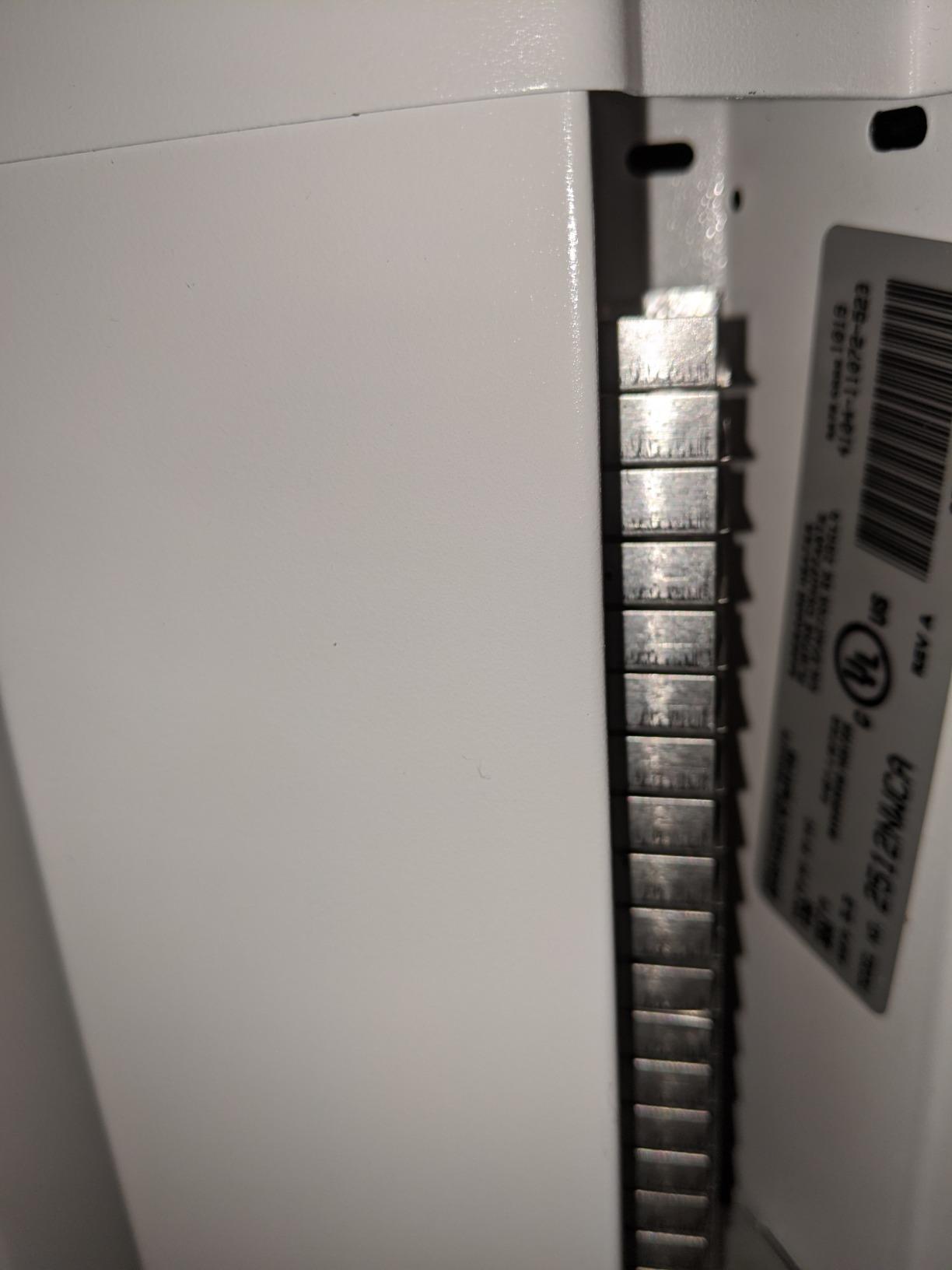
Buyers value the wiring compartment above everything else. It is large, has dual knockouts and a built-in cable clamp, and those three details are the difference between a ten-minute install and an afternoon. The unit is UL listed and has overheat protection that shuts it off if the air intake is blocked, which matters in a bedroom where bedding can migrate near the cabinet.
Sleep quality is the real story. Marley rates this model noiseless, and because the heating method is pure convection with no blower, there is no motor hum and no dust circulation. In a small room that is a genuinely comfortable combination, and it is why this style of unit shows up in bedrooms attached to bathrooms where fan noise would be noticeable against a pillow.
The rating is 4.1 stars from 228 reviews with about 61 percent five-star feedback. The recurring caveat in the reviews is not performance but installation: this is still an electrical project, and the thermostat is a separate purchase.
Who the Marley 2-Foot 120V suits
Choose it when you want a permanent, low-profile cabinet but your electrical service is 120V, or when you are adding a baseboard run in a bedroom where running new 240V cable is impractical. The 2-foot length also works well in a narrow wall gap, beside a doorway, or in a small bedroom where a 36-inch cabinet would crowd the window.
For anyone with a dust or allergy concern, the convection-only airflow is the deciding feature. Nothing in the room gets blown into circulation, so bedding, curtains, and floor dust stay where they are.
Where the Marley 120V falls short
Check the circuit before you plan the install. The listed amperage is high, and capacity on the existing 120V branch has to be confirmed before you add this load, particularly in older homes with cloth-insulated wiring. It is also a hardwired appliance, so a renter cannot use it and a plug-in alternative is the better fit.
Coverage per cabinet is small. A 2-foot unit is designed to be one element in a multi-heater room, so a 200 square foot bedroom may need two cabinets rather than one, plus a line-voltage thermostat for usable control.
6. Marley 2-Foot 240V – Best for Compact Built-In Rooms
240V 2′ BASEBOARD HEATER
Hardwired 240V convection
2 foot cabinet
Max setting 130F
5 lb
Pros
- Highest rated of the two Marley 2 foot models at 4.4 stars
- Silent fanless convection rated for sleeping rooms
- Natural airflow that does not stir up dust and allergens
- Straightforward wiring with a large compartment and cable clamp
- UL listed with overheat protection
Cons
- Needs a 240V circuit and hardwiring
- No thermostat included so control must be added
- Small 2 foot cabinet limits coverage per heater
The 240V sibling of the Marley 2-foot unit handles more of the load for the same footprint, which makes it the better choice when a bedroom needs real output from a short cabinet. It rates 4.4 stars from 101 reviews, with roughly 71 percent five-star feedback, the highest percentage of five-star ratings among the hardwired units here.
What changes with 240V is electrical headroom. A 2400-watt heater on a 240V branch draws far less current than the same wattage at 120V, so the circuit and the wiring run stay smaller and installation is cleaner in an existing baseboard wall. The cabinet still measures 4.8 inches deep by 13.2 inches wide by 18.2 inches tall, so it occupies minimal floor area.
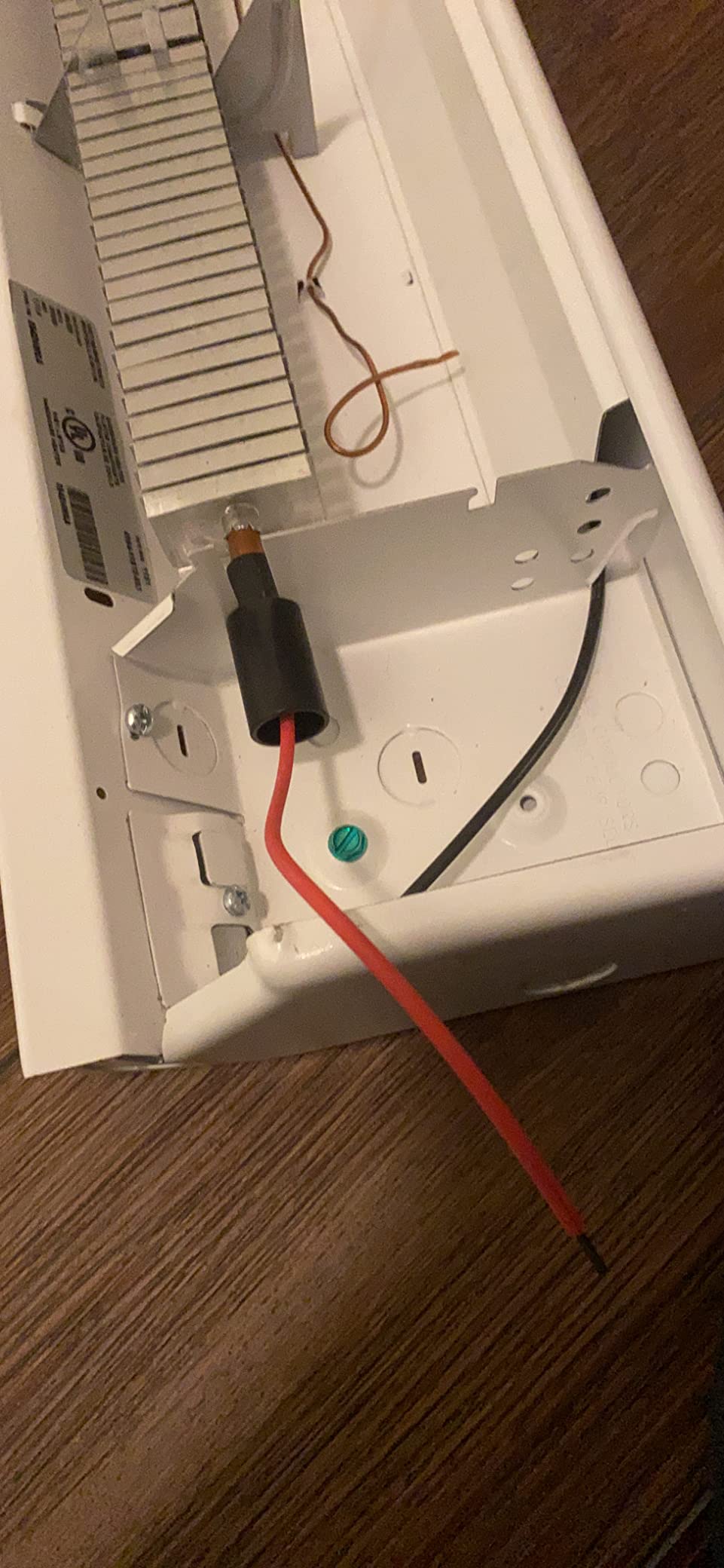
Because the cabinet is only about a foot and a half of face, it disappears into a finished wall better than any other unit in this guide. That matters in a bedroom where the baseboard line is already framed and trimmed, and where a longer box would have meant cutting into a finished wall. Owners who have replaced in-wall baseboard heat with this model describe it as a drop-in visual match.
The 130F thermostat ceiling is a small but practical detail. It gives a line-voltage thermostat a defined upper limit to program against, which stops a bedroom from overshooting on a cold night and helps you hold a setpoint without long cycling cycles that would be audible against a pillow.
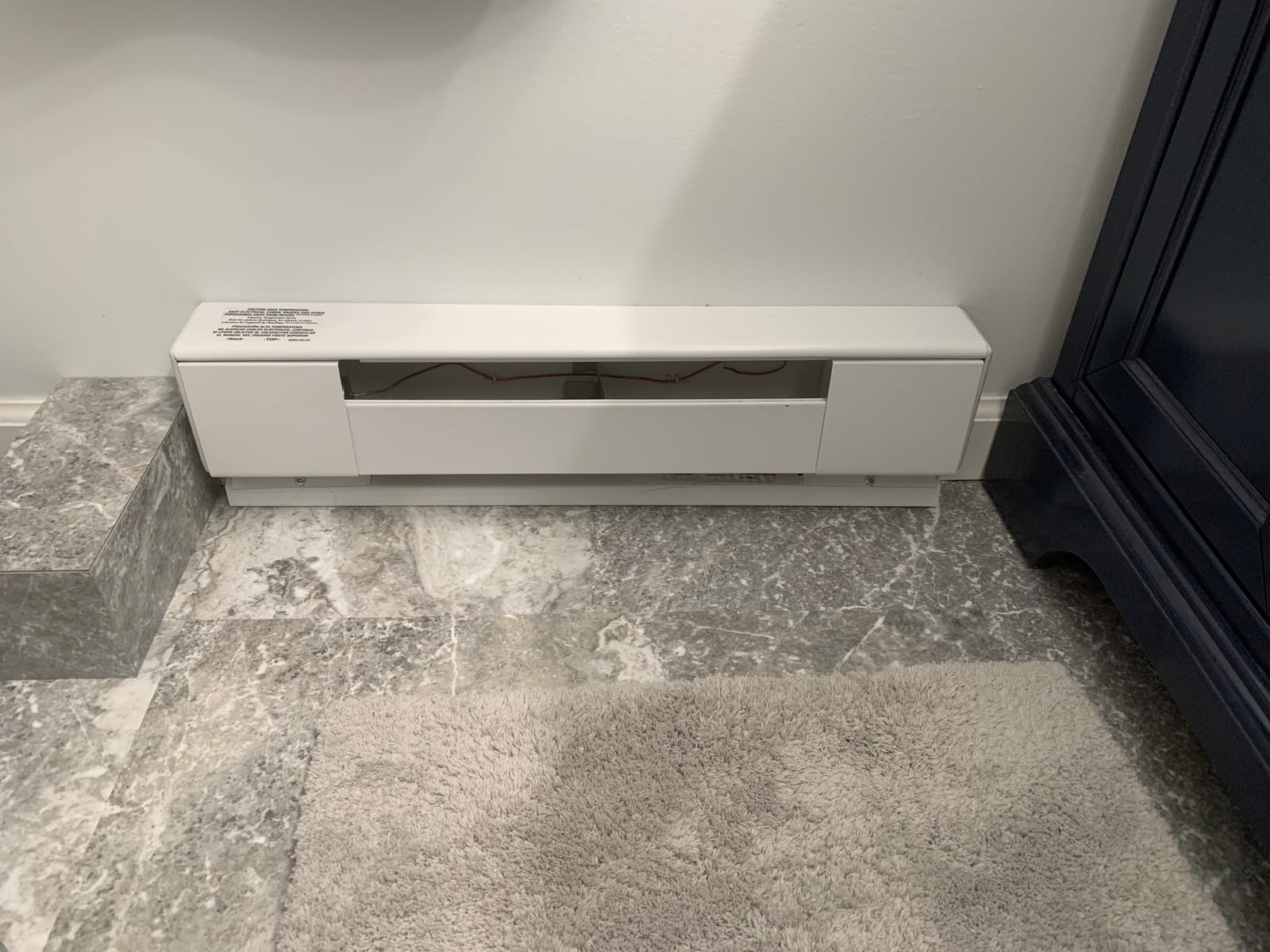
Who the Marley 2-Foot 240V suits
This is a good pick for a compact bedroom, a home office, or a small study where a long cabinet will not fit and you still want a permanent wall installation rather than a floor appliance. It works well in retrofit situations where 240V baseboard wiring already runs through the wall from a previous installation.
The 130F maximum temperature setting is worth noting if you pair it with an external thermostat, since it gives you a defined ceiling to program against. Multiple owners treat these as bedroom and study heaters specifically, citing the silent convection airflow.
Where the Marley 2-Foot 240V falls short
It hardwires to a 240V circuit, so it is off the table for renters and for most homes without an accessible 240V run in the bedroom. As with the 120V version, no thermostat is included, and a line-voltage model is the right companion.
Coverage per unit is the other limit. A 2-foot cabinet is a component, not a whole-room solution on its own, so budget for two cabinets in a bedroom above roughly 150 square feet rather than expecting one to carry the room alone.
7. ROVSUN 48-Inch with Remote – Best Remote-Controlled Baseboard Heater
ROVSUN 48” Electric Baseboard Heater with Remote, Convection Space Heater
1500W freestanding convection
48 inch wide, 9.3 inch tall
Rated up to 400 sq. ft.
3 heat settings
Pros
- Remote control and LED touch panel let you adjust heat from bed
- Fanless convection is quiet enough for sleeping
- Tip-over protection and a child lock for a family bedroom
- Three heat settings plus a 12 hour timer
- Long 48 inch cabinet covers a wide window wall
Cons
- Built-in humidifier needs regular cleaning and water handling
- Freestanding form factor takes floor space and cannot be recessed
- Combustible materials should stay at least three feet away
The ROVSUN is the only heater in this guide you can operate without getting out of bed, and for some bedrooms that is the deciding feature. It pairs a remote control with an LED touch panel, three adjustable heat settings, and a 12-hour programmable timer, so you can set the room to warm up on a schedule instead of running it all night.
Output is 1,500 watts with manufacturer coverage listed at up to 400 square feet, the highest coverage claim in the group, spread across a 48-inch cabinet. The heating method is fanless convection, so it stays quiet at sleep distance, and there is a built-in humidifier that adds moisture to the air, which some owners in dry winter climates appreciate.
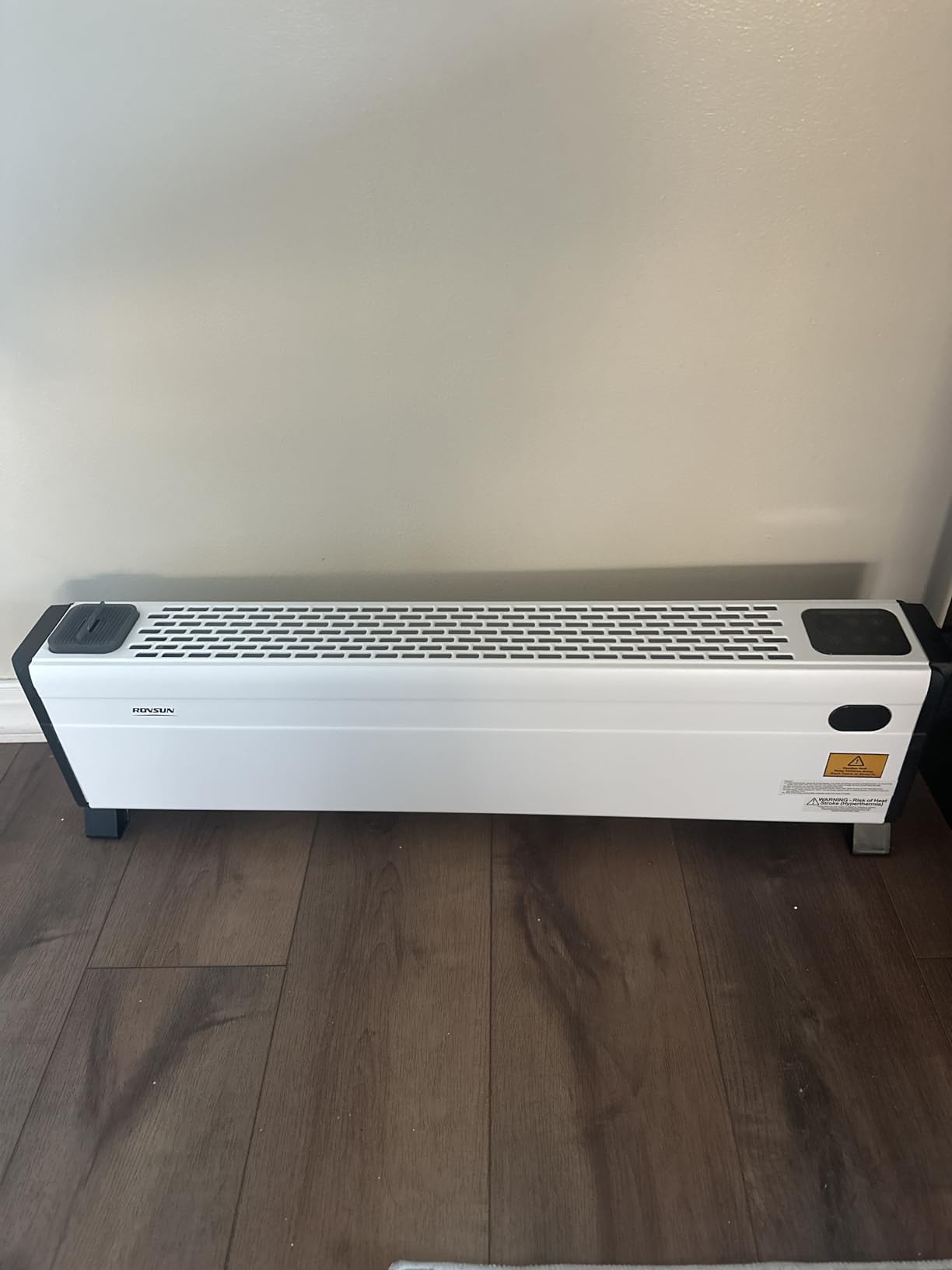
Safety features are stronger than most in this category for a family room: tip-over protection, a child lock on the touch panel, and a minimum temperature setting of 40F. Reviews rate it 4.0 stars from 98 reviews with about 57 percent five-star feedback, so the sample is small but consistently positive on convenience.
The clock matters in a bedroom specifically. A 12-hour timer means you can set it to shut down in the early morning, which is where most of the wasted electricity in a heated bedroom actually goes, and the remote removes the reason people leave a heater running all night out of laziness.
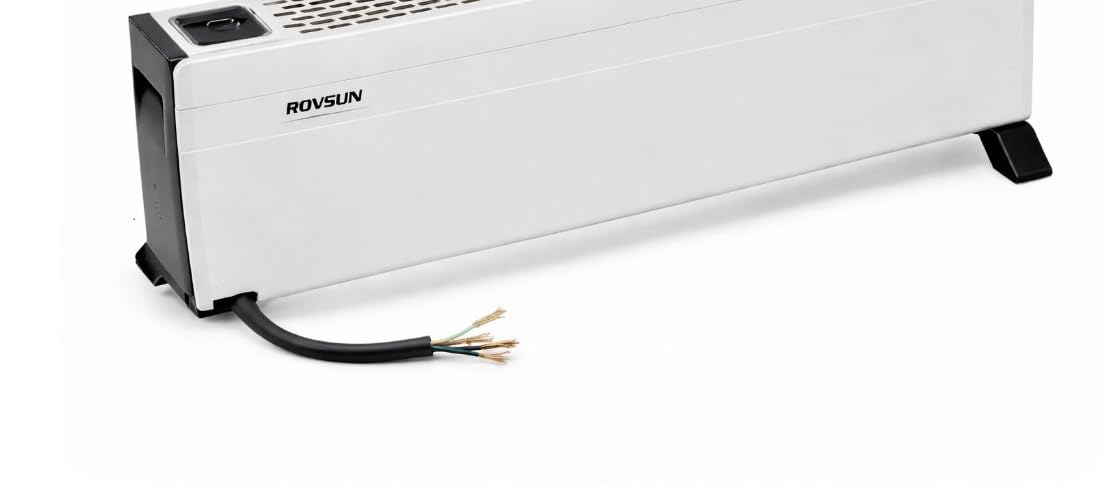
Who the ROVSUN 48-Inch suits
It fits a master bedroom or a kid’s room where getting up to adjust the thermostat is not realistic, and the 48-inch length gives it a permanent-looking presence along a window wall. The tip-over switch and child lock make it a reasonable choice for a nursery or a room shared with young children.
It is also the simplest option for a renter who wants remote and scheduling features without a line-voltage thermostat installed, since it does both from a handheld remote.
Where the ROVSUN falls short
It is freestanding, so unlike a wall cabinet it cannot be recessed and it occupies floor space along the baseboard. In a tight bedroom that means rearranging furniture, and the same 3-foot clearance guidance for combustible materials applies to bedding, curtains, and nightstands.
The built-in humidifier is the most-cited drawback. It needs regular cleaning and water handling, and in a room that is already humid it is one more maintenance item than you asked for. If the humidifier is not something you would use, consider whether the convenience features justify it.
8. KING 6K1215-BW 6-Foot – Best for Whole-Wall Bedroom Coverage
KING 6K1215-BW K Series Baseboard Heater, 6′ / 1500W / 120V, Bright White
1500W on 120V
60 inch flat panel cabinet
14.8 lb
7 year warranty
Pros
- Six foot cabinet spans a whole exterior wall for even bedroom heat
- Runs on standard 120V so existing circuits can be used
- Natural convection with no fan noise
- Aluminum ribbon fin element with crushproof construction
- Backed by a 7 year limited warranty
Cons
- Bulky 14.8 pound unit that takes real effort to mount
- Hardwired installation required
- Needs a wall thermostat for best control of the output
- Flat panel profile shows scuffs over time
The KING 6K1215-BW is the longest cabinet in this guide, at 60 inches of flat panel, and it delivers 1,500 watts on 120V. That combination is unusual and useful: you get near-whole-wall coverage without a 240V circuit, which makes it a realistic option for homes that cannot easily accommodate a high-voltage bedroom branch.
The heating element is an aluminum ribbon fin with crushproof construction, and the cover is a dent-resistant die-formed bright white. Both of those details show up in rooms where furniture gets moved around, which is normal in a bedroom. A full-length safety cutout provides overheat protection across the entire element rather than at a single point.
It is rated for bedrooms, dorm rooms, dining rooms, and home offices, and it comes with a 7-year limited warranty, the longest coverage in this roundup. The 120V requirement is the key practical advantage: in a room already served by 120V wiring, this can be installed without the electrical upgrade a 1500W 240V cabinet would require.
Buyers rate it 4.0 stars from 86 reviews with about 61 percent five-star feedback, praising the long cabinet, quiet natural convection, and the warranty. Common complaints are physical rather than electrical: the unit weighs 14.8 pounds and needs two people to mount, and the flat panel profile shows scuffs.
Who the KING 6K1215-BW suits
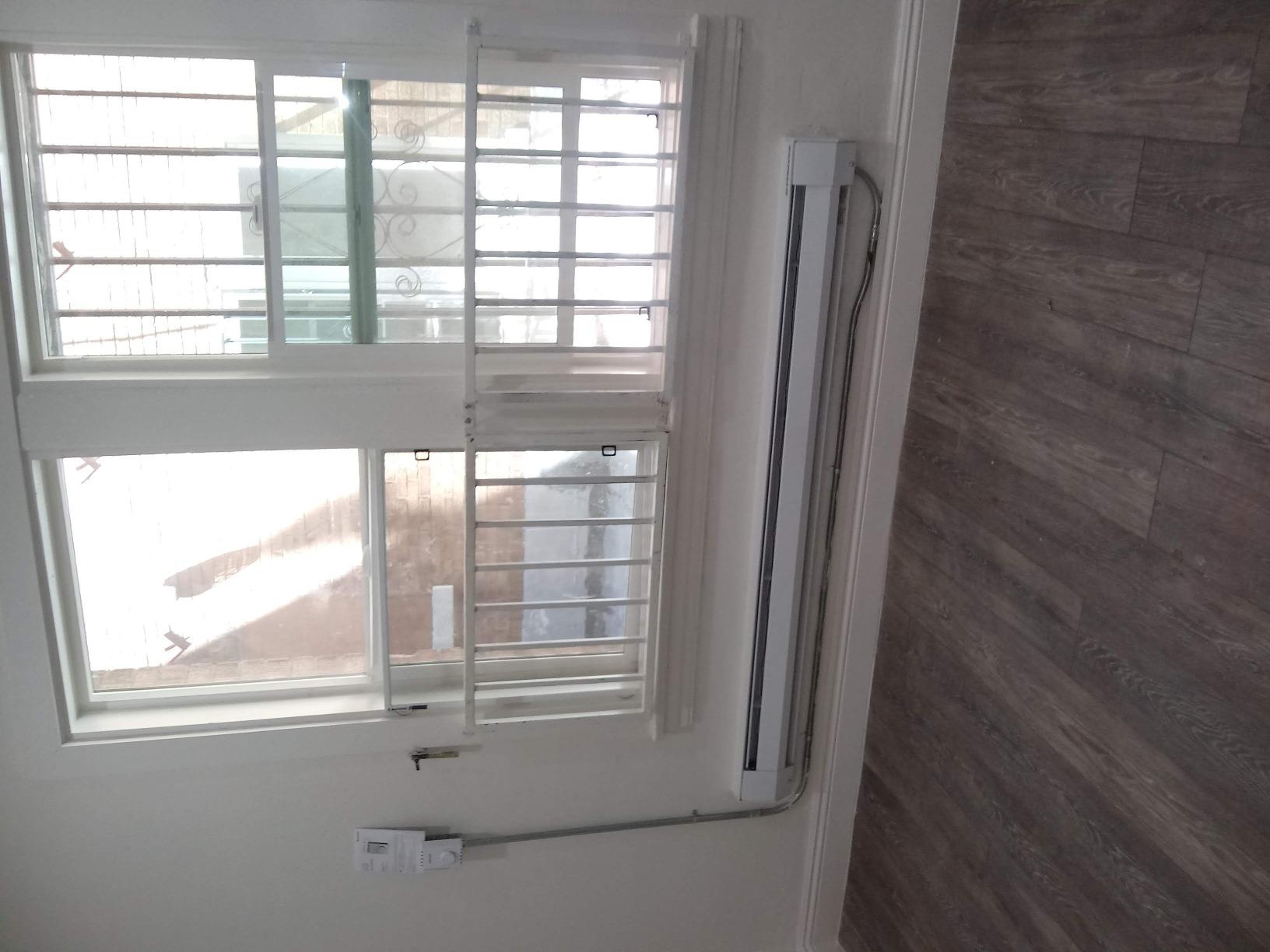
It is built for a long cold exterior wall with a wide window, where a single short cabinet leaves the corners of the room cold. A dorm room, a basement bedroom, or a converted garage room with a full-width wall of window is exactly the layout this cabinet was sized for.
Choose it over a 240V alternative when your panel is full or your bedroom has no 120V-to-240V path. The trade is lower output per unit, so on a very large room you would run two of these rather than one long 240V cabinet.
Where the KING 6K1215-BW falls short
It is hardwired, so this is a homeowner project rather than a plug-in purchase, and it has no built-in thermostat. Budget for a wall-mounted line-voltage thermostat, or control will be limited to running the element continuously.
Weight and finish are the smaller complaints. At 14.8 pounds across a 60-inch panel, mounting needs two people and solid fasteners into studs, and while the cover is dent resistant, a flat white face will show scuffs in a high-traffic bedroom over time.
How to Choose a Baseboard Heater for Your Bedroom
What type of heater is best for a bedroom?
For most bedrooms, a fanless electric convection baseboard heater is the best type. The options break down like this:
Electric convection baseboard (hardwired) heats air directly as it rises off aluminum fins, runs silently, needs a dedicated circuit, and is the standard choice for permanent bedroom heat.
Electric convection baseboard (plug-in portable) gives you the same silent convection heat with no installation, at the cost of a cord that dictates placement and a 120V wattage ceiling.
Hydronic baseboard heater heats a sealed reservoir of oil or glycol and radiates warmth for a long time after cycling off, which is gentler and longer-lasting but costs more and needs a boiler or a hot water source.
Forced-air or oil-filled portable heaters are the wrong fit for sleeping rooms, because the fan or the metal expansion noise wakes light sleepers and the airflow stirs dust and allergens.
How to size a baseboard heater for your bedroom
Start with the square footage and then adjust for insulation. A widely used rule of thumb for electric baseboards is roughly 10 watts per square foot in a poorly insulated older room and about 6 watts per square foot in a modern well-insulated one. Using those ratios, a 1,500W unit covers around 250 square feet in a modern bedroom and around 150 square feet in a drafty one.
Multiply your bedroom square footage by the ratio that matches your insulation, then round up to the nearest standard heater size. A 750W heater covers about 125 square feet, a 1,500W heater covers roughly 200 to 250 square feet, and a 2,000W or larger cabinet covers 300 square feet or more. Raise the estimate if your bedroom has vaulted ceilings, a cold slab floor, or a window on a cold exterior wall.
Cross-check the sizing against what the manufacturer claims. Coverage figures on the boxes in this guide range from about 125 square feet for the Cadet 3F750W up to 400 square feet for the ROVSUN, and where the number is generous, the room’s insulation level is the variable that decides whether it holds.
120V vs 240V: what you need to know before you buy
This is the decision that strands the most buyers, and the short version is simple: 120V means you can plug it in or wire it to an existing branch, and 240V means you need a dedicated high-voltage circuit installed.
Almost every bedroom wall in an American home has 120V receptacles and nothing else. A 1500W heater at 240V is the standard permanent residential baseboard because it delivers more heat with less current on the wire. A 1500W heater at 120V, like the Comfort Zone CZ600, is a portable appliance instead, limited by where the cord can reach.
For renters and anyone in a room without a spare breaker position, stay with 120V plug-in units. For homeowners with a panel that can spare a 20 or 30 amp 240V branch, hardwired 240V cabinets like the Cadet 72-inch or either Marley 2-foot model are quieter, more permanent, and better suited to zoned bedroom control with a line-voltage thermostat.
What thermostat should you pair with a baseboard heater?
You need a line-voltage, double-pole thermostat, and it is a separate purchase for every hardwired unit in this guide. A double-pole model opens both legs of the circuit, which is what allows the heater to drop fully to zero draw instead of leaving a live wire energized between cycles.
For a bedroom, a programmable model is worth the small step up in cost. Set it to drop a few degrees overnight and ramp up before you wake, rather than holding one temperature all night. A line-voltage thermostat also reads room temperature more accurately than an element-mounted control, which is why so many owners of the Cadet and Marley units pair them with a wall thermostat on the opposite wall.
Skip cheap mechanical dial thermostats. Homeowners repeatedly report that they cause short cycling, audible relay clicks, and temperature swings, all of which are problems in a sleeping room.
Which brands of baseboard heater are worth knowing?
Three names come up repeatedly in homeowner discussions of this category: Cadet, Fahrenheat (built by Marley Engineered Products), and King Electric. Cadet and Fahrenheat are the two most cited when people replace aging in-wall baseboard heat, and King shows up on the long-cabinet side.
Worth flagging for anyone planning a bathroom-adjacent bedroom: rust resistance in humid rooms is a recurring question in HVAC forums, and it is not something standard convection cabinets address. For a humid space, wet-location rated equipment or a different heating approach is the safer path.
For a broader look at how heaters of all types are built, our guides to the best livestock heaters tested and best brooder heaters cover rugged fan-driven equipment, which is the opposite design approach from the silent convection units that suit a bedroom.
Bedroom Safety: Clearances, Bed Placement, and Overheat Features
Is it safe to have a bed against a baseboard heater?
You should not place a bed directly against a baseboard heater. Keep the cabinet clear of the bed frame, mattress, bedding, curtains, and nightstands so air can move through the grille, and maintain at least 3 feet of clearance from combustible materials when the manufacturer specifies it.
Convection heaters draw cool air in through the bottom or front of the cabinet and exhaust warm air upward. Block that path and the heater runs hotter than its design intends, which is exactly the condition its overheat protection is meant to catch. On portable models, the tip-over switch shuts the unit off if it is knocked or tilted, and on wall cabinets the automatic shut-off or safety cutout handles a blocked intake.
What to do in a tight bedroom, which is the common case: mount the cabinet on the longest clear wall or under a window, keep nightstands a foot or more away from the ends of the cabinet, and move the bed a few inches off the baseboard on the same wall. If the bed physically cannot move, choose a unit whose clearance requirements you can actually meet, and never drape bedding over the cabinet.
Beyond clearance, look for three specific features before you buy: overheat protection that cuts power when the element exceeds its rated temperature, an automatic shut-off or full-length safety cutout, and a tip-over switch if the unit is portable. The Comfort Zone CZ600 and the ROVSUN both carry a tip-over switch, and every hardwired unit in this guide has overheat or safety cutout protection.
Finally, treat first-run odor as normal rather than alarming. Manufacturers advise burning off the finish on a new heater before regular use, which means running it with the bedroom door open and a window cracked until the smell clears. It is not a fault, but nobody should be asleep in the room while it happens.
Frequently Asked Questions
How many square feet will a 1500 watt baseboard heater heat?
About 200 to 250 square feet in a modern, well-insulated bedroom, and closer to 150 square feet in a drafty room with a cold exterior wall. The usual rule is roughly 6 watts per square foot for good insulation and 10 watts per square foot for poor insulation, so a 1,500W unit is the right size for most bedrooms up to 12 by 13 feet.
Is it safe to have a bed against a baseboard heater?
Not directly against it. Keep the cabinet clear of the bed frame, mattress, bedding, and curtains so air can move through the grille, and leave at least 3 feet of clearance from combustible materials when the manufacturer specifies it. A blocked intake makes a convection heater run hotter than its design intends.
What type of heater is best for a bedroom?
A fanless electric convection baseboard heater. It runs with no motor noise, does not blow dust and allergens around the room, and stays cool to the touch near furniture. Hydronic baseboards are gentler and hold heat longer, but a fan heater or an oil-filled portable unit is a poor fit for a sleeping room because of the noise and airflow.
Do electric baseboard heaters need special wiring?
Hardwired models do. A 240V cabinet needs a dedicated 20 or 30 amp high-voltage branch circuit installed, and 120V hardwired models need a branch circuit with enough spare capacity for a high-watt heater. Plug-in portable baseboards need nothing but a wall outlet. In every case, add a line-voltage double-pole thermostat for proper control.
Are new electric baseboard heaters more efficient than old ones?
Newer cabinets are more efficient because of the aluminum fin element designs, tighter cabinets, and better thermostat compatibility, but the difference is modest compared with how you operate them. Running a heater continuously at full output on a manual setting costs far more than using a programmable line-voltage thermostat that lowers the setpoint overnight.
The Best Baseboard Heater for Your Bedroom: The Verdict
The best baseboard heaters for bedrooms are the ones that stay quiet, avoid blowing dust, and match your electrical situation rather than the other way around. Start with the Comfort Zone CZ600 if you need heat tonight with no installation, since it is the best baseboard heater for bedrooms overall and carries a tip-over switch, an overheat sensor, and a stay-cool body on a normal 120V plug.
If you own the walls, pick a hardwired cabinet: the Cadet F Series 3F750W is the highest-rated option with a limited lifetime warranty for a small room, the Cadet 72-inch 1500W is the pick for a master bedroom on a long exterior wall, and the KING 6K1215-BW gets you whole-wall coverage without needing 240V. Add a programmable line-voltage thermostat to any of them, and keep the bed and bedding clear of the cabinet.
Whichever you choose, size it to your square footage and insulation first, budget the thermostat and any electrical work second, and check the clearance around the bed before the box arrives. That short order of operations is the difference between a bedroom that sleeps well and one that does not.