
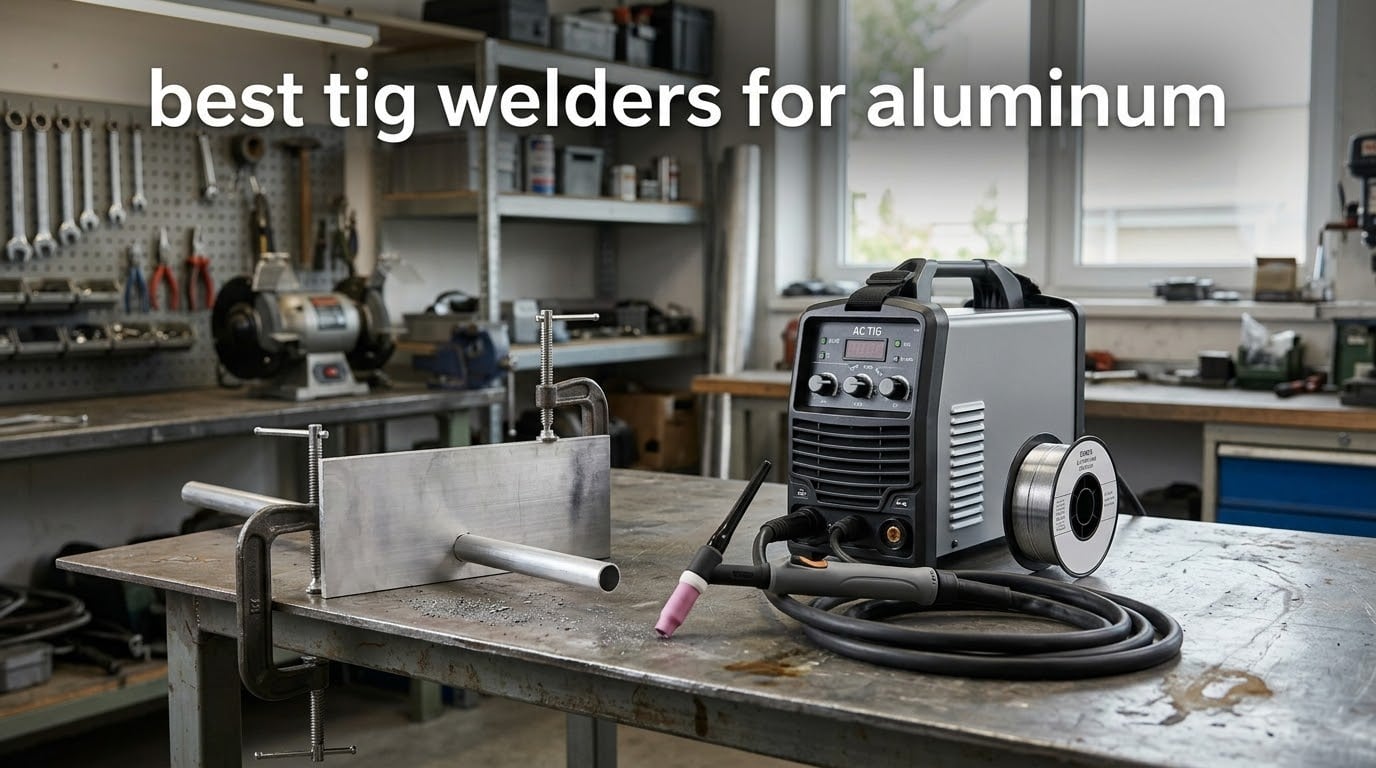
The short answer is simple: to weld aluminum you need an AC/DC TIG welder, and nothing else will do the job. Aluminum forms an oxide layer that refuses to melt with straight DC TIG, so the machine has to alternate current polarity to clean it off. Every pick below is a genuine AC/DC inverter, and I ranked them on arc control, duty cycle, accessory quality and what owners report after living with the machine.
I have pulled the ten most relevant machines for this job into one place, from a budget square-wave unit to a programmable pro machine. Each entry covers what it does well, where it falls short, and how thick a plate of aluminum you can realistically push through it. If you want the broader picture of the format first, our general guide to the best TIG welders is a good primer on the process itself.
Aluminum shows up in more home projects than most people expect. Patio structures like the aluminum pergolas we test are built from the same material you will be welding, and so are trailer frames, boat fittings, scooter panels and thin-wall tubing. That range of shapes is exactly why TIG is the process of choice for it, and why a machine with real AC control matters more than raw amperage.
The wrong machine is the single most common buyer mistake in this category. Plenty of budget boxes are advertised as TIG welders but output DC only, and a DC-only TIG simply cannot weld aluminum. I have excluded those from this list entirely, and I explain the failure mode further down the page.
Table of Contents
Top 3 Picks for Aluminum TIG Welding

PRIMEWELD TIG225X
- 225A AC/DC TIG and stick
- Pulse to 200 Hz
- Rated for 1/4 in aluminum
- 110V/220V dual voltage

Weldpro 200A AC/DC
- 5-in-1 multiprocess
- 0.5-200 Hz pulse
- Adjustable AC balance
- 40 percent duty cycle at 200A
AHP AlphaTIG 203Xi
- Handles 1/4 in aluminum
- Reported 100 percent duty cycle at 155A
- Knob controls
- Foot pedal and regulator included
All three of the top picks put 200 amps or more of genuine AC output on aluminum, and all three include the foot pedal, regulator and torch you need to begin welding with. The PRIMEWELD wins on rating and review depth, the Weldpro on how much adjustable control it packs in, and the AHP on the simplest path from new owner to first clean bead.
Best TIG Welders for Aluminum (October 2026)
| Product | Specifications | Action |
|---|---|---|
| PRIMEWELD TIG225X 225A AC/DC TIG |
|
Check Latest Price |
| Weldpro 200A 5-in-1 AC/DC TIG |
|
Check Latest Price |
| AHP AlphaTIG 203Xi AC/DC TIG |
|
Check Latest Price |
 ARCCAPTAIN TIG200P 7-in-1 AC/DC ARCCAPTAIN TIG200P 7-in-1 AC/DC |
|
Check Latest Price |
 LOTOS TIG200ACDC 200A Square Wave LOTOS TIG200ACDC 200A Square Wave |
|
Check Latest Price |
 Sunstac 250A AC/DC TIG with Pulse Sunstac 250A AC/DC TIG with Pulse |
|
Check Latest Price |
 Everlast PowerTIG 200DV Everlast PowerTIG 200DV |
|
Check Latest Price |
 Everlast PowerTIG 210EXT Everlast PowerTIG 210EXT |
|
Check Latest Price |
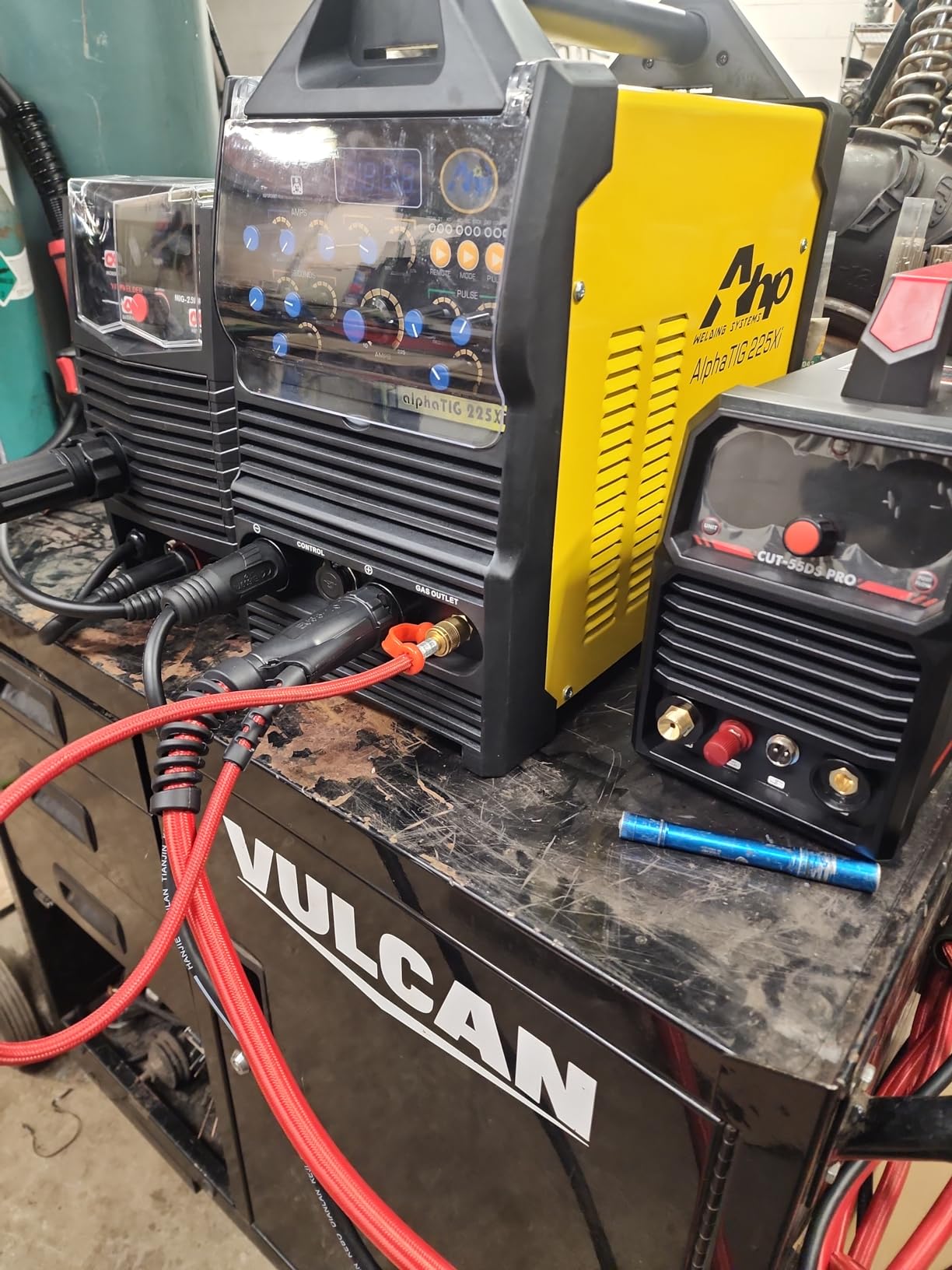
 AHP Alpha-TIG 225Xi AHP Alpha-TIG 225Xi |
|
Check Latest Price |
 Everlast PowerTIG 185DV Everlast PowerTIG 185DV |
|
Check Latest Price |
Two columns matter more than the rest for aluminum work: the AC balance and frequency controls, and the real-world amperage you can hold rather than the number printed on the panel. Read the table with those two in mind.
1. PRIMEWELD TIG225X – The Best TIG Welder for Aluminum Overall
PRIMEWELD TIG225X 225 Amp IGBT AC DC Tig/Stick Welder with Pulse CK17 Flex Torch and Cable
225A AC/DC TIG and stick
Pulse to 200 Hz
Rated for 1/4 in aluminum
110V/220V dual voltage
Pros
- Stable clean AC arc on aluminum and DC on steel
- Knob controls that are simple to learn
- CK17 Superflex torch with widely available consumables
- Responsive support with a 3-year warranty
- Detailed 57-page illustrated manual
Cons
- Panel labels are hard to read in low light
- Cooling fans run continuously and are loud
- Included argon regulator is low quality
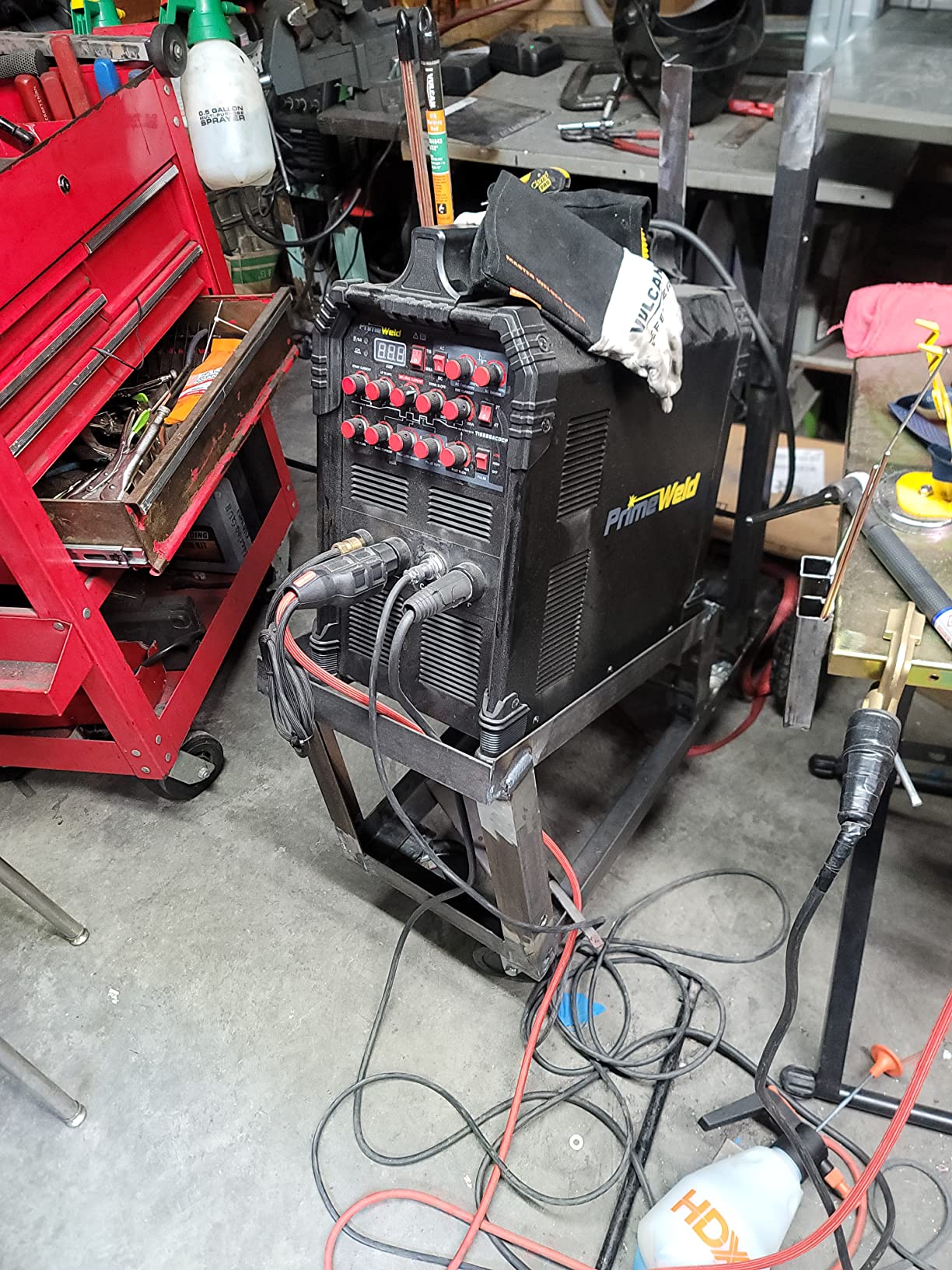
Of the ten machines I looked at, the TIG225X has the strongest combination of rating and owner history: 4.8 stars across 1426 reviews, which is the largest review base in the group. Owners consistently describe a stable, clean arc on AC aluminum and on DC steel from 22 gauge up to 3/16 in material, and many of them say the limiting factor is their own skill rather than the machine.
What stands out to me is the control philosophy. PRIMEWELD used real physical knobs instead of menu-driven screens, and for a first AC/DC machine that is the right call. You are already juggling four variables on aluminum, so the machine should not make you navigate a menu to change the AC balance. The pulse runs to 200 Hz and the AC frequency is adjustable, which covers the thin-gauge heat control you need on sheet material.
The included CK Worldwide 17 Series Superflex torch is the other quiet win. CK17 is the industry-standard air-cooled torch, and every consumable for it is cheap and easy to find, which matters more to a new owner than it sounds. The 57-page illustrated manual is unusually thorough and is genuinely enough to learn TIG from.
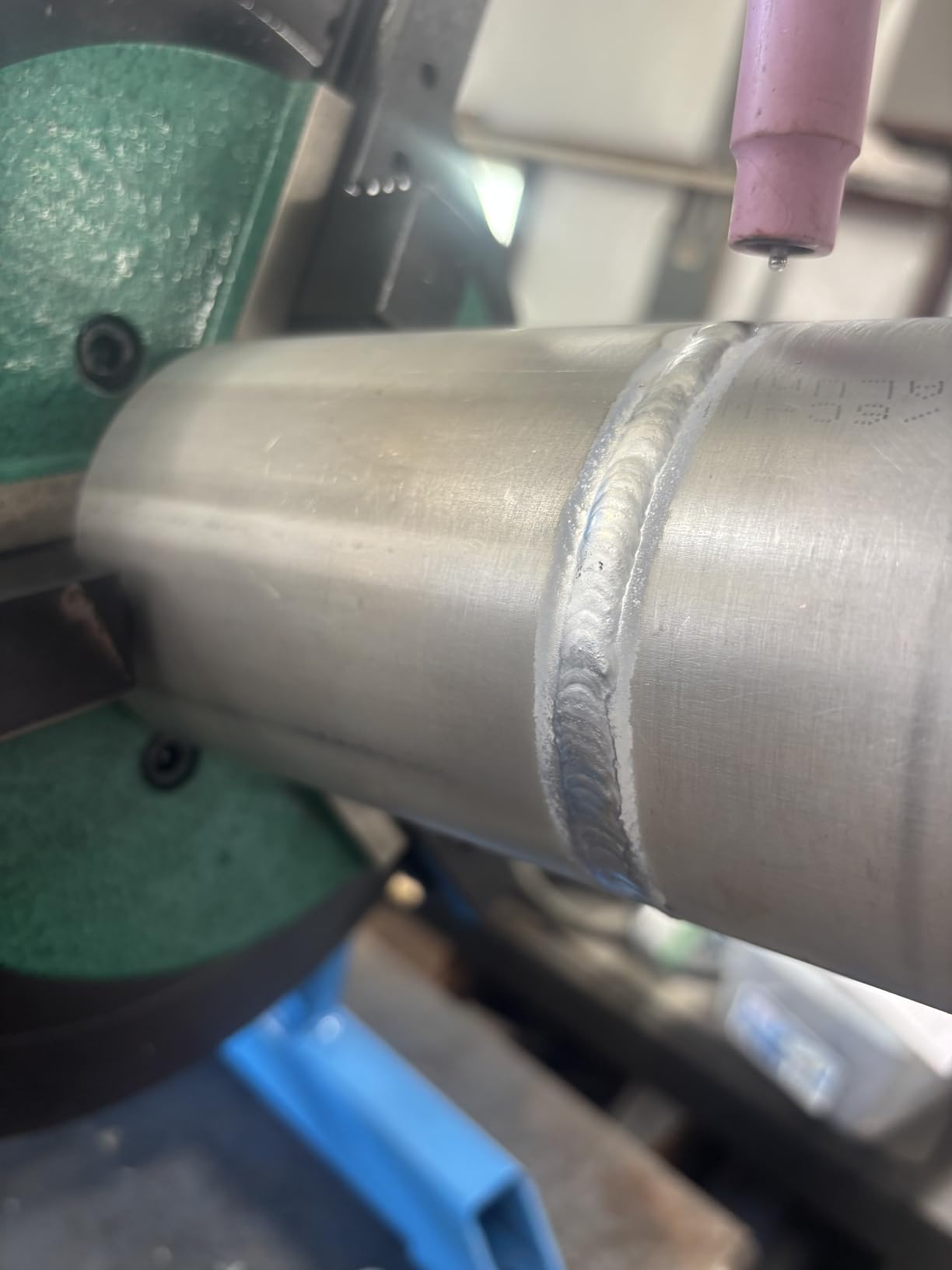
The criticism I found is almost entirely cosmetic or accessory-related. Panel labels are hard to read in a dim garage, the main power switch sits on the back of the unit, the fans run continuously and are audible, and the argon regulator in the box is low quality enough that owners replace it. None of that touches the weld quality.
One replacement part deserves a warning. The heat shield on the CK17 torch is a proprietary item and costs more than a standard shield, so treat the torch consumables as a line item rather than a rounding error. Owner reports also single out PRIMEWELD customer service as unusually responsive for a brand at this level, which matters when a torch connector or a panel setting is giving you trouble.
What thickness of aluminum it handles well
The manufacturer rates this machine for 1/4 in aluminum and 3/8 in mild steel, and owner reports cluster right around 1/4 in for comfortable AC work. If your project is 1/8 in plate, tubing or sheet, 225 amps of AC is more than enough headroom, and you can turn the amperage down rather than fighting the machine.
For anything approaching 1/2 in, this is not the machine. The gap exists on every TIG in this price band, and the fix is a larger machine rather than more finesse at the torch. On 110V home power you should expect noticeably less than the rated output, so plan on running this one on a 220V circuit for real plate work.
Who should and should not buy it
Buy it if you want a single machine that covers aluminum, stainless and carbon steel, want physical controls, and want a support line that answers. It is the pick I would hand to someone building a trailer frame, a set of aluminum steps or a small boat project on a weekend.
Pass if you need fine amperage control at the very bottom of the range for foil or ultra-thin sheet, or if your work regularly goes past 1/4 in aluminum. In that case look at a machine with a lower minimum amperage and more waveform selection.
2. Weldpro 200A AC/DC TIG – Best Value for Feature Count
Weldpro 200A AC/DC TIG Welder with Pulse, 110V/220V Dual Voltage Aluminum TIG Welder, AC TIG/DC TIG/AC PULSE TIG/DC PULSE TIG/Stick 5 in 1 Multiprocess Welding Machine with TIG Torch & Foot Pedal
200A 5-in-1 AC/DC TIG
0.5-200 Hz pulse
40% duty cycle
110V/220V auto switch
Pros
- Five TIG modes plus stick in one package
- Adjustable AC balance and frequency
- Large LED display readable in low light
- Foot pedal and full accessory kit included
- 40% duty cycle at full rated output
Cons
- Heavy 61.8 lb body is bulky for field transport
- Digital menu navigation takes practice versus analog knobs
- Included accessories are functional rather than premium
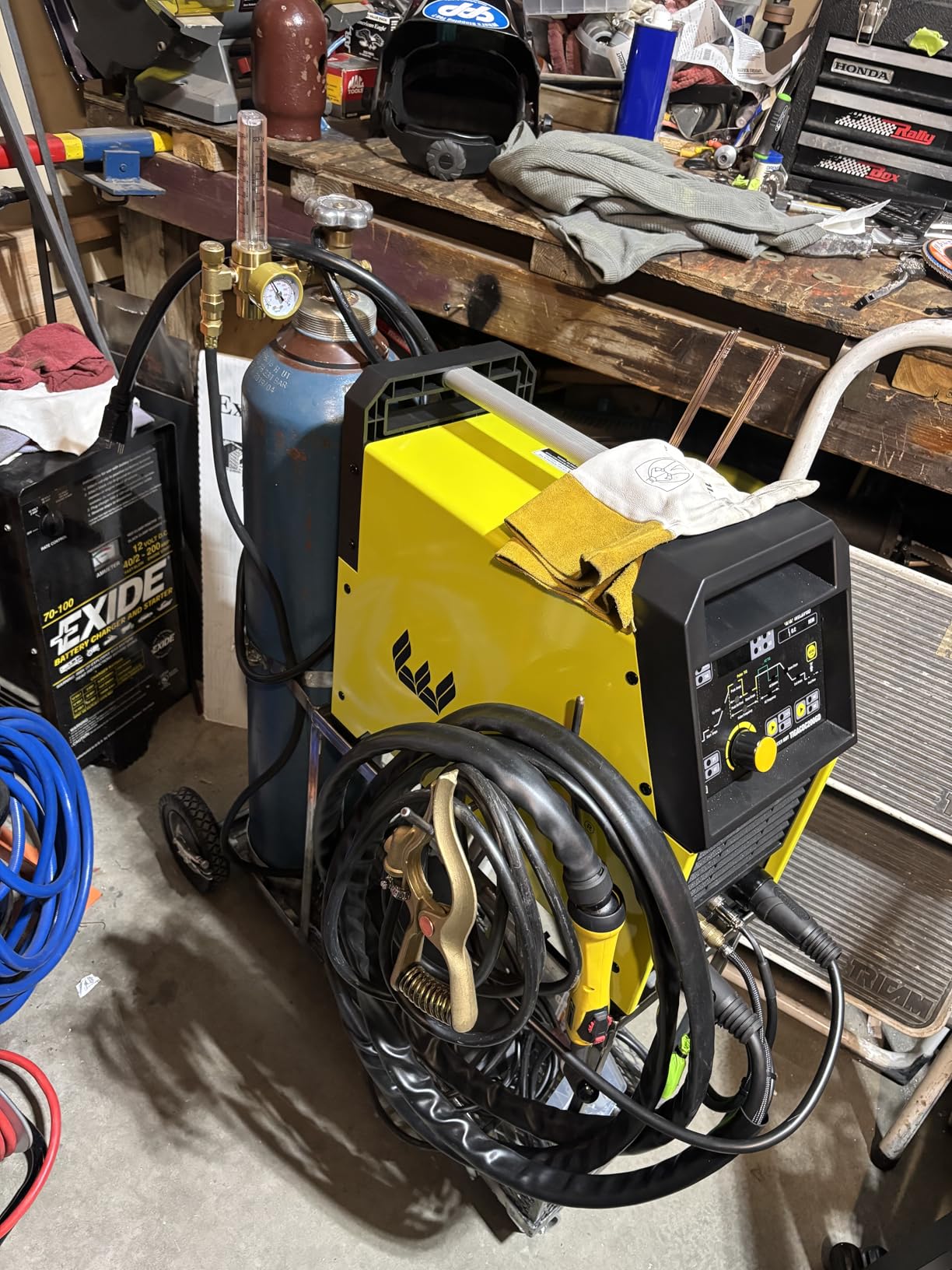
This machine packs five TIG modes into one box: HF AC TIG, DC TIG, AC pulse TIG, DC pulse TIG and stick. That is a lot of mode coverage in one box, and it comes with a rocker foot pedal, a TIG torch, gas hose, flow meter, ground clamp, stick holder and a set of tungsten and nozzles. The 836 reviews at 4.6 stars reflect a buyer base that mostly values getting a full kit out of one purchase.
Where it beats the PRIMEWELD is control granularity. Pulse frequency runs from 0.5 to 200 Hz with separate peak amperage, upslope and downslope, and both 2T and 4T trigger modes, and the AC balance and frequency are both fully adjustable. The MCU panel also exposes pre-flow, initial current, crater current and post-flow, which is the kind of access you normally only find on machines costing far more.
Power handling is handled too. It detects 110V and 220V automatically and switches without you touching a selector, and it holds a stated 40% duty cycle at full 200A output with overheat, over-current, over-voltage and under-voltage protection built in.
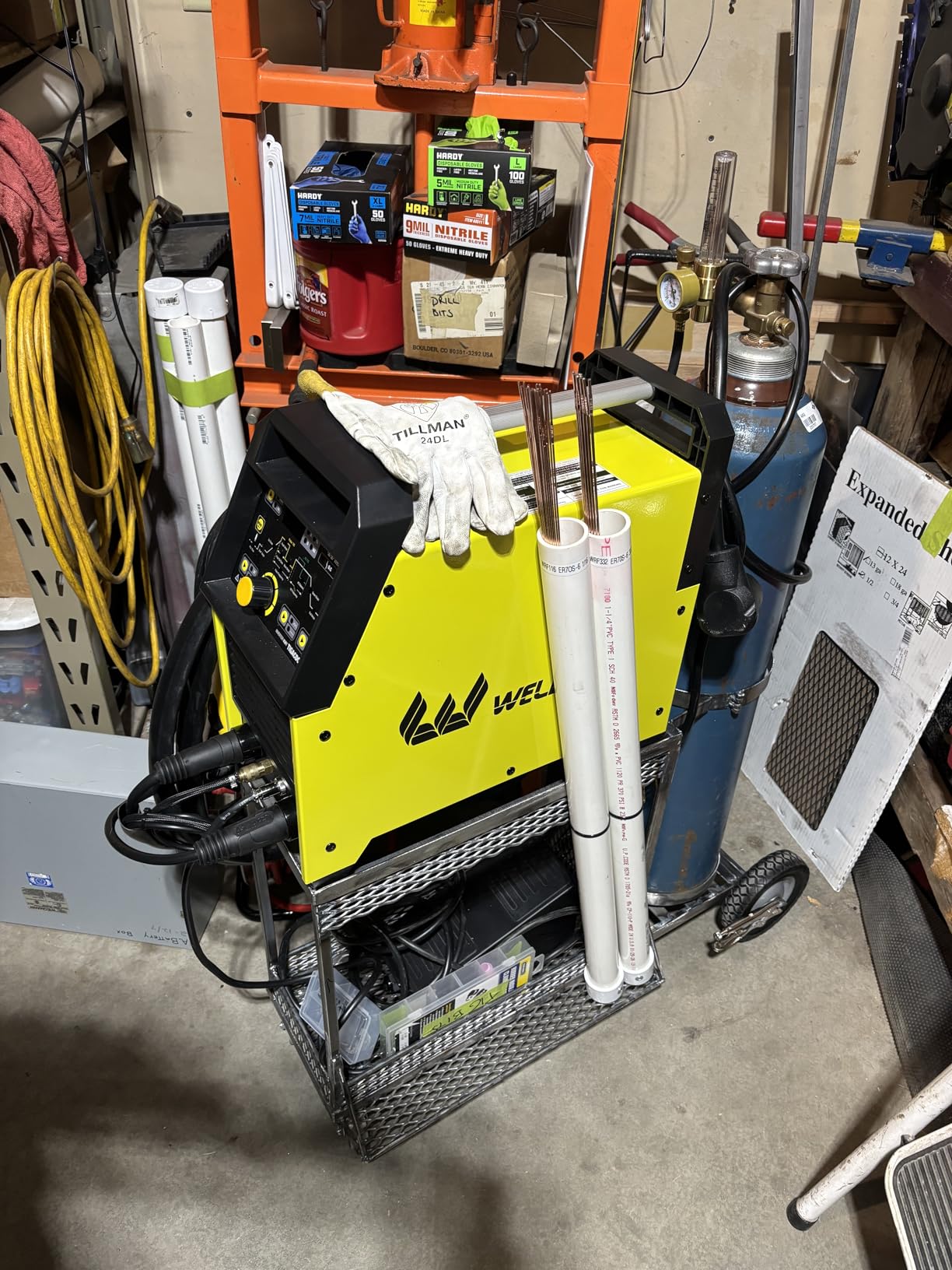
The trade-offs are size and interface. At 61.8 lb and 17.6 x 7.9 x 16.2 inches, it is a shop machine rather than something you carry to a fence or a trailer, and the digital menu takes longer to learn than a knob panel does. The included accessories are the kind that work fine, but they are not the same grade as a CK17 Superflex torch.
Long-term reliability feedback on this specific unit is thinner than on the higher-ranked machines, so treat the feature list as the reason to buy and the review count as the reason to be patient with support. Owners who have worked with it rate the adjustable AC balance and frequency, and the large display, as the two things that made aluminum go smoothly.
How it handles thin and medium aluminum
With upslope, downslope, peak and background current and crater fill under your control, this is one of the better thin-gauge machines here. The pulse range down to 0.5 Hz is genuinely useful on light-gauge aluminum where you want a slow, cool, tightly controlled puddle.
At 200A rated, it is sized for the same 1/8 in to 1/4 in aluminum work that dominates home projects. The 40% duty cycle means you can hold a longer session on thicker material than the machines that rate themselves at lower duty cycle, though on 110V the output drop is still real.
Who it suits and who it does not
This fits a home shop owner or serious hobbyist who wants fine parameter control, already knows what upslope and crater current do, and does not need to carry the machine around. The full accessory kit means nothing extra to buy before the first weld.
It is the wrong choice for a beginner who would rather learn on physical knobs, or for field work where 61.8 lb is a problem. For a first AC/DC machine and a willingness to learn menus, the value here is hard to argue with.
3. AHP AlphaTIG 203Xi – Top Rated Learning Aluminum
NEW 2024 AHP AlphaTIG 203Xi Amp IGBT AC DC Tig/Stick Welder with PULSE 110/220v 3 YEARS WARRANTY
200A AC/DC TIG and stick
Handles 1/4 in aluminum
HV start
110/220V dual voltage
Pros
- Reported 100% duty cycle at 155 amps
- Smooth stick arc that starts easily and forgives arc length
- Knob controls that are quicker to dial in
- Foot pedal and Rotaflex torch included
- AHP support replies quickly
Cons
- On 120V the digital readout does not match the knob
- No output limiting on 120V can trip a breaker
- 10 amp minimum output restricts very thin work
The AlphaTIG 203Xi has been a common recommendation in the welding community for years, and 603 reviews at 4.6 stars back that up. Owners on r/Welding cite the AHP 203 and the PrimeWeld TIG225X together as the most popular picks in their tier. It is rated for 1/4 in aluminum and 3/8 in mild steel on either 110V or 220V, and the included package is generous for a first machine: a 25 ft Nova foot pedal, a Rotaflex 9/17 TIG torch, a 250A electrode holder, a floating ball-type argon regulator, a work clamp and a 240V-to-120V plug adapter.
The 2024 revision uses an electronic solid-state HV start, which removes the point gap that older solid-state TIG welders required between the torch and the work. That single change makes ignition on aluminum far more reliable than it used to be on this model line, and the high-visibility LCD keeps the settings readable while you are helmeted.
For a beginner, the physical knob layout is the real selling point. Long-term owners describe it as a hobbyist and small-shop workhorse, and they rate the duty cycle heavily: reports of 100% duty cycle at 155 amps mean this machine does not punish you when a job runs an hour longer than planned.
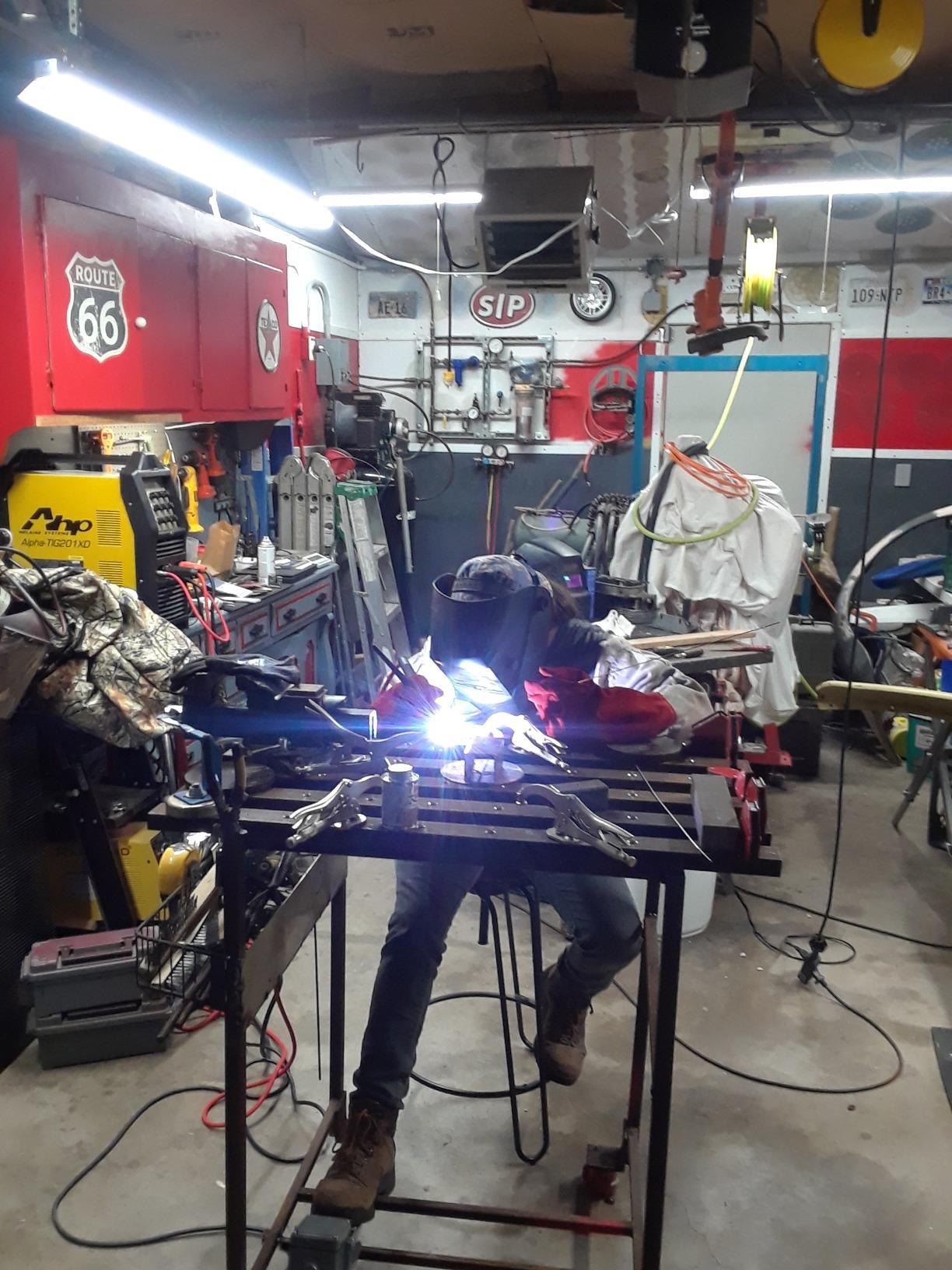
The stick side of this machine gets praise too, for an arc that starts easily and is forgiving about arc length. If you also want to do structural work or repair with 7018 and 6013 electrodes, this is a genuine two-process machine rather than a TIG with a stick function bolted on.
Now the 120V behavior, because it surprises people. The digital readout does not match the knob setting on 120V, and the machine is not power-limited there, so running it hot on a household circuit can trip a breaker. The minimum output of 10 amps is another limitation for anyone working with ultra-thin material, and the included ground clamp and flow meter are the two accessories most owners replace. At 69 lb it is also one of the heaviest machines in this list.
What thickness works on this machine
The 1/4 in aluminum rating is the number to plan around, and owner reports support that for comfortable AC work. For sheet, tubing and 1/8 in plate, 200 amps gives you room to dial back rather than fight the power source.
Because the minimum is 10 amps, extremely thin material is where you will feel the ceiling first. If your work is mostly 0.5 mm foil or decorative spinner aluminum, look for a machine with a lower start amperage instead.
Who it is for and who should skip it
It is built for the person buying their first AC/DC machine who wants knobs, a foot pedal, a regulator and a torch in the box, and who mostly welds on a 220V circuit in a garage. The three-year warranty and responsive AHP support add real value at this tier.
Skip it if you work mainly from 120V outlets, if you need to weld very thin aluminum, or if you want the lowest possible start amperage. Those are specific gaps, not reasons to avoid the machine on general grounds.
4. ARCCAPTAIN TIG200P ACDC – Seven Welding Modes in One Case
ARCCAPTAIN TIG Welder AC/DC 200A with Pulse 7 in 1 Aluminum Welding Machine
200A 7-in-1 AC/DC TIG
Square and triangular AC waves
0.5-5 mm aluminum rated
2T/4T and spot TIG
Pros
- Square wave cleans oxide and triangular wave tames heat
- Full digital control of AC balance and pulse
- 42.7 lb body with an on-demand cooling fan
- Large clear parameter display
- 2T and 4T and spot TIG modes
Cons
- Foot pedal is not included
- XS12 aviation connector makes third-party pedals hard to find
- Support and warranty response is inconsistent
ARCCAPTAIN’s edge is waveform choice on a mid-range machine. This is a 7-in-1 unit covering DC TIG, DC pulse TIG, AC TIG, AC pulse TIG, AC pulse square wave, AC pulse triangular wave, stick and spot TIG, and the square wave is what gives the oxide cleaning while the triangular wave reduces heat input on thin material. Only the Everlast 210EXT in this roundup offers a wider menu of AC waveforms.
The MCU digital control exposes pre-flow, initial current, upslope, peak and base current, downslope, crater current, post-flow, pulse duty, AC frequency, AC balance and pulse frequency. Rated aluminum capacity is 0.5 to 5 mm, roughly 0.02 to 0.20 in, and other metals run to 10 mm. The unit is listed at 42.7 lb with an on-demand fan, so it stays cool and quiet between beads.
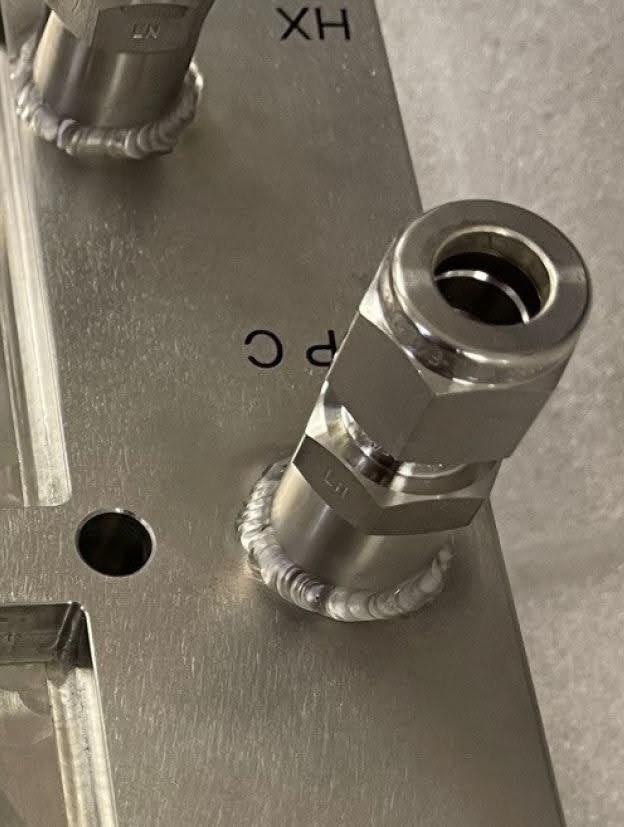
Welders who use it describe clean aluminum results well above what the feature list would predict, and the large LED display keeps the parameter set readable. The 4.3 average across 242 reviews comes down to quality control and support rather than to welding performance.
Three things to know before you buy. The foot pedal is not in the box, and the pedal interface uses an XS12 aviation connector, so generic third-party pedals are hard to find. Some owners have received machines with a sliced power cord or a cracked gas connection, and a few report a ground clamp that ran hot enough to melt its own wire casing.
Service and warranty responsiveness is the other weak spot, with some reviewers saying their warranty request was never answered. Budget for that uncertainty by keeping your receipt and inspecting the machine when you open the box, because a support line that does not respond is only survivable if you can prove the defect.
Where the waveform choice actually helps
Square wave AC spends more time in the electrode-positive half of the cycle, which is the cleaning half. That is what you want on oxidized aluminum and on laps and mill finish sheet where the oxide is thick. Triangular wave spends more time penetrating, which is what you want on thin material where a too-hot arc would blow through.
Being able to switch between them from the panel, rather than living with one fixed waveform, is a genuine advantage for anyone doing mixed aluminum work. It is the reason this machine punches above its class on thin gauges.
Who should buy it and who should pass
Buy it if you are working between roughly 0.5 and 5 mm aluminum, want to move the machine between the bench and a job site, and are willing to buy a foot pedal. The light weight and the multi-mode coverage make it a strong first serious AC/DC unit.
Pass if the warranty and support story matters more to you than the feature list, or if you need reliable foot pedal support out of the box. Inspect the machine the day you open the box.
5. LOTOS TIG200ACDC – Budget Pick With Real AC Capability
LOTOS TIG200ACDC 200A AC/DC Aluminum Tig Welder with DC Stick/Arc Welder, Square Wave Inverter with Foot Pedal and Argon Regulator 110/220V Dual Voltage Brown
200A AC square-wave TIG
10-200A AC/DC output
Auto 110/120V and 220/240V
Pedal included
Pros
- Purpose-built 200A AC square-wave output for aluminum
- Foot pedal and argon regulator included
- Automatic dual voltage and dual frequency
- 3-year limited warranty with USA-based support
Cons
- No pulse function on this variant
- Oldest design in the group at 2012
- Thin accessory set compared with newer rivals
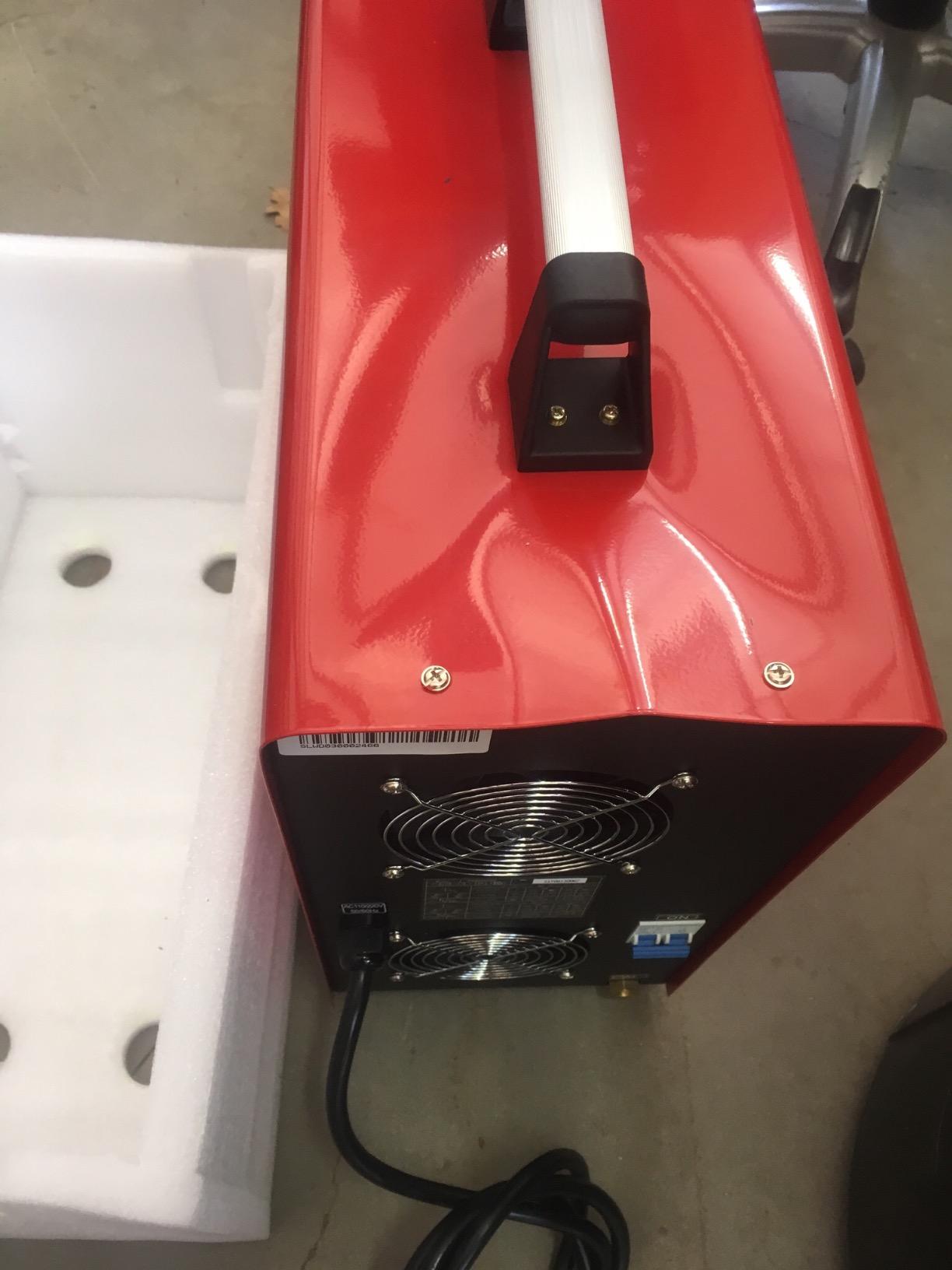
The LOTOS TIG200ACDC is the most direct route on this list to genuine AC square-wave output, and for a first aluminum machine that is a real answer. TIG output runs 10 to 200 amps on both AC and DC, stick output runs 15 to 200 amps DC with adjustable hot striking current, and the whole package includes the power supply, TIG torch, stick clamp, foot pedal, argon regulator, a 220V/110V converter pigtail, ground clamp and a consumable set.
It also switches automatically between 110/120V and 220/240V at both 50 and 60 Hz, which means it works on a normal household circuit without a manual selector or an adapter. HF start with hand torch control and foot pedal heat control are both present, and the inverter is rated at 80% power efficiency. A 30-day money-back guarantee and a 3-year limited warranty with USA-based support round out the package.
At 37 lb, it is also one of the easier machines to move. The 4.4 rating across 278 reviews reflects buyers who wanted AC capability and a complete kit at the entry level and got both.
The obvious limitation is the absence of pulse on this specific variant, and that matters for thin aluminum. Without pulse control you are managing heat with the foot pedal and your travel speed, which is workable but slower to learn. There is a pulsed 220A ACDC variant in the same range if thin-gauge heat control is your priority.
The design dates back to 2012, so the panel is simpler than everything else here and the accessory set is thin by comparison. Customer review narratives on this machine were limited in the data I reviewed, so the case for it rests on the 4.4-star average and the spec sheet rather than a long wall of owner stories.
What thickness this budget machine covers
At 200 amps of AC, the practical ceiling for comfortable aluminum work is 1/8 in plate and 1/8 in to 1/4 in tubing. The square wave handles oxide cleaning well on mill finish material, which is most of what a first project involves.
Thin sheet is where the missing pulse hurts. If your plan is 0.6 mm to 1 mm aluminum, budget for a pulsed variant or accept a slower learning process on foot pedal control alone.
Who it suits and who it does not
It suits a first-time owner who wants to know that aluminum is possible on a limited budget, needs the machine to run on household power, and prefers simple controls. The included pedal and regulator remove two early expenses.
Skip it if thin-gauge precision is the goal, or if you want the latest generation of digital parameter control. Nothing about this machine is a mistake; it is simply a straightforward 2012-era design.
6. Sunstac 250A AC/DC Pulse – A 6 mm Aluminum Rating and a Helmet-Readable Screen
Sunstac 250A Aluminum TIG Welder with Pulse ACDC Foot Pedal Control
250A AC/DC TIG with pulse
6 mm aluminum at 220V
Parameter memory
29.8 lb body
Pros
- Parameter memory restores settings after a power cycle
- Upgraded LCD readable while helmeted
- 118 in leads rated to 300A
- Light 29.8 lb body
Cons
- Manufacturer states AC-mode current measurement is inaccurate
- Foot pedal not included despite the listing
- 15 percent one-star share in reviews
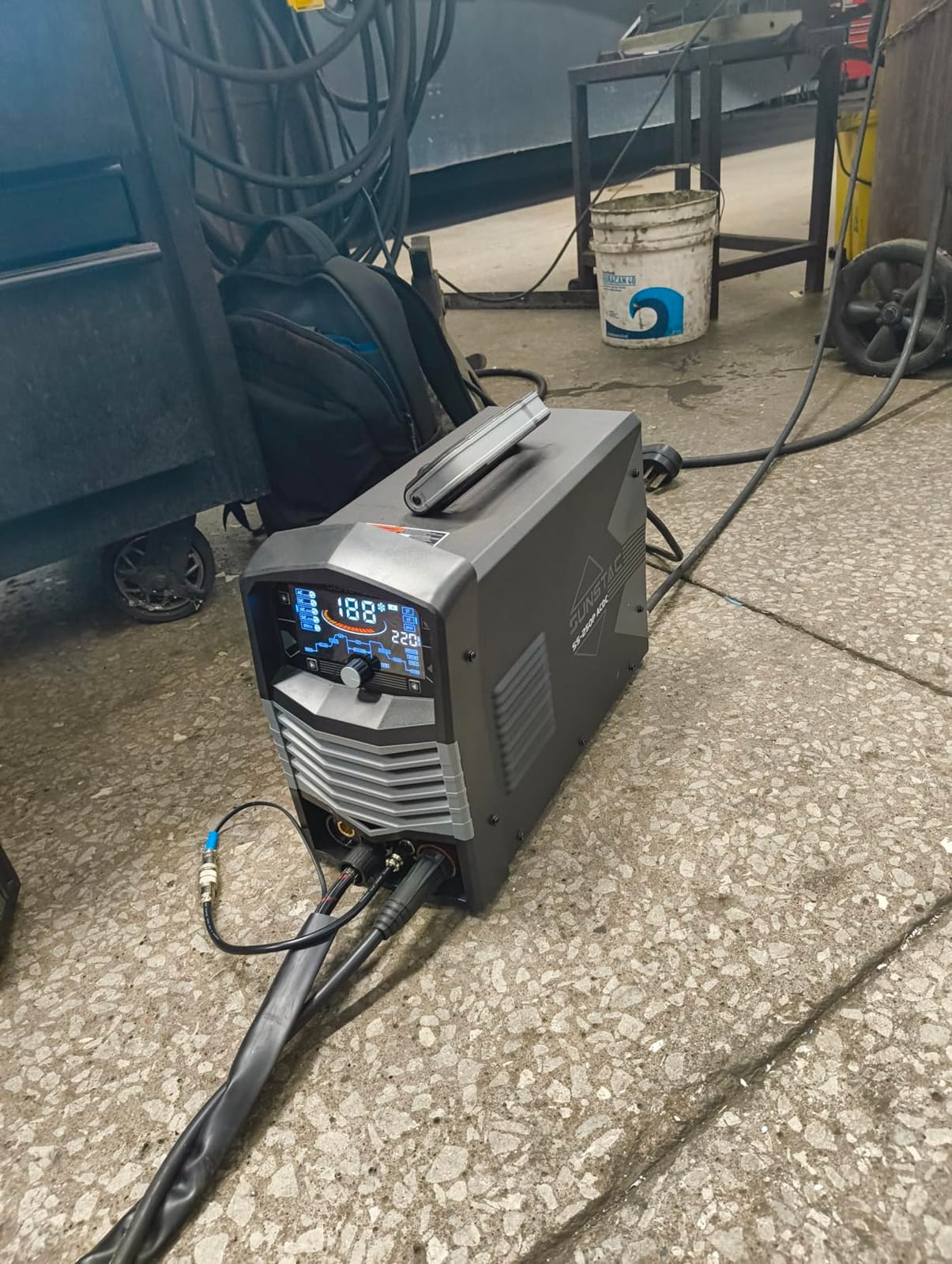
On paper this is the biggest number in the group, and at 29.8 lb it is a genuinely portable machine. It covers high-frequency AC and DC, pulsed AC and DC, AC and DC spot, and stick, with the stated aluminum capacity of 5/32 in at 110V and 6 mm at 220V. That is the only machine here that publishes a millimeter rating rather than an inch figure.
Two conveniences stand out. The upgraded LCD replaces an older LED screen and its digits are legible while wearing a welding helmet, which sounds trivial until you are trying to read amperage through a dark window. The intelligent parameter saving restores your previous settings after a power cycle, so a job interrupted for lunch does not cost you your setup.
It also handles 2T, 4T and spot TIG modes, and auto-engages foot pedal mode after restart if a pedal is connected. The work clamp and electrode holder leads are 118 in and rated to 300A, which is longer than most machines at this level.
Read the fine print, because the manufacturer itself flags limitations. The documentation states that AC-mode current measurement is inaccurate and that AC balance consistency varies. On a machine whose main appeal is AC aluminum capacity, that is exactly the warning you want to read before relying on the panel numbers.
The foot pedal is not included even though the listing references foot pedal control, and this is the lowest-rated machine in the group at 4.1 stars with a 15% one-star share, roughly triple the others. That share points at QC and support issues rather than arc quality, but it is still the weakest evidence base of the ten.
Reading the 6 mm aluminum claim
A 6 mm rating at 220V is meaningful but modest in absolute terms. Six millimeters is a shade under 1/4 in, so this sits alongside the other 200-class machines rather than above them, and it tells you nothing about holding that output for a long session.
Because AC current measurement is not accurate, do not plan to trust the displayed number while welding aluminum. Set the output against a known test piece and use your own judgment from there.
Who should consider it and who should not
Consider it if you want the lightest body, the most legible display, and parameter memory for repeat jobs, and you are willing to source a foot pedal separately. The 300A-rated leads are a real advantage for larger work.
Do not choose it as your only machine if accurate amperage readout on aluminum matters to your process, or if a strong warranty story is a deciding factor. The other 200A units here are better evidenced.
7. Everlast PowerTIG 200DV – Very Low Start Amps for Thin Work
New Everlast PowerTIG 200DV 110/220 Dual Voltage 200amp Pulse ACDC Welder
200A AC/DC pulse TIG
120V/240V dual voltage
5A DC and 20A AC start amps
Lift start
Pros
- Very low start amperage for thin work
- Dual voltage for shop and mobile use
- Lift start avoids HF start problems
- Pre and post flow plus Arc Force control reduce spatter
Cons
- 60 lb body is not easily portable
- Small review base at 116 ratings
- Digital panel is less approachable than knob panels
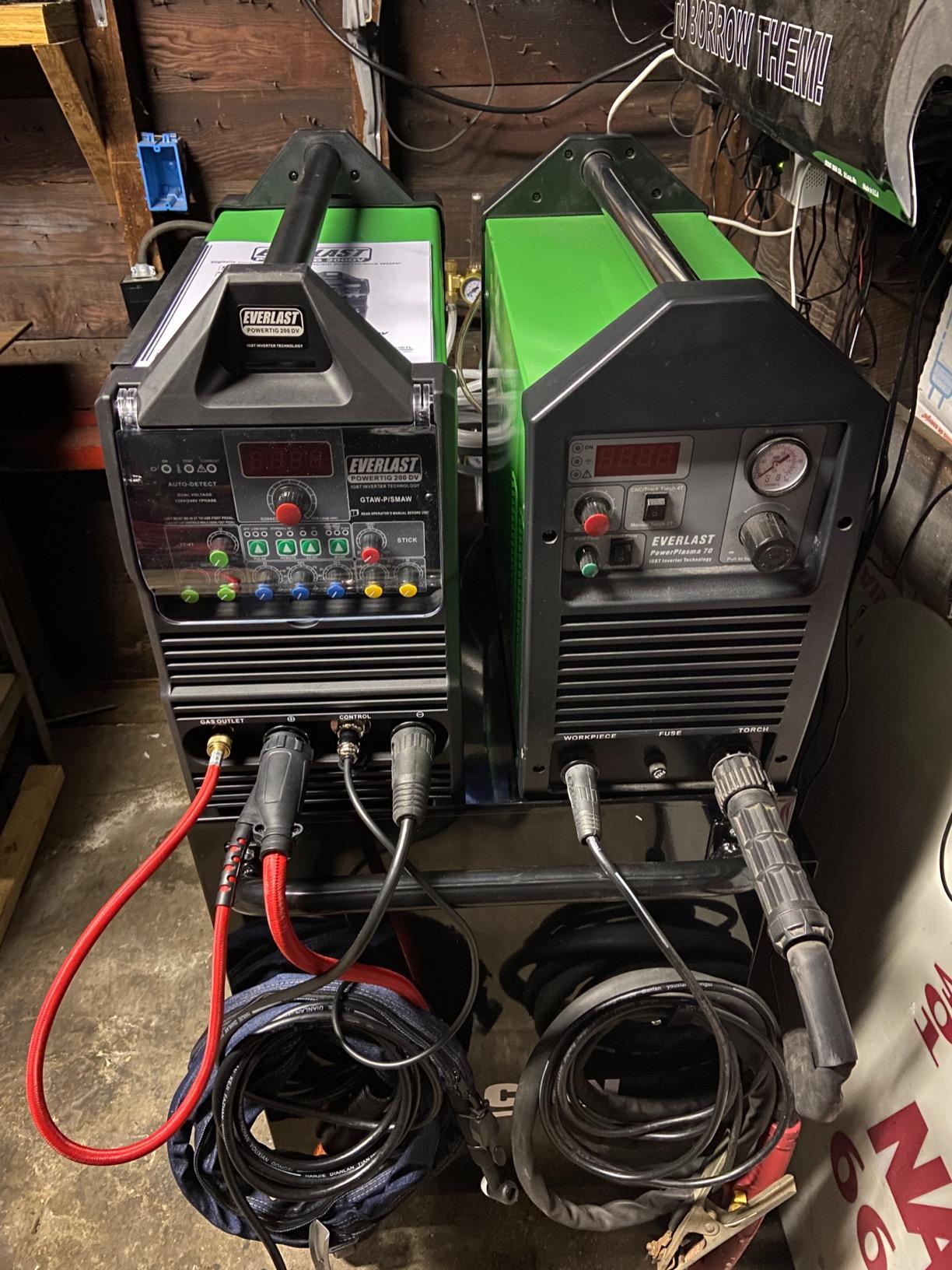
The PowerTIG 200DV’s distinguishing spec is its start amperage, which goes as low as 5 amps in DC TIG and 20 amps in AC TIG. Nothing else in this list starts that low, and on thin aluminum and small tubing that range is what lets you strike an arc without burning through. It is a 200A AC/DC pulse machine on 120V and 240V with an IGBT inverter platform.
It also gives you a lift start function for when high-frequency start is not wanted, which matters in a home shop where a CNC machine or other electronics sit within range of the arc. Pre-flow and post-flow gas control handles the shielding, and Arc Force control, marketed as DIG, is there to steady the arc and reduce spatter. The pulse rate is adjustable rather than fixed.
Owners who have bought it highlight the low start amperage and the dual-voltage flexibility as the reasons they are happy. At 4.6 stars across 116 reviews the sentiment is strongly positive, though the base is small enough that long-term durability stories are thin.
The practical drawbacks are physical. At 60 lb it is a shop machine, and the digital controls are less approachable than a knob-only panel at this level of spend. The review base of 116 means less community data to lean on when something goes wrong, which is a fair trade for owners who already know what they are doing.
There is no customer review text in the material I analyzed for this specific unit, so my read rests on the specification sheet and the aggregate rating. Longer-term ownership stories do exist in the community, and one Everlast 200DV owner in an owners’ group reports five years and 1000+ hours on stainless and aluminum with no issues, which is a genuinely encouraging sign for a machine with only 116 ratings here.
Why low start amps matter on aluminum
Aluminum conducts heat away from the puddle faster than steel, which is why aluminum TIG often needs less amperage and quicker control than people expect. A machine that starts at 20 amps AC lets you open an arc on 1/16 in wall tubing or thin sheet without a torch angle you have to talk yourself into.
It is a quiet advantage rather than a headline one, and it shows up in the second hour of a project rather than the first ten minutes.
Who it suits and who it does not
It suits a fabricator who works on thin-wall aluminum and stainless, already knows TIG, and wants a start that will not wreck delicate material. Dual voltage also makes it a good shop and mobile machine in one box.
It is a poor first machine if you want simple knobs, and a poor portable one at 60 lb. If you need a water-cooled torch or advanced waveform options, step up within the same brand.
8. Everlast PowerTIG 210EXT – Best Waveform and Programming Control
Everlast PowerTIG 210EXT 210Amp Ac Dc Tig Stick Advance Pulse Welder 110/220 Volt Inverter-Based IGBT Technology
210A AC/DC TIG and stick
Three AC waveforms
Advanced Pulse AC
Nine memory programs
Pros
- Three AC waveforms give real cleaning and penetration control
- Advanced Pulse AC raises travel speed and cuts warping
- Nine programmable parameter slots for repeat jobs
- Programmable stick hot start time and intensity
- Includes a water-cooled torch and cart
Cons
- Advanced Pulse AC works best with the optional finger amp torch
- Small review base at 64 ratings
- Digitally driven panel with a learning curve
The 210EXT is the most technically capable aluminum machine in this roundup, and it costs the most. Its selling point is AC waveform control with three options, Triangular Wave, Advanced Square Wave and Soft Square Wave, which is a level of control that changes how the puddle behaves on aluminum rather than just how the settings are labelled. It is a 210A AC/DC TIG and stick machine with standard pulse on AC and DC plus an Advanced Pulse mode for thin material.
Advanced Pulse AC is worth understanding before you buy. It is designed to increase travel speed and reduce warping on thin aluminum, which is the failure mode that stops people welding thin material, not the machine. Memory stores up to nine programs, and the stick side has programmable hot start time, hot start intensity and arc force control.
HV start and lift arc are both available in AC and DC modes, and the fan-on-demand cooling starts with the arc and stops when it is not needed, which keeps the shop quiet. The package includes a PowerCool 500 water-cooled torch and a PowerCart 500 cart.
Start planning the extras. The Advanced Pulse AC mode works best with the optional finger amperage control torch, and if you take that mode seriously you should budget for the torch as well as the machine. The water-cooled torch that is included is what lets you hold a 210A arc for long sessions without cooking the collet.
The 60 lb body with a flip-down visor to protect the panel from sparks is built for a working shop, not a garage corner. At 4.6 stars from 64 reviews, the rating is strong but the sample is small, and the community long-term ownership reports in this category tend to cite the larger Everlast machines more often.
Whether three waveforms are worth it for your work
If you weld aluminum regularly and mix thin sheet with plate, waveform selection pays off fast. Triangular wave for penetration on thicker sections, Advanced Square Wave for a stable, deeply penetrating arc, Soft Square Wave for a cooler, wider bead on thin material, each one solves a problem the others solve badly.
If aluminum is an occasional task, the same money buys a larger machine that runs two machines at once. Waveform control is a depth feature, not a scale feature.
Who this is for and who should look elsewhere
This is for a professional fabricator or a serious hobbyist who welds aluminum every week, wants repeat jobs to run identically, and will use the nine memory slots. The included water-cooled torch alone is a meaningful part of the value here.
It is the wrong purchase for a first machine, for someone who welds aluminum twice a year, or for anyone who needs a small number of reliable amps. Spend this much only after you know what a waveform does.
9. AHP Alpha-TIG 225Xi – Higher Output AHP With Very Low Start Amps
New 2024 AHP Alpha-TIG 225Xi 200 Amp IGBT AC/DC Pulse TIG/Stick Welder 110v/220v Dual Voltage
225A AC/DC pulse TIG
150A on 120V, 225A on 240V
5A DC and 20A AC start amps
Pros
- Higher 225A output than the entry AlphaTIG
- 150A available on 120V
- Very low start amps of 5A DC and 20A AC
- Rear water cooler outlet for a water-cooled torch
Cons
- Smallest review base at 42 ratings
- Listing text gives no detail on torch
- pedal or regulator
- Thin long-term field history
The Alpha-TIG 225Xi is the step up from the entry AHP machine, and the headline number is real capacity: 150 amps of output on 120V and the full 225 amps on 240V. That 150 amps on household power is the best 120V figure in this group, and it changes what you can weld in a garage without a new circuit. Pulse runs from 0.5 to 200 Hz, and minimum start amperage is 5 amps DC and 20 amps AC.
Pre-flow and post-flow are adjustable from 0 to 10 seconds with a downslope setting, and the 2T/4T function includes start and end amps adjustment in 4T mode. There is a water cooler outlet on the rear for a water-cooled torch, so the machine can take on sustained work later.
At 4.7 stars it rates second-highest in the group, but that comes from 42 reviews. Owners who have bought it report satisfaction with the 150 amps available on 120V and the very low start amperage, and the machine handles most welding applications at 225 amps.
Be honest about the evidence here. This is the smallest review base in the roundup and the listing text is sparse, with no detail about whether the torch, foot pedal or regulator are included. Plan to buy those accessories separately, and expect less community troubleshooting knowledge for this specific model than for the 203Xi.
The water cooler outlet is a forward-looking feature rather than an immediate one, since it is useless without a water-cooled torch. If sustained high-amperage work is where you are heading, budget for the torch at the same time as the machine.
What the 150 amps on 120V actually means
Most 110V-capable TIG welders cap out near 130 to 150 amps and buyers assume the full rated output is available on household power. This machine states 150 amps at 120V explicitly, which is at the practical ceiling of a standard household circuit.
That makes it unusually viable for a garage shop with no 220V outlet. On 240V you get the full 225 amps for plate work.
Who it suits and who should choose the 203Xi instead
It suits a garage fabricator on household power who wants more headroom than a 120V-only machine and the option of a water-cooled torch later. The low start amps help on thin work.
Choose the AlphaTIG 203Xi instead if the included torch, pedal and regulator matter to your budget, or if you want a larger body of owner feedback to lean on. The 42-review base is the weakness here, not the machine.
10. Everlast PowerTIG 185DV – Analog-Style Panel and a 40 lb Body
2021 Everlast PowerTIG 185DV AC/DC TIG Stick Welder 110/220 Volt Inverter-Based Dual Voltage 185Amp with Pedal Package
185A AC/DC TIG, pulse and stick
110V/220V dual voltage
Pulse presets at 1 or 50 Hz
40 lb body
Pros
- Analog-style panel that adjusts quickly
- Lightest of the three Everlast machines at 40 lb
- Two preset pulse rates remove setup guesswork
- Pedal package included
- Dual voltage for shop or mobile use
Cons
- Only two preset pulse frequencies
- 185A is the lowest output of the three Everlast units
- Design dates to 2013
The 185DV is the entry point into Everlast’s AC/DC range, and its argument is simplicity. The panel uses easy-to-read analog-style settings that adjust quickly, which is a genuine advantage if you are new to AC TIG and do not want to decode a menu to change the balance. It is a 185A AC/DC TIG and stick welder with pulse on a 110V/220V dual-voltage platform.
The pulse is simplified too. Rather than an adjustable frequency, it gives you two pre-programmed settings at 1 pulse per second or 50 pulses per second, which covers slow cooling work on aluminum and a fast, low-heat mode for thin material without a learning curve. The manufacturer rates the adjustment range and duty cycle favorably against Miller and Lincoln equivalents.
It comes as a combo set with a pedal package, and at 40 lb it is the easiest of the three Everlast machines here to move between a home shop and a vehicle.
The two preset pulse rates are also the limitation. Every rival here with pulse lets you set the frequency yourself, and on aluminum that freedom is how you stop melting holes in thin material. Two fixed choices will get you most of the way, not all of it.
At 185 amps this is the lowest output of the three Everlast machines here, and the design dates to 2013. The 4.5 average from 77 reviews sits just behind the 200DV, with the same pattern of praise for the arc quality and dual voltage alongside criticism of the preset-only pulse.
Where 185 amps lands for aluminum
Community consensus among owners is that roughly 200 amps is the comfortable point for aluminum, with 235 amps and above needed for heavier plate. At 185 amps you are just under that mark, which is fine for 1/8 in material and thin-wall tubing and tight for anything approaching 1/4 in plate.
It is a machine for the second decade of TIG work, when you know what you are doing and want the panel out of your way. If you are still learning the cleaning action, a machine with adjustable AC balance and pulse will teach you faster.
Who should pick it and who should not
Pick it if you already weld, want a brand with a service network, and want a simple panel and a light body you can move between the bench and a job site with a pedal in the box.
Skip it if you are buying your first AC/DC machine, because the preset pulse and 185A output are the two things a beginner most needs to grow past. Save it for a second machine or a dedicated aluminum weekender.
AC vs DC for Aluminum: Why the Alternating Half Matters
You need AC, and the reason is physical. Aluminum forms a thin, tenacious oxide layer on the surface the moment it is exposed to air, and that layer melts at a very different temperature from the metal underneath. On DC TIG, the arc pushes heat into the work with nothing acting on that oxide, so the oxide floats on top of the puddle like a skin and the weld will not fuse properly no matter how clean you scrubbed the plate.
AC TIG solves it by flipping electrode polarity many times per second. During the electrode-positive half of each cycle, the tungsten is positive, the workpiece is negative, and the arc shatters and burns away the oxide layer. During the electrode-negative half, the polarity reverses, the workpiece becomes positive, and the arc concentrates heat into the metal for penetration. You are not choosing between cleaning and penetrating. You are setting the ratio between them, and that ratio is the AC balance setting.
Higher AC balance means more of the cycle is spent cleaning, which is what oxidized mill finish aluminum, lap joints and anything you cannot perfectly scrub need. Lower AC balance means more of the cycle is penetration, which suits thick plate, larger filler rod and situations where you are fighting a cold, sluggish puddle. A sensible starting point for thin, oxidized aluminum is around 70 to 80% balance, dropping toward 60 to 70% when you want deeper penetration on heavier section.
AC frequency is the other half of the control. Higher frequency widens the bead and softens the arc’s bite, and lower frequency narrows the bead and increases penetration. Machines that advertise AC frequency control but offer a narrow adjustment range limit you on thin aluminum, which is why the adjustable range matters as much as the presence of the feature.
DC TIG is still essential, just not for aluminum. It is what you want for stainless steel, for chrome-moly, for copper and for any thin-gauge work where you need a small, precise, cold puddle. That is the argument for buying AC/DC rather than AC-only, and it is also why a machine sold as a TIG welder without AC capability is not a bargain.
How Thick Can Each Pick Weld Aluminum?
Only four of these machines publish an aluminum thickness rating, and for the rest you have to work from amperage. This is the honest version of the chart, without inventing numbers for machines that do not state them.
The PRIMEWELD TIG225X and the AHP AlphaTIG 203Xi are both rated for 1/4 in aluminum. The ARCCAPTAIN TIG200P states 0.5 to 5 mm, which is 0.02 to 0.20 in. The Sunstac 250A claims 6 mm at 220V, which is 0.24 in, and 4 mm at 110V. The Weldpro 200A, the LOTOS TIG200ACDC, and the three Everlast machines do not publish an aluminum plate figure, so treat them as 200A-class and 185A-class machines and use the rule of thumb below.
The rule of thumb from owner experience in the welding community is that 200 amps of AC is comfortable to about 1/4 in of aluminum, and that 235 amps and up is the practical ballpark for anything heavier. That is why the 225A and 250A machines here are more future-proof than the 185A one, and why the owner of a Hobart 210 in the community reports welding 1/8 in to 1/2 in aluminum while noting it will not handle pop-can-thin material with any confidence.
Two things cap real-world thickness well below the spec sheet. Duty cycle decides how long you can hold the output before the machine overheats, and 110V input output is well under the rated amperage on most of these machines. A machine rated at 1/4 in aluminum on 240V will be a different machine on a 120V circuit.
Machines to Skip for Aluminum
The most expensive mistake in this category is buying a DC-only machine that is advertised as a TIG welder. Plenty of budget boxes carry TIG in the name, and the spec sheet lists a TIG function, but the output is DC only. You will discover it the first time you strike an arc on aluminum and the puddle refuses to wet out, and by then the project is half built.
The tell is simple. If the machine does not explicitly state AC output, or if the output range is written as DC only, it cannot weld aluminum. In the SERP reviews of this category, several otherwise reputable roundups list DC-only machines inside aluminum-adjacent recommendations, and that is why we built a separate exclusion rule for this list rather than ranking by rating alone.
That question comes up most often about Harbor Freight machines, and the fair answer is that the brand is not the issue. A Harbor Freight or Vulcan or Titanium Unlimited unit that states genuine AC/DC TIG output will weld aluminum. The machine that only offers DC TIG will not, regardless of the sticker on the case, and the bargain price makes that trap more common.
Two other categories to be careful with. A machine with AC output but no adjustable AC balance will clean aluminum at a fixed setting, which works on clean material and frustrates you on anything oxidized. And a machine with no pulse control will fight you on thin aluminum, because the foot pedal alone is a slower way to control heat than peak and background current.
Stick and MIG welders deserve a separate note, since many are sold with a TIG function. A MIG welder with a spool gun is excellent on aluminum with the right wire and gas, and it will beat a beginner TIG machine on sheer speed. But if you want TIG, make sure the TIG mode is AC/DC rather than assuming a TIG sticker means it.
How to Choose a TIG Welder for Aluminum
Start with the five criteria that actually decide whether a machine welds aluminum: AC capability, adjustable AC balance and frequency, pulse control, high-frequency start and duty cycle. Dual voltage input and torch and pedal inclusion round out the buying decision. If you want the wider format explained, our guide to the best TIG welders overall covers the process types in detail.
Amperage and duty cycle
Aim for 200 amps or more of genuine AC output, and treat 225 to 250 amps as the comfortable range for plate work. Duty cycle matters as much as peak amperage, because it decides whether the machine can hold that output for a whole project. A machine rated 100% at 155 amps will let you finish a long job without a thermal shutdown, and one rated at 40% at 200 amps will do the same job with more pauses.
Check the duty cycle at the voltage you will actually use, because it is usually quoted at 220V or 240V. The same machine on 120V will have a lower output and a different duty cycle.
AC balance and AC frequency
Both controls should be adjustable, and the range should be wide enough to matter. Balance is your cleaning-to-penetration ratio and frequency controls bead width and arc bite. If a machine offers AC but fixes the balance at a single value, you will clean well on scrubbed material and struggle everywhere else.
Pulse TIG and peak-to-background control
Pulse alternates peak and background amperage at a set frequency, and it is what lets you weld thin aluminum without melting a hole through it. Look for a wide frequency range, adjustable peak and background current, and separate upslope, downslope and crater current if the machine offers them. A machine with a fixed pulse at one frequency is a limitation, not a feature.
HF start versus lift arc
A high-frequency start fires the arc without touching the tungsten to the work, which is what you want for aluminum, thin material and any situation where you do not want to put a torch on a finished surface. Lift arc starts by touching and lifting. Newer solid-state machines emulate the HF start electronically, which is why the AHP 2024 revision and the Everlast HV start machines behave better on aluminum than older point-gap designs.
Owners in the community do raise one problem with HF start: it can interfere with nearby electronics and CNC equipment in a home shop. If that describes your shop, a lift start option is worth having available even if you use HF normally.
Foot pedal or 2T/4T torch control
A foot pedal gives you amperage control through your foot while both hands stay on the torch and the filler rod, and for most aluminum work it is the first thing to buy even if the machine does not include one. Budget machines often include a cheap pedal that slips, and community consensus is to replace it with a better one early.
2T and 4T torch switches let you control the machine from the torch instead, which is useful for tack welding and for anyone working alone in awkward positions. 2T is a press to start and press to stop. 4T adds a separate stop, which is what makes crater fill and a controlled cool-down possible.
110V versus 220V power in a real shop
Most 110V-capable TIG welders deliver 130 to 150 amps at best, which surprises buyers who assume dual voltage means full output on household power. The AHP Alpha-TIG 225Xi is the outlier in this group at a stated 150 amps on 120V. If your aluminum work regularly reaches 1/4 in plate, get a 220V circuit installed rather than fighting a 120V ceiling.
For portable work, the machines that auto-detect voltage, like the Weldpro 200A and the LOTOS TIG200ACDC, save you from an adapter pigtail and a wrong-selector afternoon. Our guide to the best stick welders covers the structural side of the same power and circuit questions.
Consumables: tungsten, filler rod and argon
Use 2% lanthanated tungsten in DCEN for aluminum. It keeps a sharp point at AC amperage far better than pure tungsten and it is the electrode almost every aluminum TIG job calls for. For AC work, ground the end flat rather than to a needle point, and a 3/32 in electrode covers thin sheet through roughly 1/8 in, stepping up to 1/16 in for heavier section.
Filler rod for aluminum is usually 4043 for general fabrication and 5356 when you need higher strength. Run them with a slow, steady travel speed and let the puddle do the work rather than pushing the rod into it. If you are just learning the process on a machine you will use for steel too, our MIG welder guide covers the faster way to make the same shapes in steel first.
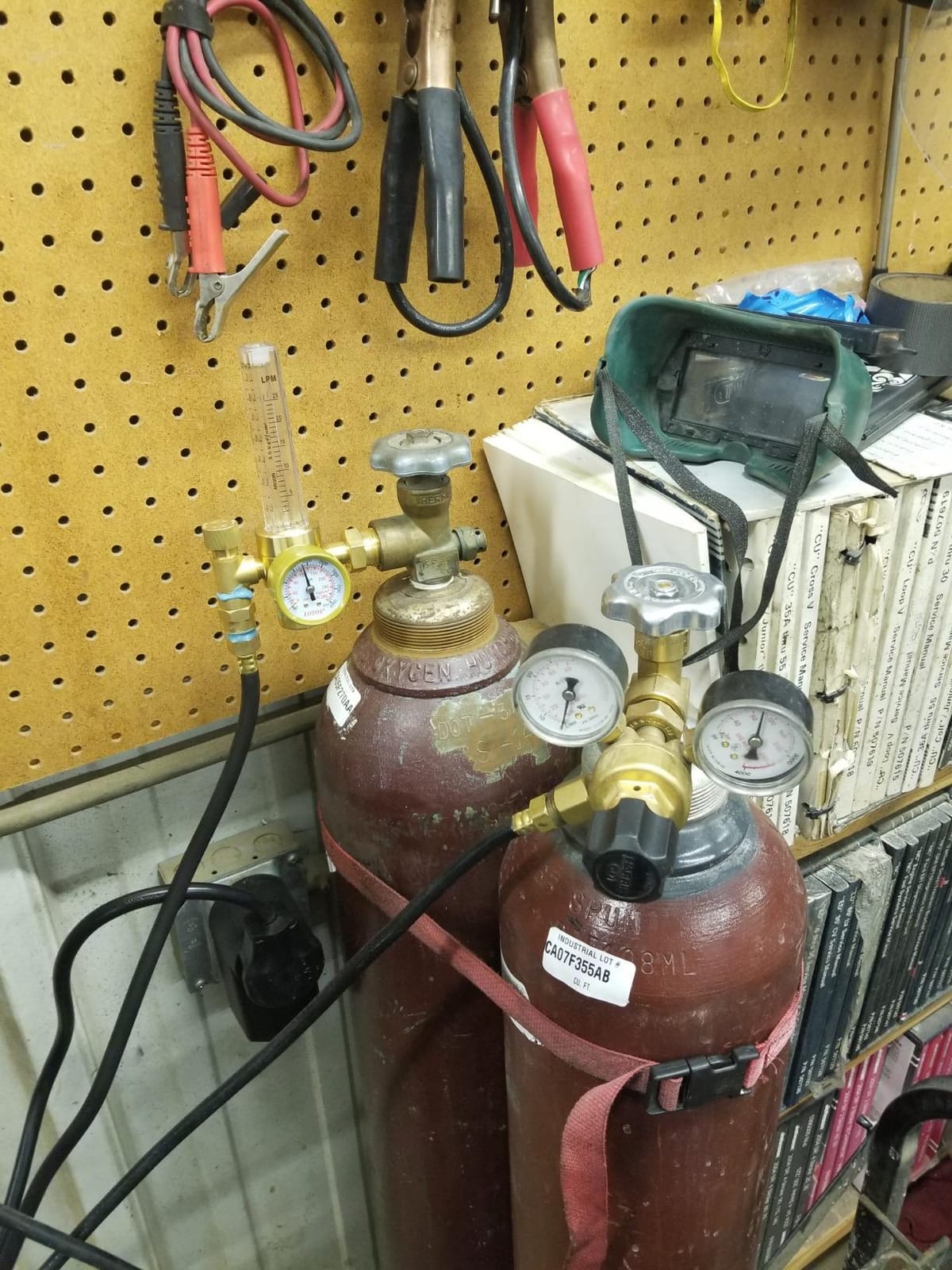
Argon is the shielding gas for aluminum TIG, and purity matters more than most people expect. Use high-purity argon and check the regulator for leaks before blaming the machine for a porous bead. Many machines here include a regulator, and the ones from PRIMEWELD and the AHP are the ones owners most often replace early.
Frequently Asked Questions
Do I need AC or DC to weld aluminum?
You need AC. Aluminum forms an oxide layer that DC TIG cannot burn through, so the puddle will not wet out and the weld will not fuse. AC TIG alternates polarity so the positive half cleans the oxide and the negative half drives heat into the metal. A DC-only machine cannot weld aluminum at all, which is why every machine on this list is AC/DC.
How thick can a 200 amp TIG welder weld aluminum?
A 200 amp AC/DC machine handles aluminum comfortably up to about 1/4 inch, and many manufacturers rate them at that figure. Around 200 amps is the practical comfort zone for 1/8 in and 1/4 in work. Heavier plate wants 235 amps and up, and much thinner material wants a lower minimum amperage, so match the machine to the thickest and thinnest material you plan to weld.
Can I TIG weld aluminum on 110V?
Yes, but with a lower ceiling. Most 110V-capable TIG welders deliver 130 to 150 amps rather than their full rated output, so plan on 1/8 in aluminum and thin-wall tubing rather than 1/4 in plate. The AHP Alpha-TIG 225Xi is rated at 150 amps on 120V, which is the highest 120V figure in this roundup. For consistent plate work, install a 220V circuit.
What tungsten do I use for aluminum TIG?
Use 2 percent lanthanated tungsten in DCEN. On AC you grind the tip flat rather than to a point, and a 3/32 in electrode covers thin sheet through roughly 1/8 in, stepping to 1/16 in for heavier aluminum. Lanthanated holds its shape at AC amperage better than pure or ceriated tungsten, which is why it is the standard for aluminum work.
Are Harbor Freight TIG welders any good for aluminum?
The brand is not the deciding factor, the output type is. A Harbor Freight, Vulcan or Titanium Unlimited machine that states genuine AC/DC TIG output will weld aluminum, and several of them include a foot pedal and regulator. A machine advertised as a TIG welder that only offers DC output cannot weld aluminum at all. Always confirm the machine states AC before buying it for aluminum.
What is a good starter TIG welder for aluminum?
For a first AC/DC machine, the PRIMEWELD TIG225X is the pick: 225 amps of AC and DC, pulse to 200 Hz, rated for 1/4 in aluminum, physical knobs and a CK17 Superflex torch in the box. If your budget is tighter, the LOTOS TIG200ACDC gives genuine AC square-wave output with a foot pedal and regulator included. The AHP AlphaTIG 203Xi is the other easy recommendation, with a foot pedal, regulator and Rotaflex torch included.
Final Verdict: Which Aluminum TIG Should You Buy?
The PRIMEWELD TIG225X is the best TIG welder for aluminum in 2026 because it combines the highest rating in this group with by far the largest body of owner feedback, and because it does not ask you to learn menus before your first bead. It handles 1/4 in aluminum, covers stainless and carbon steel on the same machine, and includes the torch and regulator you need to start.
Buy the Weldpro 200A if you want the most control and the most modes per dollar, and you are comfortable with a digital panel and a 61.8 lb shop machine. Buy the AHP AlphaTIG 203Xi if you want the simplest path to your first aluminum weld with everything included. Buy the LOTOS TIG200ACDC if the budget is the constraint and AC capability is the one thing that matters.
For regular professional aluminum work, the Everlast PowerTIG 210EXT is the machine to beat, with three AC waveforms, Advanced Pulse for thin material and a water-cooled torch in the box. Whatever you choose, confirm it states genuine AC output, run it on 220V if you can, and pick up 2% lanthanated tungsten and a high-purity argon regulator before the first bead. Our general TIG welder guide covers the accessories and setup in more depth.