
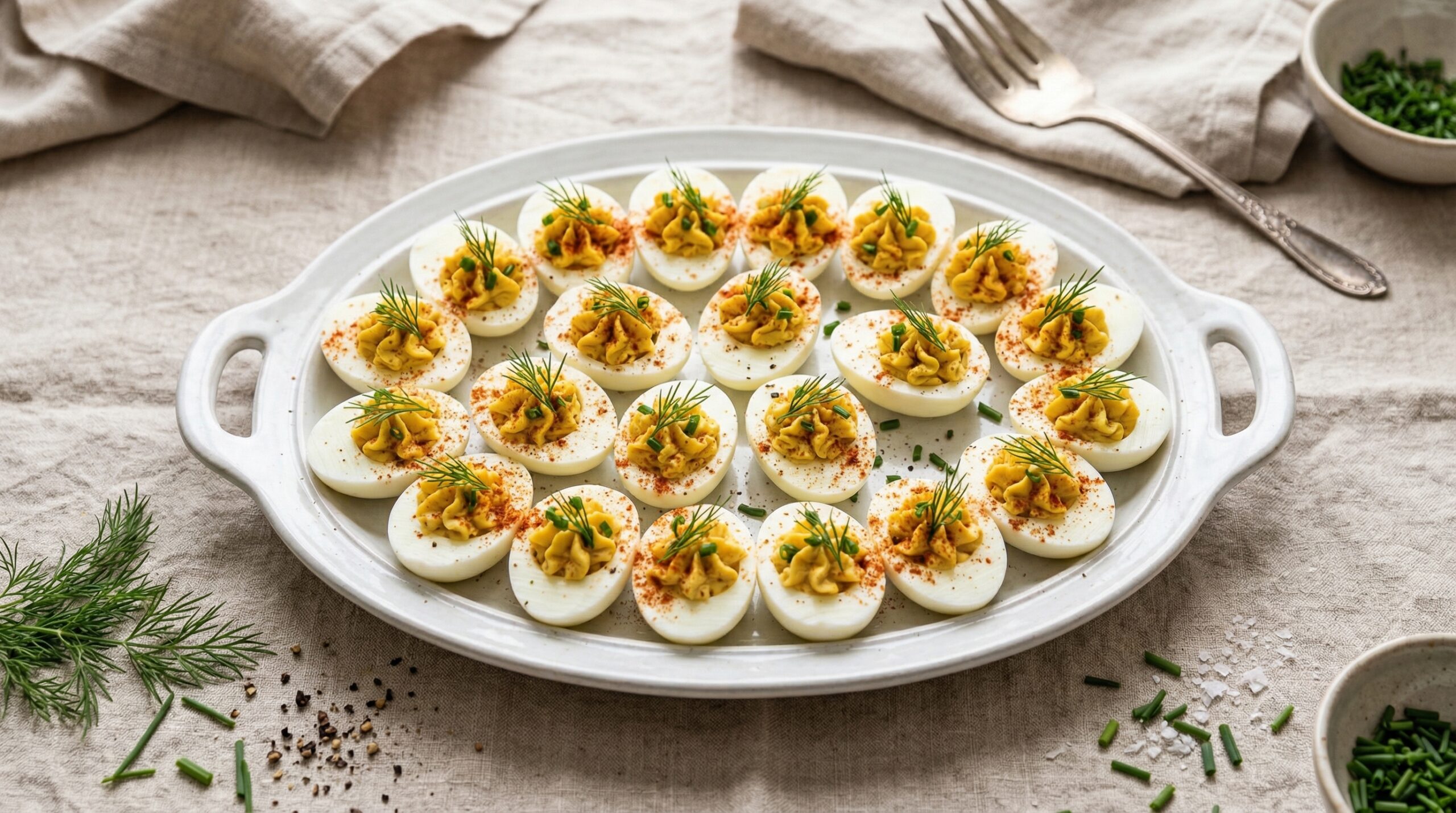
Deviled eggs are one of those classic appetizers that never go out of style. I have been making them for family gatherings, holiday dinners, and casual get-togethers for over a decade, and they always disappear fast.
This guide covers everything you need to make perfect deviled eggs every time. You will find the classic recipe, multiple cooking methods for hard boiled eggs, eight delicious variations to try, and answers to common questions. Whether you are planning an Easter dinner or need a go-to potluck dish, this recipe has you covered.
Table of Contents
What Are Deviled Eggs?
Deviled eggs are hard-boiled eggs that have been peeled, halved lengthwise, and filled with a seasoned yolk mixture. The filling typically includes mayonnaise, mustard, and seasonings, creating a creamy and tangy appetizer that has been a staple at gatherings for generations.
The term “deviled” refers to the spicy or zesty seasoning added to the yolk mixture. This cooking technique dates back to ancient Rome, where eggs were boiled, seasoned, and served as an appetizer. Today, deviled eggs remain a beloved dish across American tables, especially during holidays like Easter and Thanksgiving.
Classic Deviled Eggs Recipe
This classic deviled eggs recipe produces consistently creamy, tangy, and perfectly seasoned results. The filling strikes the right balance between richness from the mayo and brightness from the mustard.
Ingredients
You will need 12 large eggs as the base, along with half a cup of mayonnaise, two teaspoons of yellow mustard, one tablespoon of sweet pickle relish, one teaspoon of white vinegar, salt and pepper to taste, and paprika for garnish. Some home cooks also add a dash of garlic powder or onion powder for extra depth.
Step-by-Step Instructions
Start by cooking the eggs using your preferred method (see the next section for details). Once cooked, transfer the eggs immediately to a large bowl of ice water and let them sit for at least 10 minutes. This ice bath stops the cooking process and makes peeling much easier.
Peel each egg carefully, rinse off any shell fragments, and slice them in half lengthwise. Remove the yolks and place them in a mixing bowl. Set the egg white halves on a serving platter, cup side up.
Mash the yolks with a fork until they are crumbly and no large chunks remain. Add the mayonnaise, mustard, pickle relish, vinegar, salt, and pepper. Mix everything together until the filling is smooth and creamy. For an extra smooth texture, press the mixture through a fine mesh sieve.
Spoon or pipe the filling into each egg white half, filling them generously. Dust the tops with paprika for color and a subtle smoky flavor. Refrigerate for at least 30 minutes before serving to let the flavors meld together.
How to Make Perfect Hard Boiled Eggs
The foundation of great deviled eggs is perfectly cooked hard boiled eggs. Overcooked yolks become chalky and green-tinged, while undercooked eggs are rubbery and difficult to peel. I tested three different methods to find what works best in my kitchen.
Stovetop Method
Place eggs in a single layer in a large saucepan and cover them with cold water by at least one inch. Bring the water to a rolling boil over high heat. Once boiling, remove the pan from the heat, cover it with a tight-fitting lid, and let the eggs sit for exactly 12 minutes.
While the eggs sit, prepare a large bowl with ice and cold water. After 12 minutes, drain the hot water and transfer the eggs immediately to the ice bath. Let them cool for at least 10 minutes before peeling. This method gives you firm, bright yellow yolks every time.
Instant Pot Method
Pour one cup of water into the Instant Pot liner and insert the trivet. Arrange up to 18 eggs on the trivet in a single layer. Close the lid, set the valve to sealing, and pressure cook on high for 5 minutes. When the cook time ends, let the pressure release naturally for 5 minutes, then quick release any remaining pressure.
Transfer the eggs to an ice bath for 5 minutes. The Instant Pot method produces eggs that peel beautifully, with minimal risk of overcooking. The steam cooking ensures even heat distribution throughout each egg.
Oven Method
Preheat your oven to 325 degrees Fahrenheit. Place eggs directly on the oven rack (not in a muffin tin) in a single layer. Bake for 30 minutes. This method is surprisingly effective and produces eggs with yolks that are perfectly set and easy to peel.
After baking, transfer the eggs to an ice bath for 10 minutes. The oven method works well when you need to cook a large batch of eggs at once, as you can fit more eggs than in a traditional saucepan.
Peeling Tips
Fresh eggs are notoriously difficult to peel. For best results, use eggs that are at least a week old. When peeling, tap each egg firmly on the counter to crack the shell all over, then roll it gently between your palms to loosen the membrane. Peel from the wider end, where there is typically an air pocket that makes separation easier.
Deviled Eggs Variations
Once you have mastered the classic recipe, these eight variations offer exciting ways to mix up your deviled eggs. Each variation takes the basic technique and adds unique flavors that will impress your guests.
Bacon Cheddar Deviled Eggs
Crumble four strips of cooked bacon into the yolk mixture along with half a cup of shredded sharp cheddar cheese. The salty bacon and rich cheddar transform the classic into something heartier and more indulgent. Top each filled egg with an extra bacon piece for presentation.
Buffalo Blue Cheese
Add two tablespoons of buffalo sauce and a quarter cup of crumbled blue cheese to the filling. This variation brings the bold flavors of buffalo wings to a bite-sized appetizer. The tangy buffalo sauce cuts through the richness while the blue cheese adds creamy, pungent notes.
Smoked Salmon and Capers
Mix in two ounces of finely chopped smoked salmon and one tablespoon of drained capers. Garnish with fresh dill and a small piece of smoked salmon. This elegant variation works beautifully for brunch or sophisticated gatherings.
Everything Bagel Deviled Eggs
Sprinkle the tops with everything bagel seasoning instead of plain paprika. The blend of sesame seeds, poppy seeds, dried garlic, and salt gives these eggs a modern twist with minimal effort. The everything seasoning adds crunch and bold flavor to every bite.
Avocado Deviled Eggs
Replace half the mayonnaise with one mashed ripe avocado. The result is a creamier, richer filling with healthy fats. Add a squeeze of lime juice and garnish with diced avocado on top. These have a milder flavor that appeals to those who find traditional deviled eggs too tangy.
Jalapeno and Cilantro
Add two tablespoons of finely diced jalapeno (seeds removed for less heat) and two tablespoons of chopped fresh cilantro to the filling. A squeeze of lime juice brightens the mixture. These spicy, fresh eggs are perfect for summer gatherings and pair well with Mexican-themed menus.
Classic Dill with Greek Yogurt
Replace half the mayonnaise with Greek yogurt and add one tablespoon of dried dill weed. Fresh dill on top adds brightness and visual appeal. This lighter version maintains the creamy texture while reducing calories and adding protein from the yogurt.
Curry Deviled Eggs
Add one teaspoon of curry powder and a tablespoon of mango chutney to the yolk mixture. Garnish with a small piece of fresh mango and chopped cashews. This unexpected combination brings sweet, savory, and spicy elements together in an intriguing way.
Tips and Tricks for Perfect Deviled Eggs
Making deviled eggs ahead of time is one of the biggest advantages of this dish. The make-ahead approach reduces stress when hosting and allows the flavors to develop more fully. I always prepare my deviled eggs at least a few hours before serving.
Make-Ahead Instructions
You can cook and peel the eggs up to two days in advance. Store them in an airtight container in the refrigerator. Prepare the filling up to two days ahead as well, storing it separately in the fridge. Just before serving, spoon the filling into the egg whites and garnish.
For even fresher presentation on the day of serving, fill the eggs but leave off the garnish. Add paprika, fresh herbs, or other toppings right before your guests arrive. This prevents the garnish from getting soggy and keeps the eggs looking their best.
Storage Tips
Deviled eggs must stay refrigerated at all times. Once filled and garnished, they last up to three days in the fridge. However, they taste best within 24 hours. Never leave deviled eggs at room temperature for more than two hours, as this creates a food safety risk.
If you need to transport deviled eggs to a potluck or gathering, keep them in a cooler with ice packs. Set them out only when ready to serve, and return any leftovers to the cooler within an hour.
Troubleshooting Common Issues
Runny filling is the most common problem home cooks face. This happens when the eggs are overcooked, releasing excess moisture that thins out the filling. Use the cooking times specified above and immediately plunge eggs into ice water to prevent this issue.
If your filling turns out too thick, whisk in additional mayonnaise one teaspoon at a time until you reach the desired consistency. Too much mustard creates an overpowering flavor, so adjust gradually and taste as you go.
Difficult-to-peel eggs usually result from using very fresh eggs or incorrect cooking times. Older eggs peel more easily, and following the proper cooking method ensures the egg white contracts away from the shell. If you only have fresh eggs, the Instant Pot or oven methods work better for peeling.
Scaling for Large Groups
When serving a crowd, plan on two to three deviled egg halves per person as an appetizer. For a dozen people, that means making at least four dozen egg halves, which requires four dozen eggs. The filling recipe scales easily: multiply all ingredients proportionally.
For parties over 25 people, consider setting up a deviled egg station where guests can customize their own with various toppings. Provide the classic filling as a base and offer three or four garnish options like paprika, bacon bits, chives, and hot sauce.
Frequently Asked Questions
What are the basic ingredients for deviled eggs?
The essential ingredients include hard boiled eggs, mayonnaise, mustard, sweet pickle relish, salt, pepper, and paprika for garnish. Some recipes add white vinegar, garlic powder, or onion powder for extra flavor.
How do you make hard boiled eggs for deviled eggs?
Place eggs in a single layer in a saucepan, cover with cold water by one inch, bring to a boil, remove from heat and cover for 12 minutes, then transfer to an ice bath for 10 minutes before peeling. Alternative methods include Instant Pot (5 minutes high pressure with natural release) or oven baking (325F for 30 minutes).
What are popular deviled egg variations?
Popular variations include Bacon Cheddar, Buffalo Blue Cheese, Smoked Salmon and Capers, Everything Bagel, Avocado, Jalapeno and Cilantro, Classic Dill with Greek Yogurt, and Curry. Each adds unique flavors to the classic recipe.
How far in advance can you make deviled eggs?
You can cook and peel eggs up to 2 days ahead and prepare the filling up to 2 days ahead, storing both separately in the refrigerator. Assemble and garnish just before serving for the best texture and appearance.
Conclusion
Deviled eggs are a timeless appetizer that rewards simplicity. The classic recipe covered here gives you a reliable foundation, while the eight variations demonstrate just how versatile this dish can be. Whether you prefer the traditional approach or want to try something bold like Buffalo Blue Cheese or Curry, there is a version here for every palate.
The key to great deviled eggs lies in proper egg preparation and a well-balanced filling. Follow the cooking methods to get perfectly cooked yolks, and adjust the seasoning to match your taste preferences. With make-ahead flexibility and simple scaling for groups, deviled eggs remain one of the most practical and crowd-pleasing options for any gathering.
Give these variations a try at your next gathering and watch them disappear. Once you start experimenting with different flavors, you might find yourself making deviled eggs far more often than you expected.