
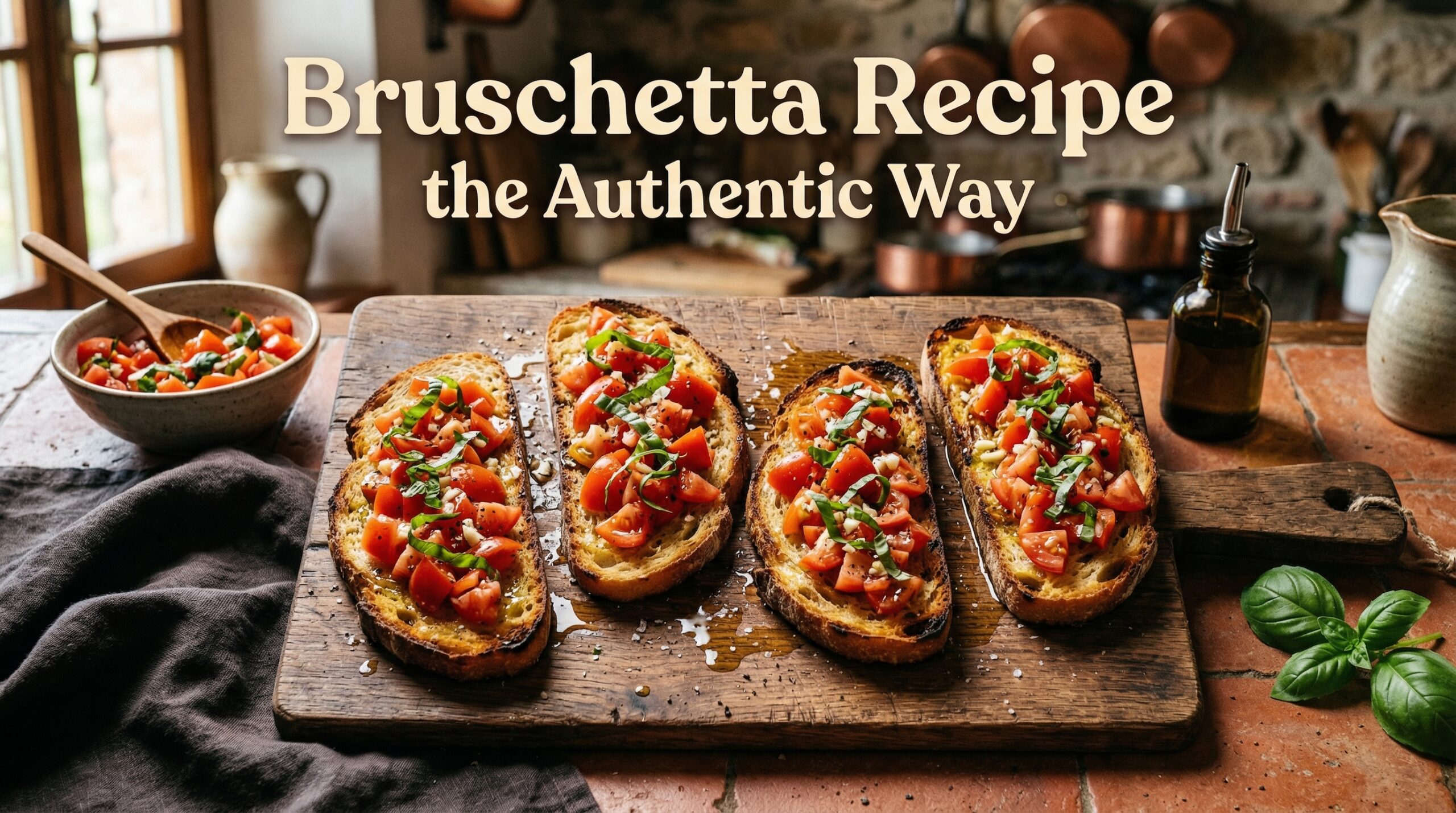
Every summer, I find myself returning to the same problem: how do you make bruschetta that actually tastes like it belongs in a small Italian trattoria, not a chain restaurant? After years of testing and tweaking, I finally locked down this bruschetta recipe the authentic way.
What makes this recipe different is simple. You focus on three things: ridiculously good tomatoes, bread that gets properly charred, and olive oil that you would actually drink on its own. Skip any one of those and you are just putting toppings on toast.
Table of Contents
What is Bruschetta?
Bruschetta is an Italian appetizer consisting of grilled or toasted bread rubbed with garlic and drizzled with olive oil, then topped with fresh ingredients. The word comes from the Italian verb “bruscare” meaning “to roast over coals” or “to burn.”
Pronouncing it correctly takes most people a few tries. Say it like this: “broo-SKEH-tah” with the emphasis on the second syllable. Say it fast and it sounds like one smooth word. Say it at a Roman market and you will fit right in.
The dish has deep roots in cucina povera, the Italian tradition of peasant cooking where simple ingredients transform into extraordinary food. Farm workers would slice day-old bread, grill it over open flames, and top it with whatever tomatoes and olive oil they had. That was centuries ago and the recipe has not changed much since, which tells you everything about how good it already was.
Authentic Bruschetta Ingredients
Quality matters more than quantity here. You need six ingredients and every single one should be the best you can find.
- 4 ripe Roma tomatoes (about 1 pound), diced
- 1/2 cup fresh basil leaves, thinly sliced
- 3 cloves garlic, minced (plus whole cloves for rubbing)
- 3 tablespoons extra virgin olive oil, plus more for drizzling
- 1/2 teaspoon sea salt
- 1 small baguette or ciabatta bread, sliced 1/2 inch thick
Roma tomatoes work best because they have fewer seeds and less water than other varieties. If you can only find cherry tomatoes, those work too. Just cut them in half and squeeze out some of the internal liquid before dicing.
The olive oil is not optional and it is not the place to skimp. Use a fruity, peppery extra virgin olive oil that you actually enjoy tasting. When you drizzle it over the finished bruschetta, you want that first bite to taste like sunshine and Italy.
How to Make Authentic Bruschetta
Step 1: Prepare the Tomatoes
Dice your tomatoes into small, even pieces, about 1/4 inch cubes. Here is what most recipes skip: seed them and salt them.
Cut each tomato in half lengthwise and gently squeeze out the seeds and surrounding gel. That liquid is what makes bruschetta soggy. Place the diced tomatoes in a colander, sprinkle with 1/2 teaspoon salt, and let them drain for 15 minutes. Pat them completely dry with paper towels.
This extra step removes excess water and concentrates the tomato flavor. Reddit cooks who have tried both versions consistently prefer the drained version for that bright, fresh taste instead of a watered-down topping.
Step 2: Prepare the Basil Using the Chiffonade Technique
Stack your basil leaves flat on a cutting board. Roll them loosely into a tight cylinder. Using a sharp knife, slice across the roll in thin strips, about 1/8 inch wide. Unfurl the strips and you have perfect basil ribbons.
This technique bruises the basil less than chopping, which keeps it vibrant green and fragrant. The thin strips distribute better across your bruschetta and create a more elegant presentation.
Step 3: Make the Tomato Topping
Combine your drained tomatoes, basil ribbons, minced garlic, and 2 tablespoons of olive oil in a bowl. Gently fold everything together with a large spoon. Taste and adjust salt if needed.
Let this mixture sit at room temperature for at least 15 minutes. This short marinating time lets the flavors meld together. The garlic mellows, the basil infuses the oil, and the tomatoes release their juices into the mixture. Do not skip this waiting period if you want that restaurant-quality taste.
Step 4: Toast the Bread Three Ways
You have three solid options for toasting bread and all of them work. Pick based on what you have available.
Grill method: Place bread slices directly on a gas grill or charcoal grill over medium-high heat. Toast for 2-3 minutes per side until you get distinct grill marks and that slightly charred flavor. This is the most traditional method and the one used in Italy.
Broiler method: Arrange bread slices on a baking sheet, drizzle one side with olive oil, and place under the broiler for 2-3 minutes until golden brown. Flip and repeat on the other side.
Skillet method: Heat a cast iron skillet over medium-high heat. Brush bread slices with olive oil on both sides and cook in the skillet for 2-3 minutes per side until crispy and golden.
Regardless of method, the bread should be crispy on the outside but still have some chew in the center. Under-toasted bread goes soft immediately when it meets the tomato topping. Over-toasted bread tastes harsh and detracts from the fresh flavors.
Step 5: Rub with Garlic
Take a whole garlic clove and cut it in half lengthwise. While the bread is still warm, rub the cut side vigorously across the surface of each toast. The warmth of the bread helps release the garlic oils.
Use just enough pressure to transfer the garlic without tearing the bread. This step adds flavor without making the garlic chunks overwhelming in each bite. It is the technique that separates authentic Italian bruschetta from regular tomato toast.
Step 6: Assemble and Serve Immediately
Spoon the tomato mixture generously onto each garlic-rubbed toast. Drizzle with a high-quality extra virgin olive oil, a few drops of aged balsamic glaze if desired, and a tiny pinch of sea salt.
Bruschetta waits for no one. Serve it immediately after assembling. The longer it sits, the soggier the bread becomes. If you are hosting, assemble each piece right before serving rather than making a big platter ahead of time.
Tips for the Best Bruschetta
Avoiding Soggy Bruschetta
The number one complaint from home cooks is soggy bruschetta. The fix starts before you even cut a tomato. Salt your tomatoes and let them drain. Remove the seeds. Use bread that is toasted until genuinely crispy. And serve immediately after assembling.
One more thing: do not refrigerate your tomatoes before using them. Cold tomatoes taste flat and watery. Room temperature tomatoes have bright, concentrated flavor that cold ones lose.
Choosing the Best Tomatoes
Look for tomatoes that feel heavy for their size, indicating juiciness. The skin should be tight and smooth without wrinkles. Avoid any tomatoes with soft spots or excessive give when pressed.
In peak summer, farmer’s market tomatoes beat grocery store tomatoes every time. Look for locally grown heirloom varieties for an even more interesting flavor profile. The key is ripeness. An underripe tomato will never taste good regardless of technique.
Quality Olive Oil Matters
You taste this ingredient in every single bite. A mid-range olive oil works for cooking but for finishing, you want something special. Look for oils marked “first cold press” or “extra virgin” with a harvest date on the bottle.
The best olive oils for bruschetta have a fruity, slightly peppery finish. Avoid oils that taste flat, rancid, or overly buttery. If you would not drink it straight from a spoon, it does not belong on your bruschetta.
Regional Variations in Italy
What you see at American tables represents just one version of this dish. In Tuscany, they sometimes skip the tomatoes entirely and use just olive oil, salt, and sometimes a drizzle of new wine. In Naples, you might find bruschetta topped with mozzarella and salami.
In Liguria, they use herbed olive oil with minced garlic and sometimes add white beans to the topping. These variations show how flexible the basic concept is while remaining true to the spirit of the dish: quality bread, quality oil, and whatever fresh ingredients are available.
Serving and Wine Pairing Suggestions
Bruschetta makes an ideal appetizer before pasta or pizza. It also works as part of an antipasto spread alongside cured meats, aged cheeses, and marinated olives.
For wine pairing, reach for an Italian white with good acidity. A Pinot Grigio from northern Italy works well. So does a crisp Vermentino from Liguria or a light Verdicchio from the Marche region. These wines cut through the olive oil and complement the fresh tomato flavor without overwhelming it.
Storing and Making Bruschetta Ahead
You can prepare the tomato topping up to 24 hours in advance. Store it in an airtight container in the refrigerator. Bring it back to room temperature at least 30 minutes before serving and drain any accumulated liquid.
The bread should always be toasted fresh. Day-old bread actually works better for absorption, so you can slice it the morning before your event and let it sit uncovered for a few hours to dry out slightly.
Assembled bruschetta does not store well. The bread gets soggy within minutes. If you are serving a crowd, set up an assembly station and let guests build their own. This keeps each piece perfect and lets people customize their portions.
Common Mistakes to Avoid
Using grocery store tomatoes in December. They are grown for shipping, not flavor. Either use canned San Marzano tomatoes (drained and diced) or wait for tomato season.
Skipping the garlic rub step. The raw garlic in the topping is not the same. You need both for complete coverage.
Overdressing the bread with too much olive oil. The bread should be lightly coated, not swimming in it.
Adding the topping too early. Even five minutes makes a difference. The tomatoes start breaking down the bread immediately.
FAQs
What is the authentic way to make bruschetta?
The authentic way to make bruschetta uses grilled bread rubbed with garlic, topped with a simple mixture of diced tomatoes, fresh basil, olive oil, and salt. The key is using peak-season tomatoes, quality extra virgin olive oil, and bread that is toasted until crispy. No cooking required for the topping, just fresh ingredients and proper preparation.
How long does it take to make bruschetta?
Active preparation time is about 20 minutes, plus 15 minutes for the tomato mixture to rest. The entire process from start to serving takes roughly 35-40 minutes. You can prepare the topping ahead of time, which cuts active time on the day of serving.
What bread is best for bruschetta?
A rustic Italian baguette or ciabatta works best. The bread should have a tight crumb and sturdy structure that holds up to toasting without falling apart. Avoid soft sandwich bread or sourdough with huge holes. Day-old bread toasts better because it has less moisture.
How do you pronounce bruschetta?
Say it as broo-SKEH-tah with emphasis on the second syllable. It comes from the Italian word bruscare meaning to roast over coals.
Can you make bruschetta ahead of time?
You can prepare the tomato topping up to 24 hours in advance and store it in the refrigerator. Bring it to room temperature before serving and drain any liquid that has accumulated. Toast the bread fresh just before serving. Assembled bruschetta does not hold well.
What tomatoes are best for bruschetta?
Roma tomatoes are the top choice because they have fewer seeds and less water than other varieties. They are firm, meaty, and have concentrated flavor. In summer, use fresh farmer’s market or garden tomatoes for the best results. Avoid out-of-season grocery store tomatoes.
How do you keep bruschetta from getting soggy?
Salt your tomatoes and let them drain for 15 minutes to remove excess liquid. Remove the seeds before dicing. Toast your bread until it is genuinely crispy all the way through. Serve immediately after assembling and do not refrigerate the tomatoes before using them.
Do you peel tomatoes for bruschetta?
Peeling is optional but recommended for a smoother texture. Use a sharp knife to score an X on the bottom of each tomato, then blanch in boiling water for 30 seconds. Transfer to ice water and the skins will slide right off. Skipping this step results in slightly tougher texture but is perfectly acceptable.
Try This Bruschetta Recipe the Authentic Way
Making bruschetta that tastes authentic does not require complicated techniques. It requires good ingredients and a few extra minutes of attention to preparation.
Salt your tomatoes. Toast your bread properly. Use olive oil you actually want to taste. These three things take you from ordinary tomato toast to something that belongs on an Italian table.
Bookmark this recipe for summer gatherings, dinner parties, or whenever you want an appetizer that disappears fast. Once you make it this way, you will not go back.