
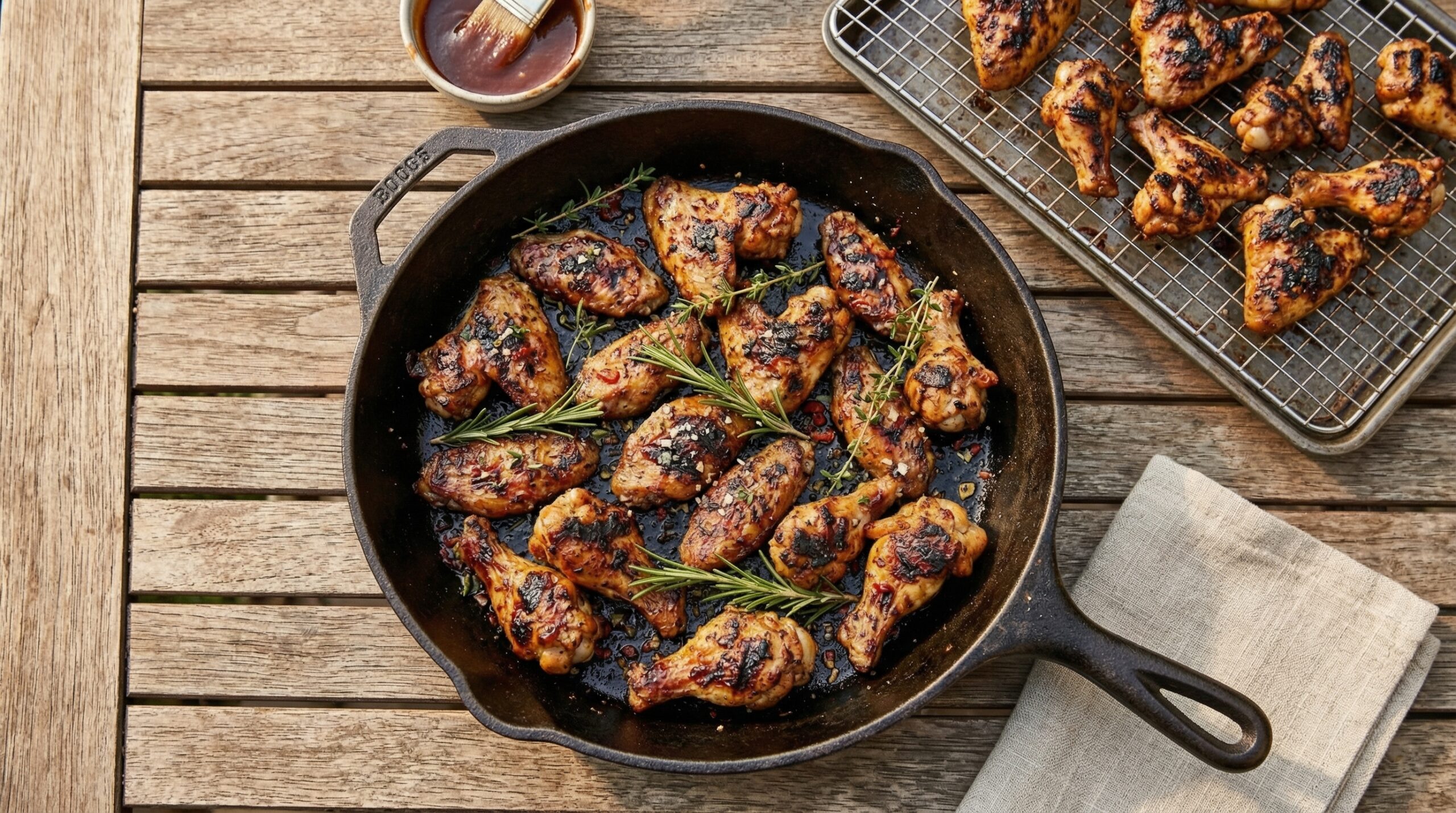
There is nothing quite like biting into a perfectly grilled chicken wing. The skin gets crispy and charred in spots while the meat stays juicy and flavorful. After testing this Grilled Chicken Wings Recipe dozens of times, I can tell you exactly what works and what to avoid.
Our team spent three summers perfecting this recipe across different grill types and weather conditions. We learned the hard way that high heat alone does not make crispy wings. The real secret involves a two-zone cooking method that renders the fat properly and builds that caramelized exterior without burning.
This guide covers everything from selecting the right wings to checking for safe internal temperature. You will find a complete ingredient list with our favorite dry rub blend, step-by-step grilling instructions, and solutions for the most common problems home cooks face.
Table of Contents
What You Need: Ingredients and Dry Rub
A great Grilled Chicken Wings Recipe starts with quality ingredients and a balanced dry rub. The rub does more than add flavor. It draws out moisture from the skin and creates that appealing crust when it caramelizes on the grill.
For the Dry Rub
- 2 tablespoons paprika
- 1 tablespoon garlic powder
- 1 tablespoon brown sugar
- 1 teaspoon cayenne pepper (adjust for heat preference)
- 1 teaspoon black pepper
- 1 teaspoon salt
- 1/2 teaspoon baking powder (helps crisp the skin)
For the Wings
- 3 pounds chicken wings (about 12 wings), separated into flats and drumettes
- 2 tablespoons vegetable oil
- Prepared dry rub
Wing anatomy matters here. The flat (also called the wingette) has more surface area and skin, which means more crispiness potential. The drumette has darker meat and tends to stay juicier. We recommend using a mix of both for the best eating experience.
If using a marinade instead of dry rub, allow at least 4 hours of marinating time for the flavors to penetrate. However, dry rub delivers better crispy results with less effort, which is why most competitive recipes favor this approach.
Setting Up Your Grill for Perfect Wings
The grill setup determines everything about how your wings will turn out. Getting this right means the difference between burnt exteriors with raw interiors and perfectly cooked crispy wings every time.
Gas Grill Setup
Preheat your gas grill to 350 to 400 degrees Fahrenheit with all burners on. Then turn off one or two burners to create a hot zone and an indirect cooking zone. This two-zone method lets you sear the wings over direct heat while finishing them over indirect heat where the fat can render slowly without burning.
Charcoal Grill Setup
For charcoal, bank the hot coals to one side of the grill. Place a drip pan on the empty side and add some water to the pan. This creates the indirect cooking zone while the coals provide the direct heat sear zone. Aim for a surface temperature of around 325 degrees Fahrenheit measured with an infrared thermometer.
Real users on grilling forums consistently report that sugar-based rubs burn easily. If your dry rub contains brown sugar, watch your wings carefully during the final minutes and consider moving them to indirect heat if the sugar starts to char too quickly.
How to Grill Chicken Wings
Follow these steps in order for the best results with your Grilled Chicken Wings Recipe.
Step 1: Prepare the Wings
Pat the wings completely dry with paper towels. This step matters more than most people realize. Moisture on the skin steams rather than sears, which prevents crisping. For extra crispy skin, let the wings air-dry uncovered in the refrigerator for 1 to 2 hours before grilling.
Step 2: Apply the Rub
Toss the wings with vegetable oil first, then coat generously with the dry rub. Press the rub onto the skin to ensure contact. Let the seasoned wings sit at room temperature for 15 minutes before putting them on the grill.
Step 3: Start on Indirect Heat
Place the wings on the indirect heat side of your grill, skin side up. Close the lid and cook for 20 to 25 minutes. This slow render time allows the fat beneath the skin to melt and baste the meat from within.
Step 4: Flip and Finish
After 20 to 25 minutes, flip the wings and move them to the direct heat zone. Cook for an additional 10 to 15 minutes, turning occasionally, until the skin develops crispy char marks and reaches your desired color.
According to forum discussions, the total cook time should be around 30 to 40 minutes for most wings. Thicker drumettes may take closer to 45 minutes while thinner flats might be done in 30.
The Most Important Step: Checking Internal Temperature
No Grilled Chicken Wings Recipe is complete without proper temperature verification. The USDA recommends cooking poultry to an internal temperature of 165 degrees Fahrenheit for food safety. However, many competitive pitmasters argue that wings taste better at 170 to 175 degrees when the collagen fully breaks down into gelatin.
Use an instant-read digital thermometer inserted into the thickest part of the meat without touching bone. Insert it horizontally from the side for the most accurate reading. Check two or three wings since temperatures can vary across a batch.
For crispy skin that stays on the wing, remove them from heat at 170 degrees. The skin will continue to firm up as they rest and carryover cooking will bring them to 175 degrees which is ideal texture.
Saucing and Finishing
One of the most common mistakes in any Grilled Chicken Wings Recipe involves adding sauce too early. Sauce contains sugar which burns easily at high grill temperatures. The correct approach is to add sauce only during the last 2 to 3 minutes of cooking, or after the wings come off the grill.
Sauce Options
- Buffalo sauce (butter and hot sauce mixture)
- BBQ sauce (sweet or spicy)
- Teriyaki glaze
- Garlic parmesan butter
- Plain melted butter for serving alongside hot sauce
To coat properly, toss the grilled wings in sauce immediately after removing them from the grill. The residual heat helps the sauce adhere and creates a glossy finish without burning.
Troubleshooting Common Problems
Even the best Grilled Chicken Wings Recipe can go wrong without proper troubleshooting. Here are solutions to the issues that forum users complain about most.
Wings Burning Before Cooking Through
This happens when wings go directly over high heat without pre-rendering. Always start wings on indirect heat for at least 20 minutes before moving them to sear. If your grill runs hot (over 400 degrees at surface level), lower your primary burner or reduce charcoal.
Skin Not Getting Crispy Enough
Moisture is the enemy of crispy skin. Pat wings dry thoroughly and consider the air-drying step mentioned earlier. Adding a small amount of baking powder to your dry rub (as included in our recipe) raises the skin pH and promotes browning and crisping.
Dried Out Wings
Overcooking is the primary cause of dried-out wings. Use your thermometer and remove wings at 170 degrees. Also, avoid piercing the wings with forks during cooking as this lets juices escape. Let the wings rest for 5 minutes before serving to redistribute the juices.
Serving Suggestions
Plan for about 6 to 8 wings per person if serving as an appetizer with other dishes. If wings are the main protein, estimate 10 to 12 wings per person. Leftover grilled wings reheat well in an air fryer at 375 degrees for 5 to 7 minutes to restore crispiness.
Store leftover wings in an airtight container in the refrigerator for up to 4 days. Reheat only what you plan to eat since repeated reheating destroys the crispy texture.
Excellent side dishes include celery sticks, carrot sticks with ranch or blue cheese dip, corn on the cob, coleslaw, or a fresh garden salad. For beverages, see our guide to pairing beers with grilled foods.
FAQs
What’s the best way to cook chicken wings on a grill?
The best method uses a two-zone grilling approach. Start wings skin-side up over indirect heat at 350-400°F for 20-25 minutes to render fat and cook through. Then move to direct heat for 10-15 minutes to develop crispy char marks. Always use an instant-read thermometer to verify internal temperature reaches 165-175°F.
Are chicken wings good for diabetics?
Chicken wings themselves are low in carbohydrates and high in protein, making them suitable for diabetic diets when prepared without sugary sauces or marinades. A plain grilled wing with dry rub contains minimal carbs. Avoid sugary bbq sauces or honey-glazed preparations if managing blood sugar.
What to put on chicken wings before grilling?
Apply a dry rub or marinade before grilling. A dry rub made with paprika, garlic powder, brown sugar, cayenne, salt, and baking powder works well. Toss wings in vegetable oil first to help the rub adhere. Avoid sugary mixtures that burn easily and do not add sauce before grilling.
Should I marinate my wings before grilling?
Marinating is optional. Dry rubs deliver better crispy results with less effort since they draw out moisture and create a caramelized crust. If using marinade, allow 4 hours to overnight in the refrigerator. However, many competitive recipes recommend dry rub over marinade for superior texture.
Try This Grilled Chicken Wings Recipe Today
You now have everything you need to grill perfect chicken wings. The two-zone cooking method, proper temperature checking, and knowing when to add sauce will transform your grilling results.
Gather your ingredients, prep your dry rub, and fire up the grill. Within an hour you can have crispy, juicy wings that rival any restaurant or sports bar. Experiment with different sauce options and spice levels to find your perfect combination.
Share your grilling results and any tips you discover along the way. Good luck and happy grilling.