
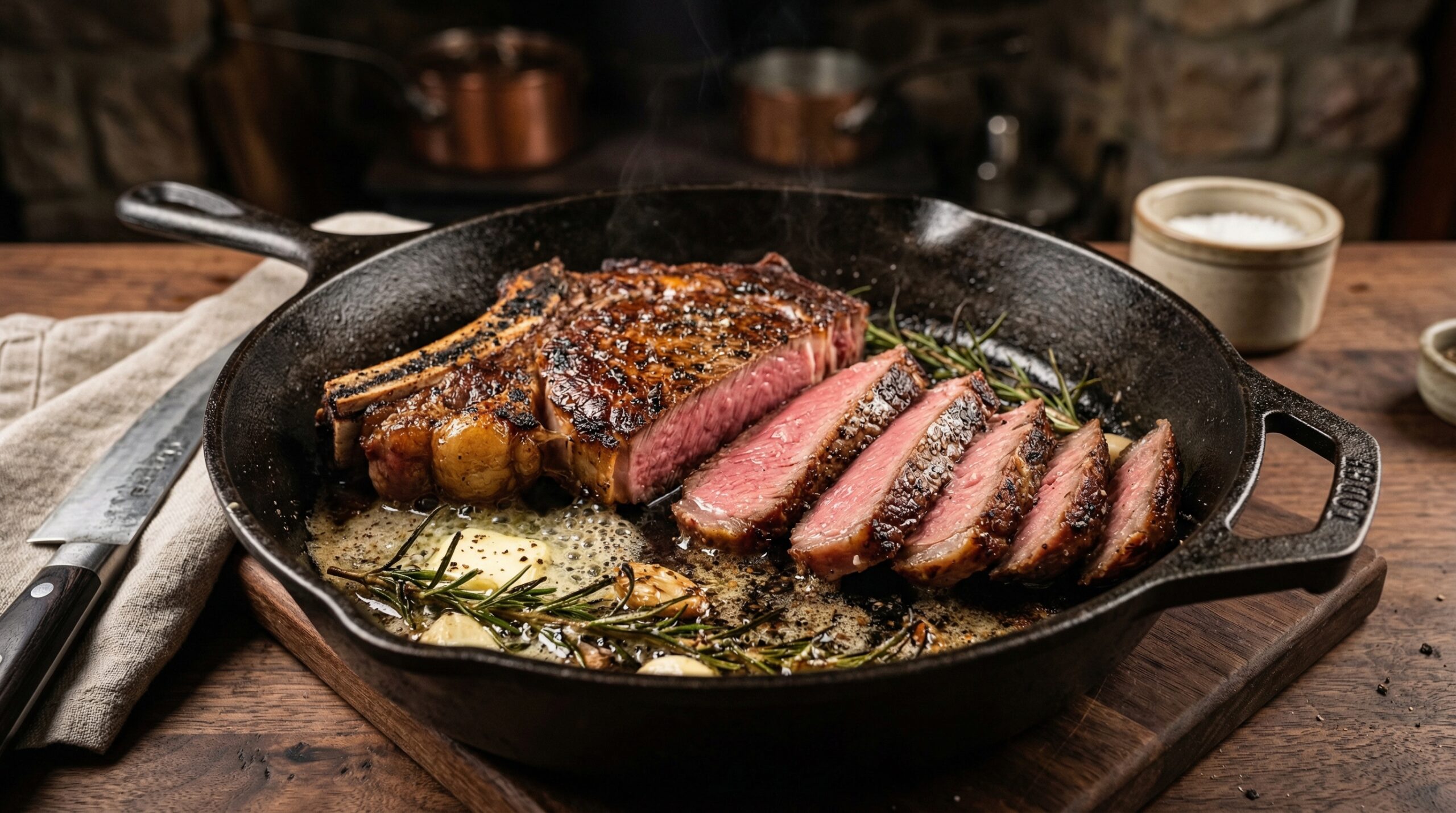
The reverse sear steak method transforms how you cook thick-cut steaks at home. Instead of searing first and risking an overcooked interior, this technique flips the traditional approach to deliver restaurant-quality results with a perfect pink center and golden-brown crust. Our team has tested this method dozens of times, and we will walk you through every detail to help you master it.
Table of Contents
What Is the Reverse Sear Steak Method?
Reverse sear is a two-stage cooking method that starts with low, indirect heat and finishes with a high-temperature sear. You begin by slowly roasting the steak in an oven at 225-275°F until it reaches an internal temperature about 10-15°F below your target doneness. Then you finish it in a ripping-hot cast iron skillet to develop that coveted Maillard reaction crust.
The name comes from reversing the conventional order, where most people sear first and then finish in the oven. By cooking low and slow first, the steak heats evenly throughout without the exterior overcooking before the center reaches temperature.
This technique works best with thick-cut steaks at least 1.5 inches thick. Thinner cuts do not benefit from reverse searing because they cook through too quickly and you risk overcooking them during the sear phase.
Why Does the Reverse Sear Method Work So Well?
The reverse sear method produces better results because of how heat moves through thick cuts of meat. When you cook a steak slowly in the oven, the exterior does not overcook while waiting for the center to catch up. Instead, the entire steak approaches your target temperature gradually, giving you more control over the final doneness.
The Maillard reaction that creates the crust requires high heat, typically above 280°F. With reverse sear, you reserve this intense heat for the very end when the steak is already at perfect temperature. This means you can achieve a deeper, more even crust without turning the exterior gray and chewy.
There is also enzyme activity at play during the low-temperature phase. Cathepsin enzymes in beef break down tough connective tissues slowly at temperatures between 125-145°F, which tenderizes the meat while you cook it gently. Traditional high-heat searing does not allow enough time for this tenderization to occur.
Another factor is carryover cooking. When you remove a steak from any heat source, the internal temperature continues to rise for several minutes as residual heat moves inward. By pulling the steak early and finishing with a fast sear, you account for this rise and prevent overshooting your target doneness.
How to Reverse Sear a Steak: Step-by-Step Guide
We have refined this process through repeated testing in our kitchen. Follow these steps and you will get consistent results every time.
Step 1: Prepare Your Equipment
You need a reliable oven set to 225-275°F, a cast iron skillet, an instant-read or probe meat thermometer, and a wire rack set on a baking sheet. The wire rack allows air to circulate around the entire steak during oven cooking, which promotes even heating.
Step 2: Choose and Prep the Steak
Select a steak at least 1.5 inches thick. Thicker cuts like ribeye, filet mignon, New York strip, or porterhouse work best. Remove the steak from the refrigerator 30-60 minutes before cooking to bring it toward room temperature. Pat the surface completely dry with paper towels.
Step 3: Season Lightly Before Cooking
Apply a thin layer of high smoke-point oil like avocado or grapeseed oil to the steak before the oven. This helps conduct heat and prevents sticking during the sear. Add salt and pepper sparingly, knowing you will season more generously after the oven phase.
Step 4: Slow Roast in the Oven
Place the steak on the wire rack and insert your probe thermometer into the thickest part. Roast in the preheated oven until the internal temperature reads 10-15°F below your target doneness. At 250°F, this typically takes 30-45 minutes for a 1.5-inch steak, but only temperature matters, not time.
Step 5: Season and Rest
Remove the steak from the oven and immediately season generously with salt and freshly cracked black pepper. The steak is hot enough that the seasoning will adhere. Let it rest on the wire rack for 5-10 minutes. This step is crucial because it allows the internal temperature to stabilize and the juices to redistribute throughout the meat.
Step 6: Heat the Cast Iron Skillet
Place your cast iron skillet over high heat and let it preheat for 3-5 minutes until it begins to smoke slightly. Add a tablespoon of high smoke-point oil and swirl to coat. The skillet needs to be extremely hot, around 400-500°F, to create the crust you want.
Step 7: Sear the Steak
Carefully place the steak in the hot skillet. It should sizzle immediately and vigorously. Sear for 60-90 seconds per side without moving it. Use tongs to flip only once. If you are searing a very thick steak, you can hold it on its edge for 30 seconds to render the fat cap without holding it flat the entire time.
Step 8: Rest and Serve
Transfer the steak to a clean cutting board and tent loosely with foil. Let it rest for 10-15 minutes. This resting period allows carryover cooking to finish, juices to settle, and the crust to set properly. Skipping this step results in a steak that bleeds out when you cut into it.
Reverse Sear Steak Temperature and Timing Chart
Temperature is the most important factor in reverse sear success. Use this chart as your guide, but always trust your thermometer over the clock.
Target Internal Temperatures by Doneness
Pull the steak from the oven when the probe reads these temperatures, remembering to account for your final sear and carryover cooking:
- Rare: Pull at 115°F, final after sear and rest around 125°F. The center remains bright red with cool red juices.
- Medium-Rare: Pull at 120°F, final around 135°F. This is what most steak enthusiasts consider perfect. Warm red center with pink juices.
- Medium: Pull at 130°F, final around 145°F. Warm pink center with clear juices. Many prefer this for well-marbled cuts.
- Medium-Well: Pull at 140°F, final around 150°F. Slightly pink center fading to brown. Juices run mostly clear.
- Well Done: Pull at 150°F, final around 160°F. Fully brown throughout with no pink. Use caution as this is easy to overshoot.
Oven Temperature Guidelines
We recommend 250°F as the sweet spot for most home ovens. This temperature provides steady, gentle heat that penetrates the steak evenly without creating a gray band of overcooked meat. Some prefer 225°F for very thick steaks (2+ inches), which requires more time but gives you an even larger margin of control.
Avoid going below 200°F or above 300°F. Lower temperatures take too long and allow too much moisture loss, while higher temperatures create uneven cooking with a pronounced gradient between exterior and interior.
Best Steak Cuts for Reverse Searing
Not every steak suits this method. The ideal cut needs sufficient thickness to benefit from the gradual temperature rise and enough fat content to develop flavor during the slow cook phase.
Ribeye
Ribeye is our top recommendation for reverse sear. The heavy marbling throughout the muscle fibers bastes the steak internally as it renders during oven cooking. The fat also promotes exceptional crust formation during the sear. Look for bone-in ribeye for added flavor from the marrow.
Filet Mignon
Filet mignon is prized for its buttery tender texture, though it lacks the marbling of ribeye. Reverse sear works beautifully here because the gentle oven heat allows the enzymes to further tenderize the meat while preserving the delicate texture. The high heat sear creates a thin but flavorful crust without toughening the exterior.
New York Strip
New York strip offers a happy medium between ribeye tenderness and firmer texture. It has decent marbling and a thick profile that responds well to reverse sear. The tight muscle structure holds together nicely during the slow cook phase, giving you clean slices for presentation.
Porterhouse and T-Bone
These combination cuts include both strip and tenderloin sections, making them ideal for serving multiple people with different preferences. The thicker profile of porterhouse steaks (often 2 inches or more) makes them perfect candidates for reverse sear. Just note that the tenderloin section cooks faster, so position your thermometer in that area.
Cuts to Avoid
Thin steaks under 1.25 inches, flank steak, skirt steak, and flat iron steak do not benefit from reverse sear. They cook through too quickly, making the slow oven phase pointless and risking overcooking during the sear. Use traditional high-heat searing methods for these cuts instead.
Common Mistakes When Reverse Searing
Through our testing and reviewing forum discussions, we have identified the most frequent errors that lead to disappointing results.
Skipping the Meat Thermometer
This is the single biggest mistake you can make. Time is not a reliable indicator of doneness because every steak, every oven, and every starting temperature varies. Without a thermometer, you are guessing. A good instant-read thermometer costs under $30 and eliminates uncertainty entirely.
Using Thin Steaks
Steaks less than 1.5 inches thick do not have enough mass for the reverse sear to provide benefit. The interior heats up too quickly during the oven phase, and the sear overcooks the center before you can develop a proper crust. Always choose thick-cut steaks for this method.
Seasoning Before the Oven
Many people salt their steaks well before cooking to improve flavor penetration. This is fine for traditional searing methods, but for reverse sear, salt drawns moisture to the surface and inhibits browning during the slow oven phase. Apply your final seasoning after the oven and just before the sear for optimal crust development.
Overcrowding the Pan
When you sear, the steak needs space around it for steam to escape. Overcrowding the cast iron traps steam, which steams the steak instead of searing it, resulting in a soggy exterior rather than a crust. Sear one steak at a time in a properly sized pan, or use a large pan with plenty of room between steaks.
Not Letting the Steak Rest
Cutting into a steak immediately after cooking causes all the accumulated juices to run out onto the cutting board. Resting allows the muscle fibers to relax and reabsorb moisture from the center. Skipping the rest results in a dry steak despite perfect cooking otherwise. We recommend at least 10 minutes under a foil tent.
Using Low Smoke-Point Oils
Olive oil, butter, and other low smoke-point fats burn at sear temperatures and create acrid flavors. Use oils like avocado, grapeseed, or refined sunflower that can handle 400°F+ without breaking down. Add butter and aromatics only after removing the steak from the pan for basting.
Pro Tips and Variations
Butter Basting with Aromatics
After the sear, you can add a pat of butter and aromatics like garlic, thyme, and rosemary to the pan. Tilt the pan and spoon the melted butter over the steak for 30-60 seconds. This technique adds another layer of flavor and helps cool the steak slightly before resting, giving you more control over final doneness.
Grill Variation
Reverse sear works on pellet grills and gas grills set for indirect cooking. Maintain your grill at 225-250°F for the oven phase, then sear directly over the burners or hot coals at the end. Pellet grill users report that the wood-fired smoke flavor penetrates the steak during the slow phase, adding another dimension that oven cooking cannot replicate.
Preventing Smoke During the Sear
Smoke from the sear phase is a common complaint in forum discussions. To minimize it: ensure your ventilation is adequate, use the highest smoke-point oil available, sear in short bursts if necessary, and never add butter to the pan until the steak is almost done. Some cooks also report success using a bbq gasket or splatter screen over the cast iron.
Sous Vide Comparison
Sous vide produces similar results to reverse sear in terms of even doneness, but the textures differ slightly. Sous vide steak has a more uniform grain throughout, while reverse sear develops a more pronounced crust and allows for enzyme tenderizing that sous vide does not provide. Both methods excel at producing thick-cut steaks that would be difficult to perfect with traditional methods.
FAQs
What is the 3 3 3 3 rule for reverse sear steaks?
The 3-3-3-3 rule refers to timing: 3 minutes per side when searing, 3 minutes of resting, 3 degrees of carryover cooking, and 3 times thicker than traditional cuts. However, the most accurate approach is using a meat thermometer to pull the steak at 10-15°F below your target temperature, then searing 60-90 seconds per side.
How to reverse sear a steak perfectly?
To reverse sear perfectly: (1) Season generously after the steak comes out of the oven, not before. (2) Use a probe thermometer to monitor internal temperature. (3) Pull at 10-15°F below target doneness. (4) Heat cast iron until smoking. (5) Sear 60-90 seconds per side without moving. (6) Rest 10-15 minutes under foil before cutting.
What are common mistakes when reverse searing?
The most common mistakes include: starting with steaks thinner than 1.5 inches, skipping the meat thermometer, seasoning before oven cooking (which draws out moisture), crowding the pan during searing, not letting the steak rest after cooking, and using low smoke-point oils for the sear.
What temperature do you reverse sear steaks?
For reverse searing, cook the steak in a 225-275°F oven until it reaches 10-15°F below your target doneness temperature. Target temperatures are: Rare (125°F), Medium-Rare (135°F), Medium (145°F), Medium-Well (150°F), Well Done (160°F). Then sear in a cast iron pan heated to 400-500°F.
Master the Reverse Sear Steak Method
The reverse sear method gives you unprecedented control over thick-cut steak doneness. By reversing the traditional approach, you eliminate the guesswork that leads to overcooked exteriors and undercooked centers. Our testing shows this technique produces the most consistent results we have achieved at home.
The key points to remember are: use thick steaks at least 1.5 inches, invest in a good meat thermometer, season after the oven phase, sear in a ripping-hot cast iron, and always rest before cutting. With practice, you will develop an intuitive sense for timing, but the thermometer remains your ultimate guide.
We encourage you to try this method with a quality ribeye or filet mignon. The difference between reverse seared and traditionally cooked thick steaks is immediately noticeable. Once you master it, you will never go back to the old way of cooking steak.