
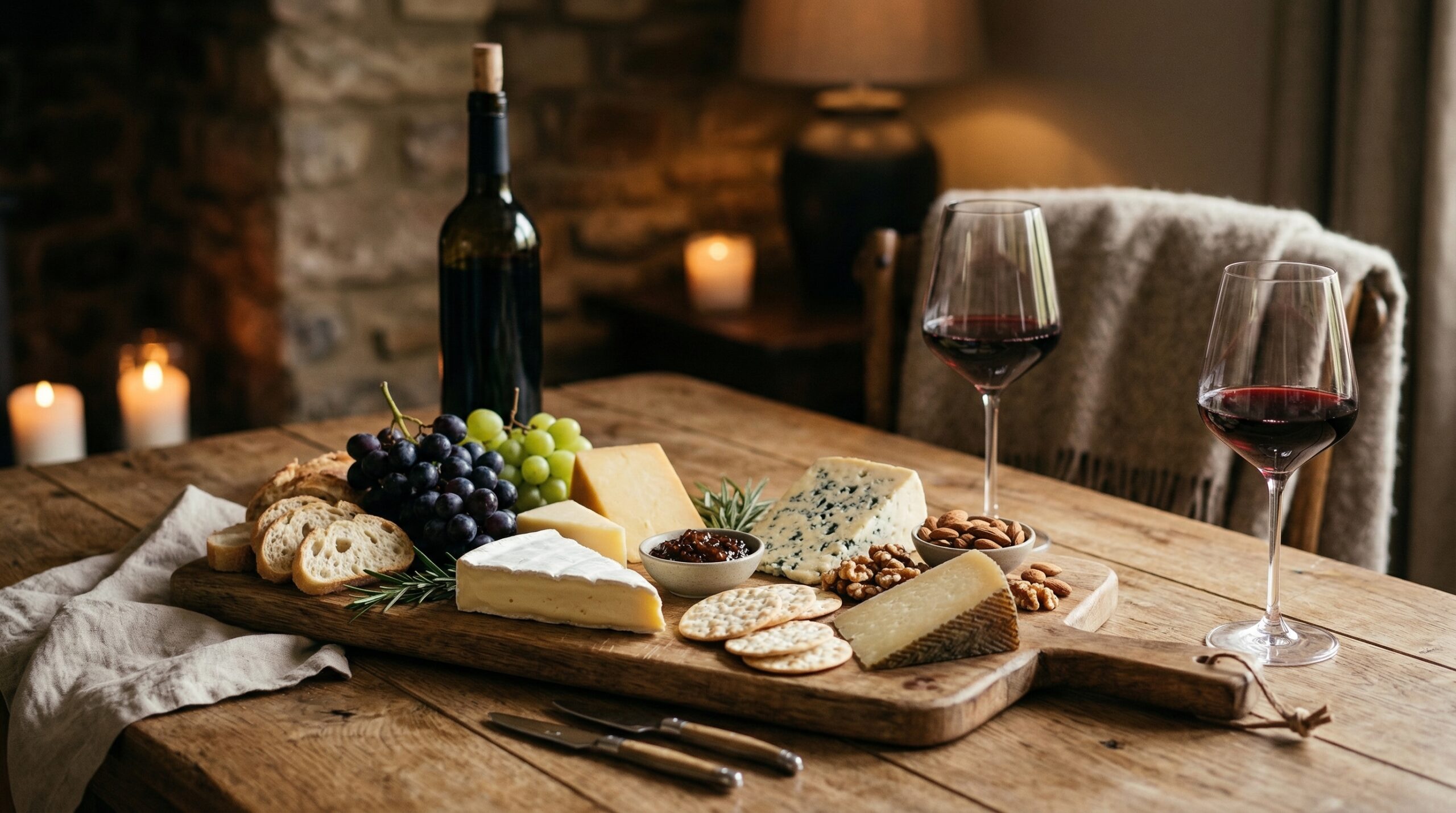
There is something magical about a well-planned wine and cheese night. It brings people together, sparks conversation, and lets guests explore flavors at their own pace. Best of all, you do not need to be a sommelier or have a culinary degree to pull it off. This guide will walk you through everything you need to host a memorable evening.
Table of Contents
Essential Supplies for Your Wine and Cheese Night
Before you start shopping for cheese and wine, make sure you have the right tools on hand. Our team has hosted dozens of these gatherings, and the basics come down to a few key items.
You will need one wine glass per person for each wine you serve. Three glasses per guest is a good rule of thumb. For the board itself, a wooden cutting board, marble slab, or slate tile works beautifully. You will also want a sharp knife for each cheese type, small bowls for jams and honey, and some parchment paper or small labels to identify each cheese.
Other supplies that make hosting easier include a corkscrew, a small cutting board for crackers, napkins, and appetizer plates. If you are serving red wine, consider using wine stoppers so you can enjoy the bottles over a few hours rather than rushing to finish them.
How to Select the Perfect Cheese Varieties
The heart of any wine and cheese night is the cheese selection. One common framework is the 3-3-3-3 rule: offer three types of cheese, three types of accompaniments, and plan for about three ounces of each cheese per guest.
When choosing cheeses, aim for variety in texture and intensity. A good starter selection includes one soft cheese like brie or camembert, one semi-firm cheese like gouda or gruyere, and one hard cheese like aged cheddar or pecorino. If you want to expand, add a blue cheese for bold flavor and maybe a goat cheese for something creamy and tangy.
Consider milk source as well. Offering a mix of cow, sheep, and goat milk cheeses gives guests different flavor profiles to explore. Reddit users who host wine and cheese nights recommend starting with familiar names like brie and manchego, then gradually introducing more adventurous options like aged asiago or Humboldt Fog.
Wine Pairing Basics for Beginners
Wine pairing does not have to be intimidating. The simplest approach is to offer one wine that pairs well with multiple cheeses rather than trying to match every single cheese perfectly.
Here is where the 30-30 rule comes in handy. For red wine, let it breathe for about 30 minutes and serve at roughly 60-65 degrees Fahrenheit. For white wine, chill for about 30 minutes and serve at 45-50 degrees. This ensures the wine aromas open up properly and complement rather than overwhelm the cheese.
Some wines cast a wider net than others. Pinot Noir works beautifully with soft cheeses and nutty varieties. A crisp Sauvignon Blanc pairs well with tangy goat cheese and bright accompaniments. For sparkling wine, Prosecco is forgiving and popular, working well with everything from mild cheddar to prosciutto. One forum user discovered that Merlot holds up surprisingly well to blues and aged cheeses.
If you want to explore regional pairings, Explore Spanish wine and cheese pairings for inspiration. Manchego with Tempranillo is a classic combination worth trying.
How Much Cheese and Wine to Buy
Getting quantities right takes practice, but there are helpful guidelines. Plan on two to three ounces of each cheese per guest. If you offer five cheeses and eight guests, that means roughly one pound of each cheese variety.
The 75-85-95 rule helps with wine quantities. Plan for one 750ml bottle to serve approximately two guests at a standard tasting pace. If your party runs three to four hours, budget one bottle per two guests for the first hour, then adjust based on preference. A group of eight typically needs four to six bottles total.
One Reddit host learned the hard way to avoid over-buying. They hosted six people with 14 cheeses and 8 meats, which turned out to be massive overkill. Starting smaller and adding more is always better than being stuck with dozens of leftovers that will not keep.
How to Arrange a Beautiful Cheese Board
Visual presentation matters, but it does not require professional skills. Start by placing your largest cheeses first, then fill in gaps with smaller items. Think about height and shape when arranging.
Cluster cheeses near their complementary accompaniments. Place the honey near mild, buttery cheeses. Put sharp mustards and tangy jams next to stronger cheeses that can stand up to them. Use small bowls strategically to create visual interest and prevent items from rolling around.
Fill empty spaces with your accompaniments like crackers, dried fruits, and nuts. Add fresh herbs like rosemary or thyme for color and aroma. Finally, leave space between cheeses so guests can see what they are choosing. Label each cheese with a small card noting the name and milk source.
Temperature and Serving Guidelines
Temperature dramatically affects both cheese and wine flavor. The biggest mistake beginners make is serving cheese straight from the refrigerator. Most cheeses taste best when served at room temperature, which typically means about an hour out of the fridge before serving.
For wine, the 30-30 rule ensures optimal flavor. Thirty minutes in the fridge for whites, thirty minutes out for reds before serving. If you are serving both, keep whites in a cooler and reds in a decanter or carafe so they stay at the right temperature during the event.
Soft cheeses like brie need the most time to come to room temperature, sometimes up to 90 minutes. Harder cheeses can come out slightly sooner. Once out, do not let cheese sit for more than two hours at room temperature for food safety reasons.
Choosing the Right Accompaniments
Accompaniments complete the experience and give guests palate cleansers between different cheese and wine combinations. A good mix includes something crunchy, something sweet, something savory, and something with acid or brightness.
Crackers are essential. Offer two to three varieties with different shapes and flavors. Plain water crackers are versatile, while seeded or herbed crackers add interest without competing. Nuts like Marcona almonds, candied pecans, or roasted walnuts provide protein and texture.
Fruits work beautifully for cutting through rich cheeses. Fresh grapes, sliced pears, and figs are classic choices. For something more assertively flavored, try fig jam, honeycomb, or a spicy mustard. Olives, cornichons, and pickled vegetables add briny contrast that refreshes the palate.
Hosting on a Budget
Wine and cheese nights can be as simple or elaborate as you want. One approach that reduces pressure on the host is potluck style. Ask each guest to bring their favorite wine or cheese. This not only cuts costs but also introduces variety you might not have chosen yourself.
For budget-friendly wine, look for options around $12-15 per bottle. Many quality wines in this range work beautifully for hosting. Focus on one or two good wines rather than trying to stock a full bar. You can always add a sparkling option and a red without breaking the budget.
The key insight from experienced hosts is that presentation often matters more than the price point. A beautifully arranged board with thoughtful labels makes even modest selections feel special. Guests appreciate the care more than the cost.
Conclusion
Hosting a wine and cheese night is one of the most forgiving and enjoyable ways to entertain. You do not need to be an expert. You just need good cheese, a few solid wines, and a willingness to let guests explore and ask questions.
Start with the essentials, follow the quantity guidelines, and pay attention to temperature. Most importantly, relax and enjoy the experience. The best wine and cheese nights happen when hosts focus on connection rather than perfection.
FAQs
What is the 3-3-3 rule for cheese board?
The 3-3-3 rule is a simple planning framework: offer three types of cheese, three types of accompaniments, and plan for about three ounces of each cheese per guest. This ensures variety without overwhelming your board or your budget.
What is the 75-85-95 rule for wine?
The 75-85-95 rule refers to the number of 750ml bottles needed. Plan for one bottle per two guests for a standard three-hour tasting. For eight guests, that means roughly four to six bottles total to ensure everyone has enough without excessive leftovers.
What is the 3 3 3 3 cheese rule?
The 3-3-3-3 cheese rule breaks down as: three types of cheese, three accompaniments, three ounces per cheese per person, and three hours of optimal serving time before cheese loses freshness. This framework helps beginners plan without second-guessing.
What is the 30 30 rule for wine?
The 30-30 rule guides wine temperature. For red wine, let it breathe for about 30 minutes and serve at 60-65 degrees Fahrenheit. For white wine, chill for about 30 minutes and serve at 45-50 degrees. This ensures aromas and flavors open up properly for the best tasting experience.