
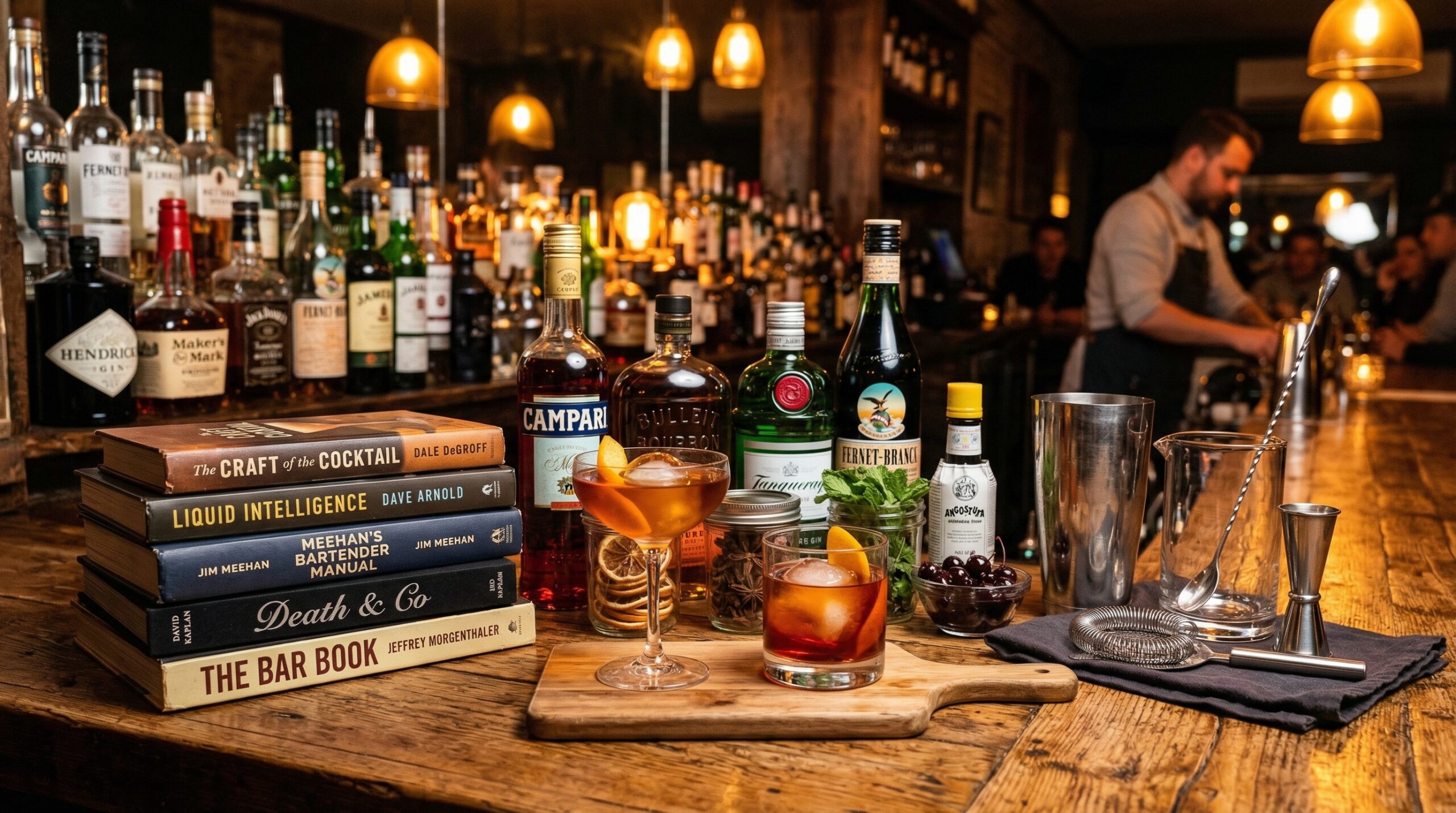
Whether you are just starting to explore the world of mixology or you have been crafting drinks at home for years, the right cocktail book can transform your skills. We spent months reviewing dozens of titles, comparing techniques, and testing recipes to bring you this guide to the best cocktail books for beginners and experts alike.
A good cocktail book does more than collect recipes. It teaches you why cocktails work, how to balance flavors, and when to shake versus stir. Our team evaluated books based on their approach to fundamentals, recipe quality, photography, and how well they serve different skill levels.
In this guide, you will find recommendations that match where you are in your cocktail journey. We cover everything from accessible introductions for complete beginners to advanced references that seasoned bartenders return to year after year.
Table of Contents
Quick Picks: Best Cocktail Books by Category (2026)
If you want our top recommendations without diving deep into every detail, here is a quick overview of the best cocktail books organized by what we found they do best.
For complete beginners, we recommend starting with Cocktail Codex. It demystifies cocktail fundamentals and gives you a framework that applies to hundreds of drinks.
For those focused on technique over recipes, The Bar Book by Jeffrey Morgenthaler is the definitive guide to mastering the mechanical skills of bartending.
For home bartenders ready to level up, Death & Co. offers a beautiful blend of recipes, theory, and inspiration that works for multiple skill levels.
For cocktail science enthusiasts, Liquid Intelligence by Dave Arnold reveals the chemistry behind perfect dilution, temperature control, and flavor balance.
Why a Good Cocktail Book Matters for Your Home Bar
You might wonder why you need a cocktail book when countless recipes exist online. We asked ourselves the same question before diving into this research. What we discovered is that books offer something digital resources often cannot: structured learning with depth.
A quality cocktail book teaches you principles that transfer across thousands of recipes. When you understand why a classic daiquiri works, you can adapt it endlessly. You stop following recipes blindly and start creating drinks that match your taste preferences.
Our team found that books from professional bartenders and award-winning authors consistently outperform generic collections. They share real-world experience, not just copied internet recipes. These authors have tested their techniques on thousands of paying customers before writing them down.
The investment in a good cocktail book pays for itself quickly. A single bar tool or quality spirit purchase often costs more than a hardcover reference that will serve you for decades. We believe every serious home bartender should own at least one comprehensive cocktail book.
Best Cocktail Books for Beginners
Starting your cocktail journey requires finding a book that builds confidence rather than creating confusion. The best cocktail books for beginners teach fundamentals through clear explanations and accessible recipes. Here are our top recommendations for new mixologists.
1. Cocktail Codex
If you buy only one cocktail book, make it Cocktail Codex. We have seen this book recommended by beginners and professionals alike, and the praise is well-deserved. Authors Alex Day, Nick Mautone, and the Death & Co. team break cocktails down into six foundational families.
The book uses a systematic approach that teaches you how cocktails relate to each other. Once you understand the template for a sour cocktail, for example, you can make dozens of variations. This framework-based learning accelerates your progress dramatically compared to memorizing individual recipes.
What sets Cocktail Codex apart is its balance of theory and practice. Each chapter explains why techniques work before presenting recipes. You learn the difference between shaking and stirring, when to use different types of ice, and how to adjust recipes to your preferences.
2. Three Ingredient Cocktails
Robert Simonson’s Three Ingredient Cocktails solves a common beginner problem: too many choices. As new mixologists, we found ourselves overwhelmed by complex recipes requiring multiple syrups and obscure liqueurs. This book strips that complexity away.
The premise is elegant. Every cocktail in the book requires exactly three ingredients plus a garnish. This constraint forces you to master the essentials without getting lost in elaborate preparations. The Old Fashioned, Daiquiri, and Manhattan all appear in their purest forms.
We appreciate how this book builds confidence through simplicity. After working through its recipes, you understand how spirits, modifiers, and sweeteners interact. That knowledge prepares you perfectly for more complex cocktails later.
3. Cocktails for Drinkers
Jennifer McCartney’s Cocktails for Drinkers assumes you already enjoy cocktails but may not know how they are made. The tone is witty and approachable, avoiding pretension while still teaching serious skills.
This book works particularly well for people who love drinking but feel intimidated by formal bartending. The instructions are clear, the photography is beautiful, and the recipes skew toward drinks you actually want to make for yourself and friends.
4. The Essential Cocktail Book
Phaidon’s Essential Cocktail Book serves as a solid all-around reference for beginners. It covers the classics thoroughly while including enough modern classics to keep things interesting. The recipe selection represents a good cross-section of what most home bartenders want to make.
What we appreciate about this book is its organization and reliability. Every recipe we tested from its pages worked as described on the first attempt. For beginners who want assurance they are learning correct techniques, that dependability matters.
Best Cocktail Books for Intermediate and Advanced Bartenders
Once you have mastered the fundamentals, you need resources that challenge and inspire continued growth. The best cocktail books for experienced bartenders focus on deeper technique, creative exploration, and professional-level knowledge.
1. Death & Co.
Death & Co. began as one of New York’s most influential cocktail bars before becoming a publishing force. The Death & Co. book captures the bar’s philosophy in print form, offering recipes that span classic revivals and original creations.
This book works for intermediate bartenders who want to understand the creative process behind cocktail development. Each chapter includes essays on flavor theory, ingredient selection, and the evolution of specific drink styles. We found it equally useful as a recipe source and as a thinking tool.
The photography throughout the book deserves special mention. It captures cocktails as art objects while still presenting them as practical drinks you can actually make. This balance between aspiration and accessibility makes Death & Co. a book you will return to regularly.
2. The Bar Book by Jeffrey Morgenthaler
If you want to understand the mechanics of bartending at a deep level, The Bar Book is essential reading. Jeffrey Morgenthaler approaches cocktail preparation like a scientist, explaining the processes that make drinks succeed or fail.
The chapters on syrups, juices, and infusions teach you how to make the building blocks that separate good cocktails from great ones. We have used techniques from this book to make our own grenadine, orgeat, and citrus juices. The difference from store-bought alternatives is immediately noticeable.
This book does not focus heavily on recipes. Instead, it teaches you to understand the principles behind recipes so you can troubleshoot and adapt on your own. For serious home bartenders who want independence from following instructions, The Bar Book is invaluable.
3. Liquid Intelligence
Dave Arnold’s Liquid Intelligence represents cocktail science at its most accessible and fascinating. As the founder of the Museum of Food and Drink, Arnold brings a researcher’s mindset to the bar. This book teaches you to think about cocktails as chemical and physical systems.
Topics like dilution control, temperature management, and clarifying cocktails expand what you consider possible behind the bar. We found the chapters on ice particularly eye-opening. Learning to control dilution through ice shape and technique transformed our Old Fashioneds.
This book appeals most to intellectually curious bartenders who want to understand why things work, not just how to do them. Some readers may prefer more recipe-focused content, but those interested in cocktail science will find endless value.
4. Meehan’s Bartender Manual
Owen Meehan’s bartender manual represents a professional-level reference that remains accessible to serious amateurs. The book covers everything from bar setup and inventory management to advanced mixology techniques and drink construction.
What makes this book special is its scope. It functions simultaneously as a training manual for professional bartenders and as an advanced curriculum for home enthusiasts. The chapter on building a home bar saves you from common expensive mistakes.
We recommend this book for readers who have worked through beginner material and want to approach cocktail craft at a professional level without attending bartending school.
5. The Joy of Mixology
Gary Regan’s The Joy of Mixology has been a cornerstone reference since its publication. The book provides an extensive taxonomy of cocktail styles and families, helping you understand how drinks relate across traditions and eras.
Regan’s writing style combines authority with approachability. He shares stories from decades behind the bar while teaching the technical skills those experiences developed. For readers who appreciate context alongside instruction, this book delivers both.
The recipe collection spans classic cocktails and original creations, with detailed instructions that account for variations in equipment and technique. Advanced readers will appreciate the depth of knowledge packed into this comprehensive volume.
Specialty Cocktail Books by Category
Beyond general references, specific interests call for targeted resources. Whether you want to explore tiki cocktails, master the classics, or dive deep into a particular spirit, specialty books provide expertise that general references cannot match.
Best Tiki Cocktail Books
Tiki represents one of the most creative and technique-intensive styles in mixology. The best tiki cocktail books teach you to make exotic drinks that transport you to tropical destinations through careful use of rum blends, fresh juices, and impressive presentation.
Smuggler’s Cove by Martin Cate and Jeff “Pixie” Hess is the definitive tiki reference for home bartenders. The book explains the history of tiki culture while providing meticulously tested recipes. The sections on rum and building a tiki bar at home are worth the price alone.
For those interested in modern tropical cocktails, Tiki: Modern Tropical Cocktails offers contemporary interpretations that maintain traditional techniques while updating flavor profiles.
Best Classic Cocktail Books
Understanding classics is essential for every bartender. The best classic cocktail books preserve historical accuracy while explaining why these drinks have endured for generations.
Imbibe! by David Wondrich remains the authoritative text on American drink history through the 19th century. Wondrich’s meticulous research recovers original recipes and explains the context in which they developed. This book is essential for understanding where modern cocktails come from.
The PDT Cocktail Book by Jim Meehan offers a tour through one of New York’s most influential bars. Each recipe comes with the story of its creation, connecting you to contemporary classic cocktail culture.
Best Technique-Focused Books
For bartenders prioritizing mechanical skills over recipe knowledge, technique-focused books offer the deepest value. These references teach you to make bar ingredients from scratch and execute professional-level techniques.
The Bar Book by Jeffrey Morgenthaler, covered earlier, leads this category. For additional depth, Flair Bartending by Kazuo Uyeda teaches creative bottle work and presentation skills that add showmanship to substance.
Best Spirit-Specific Books
Some readers want to master cocktails through deep knowledge of specific spirits. The best spirit-specific cocktail books cover the history, production, and cocktail applications of individual categories.
The Whiskey Cocktail Book by Washington Post spirits writer M. Carrie Allan covers American and Scotch whiskies alongside recipes designed to showcase their distinct characteristics.
Gin Cocktails focuses on the spirit that defines many classic recipes, providing specialized knowledge for gin enthusiasts exploring beyond the basic G&T.
Essential Cocktails Every Beginner Should Master
Before exploring advanced techniques, every new bartender should build confidence with a core set of classic cocktails. These drinks teach fundamental skills while producing results that impress friends and family.
The Six Core Cocktails
We recommend starting with six cocktails that represent different building blocks of mixology. Mastering these templates opens the door to hundreds of variations.
The Old Fashioned teaches spirit-forward drinking. This simple combination of whiskey, sugar, and bitters demonstrates how a few quality ingredients can be greater than their parts. We have a detailed guide to classic cocktails like the Manhattan that complements your Old Fashioned studies.
The Martini teaches precision and the balance between gin and vermouth. Learning to make a proper Martini reveals how subtle adjustments transform a drink entirely.
The Manhattan introduces whiskey-based cocktails with complex sweetness. Our Rob Roy recipe guide shows how similar templates create different results with spirit swaps.
The Daiquiri is your introduction to the sour template. Rum, citrus, and sugar create a template you can adapt endlessly with different rums and fruit variations.
The Sidecar builds on the sour template by adding cognac and orange liqueur. We have a full Sidecar recipe guide that explores this classic’s history and variations.
The Whiskey Sour perfects the sour template with egg white foam technique. This addition creates texture and richness that elevates simple ingredients.
The 2:1:1 Ratio Explained
The 2:1:1 ratio represents the foundation of sour cocktails. Understanding this framework allows you to create balanced drinks from any spirit, citrus, and sweetener combination.
The formula is straightforward: two parts spirit, one part citrus, one part sweetener. This ratio produces a drink with enough spirit presence to taste intentional while maintaining refreshing acidity and enough sweetness to be approachable.
Once you internalize this ratio, you stop needing recipes for sours. A tequila sour with fresh lime and agave nectar follows the same principle as a whiskey sour or a rum sour. You can explore modern martini variations using the same fundamental thinking.
Adjusting the ratio to your taste matters. Some prefer more citrus for a tarter result, others want additional sweetness. The goal is not rigid adherence but understanding the relationship between elements so you can tune drinks to your preferences.
How to Choose the Right Cocktail Book
With so many options available, selecting the right cocktail book requires thinking about your specific needs, goals, and current skill level. This buying guide walks you through the factors that matter most.
Match the Book to Your Skill Level
The most important factor is fit. A book too advanced discourages beginners, while a book too basic bores experienced bartenders. Be honest about where you are and choose accordingly.
Complete beginners should start with accessible books like Cocktail Codex or Three Ingredient Cocktails. These resources build confidence while establishing correct techniques.
Intermediate bartenders ready to expand will benefit from Death & Co., The Bar Book, or Liquid Intelligence. These books challenge existing knowledge while providing new frameworks.
Advanced practitioners and professionals should focus on specialty references and comprehensive manuals like Meehan’s Bartender Manual or The Joy of Mixology.
Consider What You Want to Learn
Different cocktail books emphasize different aspects of the craft. Some focus primarily on recipes, others on technique, and others on history or theory. Understanding your priority helps narrow options.
If you want to build a recipe collection, ensure the book includes drinks you actually want to make. Check the table of contents for style coverage that matches your preferences.
If you want to improve technique, prioritize books with detailed explanations of processes like dilution, temperature control, and ingredient preparation. The Bar Book excels in this area.
If cocktail science fascinates you, Liquid Intelligence offers the deepest exploration of why cocktails work the way they do.
Evaluate Photography and Design
A cocktail book’s physical quality affects your experience over years of use. We recommend examining photography quality, page layout, and binding durability if possible before purchasing.
Beautiful photography inspires creativity and helps you visualize finished drinks. Books with step-by-step images teach techniques more effectively than text-only descriptions.
Page layout matters for practical use behind a bar. Can you find information quickly? Are recipes easy to scan while making drinks? These practical considerations affect long-term value.
Digital vs. Print Cocktail Books
Digital versions offer convenience and searchability but lack the permanence and tactile experience of physical books. Consider how you will primarily use the reference.
Physical books work well for home libraries and dedicated study. They do not require batteries or screens, and their permanence means they will always be available.
Digital books suit mobile reference and readers with limited shelf space. The search function speeds up finding specific recipes or techniques.
Many serious bartenders maintain both: a physical copy for home study and a digital version for quick reference at the bar.
Budget Considerations
Cocktail books range from affordable paperbacks to expensive collector’s editions. Set a budget that makes sense for how you will use the reference.
For most readers, a single comprehensive hardcover provides the best value. Quality cocktail books remain relevant for decades, making the investment worthwhile.
Expensive coffee table editions may impress visually but often contain fewer practical recipes than focused references. Consider whether display value or practical value matters more to you.
Library borrowing or used book shopping allows you to explore titles before committing to purchase. This approach works well when evaluating books for specific needs.
Frequently Asked Questions
What is the best cocktail book for beginners?
Cocktail Codex is widely considered the best cocktail book for beginners because it teaches foundational knowledge and techniques that apply to thousands of cocktails, not just recipes. The book’s framework-based approach helps new bartenders understand how cocktails relate to each other, accelerating their learning curve dramatically.
What is the 2:1:1 rule for cocktails?
The 2:1:1 rule is a simple ratio for classic sour cocktails: 2 parts spirit, 1 part citrus, and 1 part sweetener. This framework helps beginners understand cocktail balance and adapt recipes to their taste preferences without following recipes blindly.
What is the world’s best cocktails book?
There is no single ‘world’s best’ cocktail book, but Cocktail Codex, Death & Co., and Liquid Intelligence are consistently ranked at the top for their comprehensive approach to teaching cocktail craft. The right choice depends on your skill level and learning goals.
What cocktails should a beginner learn?
Every beginner should master the six core cocktails: Old Fashioned, Martini, Manhattan, Daiquiri, Sidecar, and Whiskey Sour. These templates form the foundation for hundreds of variations and teach essential skills like balancing sweet, sour, and spirit.
What are the six basic cocktails?
The six basic cocktails every bartender should know are the Old Fashioned (spirit + sugar + bitters), Martini (gin + vermouth), Manhattan (whiskey + sweet vermouth + bitters), Daiquiri (rum + citrus + sugar), Sidecar (cognac + citrus + liqueur), and Whiskey Sour (whiskey + citrus + sugar with egg white optional).
Final Thoughts on Building Your Cocktail Book Library
Selecting the best cocktail books for your needs creates a foundation for years of enjoyment behind the bar. We recommend starting with one comprehensive beginner reference and expanding based on specific interests.
Cocktail Codex serves most new bartenders exceptionally well as a first purchase. From there, consider adding a technique-focused book like The Bar Book and a specialty reference matching your favorite cocktail style.
Remember that the best cocktail book is the one you actually use. A book gathering dust on a shelf provides no value regardless of its quality. Choose references that inspire you to practice and explore.
Your home bar library will grow naturally as you develop preferences. Some books will become constant references while others serve occasional consultation needs. This organic growth reflects genuine engagement with the craft.
We hope this guide helps you find the resources that match your cocktail journey, whether you are just beginning or continuing decades of exploration. The world of mixology offers endless learning opportunities, and the right books make that journey more rewarding.