
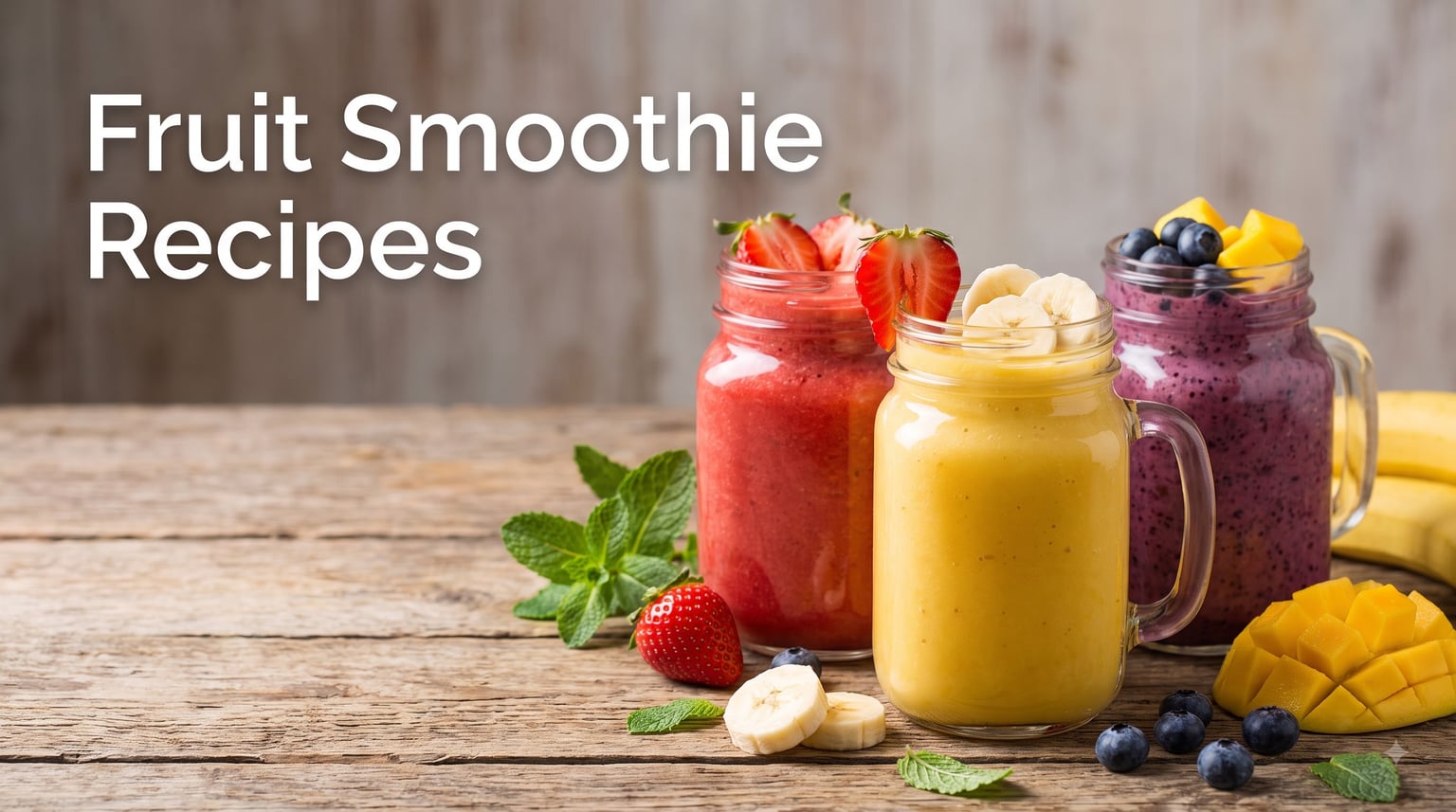
I have been making fruit smoothie recipes almost every morning for the past eight years, and I can tell you that the right blend of fruit, liquid, and technique changes everything. A great smoothie should taste like a treat while delivering real nutrition that keeps you going until lunch.
In this guide, I am sharing my 10 favorite fruit smoothie recipes, the simple formula I use for creating my own combinations, and all the tips I wish someone had told me when I started. Whether you want a quick breakfast, a post-workout recovery drink, or a healthy snack for picky kids, you will find something here.
These fruit smoothie recipes cover everything from classic strawberry-banana to tropical dragon fruit blends. I have tested each one multiple times, tweaked the ratios, and included substitution options so you can work with whatever you have on hand. If you want to branch out beyond the basics, check out our exotic fruit smoothie recipes for even more creative combinations.
Table of Contents
The Basic Fruit Smoothie Formula
Every great fruit smoothie recipe follows a simple ratio that I call the 2-1-1 rule: two parts fruit, one part liquid, and one part thickener. Once you memorize this formula, you can build endless variations without ever needing a recipe card.
Here is how the ratio breaks down in practical terms. You combine roughly 1 cup of fruit (fresh or frozen), half a cup of liquid, and half a cup of a thickening ingredient like yogurt, frozen banana, or avocado. Add a teaspoon of natural sweetener if your fruit is not ripe enough, and a handful of ice if you are using fresh fruit.
The order you add ingredients to your blender matters too. Always pour liquids in first, then soft ingredients like yogurt or greens, then frozen fruit and ice on top. This helps the blades move freely and prevents those annoying chunks of unblended fruit at the bottom of your cup.
For natural sweetness without refined sugar, I often use dates, honey, or maple syrup. Our natural sweeteners for smoothies guide walks through how to use dates as a whole-food sweetener that also adds fiber and minerals.
10 Best Fruit Smoothie Recipes
Each recipe below serves one person and takes about five minutes to make. All measurements use a standard measuring cup. Feel free to double or triple them for the whole family.
1. Classic Strawberry Banana Smoothie
This is the smoothie that started my daily habit, and it remains my most-made recipe. The banana adds natural sweetness and a creamy texture, while the strawberries bring brightness and vitamin C.
Ingredients: 1 frozen banana, 1 cup frozen strawberries, 3/4 cup milk (dairy or plant-based), 1/2 cup Greek yogurt, 1 teaspoon honey.
Instructions: Add milk and yogurt to the blender first. Toss in the frozen banana and strawberries. Blend on high for 45 to 60 seconds until completely smooth. Drizzle honey in during the last 10 seconds.
For a dairy-free version, swap the Greek yogurt for coconut yogurt and the milk for oat milk. The texture stays creamy, and the flavor is just as good.
2. Tropical Mango Pineapple Smoothie
This smoothie tastes like a vacation in a glass. I developed this recipe during a particularly cold January when I needed something bright and sunny.
Ingredients: 1 cup frozen mango chunks, 1/2 cup frozen pineapple, 3/4 cup coconut water, 1/2 cup orange juice, 1 tablespoon chia seeds.
Instructions: Pour coconut water and orange juice into the blender. Add frozen mango, pineapple, and chia seeds. Blend for 50 seconds until silky smooth. Let it sit for two minutes so the chia seeds can soften.
The chia seeds add omega-3s and help thicken the texture. If you prefer a thinner smoothie, add an extra splash of coconut water.
3. Mixed Berry Blast Smoothie
Berry smoothie recipes are packed with antioxidants, and this combination is my go-to when I want maximum nutrition with minimal effort. The deep purple color is stunning.
Ingredients: 1/2 cup frozen blueberries, 1/2 cup frozen raspberries, 1/2 cup frozen strawberries, 1 ripe banana, 3/4 cup almond milk, 1 tablespoon ground flaxseed.
Instructions: Add almond milk to the blender. Drop in the banana, then all three types of berries. Sprinkle in ground flaxseed. Blend on high for 60 seconds until no berry pieces remain.
The ground flaxseed adds fiber and lignans, a nutrient that forum users on r/Smoothies rave about for daily health. Whole flax seeds will pass through undigested, so always use ground.
4. Creamy Blueberry Almond Smoothie
This is one of the most luxurious-tasting smoothies I make, yet it uses simple ingredients. The almond butter adds richness and protein that keeps you full for hours.
Ingredients: 1 cup frozen blueberries, 1 frozen banana, 3/4 cup almond milk, 2 tablespoons almond butter, 1 teaspoon maple syrup, pinch of cinnamon.
Instructions: Pour almond milk into the blender. Add the frozen banana, blueberries, almond butter, maple syrup, and cinnamon. Blend for 50 seconds until thick and creamy.
A pinch of cinnamon might seem odd in a fruit smoothie, but it adds warmth and helps balance the sweetness. Try it once and you will be hooked.
5. Green Tropical Smoothie
If you have never tried a green smoothie, this is the one to start with. The tropical fruit completely masks the spinach flavor, so even skeptics enjoy it.
Ingredients: 1 cup fresh spinach, 1 cup frozen pineapple, 1/2 frozen banana, 3/4 cup coconut milk (carton, not canned), 1 tablespoon honey.
Instructions: Pour coconut milk into the blender. Add spinach first and blend for 15 seconds to break it down completely. Then add pineapple, banana, and honey. Blend for 45 seconds until bright green and smooth.
Blending the spinach with liquid first is the key to avoiding leafy chunks. This technique works for kale and other greens too.
6. Peach Cobbler Smoothie
This smoothie tastes remarkably like peach cobbler in drinkable form. I make it constantly during peach season, but frozen peaches work great year-round.
Ingredients: 1 cup frozen peach slices, 1/2 frozen banana, 3/4 cup oat milk, 1/4 cup rolled oats, 1 teaspoon vanilla extract, 1/2 teaspoon cinnamon, 1 teaspoon maple syrup.
Instructions: Pour oat milk into the blender. Add peaches, banana, oats, vanilla, cinnamon, and maple syrup. Blend for 60 seconds until the oats are fully incorporated and the texture is smooth.
The oats add fiber and slow-digesting carbohydrates, making this a filling meal replacement. For more peach-based drink inspiration, our peach and strawberry drink recipes feature fresh combinations worth trying.
7. Dragon Fruit Recharge Smoothie
Dragon fruit (also called pitaya) gives this smoothie its brilliant magenta color and mild, refreshing flavor. I discovered this combination at a juice bar and spent weeks recreating it at home.
Ingredients: 1/2 cup frozen dragon fruit chunks, 1/2 cup frozen strawberries, 1/2 cup frozen mango, 3/4 cup coconut water, 1 tablespoon lime juice.
Instructions: Pour coconut water and lime juice into the blender. Add dragon fruit, strawberries, and mango. Blend for 50 seconds until vibrant and smooth.
The lime juice brightens all the fruit flavors and prevents the smoothie from tasting flat. A little acid goes a long way in fruit smoothie recipes.
8. Chocolate Strawberry Smoothie
This smoothie proves that healthy can taste indulgent. The cocoa powder pairs perfectly with strawberries, creating a flavor that tastes like a chocolate-covered strawberry.
Ingredients: 1 cup frozen strawberries, 1 frozen banana, 3/4 cup milk, 2 tablespoons cocoa powder, 1 tablespoon peanut butter, 1 teaspoon honey.
Instructions: Pour milk into the blender. Add banana, strawberries, cocoa powder, peanut butter, and honey. Blend for 60 seconds until thick and chocolatey.
Use unsweetened cocoa powder, not hot chocolate mix. The honey provides all the sweetness you need without the artificial flavors.
9. Citrus Sunrise Smoothie
This bright, tangy smoothie is packed with vitamin C and feels like a glass of sunshine. It is perfect for mornings when you need an energy lift without caffeine.
Ingredients: 1 peeled orange (frozen segments work best), 1/2 cup frozen mango, 1/2 cup frozen pineapple, 1/2 cup carrot juice, 1/2 cup Greek yogurt, 1 teaspoon grated fresh ginger.
Instructions: Pour carrot juice into the blender. Add orange, mango, pineapple, yogurt, and ginger. Blend for 45 seconds until completely smooth with no pulp remaining.
The ginger adds a subtle warmth and aids digestion. Start with a small amount if you are sensitive to spice, then adjust upward once you know your tolerance.
10. Watermelon Mint Refresher
This is the most hydrating smoothie in my collection, and I make it constantly during summer. Watermelon blends up incredibly light and refreshing.
Ingredients: 2 cups cubed seedless watermelon (chilled), 1/2 cup frozen strawberries, 1 tablespoon fresh lime juice, 6 to 8 fresh mint leaves, 1/2 cup coconut water.
Instructions: Pour coconut water and lime juice into the blender. Add watermelon, strawberries, and mint leaves. Blend for 30 seconds. Watermelon blends quickly, so do not over-process or it will become frothy.
For more fruit-based drink recipes that use fresh seasonal produce in creative ways, our non-alcoholic sangria guide features several fruit combinations that translate beautifully to smoothies.
Liquid Base Options for Smoothies
The liquid you choose affects both flavor and nutrition more than almost any other ingredient. Here is a quick breakdown of the most popular options and when to use each one.
Dairy milk adds protein, calcium, and creaminess. Whole milk creates the richest texture, while skim milk keeps things lighter. Each cup of whole milk adds about 8 grams of protein.
Almond milk is low in calories and has a mild, nutty flavor that pairs well with berries and chocolate. Choose unsweetened varieties to control sugar intake. The texture is thinner than dairy milk.
Oat milk has become my favorite for fruit smoothie recipes because it is naturally creamy and slightly sweet. It blends beautifully with tropical fruits and creates a thick, satisfying texture.
Coconut water is ideal for tropical and hydrating smoothies. It is rich in potassium and electrolytes, making it perfect for post-workout recovery. The flavor is subtle enough that it does not overpower fruit.
Fruit juice like orange, apple, or pineapple juice intensifies the fruit flavor but adds natural sugars. Use juice in small amounts (1/4 to 1/2 cup) and balance it with water or milk to avoid an overly sweet smoothie.
Plain water works when you want the pure fruit flavor to shine. It keeps calories low and lets the natural sweetness of ripe fruit carry the smoothie.
How to Fix Common Smoothie Texture Problems
Texture is the number one complaint I hear from people learning to make smoothies. Forum users on r/Smoothies and r/EatCheapAndHealthy constantly ask how to get that perfect consistency. Here are the fixes I use.
Smoothie Is Too Thick
Add liquid one tablespoon at a time and blend for 10 seconds after each addition. This gives you control over the consistency without over-thinning it. Using too much liquid at once is the most common mistake.
Smoothie Is Too Watery
Add more frozen fruit, a few ice cubes, or a quarter of an avocado. Frozen banana chunks are my favorite fix because they add creaminess and natural sweetness. Avoid adding yogurt to thin smoothies since it can make them taste flat.
Smoothie Is Not Sweet Enough
First, check whether your fruit is fully ripe. An unripe banana or under-ripe mango will never blend into a sweet smoothie no matter how much honey you add. If the fruit is ripe but still needs a boost, try a pitted Medjool date, a teaspoon of maple syrup, or a splash of apple juice.
Smoothie Has Chunks or Is Gritty
Chunks usually mean your blender needs more liquid or more time. Pour liquid first and blend leafy greens with liquid before adding frozen fruit. For grittiness from seeds or oats, blend for an extra 15 to 20 seconds. A high-speed blender makes a noticeable difference for tough ingredients like chia seeds and frozen berries.
Prep-Ahead and Storage Tips
If you are short on time in the mornings, prep-ahead smoothie packs are a game changer. I assemble five packs every Sunday and my weekday breakfast is ready in under two minutes.
To make freezer packs, measure your fruit into individual zip-top bags or containers. Label each one with the recipe name and the amount of liquid to add. When you are ready, dump the frozen pack into the blender, add liquid, and blend.
Smoothies are best consumed immediately after blending, but you can store them in the fridge for up to 24 hours in an airtight container. Fill the container to the top to minimize oxidation, which causes browning and nutrient loss. Give it a quick shake or re-blend before drinking.
For frozen drink techniques and equipment tips, our frozen drink recipes and techniques guide covers blenders and methods that work beautifully for smoothies too.
Budget-Friendly Smoothie Tips
Fruit smoothie recipes do not have to be expensive. The most common budget tip I share is to buy frozen fruit instead of fresh. Frozen fruit is picked at peak ripeness, so it is often more nutritious than fresh fruit that has spent weeks in transit.
Buy bananas when they are on sale, let them ripen, then peel and freeze them in batches. Frozen bananas are the backbone of most smoothie recipes, and they cost pennies per serving.
Shop seasonally for fresh fruit and freeze what you cannot use immediately. Summer berries and fall peaches freeze beautifully and save you significant money compared to buying frozen packages year-round.
Bulk-buy staples like rolled oats, ground flaxseed, and chia seeds. A small amount goes a long way in each smoothie, and buying in bulk cuts the per-serving cost dramatically.
Frequently Asked Questions
What are the best ingredients to put in a smoothie?
The best smoothie ingredients are frozen fruit (banana, berries, mango, pineapple), a liquid base (milk, almond milk, coconut water), a thickener (Greek yogurt, frozen banana, or avocado), and optional add-ins like ground flaxseed, chia seeds, or nut butter for extra nutrition. A natural sweetener like honey or dates rounds out the flavor.
What to put on a fruit smoothie?
Great smoothie toppings include granola, fresh fruit slices, a drizzle of nut butter, chia seeds, shredded coconut, cacao nibs, and fresh mint leaves. These add texture, crunch, and visual appeal when serving smoothies in a bowl or glass.
What not to mix in a smoothie?
Avoid mixing too many strongly flavored ingredients at once, such as garlic, raw onions, or bitter greens like raw kale stems without a sweet fruit to balance them. Also avoid adding large amounts of added sugar, artificial syrups, or protein powders with strong artificial flavors that overpower the natural fruit taste.
Do you need milk or yogurt for a smoothie?
No, you do not need milk or yogurt to make a smoothie. You can use water, coconut water, juice, or any plant-based milk as your liquid. For creaminess without dairy, use frozen banana, avocado, coconut yogurt, or soaked oats. Many delicious fruit smoothie recipes are completely dairy-free.
Wrapping Up These Fruit Smoothie Recipes
Fruit smoothie recipes give you an easy, delicious way to eat more fruit, fuel your body, and enjoy breakfast in under five minutes. The 10 recipes above cover everything from classic combinations to creative tropical blends, and the 2-1-1 formula lets you build your own variations once you have the basics down.
Start with the classic strawberry banana smoothie if you are new to blending, then work your way through the others as you discover your favorite flavor profiles. Remember that frozen fruit is your best friend for texture, and that adding liquid gradually gives you total control over consistency.
Pick one recipe to try tomorrow morning, and once you find your favorite, bookmark it. Your daily smoothie habit starts with a single blend.