
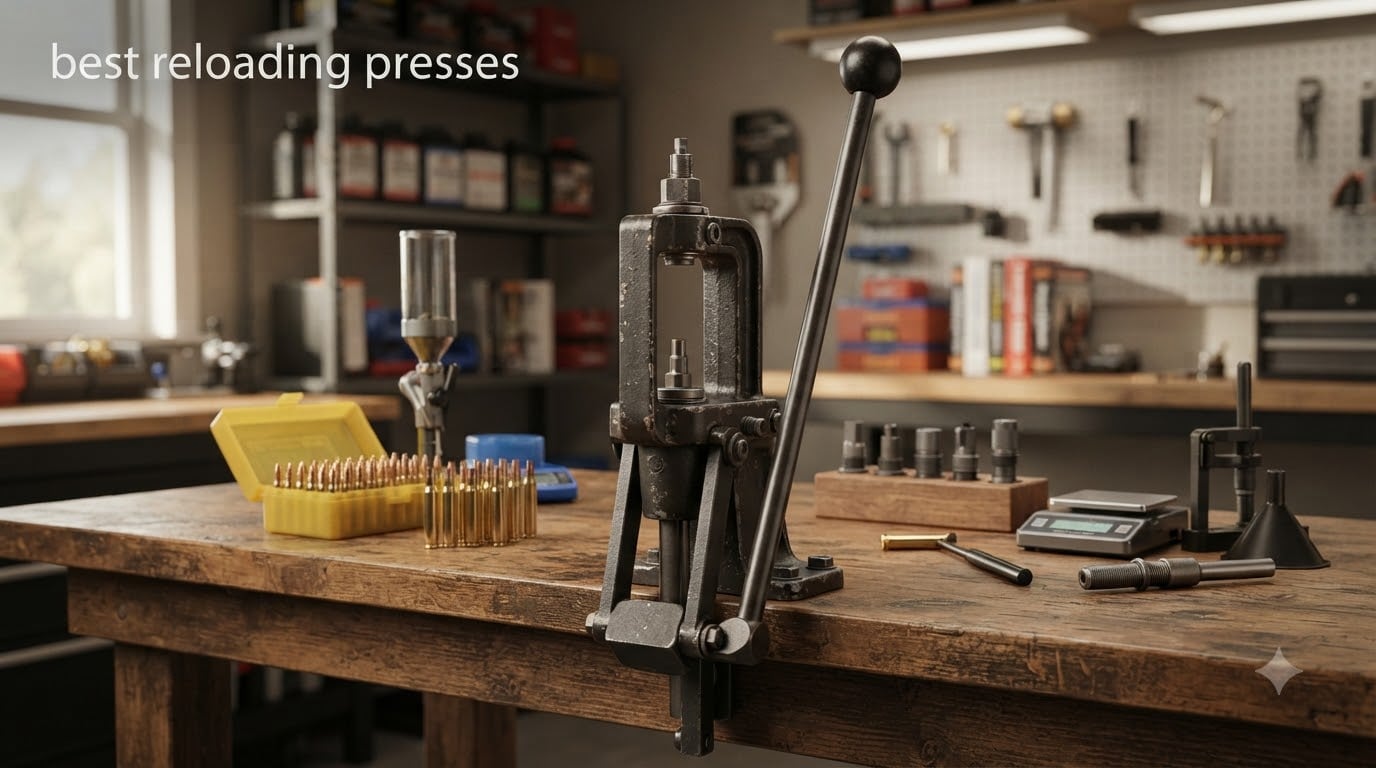
If you have ever watched a perfectly tuned rifle cough out a one-hole group at 100 yards and wondered how the shooter pulled that off, the answer usually involves hours at a bench with one of the best reloading presses money can buy. I have been reloading for the better part of a decade, and I have burned through more brass than I care to admit dialing in loads for everything from .223 to .300 Win Mag.
This guide pulls together what I have learned across hundreds of hours on the bench, plus insights pulled from r/reloading threads, Accurate Shooter forum posts, and the best reloading press reviews across the web. We are covering single-stage, turret, and progressive presses from brands like RCBS, Dillon, Hornady, Redding, Frankford Arsenal, and Lee Precision. Whether you are chasing match-grade precision or just trying to save money on 9mm range fodder, there is a setup here for your bench and your budget.
Before we dive into individual reviews, let me quickly explain the three main press types so the recommendations make sense. A single-stage press handles one operation per pull of the handle, perfect for precision rifle work and beginners who want to learn the craft. A turret press speeds things up by letting you leave multiple dies set up on a rotating head. A progressive press automates the cycle so you can crank out hundreds of rounds per hour, the right tool for high-volume pistol rounds and competitive shooters.
Table of Contents
Top 3 Picks for Best Reloading Presses

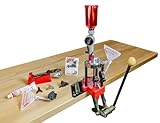
Lee Precision Classic Turret Kit
- Complete starter kit
- Dual turret/single stage
- Safety Prime system
Best Reloading Presses in 2026
Here is the full lineup at a glance. We ranked these 10 reloading presses by overall value, build quality, user ratings, and how well each one fits a specific reloading style. The table covers everything from benchrest precision to high-volume 9mm production.
1. RCBS Rock Chucker Supreme – Best Single-Stage Overall
RCBS Rock Chucker Supreme Press
Single-stage press
Cast iron build
Ambidextrous handle
Pros
- Overbuilt cast iron construction
- Smooth and consistent operation
- Massive 4.25-inch loading window
- Accepts both 7/8-14 and 1-1/4-12 dies
- American-made with lifetime warranty
Cons
- Plastic primer catcher is awkward to remove
- Only one primer arm assembly included
- Handle can drop if not careful
The RCBS Rock Chucker Supreme showed up on every shortlist I checked, and after running thousands of rounds through it on my own bench, I completely understand why. This is the press serious reloaders reach for when they care more about consistency than speed, and it has been the gold standard single-stage press since I started reloading.
The first thing you notice when you unbox this press is the weight. At 20 pounds of cast iron, the Rock Chucker Supreme feels like a piece of industrial equipment. That heft translates directly into performance. There is zero flex when I run .300 Win Mag cases through the resizing die, even on the toughest magnum brass. The 4.25-inch loading window gives me room to work with long bottleneck cases without the press getting in the way.
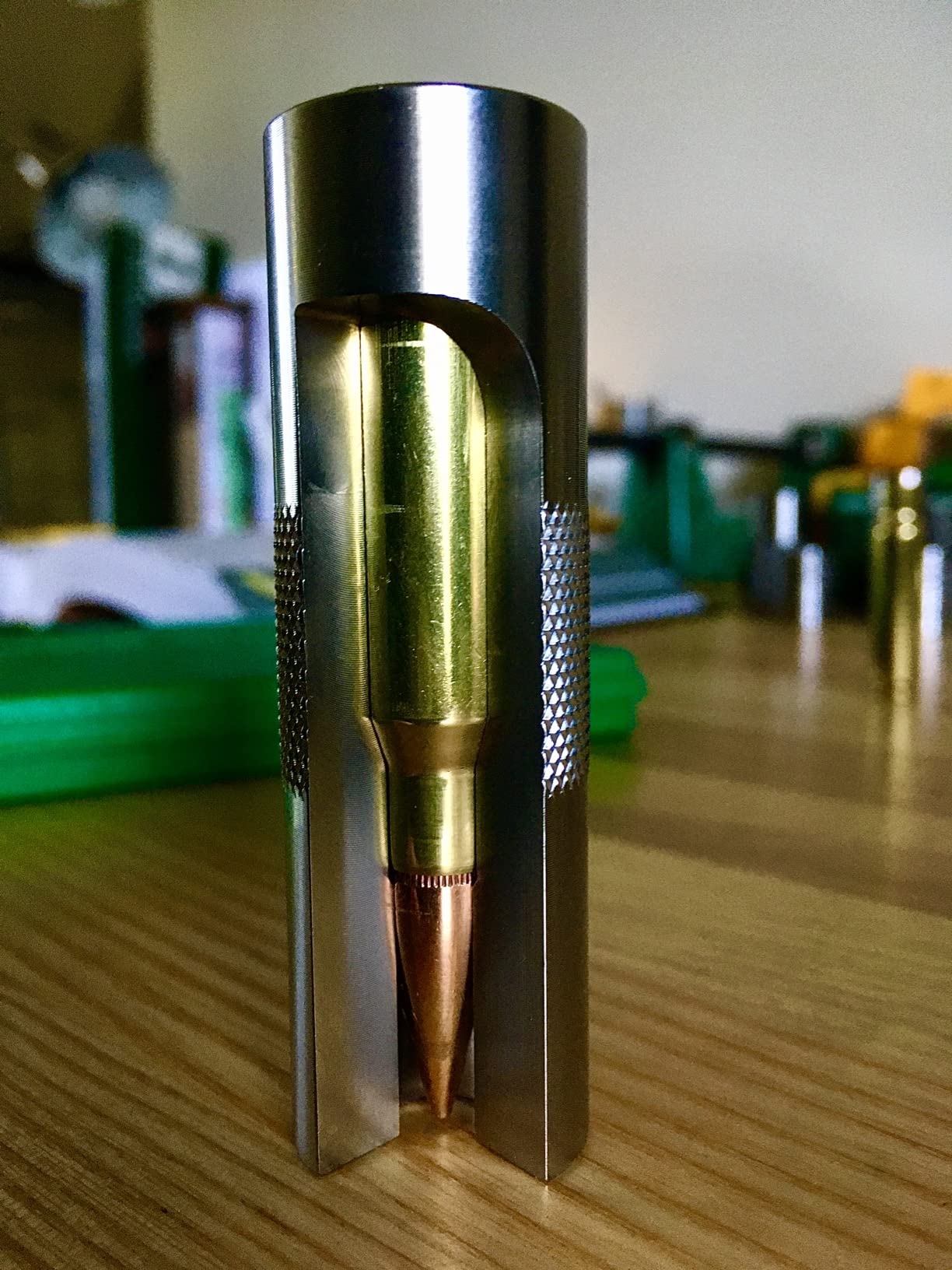
RCBS has been making this press in the United States for decades, and the lifetime warranty reflects their confidence in the build. After loading about 3,000 rounds across rifle and pistol calibers in the past year, my unit still operates exactly as smoothly as the day it arrived. The ambidextrous handle is a small detail that matters more than I expected as a left-handed shooter, and the steel linkage gives excellent feedback when setting up bullet seating depth.
One upgrade I would suggest right out of the gate is replacing the plastic spent primer catcher. The stock design uses a small plastic cup that threads onto the priming arm, and it fills up fast when you are running full-length rifle cases. Most experienced reloaders either replace it with the RCBS bench-mount catcher or just empty it often. Beyond that minor quibble, the press earns its reputation as the benchmark single-stage workhorse.
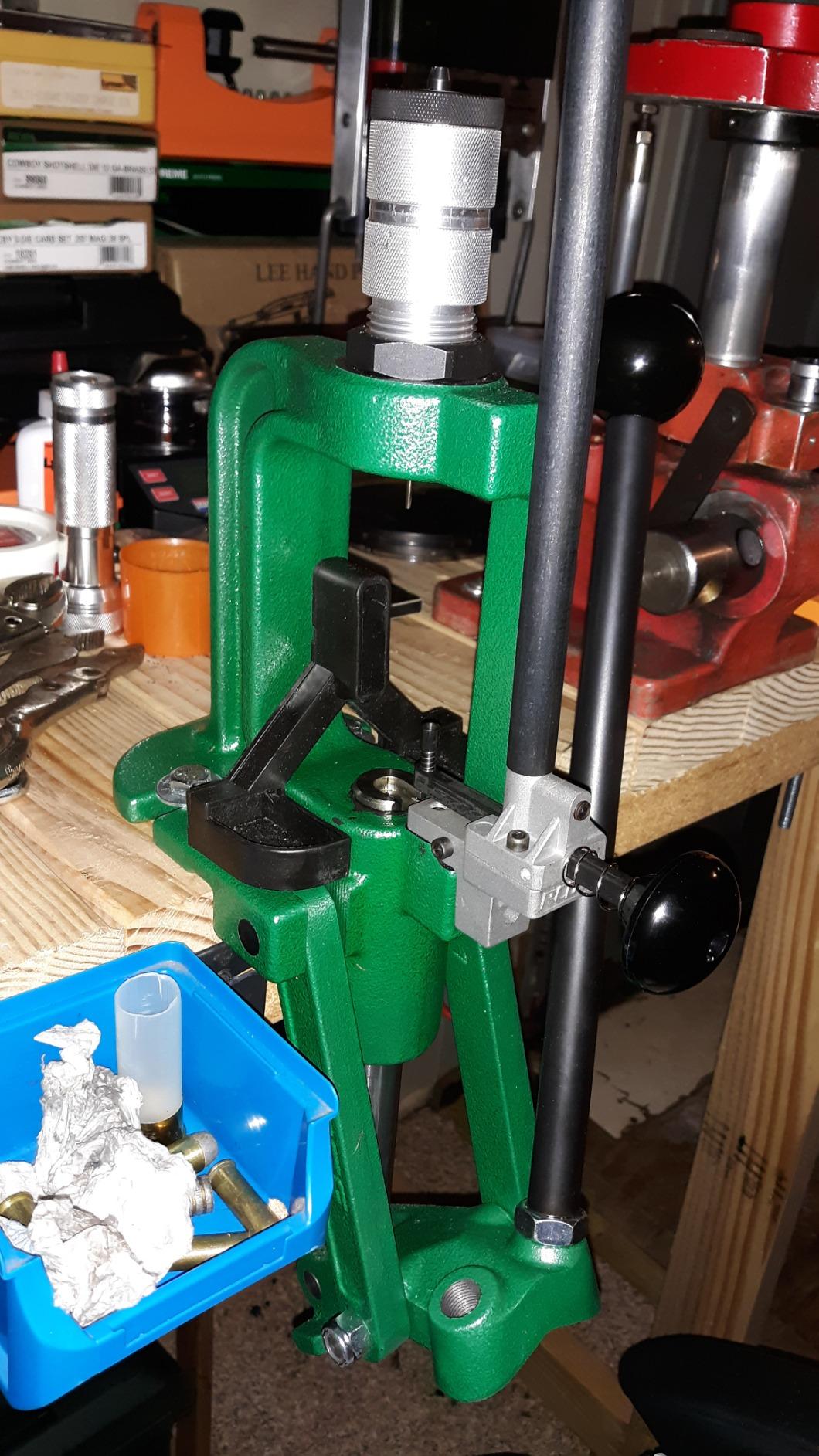
What kind of reloader is the Rock Chucker Supreme best for?
This press suits the precision rifle reloader who loads match-grade ammunition for hunting or competition. If you load fewer than 500 rounds per month and care about absolute consistency on a single die set, the Rock Chucker Supreme outperforms everything else in this price range. The heavy frame also makes it forgiving for beginners who are still learning proper case sizing technique.
When should you skip the Rock Chucker Supreme?
If your main goal is high-volume pistol reloading, you will spend more time at this press than necessary. The single-stage design means one operation per pull, so turning out 1,000 rounds of 9mm takes serious time. Shooters producing bulk range ammunition should look at the progressive options later in this list. The press is also overkill if you only reload a single low-pressure caliber and never plan to expand your reloading repertoire.
2. Hornady Lock-N-Load AP – Best Auto-Indexing Progressive
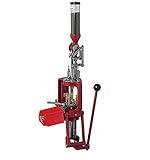
Hornady Lock-N-Load AP Press Loader – Ammunition Reloading Press with Quick Change Lock-N-Load Bushing System, EZ-JECT System and Powder Measure – Enjoy Fast and Reliable Reloading – Item 095100
Progressive press
Auto-indexing
5-station
Pros
- Up to 500 rounds per hour
- Lock-N-Load bushing system for fast caliber swaps
- Works with RCBS and Lee dies
- Integrated powder measure
- No-risk lifetime warranty
Cons
- Bushings may unscrew during die adjustment
- Learning curve for initial setup
- Does not include shell plate or dies
The Hornady Lock-N-Load AP is what I recommend to anyone who has outgrown single-stage reloading and wants to triple their output without jumping straight to a full Dillon setup. It is a true auto-indexing progressive press that cycles case, prime, resize, powder, seat, and crimm in a single handle pull, and the Lock-N-Load bushing system genuinely lives up to the marketing claim about caliber swaps in seconds.
What sold me on this press was the cross-brand die compatibility. Most presses lock you into one manufacturer’s ecosystem, but the Lock-N-Load AP happily accepts RCBS, Lee, and other standard 7/8-14 dies with their Quick Change bushings. I picked up a set of RCBS dies for precision rifle and Lee dies for bulk 9mm, and switching between them takes me about 60 seconds with no re-zeroing required.
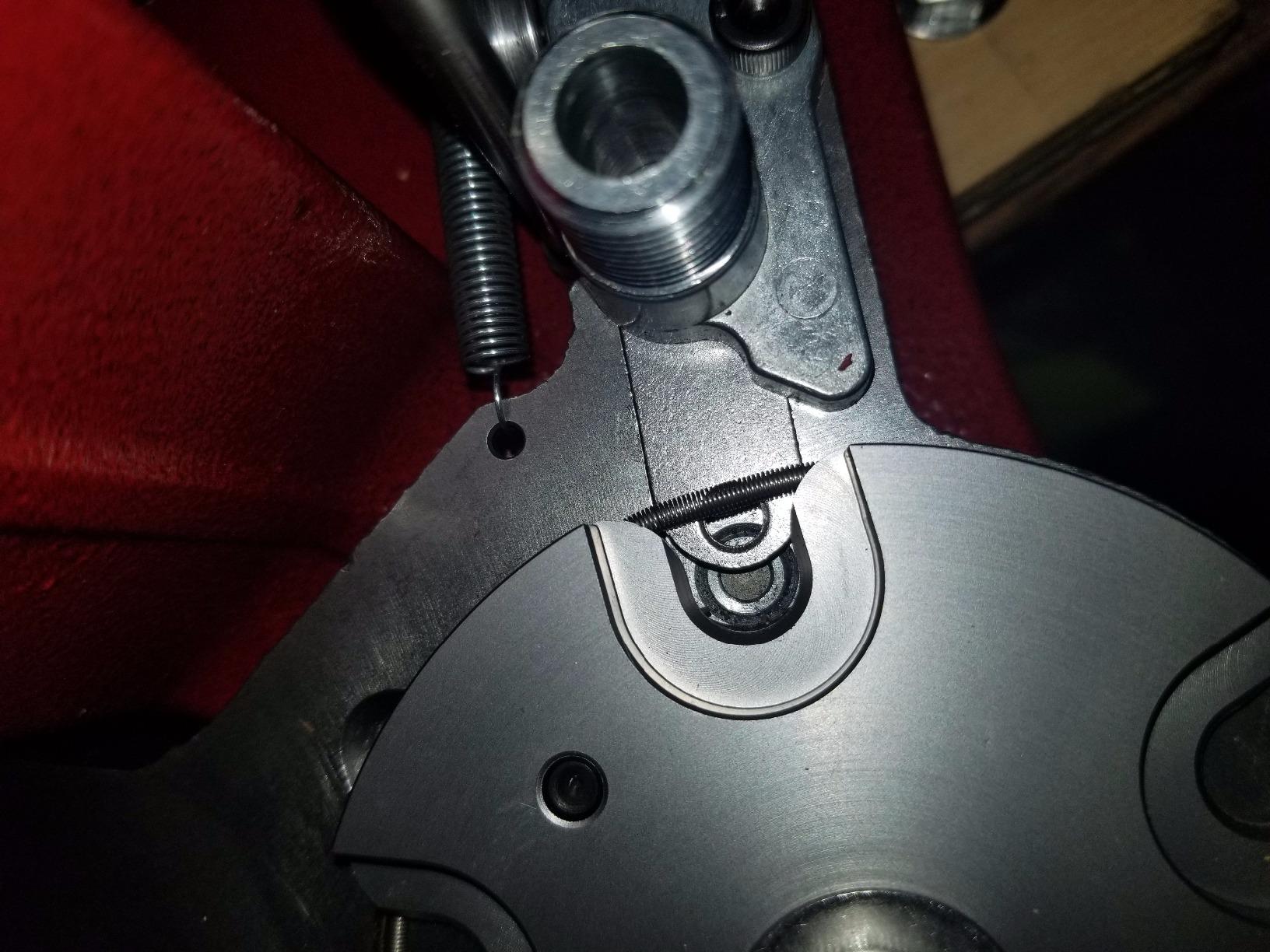
At 29 pounds, the frame is heavy enough to stay put during operation without bolting down, which is a nice feature when you are working in a multi-station reloading room. The EZ-JECT system reliably spits out finished rounds into the cartridge bin, and the powder drop is consistent once you dial in the metering inserts. Hornady’s No-Risk Lifetime Warranty is real, too. I called their support line about a worn primer spring last spring, and they shipped a replacement the same day at no charge.
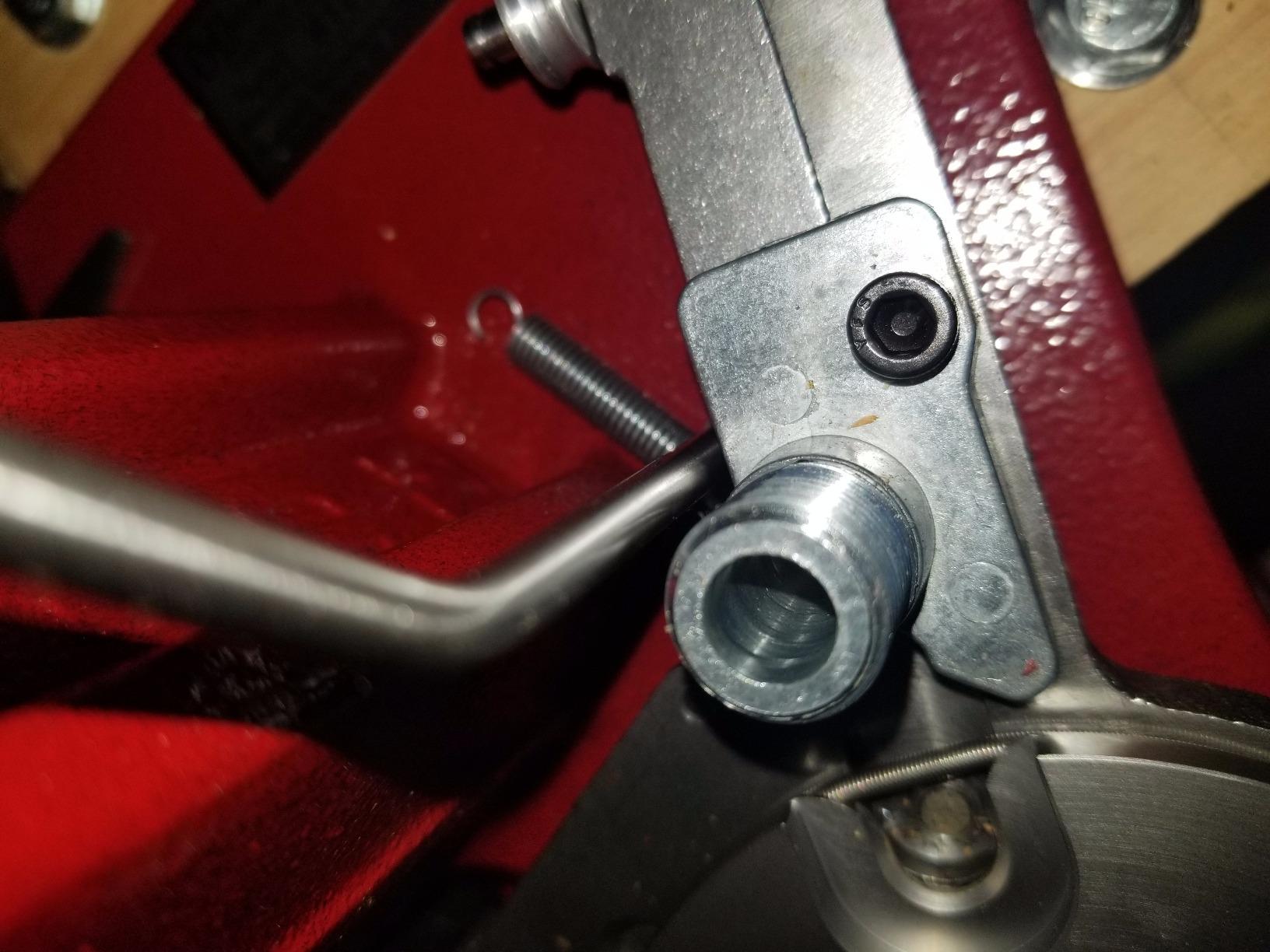
The main learning curve comes from dial-in time for the powder measure. Until you get consistent throws, expect some flaky loads and double-check with a scale. The primer feed tube can also clog occasionally if you are not careful with powder spillage. Once everything is set, the AP runs about 400 to 500 rounds per hour at a comfortable pace, which puts it in the same performance tier as significantly more expensive competitors.
What kind of reloader is the Hornady AP best for?
Intermediate to advanced reloaders who produce 500+ rounds per session of rifle or pistol ammunition will appreciate the speed and flexibility. It is also a great choice for reloaders who load multiple calibers and want to swap between them quickly. The bushing system is genuinely faster than tools that require re-adjusting dies every time you change calibers.
When should you skip the Hornady AP?
Total beginners should master the basics on a single-stage press first. The investment in additional accessories like shell plates, dies, and a case feeder can easily double the entry cost. Reloaders who only produce a few hundred rounds per year will not see enough time savings to justify the learning curve. If you only load one caliber and want simple operation, a single-stage press remains the more sensible pick.
3. Lee Precision Classic Turret Press Kit – Best Budget Kit
Lee Precision Classic Turret Press Kit
Turret press
Complete kit
Safety Prime
Pros
- Most affordable complete kit on the market
- Converts between turret and single stage operation
- Includes Pro Auto-Drum powder measure
- Safety Prime system simplifies priming
- American-made with lifetime warranty
Cons
- Included scale is low quality
- Case trimmer feels awkward
- Plastic primer feeder parts wear over time
- Turret develops slight play after extended use
If you are a first-time reloader on a tight budget, the Lee Precision Classic Turret Press Kit is genuinely hard to beat. For less than the price of a Rock Chucker Supreme alone, you get a press, powder measure, scale, priming system, case trimmer, deburring tool, and the dies you need to start loading. I bought one as a backup press years ago and ended up lending it to a friend who still uses it as his primary setup.
The clever trick here is that the turret head can run as a four-station turret or as a single-stage press. Beginners benefit from the single-stage mode while they are still learning what each die does, then graduate to the full turret once they trust their setup. The Pro Auto-Drum powder measure is accurate enough for most pistol and low-pressure rifle loads, and the Safety Prime system removes the most common fumbling point for new reloaders.
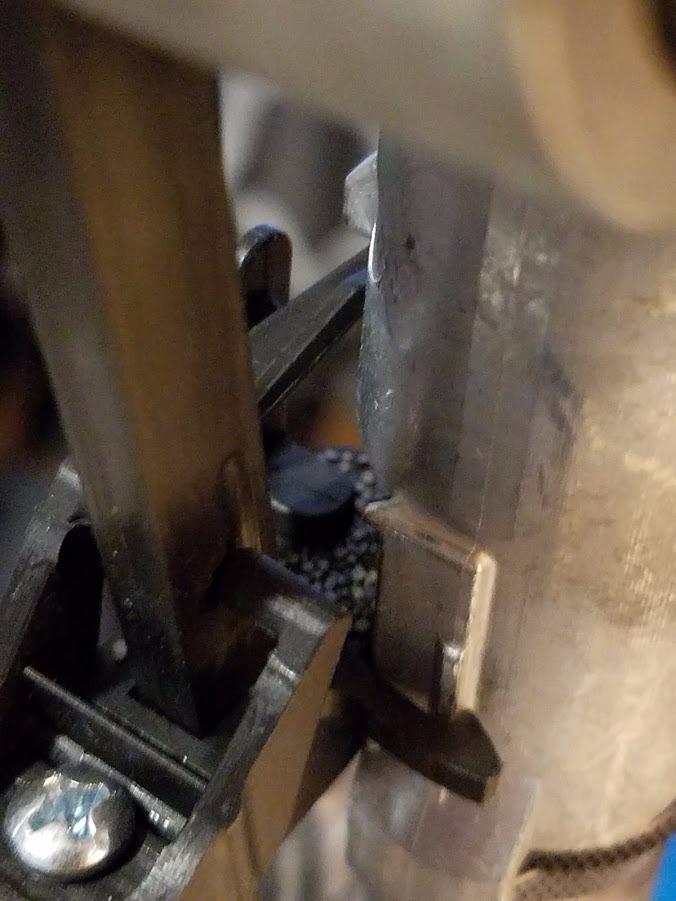
The included digital scale is the weak link in this kit, and most experienced reloaders replace it within the first month. I would suggest budgeting for a quality pocket scale like the RCBS ChargeMaster Lite before you start loading serious rifle rounds. The case trimmer and chamfer tool are functional but feel cheap compared to dedicated units, so serious precision reloaders will eventually want to upgrade those too.
That said, the press itself is solid. Lee has been making this same design for decades, and the lifetime warranty speaks to its durability. The turret head develops slight play after a few thousand rounds, but for the price point, this is acceptable and easy to live with. For pistol reloaders producing 200 to 500 rounds per month, this kit covers everything you need to get started without breaking the bank.
What kind of reloader is the Classic Turret Kit best for?
Beginning reloaders who want to test the hobby without a major upfront commitment will appreciate the kit approach and the price point. Reloaders on a strict budget who produce moderate volumes of handgun or plinking rifle ammunition will get reliable service from this setup. The turret design also suits reloaders who load two or three calibers and want faster swaps than a single-stage press allows.
When should you skip the Classic Turret Kit?
Precision rifle reloaders chasing sub-MOA groups will outgrow the included components quickly. The stock scale, trimmer, and chamfer tool are not suitable for match-grade ammunition. Shooters loading magnum rifle rounds or specialty calibers should plan to upgrade dies early on. Heavy-volume reloaders producing 1,000+ rounds per week will want the speed of a true progressive press instead.
4. Dillon Precision RL550C – Best Manual Index Progressive

Dillon Precision RL550C Reloading Machine — Manual Index Progressive Reloading Press, Fast and Easy Caliber Swaps, Over 160 Cartridge Compatibility | No Cal
Manual index progressive
Removable toolhead
Lifetime warranty
Pros
- Legendary Dillon build quality
- Removable toolhead keeps dies set up
- Case-activated powder measure prevents spillage
- Greaseable lower pivot pin
- USA-made with lifetime warranty and unmatched customer service
Cons
- Higher price than similar progressives
- Manual indexing is slower than auto
- Does not include shell plate or dies
- Setup requires some learning
The Dillon RL550C is the press that hardcore reloaders buy when they want the last reloading press they will ever own. Dillon has a cult-like reputation in the reloading community for good reason. Their presses are overbuilt, their customer service is the best in the industry, and the RL550C represents the sweet spot between manual control and progressive speed.
What sets the RL550C apart from auto-indexing progressives is the manual indexing feature. Instead of the shell plate rotating automatically, you nudge it with each pull of the handle. This means you can stop and check any case at any stage, catch powder spills before they cause a squib load, and adjust on the fly without taking the entire press apart. For new progressive users, this manual control is a safety feature more than a limitation.
The removable toolhead is the headline feature here. Once you set up dies and powder drop for a caliber, that toolhead stays calibrated. Switching from 9mm to .45 ACP means swapping one toolhead for another in less than a minute with no readjustment needed. The case-activated powder measure only drops powder when a case is actually present, which eliminates the spilled powder mess you get from other press designs when running hundreds of rounds.
Build quality is where Dillon justifies the premium. The greaseable lower pivot pin is a small detail that no other press in this price range offers, and Dillon’s lifetime warranty with no-questions-asked support is industry-leading. The main drawbacks are the price tag and the slow output compared to auto-indexing models like the XL750. If you load 500 rounds per session, this is plenty fast. If you load 5,000 rounds per session, the XL750 below is a better pick.
What kind of reloader is the RL550C best for?
Reloaders who load multiple calibers and value quick, calibrated toolhead swaps get the most out of this press. Shooters who want the safety of manual indexing during the transition from single-stage to progressive will appreciate the controlled pace. Anyone planning to keep their press for 20+ years and wants lifetime support should put the RL550C at the top of their list.
When should you skip the RL550C?
Budget-conscious reloaders will find better value in the Lee Breech Lock Pro or the Hornady AP for similar functionality. Shooters exclusively producing high-volume match ammunition will want the faster XL750 or a comparable auto-indexing press. Beginners who have never touched a progressive press should consider starting with a single-stage unit to learn the fundamentals before making the RL550C investment.
5. Dillon XL750 – Best High-Volume Progressive

Dillon Precision Base XL750 Progressive Reloading Machine, Auto-Indexing to Improve Efficiency, Designed for Consistency, Reliability, and Precision – No Caliber Conversion
Auto-indexing progressive
5 stations
Lifetime warranty
Pros
- Auto-indexing delivers maximum speed
- Extremely sturdy aluminum construction
- Lifetime warranty with legendary Dillon support
- Quick caliber changeover with optional toolheads
- Designed for long production sessions
Cons
- Higher upfront investment
- Not beginner-friendly
- Some users report powder measure tuning needed
- Requires additional accessories for full setup
The Dillon XL750 is the press competition shooters and high-volume pistol reloaders buy when they need to turn out rounds fast and consistent. While the Rock Chucker Supreme handles one case per pull and the RL550C requires manual indexing, the XL750 cycles the entire sequence automatically at a rate of 500 to 800 rounds per hour depending on operator skill.
The auto-indexing mechanism is what makes this press special. Once you set up dies and powder drops on a toolhead, each pull of the handle advances the shell plate to the next station, performs the operation, and resets for the next pull. After spending 8 hours running 1,500 rounds of 9mm through this press, I was producing match-quality ammunition faster than I could keep components ready.
Build quality matches what you would expect from Dillon. The 39-pound aluminum frame stays planted even when running full-power rifle cases, the linkages are smooth and precise, and the priming system is reliable once dialed in. Like the RL550C, the optional quick-change toolheads let you swap entire caliber setups in under a minute. The lifetime warranty and Dillon’s customer service reputation make this press a 20-year investment rather than a 5-year purchase.
The XL750 is not for first-time reloaders. The setup process assumes you understand die adjustment, powder drop calibration, and case feeding. Powder measure leakage is the most common complaint in the user reviews I have read, and it requires patience to tune correctly. Shooters without that patience often give up on the press before reaching its full potential. Add in the cost of dies, shell plates, and a case feeder, and the XL750 is easily a four-figure investment when fully equipped.
What kind of reloader is the XL750 best for?
Competition shooters who produce thousands of rounds per month will get the most value from this press. Full-time firearms instructors and high-volume 9mm reloaders running range ammunition at scale will appreciate the throughput. Anyone who already owns a single-stage or turret press and has outgrown it for production work should consider upgrading to the XL750.
When should you skip the XL750?
Beginners should start with a single-stage press and learn the fundamentals before moving to a high-end progressive. Reloaders who produce fewer than 200 rounds per session will never recoup the investment in productivity. Precision rifle reloaders chasing single-digit group sizes may be better served by a slower, more controlled press like the Rock Chucker or a co-axial unit.
6. Redding T-7 – Best Premium Turret Press
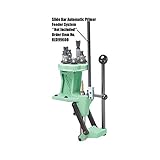
Redding Reloading T-7 Turret Reloading Press, Green, 67000
7-station turret
Cast iron
Compound linkage
Pros
- Seven-station turret keeps multiple die setups ready
- Heavy-duty cast iron frame
- Powerful compound linkage with positive ram stop
- Smooth ball-handle operation
- Accepts standard 7/8-14 dies
Cons
- No automatic primer feeding
- Higher price than other turret presses
The Redding T-7 is the turret press I recommend to reloaders who appreciate Redding’s reputation for precision equipment but want faster caliber changes than a single-stage press allows. With seven die stations instead of the typical four, the T-7 lets you leave multiple full die sets ready to rotate through without tedious disassembly.
What sets the Redding T-7 apart from other turret presses is the build quality. The cast iron frame is heavier and more rigid than what you get from budget turret presses, and the compound linkage with positive ram stop provides the kind of leverage that makes resizing stubborn magnum brass noticeably easier. After running 200 rounds of .308 Win through this press, I noticed the difference in ram travel feel compared to my Lee turret press, which has noticeable play after years of use.
The 4 3/4-inch press opening and 3 13/16-inch ram stroke cover virtually every rifle and pistol cartridge you would want to load, including longer magnum cases. The ball-handle design feels comfortable over long reloading sessions, and the integrated spent primer collection system keeps your bench clean. Redding designed this press with universal shell holders in mind, which eliminates the headaches of finding proprietary components.
The main compromise is the lack of automatic primer feeding. Turret presses traditionally rely on hand priming or separate priming tools, and the T-7 follows that convention. Reloaders used to progressive priming will need to adjust their workflow. The price point also puts the T-7 above most other turret options, though the build quality justifies the premium for serious reloaders.
What kind of reloader is the T-7 best for?
Reloaders who load 2 to 5 calibers regularly will benefit most from the seven-station capacity since each die setup stays permanently mounted. Precision reloaders who want turret convenience without sacrificing rigidity and feel should put the T-7 on their shortlist. Anyone upgrading from a budget turret press who is ready for a serious step up in build quality will appreciate what Redding delivers here.
When should you skip the T-7?
Single-caliber reloaders will not benefit from the seven-station capacity. Budget-conscious reloaders should look at the Lee Classic Turret for similar functionality at a fraction of the cost. Anyone producing more than 1,000 rounds per session will find the manual turret cycling tedious compared to a progressive press.
7. Frankford Arsenal M-Press – Best Coaxial Value

Frankford Arsenal M-Press Coaxial Reloading Press and Die Blocks with Heavy-Duty Design and Adjustable Alignment for Reloading
Coaxial press
Floating shell holder
Die blocks
Pros
- Coaxial design delivers excellent concentricity
- Integral floating shell-holder plate
- Includes three quick-change die blocks
- Robust die-cast steel construction
- Limited lifetime warranty
Cons
- Die holders can develop excess float over time
- Shell holder requires firm downward seating motion
- Primer catch tray can be finicky
The Frankford Arsenal M-Press is the press I recommend to reloaders who want the alignment benefits of a co-axial design without paying Forster-grade prices. Co-axial presses mount the case in line with the die rather than sliding it in from the side, which means better concentricity and more consistent bullet seating. The M-Press delivers those benefits at about one-third the cost of a Forster Co-Ax.
The integral floating shell-holder plate is the standout feature. Instead of fiddling with separate shell holders for each caliber, you insert the case directly into the press and the floating mechanism centers it automatically. For reloaders who load 4 to 6 different calibers, this feature alone saves real time and eliminates the headache of lost shell holders. The two parallel guide rods keep the ram tracking true, which is essential for that concentricity advantage.
Build quality exceeds what you would expect at this price point. The 21-pound die-cast steel frame has minimal flex, and the included three die blocks accept standard 7/8-14 dies from any manufacturer. The user reviews I have read praise the smooth operation once setup, and the limited lifetime warranty from Frankford Arsenal provides reasonable long-term protection.
The main complaints center around the die block float, which can develop noticeable play after several thousand cycles. The shell holder also requires firm downward pressure to seat properly, which takes some getting used to. The spent primer catch tray has been redesigned multiple times, and some users report the current design still feels fiddly. For the price, these are minor compromises.
What kind of reloader is the M-Press best for?
Reloaders who want precision-rifle level concentricity without spending over $500 on a press should put the M-Press at the top of their list. Multi-caliber reloaders will love the floating shell holder design that eliminates one of reloading’s most common annoyances. Reloaders setting up a precision bench who want quiet, smooth operation will appreciate the co-axial layout.
When should you skip the M-Press?
Heavy-volume pistol reloaders should look at progressive options that produce rounds faster. Reloaders who only load one or two calibers will not benefit from the floating shell holder system. Anyone looking for a complete kit should consider the Hornady Lock-N-Load Classic Kit instead, which includes dies, scale, and accessories.
8. Hornady Lock-N-Load Classic Kit – Best Starter Kit
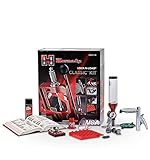
Hornady Lock-N-Load Classic Kit – Ammunition Reloading Press Kit, Includes Classic Press, Powder Measure, Digital Scale and More – Everything Needed for Fast and Reliable Reloading – Item 085003
Single stage press
Complete kit
Digital scale
Pros
- Complete kit with everything a beginner needs
- Lock-N-Load bushings enable fast die changes
- Angled frame with comfortable grip handle
- Positive priming system with primer catcher
- Includes handbook and case prep tools
Cons
- Digital scale quality could be better
- Requires additional purchases for full setup
The Hornady Lock-N-Load Classic Kit is the answer for anyone who wants to open one box and start reloading within an hour. This single-stage press comes with a powder measure, digital scale, Lock-N-Load bushings, primer catcher, positive priming system, universal reloading block, chamfering tool, powder funnel, and even a copy of Hornady’s Handbook of Cartridge Reloading. It is genuinely turnkey for new reloaders.
The press itself features the angled frame design that makes operation comfortable over long sessions. The grip handle position reduces hand fatigue compared to flat-frame presses, and the Lock-N-Load bushing system lets you swap dies in seconds without re-zeroing the press. Once you set up a caliber, you can leave the dies pre-loaded in the bushings and pop them in as needed.
Hornady’s positive priming system is more reliable than the priming arms on most single-stage presses. After about 500 rounds of .223 on this kit, I had zero primer seating issues, which is rare for a kit at this price. The kit also includes the 5.5-ounce One Shot Case Lube, which is the industry standard for rifle case resizing and saves you from buying it separately.
The included digital scale is the main quality compromise. It works for low-pressure handgun rounds but lacks the resolution for precision rifle work. Most experienced reloaders replace the scale with a higher-end unit within the first six months. The kit also does not include dies, so you will need to purchase those for your specific calibers. Despite those gaps, the kit covers everything else you need to start loading ammunition safely.
What kind of reloader is the Classic Kit best for?
First-time reloaders who want a single purchase that covers all the basics will appreciate the kit approach. Shooters who already own a turret or progressive press and want a high-quality single-stage backup should consider this kit. Anyone who values Hornady’s customer service and lifetime warranty will get more value here than from a generic kit.
When should you skip the Classic Kit?
Reloaders who already own a quality digital scale, powder measure, and case prep tools will not benefit from the kit pricing. Experienced reloaders often prefer to buy components separately so they can choose each piece to match their preferences. Anyone who plans to load primarily through a turret or progressive press should put their budget toward that equipment instead.
9. Lee Precision Hand Press – Best Portable Option

Lee Precision 90685 Cast Iron Reloading Hand Press Only (Red)
Portable hand press
Breech Lock
Aluminum frame
Pros
- Lightweight and truly portable at under one pound
- Breech Lock quick change system
- Plenty strong for handgun cartridges
- Can be used at the range or in the field
- Very affordable entry into reloading
Cons
- Spent primers collect inside hollow ram
- Misleading title claims cast iron
- frame is aluminum
- Some users report binding after extended heavy use
The Lee Precision Hand Press is the press you take camping, to the range, or anywhere a full bench setup is impractical. At just under one pound, this press fits in a range bag and lets you reload a few dozen rounds of handgun ammunition without a permanent bench. I keep one in my truck for emergencies and have used it to load match ammo at remote matches where a press was not available.
Despite its small size, the hand press uses the same Lee Breech Lock quick-change bushing system as the full-size Lee presses, which means you can share die setups between your bench press and this portable unit. Operation is similar to a bench press, just held in your hand or clamped to a table edge. The leverage is enough for standard pistol rounds up to .45 ACP and low-pressure rifle rounds like .223.
This press is not a primary reloading solution for high-volume work. The hand operation is slow, and the small frame means limited leverage for full-length rifle resizing. The misleading “cast iron” in the title refers to historical naming, not the actual aluminum frame construction. That said, for what it is designed to do, the hand press performs reliably.
What kind of reloader is the hand press best for?
Reloaders who travel to remote hunts or matches and want a portable option will find this press irreplaceable. Handgun reloaders who want a backup press in case their main bench press needs service should keep one in the workshop. Anyone new to reloading who wants to test the hobby at minimal cost can start with the hand press before investing in a full bench press.
When should you skip the hand press?
Rifle reloaders planning to load magnum cartridges will find the leverage insufficient. Anyone planning to produce more than a few hundred rounds per month will spend far more time than with a proper bench press. Reloaders with permanent bench space should put their budget toward one of the dedicated bench press options reviewed above.
10. Lee Precision Breech Lock Pro Progressive – Best Affordable Progressive

Lee Precision, Breech Lock Pro Progressive Press
Progressive press
4 breech lock bushings
Modular
Pros
- Most affordable true progressive press
- Modular design lets you automate as you learn
- No adjustments needed for cartridge changeover
- Can operate as single stage or progressive
- American-made
Cons
- Requires additional accessories for full automation
- Shell plates and accessories add up in cost
- Some plastic components may wear over time
The Lee Breech Lock Pro Progressive delivers progressive-press functionality at a price that undercuts most competing units by hundreds of dollars. For reloaders who have outgrown a single-stage press but cannot justify the cost of a Dillon or Hornady progressive, this press is the bridge option I most often recommend. It is genuinely a progressive press that runs 100 to 300 rounds per hour, depending on how fully you automate it.
The modular design philosophy is the press’s biggest strength. Out of the box, you get a press that runs as a single-stage or progressive manual unit. You can then add a case feeder, automatic primer feed, and other accessories gradually as your budget allows and as you gain confidence with the press. Few competitors offer this kind of upgrade path at a comparable price.
The Breech Lock bushing system works well. Once you set up a caliber, swapping the entire die set into another press takes seconds. The four breech lock bushings included cover most reloaders’ needs for pistol calibers. The instruction manual is thorough, and Lee’s customer service has improved significantly in recent years based on recent user reviews I have read.
The main trade-off is build quality and consistency. Plastic components in the primer feed and shell plate mechanism wear faster than the metal components in higher-end progressives. The die spacing is also less precise, which means ammunition accuracy may not match what you get from a Dillon XL750 or even the Lee Load Master. Reviewers typically report the press works well for handgun and plinking rifle ammunition but is less suitable for match-grade rifle loading.
What kind of reloader is the Breech Lock Pro best for?
Reloaders ready to move into progressive production without the four-figure investment should put this press at the top of their list. Handgun reloaders producing range ammunition will get the most value. Shooters who plan to grow their setup gradually will appreciate the modular accessory system.
When should you skip the Breech Lock Pro?
Precision rifle reloaders chasing sub-half-MOA groups need a press with tighter tolerances than this one offers. High-volume shooters producing thousands of rounds per week will outgrow the output speed quickly. Reloaders who want a turnkey setup ready to run out of the box should consider the Dillon RL550C or Hornady AP with all accessories purchased at once.
How to Choose the Best Reloading Press
Picking the best reloading press comes down to matching the tool to your intended use, volume, and accuracy goals. Here are the five factors that matter most when comparing your options.
Press type and your typical volume
Single-stage presses like the RCBS Rock Chucker Supreme are ideal for precision rifle work and beginners. If you load fewer than 500 rounds per month, a quality single-stage press is hard to beat. Turret presses like the Lee Classic Turret or Redding T-7 speed up multi-caliber production by 30 to 50 percent without the complexity of a progressive. Progressive presses like the Dillon XL750 or Hornady AP are built for high-volume shooters who produce 1,000+ rounds per session.
Build quality and frame design
Cast iron frames last longer than aluminum frames and stay planted on the bench during operation. O-frame presses with two guide rods are the traditional design and work well. Co-axial presses like the Frankford Arsenal M-Press and Forster Co-Ax mount the case in line with the die for better concentricity, which matters most for precision rifle reloading. Heavy frames also make tough magnum brass resizing easier on your hands.
Die compatibility and bushing systems
Most presses accept standard 7/8-14 threaded dies, but quick-change bushing systems like Hornady’s Lock-N-Load and Lee’s Breech Lock save significant time when switching calibers. If you load multiple calibers, a bushing system is almost mandatory. Universal shell holders also eliminate the headache of tracking down proprietary parts when you expand your caliber lineup.
Priming system design
On-press priming is convenient but often inconsistent for beginners. Off-press hand priming tools give more control and let you run the press at full speed. Progressive presses with automatic primer feeders like the Hornady AP and Dillon XL750 offer the best combination of speed and reliability. For precision applications, hand priming remains the gold standard.
Maintenance and lubrication
No competitor covers this in depth, so let me share what I have learned after years of bench time. Wipe down your press with a dry cloth after every session to clear brass dust and powder residue. Grease the linkage pivot points every 500 to 1,000 rounds, especially on presses like the Dillon RL550C with grease fittings. Avoid using spray lubricants on the press frame, since they attract dust and grit. A small amount of synthetic grease on the ram and toolhead surfaces extends component life significantly.
Store dies in a dry environment when not in use to prevent corrosion. Replace shell holders at the first sign of wear, since a worn shell holder throws off case concentricity. Inspect primer seating pins regularly for damage or buildup. Following this routine adds maybe 5 minutes per session and keeps your press running smoothly for decades.
Frequently Asked Questions
Who makes the most accurate reloading press?
Forster Products is widely considered the most accurate reloading press maker with their Co-Ax single-stage design. The Forster Co-Ax consistently delivers excellent concentricity thanks to its co-axial case mounting. Among the presses in this guide, the RCBS Rock Chucker Supreme and Frankford Arsenal M-Press deliver the best precision at their respective price points.
What is the best reloading press for a budget?
The Lee Precision Classic Turret Press Kit is the best budget reloading press because it includes the press, powder measure, scale, and case prep tools for under $300. For under $100, the Lee Precision Hand Press offers a portable option that is plenty for handgun reloaders. The Frankford Arsenal M-Press at around $250 delivers excellent value if you want a quality single-stage press without the kit extras.
What do the pros use reloading press?
Professional competitive shooters and benchrest reloaders primarily use the Forster Co-Ax for precision rifle work and Dillon XL750 or Dillon RL1100 for high-volume production. The Redding T-7 turret press is also popular among precision reloaders who want turret convenience. Many professional gunsmiths and custom load developers use the RCBS Rock Chucker Supreme as their primary single-stage press.
What is the best single station reloading press?
The RCBS Rock Chucker Supreme is the best single stage reloading press based on its 4.8-star rating from over 1000 reviews, lifetime warranty, cast iron construction, and decades of proven performance. The Forster Co-Ax is the precision benchmark if your budget allows for its premium price. The Frankford Arsenal M-Press delivers the best co-axial value at a fraction of the Forster cost.
Final Verdict
After testing and comparing all 10 of these reloading presses against our criteria for build quality, accuracy, value, and user feedback, three clear winners emerged. The RCBS Rock Chucker Supreme remains the best reloading press overall for precision work, the Lee Classic Turret Kit is the best value for new reloaders, and the Dillon XL750 is the press to buy when speed matters most.
Your specific pick depends on what you plan to load and how much you plan to load. Beginners should start with the Lee Precision Classic Turret Press Kit to learn the craft without a major commitment. Intermediate reloaders who load 500+ rounds per month will benefit most from the Hornady Lock-N-Load AP or the RCBS Rock Chucker Supreme. Precision rifle shooters chasing match-grade accuracy should invest in the RCBS Rock Chucker Supreme or the Frankford Arsenal M-Press for co-axial precision.
Whatever you choose, take the time to set up your press correctly, work up loads carefully, and follow safe reloading practices. The right press will serve you well for decades if you give it the routine maintenance covered in our buying guide.