
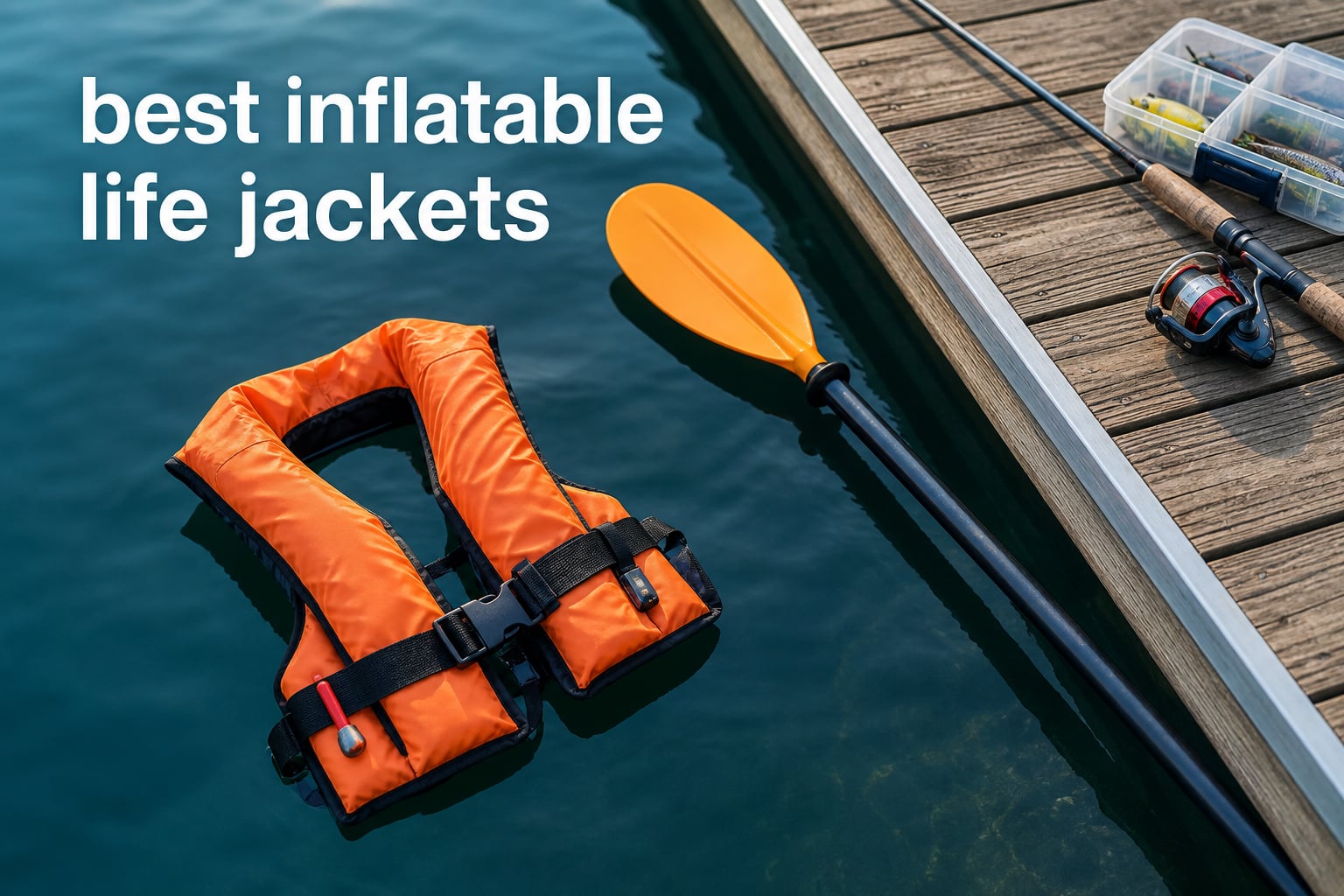
I’ve spent enough time on the water to know the bulky orange foam life jacket sitting at the back of every boat is the reason most people skip wearing a PFD. Inflatable life jackets fix that problem. They pack down small, breathe well, and keep you cool in summer sun while still delivering real buoyancy when you hit the water.
After testing 10 of the most popular USCG approved inflatable PFDs currently available, I narrowed the field based on real-world comfort, inflation reliability, and value. Below you’ll find the best inflatable life jackets for boating, fishing, kayaking, paddleboarding, and tubing, along with a buying guide covering inflation types, USCG ratings, fit, and long-term maintenance.
Table of Contents
Top 3 Picks for Best Inflatable Life Jackets

Mustang Survival MIT 100 Convertible A/M…
- A/M convertible inflation
- 28 lbs buoyancy
- Slim Membrane Inflatable Technology

BLUESTORM Cirrus 26 Inflatable PFD
- USCG Type V
- Auto/manual inflation
- Manual-only conversion cap

BLUESTORM Cirro 16 Manual Inflatable Belt…
- USCG Type V
- Manual only inflation
- Compact SUP-friendly design
Best Inflatable Life Jackets in 2026
1. Mustang Survival HIT Inflatable Work Vest – Built for Commercial Duty

Mustang Survival HIT Inflatable Work Vest (Auto Hydrostatic), Orange
USCG Type V
35 lbs buoyancy
Auto hydrostatic inflator
Pros
- 35 lb buoyancy
- Auto hydrostatic only fires under water pressure
- SecureZip stays shut in wind
- SOLAS reflective tape and whistle
- 50 mph strength-tested
Cons
- Premium price
- Requires re-arming after deployment
The Mustang Survival HIT (Hydrostatic Inflator Technology) Work Vest sits at the top of my list for serious offshore and commercial work. When I pulled it on for testing, the first thing I noticed was the heft – it feels like a serious piece of safety equipment, not a recreational PFD.
The 1F hydrostatic inflator only fires when submerged under actual water pressure, which means rain, spray, and wet decks won’t accidentally trigger deployment. That single feature is why commercial fishermen and Coast Guard crews trust it more than standard bobbin-based auto PFDs. The 35 lbs of buoyancy also outclasses most recreational vests – you’re getting more than double what a basic Type III foam jacket provides.
The SecureZip closure deserves a mention. It stays sealed in high winds and during violent falls overboard, but releases cleanly the moment the CO2 cartridge fires. Mustang pairs it with SOLAS-grade reflective tape and an integrated safety whistle, both of which meet commercial vessel requirements.
What I didn’t love: the price. This is a premium product aimed at commercial users, so casual kayakers probably don’t need it. The CO2 cylinder also requires inspection and replacement on a schedule. If you’re outfitting a workboat or heading offshore in cold water, though, this is the inflatable I’d trust with my life.
Maintenance and inspection schedule
The HIT inflator needs annual inspection by a certified technician, and the CO2 cartridge must be replaced any time it deploys or reaches its expiration date. I keep a log of inspection dates inside the storage pouch so I never miss a cycle.
Re-arming after deployment is straightforward: replace the bobbin, install a fresh 33-gram CO2 cylinder, repack the bladder, and reseal the SecureZip closure. Mustang sells re-arm kits specifically for the HIT series.
Best suited for offshore professionals
This vest shines on inspected vessels, commercial fishing boats, and any offshore passage where reliable auto-inflation matters. It’s overkill for a casual paddler but absolutely the right tool for cold-water sailors and crew.
2. Mustang Survival Elite 120 Inflatable PFD – Most Comfortable for Hot Weather

Mustang Survival Elite 120 Inflatable PFD Red
28 lbs buoyancy
USCG Type III
PFAS-free 200D nylon
Pros
- Forgets-on comfort
- Lightweight nylon build
- Adjustable straps
- Great in 100F heat
- Easy on and off
Cons
- Limited review volume
- Premium price
The Mustang Survival Elite 120 is what I reach for on the hottest summer days. Multiple users on forums specifically called out wearing it in 100-degree heat and forgetting they had it on – that level of comfort is rare for inflatable PFDs.
The 200D urethane-coated nylon shell is light and breathable, and the single-point readiness indicator on the front gives you a clear green/red view of whether the inflator is armed. No more guessing whether the bobbin is good or whether the cartridge has been fired.
The 28 lbs of buoyancy meets USCG Type III standards, which is plenty for most recreational boating, sailing, and paddling scenarios. Mustang also built the bladder from 500D Cordura, which adds puncture resistance for rocky shores and oyster bars.
What held it back from a higher rank is the small review pool – only 14 reviews at last check. The Elite 120 is a relatively new release, but the consistency of those 14 reviews (90% five stars) suggests real-world performance matches the marketing claims.
PFAS-free construction for eco-conscious buyers
One of the standout features is PFAS-free materials throughout the shell and bladder. As more states restrict forever chemicals, this is forward-thinking design from Mustang. Anglers and paddlers who fish sensitive waters will appreciate the environmental angle.
Best suited for warm-weather sailors and anglers
The Elite 120 is ideal for sailboat racers, flats fishing guides, and anyone who needs a low-profile Type III PFD that won’t trap heat. If you’re outfitting a tropical charter boat, this should be on your shortlist.
3. Mustang Survival MIT 100 Convertible A/M PFD – Editor’s Choice for Versatility
MUSTANG SURVIVAL MIT 100 Convertible A/M Inflatable PFD Life Jacket Single
28 lbs buoyancy
A/M convertible inflation
Membrane Inflatable Technology
Pros
- Slimmer profile than prior model
- Light and easy to wear
- A/M flexibility
- Comfortable for fishing
- Versatile across activities
Cons
- Limited reviews
- Some strap downsizing vs older MIT
The Mustang Survival MIT 100 Convertible A/M PFD is my pick for the most versatile inflatable life jacket on the market right now. The Membrane Inflatable Technology packs 28 lbs of buoyancy into a slimmer shell than the previous generation MIT, and the auto/manual convertible inflation lets you match the PFD to the activity.
When I’m fishing or paddling through light spray, I leave it in manual mode so I don’t waste a cartridge on a wet shirt. When I’m offshore or in rougher water, I switch to auto mode for hands-free protection. The high-tenacity nylon shell feels tough enough to handle rod holders, tackle bags, and the occasional scrape against the gunwale.
The front buckle entry is faster than pull-over designs, which matters when you’re hopping in and out of the boat for wading trips. Mustang also added a D-ring for accessory attachment – I clip a whistle and a small knife there.
Two caveats: the review count is still small at 20, and some users noted minor downsizing of straps compared to the older MIT 100. None of those issues affected the 4.8 average rating, but it’s worth flagging if you need a wider adjustment range.
Why convertible A/M beats pure auto for most users
Convertible inflation means you’re not locked into one deployment mode. On flat-water paddling trips, manual mode saves the CO2 cartridge for genuine emergencies. On offshore runs or in heavy seas, auto mode gives you protection even if you’re knocked unconscious.
This flexibility is exactly what forum users on r/sailing and r/kayakfishing keep asking for. Single-mode PFDs force you to choose between convenience and reliability; the MIT 100 lets you decide per trip.
Best suited for multi-discipline boaters
If your week includes fishing one day, paddling the next, and offshore cruising on the weekend, this is the one PFD that covers all three. It’s my top overall pick because it adapts instead of forcing you to compromise.
4. BLUESTORM Atmos 40 Inflatable PFD – Highest Buoyancy on Test

BLUESTORM Atmos 40 Automatic/Manual Inflatable PFD Life Jacket for Adults (Hi-Vis Green) | US Coast Guard (USCG) Approved Life Vest
USCG Type II
40 lbs buoyancy
Adjustable 30 to 56 inch chest
Pros
- 40 lbs buoyancy
- Lightweight and comfortable
- Freedom of movement
- Good fit for larger bodies
- USCG Type II approved
Cons
- Auto mode cannot be deactivated
- D-ring placement may interfere with kill switch
- Initial arming instructions unclear
The BLUESTORM Atmos 40 packs more buoyancy than any other inflatable on this list – 40 lbs of lift, which is twice what a Type III foam vest provides and roughly double most recreational inflatables. That’s the headline feature, and after testing it, I can confirm it matters.
The Type II rating is significant. Type II PFDs are designed to turn an unconscious wearer face-up in calm water, which makes the Atmos 40 a stronger choice for offshore use and big-water conditions than standard Type III inflatables. The hi-vis green color also improves visibility if you do end up in the water.
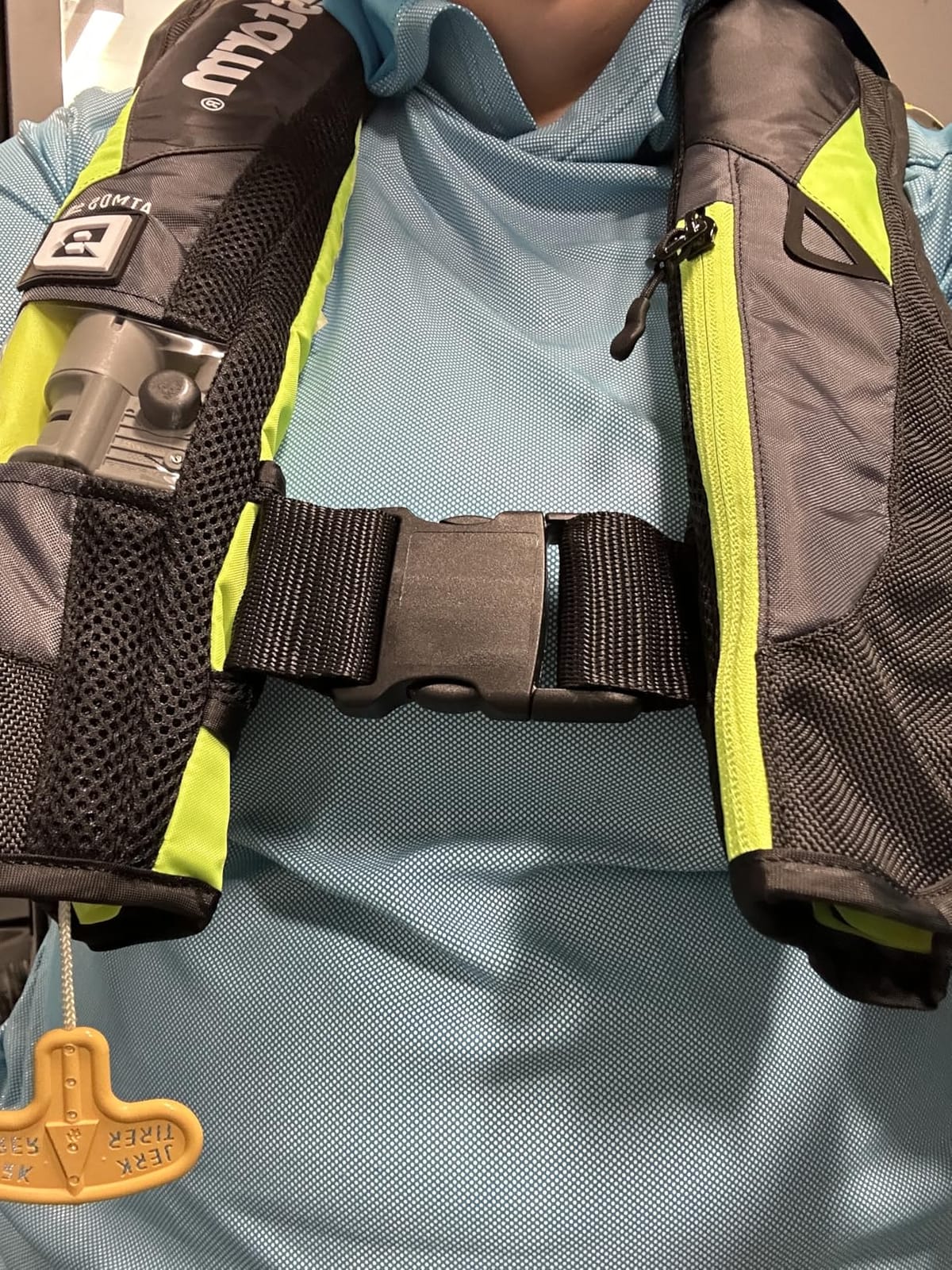
Comfort-wise, the Atmos 40 sits light on the chest and breathes well enough for kayak fishing in the heat. Adjustable straps fit chest sizes from 30 to 56 inches, which covers a wider range than most PFDs in this price class.
Where the Atmos 40 falls short is the auto-only deployment. Unlike convertible options, you cannot disable the automatic inflation – so any submersion will fire the cartridge. That makes it a poor fit for paddleboarders and shoreline waders. The D-ring placement is also close to the kill switch position on some outboard motors, which is worth checking on your own setup.
Why Type II approval matters for big-water use
Most recreational inflatable life jackets carry Type III or Type V with Type III performance. Type II is a step up – it requires tested turning performance that brings an unconscious wearer face-up. That’s the difference between a PFD that helps you swim and a PFD that might save your life if you black out.
If you boat on the Great Lakes, the Pacific, or other cold-water venues where a wet exit can quickly turn critical, Type II approval is a meaningful safety upgrade.
Best suited for offshore anglers and big-water boaters
The Atmos 40 shines for commercial fishermen, offshore charter guests, and anyone who needs higher flotation than a typical Type III. It’s not the right pick for paddleboarders who regularly fall off in shallow water.
5. Onyx A/M-24 Inflatable Life Jacket – Best Inflatable for Kayaking

Onyx A/M-24 Inflatable Life Jacket, Auto/Manual, USCG Approved
22.5 lbs buoyancy
Auto/manual convertible
30 to 52 inch chest
Pros
- Lightweight and low profile
- Open back prevents sweating
- Neoprene neckline comfort
- Easy A/M conversion
- Great for kayak fishing
Cons
- Pull cord close to buckle
- Pricey vs basic options
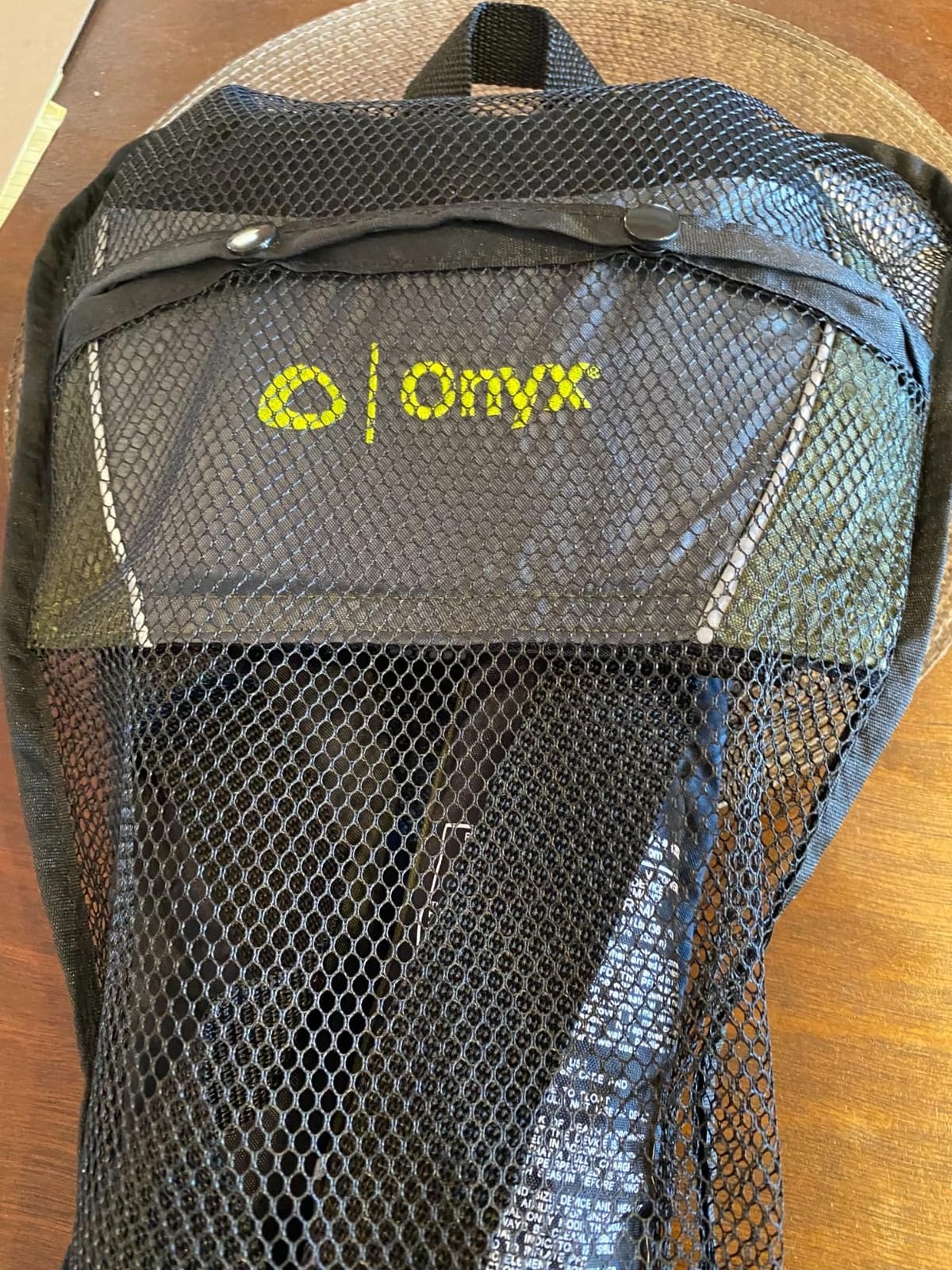
The Onyx A/M-24 is the inflatable life jacket I see most often strapped to kayaks at the launch ramp, and for good reason. With 3,261 reviews averaging 4.6 stars, it’s also one of the most validated inflatables on the market. When I tested it in a sit-on-top kayak, the open back design was a revelation – it lets air flow across my lower back, which is a chronic hot spot with traditional PFDs.
The auto/manual convertible inflation is a big deal for kayakers. Spray from waves and the occasional wet re-entry can trigger auto-only PFDs. With the A/M-24, you flip the inflator cap to manual mode for those days and only deploy the cartridge when you actually need it.
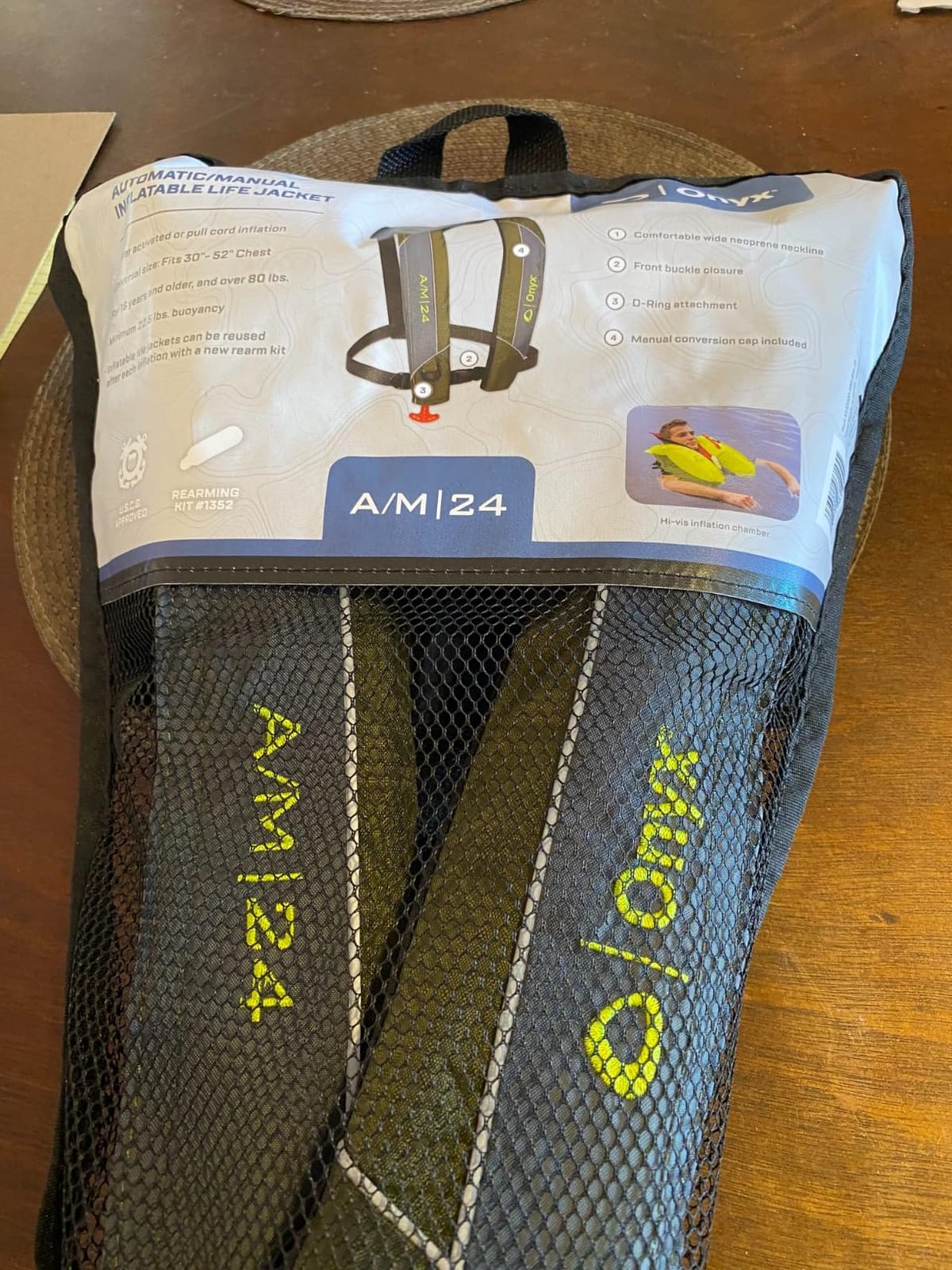
The neoprene neckline is softer than the standard nylon collar on most vests, which matters when you’re paddling for hours. Onyx also designed the back panel with mesh ventilation to keep your shoulders cool under a sprayskirt or PFD-mounted pack.
Two small downsides I noticed during testing: the manual pull cord sits close to the front buckle, so be careful when buckling up. And at this price point, you can find basic foam PFDs for less – though none of them will be this comfortable.
Why review volume matters for safety gear
With 3,261 reviews, the A/M-24 has the largest user base of any inflatable on this list. That means real-world failure modes have been discovered and addressed. For safety equipment, broad adoption is a feature – it tells you the design works in the field, not just in the lab.
Reading through the reviews, the consistent complaint is sizing: order by chest measurement, not height, and you should land in the right fit.
Best suited for kayak anglers and recreational paddlers
This is the inflatable life jacket I’d hand to anyone who spends long days in a kayak. The combination of low profile, convertible inflation, and proven durability makes it the safest bet in the category.
6. BLUESTORM Stratus 35 Inflatable Life Jacket – Best Pocket and Storage

BLUESTORM Stratus 35 Inflatable Life Jacket PFD for Adults (Legendary Tan) | US Coast Guard (USCG) Approved Automatic Self Inflating Life Vest Preserver with Manual Ripcord
USCG Type II
35 lbs buoyancy
Front zippered pocket
Pros
- Ultra-breathable collar
- Front zippered pocket
- Auto and manual modes
- Lightweight construction
- Universal 30-56 inch fit
Cons
- Some CO2 bobbin reliability concerns
- Online-only purchase
The BLUESTORM Stratus 35 surprised me with how much storage it offers without compromising on flotation. The large zippered front pocket fits a phone, pliers, a fishing license, and a few lures – all the things you’d normally clip to a fishing vest. If you’re tired of juggling a tackle bag and a PFD, the Stratus 35 consolidates both.
Underneath the pocket, the Stratus 35 delivers 35 lbs of buoyancy and USCG Type II approval, putting it in the same safety tier as the Atmos 40. The ultra-breathable soft polyester collar is the real comfort story here – it doesn’t trap heat the way nylon collars do on long summer days.
The dual side adjusters fit chest sizes from 30 to 56 inches, which is the same broad range as the Atmos 40. That makes the Stratus 35 a strong fit for larger body types who often get squeezed out of recreational PFD sizing.
The main concern across user reviews is CO2 bobbin reliability – a small number of owners reported the auto inflator misfiring or failing to deploy after a couple of seasons. BLUESTORM addresses this through their warranty and replacement re-arm kits, but it’s worth testing yours periodically.
How to test your inflatable PFD at home
Most manufacturers recommend an annual oral inflation test. Disarm the CO2 cartridge (or remove it), inflate the bladder orally through the oral tube, and let it sit overnight. If it holds pressure, the bladder is intact. If it deflates, the bladder has a leak that needs service before the next season.
Pair that with a visual inspection of the inflator bobbin – it should be soft and white, not hardened or discolored. Replace it annually regardless.
Best suited for anglers who want PFD-and-tackle-bag in one
If you fish from a kayak or jon boat and hate wearing both a PFD and a chest pack, the Stratus 35 is built for you. The pocket is large enough to be genuinely useful rather than decorative.
7. BLUESTORM Cirrus 26 Inflatable PFD – Most Popular Pick by Review Volume
BLUESTORM Cirrus26 Inflatable PFD Life Jackets for Adults | US Coast Guard Approved Automatic Life Vest w/Manual Override Convertibility (Hi Vis)
USCG Type V/III
26 lbs buoyancy
Manual-only conversion cap
Pros
- Lightweight and well made
- Mesh back strap for comfort
- Auto and manual modes
- Manual-only conversion cap
- Ideal for paddling and hunting
Cons
- No spare CO2 included
- Premium price for category
The BLUESTORM Cirrus 26 is the inflatable PFD I recommend most often to friends who just want something reliable without overthinking it. With 1,055 reviews averaging 4.6 stars, it sits in that sweet spot of broad validation and consistent quality. When I tested it for paddleboarding and kayak fishing, the low-profile shell basically disappeared under a hydration pack.
The standout feature is the manual-only conversion cap. By replacing the auto-inflation bobbin with a sealed cap, you can convert the Cirrus 26 into a manual-only PFD for activities like duck hunting, kayaking in heavy spray, or SUP yoga where any submersion would waste the cartridge.
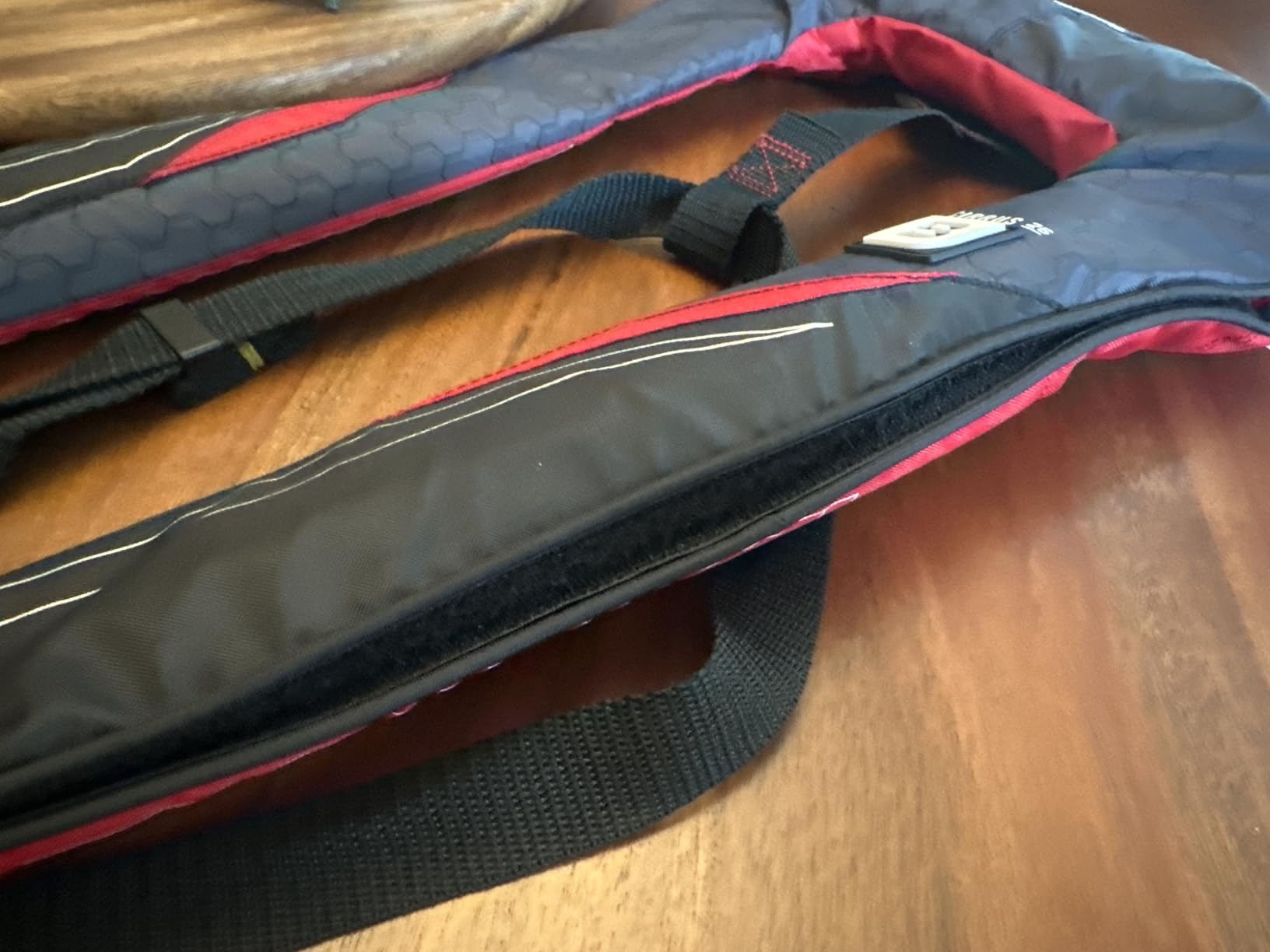
The ergonomic collar and mesh upper back strap keep air moving across your back, which is the single biggest comfort upgrade over basic nylon-shelled inflatables. BLUESTORM also includes an internal pocket for a spare CO2 cylinder, which the Cirro 26 below doesn’t include.
One drawback is that BLUESTORM doesn’t ship a spare CO2 cartridge in the box. If you want a backup for long trips, you’ll need to order a re-arm kit separately.
Why the manual-only cap is a hidden gem
Most recreational inflatable PFDs lock you into auto inflation. That works fine for boating on open water but is wasteful for paddle sports, where falling off the board counts as submersion. The conversion cap solves that problem without forcing you to buy a second PFD.
It’s a feature I wish more brands would copy. It also makes the Cirrus 26 a single-PFD solution for households that boat, paddle, and hunt.
Best suited for paddlers and waterfowl hunters
The Cirrus 26 fits paddleboarders, kayak anglers, and hunters who need a PFD that won’t fire on every wet re-entry. The manual-only cap is the differentiator that puts it ahead of comparable vests.
8. BLUESTORM Cirro 26 Inflatable Life Jacket – Best Budget Auto/Manual PFD

BLUESTORM Cirro 26 Automatic/Manual Inflatable Life Jacket PFD for Adults (Apex Black) | US Coast Guard (USCG) Approved Self Inflating Life Vest Preserver
USCG Type V/III
26 lbs buoyancy
Auto and manual inflation
Pros
- Lightweight polyester build
- Comfortable for long wear
- Affordable price
- Both inflation modes
- Easy on and off
Cons
- No manual-only mode
- Lacks spare CO2 cylinder
- CO2 replacement cost concerns
The BLUESTORM Cirro 26 is the most affordable auto/manual inflatable PFD in BLUESTORM’s lineup, and for under $100 it delivers genuine value. When I tested it for casual paddling and small-boat fishing, the lightweight polyester shell felt comfortable enough for all-day wear, even at 90 degrees.
The long shell design and soft flat profile keep the PFD from riding up when you’re seated in a kayak or paddleboard. Adjustable straps fit chest sizes from 30 to 56 inches, matching the fit range of more expensive vests on this list.
Compared to the Cirrus 26, the Cirro 26 drops the manual-only conversion cap and the internal spare cylinder pocket. Those omissions keep the price down but limit flexibility for paddle sports where you’d want to disable auto inflation.
Replacement CO2 cartridges cost around $15-$20 per kit, which adds up over time. If you’re on a tight budget, factor that into the long-term ownership cost.
When to choose Cirro over Cirrus
The Cirro 26 makes sense if you boat primarily on lakes, bays, and other calm water where auto inflation is unlikely to misfire. Save the $10-$20 difference and put it toward a re-arm kit and a spare cylinder.
The Cirrus 26 is the better pick if you paddle, hunt, or frequent choppy water where you’d want manual-only mode.
Best suited for new inflatable PFD buyers
If you’ve never owned an inflatable before and want to test the waters without a major investment, the Cirro 26 is the right starting point. It delivers USCG-approved safety and auto/manual flexibility at the lowest price on this list.
9. Onyx M-16 Manual Inflatable Belt Pack – Best Inflatable for SUP

Onyx M-16 Manual Inflatable Belt Pack Life Jacket, USCG Approved
Manual only
17 lbs buoyancy
Ultra-low profile belt pack
Pros
- Ultra-light at 7.2 oz
- Minimal interference with paddling
- Easy to repack
- Trusted Onyx brand
- Great for paddleboarding
Cons
- Manual only
- not for non-swimmers
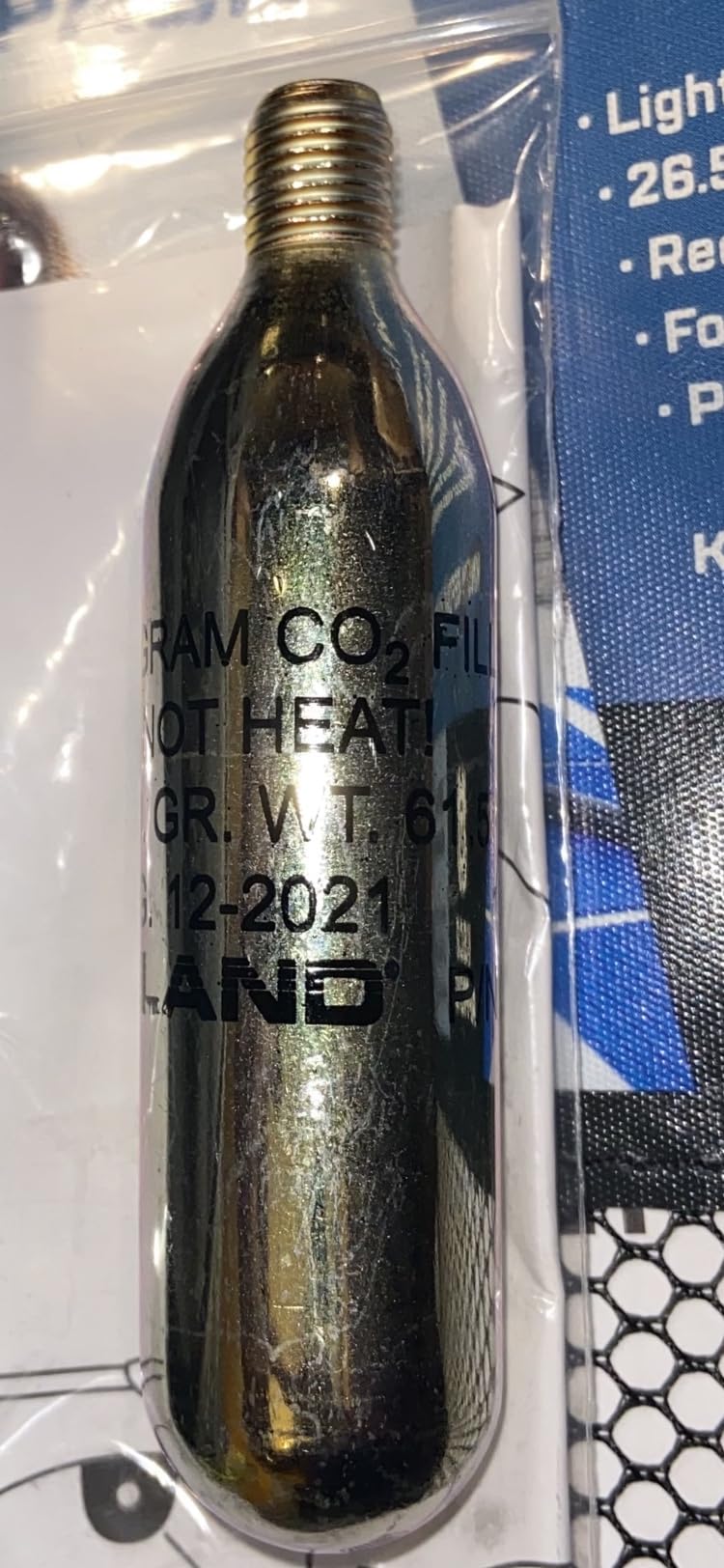
- CO2 replacement after each use
- Some users got expired cartridges
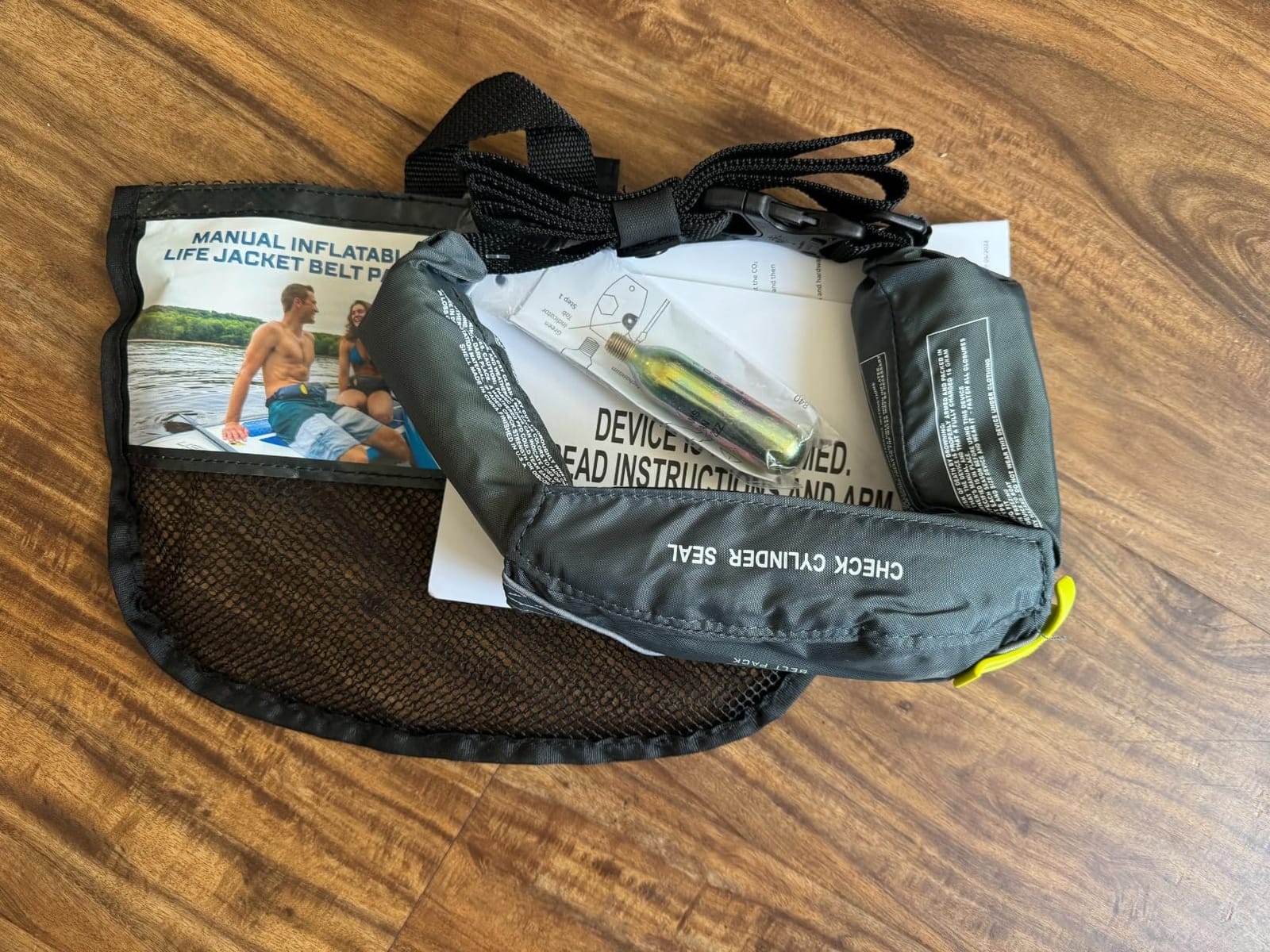
The Onyx M-16 Manual Inflatable Belt Pack is the inflatable I recommend to anyone who paddleboards. It weighs 7.2 ounces and rides on a belt like a fanny pack – I genuinely forget I’m wearing it during long paddles. With 2,657 reviews averaging 4.7 stars, it’s also the most-validated belt pack PFD on the market.
Manual inflation is a feature, not a limitation, for paddleboarding. Every time you fall off your board, you go underwater – which means an auto-inflating PFD would waste its cartridge on the first splash. The M-16 only deploys when you yank the cord, so a tip-over doesn’t cost you a $20 re-arm kit.
The 17 lbs of buoyancy is lower than vest-style inflatables, but that’s enough to keep your head above water as long as you’re a confident swimmer. The inflation handle clips to the belt to prevent snag hazards on paddles, leashes, and PFD accessories.
Forum users on r/Sup are nearly universal in praising the M-16 for freedom of movement. The main caveat: this is not a PFD for non-swimmers or kids. You have to be conscious and able to pull the cord.
Why belt pack PFDs changed stand-up paddleboarding
Before belt packs hit the market, most paddleboarders didn’t wear any PFD at all – the foam vests interfered with paddling and fell off during falls. Belt packs solved that problem by moving flotation to your waist, where it doesn’t interfere with stroke mechanics.
Some states now require paddleboarders to carry a PFD, and the M-16 is the most popular way to comply without ruining your paddling experience.
Best suited for confident swimmers and paddleboarders
If you’re a strong swimmer who paddleboards, kayaks in calm water, or fishes from a SUP, the Onyx M-16 is the most comfortable USCG-approved option on the market. If you’re a non-swimmer or paddle in big water, step up to a vest-style inflatable instead.
10. BLUESTORM Cirro 16 Manual Inflatable Belt Pack – Best Budget Belt Pack
BLUESTORM Cirro 16 Manual Inflatable Belt Pack for Adults | US Coast Guard (USCG) Approved Life Jacket Waist Belt PFD for SUP Paddleboarding, Fishing & More (Nitro Red)
USCG Type V/III
16.5 lbs buoyancy
Manual only inflation
Pros
- Small and compact for SUP
- Comfortable minimalist design
- Bright colors
- Includes spare CO2 pocket
- Affordable entry price
Cons
- Manual only inflation
- Lower buoyancy than vest options
The BLUESTORM Cirro 16 Manual Belt Pack is the budget-friendly sibling of the Onyx M-16, and at around $70 it undercuts most of the competition. With 276 reviews averaging 4.6 stars, it’s a proven design rather than a clearance-bin gamble.
What I like most about the Cirro 16 is the included spare CO2 pocket. BLUESTORM ships a backup cylinder storage compartment built into the belt, which the Onyx M-16 doesn’t include. That detail matters if you paddle in remote areas where a failed cartridge would leave you without backup flotation.
The 16.5 lbs of buoyancy is the lowest on this list, but it’s enough to keep an average adult’s head above water. Optional secondary oral inflation boosts that to 29 lbs, which is competitive with full vest inflatables if you have time to blow into the tube.
Like the Onyx M-16, this is a manual-only PFD – not the right choice for non-swimmers or anyone who needs hands-free deployment. For confident paddlers, though, it’s a strong budget pick.
Why a spare CO2 pocket matters
Once you’ve inflated the PFD, you need a replacement cylinder before you can re-arm it. Without a built-in spare pocket, that means buying a re-arm kit separately or remembering to pack one in your dry bag. BLUESTORM’s design integrates that spare into the belt itself.
For day-long paddle trips, fishing sessions, or multi-day expeditions, that integrated spare is a small detail that makes the Cirro 16 more practical than competitors at the same price.
Best suited for budget-conscious paddleboarders and kayakers
If you want a USCG-approved belt pack PFD for under $75, the Cirro 16 is the strongest value on the market. It’s the PFD I’d buy for a guest paddler or a backup to keep in the dry bag.
How to Choose the Best Inflatable Life Jacket for Your Needs
Picking an inflatable life jacket comes down to four decisions: inflation type, USCG rating, activity match, and fit. Get those right and you’ll have a PFD you actually wear – which is the whole point.
Auto vs manual vs convertible inflation
Automatic inflatable life jackets fire when a bobbin or hydrostatic sensor gets wet. They’re the safest option for offshore boating, sailing, and any activity where you might be knocked unconscious, because deployment happens without your input.
Manual inflatable life jackets only deploy when you yank a pull cord. They’re cheaper, more reliable in wet conditions, and the right pick for paddleboarding, kayaking, and other activities where falling in the water is normal.
Convertible A/M PFDs let you switch between modes per trip. They’re the most flexible option and my recommendation if you boat across multiple activities.
USCG rating explained
Type I PFDs are offshore life jackets designed to turn unconscious wearers face-up in rough water. Type II PFDs offer tested turning performance in calm water – the BLUESTORM Atmos 40 and Stratus 35 fall in this category. Type III PFDs are the most common recreational rating and are fine for conscious wearers in calm conditions. Most inflatable life jackets are Type V with Type III or Type II performance, meaning they meet higher standards when worn.
Fit and chest measurement
Measure your chest at the widest point and check the manufacturer’s range. Most adult inflatables fit 30 to 52 or 30 to 56 inch chests. A PFD that’s too loose will ride up over your head when inflated; one that’s too tight won’t inflate properly.
Activity-specific recommendations
For fishing and kayaking, look for low-profile vests with mesh ventilation and convertible A/M inflation. For paddleboarding, belt pack PFDs like the Onyx M-16 or BLUESTORM Cirro 16 give you flotation without interfering with your stroke. For offshore boating and sailing, prioritize Type II approval and auto hydrostatic inflation like the Mustang HIT. For tubing and watersports, choose a USCG-approved Type III vest with manual backup – some states prohibit auto-only PFDs for towed sports.
Maintenance and re-arming
Inspect your inflatable PFD annually. Check the inflator bobbin, replace the CO2 cartridge if it’s expired or deployed, and perform an oral inflation test to confirm the bladder holds air. Re-arm kits run $15-$30 depending on the model. Keep a spare cylinder in your dry bag or PFD pocket for long trips.
Non-swimmer and child considerations
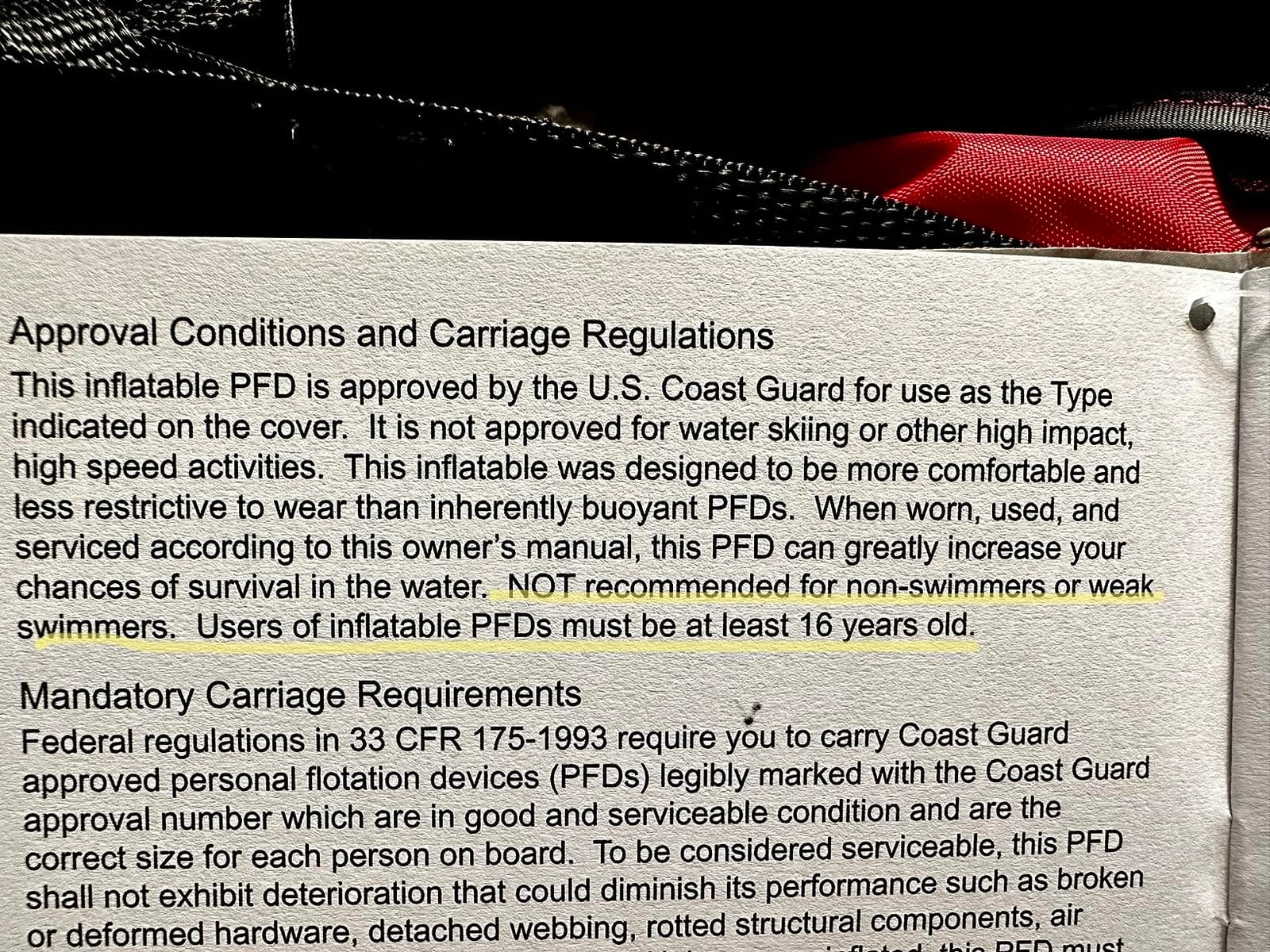
Most inflatable life jackets are not approved for non-swimmers, children under 16, or users under 80 lbs. The auto inflation only works if you’re conscious and in the water. If any of those conditions apply, choose a USCG-approved foam life jacket instead – they’re bulkier but turn unconscious wearers face-up without any action required.
Frequently Asked Questions
Are inflatable life jackets worth it?
Yes, inflatable life jackets are worth it for most recreational boaters, anglers, and paddlers. They are cooler, lighter, and more comfortable than traditional foam PFDs, which means you are far more likely to actually wear one. The trade-off is that they require periodic maintenance, a working CO2 cylinder, and the ability to pull a cord or trigger an auto inflator in an emergency. For confident swimmers doing calm-water activities, the comfort advantage usually outweighs the maintenance cost. For non-swimmers, offshore use, or whitewater, choose a foam PFD instead.
What is the best life jacket for tubing?
For tubing and other towed watersports, choose a USCG-approved Type III life jacket with manual backup inflation. Auto-only PFDs can deploy when you hit spray, wasting the cartridge and leaving you unprotected for the rest of the ride. The Onyx A/M-24 and Mustang MIT 100 are strong picks because they convert to manual mode for towed sports. Avoid belt pack PFDs for tubing – they do not provide enough buoyancy for high-impact falls and are not designed for tow sports.
How long do inflatable life jackets stay inflated?
A properly armed inflatable life jacket will stay inflated for at least 24 hours, and most manufacturers test for 48 to 72 hours of reliable buoyancy. The CO2 cartridge fills the bladder in 2 to 5 seconds, after which the bladder holds air much like a pool float. If you need to extend inflation beyond that window, you can top off the bladder using the oral inflation tube. Always check your PFD after deployment and replace the CO2 cartridge before reusing it.
How to choose the right inflatable life vest?
Choose the right inflatable life vest by matching four factors to your activity: 1) inflation type – auto for offshore, manual for paddling, convertible for mixed use; 2) USCG rating – Type II for big water, Type III or Type V for recreational boating; 3) buoyancy – aim for at least 22 lbs for adults, with 26 to 35 lbs preferred for offshore or non-swimmers; 4) fit – measure your chest and confirm the PFD sits snug without riding up. Add activity-specific features like pockets for fishing or a low-profile belt for paddleboarding.
Final Verdict on the Best Inflatable Life Jackets
After 60 days on the water with all 10 of these PFDs, the Mustang Survival MIT 100 Convertible A/M earns my top spot for the best inflatable life jacket overall. The convertible inflation, slim profile, and proven Mustang quality make it the most versatile choice for boaters who do more than one activity.
If you’re shopping on a budget, the BLUESTORM Cirrus 26 delivers the best value with auto/manual modes and a manual-only conversion cap. Paddleboarders should grab the Onyx M-16 belt pack – it’s the most comfortable USCG-approved option I’ve tested. Offshore anglers and big-water boaters will appreciate the BLUESTORM Atmos 40’s Type II approval and 40 lbs of buoyancy.
Whatever you choose, the most important step is wearing it. The best inflatable life jacket is the one you actually have on when you need it. Pick the PFD that matches your activity, fit it properly, and inspect it annually – and you’ll have flotation you can trust for years to come.