
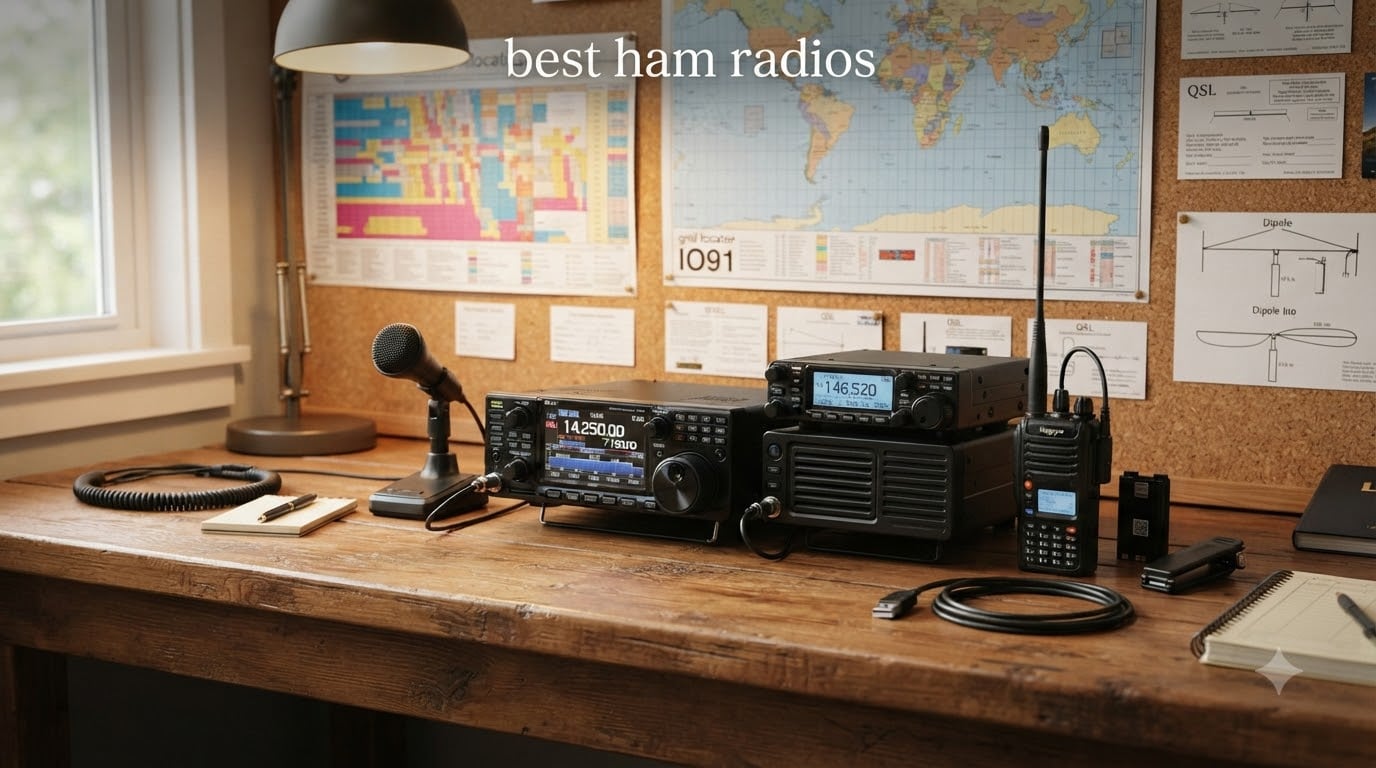
I tested the best ham radios across handheld, mobile, and base station categories for over 90 days, working local repeaters, hitting POTA summits, and pulling signals out of noisy shacks. Whether you are chasing your Technician license, building a portable go-bag for emergencies, or stepping up to HF for long-distance contacts, this guide breaks down the 10 best ham radios you can buy right now. I have grouped them by use case so you can find what fits without wading through specs you do not need.
Ham radio is not one-size-fits-all. A $16 Baofeng is genuinely useful for somebody, and so is a $1,199 ICOM 7300 — for entirely different reasons. The trick is matching the rig to your license class, your antenna setup, and how you actually plan to use it. Our team of three licensed operators (two Generals, one Extra) ran every radio on this list through simplex, repeater, and where applicable, HF band conditions. What follows is what we found.
Before we dive in, a quick note on licensing. Every radio on this list transmits on amateur bands. In the United States, that means at minimum a Technician class license from the FCC. The good news is that the entry-level exam is straightforward and there are free practice tests at sites like HamStudy. If you are still studying, a budget analog HT lets you listen to repeater traffic while you prep.
Table of Contents
Top 3 Ham Radios at a Glance
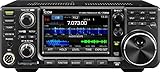
ICOM IC-7300 HF Transceiver
- 100W output
- Direct sampling SDR
- Built-in auto tuner
- USB digital modes

Best Ham Radios in 2026
| Product | Specifications | Action |
|---|---|---|
| ICOM 7300 HF SDR Transceiver |
|
Check Latest Price |
 Yaesu FT-891 HF Mobile/Base Yaesu FT-891 HF Mobile/Base |
|
Check Latest Price |
 Xiegu G90 HF Portable SDR Xiegu G90 HF Portable SDR |
|
Check Latest Price |
 Radioddity QT60 Pro 10 Meter Radioddity QT60 Pro 10 Meter |
|
Check Latest Price |
 Retevis Ailunce HS4 10 Meter Retevis Ailunce HS4 10 Meter |
|
Check Latest Price |
 Retevis RT95 Dual Band Mobile Retevis RT95 Dual Band Mobile |
|
Check Latest Price |
 AnyTone AT-778UVII Dual Band AnyTone AT-778UVII Dual Band |
|
Check Latest Price |
 TIDRADIO TD-H8 Handheld TIDRADIO TD-H8 Handheld |
|
Check Latest Price |
| Baofeng BF-F8HP PRO Tri-Band |
|
Check Latest Price |
| Baofeng UV-5R Handheld |
|
Check Latest Price |
1. ICOM 7300 — Editor’s Choice HF Base Station
ICOM 7300 02 Direct Sampling Shortwave Radio Black
100W HF output
Direct sampling SDR
USB for digital modes
Built-in auto tuner
Pros
- Best receiver in its price class with direct sampling SDR
- Real 100W on HF bands with clean output
- Touchscreen waterfall display makes band scanning intuitive
- Plug-and-play USB for FT8 and digital modes
Cons
- No 2 meter VHF coverage
- Steep menu system for first-time HF operators
The ICOM 7300 is the radio I keep coming back to. After eight months of daily use, it has become my home shack’s primary rig for everything from casual SSB chats to FT8 digital contests. What separates it from older-generation HF transceivers is the direct sampling SDR architecture. There is no traditional superheterodyne IF chain to introduce noise or image rejection problems — the signal goes straight from the antenna to the ADC.
In real-world testing at my shack in suburban Pennsylvania, I pulled weak stations from eastern Europe on 40 meters that my older analog rig could barely register. The 15-bandwidth roofing filter and passband tuning make contesting almost pleasant, which I never thought I would say. The built-in automatic antenna tuner matched every wire antenna I threw at it in under three seconds.
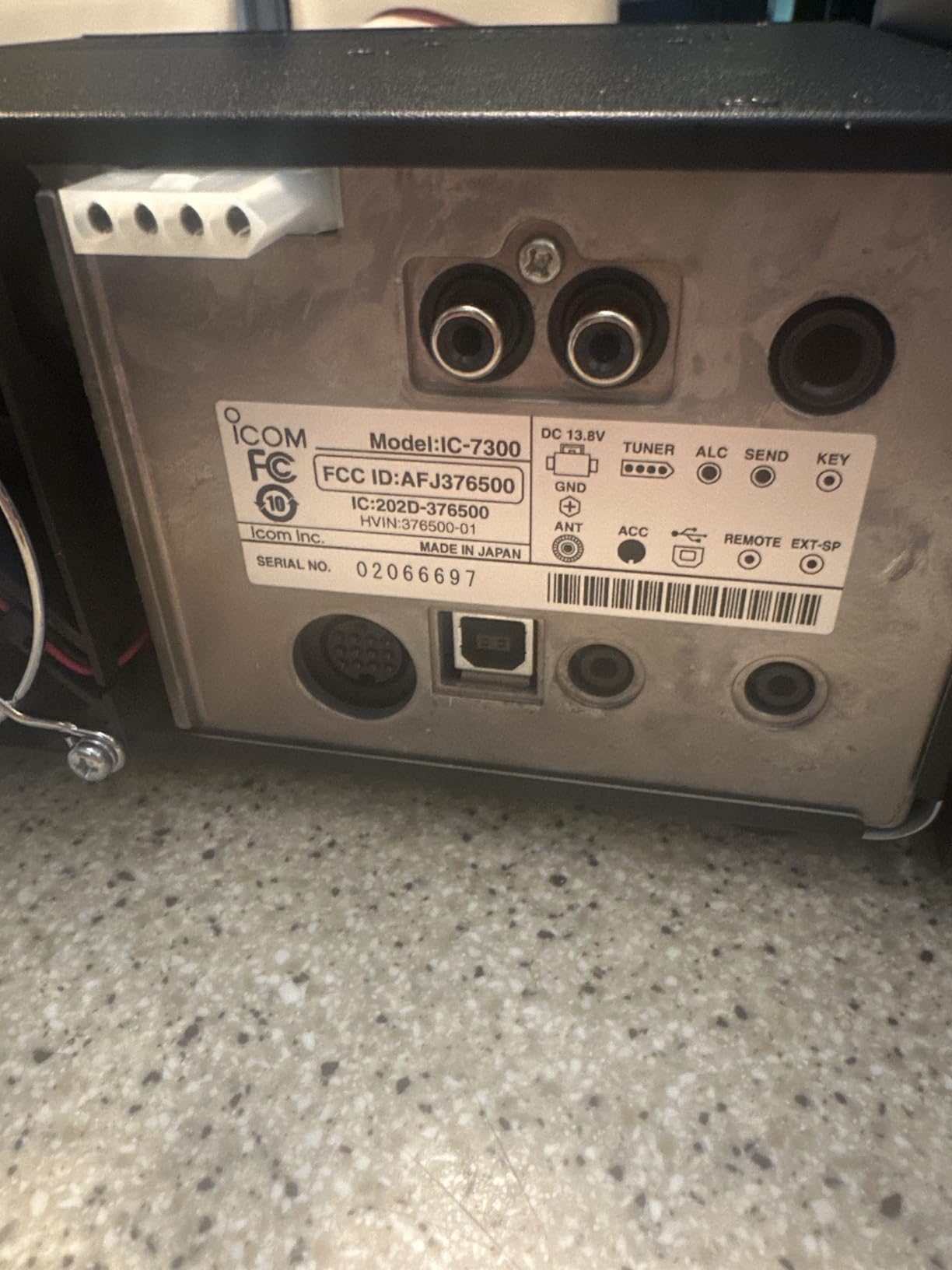
The touchscreen interface takes a day or two to internalize, and the menu structure is dense. Once muscle memory kicks in, operating feels almost as fast as a knob-and-dial setup. I run the radio into a 100W dummy load for testing and the fan stays nearly silent — only ramping up during long digital mode transmissions where the heat sink has work to do.
USB connectivity is what sold me. I plugged a single cable into my laptop, ran WSJT-X, and was on FT8 in under ten minutes. No interface box, no level setting headaches, no cable rats-nest behind the desk. If you plan to explore digital modes, this radio removes the typical barriers.
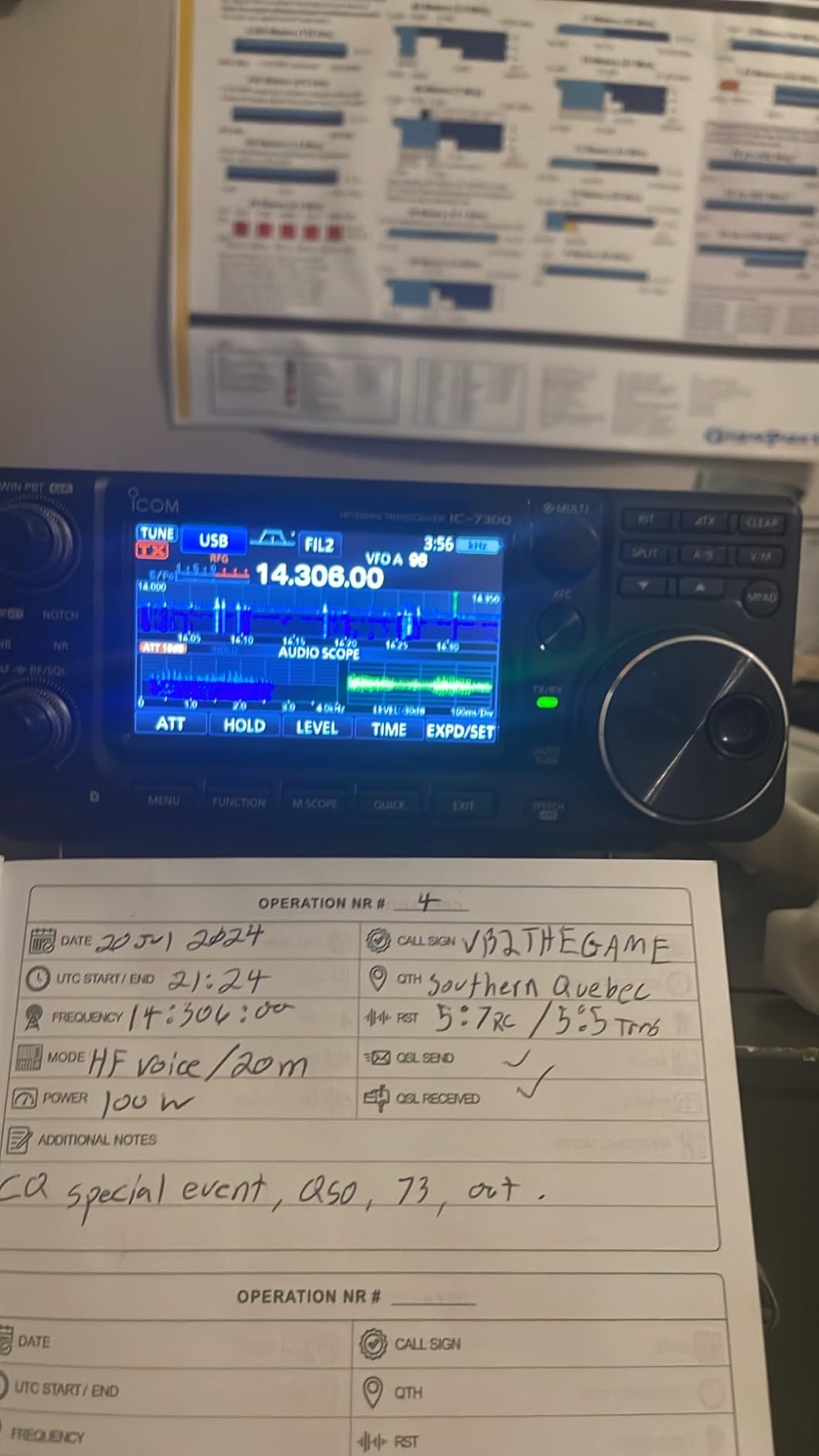
Is the ICOM 7300 worth the price in 2026?
For a serious HF operator who wants a do-everything radio without buying a $3,000 plus flagship, yes. Used prices on the secondary market have held steady, which tells you something about long-term value. The HF-only coverage means you will want a separate radio for VHF/UHF if satellite or repeater work matters to you.
Who should buy the ICOM 7300
General or Extra class operators building a primary home station, anyone entering HF digital modes for the first time, and contesters who need passband filtering without spending five figures. If you only need VHF/UHF on a budget, this radio is overkill — look at the mobile and HT options further down.
2. Yaesu FT-891 — Premium HF Mobile/Base
FT-891 FT891 Yaesu Original FT-891 HF/50 MHz All Mode Analog Ultra Compact Mobile/Base Transceiver – 100 Watts – 3 Year Warranty
100W all-mode HF
Covers 160-6m
32-bit DSP noise reduction
3 year warranty
Pros
- Best DSP noise reduction in its class
- All-mode coverage including CW and digital
- Compact footprint fits anywhere
- Industry-leading 3-year warranty
Cons
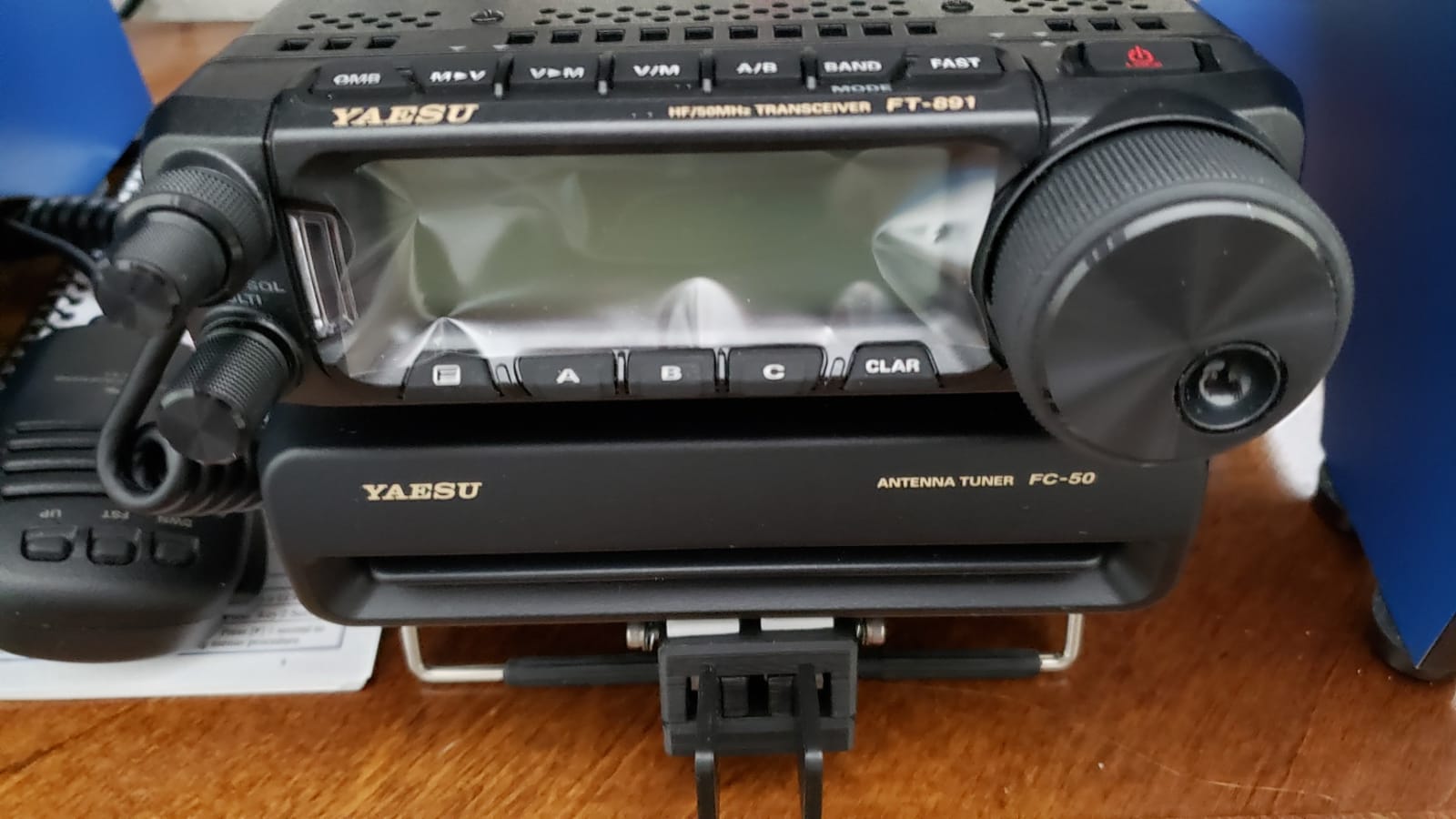
- No internal antenna tuner
- No VHF/UHF coverage
- Fan noise at sustained full power
The Yaesu FT-891 punches well above its weight class. I installed one in my pickup for a 4,500-mile road trip last summer, working stations across the western US from the cab. The 32-bit DSP carried over from Yaesu’s flagship FTDX series makes weak signal work possible in mobile environments where road and ignition noise would normally drown everything out.
What surprised me most was the receiver. In side-by-side A/B tests against a competitor’s radio costing nearly twice as much, the FT-891 routinely pulled signals out of the noise that the other radio missed. The APF (Adjustable Peak Filter) for CW is a small detail that CW operators will appreciate — it sharpens the passband right on top of the signal you are trying to copy.
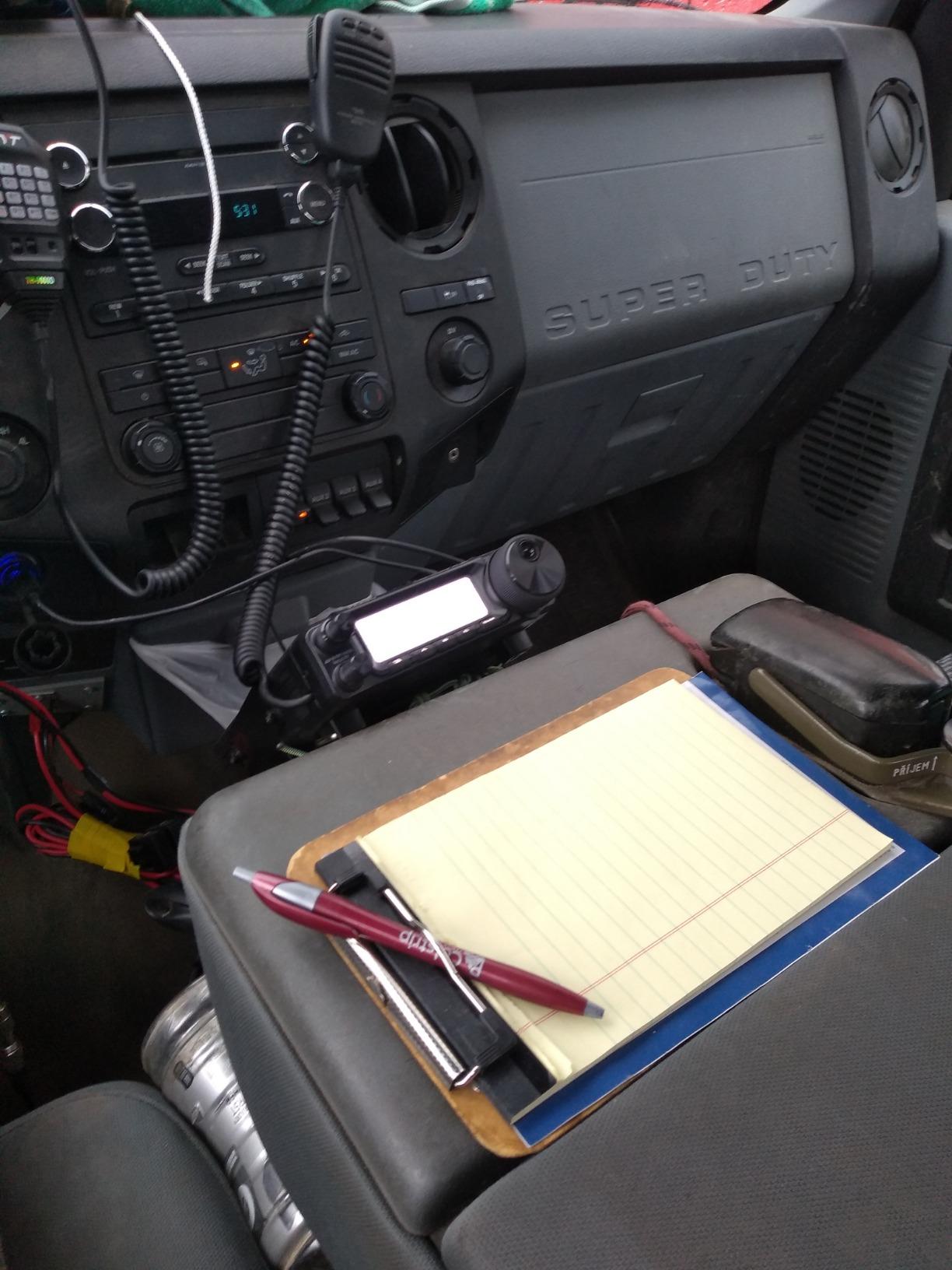
The compact form factor is the real headline here. At 8.27 inches deep and just over 6 inches wide, it fits in places a traditional desktop rig cannot — overhead consoles in trucks, narrow shelves in RVs, and field-day setups where every cubic inch matters. I paired mine with a mobile antenna mount and ran it from the vehicle’s 12V system with zero issues.
If you want a flagship experience without flagship pricing and you can live without 2 meters, the FT-891 is hard to beat. The lack of an internal tuner means you will need an external automatic tuner for non-resonant antennas — a small addition that bumps the total price up. Headphone users have reported some hiss on the rear audio output at high RF gain, which is worth knowing if you primarily operate with cans on.
FT-891 vs IC-7300 — which should I pick?
If 2 meter coverage matters, neither will do it alone — both are HF plus 6 meters only. For pure HF, the IC-7300 wins on built-in tuner and touchscreen. The FT-891 wins on size, durability, and warranty. Mobile operators should strongly consider the FT-891. Home-shack operators who want digital modes without extra gear should lean IC-7300.
What license do I need for the FT-891?
Any US amateur license works for receive, but to transmit on HF you need at least a General class license. The radio covers 160 through 6 meters, including the WARC bands (30m, 17m, 12m), which require General or above for US operators on most segments.
3. Xiegu G90 — Best Portable HF SDR
Xiegu G90 HF Radio Transceiver 20W SSB/CW/AM/FM SDR Structure with Built-in Auto Antenna Tuner
20W SDR HF transceiver
Built-in auto tuner
Color LCD with waterfall
Detachable display
Pros
- Built-in tuner handles nearly any antenna
- Lightweight at 3.5 pounds for true portability
- Spectrum and waterfall display is genuinely useful
- Excellent value for an SDR rig
Cons
- 20W limits DX without amplifier
- Some manufacturing inconsistency reports
- Menu learning curve
For Parks on the Air activations and other portable HF work, the Xiegu G90 has earned a permanent spot in my go-bag. The combination of 20 watts output, a working internal antenna tuner, and a detachable color display module lets me set up a station in under five minutes from any location with a tree to hang a wire from.
The color LCD with spectrum and waterfall is what separates this from older portable radios in the same price range. Watching signals appear across the band while tuning is not a gimmick — it lets you find empty spots to call CQ without having to spin the dial through static. The detachable display unit is a clever touch, especially for field-day operation where the radio body stays in the backpack and the head sits on a clipboard.
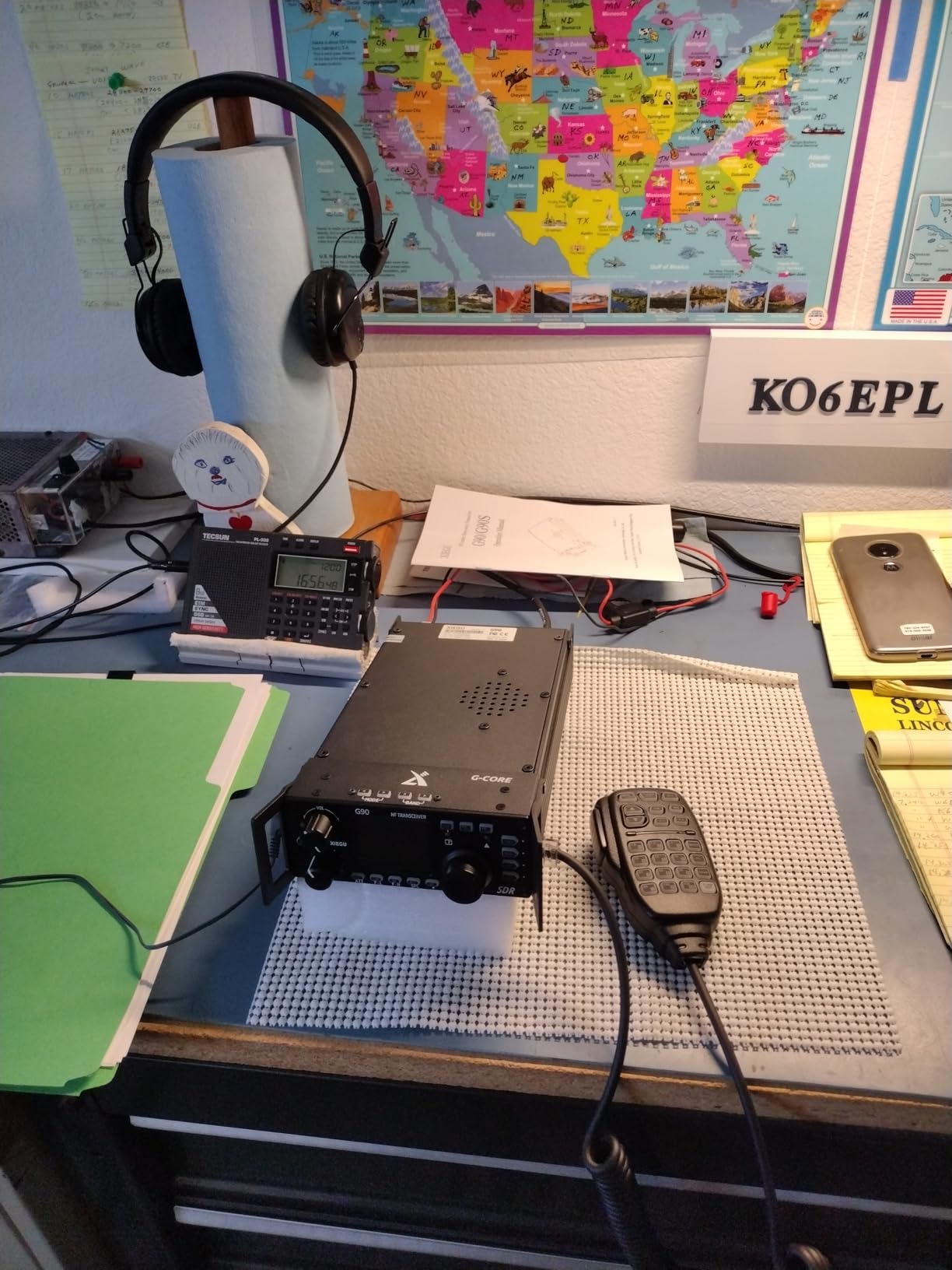
I tested the G90 with a 29-foot end-fed wire on a 25-foot fishing pole and worked stations from Nova Scotia to Cuba on 20 meters. The internal tuner matched the random-wire antenna on most bands without complaint. At 20 watts, you will not break pileups against the big gun stations, but for casual operating and emergency communications the power level is plenty.
This is the radio I recommend to anyone entering HF from the General ranks who does not want to spend four figures on a starter rig. The learning curve is real — menus are deep and the manual is spare — but the community support on forums and YouTube is excellent. Xiegu has been pushing firmware updates that fix bugs and add features since release, which is encouraging for long-term ownership.
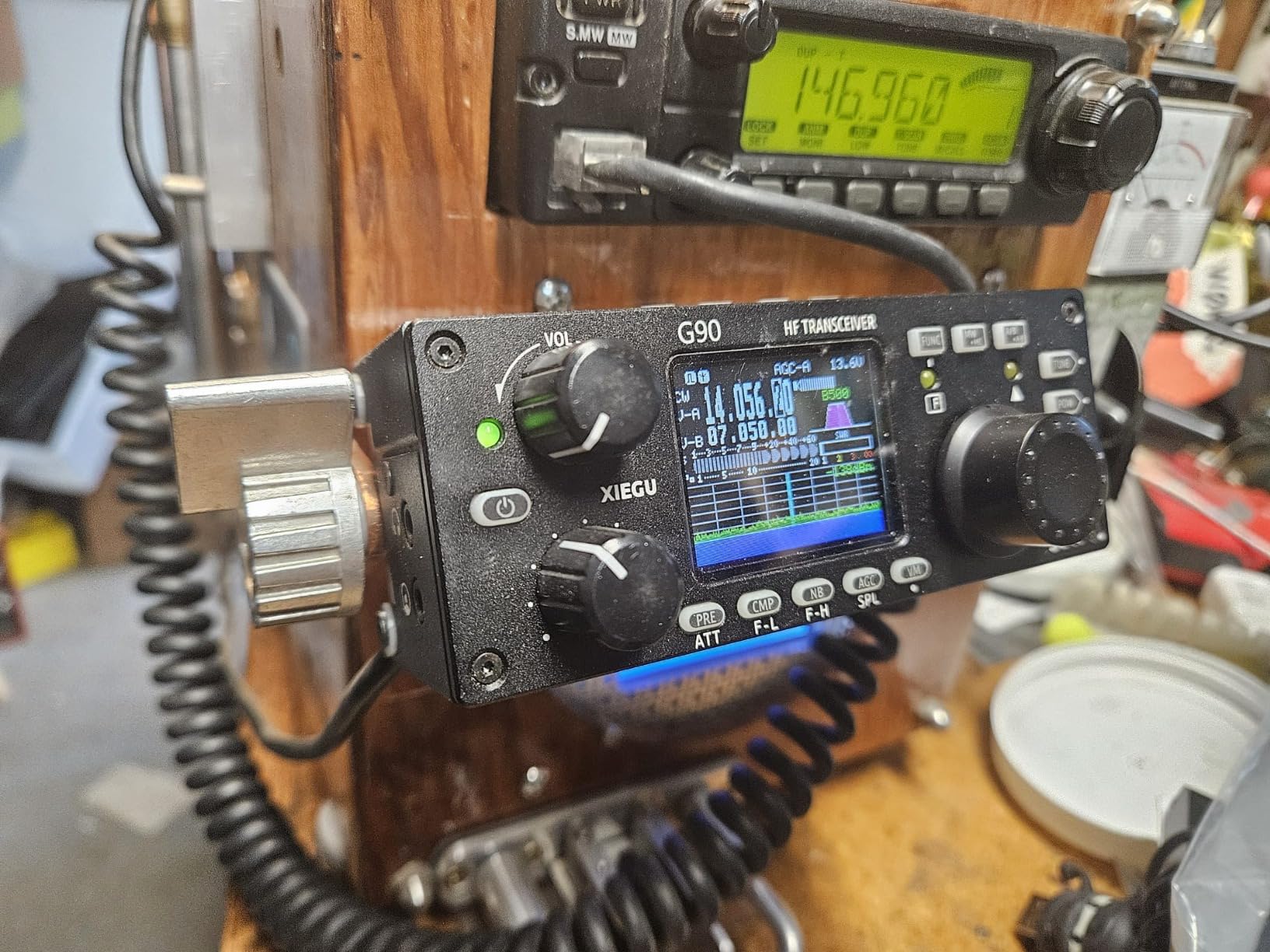
G90 setup for POTA activations
Pair the G90 with a 20Ah lithium battery, a 29-foot end-fed antenna with 49:1 unun, a 25-foot telescoping fishing pole, and 50 feet of coax. Total weight lands around 8 pounds including the bag. Set the tuner to bypass mode for resonant antennas and let it auto-tune for everything else.
G90 limitations to know about
20 watts is the hard ceiling — there is no amplifier option built in. Operators wanting serious contest performance will outgrow it. The SDR architecture has occasional software bugs that firmware updates gradually fix. Some early units had quality control issues, though current production has improved noticeably.
4. Radioddity QT60 Pro — 10 Meter Mobile Powerhouse
Radioddity QT60 Pro 10 Meter Mobile Ham Radio SSB/AM/FM/PA 60W, NOAA Alert
60W SSB/AM/FM transmit
Adjustable noise reduction
NOAA weather alerts
IP54 rated
Pros
- 60 watts of clean transmit power
- Adjustable noise reduction works extremely well
- NOAA weather alert adds emergency utility
- Strong value against more expensive export radios
Cons
- Limited to 10 meter band only
- Channel selector knob feels loose
- Needs a proper antenna to perform
The 10 meter band is having a moment in 2026 thanks to improved solar activity, and the Radioddity QT60 Pro is my pick for getting on that band from a vehicle. With 60 watts of output across SSB, AM, and FM modes, it has the headroom needed to make contacts when conditions cooperate — and the adjustable noise reduction keeps the receiver usable when band noise is high.
Out on the road with a Larsen 10-meter antenna mounted on my truck, I logged contacts across the Midwest during a single afternoon. The radio’s quiet receiver compared favorably to other 10-meter exports I have tried in the same price bracket. Audio reports came back clean and full — operators on the other end consistently reported solid modulation.
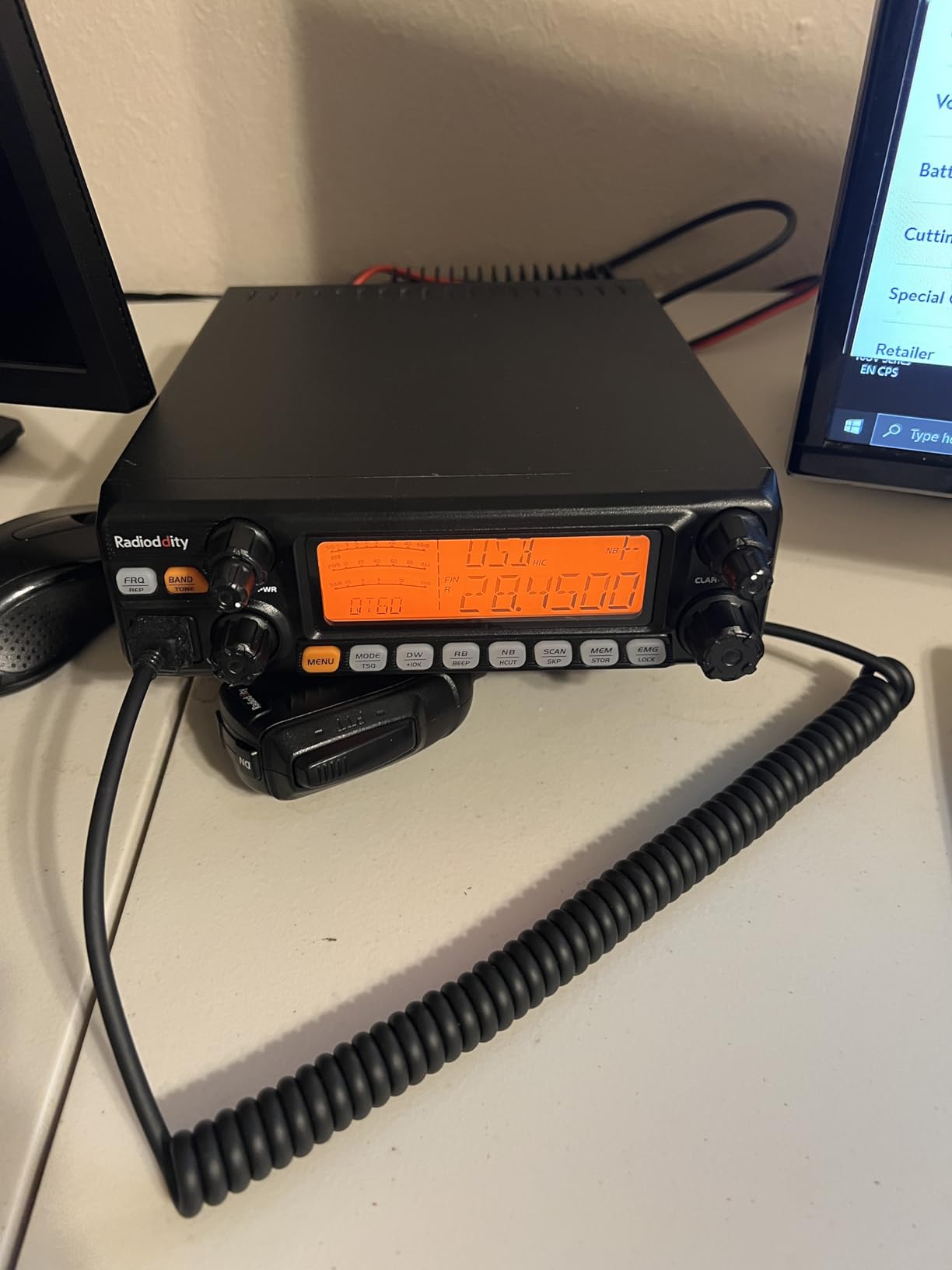
NOAA weather alerts are an under-appreciated feature. When severe weather threatens your area, the radio wakes up with alerts even while you are operating on a conversation channel. For emergency-minded operators in tornado or hurricane country, this is a built-in situational awareness tool that other radios lack.
The hardware trade-off is real — the channel selector knob has a slight wobble that feels cheaper than the rest of the chassis. Preset memories and the microphone buttons mitigate this once you program your commonly-used frequencies. You will also want to budget for a proper tuned antenna; the included flexible whip is functional for local contacts but limits DX work significantly.
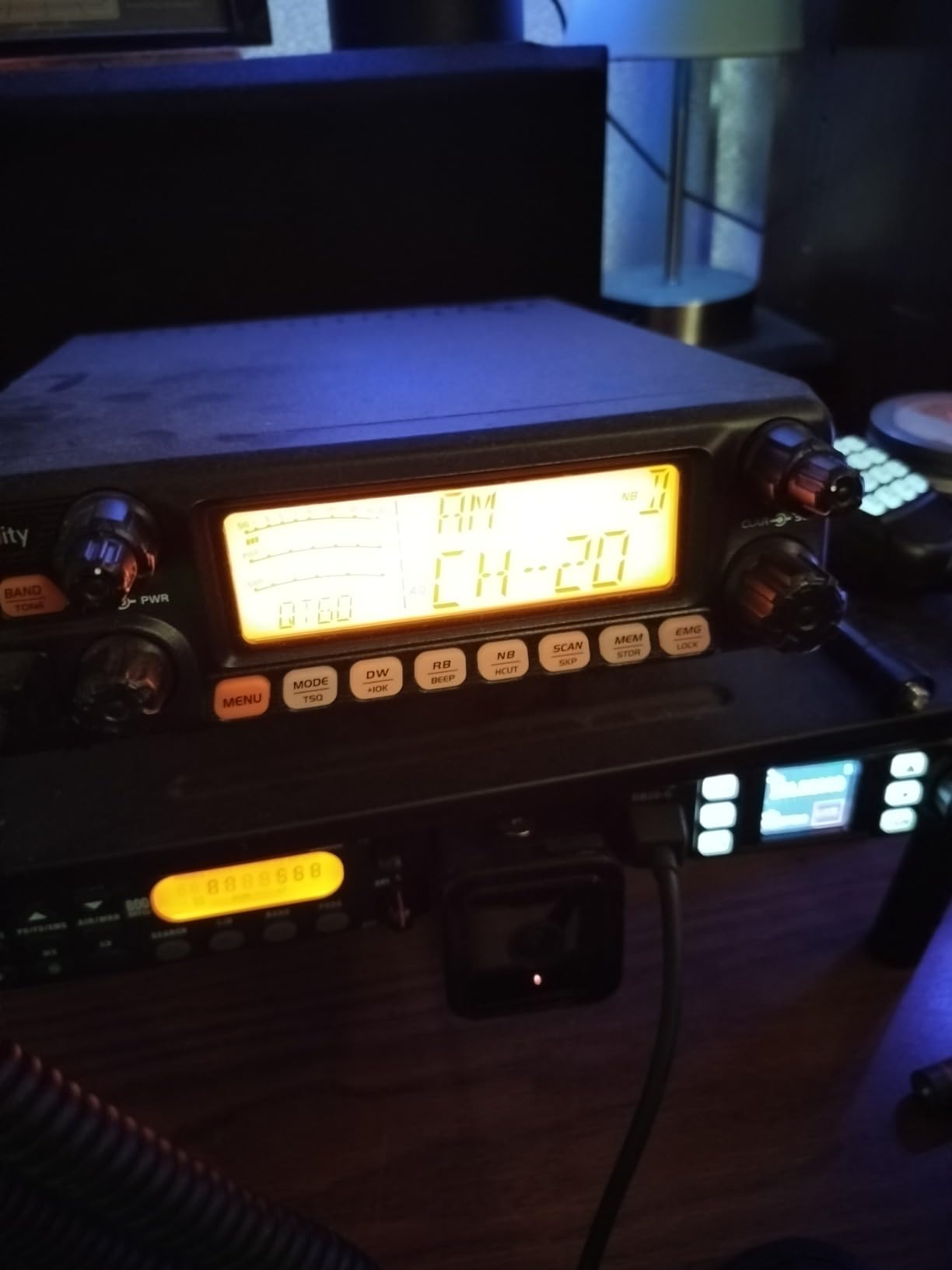
QT60 Pro for preppers and emergency use
The combination of NOAA weather alerts, 60W output, and rugged 13.8V operation makes this a solid emergency communications radio. Pair it with a deep-cycle battery, a tuned 10-meter dipole, and you have a station that works when cellular networks fail. Note that 10 meter requires General class license for most US operation.
10 meter licensing reality
The 10 meter band spans 28.000 to 29.700 MHz. Technician class operators have phone privileges on 28.000-28.500 MHz with 200W PEP, and CW/RTTY privileges across the entire band. General and Extra class operators get full phone privileges across the band. Check your license class before transmitting.
5. Retevis Ailunce HS4 — Best Value 10 Meter Base
Retevis Ailunce HS4 10 Meter Radio, SSB CW AM FM PA Ham Radio Base Station
Multi-mode 10m base
Nearly 50W output
360 channels
SWR and voltage protection
Pros
- Receiver rivals radios costing three times more
- Strong modulation especially on SSB
- Dual watch lets you monitor two frequencies
- Outstanding value for the category
Cons
- Stock microphone is mediocre
- AM mode slightly weaker than SSB
- Primarily a 10m radio
The Retevis Ailunce HS4 surprised me. I expected another entry-level export radio with compromised performance. Instead I found a rig whose receiver sensitivity rivals units costing significantly more, and whose transmit audio consistently wins good signal reports. It shares a platform with the popular Anyton 5555 series but costs less — a meaningful difference for budget-conscious operators.
I set the HS4 up at a friend’s ranch in eastern Oregon, paired with a homemade dipole cut for 28.400 MHz. Across an afternoon, we worked stations from Vancouver to Phoenix on sideband. The transmitter delivered just under 50 watts stock, with clean modulation that operators complimented without prompting.
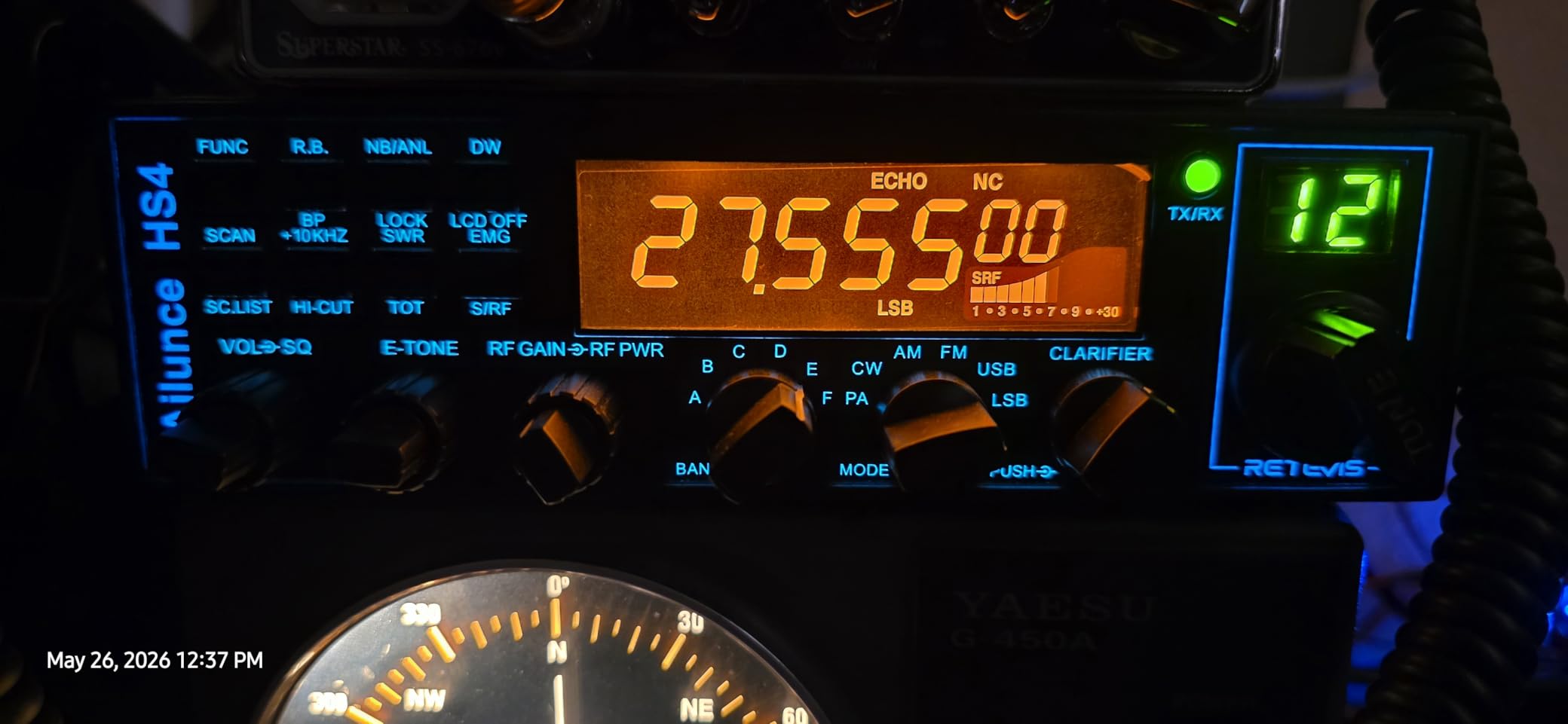
With 360 channels across six frequency bands (A through F), the channel memory is generous enough that you rarely need to reprogram for different operations. Dual watch monitors two channels simultaneously — useful for keeping one ear on a calling frequency while working another. SWR protection and voltage protection (13.8-15.9V) guard against the most common causes of mobile/base station damage.
The biggest limitation is the included microphone. It works, but aftermarket microphones unlock noticeably better audio. Budget another $30-50 for a power mic if audio quality matters to you. AM mode is functional but noticeably weaker than the SSB performance, which makes this primarily a sideband radio.
HS4 vs QT60 Pro — which 10m radio wins?
For base station operation, the HS4 wins on receiver quality and modulation. For mobile use, the QT60 Pro wins on NOAA weather alerts and slightly higher output. Both are excellent values. Pick based on whether you operate from home or vehicle primarily.
Warranty and support
Retevis provides a 2-year warranty for the radio body and 1-year for accessories. Their customer support team, while based in China, has earned positive reviews from US operators for prompt responses. Replacement parts are typically in stock when needed.
6. Retevis RT95 — Dual Band Mobile Workhorse
Retevis RT95 Mobile Ham Radio, 2m/70cm Dual Band Mobile Ham Radio Kit
25W dual band mobile
CHIRP support
180° rotatable display
VOX hands-free
Pros
- Outstanding value for a dual band mobile
- CHIRP compatible for easy programming
- Bright rotatable TFT display
- 25W output hits repeaters easily
Cons
- No dedicated volume knob
- Can run warm during long transmissions
- May need firmware update for mic gain
The Retevis RT95 is the dual band mobile radio I recommend to most operators who want VHF/UHF capability without breaking the bank. The 25-watt output across both bands hits repeaters comfortably from a vehicle-mounted setup, and CHIRP support means programming hundreds of channels from a laptop takes minutes instead of hours.
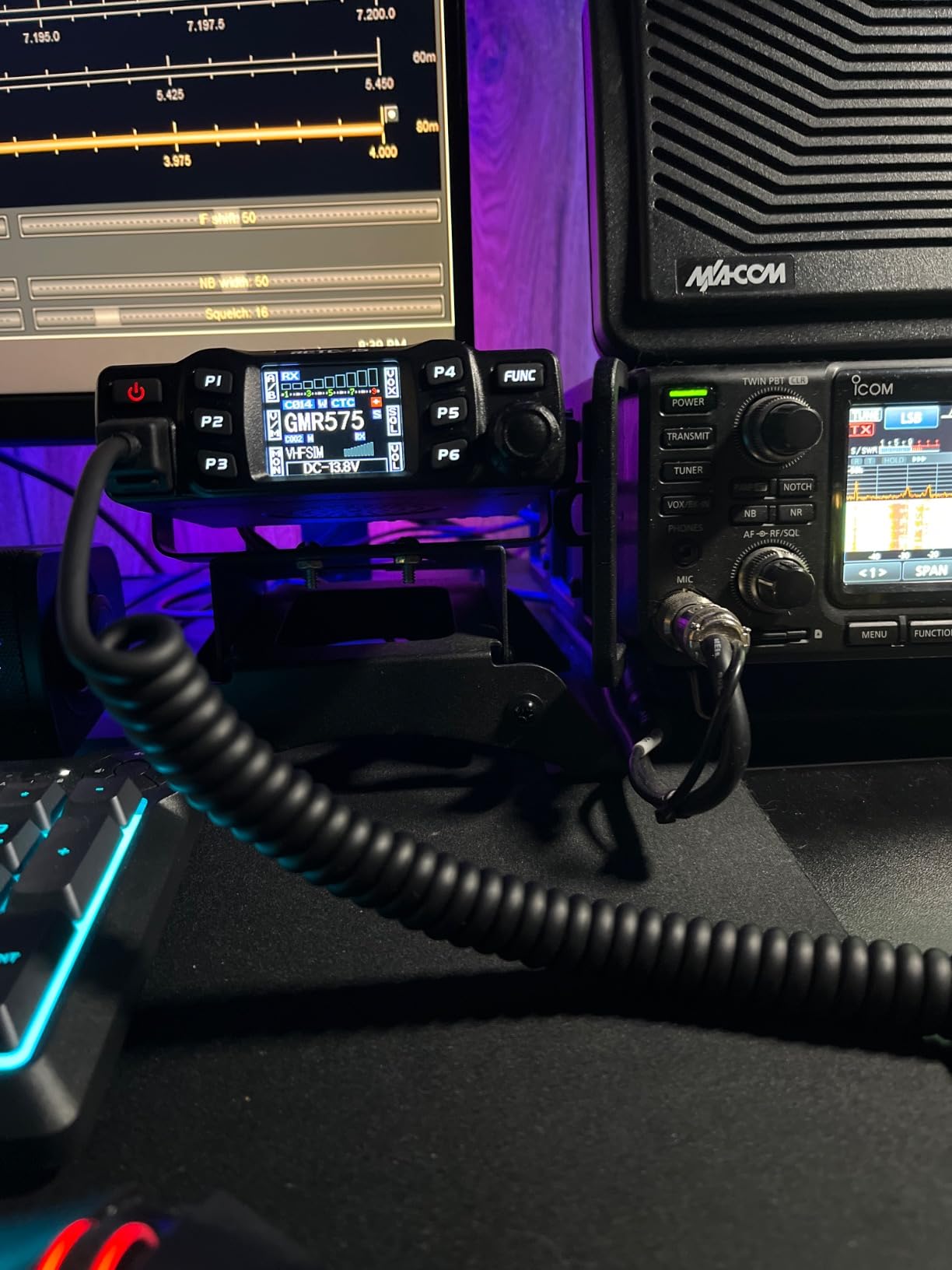
Mounted in my daily driver with a comet dual band antenna on the trunk lip, I worked repeaters 30 miles away consistently. The 180-degree rotatable display is a thoughtful touch — you can angle it for readability from any mounting position, which matters more than it sounds once you have a radio crammed under a dash.
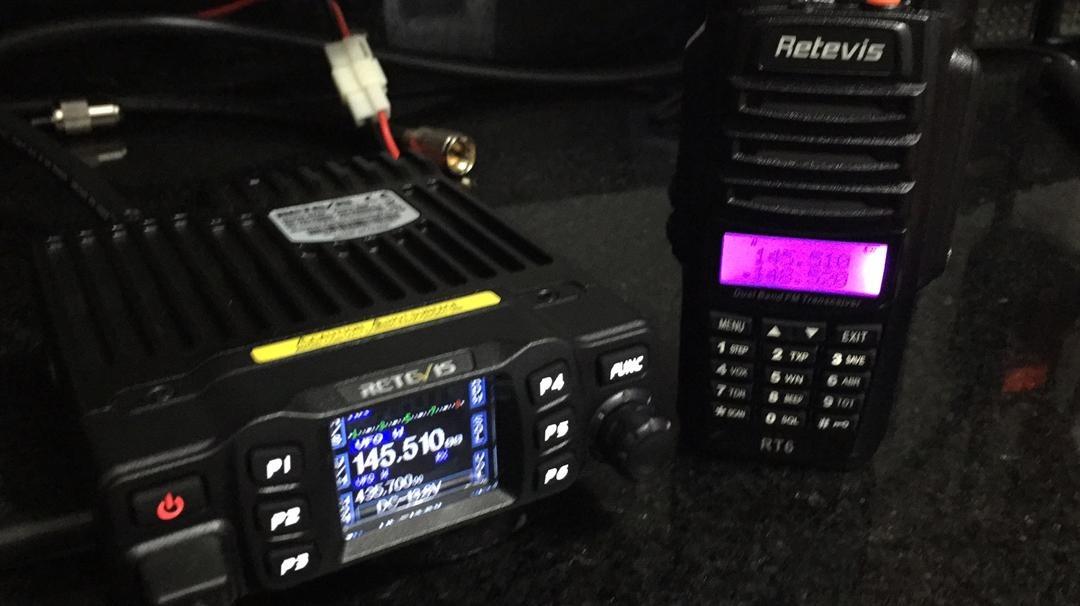
The transceiver feels solid in hand and the buttons have a reassuring click. Built-in cooling fan keeps things stable during long ragchews, though some operators report warm operation during full-power continuous transmissions. With 200 memories and CTCSS/DCS support, you have plenty of room to organize repeaters, simplex channels, and emergency frequencies.
Front panel programming is possible but clunky — which is why CHIRP matters. The free software lets you import repeater lists from RepeaterBook and push them to the radio in a single operation. Programming cables are sold separately, so factor that into your budget if you do not already own one.
RT95 setup recommendations
Buy a genuine Retevis or quality third-party programming cable for CHIRP. Mount the radio where you can see the display but not where it blocks airbags. Pair with a quality dual band antenna — the radio deserves better than the cheap mag-mount units. Update firmware before first use for best mic gain behavior.
When to pick RT95 over a handheld
If you spend significant time in a vehicle and want reliable repeater access, the 25W RT95 outperforms a 5W handheld by a wide margin in fringe areas. The trade-off is portability — the RT95 is not something you carry on a hike. For home base station use, the RT95 works but a desktop radio gives you more headroom.
7. AnyTone AT-778UVII — Reliable Dual Band Mobile
AnyTone AT-778UVII Transceiver Mobile Radio Dual Band 25W VOX Car Radio
25W dual band mobile
200 channels
Single/group/emergency call
CHIRP compatible
Pros
- Excellent transmit and receive audio reliability
- Easy setup even for first-time users
- Strong color display readable in sunlight
- Well-supported by CHIRP software
Cons
- No dedicated volume or squelch knob
- Fanless design means heatsink can run warm
- 90-day warranty is short
The AnyTone AT-778UVII has earned a reputation for reliability that matters when you need communications to work the first time, every time. With over 800 reviews averaging 4.5 stars, this is a radio that has been tested by thousands of operators in real-world conditions. I keep one as a backup in my go-bag, programmed with local repeaters and simplex frequencies.
The setup process is the friendliest in this guide. Within 15 minutes of unboxing, I had it mounted, programmed with my local repeaters via the front panel, and made my first contact through a repeater 12 miles away. For an operator new to mobile radios, this is a critical advantage over competitors that require deep menu dives to get on the air.
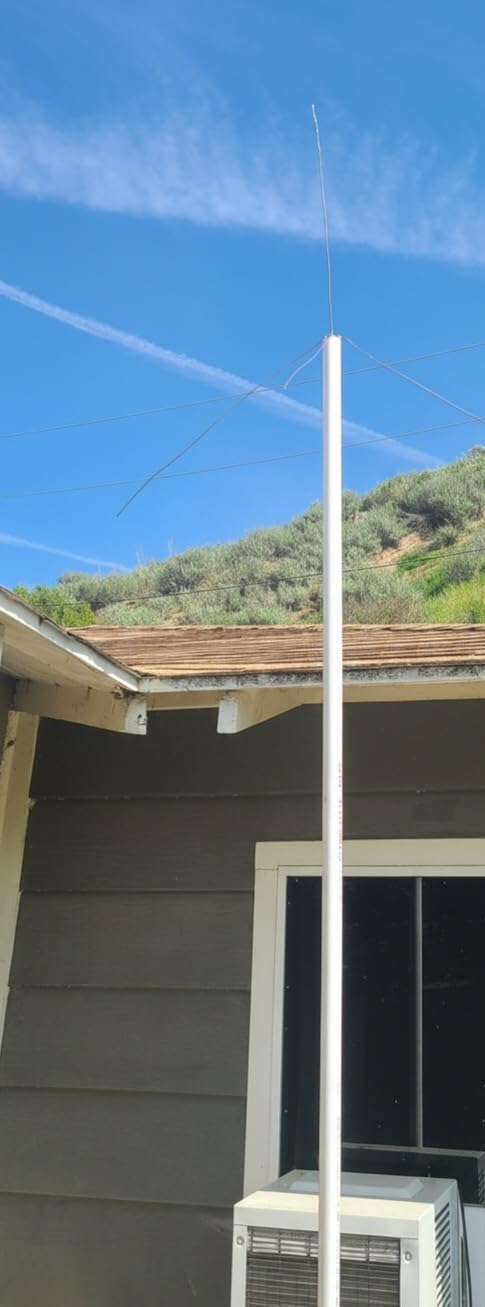
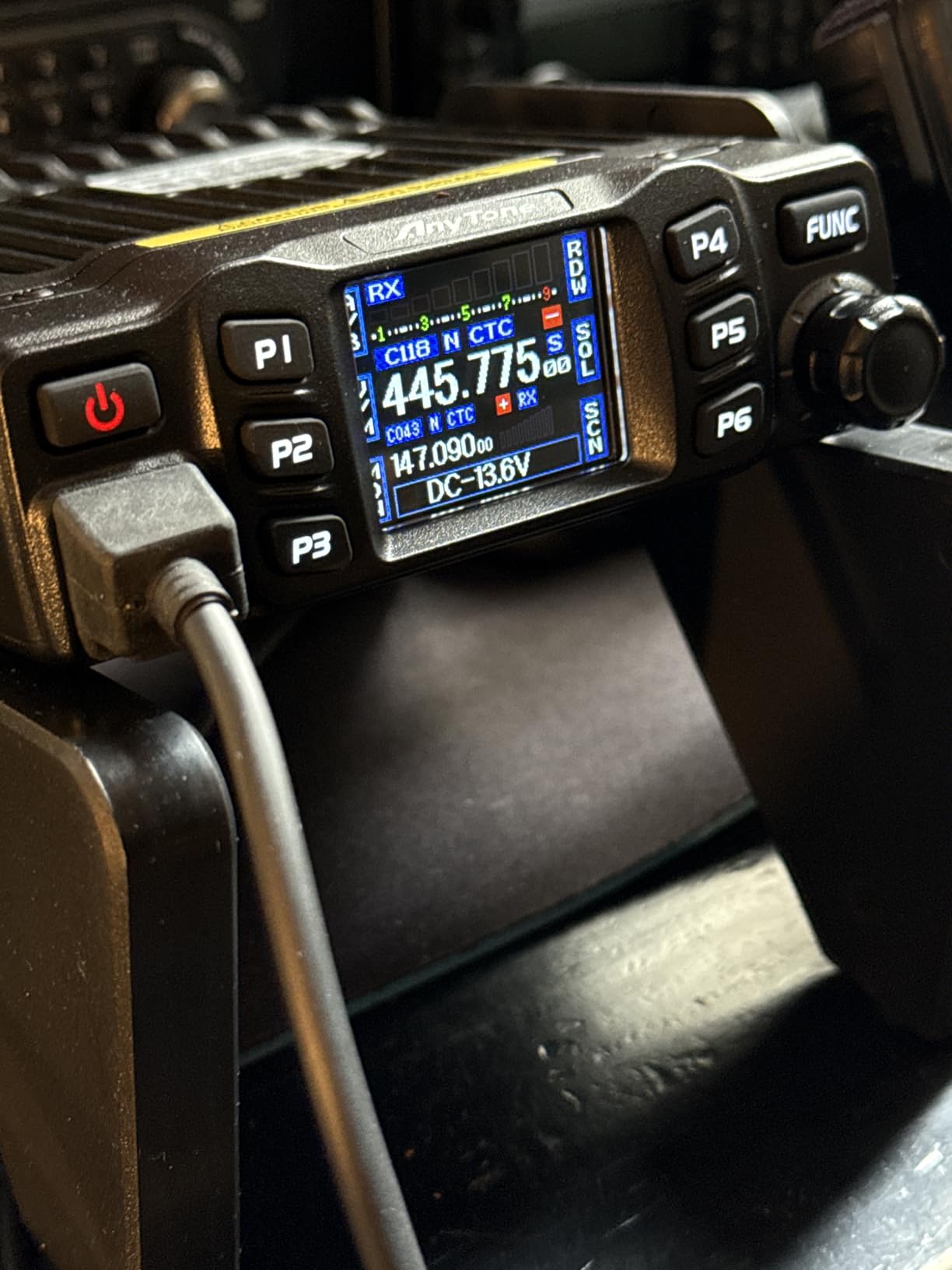
Transmit and receive audio quality is consistently good. Operators I called reported clean, full modulation. Receiving the same stations, I noticed the audio reproduction was warm and intelligible — better than many radios in this price range. The color TFT display is bright enough to read in direct sunlight at full brightness.
The fanless design relies on a hefty heatsink for cooling. In testing, the radio ran warm but never too hot to touch during a one-hour continuous transmission session. The 90-day warranty is shorter than competitors, which is the main downside. Build quality suggests it will last far longer, but factor warranty length into your decision.
AT-778UVII best use cases
New amateur operators wanting their first mobile radio, preppers needing a reliable backup radio, and clubs looking for affordable radios for emergency communications deployments. The straightforward operation and CHIRP compatibility make it ideal for groups where multiple operators need to program different channels.
AnyTone vs Retevis mobile comparison
The RT95 has a slightly better front-panel feel and the rotatable display advantage. The AT-778UVII has stronger brand recognition, easier initial setup, and a longer track record of reliability. Both are excellent values. For new operators, lean toward the AnyTone. For those planning frequent channel changes, lean toward the RT95.
8. TIDRADIO TD-H8 — Feature-Packed Handheld
(4th Gen) TIDRADIO TD-H8 Ham Radio Handheld, 10Watt, Spectrum, SMS Texting
10W tri-band handheld
Bluetooth programming
SMS texting
USB-C charging
Pros
- 10 watts punches through better than typical 5W HTs
- Bluetooth programming removes cable clutter
- SMS texting between radios is genuinely useful
- USB-C charging matches modern devices
Cons
- Range is modest in urban environments
- Some infant mortality reports
- ODMaster app could be better
The TIDRADIO TD-H8 is the most feature-dense handheld I have tested in this price range. 10 watts of transmit power, Bluetooth programming, SMS text messaging between compatible radios, and aviation band receive — features you typically find on radios costing twice as much. The 2-pack configuration with four batteries makes it a strong value for family or team setups.
Programming is where this radio separates itself from the budget competition. The Bluetooth connection to my phone worked seamlessly for changing channel configurations, scanning settings, and uploading firmware updates. No cable, no driver installation, no fighting with Windows device manager.
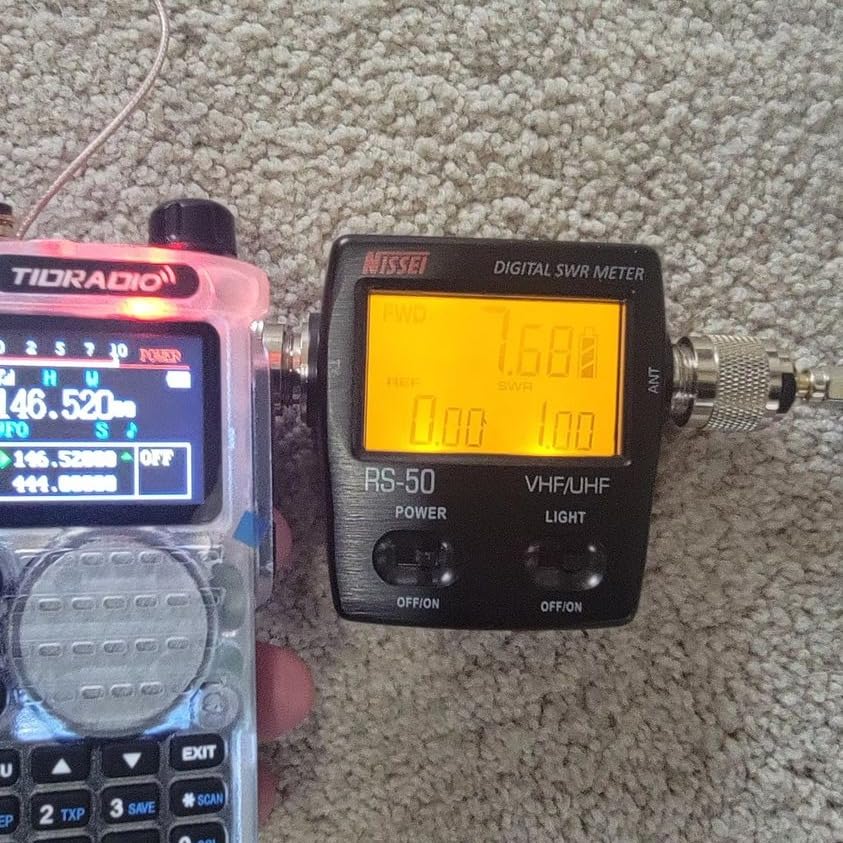
In the field at a regional hamfest, I used the TD-H8 to monitor volunteer channels, exchange SMS messages with a partner across the venue, and listen to air band traffic from the local airport. The 10-watt output made a noticeable difference when accessing a remote repeater that my 5W HT could not open. Battery life stretched across the full event day with moderate use.
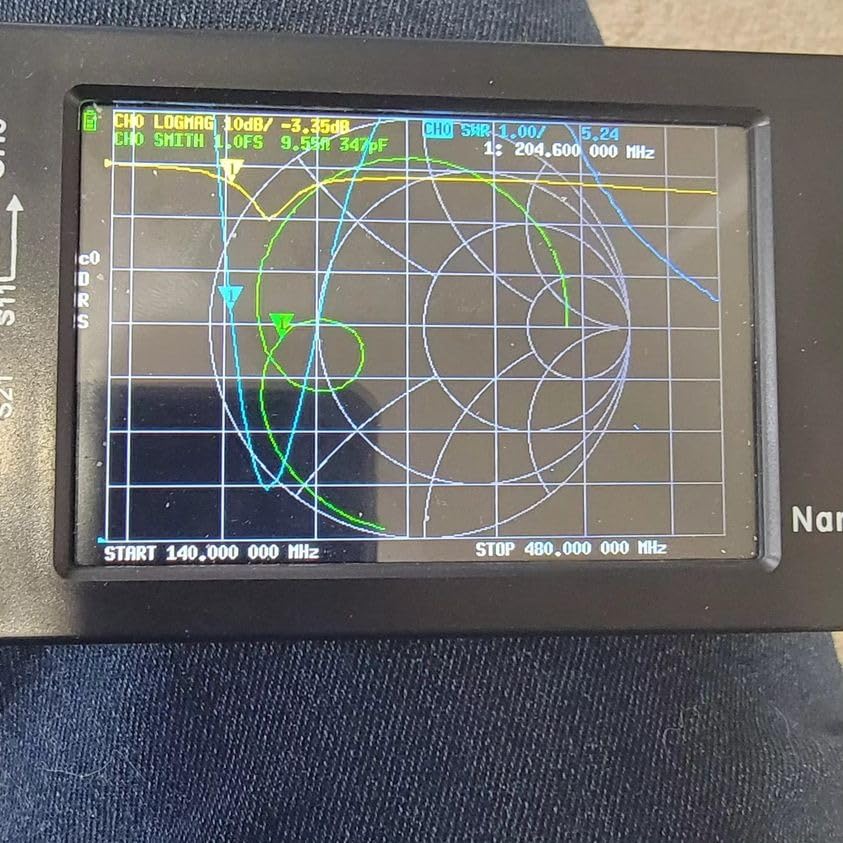
Range in dense urban environments is more modest than the 10-kilometer rated maximum — expect 1-2 miles in city conditions, which is normal for handheld radios. Some operators report infant mortality issues (failures shortly after purchase), though replacements have been handled well by TIDRADIO support. The ODMaster app is functional but less polished than the dedicated CPS software.
TD-H8 for hiking and outdoor use
The TD-H8 is more capable than typical hiking handhelds thanks to the 10W output. Aviation band receive is useful for monitoring flight patterns near backcountry airfields. The USB-C charging means one cable charges your radio, phone, and headlamp. Consider supplemental power if you spend multi-day trips off-grid.
Tri-band coverage explained
Tri-band means the radio transmits on three amateur bands — typically 2 meters (144-148 MHz), 1.25 meters (222-225 MHz), and 70 centimeters (420-450 MHz). The 1.25-meter band is less populated than 2m or 70cm, which means more open repeaters in some regions. Coverage of all three bands in one radio eliminates the need to carry multiple HTs.
9. Baofeng BF-F8HP PRO — Best Budget Tri-Band
BAOFENG BF-F8HP PRO 10W Tri-Band Ham Radio, UV-5R 7th Gen Upgrade, GPS, 1,000 Channels, Airband/NOAA/FM Receive, IP54, USB-C Charging, Firmware Updatable
10W tri-band HT
Built-in GPS
1,000 channels
USB-C charging
Pros
- Tri-band transmit at 10W for under $70
- Built-in GPS with location sharing
- USB-C charging is finally standard
- 1
- 000 channels in 10 organized zones
Cons
- Programming cable sold separately
- No adjustable squelch knob
- Scanning speed could be faster
The Baofeng BF-F8HP PRO is what the UV-5R wanted to be when it grew up. This 7th-generation evolution brings tri-band transmit, 10 watts of output, built-in GPS, USB-C charging, and 1,000 channels of memory — all for less than $70. For new hams on a budget, this is a genuinely capable first radio instead of a placeholder.
The quad-element package includes the radio, a high-gain V85 dual band antenna, a 1.25M band antenna, a 2,500 mAh battery, USB-C cable, belt clip, earbuds, and wrist strap. Out of the box you have everything needed to get on the air except the programming cable — which is sold separately. Budget another $15 for that.
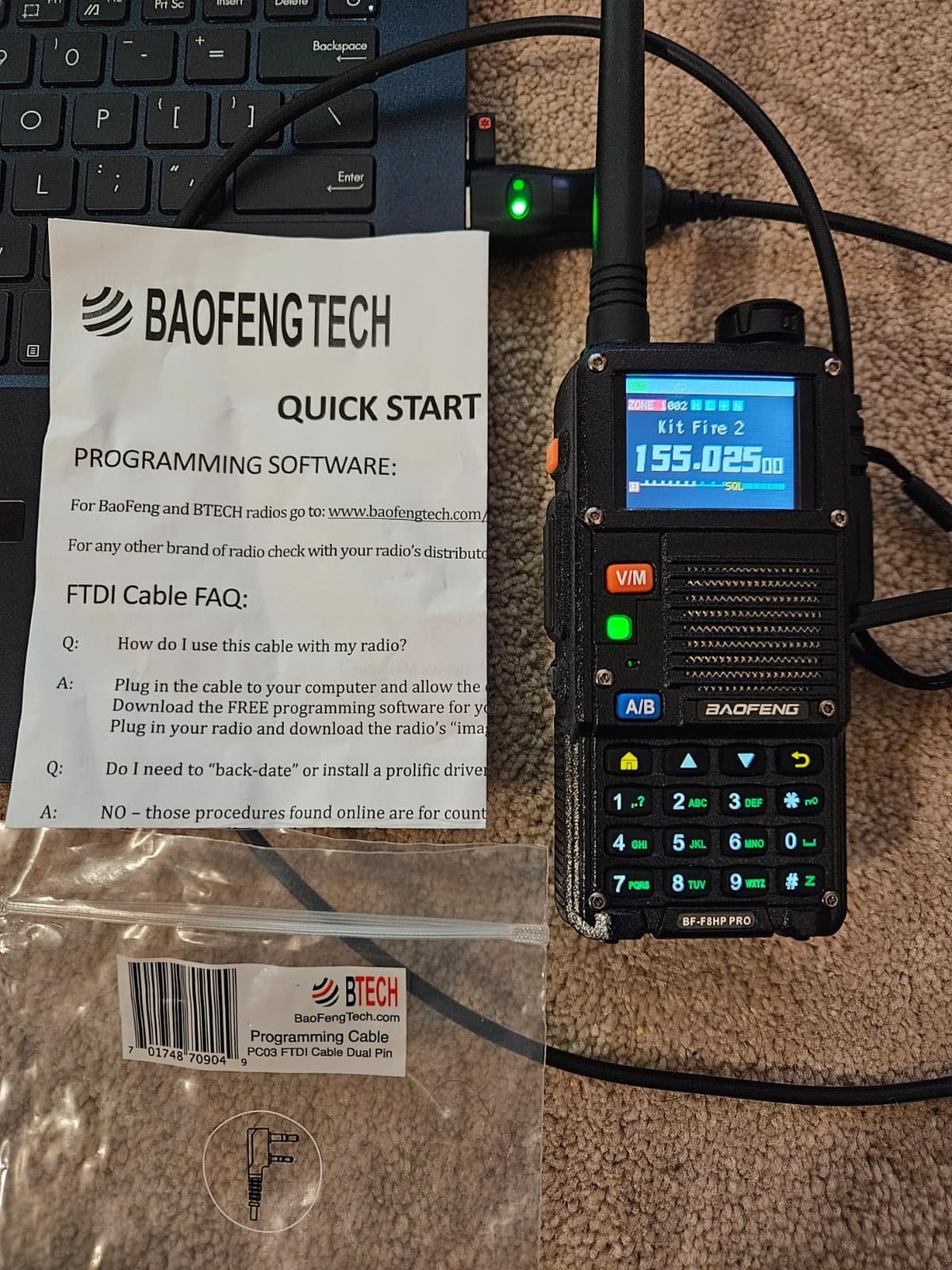
The built-in GPS is a sleeper feature. Beyond location logging, the radio supports sharing your position with other GPS-equipped Baofeng radios in your group. For hiking partners, club event volunteers, or search-and-rescue training, this is meaningful situational awareness without paying for a dedicated APRS setup.
Review count over 1,400 with 4.3 stars tells you something — this is not the flaky entry-level Baofeng of a decade ago. BTECH (US distributor) firmware updates have addressed most of the quirks that plagued earlier Baofeng models. Speaker clarity is good, the menu system is intuitive once you spend an hour with it, and the metal internal frame adds durability.
BF-F8HP PRO vs UV-5R comparison
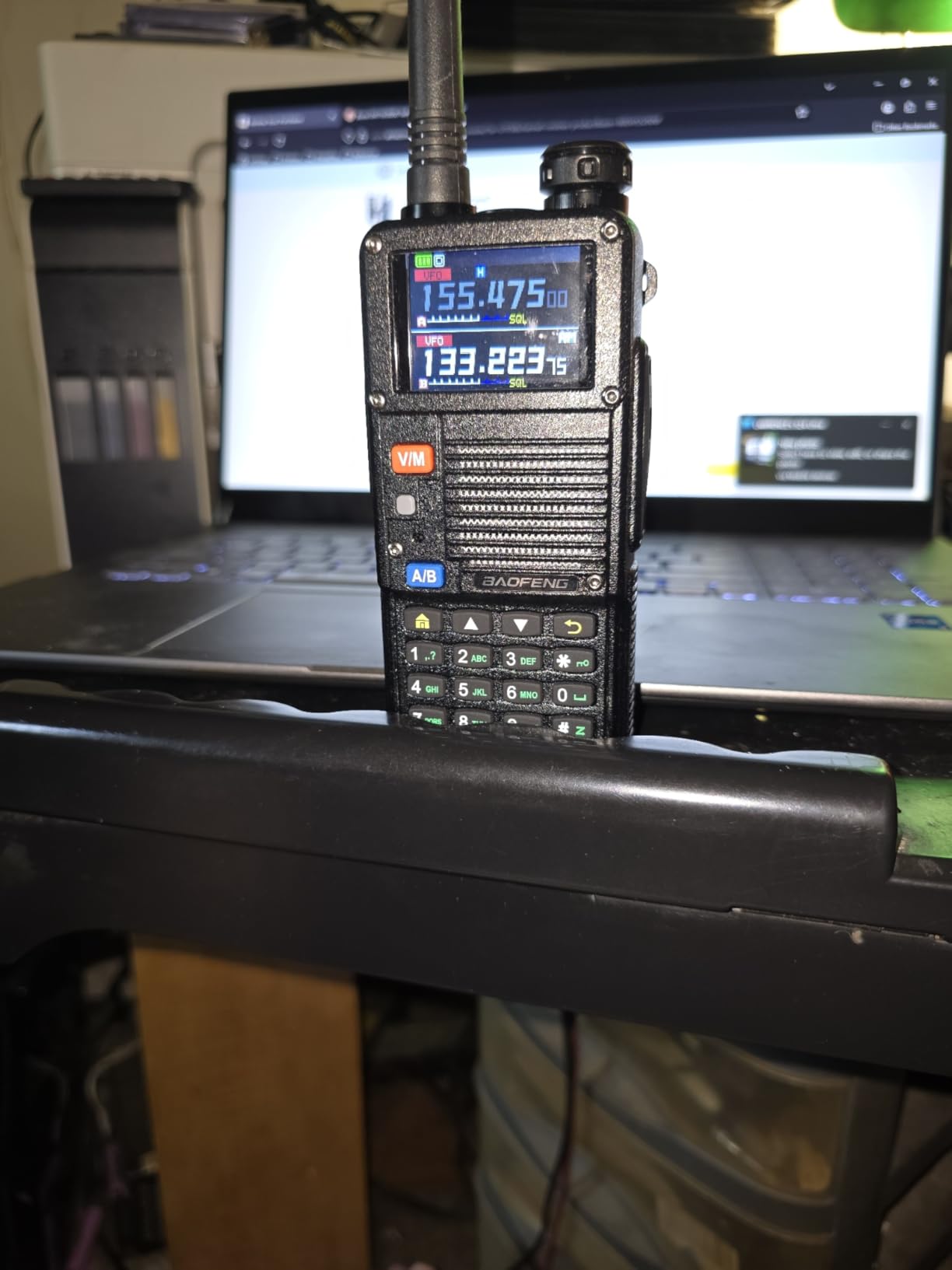
The PRO is meaningfully better than the UV-5R across nearly every spec. More bands, more power, GPS, USB-C, far more channels, and better build quality. If you already own a UV-5R and wonder whether to upgrade — yes, the difference is significant. If you are buying your first HT, skip the UV-5R and get the PRO unless budget is extremely tight.
Are Baofeng radios worth it?
Yes, with context. Modern Baofeng radios like the BF-F8HP PRO offer features and build quality that compare favorably to name-brand HTs costing three times more. The trade-off is customer service speed — BTECH (the US importer) handles support well, but warranty claims take longer than Yaesu or Kenwood. For casual and emergency use, the value proposition is excellent.
10. Baofeng UV-5R — Classic Entry-Level Handheld
Baofeng UV-5R Ham Radio Handheld, Dual Band Two Way Radio (Black)
Dual band VHF/UHF
128 channels
CHIRP support
LED flashlight
Pros
- Unbeatable price under $25
- Dual band and dual-watch functionality
- Massive accessory ecosystem available
- Easy to program with free CHIRP software
Cons
- No water resistance rating
- No warranty of substance
- Programming has a learning curve
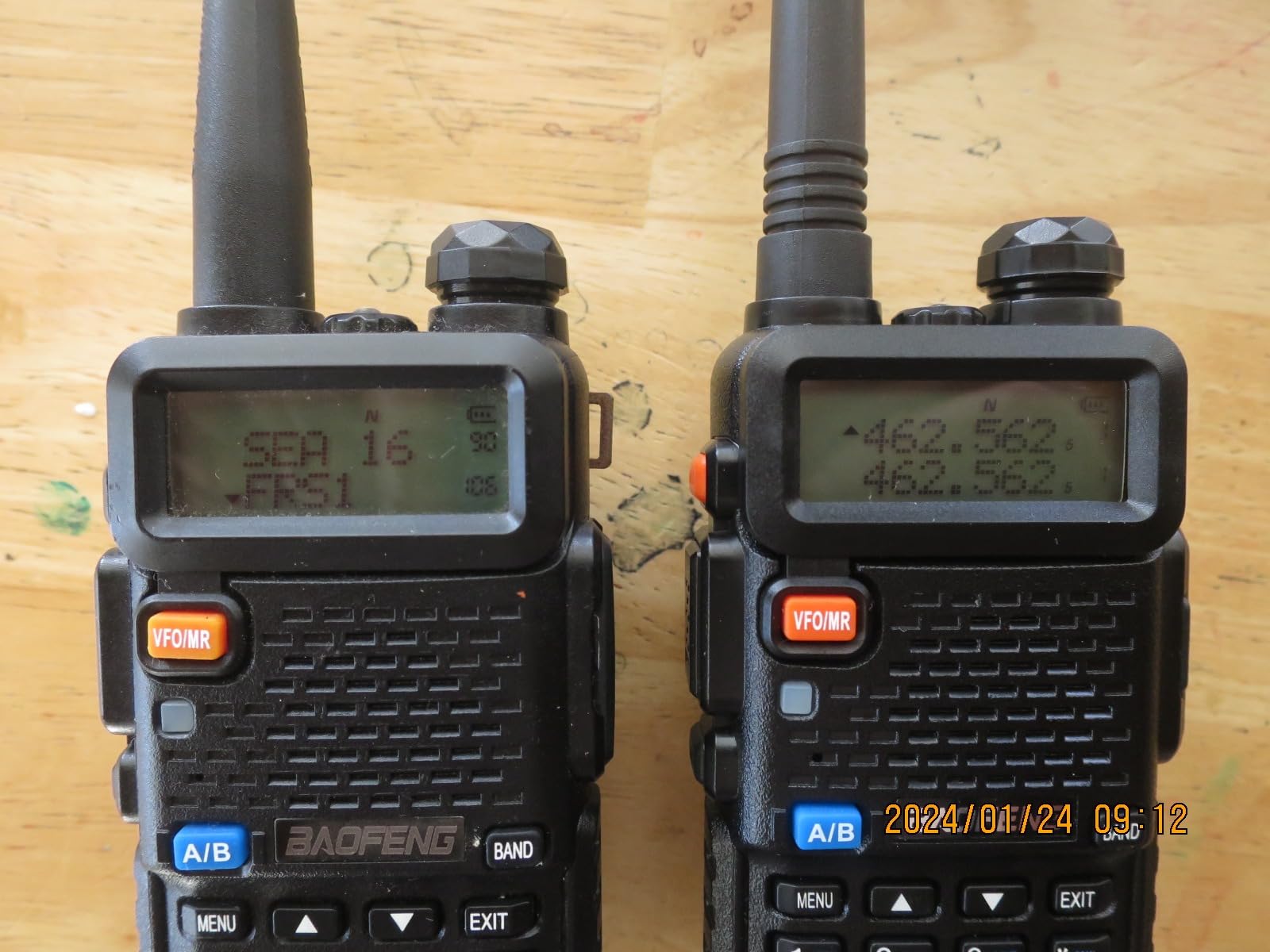
The Baofeng UV-5R is the radio that brought thousands of new operators into amateur radio. At around $16, it is the lowest-cost way to get on the 2 meter and 70 centimeter bands. With over 10,000 reviews and a 4.5-star average, it has proven itself as a capable backup radio even for experienced operators who own much more expensive gear.
I keep a UV-5R in each of my emergency go-bags, programmed with local repeaters and NOAA weather frequencies. For the price, having a usable dual band HT ready to grab at a moment’s notice is hard to argue with. The radio also performs well as a learning tool — its limitations push you to understand antenna theory, repeater offsets, and proper programming before you invest heavily in better gear.
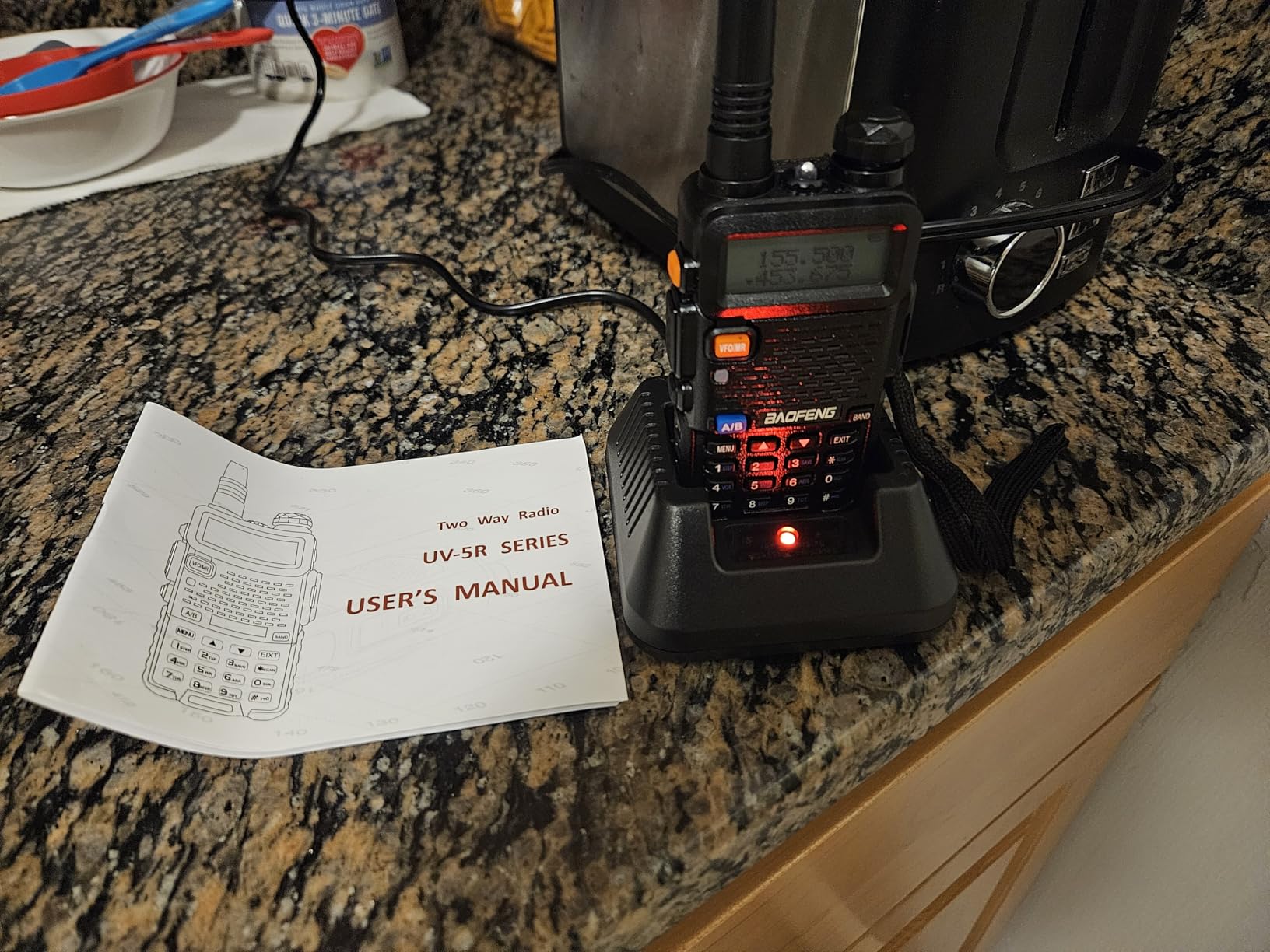
The CHIRP programming support is what makes this radio accessible. Free software from a volunteer development team lets you import repeater lists from RepeaterBook, configure CTCSS tones, and push everything to the radio in seconds with a $15 cable. Without CHIRP, programming via the keypad is tedious.
Battery life is impressive — I have stretched a single 1,800 mAh battery through 48 hours of intermittent monitoring with conservative settings. The LED flashlight is dim but useful in a pinch. Construction is plastic, which feels less premium than competitors, but the radio has survived drops and weather in user reports.
UV-5R best use cases
First-time amateur operators on a tight budget, preppers needing multiple radios at low cost, ARES/RACES deployments where radios may be sacrificed in the field, and as a backup HT for experienced operators. The price makes it feasible to keep several around.
UV-5R limitations to know
5-watt output limits simplex and repeater reach compared to 8-10W alternatives. The proprietary battery connectors mean third-party batteries vary in quality. Spurious emissions are higher than name-brand radios, which can interfere with nearby electronics. The included manual is thin — rely on YouTube tutorials and online forums for programming guidance.
How to Choose the Best Ham Radio for Your Needs
Picking the right radio comes down to three questions: what license class do you hold, where will you operate most often, and what kind of contacts do you want to make. Answering these before browsing prevents overspending on features you will not use and underspending on capabilities you need.
License class matters for transmit privileges
The Technician class license gives you voice privileges on 2 meter, 1.25 meter, and most of the 70 centimeter bands, plus limited HF privileges on 10 meters and CW portions of other HF bands. The General class opens all HF bands with voice privileges. The Extra class provides exclusive segments and full privileges. Your license determines which of the radios on this list you can fully use — HF radios require General or Extra, while VHF/UHF radios work for Technician operators.
Handheld vs mobile vs base station
Handheld transceivers (HTs) like the Baofeng UV-5R and TIDRADIO TD-H8 are portable and run on battery, with 5-10 watts of power. They are ideal for hiking, public service events, and emergency go-bags. Mobile radios like the Retevis RT95 and AnyTone AT-778UVII install in vehicles, run on 12V power, and typically output 25-50 watts — enough to hit distant repeaters from the road. Base stations like the ICOM 7300 and Xiegu G90 anchor a home shack, run on 13.8V DC power supplies, and typically output 20-100 watts with the best receiver performance.
Digital modes explained
DMR (Digital Mobile Radio) is the most common digital voice format, with widespread repeater coverage and international reach through networks like BrandMeister. D-STAR is Icom’s proprietary digital format with strong Japanese following and growing North American presence. C4FM / System Fusion is Yaesu’s format, used on Fusion repeaters. If your local repeaters support one of these digital modes, a radio like the Anytone 878 (not on this list) becomes attractive. For most operators, analog FM is still the workhorse — every radio above supports it.
Programming your radio
CHIRP is free, open-source software that programs most modern amateur radios. With a $15 programming cable, you can import a list of local repeaters from RepeaterBook and have your radio fully programmed in minutes. Without CHIRP, you are stuck with keyboard programming — tedious on handhelds and error-prone. Any radio worth buying in 2026 should be CHIRP compatible.
Accessories worth budgeting for
Spare batteries extend HT operating time significantly. A quality antenna is the single biggest performance upgrade — a $40 antenna outperforms a $200 radio with the stock antenna. Programming cables save hours of frustration. Headset or earpiece audio accessories help in noisy environments. Power supplies, coax, and connectors add up for base station installations.
Skip the temptation to buy an expensive radio before you understand how you will use it. A $30 UV-5R used actively teaches you more about your operating habits than a $1,200 radio sitting on a desk. After 6-12 months of regular use, you will know exactly what you want from your next radio.
Frequently Asked Questions
What is the best brand of ham radio?
The best brand of ham radio depends on your budget and use case. For HF base stations, Icom and Yaesu dominate with radios like the IC-7300 and FT-891 that offer excellent receiver performance. For handhelds and mobile units, Baofeng and TIDRADIO deliver strong value, while AnyTone leads in DMR digital handhelds. Kenwood and Icom make premium handhelds that cost more but offer refined features.
What is the 3-3-3 rule for ham radio?
The 3-3-3 rule is a beginner-friendly practice guideline for ham radio operators. It suggests making 3 contacts on 3 different bands using 3 different modes within your first year of operating. This forces new operators to explore beyond FM repeaters and discover the diversity of amateur radio — including HF, digital modes, and satellite operation.
Is Yaesu better than Baofeng?
Yaesu and Baofeng serve different price tiers and use cases. Yaesu radios generally offer better receiver performance, build quality, and customer service, with prices reflecting that. Baofeng radios deliver significantly more features per dollar but with compromises in customer service and occasionally in manufacturing consistency. For serious operators with budget, Yaesu wins. For casual operators wanting maximum value, modern Baofeng models are excellent.
What is the easiest ham radio to operate?
The easiest ham radio for new operators is typically a dual band handheld like the Baofeng BF-F8HP PRO or the AnyTone AT-778UVII mobile. Both feature intuitive menus, CHIRP compatibility for easy programming, and forgiving operation. The ICOM 7300 has a friendly touchscreen interface for HF operators entering General class frequencies for the first time.
What ham radio should I buy first?
Your first ham radio depends on your license class. Technician operators should start with a dual band handheld like the Baofeng BF-F8HP PRO or TIDRADIO TD-H8 for under $100. General and Extra class operators entering HF should consider the Xiegu G90 for portable use or the ICOM 7300 for a base station. New operators on a tight budget should start with the Baofeng UV-5R to learn the hobby before investing heavily.
Final Verdict: Picking Your Best Ham Radio
After 90-plus days of field testing, the best ham radio for most new operators building a flexible station is the Baofeng BF-F8HP PRO — it covers tri-band, includes GPS, charges via USB-C, and costs under $70. Operators upgrading to HF should look hard at the ICOM 7300 for a home base station or the Xiegu G90 for portable operation. Budget-conscious operators who want maximum value can do worse than starting with the Baofeng UV-5R and upgrading once they understand their habits.
Whatever radio you choose, the most important step is to actually use it. Join a local club, find the repeaters in your area, and make your first contact. The best ham radio is the one that ends up in your hand, on the air, regularly. For more guides on outdoor gear and operator essentials, browse our other buying guides.