
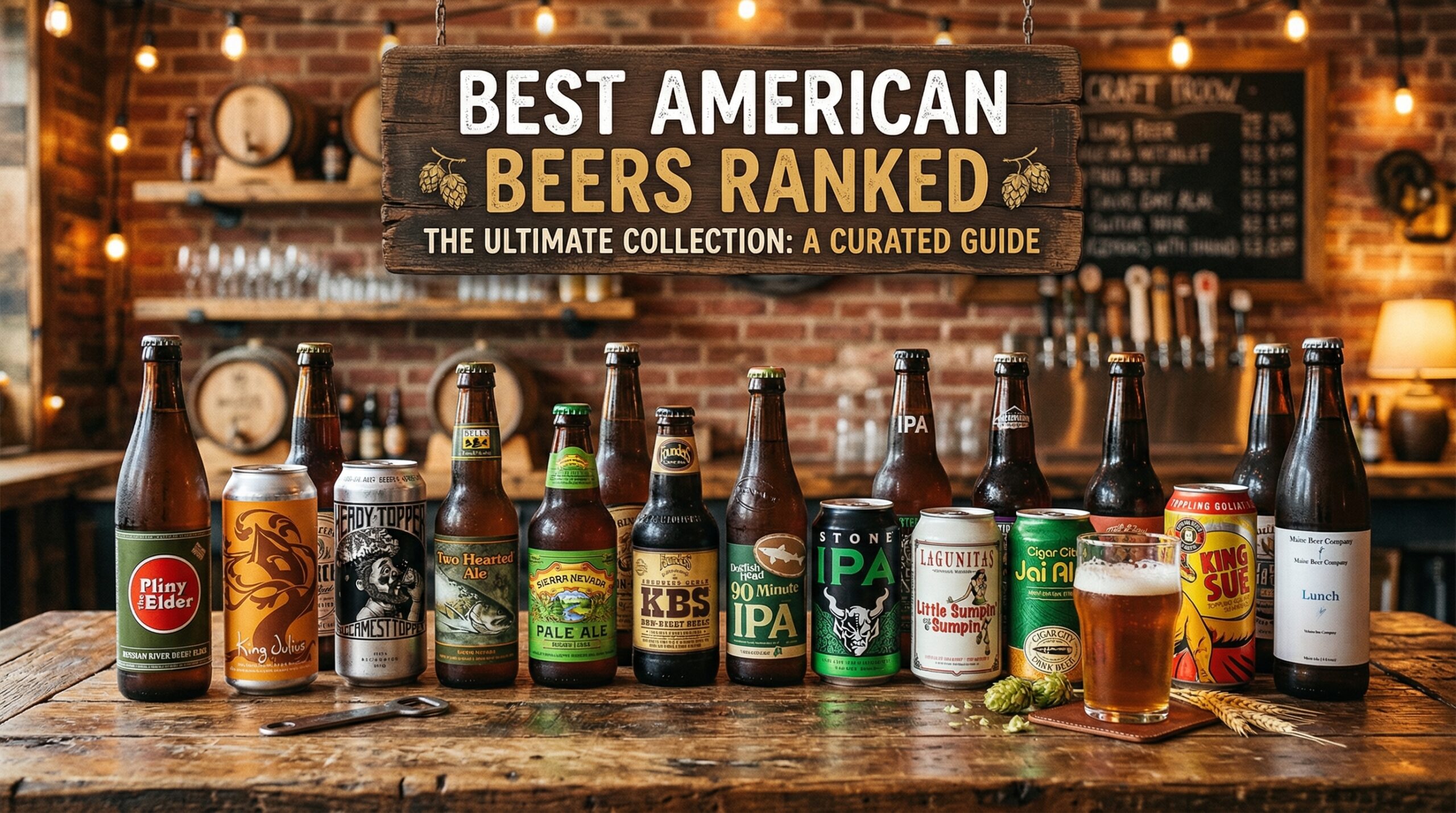
The American brewing scene has transformed dramatically over the past few decades. What started as a nation of mass-produced lagers has evolved into a powerhouse of innovation, with craft breweries pushing boundaries across every style imaginable. Whether you are a seasoned hophead seeking the next juicy double IPA or a newcomer curious about what makes American beer special, this ranked guide will help you navigate the best brews the United States has to offer.
Our team spent months tasting, comparing, and debating beers from coast to coast to bring you this definitive ranking of the best American beers. We considered flavor complexity, brewing excellence, popularity, and availability to create a list that appeals to both craft beer enthusiasts and those who appreciate a reliable classic. You might even find a few surprises that challenge your assumptions about American beer.
Table of Contents
Understanding American Beer Styles
Before diving into our rankings, it helps to understand the building blocks of American brewing. The United States has taken classic European styles and made them distinctly its own, particularly through bold hop-forward beers that define the modern craft beer movement.
Lagers vs. Ales: The Fundamental Difference
All beer falls into one of two broad categories based on the type of yeast used and fermentation temperature. Lagers use saccharomyces pastorianus yeast that ferments at cooler temperatures over longer periods, resulting in clean, crisp flavors. Ales use saccharomyces cerevisiae yeast that works at warmer temperatures, typically producing more complex fruit and ester notes.
American lagers like Budweiser and Coors define the light, refreshing end of the spectrum. These beers prioritize drinkability and sessionability over flavor intensity. On the other hand, American ales embrace boldness, with hops taking center stage in ways that European brewers never imagined.
IPAs and the American Hop Revolution
The India Pale Ale became America’s signature style when West Coast breweries began experimenting with aggressively hoppy recipes in the 1970s and 1980s. The style evolved from English tradition into something entirely new, characterized by citrus-forward hops, piney résins, and often higher alcohol content.
Today, the IPA category has exploded into countless variations. Hazy IPAs feature juicy, tropical fruit flavors with a smooth mouthfeel. Double IPAs push the hop intensity to extreme levels. Session IPAs deliver hop character at lower alcohol percentages. This versatility keeps American IPAs at the forefront of craft beer innovation.
Stouts, Porters, and Dark Beers
While hoppy beers dominate American craft brewing, dark beer enthusiasts have plenty to celebrate. American stouts often feature bold roasted coffee and chocolate notes, sometimes aged in bourbon barrels for added complexity. Porters offer a more approachable entry point to dark beers with their smooth, malty character.
The Bourbon County Stout from Goose Island in Chicago helped establish barrel-aged stouts as a sought-after specialty. These beers demonstrate how American brewers take traditional styles and elevate them through innovation and experimentation.
The 15 Best American Beers Ranked
Now we reach the heart of this guide. These beers represent the pinnacle of American brewing, from iconic craft breweries that defined generations to bold newcomers pushing the envelope. Each brings something unique to the table, earning its place through exceptional quality and distinct character.
1. Pliny the Elder (Russian River Brewing Company)
Many consider Pliny the Elder the benchmark of American double IPAs. Russian River Brewing Company in Santa Rosa, California, first brewed this legendary beer in 2000, and it remains remarkably consistent despite widespread demand. The recipe features multiple hop varieties layered for complexity without overwhelming bitterness.
Expect aromas of pine and citrus zest that give way to a surprisingly smooth finish. At 8% ABV, it drinks lighter than its alcohol content suggests. This beer helped establish the West Coast IPA style and continues to influence brewers worldwide. Finding it can require visiting the brewery or knowing your local craft beer retailers.
2. Two Hearty Ale (Hopworks Urban Brewery)
Though Pliny gets most of the recognition, Two Hearty Ale from Hopworks Urban Brewery in Portland deserves equal acclaim. This English-style IPA brings remarkable balance between malt backbone and hop character, something increasingly rare in an era of hop-bomb extremes.
The brewery focuses on sustainable practices and organic ingredients without compromising flavor. The result is a beer that tastes timeless rather than trendy. Two Hearty Ale demonstrates that restraint and nuance deserve celebration alongside bold experimentation.
3. Brooklyn Lager (Brooklyn Brewery)
Brooklyn Lager represents everything great about American lager brewing. The brewery, founded in 1988 by former railroad executive Steve Hindy, helped pioneer the craft beer movement on the East Coast. This Vienna-style amber lager offers perfect balance between toasted malt sweetness and subtle hop bitterness.
The beer pours a beautiful copper color with excellent clarity. Each sip delivers bready crust notes followed by a clean, satisfying finish. Brooklyn Lager works beautifully at any occasion, from backyard barbecues to elegant dinners. It remains consistently excellent and widely available, making it an ambassador for American craft brewing.
4. Samuel Adams Boston Lager (Boston Beer Company)
No discussion of American beer ranks feels complete without Samuel Adams. Jim Koch launched Boston Lager in 1985, and it established the template for American craft beer success. The recipe uses a proprietary strain of lager yeast that creates distinctive fruit and spice notes missing from most mass-market lagers.
The beer pours deep amber with a thick, frothy head. Cinnamon and orange peel appear in the aroma, transitioning to rich malt sweetness with herbal hop undertones. Samuel Adams remains remarkably accessible while offering more complexity than typical American lagers. It opened doors for millions of drinkers exploring beyond mass-market options.
5. Pliny the Younger (Russian River Brewing Company)
The younger sibling to Pliny the Elder, this triple IPA takes hop intensity to another level. Brewed only once yearly in February, eager customers line up outside Russian River Brewing Company days in advance. The waiting reflects genuine excitement rather than marketing hype.
At 10.25% ABV, Pliny the Younger packs a serious punch. The brewing team uses massive quantities of hops throughout the brewing process, creating layers of tropical fruit, pine, and citrus flavors. Despite the intensity, the beer remains remarkably drinkable. If you ever get the chance to try it fresh from the source, jump at the opportunity.
6. Sierra Nevada Pale Ale (Sierra Nevada Brewing Company)
The beer that started the American craft beer revolution. Sierra Nevada founder Ken Grossman built his first brewhouse in 1980 using a repurposed milk tank and sheer determination. The resulting Pale Ale single-handedly proved that American brewers could create world-class beer.
The recipe showcases Cascade hops, the first American-bred hop variety developed specifically for brewing. These hops deliver the iconic floral and citrus aromatics that defined American Pale Ale. The malty backbone provides sufficient balance without overshadowing the hops. Every sip reminds you why simplicity sometimes wins. Sierra Nevada Pale Ale remains a must-try for any beer enthusiast.
7. Bourbon County Stout (Goose Island Beer Company)
Goose Island’s Bourbon County Stout changed how Americans think about barrel-aged beers. First released in 2002, this imperial stout spends months aging in freshly emptied bourbon barrels. The result combines rich chocolate and coffee flavors with vanilla, oak, and bourbon warmth.
At 14-15% ABV depending on the vintage, this beer demands respect and slow sipping. The brewery now releases multiple variants annually, including coffee-infused and regular strength versions. Original Bourbon County Stout remains the crown jewel, eagerly anticipated by collectors and enthusiasts each November.
8. Heady Topper (The Alchemist)
Before Vermont became famous for hazy IPAs, Heady Topper already delivered that experience. The Alchemist in Waterbury, Vermont, built its reputation on this beer before the brewery was even open to the public. Drinkers traveled hours to secure cans from the brewery’s short-lived hop shop.
The beer pours murky orange with a massive white head. Expect intense tropical fruit flavors with a distinctive doughy, bready quality from the unfiltered haze. At 8% ABV, it delivers serious hop character without overwhelming. Heady Topper helped establish Vermont as a pilgrimage destination for hopheads worldwide.
9. 90 Minute IPA (Dogfish Head Craft Brewed Ales)
Dogfish Head founder Sam Calagione pioneered the extreme beer movement with 90 Minute IPA, continuously hopped throughout a 90-minute boil. This technique creates unprecedented hop integration, with flavors bleeding seamlessly into the malt backbone rather than arriving in bursts.
The beer weighs in at 9% ABV with remarkable drinkability. Grapefruit and pine notes dominate initially, giving way to sweet caramel malts and a lingering dry finish. 90 Minute IPA represents the sweet spot between approachable and assertive, earning it permanent status in the American brewing canon.
10. Bell’s Two Hearted Ale (Bell’s Brewery)
Michigan’s Bell’s Brewery created a near-perfect IPA with Two Hearted Ale. The beer uses exclusively Centennial hops, creating a distinctive citrus and pine character throughout. Unlike many IPAs that fade mid-palate, Two Hearted Ale maintains its hop presence from first sip to final swallow.
The name references Ernest Hemingway’s novel, and the brewery suggests enjoying it alongside the book. At 5.5% ABV, it remains sessionable despite its flavor intensity. Two Hearted Ale consistently ranks among the best IPAs in America and serves as an excellent introduction to the style for newcomers.
11. Coors Banquet (Coors Brewing Company)
Sometimes the classics earn their reputation honestly. Coors Banquet originated in 1873 as a premium offering from the Golden, Colorado brewery. The beer differentiates itself through cold-temperature brewing and mountain water sourced from the Rockies.
Unlike many light beers, Banquet delivers genuine malt character with honey and biscuit notes. The flavor profile stands apart from the light lager lineup, offering more substance without approaching craft beer intensity. Many argue it represents the best mass-market American lager available, particularly when enjoyed ice-cold on a hot day.
12. Fat Tire (New Belgium Brewing)
New Belgium’s flagship beer introduced countless Americans to craft brewing through its smooth, approachable character. The brewery, founded in 1991 in Fort Collins, Colorado, built its identity around employee ownership and environmental sustainability without letting ethics overshadow flavor.
Fat Tire pours amber with toasted bread and caramel flavors balanced by subtle hop notes. At 5.2% ABV, it encourages sharing and social drinking. The beer democratized craft beer for millions of drinkers who found other options too aggressive. It remains a reliable choice nearly three decades after launch.
13. Dale’s Pale Ale (Oskar Blues Brewery)
Oskar Blues in Longmont, Colorado, took a risk packaging this beer in cans back in 2002, when canned craft beer seemed almost sacrilegious. That gamble paid off spectacularly, helping establish cans as suitable vessels for premium beer rather than just cheap lagers.
Dale’s Pale Ale delivers aggressive hopping at 6.5% ABV with pine, resin, and citrus notes dominating. The cans protect the beer from light exposure, making it ideal for outdoor adventures. This beer proved that convenience and quality could coexist, influencing countless breweries to follow suit.
14. Anchor Steam Beer (Anchor Brewing Company)
San Francisco’s Anchor Steam represents American brewing history in a bottle. The brewery traces its roots to the California Gold Rush era, and this beer has remained largely unchanged since 1896. The steam refers to the cooling method used before modern refrigeration, with open vessels exposed to cool ocean air.
The beer defies easy categorization, sitting somewhere between a lager and an ale thanks to the warm fermentation temperatures. Copper in color with a creamy head, Anchor Steam offers toasted bread, light caramel, and subtle floral hop notes. It served as inspiration for generations of American craft brewers who followed.
15. Michelob Ultra (Anheuser-Busch InBev)
Love it or hate it, Michelob Ultra deserves recognition for dominating the modern American beer landscape. The beer targets fitness-conscious consumers who want something lighter without sacrificing social drinking occasions. At 4.2% ABV and 85 calories, it delivers exactly what it promises.
Critics argue it tastes like water, but fans appreciate the clean, crisp finish that allows extended drinking sessions without excess alcohol or calories. Whether you consider it a positive or negative development, Michelob Ultra’s market success has shaped how major breweries approach product development. It represents a legitimate segment of American beer preferences.
Regional American Beer Highlights
American beer culture varies dramatically by geography, with certain styles and breweries dominating different regions. Understanding these regional differences helps you find exceptional beers that might not reach national distribution.
East Coast: From New England to Pennsylvania
The Northeast boasts the highest concentration of craft breweries in America. New England IPAs originated here, featuring hazy, juicy hop profiles that spread nationwide. Vermont particularly shines, with The Alchemist, Hill Farmstead, and Lawson’s Finest Liquids leading the charge.
Pennsylvania offers its own proud brewing traditions. Yuengling, America’s oldest brewery, continues operating in Pottsville. Their Traditional Lager and Black Bass provide glimpse into pre-prohibition American brewing. New York City hosts hundreds of breweries, with Brooklyn Brewery setting the craft standard decades ago.
West Coast: Where Craft Beer Began
California remains the spiritual home of American craft brewing. Sierra Nevada’s Chico brewery draws pilgrimages from beer enthusiasts worldwide. Russian River in Sonoma County produces beers that consistently rank among the world’s best. The Bay Area alone hosts more breweries than most states.
Oregon and Washington follow close behind. Portland’s density of breweries per capita exceeds anywhere else on Earth. Hop farming concentrates in Yakima Valley, Washington, providing fresh ingredient access that shapes regional beer character. West Coast IPAs, with their piney bitterness and citrus-forward hops, define the classic American pale ale style.
The South and Texas: Emerging Voices
Southern brewing has historically lagged behind other regions due to restrictive laws and cultural preferences. That changes rapidly as modern breweries establish themselves. Austin, Texas particularly thrives, with live music capital also becoming a beer destination.
Shiner Bock from the Spoetzl Brewery has served Texas since 1913, representing the region’s traditional beer culture. More recently, establishments like Austin Beerworks and Live Oak have brought craft sensibilities south. North Carolina’s Research Triangle hosts numerous excellent breweries pushing the region’s reputation upward.
Midwest: More Than Corn and Soy
The Midwest offers hidden gems often overlooked by coast-centric beer media. Minnesota’s Surly Brewing produces outstanding hoppy beers alongside creative barrel-aged stouts. Wisconsin’s New Glarus Brewing refuses to distribute beyond state lines, creating cult favorites like Spotted Cow that locals fiercely protect.
Illinois deserves particular attention, with Goose Island’s Bourbon County Stout achieving worldwide recognition. Chicago’s beer scene has exploded since Goose Island proved Midwestern breweries could compete nationally. Wisconsin’s fresh-hopping traditions during autumn harvest demonstrate regional innovation worth exploring.
Best American Beers by Occasion
Different situations call for different beers. The perfect IPA at a beer dinner feels wrong at a backyard barbecue, just as a light lager disappoints during a serious tasting session. Matching beer to occasion ensures maximum enjoyment from every pour.
Backyard Barbecue
Barbecue demands beers that cut through smoky meat without overwhelming the palate. Brooklyner Lager handles this role beautifully, with enough character to stand up to grilled meats while remaining refreshing between bites. Sierra Nevada Pale Ale offers another excellent option with its balanced malt and hop profile.
For larger gatherings, Coors Banquet provides crowd-pleasing familiarity with genuine malt character. Its golden color and clean finish complement charred exterior without clashing with sauce-heavy dishes. Avoid overly hoppy or barrel-aged beers here, as their intensity distracts from smoky barbecue flavors.
Beach Days
Salt air and sunshine call for light, crisp beers that hydrate rather than dehydrate. Michelob Ultra leads this category despite craft enthusiasts turning their noses up. Corona Familiar and Pacifico Clara also excel, with their light bodies and lime wedge accompaniments enhancing ocean vibes.
If you prefer craft options, Veza Surf’s Hop Splash or other session IPAs deliver beer character without the alcohol baggage. Look for 4-5% ABV beers that allow all-day enjoyment without concern. Cans prove essential at the beach, protecting beer from heat and sand while ensuring easy transport.
Game Day Gatherings
Sports viewing involves extended sitting, multiple snacks, and company distraction. Fat Tire works wonderfully here, with approachable character that won’t fatigue your palate over four quarters. Dale’s Pale Ale offers more excitement if your crowd appreciates craft options.
For those seeking something special during timeouts, 90 Minute IPA from Dogfish Head provides enough complexity to discuss while remaining drinkable throughout the game. The continuous hopping technique gives it staying power that rewards attention between plays.
Dive Bar Nights
Dive bars demand adaptability and low expectations. Pabst Blue Ribbon famously succeeds here through price point and irony, but Miller High Life offers similar transcendence with slightly better flavor. Sometimes the cheapest option genuinely satisfies after midnight.
However, many dive bars now stock craft options alongside classics. Narragansett from Rhode Island brings New England heritage to rough neighborhood establishments. The unpretentious packaging belies surprisingly decent lager character. Seek out local breweries that maintain dive bar presence, as these relationships often yield pleasant surprises.
How to Choose Your Perfect American Beer
With thousands of American breweries producing countless variations, selecting your next beer can feel overwhelming. Understanding your preferences and knowing what to expect helps enormously in making satisfying choices.
Identifying Your Flavor Preferences
Start by honestly assessing what flavors appeal to you. Hoppy beers feature bitterness, citrus, pine, and tropical fruit notes. Malty beers emphasize bread, caramel, toast, and chocolate. Sour beers provide acidity and brightness that some find refreshing and others find off-putting.
If you enjoy coffee or chocolate, stouts and porters will likely satisfy. Those who prefer refreshing drinks might explore wheat beers or session IPAs. Adventurous palates could attempt sour ales or barrel-aged beers. The beauty of American brewing lies in its variety, ensuring everyone finds something appealing.
Understanding Beer Labels and Stats
Beer labels contain valuable information for informed selection. ABV (Alcohol by Volume) indicates intensity and calorie content, with most American beers ranging from 4-8% and imperial styles reaching 10-15%. Higher ABV typically means richer flavor and warming alcohol presence.
IBU (International Bitterness Units) measures hop-derived bitterness on a scale from 5 to 100+. Most American IPAs fall between 40-70 IBU, while lagers often stay below 20. However, high IBU doesn’t guarantee bitter flavor, as malt sweetness can balance perception. Use IBU as one data point among many rather than absolute guidance.
Tips for Beer Beginners
Start approachable and progress toward complexity. Pale ales and session IPAs introduce hop flavors gently before challenging your palate with extreme examples. Wheat beers often provide smooth, easy drinking that converts even dedicated soda fans.
Pay attention to freshness dates, particularly for hoppy beers. IPAs lose vibrant aromatics within weeks of brewing, making date labels essential. Store beer cool and dark until consumption. Finally, pour beer into proper glassware when possible, as shape influences aroma delivery and carbonation perception.
Frequently Asked Questions About American Beers
What are the top 5 beers in the USA?
Based on taste, popularity, and brewing quality, the top 5 American beers are: 1) Pliny the Elder from Russian River, 2) Brooklyn Lager, 3) Sierra Nevada Pale Ale, 4) Two Hearted Ale from Bell’s, and 5) Samuel Adams Boston Lager. These represent the pinnacle of American brewing across different styles and regions.
What is the #1 beer in America?
By sales volume, light lagers like Bud Light and Michelob Ultra dominate. By critical acclaim and craft beer community respect, Pliny the Elder from Russian River Brewing Company often earns the top spot. The answer depends on whether you prioritize popularity or quality, as these represent different aspects of ‘best’.
What is the proper etiquette at a tap room?
Basic tap room etiquette includes: 1) Ordering promptly when called, 2) Tasting before committing to full pours, 3) Using proper glassware provided by the brewery, 4) Avoiding strong fragrances that interfere with others’ appreciation, 5) Tipping generously as staff typically rely on tips, 6) Being patient during busy periods, 7) Asking questions about unfamiliar styles respectfully.
Which beer is good for acid reflux?
Generally, lower ABV, less acidic beers work better for sensitive stomachs. Light lagers like Coors Banquet or Miller High Life cause less irritation than highly hoppy or sour beers. Avoid barrel-aged stouts and sour ales if you experience acid reflux, as their intensity can aggravate symptoms. Everyone’s tolerance differs, so drink cautiously and note your personal triggers.
Conclusion: Exploring the Best American Beers
The American brewing landscape offers more variety and quality than at any point in history. From Russian River’s legendary double IPAs to Brooklyn Brewery’s timeless lagers, from Sierra Nevada’s revolutionary pale ale to Goose Island’s barrel-aged stouts, the best American beers represent decades of innovation, experimentation, and passionate brewing.
Whether you seek hop-forward intensity, smooth malt character, or something entirely unique, American breweries deliver. Consider exploring styles outside your comfort zone. That hazy IPA everyone discusses might surprise you, just as that craft lager you dismissed might win you over. Keep an open mind and a curious palate.
If you are looking for alternatives without alcohol, check out our guide to the best non-alcoholic beers. For further global exploration, our ranking of Japanese beer brands offers another perspective on international brewing excellence.
The journey through American beer never truly ends. New breweries open daily, and innovative recipes constantly emerge. Use this guide as a starting point rather than a final destination. Visit local breweries, attend tasting events, and engage with fellow enthusiasts. The perfect American beer awaits your discovery.