
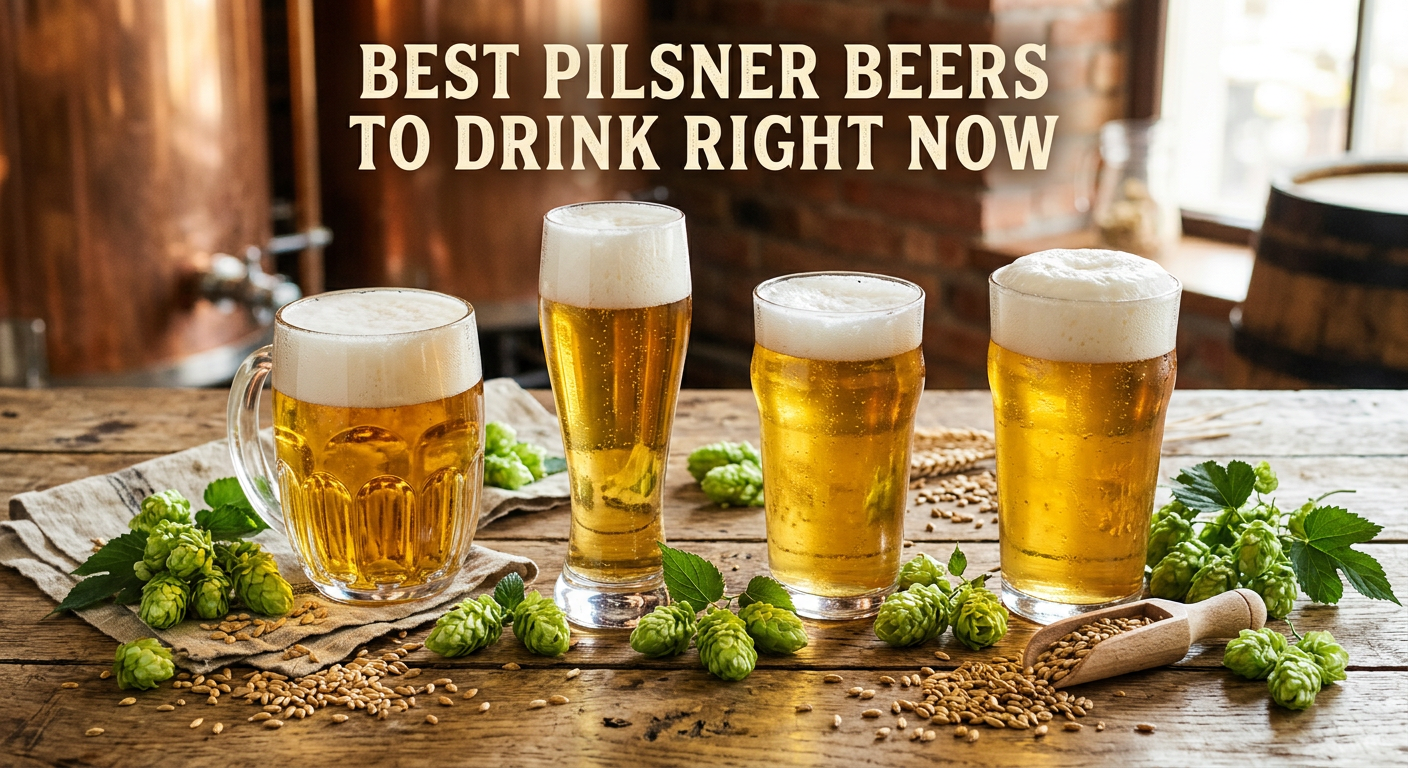
If you have ever found yourself staring at a wall of beer options wondering which one will actually be worth your time, you are not alone. Pilsners occupy that rare middle ground between approachable and complex, between session beer and something worth savoring. The style has exploded in popularity over the past few years, with craft breweries and legacy breweries alike investing serious effort into getting their versions right. This guide cuts through the noise and delivers the best pilsner beers you should be drinking right now, organized by style so you can find exactly what fits your palate and situation.
Table of Contents
What Makes a Great Pilsner
Before diving into specific recommendations, it helps to understand what separates a truly excellent pilsner from a forgettable one. Four factors consistently matter when evaluating any pilsner in this guide.
Malt Character
A great pilsner starts with a bready, cracker-like malt backbone that provides depth without tipping into heaviness. The best examples walk a careful line: present enough to add complexity, restrained enough to let the hops speak. Pilsner malt differs from standard pale malt through modified brewing techniques that create that distinctive toasty quality. When you taste a pilsner with proper malt character, you will notice hints of bread crust, fresh biscuit, or even a whisper of honey. This sweetness should never overwhelm the finish, which brings us to our next criterion.
Hop Profile
Pilsners owe their signature crispness to noble hops, typically Saaz hops for Czech styles and Magnum or other traditional varieties for German interpretations. These hops deliver herbal, floral, and slightly spicy bitterness that balances the malt without assaulting the palate. The hop character in a well-made pilsner should feel integrated rather than harsh. You might catch notes of grass, cedar, or even a touch of citrus depending on the specific hop bill. The bitterness itself tends toward clean and dry rather than resinous or overwhelming.
Fermentation Quality
Pilsners use bottom-fermenting yeast strains that work at cooler temperatures than their ale counterparts, and the extended cold lagering period (typically four to eight weeks at temperatures around 32 to 40 degrees Fahrenheit) develops that characteristic smooth, clean finish. This process strips out unwanted esters and byproducts that can make a beer taste rough or funky. When you drink a pilsner with proper fermentation, you notice how the flavors settle into a cohesive whole rather than hitting you in waves. The carbonation also tends to be finer and more persistent, contributing to that refreshing snap on the palate.
Freshness
Freshness matters more for pilsners than almost any other style. Pilsners contain more hops than standard lagers, which means they are more susceptible to oxidation and light strike. A stale pilsner tastes of cardboard or wet paper rather than crisp grain and herbs. Always check the packaging date when possible. Many European breweries print the brewing date rather than a best-by date, which gives you more accurate information about freshness. For imported beers, the timeline between brewery and your glass significantly impacts what you experience. We prioritize breweries and imports with reliable supply chains and strong freshness practices throughout this guide.
Pilsner Style Categories
Not all pilsners taste the same, and understanding the major style categories helps you navigate the beer aisle with confidence. Each tradition brings something distinct to the glass.
Czech Pilsner
The original pilsner hails from Plzen, Czech Republic, where the style emerged in 1842. Czech pilsners tend toward a fuller body with more caramel malt sweetness than their German counterparts. The Saaz hop influence is pronounced, creating a bitterness that registers more prominently and lingers longer on the palate. These beers often show a slight amber tint rather than the pale gold you might expect. The best examples feel substantial without being heavy, with a warmth from the malt that makes them deeply satisfying. Pilsner Urquell remains the benchmark that defined this style and still sets the standard today.
German Pilsner
German pilsners (sometimes labeled as Pils or Export) emphasize a lighter body and drier finish than Czech versions. The bitterness tends to be more sharp and crisp, with a cleaner hop profile that often features Magnum hops for bittering and more subtle finishing additions. German pilsners are highly carbonated, giving them an almost effervescent quality that makes them incredibly refreshing. The malt character stays restrained, letting the hops and carbonation carry the experience. If Czech pilsners feel like a cozy pub, German pilsners feel like a breezy beer garden on a summer afternoon.
Italian-Style Pilsner
Italy has developed its own take on pilsner over the past decade, influenced heavily by the craft beer movement but grounded in European brewing traditions. Italian craft pilsners often feature modern hop varieties like Cascade or Centennial alongside traditional noble hops, creating more aromatic and tropical-forward beers than classic European examples. The brewing approach tends toward experimental fermentation and creative malt bills. These beers appeal to craft beer enthusiasts who want something recognizable as a pilsner but with more aromatic complexity. The Italian craft scene has produced several noteworthy examples that have influenced pilsner brewing worldwide.
American Craft Pilsner
American craft breweries have embraced pilsner brewing with enthusiasm, creating versions that bridge European tradition with US craft innovation. Some breweries focus on historically accurate interpretations using imported ingredients, while others develop distinctly American expressions with local hops and local malts. Regional variations emerge based on available ingredients and local preferences. West Coast breweries tend toward more bitter, hop-forward interpretations, while Midwest breweries often favor traditional European approaches. This diversity means American craft pilsners offer something for every palate, whether you want a faithful recreation or an innovative reinterpretation.
Top Pilsner Picks You Should Know
Drawing from real enthusiast discussions, blind tasting results, and careful analysis of what actually represents quality across availability tiers, these recommendations span styles and price points to help you build your own rotation.
Czech Pilsner Standouts
Pilsner Urquell stands alone as the defining example of the Czech pilsner style. Brewed in Plzen since 1842, this beer established everything the style would become. The flavor profile features rich bready malt, pronounced Saaz hop bitterness, and a clean fermentation character that makes each sip feel balanced despite its complexity. Reddit discussions among beer enthusiasts consistently rank Urquell as the top Czech pilsner recommendation, with some users declaring it the best pilsner available anywhere in the world. Availability has improved in the United States through specialty importers, making this a realistic option for most beer-focused retailers. The can and bottle offerings both perform well, though draft versions at quality taprooms reveal additional depth.
Budejovicky Budvar, brewed in the Czech town of Ceske Budejovice, presents an alternative to Urquell with a slightly drier profile and more aggressive carbonation. Some tasters prefer its sharper finish, while others gravitate toward Urquell’s richer malt presence. Both represent the style at its finest, and having both available creates an interesting comparison for enthusiasts who want to understand what makes Czech pilsners distinctive. The export versions maintain reasonable freshness timelines compared to some imports.
German Pilsner Classics
Bitburger has earned its reputation as Germany’s most popular premium pilsner through consistent quality and wide availability. The flavor profile delivers crisp bitterness with a clean, dry finish that invites another sip. The carbonation provides excellent refreshment without being harsh. German beer enthusiasts often cite Bitburger as their go-to everyday pilsner, praising its balance and drinkability. The brewery has expanded its traditional offerings in recent years to include craft-inspired variations while maintaining the core Bitburger profile that made it famous.
Krombacher from North Rhine-Westphalia represents another German pilsner standard, known for particularly soft water profiles that create a smooth, gentle character. Some drinkers find Krombacher more approachable than the sharper Bitburger, making it an excellent entry point for those new to German pilsners. The brewery produces several variations including a popular Radler (shandy) option and a higher-alcohol celebrating strength version.
Rothaus from the Black Forest region has developed a cult following among American craft beer enthusiasts who appreciate its distinctive brine note and slightly fuller body. The Markgrafenbrauerei brewery uses traditional brewing methods that create a pilsner with more personality than mass-market alternatives. Rothaus appears frequently in Reddit discussions as a recommendation for people seeking something with more character than mainstream German options. The distinctive blue crown design makes bottles easy to spot on shelves.
American Craft Pilsners Worth Seeking
Trumer Pils from Berkeley, California consistently appears at the top of American craft pilsner discussions. The brewery’s Austrian-trained head brewer brings European precision to California ingredients, creating a pilsner that rivals imports. The flavor profile emphasizes the noble hop character with a clean fermentation background and proper lagering period that develops smoothness. Trumer Pils demonstrates what American craft brewing can achieve when the style receives proper respect and attention. The brewery maintains strong quality control with local distribution ensuring freshness.
Russian River Brewing Company’s STS Pils represents another benchmark for American craft pilsners. The brewery’s commitment to traditional methods, including open fermentation in some batches, creates a pilsner with exceptional depth and complexity. Beer enthusiasts who have participated in blind tastings consistently rank STS Pils among the finest pilsners available in the United States, sometimes prefering it over imported options. The limited distribution means tracking down this beer requires effort, but the reward justifies the search.
Breakside Brewery from Portland, Oregon has built a reputation for pilsners that bridge traditional European styles with Pacific Northwest innovation. The brewery’s focus on local ingredients and careful process control produces pilsners that showcase regional character. Breakside’s interpretations have won awards at major competitions, validating what enthusiasts have been saying about their quality. Regional availability limits access for some drinkers, but those near Portland should prioritize seeking out these offerings.
Pfriem Brewing from Hood River, Oregon similarly delivers exceptional German-style pilsners that have earned national recognition. The brewery’s small-batch approach allows for experimentation while maintaining the precision that traditional pilsner brewing requires. Pfriem’s pilsners appear in blind tasting comparisons alongside European benchmarks and hold their own against established names. The brewery’s commitment to the style has influenced other Pacific Northwest breweries to take pilsner brewing seriously.
Prost Brewing from Denver, Colorado focuses exclusively on German-style lagers and pilsners, bringing Munich-level expertise to Colorado brewing. The altitude and water profile create subtly different conditions that Prost has learned to work with rather than fight. Their pilsner offerings demonstrate how American craft brewing can honor European traditions while developing its own identity. Denver-area beer enthusiasts have made Prost a staple in their rotation for everyday pilsner drinking.
Modern Italian-Style Craft Pilsners
The Italian craft beer scene has produced several noteworthy pilsner interpretations that merit attention. These beers typically emphasize aroma and drinkability while maintaining enough structure to satisfy fans of traditional styles. Breweries like Toccalmatto and Lambrate have developed followings for their distinctive approaches that blend Italian brewing creativity with respect for the pilsner tradition. American importers have made some of these options more accessible, though they remain specialty items compared to German and Czech imports.
Budget and Value Options
Quality pilsners exist at accessible price points for everyday drinking without requiring a specialty retailer or premium budget. Some of the best German pilsners in terms of value include Warsteiner, which delivers solid traditional pilsner character at a price that makes fridge stocking realistic. The freshness window on these mass-market options tends to be shorter, so buying from retailers with strong turnover helps ensure you are getting a fresh product.
Domestic options like Stella Artois and Modelo Especial occupy the accessible import space, though purists might debate whether these represent true pilsner style or broader pale lager territory. Both offer clean, crisp drinking experiences that align with pilsner principles even if they lean lighter than traditional European examples. For casual drinking occasions where refreshment matters more than style purity, these options perform well.
Yuengling Lager, while technically an American amber lager rather than a true pilsner, frequently appears in pilsner discussions due to its traditional brewing approach and regional availability. The flavor profile differs significantly from European pilsners, but some drinkers appreciate its bready malt character and clean finish. Including Yuengling in discussions acknowledges how American brewing traditions intersect with European influences.
Non-Alcoholic Pilsner Options
The non-alcoholic beer category has improved dramatically, and pilsner-style NA beers now represent some of the best options for alcohol-free drinking. Athletic Brewing Company has developed NA versions that capture pilsner character with impressive fidelity, including proper malt body and hop balance without the alcohol. If you are exploring best non-alcoholic beers, these options demonstrate how craft brewing techniques can work within the NA format.
Part of the reason NA pilsners work well is that the style relies less on alcohol for body and complexity than stronger beer styles. When breweries remove the alcohol, the underlying malt and hop character remains identifiable as pilsner rather than disappearing into generic beer territory. This makes pilsner one of the most successful styles for NA interpretation.
Freshness and Storage Tips
Getting the freshest possible pilsner requires attention from your local retailer all the way to your glass. Understanding how pilsners degrade helps you make better purchasing decisions and storage choices.
Light strike represents the greatest enemy of pilsner quality. The hops in pilsners react with light to create skunky, sulfur-like compounds that make even premium beers undrinkable. Clear and green glass bottles offer virtually no protection against light, while brown bottles provide meaningful but not complete protection. Cans solve the light strike problem entirely, which is why many craft breweries have shifted to cans for their pilsner offerings. When buying bottles, choose brown glass and store them away from light immediately after purchase.
Temperature fluctuations accelerate oxidation and flavor degradation in pilsners. Once a pilsner warms after being cold, the cycle of expansion and contraction forces oxygen into the beer. This process creates stale, cardboard-like flavors that overwhelm the delicate hop and malt character. Keeping pilsners consistently refrigerated from store to home to glass is essential for experiencing the beer as the brewer intended. Room temperature storage for extended periods significantly degrades even premium pilsners.
Most European breweries print either a best-before date or a brewing date on their packaging. Best-before dates typically run four to six months from brewing for most pilsners, though some breweries recommend drinking within six weeks for optimal freshness. Brewing dates provide more useful information since you can calculate exactly how long the beer has been in circulation. When given the choice between a clearly dated product and an undated one, the dated option almost always delivers better quality.
For imported pilsners, the timeline between European brewery and American retail shelf can be significant. Working with retailers who prioritize freshness and maintain cold storage throughout the supply chain makes a measurable difference. Some importers specialize in fresh beer and have established relationships with breweries and retailers to minimize time in transit. Seeking out these sources rewards the effort with noticeably better beer.
Food Pairing Suggestions
Pilsners excel at the dinner table thanks to their versatility and balanced profile. The style handles a wider range of foods than many people expect, making pilsners excellent choices for house beer or party hosting where you need something that please diverse palates.
BBQ and grilled meats pair exceptionally well with pilsners, particularly Czech-style examples with their richer malt character. The carbonation cuts through fatty smoke and char flavors while the malt sweetness complements the caramelization from the grill. The hop bitterness provides enough structure to handle spicy dry rubs without becoming overwhelmed. For summer cookouts, pilsners should be your default choice over heavier ales.
Seafood and light fish dishes find an ideal partner in German-style pilsners with their crisp, clean finish. The subtle hop character does not overwhelm delicate fish flavors while the carbonation refreshes the palate between bites. Shrimp, clams, and light white fish preparations work particularly well. Even sushi pairs respectably with well-chilled German pilsners.
Pizza and Italian dishes align naturally with pilsner drinking traditions in both Europe and the United States. The style originated in what is now the Czech Republic, and European beer culture has long associated pilsners with Italian cuisine. Tomato-based pasta sauces, grilled vegetables, and cheese pizza all interact beautifully with pilsner malt and hops. The refreshing quality prevents the palate fatigue that heavier beers create during multi-course Italian meals.
Spicy Asian cuisine benefits from pilsner’s ability to reset the palate between bites of heat. The carbonation and clean finish handle chili heat more effectively than sweet beers or heavy stouts. Thai curries, Szechuan dishes, and Korean fried chicken all work surprisingly well with pilsner pairings. The relatively low alcohol also allows pilsners to function throughout an extended meal without overwhelming spice sensitivity.
Soft cheeses like brie, camembert, and fresh goat cheese highlight pilsner’s more subtle qualities. The bready malt character in Czech pilsners echoes the buttery richness of these cheeses while the carbonation prevents the palate from becoming coated. Harder aged cheeses also work, though the pairing becomes more about contrast than harmony. Picnic spreads with mixed cheese boards and cured meats represent ideal pilsner scenarios.
Frequently Asked Questions
What is the best tasting pilsner beer?
Pilsner Urquell remains the benchmark for Czech-style pilsners with its perfect balance of malt sweetness and Saaz hop bitterness. For German-style, Bitburger offers exceptional crispness and clean finish. Both represent the style at its finest and are widely available in most markets.
What beers are considered pilsners?
Pilsners are pale lagers characterized by a crisp, dry finish and noticeable hop bitterness from noble hops. Key examples include Pilsner Urquell (Czech), Bitburger (German), Trumer Pils (American craft), and Italian-style craft pilsners. All share the common thread of bottom-fermenting yeast, extended lagering, and noble hop character.
What is the difference between Czech and German pilsner?
Czech pilsners have a fuller body with more caramel malt sweetness and pronounced Saaz hop character. German pilsners are lighter-bodied with a drier finish, cleaner profile, and more aggressive carbonation. Czech versions feel more substantial while German pilsners prioritize refreshment.
Which pilsner is best for beginners?
For beer newcomers, start with a well-balanced German pilsner like Bitburger or Krombacher. They are approachable, refreshing, and showcase the style without overwhelming bitterness. Those wanting more complexity can move to Czech pilsners which offer richer malt character and deeper hop presence.
Building Your Pilsner Rotation
Now that you understand what makes pilsners special and which options deserve your attention, putting together a rotation that covers different occasions and palates becomes the practical next step. A well-rounded pilsner rotation might include one widely available German classic like Bitburger for everyday refreshment, one Czech pilsner like Pilsner Urquell for when you want something more complex, and one local craft option like Trumer Pils or a regional brewery to support local business while enjoying exceptional freshness.
The beauty of pilsner as a style lies in its versatility. These beers work equally well at a backyard BBQ, paired with takeout on a Tuesday evening, or savored slowly from a properly frosted glass on a warm afternoon. Building your rotation around quality examples across different price points ensures you always have something appropriate for the moment without overspending on casual occasions or underwhelming yourself when you want something special.
Check freshness dates when available, store your pilsners properly, and do not be afraid to ask your local bottle shop which recent arrivals they recommend. Brewery staff and specialty retailers genuinely want to help you find beers that will make you happy, and showing interest in pilsner quality often leads to discovering new favorites that never appeared on your radar. The best pilsner beers to drink right now include both legendary classics and exciting newcomers, and your perfect rotation waits somewhere in the overlap between what is available and what you enjoy.