
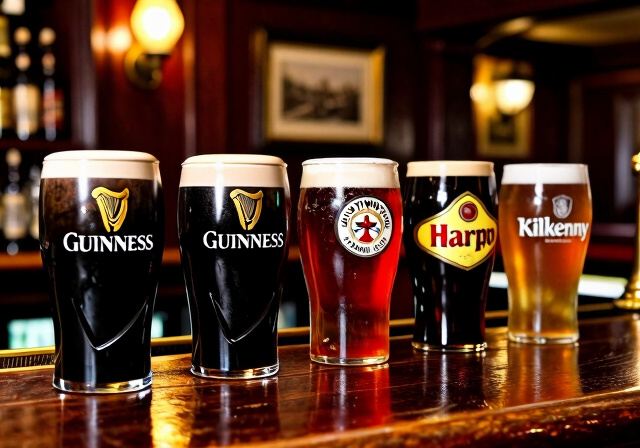
Ireland has been brewing beer for over 5,000 years, and somewhere along the way, a pint of perfectly poured Irish stout became one of the world’s most recognizable drinks. But if you think the best Irish beers start and end with Guinness, you’re missing out on a whole lot of flavor.
Our team has spent years exploring pubs from Dublin to Cork, tasting through Ireland’s brewing heritage and its exciting modern craft scene. This guide covers everything from nitrogenated stouts with their signature creamy heads to smooth red ales and crisp Irish lagers. Whether you’re planning a trip to the Emerald Isle, stocking up for St. Patrick’s Day, or just want to expand your beer horizons, you’ll find your next favorite pint right here.
Table of Contents
Quick Picks: Best Irish Beers at a Glance
Before we dive into detailed profiles, here’s how the major players stack up across the key categories that matter most when you’re choosing an Irish beer.
- Best Overall Irish Stout: Guinness Draught
- Best Cream Ale: Kilkenny Cream Ale
- Best Irish Lager: Harp Lager
- Best Red Ale: Smithwick’s Red Ale
- Best Craft Option: Scraggy Bay
- Best for Smooth Flavor: Murphy’s Irish Stout
Understanding Irish Beer Styles
Irish breweries have perfected a few distinct styles that differ quite a bit from their American or British counterparts. Knowing what sets them apart helps you pick the right beer for your taste.
Irish Stout
The stout is what most people picture when they think of Irish beer. These dark brews get their color from roasted barley, which gives them notes of coffee, chocolate, and sometimes even a hint of smoke. The thing that makes Irish stouts special is the nitrogenated pour. Instead of carbonation, nitrogen creates that thick, creamy head and silky mouthfeel that makes a proper Irish stout feel like liquid velvet. ABV typically sits between 4% and 5%.
Irish Red Ale
Red ales from Ireland are amber-colored with a malty sweetness that balances perfectly with a subtle hop finish. They’re smooth and sessionable, making them great for drinking a few pints without feeling heavy. Smithwick’s really defines this category, and you’ll find it in virtually every Irish pub.
Irish Cream Ale
Cream ales blend the best of both worlds: the refreshment of a lager with the smooth, full-bodied character of an ale. Kilkenny is the gold standard here, with its copper color and velvety texture winning fans worldwide.
Irish Lager
Crisp and clean, Irish lagers like Harp offer a refreshing alternative to darker styles. They’re typically light-bodied with a subtle hop presence and a clean finish that makes them perfect for warmer weather or pairing with food.
Guinness Draught: The Icon That Still Delivers
Let’s get the obvious one out of the way first. Guinness Draught is the number one beer in Ireland for a reason, and dismissing it just because it’s famous would be a mistake.
That nitrogenated widget in every can and keg creates the perfect cascade of tiny bubbles and that iconic creamy head when you pour it correctly. The flavor profile delivers roasted barley with coffee undertones, a touch of chocolate, and that distinctive dry finish at the end. At 4.2% ABV, it’s sessionable enough for a long afternoon at the pub without hitting you too hard.
The trick with Guinness is that not every pint is equal. The best glasses come from properly maintained taps at reputable pubs. A fresh pour from a good source is worlds apart from a stale one. If you’re buying in bottles or cans for home, look for the “Draught” variety rather than the Extra Stout for that authentic experience.
Murphy’s Irish Stout: The Cork Alternative
If Guinness is Dublin’s beer, Murphy’s belongs to Cork. This secondary stout offers a different take on the style that many argue is even smoother than the big name.
Murphy’s has a slightly sweeter finish with more prominent chocolate notes compared to Guinness. The body feels a touch lighter, which some drinkers prefer. It’s less bitter on the back end, making it a good gateway beer if you’re new to stouts. The creamy head forms beautifully, and the nitrogenated pour is just as satisfying as the competition.
One thing Murphy’s has going for it is consistency. Because it’s less ubiquitous, you’re more likely to get a fresh pint even at smaller establishments. Look for it on tap at Irish pubs, and don’t sleep on the Murphy’s Irish Dry Stout variant if you want something with a bit more roast character.
Beamish Irish Stout: The Lost Export
Beamish holds a special place in Irish beer history. Brewed in Cork alongside Murphy’s, this stout has a distinct personality with more roasted barley character and a fuller body. It tastes earthier and less sweet than Murphy’s, with a lingering bitter finish that stout purists appreciate.
Here’s the painful part for American beer fans: Beamish stopped exporting to the US in 2016. Reddit threads are still full of heartbroken fans asking if there’s any way to get it. If you find it in an Irish import shop, grab it. The experience of drinking Beamish at its source in Cork remains one of the great pleasures of Irish beer culture, with locals often claiming it makes Murphy’s taste watery by comparison.
Smithwick’s Red Ale: Ireland’s Everyday Pint
Smithwick’s Red Ale is what most Irish people actually drink when they want something that’s not a stout. It originated in Kilkenny in 1710, making it one of the oldest beer brands in the world still in production.
The color is a beautiful deep amber, almost copper. You get caramel and toffee on the nose, followed by a malty sweetness that flows into a smooth, slightly hoppy finish. At 4.4% ABV, it’s incredibly sessionable. The Irish call this type of beer a “red ale,” and Smithwick’s essentially created the template that others follow.
Beyond the original red ale, the Smithwick’s portfolio includes a Blonde variant that’s lighter and more citrusy, worth trying if you want something refreshing. You can find Smithwick’s in most major US liquor stores with an import section, usually in four-pack bottles or on tap at Irish-themed restaurants.
Kilkenny Cream Ale: The Overlooked Gem
Gearjunkie called it “The Best Irish Beer Ever,” and after trying it yourself, you’ll probably understand why. Kilkenny Cream Ale often gets overshadowed by Guinness, but serious beer fans know it’s a world-class brew.
Kilkenny sits in that space between a red ale and a lager. It has the smooth, rich body of an ale but finishes clean like a lager. The flavor profile offers toasted malt, caramel, and a subtle nuttiness that makes it incredibly easy to drink. At 4.4% ABV, it’s perfect for a long session. The copper color and persistent head make it look as good as it tastes.
Originally from the same brewery as Smithwick’s (they’re both owned by Diageo now), Kilkenny has its own distinct character. Look for it on tap at Irish pubs, and don’t be surprised if it’s not bottled in the US. When you find a pub with Kilkenny on draft, you’ve found a place that takes its Irish beer seriously.
Harp Lager: Crisp and Refreshing
Sometimes you don’t want something dark and heavy. Harp Lager is Ireland’s answer to the question of what to drink when you want a quality lager with Irish character.
This pale golden beer delivers crispness with a subtle hop bite and a clean finish. It’s not trying to be complex or challenging. Instead, it does the simple things right: it’s refreshing, well-balanced, and pairs beautifully with pub food. The IBis rating (International Bitterness Units) sits around 20-25, giving it just enough bite to keep things interesting without being aggressive.
You won’t mistake Harp for an American macro-lager. There’s more depth and character here, with a slight grain note from the malt bill. It works as an excellent palate cleanser between darker Irish beers or as your go-to for outdoor drinking in warm weather. Finding Harp in the US is getting easier as import awareness grows.
O’Hara’s Irish Stout: Craft Excellence
O’Hara’s represents the craft beer side of Irish brewing. Based in County Carlow, this family brewery has been producing award-winning beers since 1997, with their stouts consistently winning medals at international competitions.
The Irish Stout variant delivers a classic nitrogenated experience with roasted coffee aromatics, dark chocolate on the palate, and that characteristic dry finish. At 4.3% ABV, it’s sessionable like the big commercial stouts but with more complexity and character. They also make an Irish Red Ale that’s worth seeking out, with rich caramel notes and a smooth, lingering finish.
What sets O’Hara’s apart is the attention to traditional brewing methods. They use quality ingredients and take their time, which shows in the final product. If you see O’Hara’s on a menu, you’re looking at craft beer that’s rooted in Irish tradition while competing with the best the world has to offer.
Scraggy Bay: Modern Irish Craft at Its Best
The Irish craft beer revolution started around 2010, and Scraggy Bay is one of the success stories that came out of that explosion of creativity. Based in County Clare on the west coast, this brewery takes its inspiration from traditional Irish ingredients and methods while pushing boundaries.
Their flagship beers often feature local barley and Irish hop varieties that you won’t find anywhere else. The flavor profiles tend toward the bold and adventurous, withbrewers unafraid to experiment with barrel aging, wild fermentation, or unique ingredient combinations. This is Ireland’s answer to the American craft movement, and it’s producing some genuinely exciting beer.
The challenge with Scraggy Bay is availability. As a smaller craft producer, getting their beer outside of Ireland is difficult. If you’re visiting Ireland, seeking out local craft breweries like this one is one of the best parts of the beer tourism experience. Some specialty import shops in major US cities occasionally carry Scraggy Bay products, but you’ll pay a premium for the privilege.
Where to Buy Irish Beers in the US
Finding authentic Irish beer in America has gotten much easier over the past decade, though some varieties remain elusive. Here’s the realistic breakdown of what you can find where.
Widely Available
Guinness Draught is in most liquor stores and many grocery stores that sell alcohol. You can find it in cans, bottles, and sometimes on nitro tap in cans. Smithwick’s Red Ale shows up regularly in import sections. Harp Lager is increasingly common in well-stocked stores.
Specialty Importers
For Murphy’s, Kilkenny, and O’Hara’s, look for stores with dedicated import sections. Total Wine, Whole Foods, and specialty beer shops like BevMo or Bumble’s Liquor Mart typically carry rotating imports. Murphy’s is the most commonly available of the secondary stouts.
Online and Regional
Some regions have better Irish beer access than others. The Northeast US generally has the best selection thanks to port proximity and larger Irish-American populations. Online retailers like Beer Hawk and Mouth can ship certain products, though shipping costs make smaller orders impractical.
The Hard Truth on Beamish
Accept it now: finding Beamish in the US is nearly impossible in 2026. Your best bet is finding an Irish pub that imports directly or making friends with someone flying back from Cork. Some specialty importers occasionally bring in small batches, but there’s no reliable source. This is one of those gaps in the American beer market that fans hope will eventually be filled.
Irish Beer Food Pairings
Irish beers were made for food, and understanding what works elevates your drinking experience significantly.
Stouts like Guinness and Murphy’s pair naturally with hearty Irish fare: beef stew, lamb chops, or a classic fish and chips. The roasted flavors in the beer complement the caramelized edges of cooked meat. For something more adventurous, try a good Irish stout with dark chocolate desserts. The coffee and chocolate notes create a synergy that dessert lovers swear by.
Red ales like Smithwick’s work beautifully with roast chicken, pork tenderloin, or aged cheddar. The malt sweetness cuts through the fat in cheese while standing up to savory meat dishes. Cream ales like Kilkenny are incredibly versatile and can handle everything from burgers to grilled salmon.
Lagers like Harp are your go-to for lighter fare: salads, grilled fish, or as a pre-dinner drink. Their crispness refreshes the palate and prepares your taste buds for the meal ahead. These also work well with spicy food, as the clean finish handles heat better than sweeter styles.
Irish Beer vs American Craft Beer: What’s Different?
American craft brewers have revolutionized the beer world, but Irish beer offers something distinct. Where American craft tends toward bold experimentation with hops and unusual ingredients, Irish brewing focuses on perfecting a smaller range of styles with incredible consistency.
The Irish approach values balance and drinkability over extreme flavors. A good Irish stout isn’t trying to blow your mind with intensity. Instead, it aims for that perfect moment where the creamy head, the roasted notes, the smooth body, and the dry finish all come together in something you could drink for hours. It’s craftsmanship through restraint rather than through excess.
That said, Irish craft brewers are absorbing American techniques and adding their own innovations. The result is a new generation of Irish beer that honors tradition while exploring new territory. Scraggy Bay, Wicklow Wolf, and Mescan represent this bridge between old and new Irish brewing.
What Makes a Beer “Authentically Irish”?
A true Irish beer doesn’t just come from Ireland. It reflects the island’s brewing heritage, typically using traditional methods like nitrogenation for stouts, and often featuring ingredients sourced from Irish farms when possible.
Stouts must use roasted barley as a significant portion of the grain bill to get that characteristic dark color and roasted flavor. Irish red ales distinguish themselves through a specific malt bill that creates that signature amber color and caramel sweetness. The water profile in different parts of Ireland also affects flavor, with Dublin’s water traditionally lending itself to the drier stouts while other regions produce different characteristics.
Many Irish beers are also defined by their serving style. A proper Guinness pour involves a two-part system that creates the signature surge and settle. This attention to how the beer reaches your glass matters in a way that American craft beer culture hasn’t quite replicated.
FAQ: Common Questions About Irish Beers
What is the #1 beer in Ireland?
Guinness Draught is the number one beer in Ireland, commanding roughly 25% of the market. It’s the beer most associated with Irish brewing heritage and remains the benchmark against which all other Irish stouts are measured. However, many locals and beer enthusiasts argue that alternatives like Murphy’s, Kilkenny, or Beamish offer superior flavor profiles depending on personal preference.
What beer is popular on St. Patrick’s Day?
St. Patrick’s Day is synonymous with Guinness, which sees its sales spike dramatically on March 17th each year. However, the holiday also drives increased sales of Smithwick’s Red Ale, Harp Lager, and Murphy’s Irish Stout. Many Americans use the holiday as an opportunity to explore Irish beer beyond the familiar stout.
What is a true Irish beer?
A true Irish beer is one brewed in Ireland using traditional methods and ingredients that reflect the country’s brewing heritage. This includes stouts with nitrogenated pours and roasted barley, red ales with caramel and malty sweetness, and lagers with crisp, clean profiles. The term isn’t legally protected, so authentic Irish brewing tradition matters more than strict geographic requirements.
What Irish beers can I buy in the US?
In the US, you can readily find Guinness Draught, Smithwick’s Red Ale, Harp Lager, Murphy’s Irish Stout, Kilkenny Cream Ale, and O’Hara’s products in well-stocked liquor stores and import shops. Beamish, unfortunately, stopped exporting to the US in 2016. Specialty import retailers occasionally carry harder-to-find craft options like Scraggy Bay.
What beer is popular on St. Patrick’s Day?
St. Patrick’s Day is synonymous with Guinness, which sees its sales spike dramatically on March 17th each year. However, the holiday also drives increased sales of Smithwick’s Red Ale, Harp Lager, and Murphy’s Irish Stout. Many Americans use the holiday as an opportunity to explore Irish beer beyond the familiar stout.
What is a true Irish beer?
A true Irish beer is one brewed in Ireland using traditional methods and ingredients that reflect the country’s brewing heritage. This includes stouts with nitrogenated pours and roasted barley, red ales with caramel and malty sweetness, and lagers with crisp, clean profiles. The term isn’t legally protected, so authentic Irish brewing tradition matters more than strict geographic requirements.
What Irish beers can I buy in the US?
In the US, you can readily find Guinness Draught, Smithwick’s Red Ale, Harp Lager, Murphy’s Irish Stout, Kilkenny Cream Ale, and O’Hara’s products in well-stocked liquor stores and import shops. Beamish, unfortunately, stopped exporting to the US in 2016. Specialty import retailers occasionally carry harder-to-find craft options like Scraggy Bay.
Final Thoughts on the Best Irish Beers
The best Irish beers aren’t just about Guinness. They’re about a 5,000-year brewing tradition that gave the world stouts with silky nitrogenated pours, red ales with perfect malt balance, and a craft beer scene that’s finally getting the recognition it deserves.
Our team has tasted through these beers across dozens of pubs in Dublin, Cork, and beyond. What keeps us coming back isn’t just the flavor (though the flavor is exceptional). It’s the way Irish beer culture treats drinking as a social experience rather than just consuming alcohol. A proper pint is meant to be shared, discussed, and enjoyed slowly with good company.
Start with the classics like Guinness and Smithwick’s if you haven’t already. Then push yourself to try Kilkenny’s cream ale or Murphy’s if you find it. Seek out O’Hara’s for craft quality, and if you ever make it to Ireland, dive into the local craft scene. The best Irish beers are the ones that make you appreciate the craft behind every pour.
Slainte.