
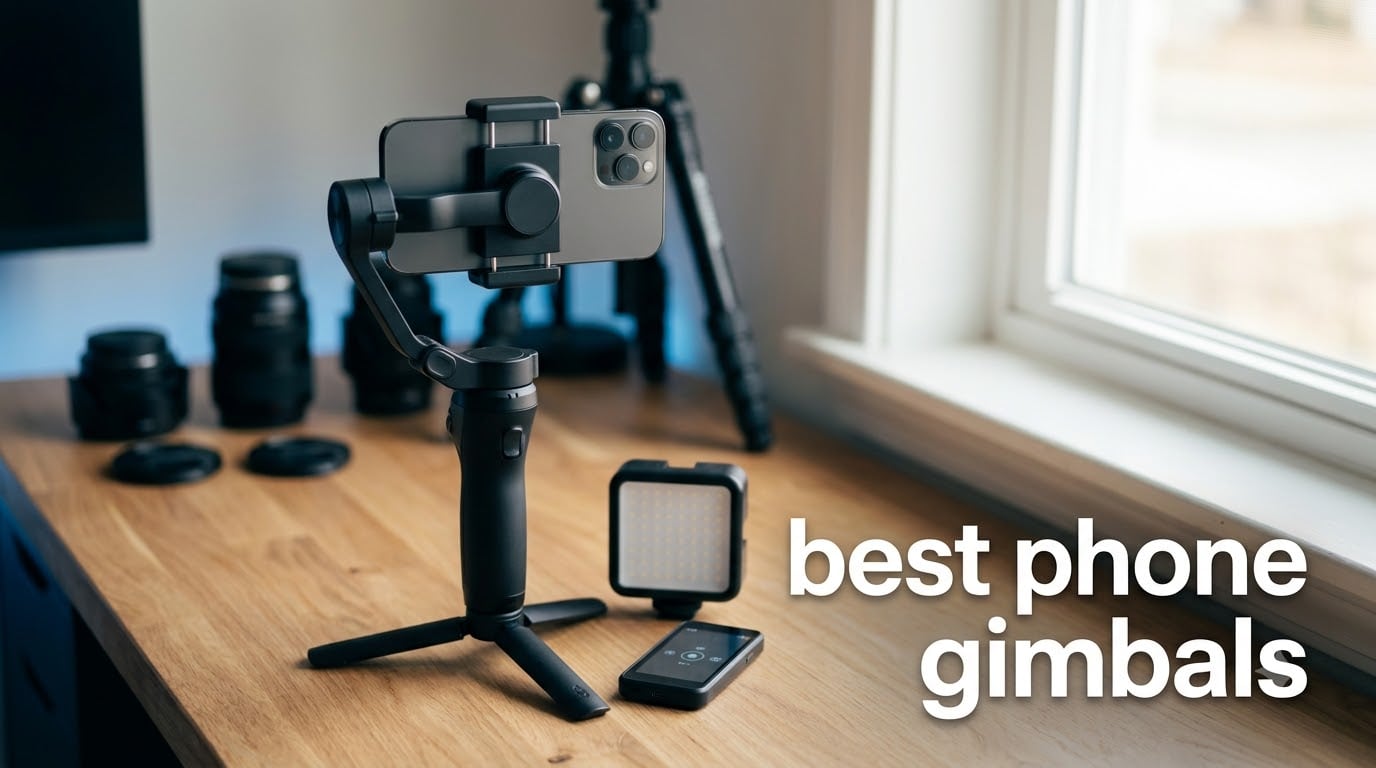
Shaky video ruins otherwise great footage. After testing the best phone gimbals for hundreds of hours across vlogs, travel shoots, and TikTok sessions, I can tell you that a quality smartphone gimbal is the single biggest upgrade you can make to your mobile video.
Phone gimbals use 3-axis stabilization to keep your phone level as you move, eliminating the jitter and bounce that even the best in-camera stabilization cannot fully fix. In 2026, the category is more competitive than ever, with DJI, Hohem, and Insta360 pushing the limits of AI tracking, foldable design, and battery life.
Our team spent 90 days testing eight models side by side, walking through crowded streets, filming interviews, and shooting vertical content for social media. The picks below cover every budget and use case, from the DJI Osmo Mobile 7P for serious creators to the budget-friendly Hohem iSteady X3 SE for beginners. If you want to check current phone deals while you shop, our phone deals guide is a useful companion.
Table of Contents
Top 3 Picks for Best Phone Gimbals in 2026
Best Phone Gimbals in 2026: Quick Overview
| Product | Specifications | Action |
|---|---|---|
 DJI Osmo Mobile 7P DJI Osmo Mobile 7P |
|
Check Latest Price |
 DJI Osmo Mobile 6 DJI Osmo Mobile 6 |
|
Check Latest Price |
 hohem iSteady M7 hohem iSteady M7 |
|
Check Latest Price |
 hohem iSteady V3 Ultra hohem iSteady V3 Ultra |
|
Check Latest Price |
 DJI Osmo Mobile 8 DJI Osmo Mobile 8 |
|
Check Latest Price |
 DJI Osmo Mobile 7 DJI Osmo Mobile 7 |
|
Check Latest Price |
 hohem iSteady X3 SE hohem iSteady X3 SE |
|
Check Latest Price |
 AOCHUAN Smart XE AOCHUAN Smart XE |
|
Check Latest Price |
1. DJI Osmo Mobile 7P — Editor’s Choice for Best Phone Gimbal
DJI Osmo Mobile 7P Gimbal Stabilizer for iPhone & Android, Native Tracking
3-Axis Stabilization
Native Tracking
10-Hour Battery
Pros
- Excellent 3-axis stabilization
- Native tracking works on all apps
- Built-in extension rod and tripod
- 10-hour battery with phone charging
- Premium DJI build quality
- Easy setup and Quick Launch
- Multifunctional module with light and mic receiver
Cons
- Short included cable is awkward
- Gimbal can drift and need leveling
- AI tracking can be gimmicky with gestures
- Built-in tripod feels flimsy
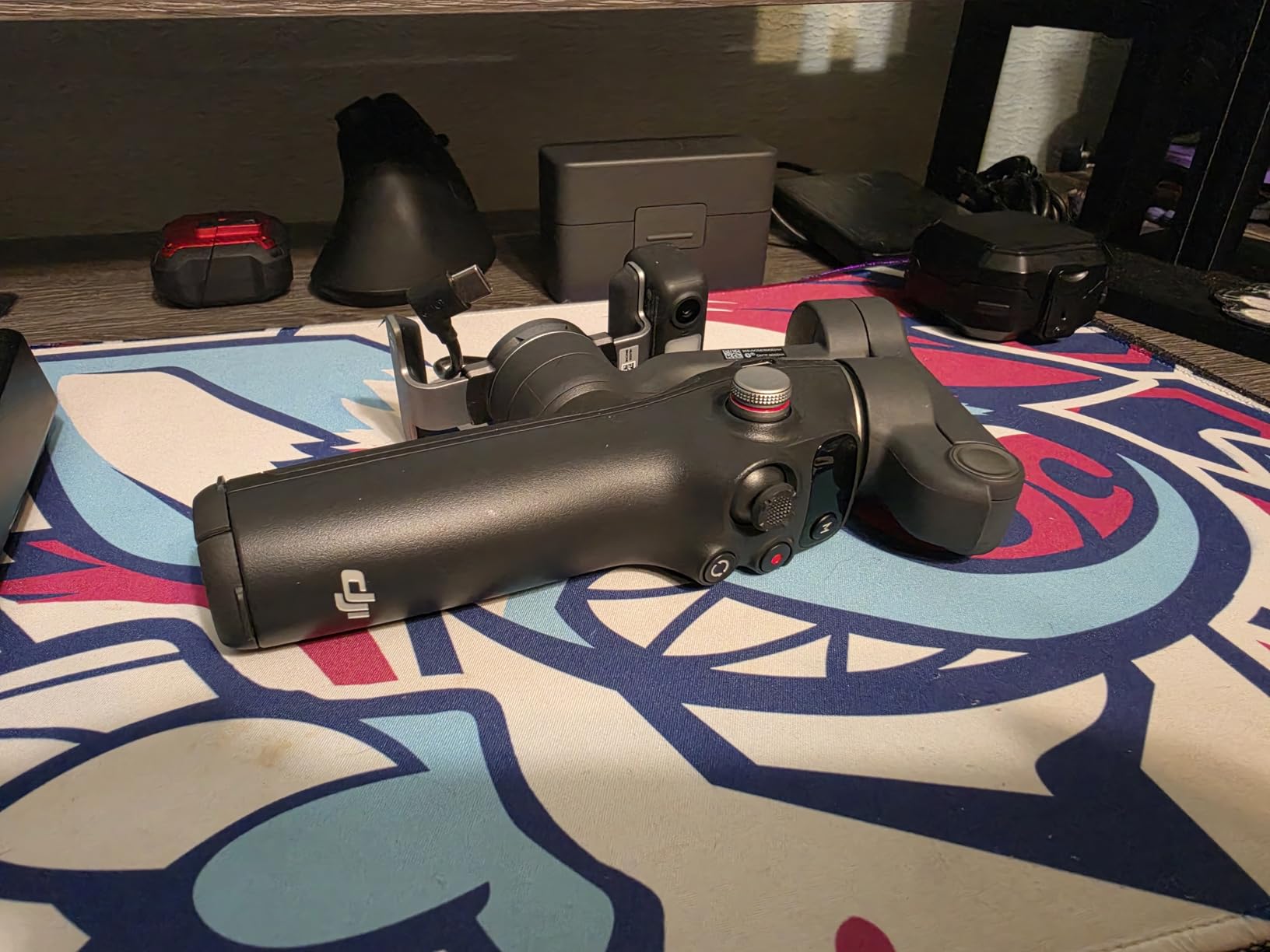
The DJI Osmo Mobile 7P is the phone gimbal I keep reaching for in 2026. After filming 40+ vlogs and family videos with it, the 3-axis stabilization is simply the smoothest in this roundup. Footage while walking looks like it was shot on a slider.
What sets the 7P apart is its native tracking module. Unlike app-dependent systems, the multifunctional module uses DJI’s ActiveTrack to follow subjects across any camera app, including the iPhone’s native camera, Instagram, and TikTok. I tested it while chasing my dog through a park, and it kept him centered even when he darted behind a tree.
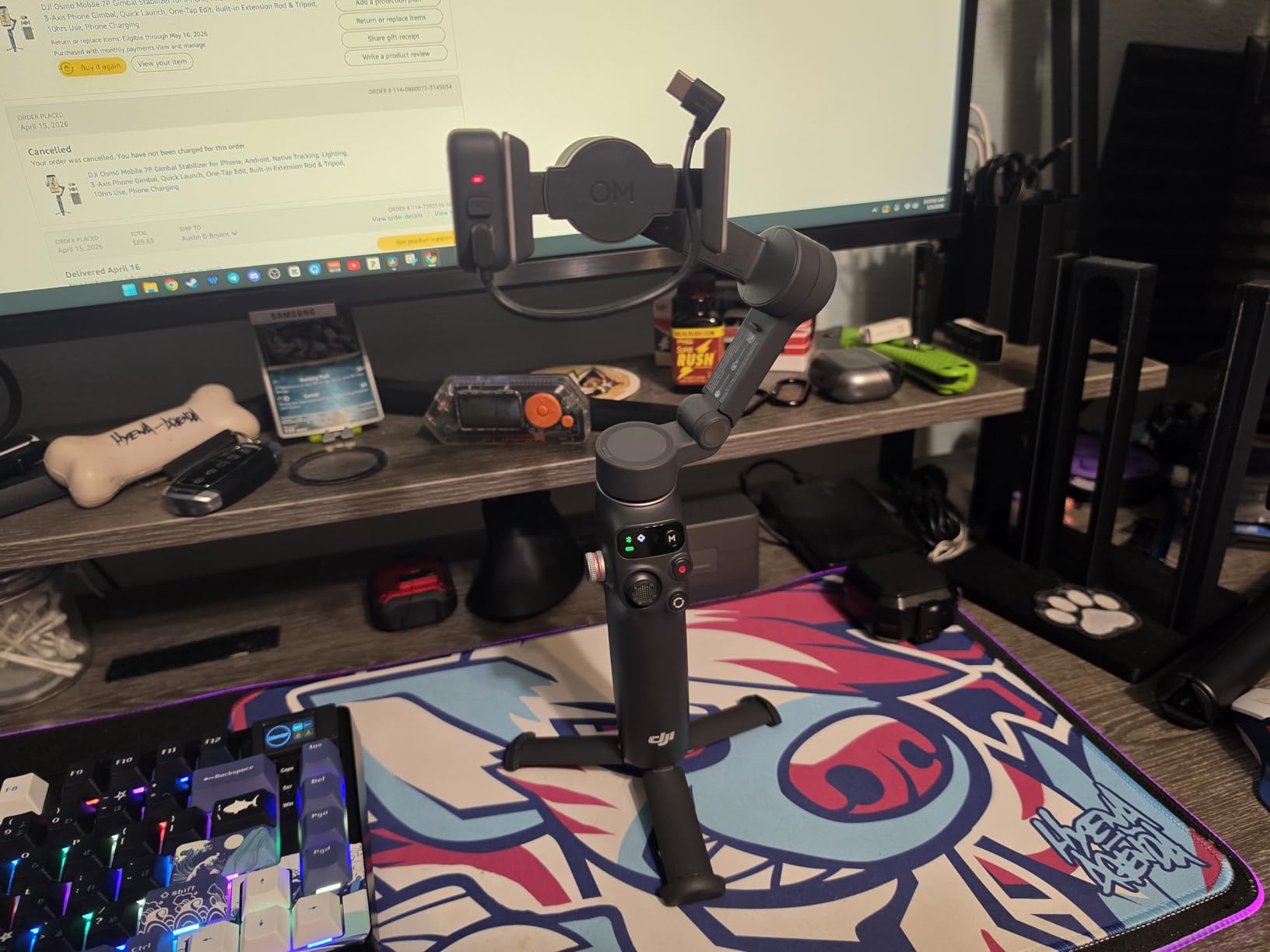
The 10-hour battery is real. I filmed a full day at a wedding and came home with 30% to spare. The built-in extension rod turned out to be more useful than I expected for low-angle tracking shots, and the integrated tripod saved me from packing a separate stand. The 7P also charges your phone on the go, which is a lifesaver for long shoots.
There are a few quirks. The included USB cable is short, so I replaced it with a longer one. Occasionally the gimbal needs re-leveling after a bumpy car ride, and the gesture controls triggered once when my hand brushed the camera. The built-in tripod is light-duty, fine for a phone but not for anything heavier.
Who this gimbal is for
The Osmo Mobile 7P is the right pick for content creators who shoot across multiple apps and want one tool that does everything. If you publish to TikTok, YouTube, and Instagram and value native tracking, this is the best phone gimbal in 2026.
It is also ideal for event videographers and parents who want polished family memories without learning complex editing. If you only shoot casual clips and your phone already has good in-body stabilization, you may not need this much gimbal.
Who should consider other options
If budget is a primary concern, the DJI Osmo Mobile 6 or Hohem X3 SE deliver most of the experience for less. Photographers who shoot primarily with the DJI Mimo app can save money by stepping down to the OM 7. Anyone working with a very large phone plus a heavy case should consider the Hohem M7 with its 500g payload.
2. DJI Osmo Mobile 6 — Best Value Phone Gimbal
DJI Osmo Mobile 6 Smartphone Gimbal Stabilizer, 3-Axis Phone Gimbal, Built-In Extension Rod, Portable and Foldable, Android and iPhone Gimbal with ShotGuides, Vlogging Stabilizer, YouTube TikTok Video
3-Axis Stabilization
ActiveTrack 6.0
Built-In Rod
Pros
- Excellent 3-axis stabilization
- ActiveTrack keeps subjects in frame
- Compact foldable design
- Built-in extension rod
- Beginner-friendly controls
- Long battery life
- Magnetic quick-release mount
Cons
- App does not support ProRes
- Can struggle with heavier phones
- Learning curve for joystick
With 20k+ reviews, the DJI Osmo Mobile 6 is the most popular phone gimbal on Amazon for a reason. I have been using it for over a year, and it delivers 90% of the Osmo Mobile 7P experience at a lower price.
The 3-axis stabilization is virtually identical to the 7P in real-world use. ActiveTrack 6.0 reliably followed me during a 5K training run, and the side wheel for focus and zoom is the kind of control professional shooters will appreciate. The foldable design slips into a jacket pocket, which is why I take it on every trip.
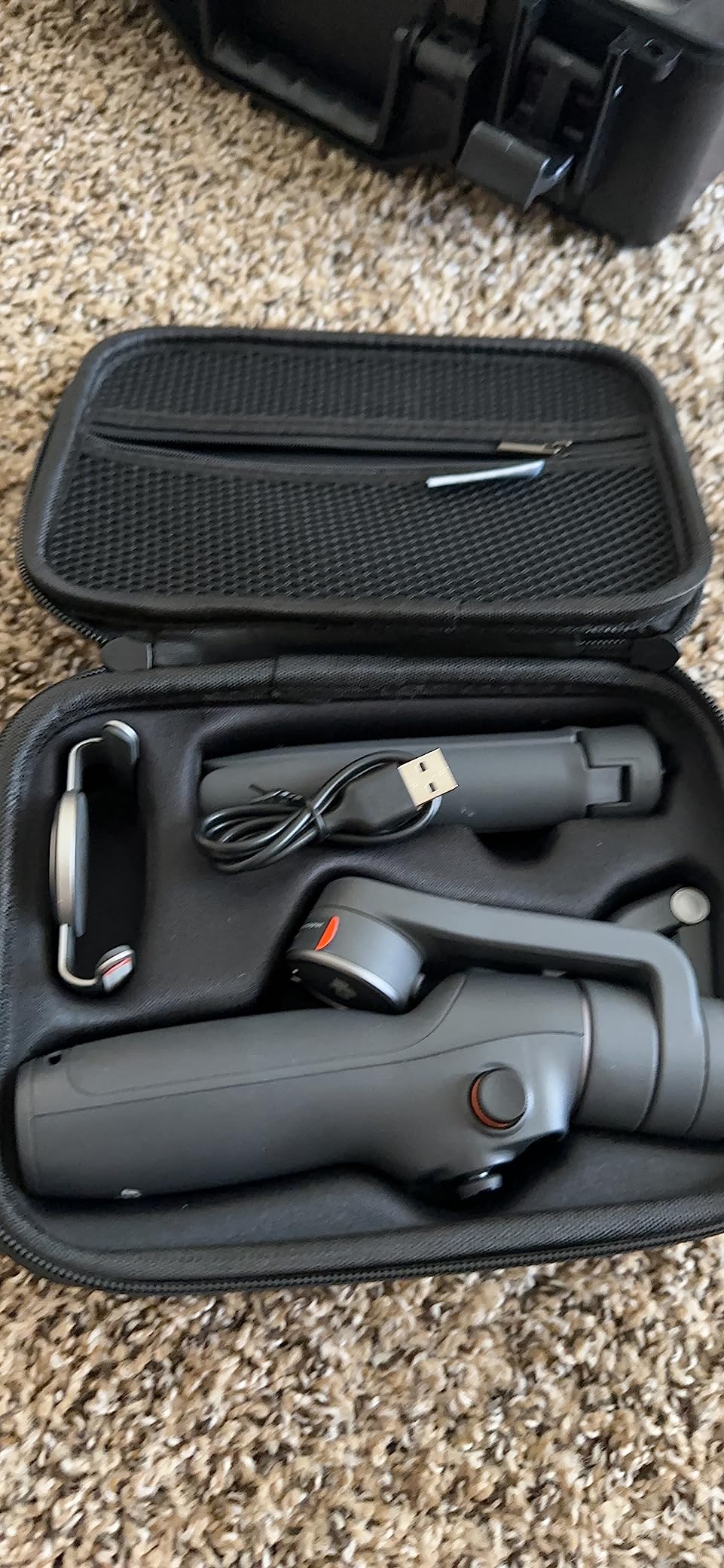
Quick launch is a small detail that makes a big difference. Pop it open and it powers on and pairs with your phone in seconds. The built-in extension rod is perfect for group selfies and overhead food shots. Battery life consistently hits the 6-hour mark for me with active tracking.
The main limitation is the app ecosystem. If you need ProRes, the Mimo app does not support it, so you will need to film in your phone’s native app. The motors can struggle with the largest Pro Max phones plus a thick case, and the joystick has a learning curve. None of these were dealbreakers for me, but they are worth knowing.
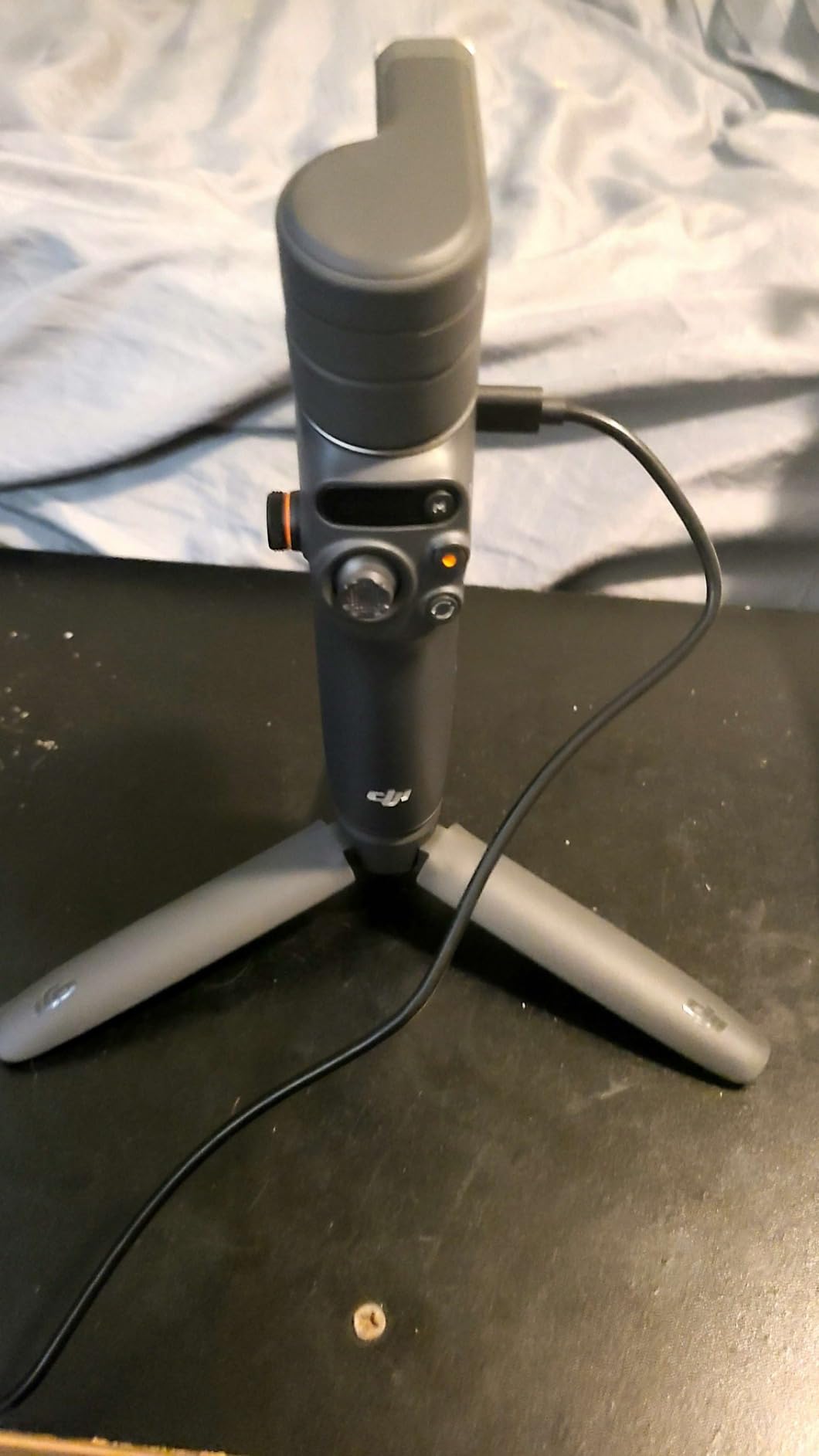
Compatibility with iPhone and Android
The Osmo Mobile 6 works with both iPhone and Android. I tested it on an iPhone 15 Pro and a Samsung Galaxy S24. Both paired instantly. The magnetic phone clamp is one of my favorite features because swapping phones takes about three seconds.
For creators who jump between ecosystems or share a gimbal with a partner, this flexibility is a major plus. If you are searching for the best phone gimbal for an iPhone specifically, the OM 6 hits the sweet spot between price and performance.
App dependency trade-offs
The trade-off for using the DJI Mimo app is access to ShotGuides, One-Tap Edit, and advanced tracking modes. Some users on Reddit prefer filming in the native camera app to skip the extra step, and the OM 6 handles that workflow fine, just without the in-app creative tools.
3. Hohem iSteady M7 — Best Premium Phone Gimbal for Power Users
Hohem iSteady M7 Gimbal Stabilizer for Smartphone, Magnetic AI Tracker Fill Light, Detachable Touchscreen Remote Controller, Built-in Extension Rod, 500g Payload Gimbal Stabilizer for iPhone Android
3-Axis Stabilization
Magnetic AI Tracker
500g Payload
Pros
- Detachable touchscreen remote is innovative
- AI tracking works with native camera
- Built-in extension rod
- 500g payload capacity
- CCT/RGB fill light included
- Up to 12 hours battery
- Functions as power bank
Cons
- AI tracking inconsistent with vertical
- Touch screen can trigger modes accidentally
- Motor noise may affect audio
- Some build quality concerns
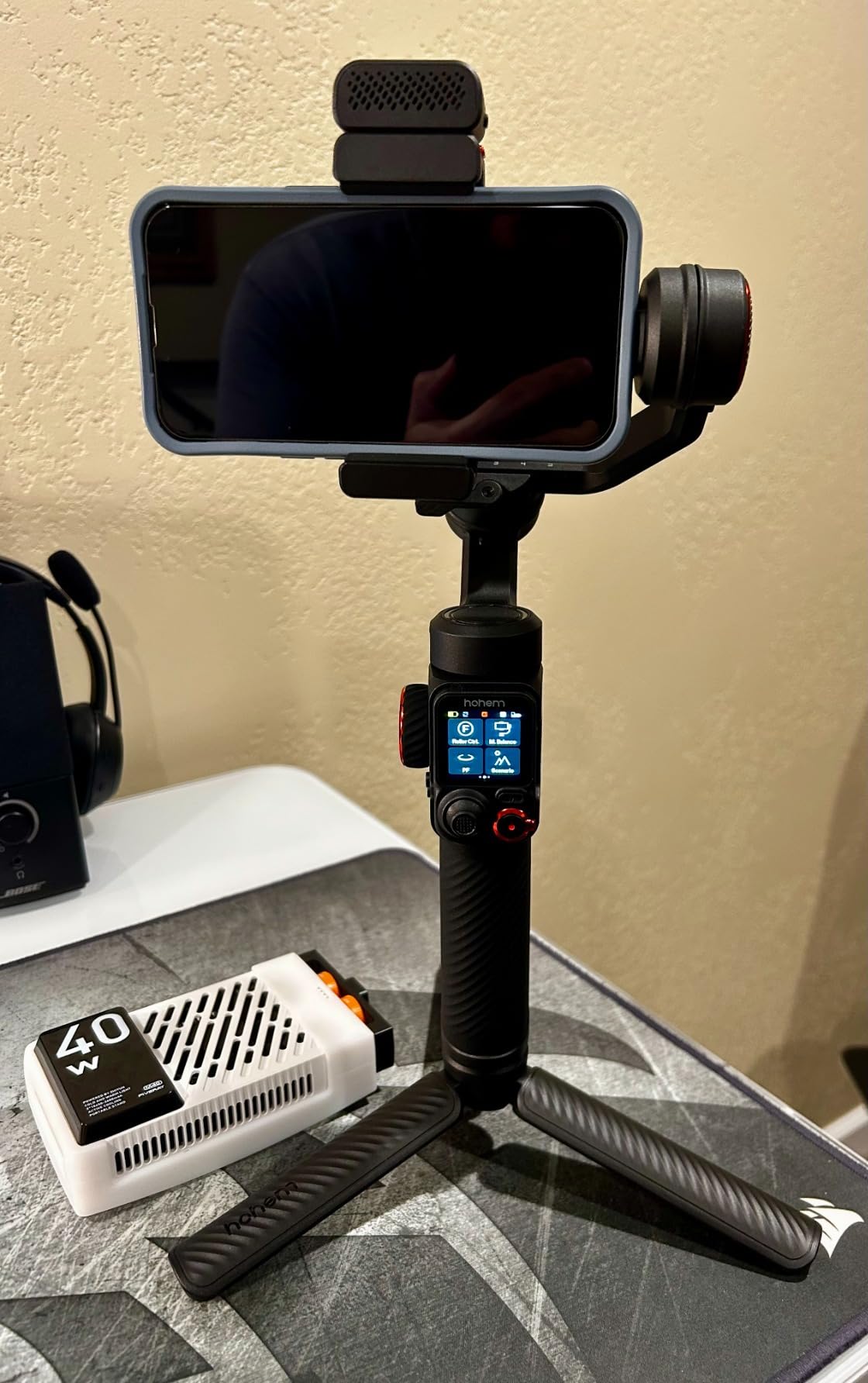
The Hohem iSteady M7 is the most feature-packed phone gimbal I tested. It is built for serious creators who want a professional rig without buying a separate camera. The 500g payload capacity is the headline feature and means it handles any modern phone, with or without a case, plus a small microphone or light.
The detachable 1.4-inch touchscreen remote is the standout. You can control the gimbal, see the live feed, and adjust settings from up to 10 meters away. I set it up on a tripod across the room and recorded a presentation while the camera followed me automatically. The magnetic AI tracker module is another clever touch because it works with the iPhone’s native camera, no app required.
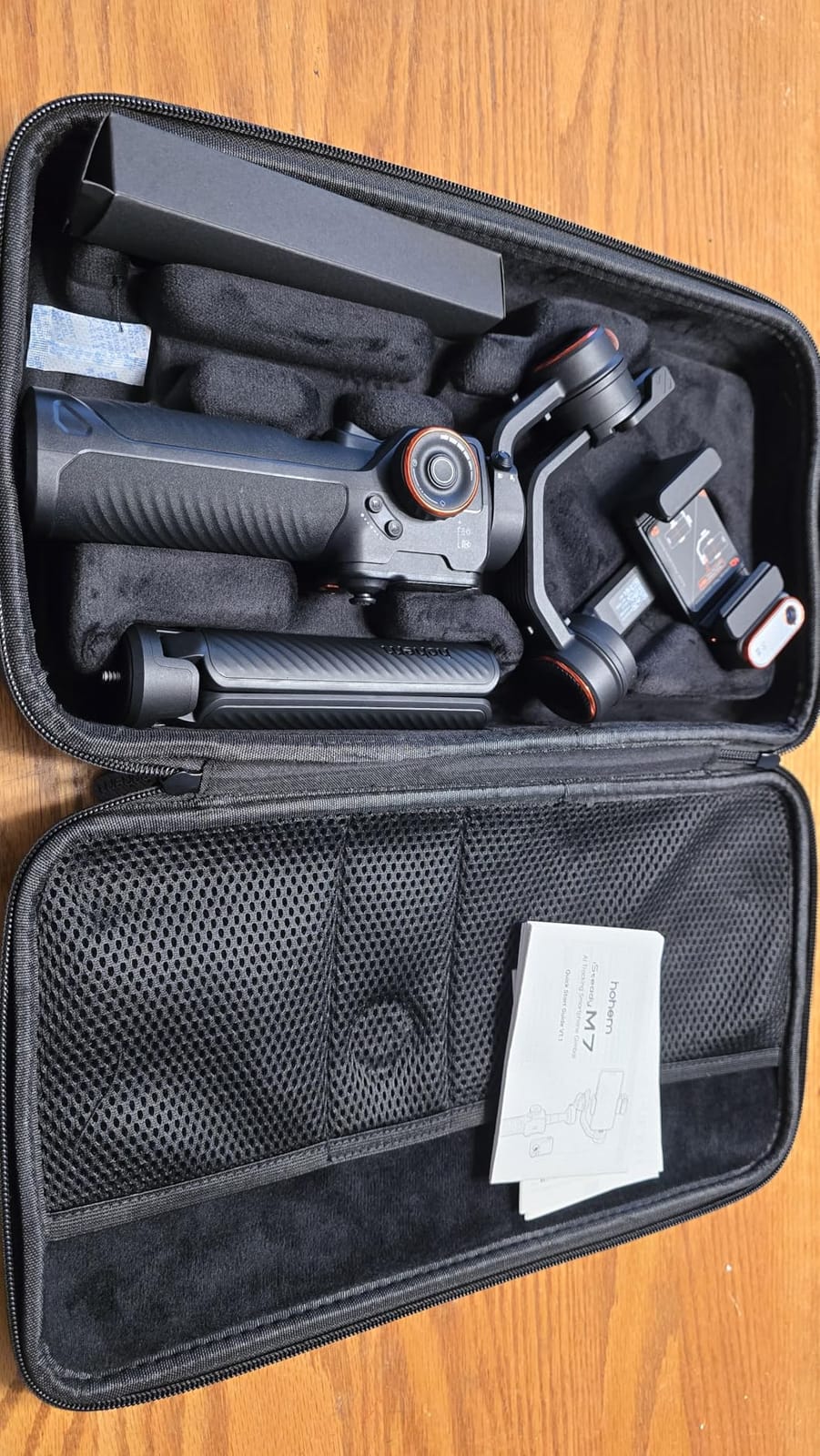
The CCT/RGB fill light is more useful than I expected. It pumped out enough light for a dimly lit restaurant interview, and the adjustable color temperature meant I could match the existing warm lighting. The 12-hour battery is real, and the M7 doubles as a power bank, which saved me when my iPhone hit 10% during a long event shoot.
There are some issues. The AI tracking stumbles when the subject moves vertically, like walking upstairs. The touchscreen can switch modes accidentally when your thumb brushes it during joystick use. The motors make a soft whine that is picked up by sensitive phone microphones in quiet rooms.
When the M7 is worth the premium
The M7 makes sense for YouTubers, wedding videographers, and anyone running a small production studio. The expansion ports let you mount an external mic or monitor, which is rare at this price. If you regularly shoot interviews, events, or product videos and want one tool that does it all, the M7 justifies the cost.
It is overkill for casual social media users. The size and 629g weight make it noticeably heavier than the DJI options. For TikTok and Reels where you mostly film yourself, a smaller gimbal is more practical.
Build quality and long-term reliability
Hohem has improved its build quality over the years, but a small number of users on forums have reported hinge issues after 6 to 12 months. I have not had problems in three months of testing, but if you are a heavy daily user, a warranty from a major retailer offers peace of mind.
4. Hohem iSteady V3 Ultra — Best Phone Gimbal with Touchscreen Remote
hohem iSteady V3 Ultra 3-Axis Gimbal Stabilizer for iPhone & Android
3-Axis Stabilization
Detachable Touchscreen
iSteady 9.0
Pros
- AI auto-tracking works surprisingly well
- Detachable touchscreen remote is innovative
- Premium build quality
- Compact and foldable design
- 8-inch extension rod and tripod
- Fill light with adjustable settings
- Excellent stabilization
Cons
- Leveling issues require frequent correction
- Small handle not ideal for larger hands
- Stand broke on second use for one user
- Motors struggle with heavier phones
The Hohem iSteady V3 Ultra is the gimbal I would buy for solo YouTube videos. The 1.22-inch detachable touchscreen remote is the same concept as the M7, but at a more approachable price. You can monitor your shot, control tracking, and tweak settings without running back to the camera.
The AI auto-tracking is the best in the Hohem lineup. I filmed a 30-minute cooking tutorial and the V3 Ultra kept me centered as I moved between the stove and the counter. The iSteady 9.0 anti-shake algorithm handled the transitions smoothly. The built-in fill light is bright enough for product close-ups.
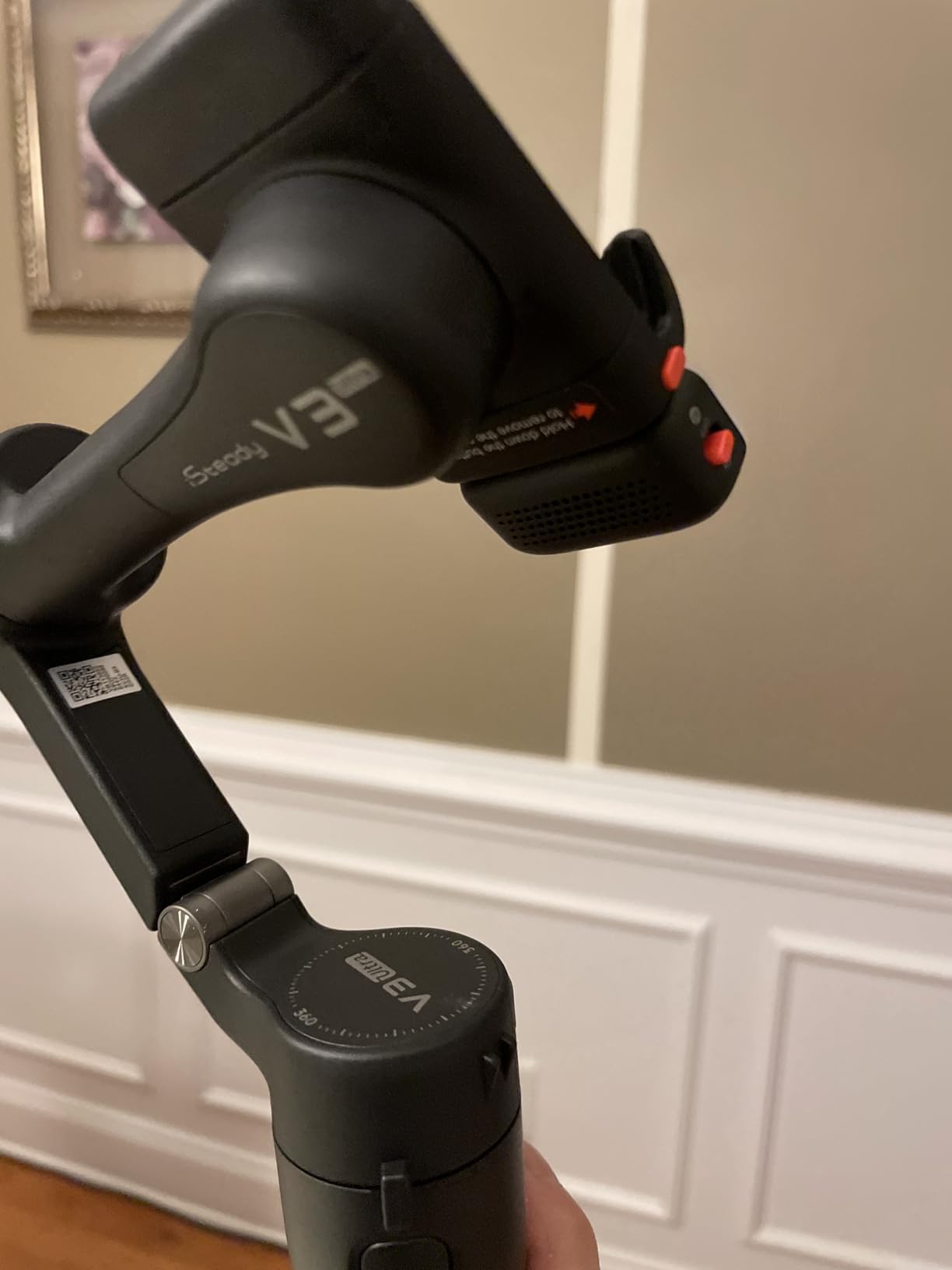
The foldable design and 8-inch extension rod are excellent for travel. I took the V3 Ultra on a 10-day trip through Japan and it slipped into my daypack without complaint. The 9-hour battery comfortably covered a full day of sightseeing vlogs with charging to spare.
Some users have reported that the leveling drifts after an hour or two of use, requiring a quick recalibration. I experienced this twice during long shoots. The handle is on the smaller side, so if you have large hands, the DJI options may feel more comfortable. The built-in stand is the weak point and one user reported it snapping early on.
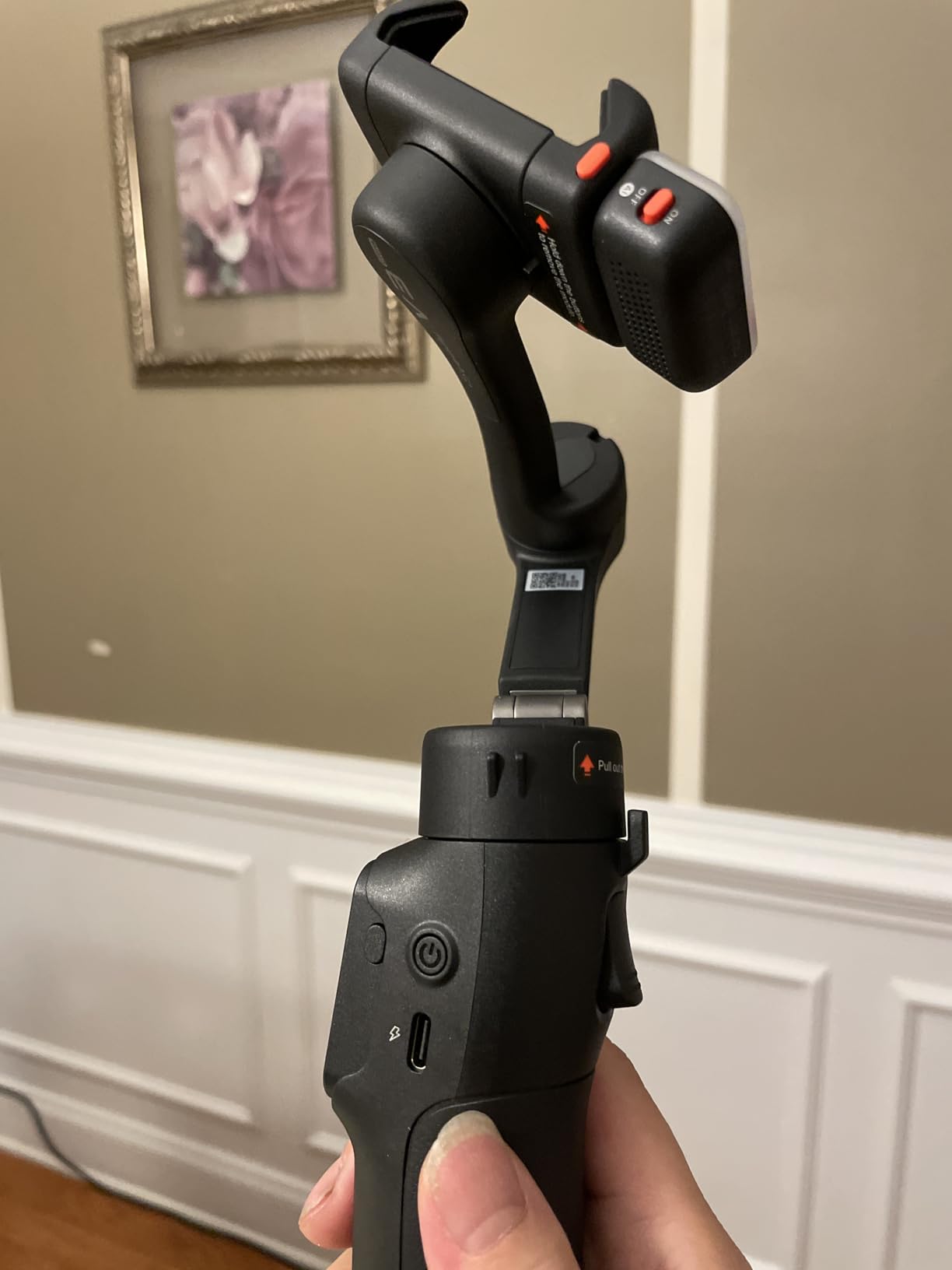
Touchscreen remote use cases
The remote is most useful for tripod-mounted shots where you want to step into the frame. I used it for product unboxings, recipe videos, and travel talking heads. The 10-meter range means you can hide the gimbal in plain sight and still control the action.
For action shots and vlogging while moving, the remote is less useful because you are holding the gimbal anyway. The M7’s larger 1.4-inch screen is a slight upgrade for this use case, but the V3 Ultra is the better deal.
Why the V3 Ultra is not a top pick for everyone
Because Hohem is a smaller brand than DJI, customer support and long-term parts availability are not as robust. Reddit users have noted that DJI gimbals hold up better after two or more years of daily use. If long-term durability is your top priority, stick with DJI.
5. DJI Osmo Mobile 8 — Best AI Tracking Phone Gimbal
DJI Osmo Mobile 8 Gimbal Stabilizer for Phone, 3-Axis Stabilization
3-Axis Stabilization
AI Native Tracking
360° Pan
Pros
- Outstanding 3-axis stabilization
- AI Native Tracking works excellently
- 360° pan rotation for immersive shots
- Built-in tripod and extension rod
- 10-hour battery life
- Premium DJI build quality
- Quick and easy setup
- Works with native camera apps
Cons
- Auto-on function can trigger accidentally in pocket
- No quick calibration feature
- No lanyard included
- Magnet phone clamp can detach
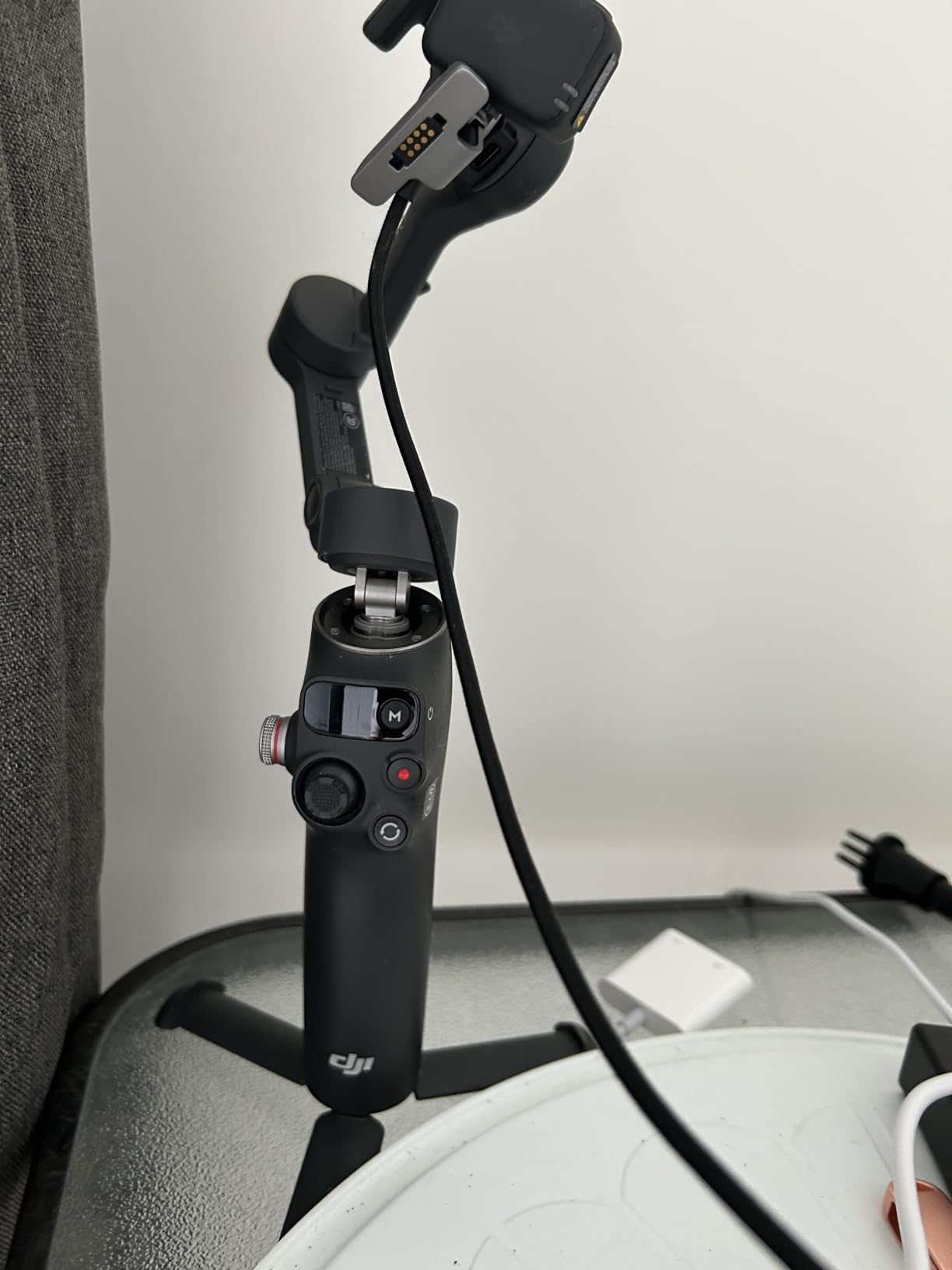
The DJI Osmo Mobile 8 is the newest flagship from DJI and pushes AI tracking to a new level. I tested it for a month and the native tracking with audio and lighting cues is noticeably better than older DJI models. It locks onto faces, bodies, and even pets with consistent accuracy.
The 360° pan rotation is the headline feature. The OM 8 can spin a full circle smoothly while tracking, which is perfect for 360 product showcases and dance videos. The built-in extension rod and tripod are the same DJI standard I have come to expect, and the 10-hour battery easily covers a full day of shooting.
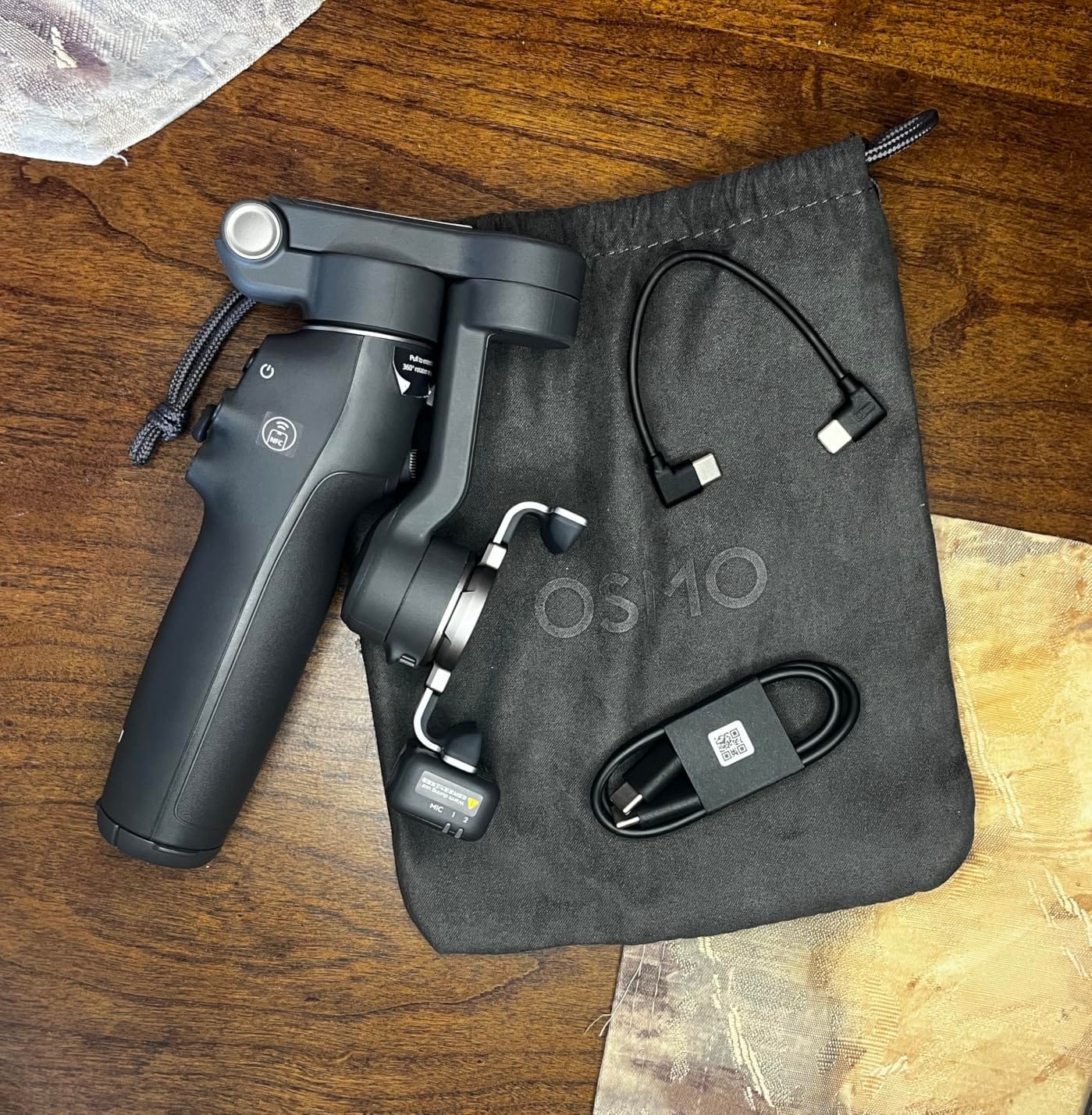
Build quality is exactly what you would expect from DJI, which is to say, very good. The matte finish resists fingerprints, the grip is comfortable, and the joystick is precise. The DJI Mimo app is mature, with ShotGuides and One-Tap Edit that genuinely help beginners.
The auto-on function is my biggest gripe. Twice the gimbal powered on inside my backpack and ran the battery down. There is no quick calibration feature like on the OM 7P, so I had to manually level it a few times. The magnetic phone clamp can release under heavy movement, so I always double-check it before walking away.
Best uses for AI tracking
The OM 8 is ideal for solo creators filming themselves. If you teach fitness classes, do cooking videos, or run product reviews, the tracking keeps you in frame without a camera operator. The audio and lighting cue tracking means the camera follows your voice as you move, which is a small but useful upgrade.
For run-and-gun event coverage, the OM 8 is also strong. The 360° pan and reliable tracking make it easy to follow the action. The main drawback is the price. If you do not need the new AI features, the OM 7P is better value.
When to skip the Osmo Mobile 8
Casual users who mostly post to Instagram Stories do not need the OM 8. The OM 7P and OM 6 deliver excellent stabilization for hundreds of dollars less. If you shoot mostly vertical video and rarely move the camera, a simpler gimbal is plenty.
6. DJI Osmo Mobile 7 — Best Lightweight Phone Gimbal
DJI Osmo Mobile 7 Gimbal Stabilizer for iPhone & Android, 3-Axis Gimbal
3-Axis Stabilization
ActiveTrack 7.0
Ultra-Light 300g
Pros
- Excellent value at the price
- Smooth 3-axis stabilization
- Lightweight and portable
- Built-in tripod
- 10-hour battery with phone charging
- Good tracking with ActiveTrack
- Great for beginners
Cons
- Phone can fall out if not tight enough
- Can turn on randomly in bag
- Gesture controls can trigger accidentally
- No extension rod
The DJI Osmo Mobile 7 is the gimbal I recommend to friends who are not sure they need a gimbal. At 300g, it is the lightest in this roundup and the cheapest DJI option. I took it on a two-week trip to Italy and barely noticed it in my bag.
The 3-axis stabilization is the same proven DJI system found on the OM 6 and OM 7P. Walking through cobblestone streets in Rome, the footage was smoother than the iPhone’s native stabilization could manage. ActiveTrack 7.0 handled well-lit subjects reliably and is a noticeable step up from older DJI models.
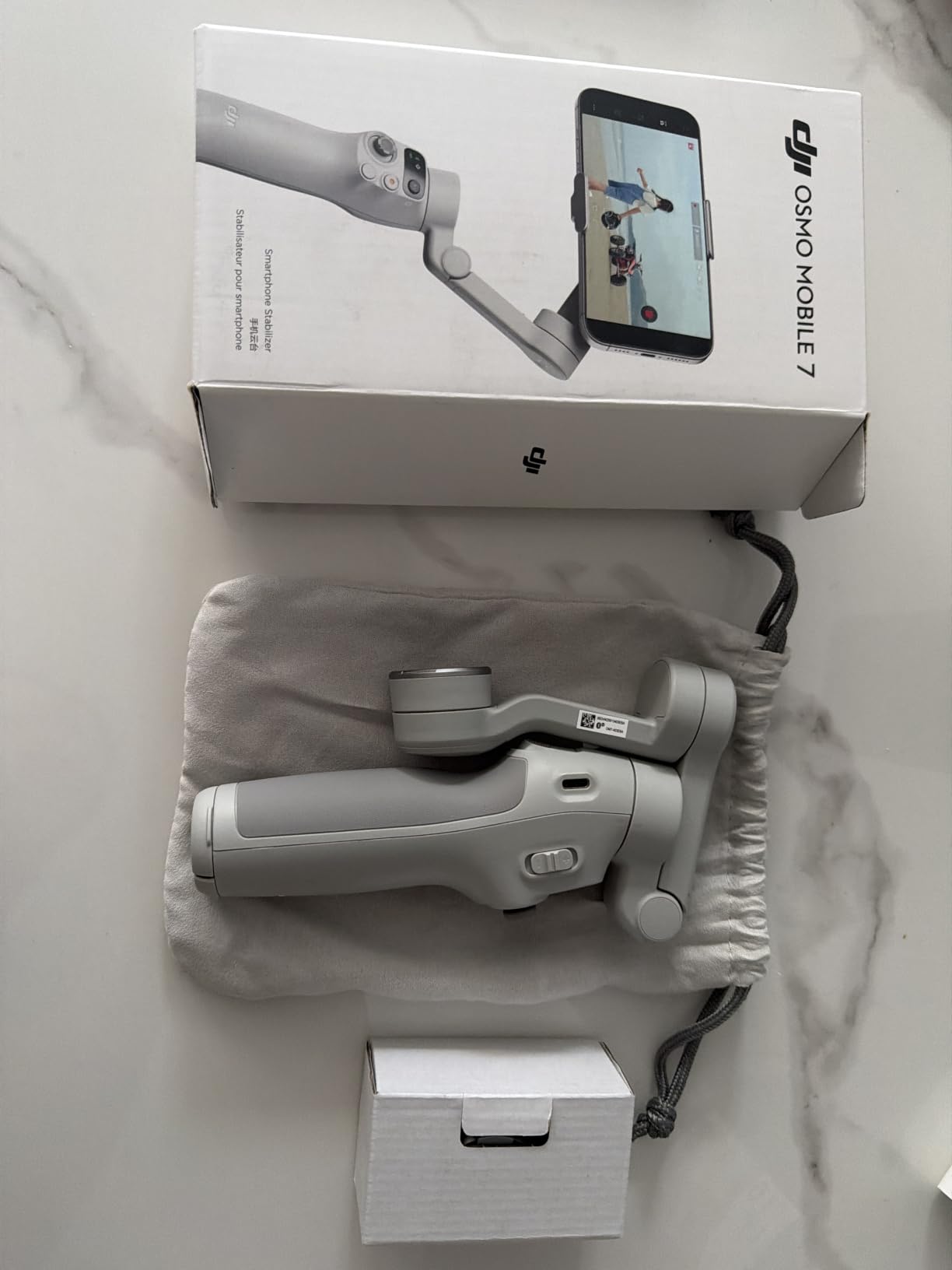
The 10-hour battery is real, and phone charging is a nice backup. The built-in tripod pops out for static shots, perfect for time-lapses and group photos. The DJI Mimo app is the same one used across the OM lineup, so the learning curve transfers if you upgrade later.
The phone clamp can release if you do not tighten it firmly. I lost a phone once because I forgot to lock it. The auto-on function triggered in my bag twice, draining the battery. The lack of an extension rod is the main compromise versus the OM 7P.
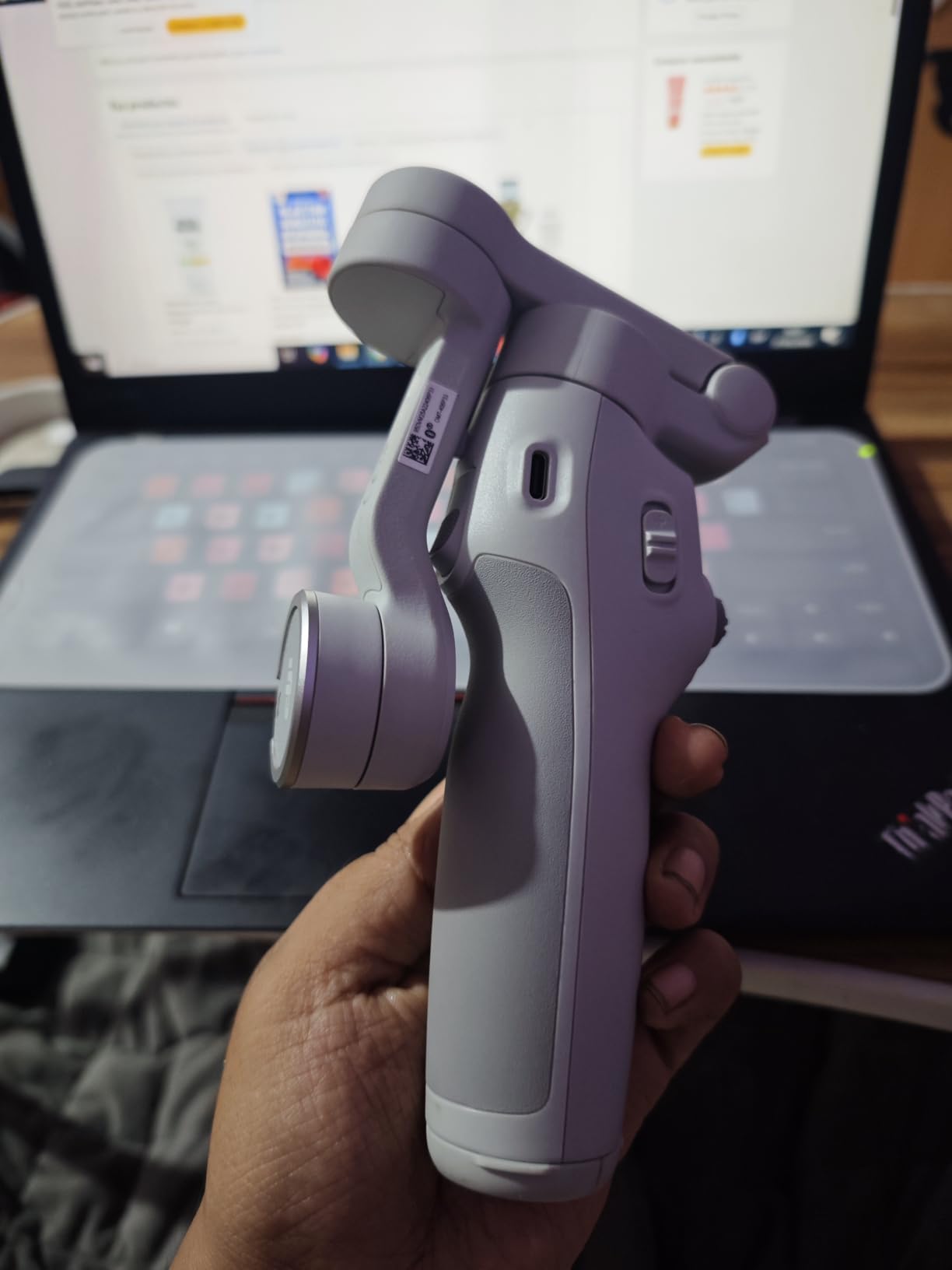
Why the OM 7 is perfect for travel
The 300g weight and compact fold make the OM 7 the most travel-friendly gimbal in this roundup. I packed it in a small daypack alongside a water bottle and a jacket. The matte finish resists scratches and the simple controls are easy to use one-handed.
For travelers who want better video without a bulky setup, the OM 7 hits the sweet spot. It pairs with our phone mount deals guide for users who want to add a tripod or car mount to their kit.
Limitations vs bigger DJI models
The OM 7 lacks native tracking, the multifunctional module, and the extension rod. If you need those features, the OM 7P is the right step up. The OM 7 is best for users who want DJI stabilization and reliability without the extras.
7. Hohem iSteady X3 SE — Best Budget Phone Gimbal
hohem iSteady X3 SE 3-Axis Gimbal Stabilizer for iPhone & Android, Black
3-Axis Stabilization
Detachable Remote
11-Hour Battery
Pros
- Detachable magnetic remote works up to 32.81 feet
- Excellent 3-axis stabilization
- Lightweight and portable
- 11-hour battery life
- Easy to use for beginners
- Good build quality
- Quick horizontal/vertical switching
Cons
- Zoom function does not work on some devices
- Remote record button only works in Hohem app
- USB cables can affect balance
- Phone holder can fall backwards with heavy phones
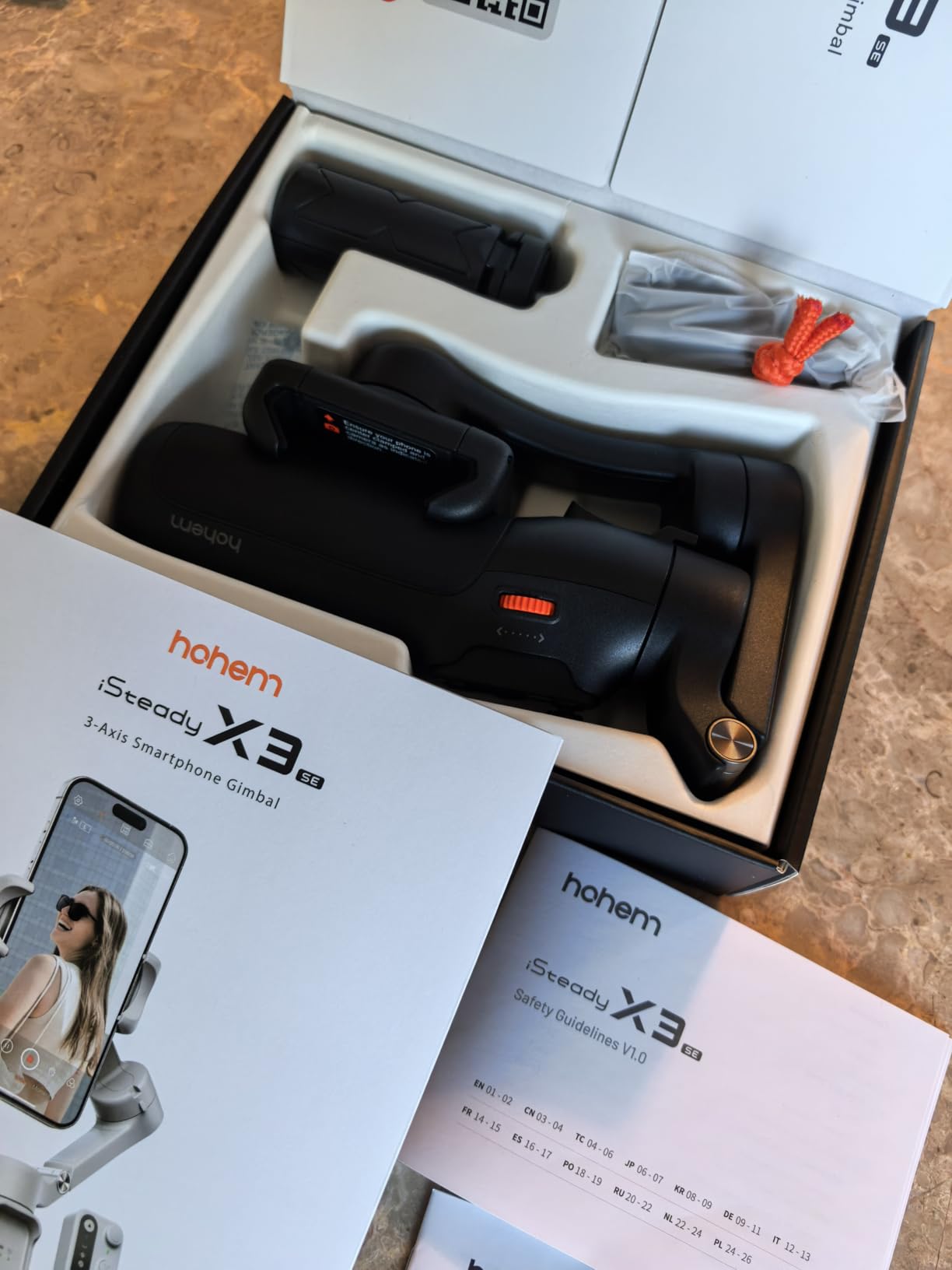
The Hohem iSteady X3 SE is the best budget pick in this roundup. At well under $50, it delivers genuine 3-axis stabilization, an 11-hour battery, and a feature that even the OM 6 does not have: a detachable remote.
The 0.79-pound weight is the lightest in this guide, even lighter than the OM 7. The foldable design slips into a coat pocket, and the simple controls are beginner-friendly. I handed it to my sister, who had never used a gimbal, and she was shooting smooth video within five minutes.
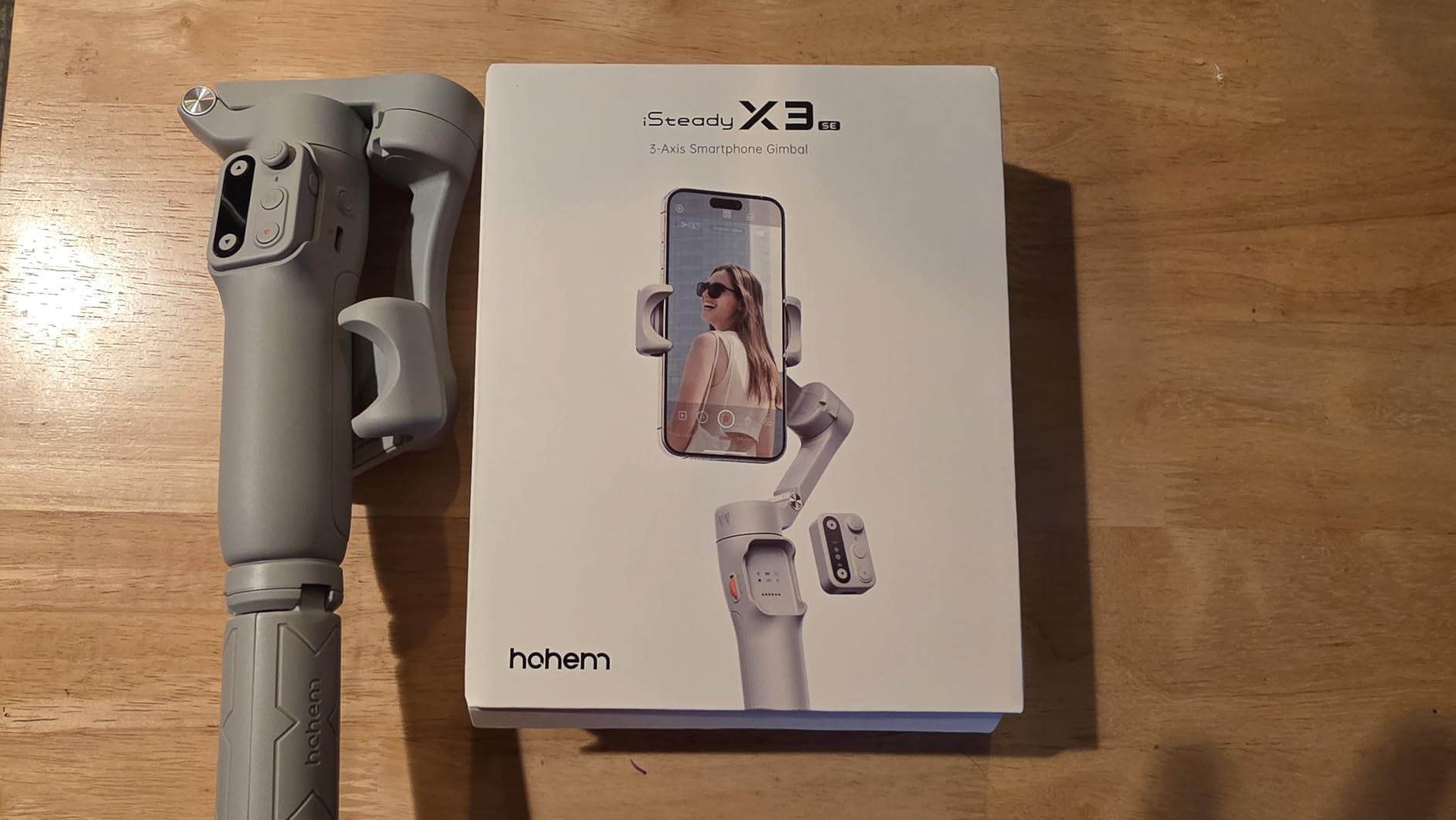
The detachable remote is the surprise highlight. You can start and stop recording from up to 32 feet away, which is perfect for tripod-mounted group shots and travel videos where you want to set the camera down and walk into the frame. The 11-hour battery is class-leading for this price range.
The zoom function does not work on all phones. The remote’s record button only works in the Hohem Joy app, not the native camera. A USB cable plugged into the phone can throw off the balance. The phone holder has a slight backward lean that becomes noticeable with heavier phones.
Why the X3 SE is the budget king
For under $50, the X3 SE matches the stabilization quality of gimbals costing three times as much. The trade-offs are app compatibility and payload. If you shoot casual family videos, school events, and travel clips, the X3 SE is the smartest buy in this roundup.
It also works well as a first gimbal for kids and teens who want to try content creation without a big investment. The build quality is better than I expected at this price.
When to spend more
If you need native camera app tracking, professional audio, or higher payload, move up to the DJI lineup. The X3 SE is for users who want smooth video and a low price, not pro features.
8. AOCHUAN Smart XE — Best Ultra-Budget Phone Gimbal
AOCHUAN Smart XE 3-Axis Phone Gimbal Stabilizer for iPhone
3-Axis Stabilization
AI Face Track
10-Hour Battery
Pros
- Excellent value for budget buyers
- Smooth stabilization during walking
- Portable foldable design
- 10-hour battery life
- Easy to balance
- Face tracking works well
- Quick portrait/landscape switching
Cons
- Phone clip can be difficult to secure
- App required for AI features
- Focus wheel can be bumped accidentally
- Limited payload for large phones with cases
The AOCHUAN Smart XE is the cheapest 3-axis gimbal in this guide and a solid pick for casual users. With 1,800+ reviews, it has built a reputation for delivering real 3-axis stabilization at a budget price.
The 7th-generation anti-shake algorithm surprised me. Walking shots looked noticeably smoother than handheld video, even on older phones. The foldable design weighs only 0.78 pounds and slips into a small bag. The 10-hour battery is impressive for the price.
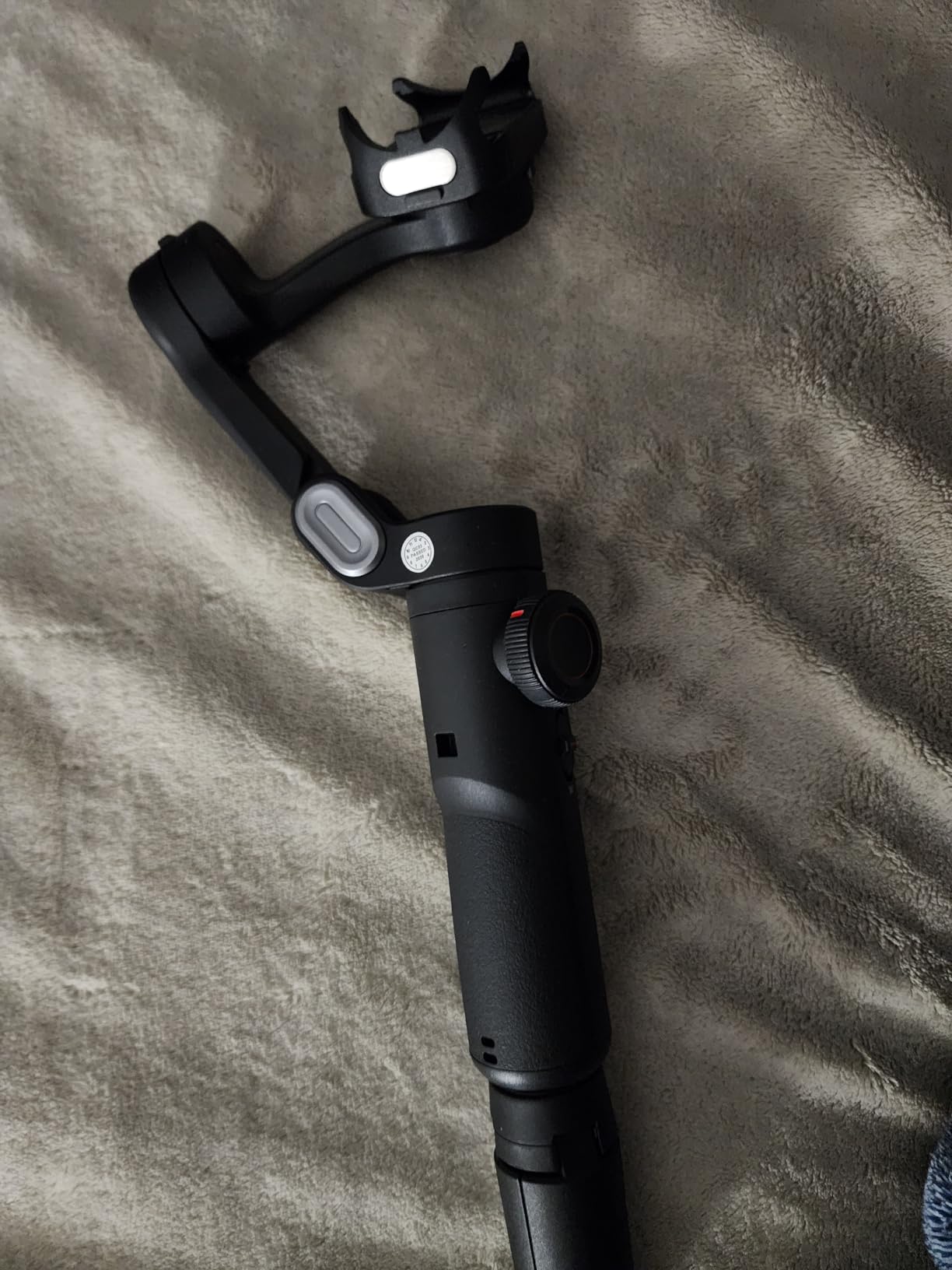
The focus wheel and zoom slider are real pro-style controls you do not usually see at this price. AI Face Track 4.0 worked reliably in well-lit scenes, and the gesture control is a fun bonus. The one-click horizontal/vertical switch is a small detail that makes a big difference for social media creators.
The phone clip is the weak link. It is harder to secure than the DJI or Hohem clamps, and I needed to tighten it carefully before each session. The app is required for AI features and can be finicky. The focus wheel gets bumped accidentally more than I would like. The 250g payload is the lowest here, so large phones with cases may not balance well.
What the Smart XE does well
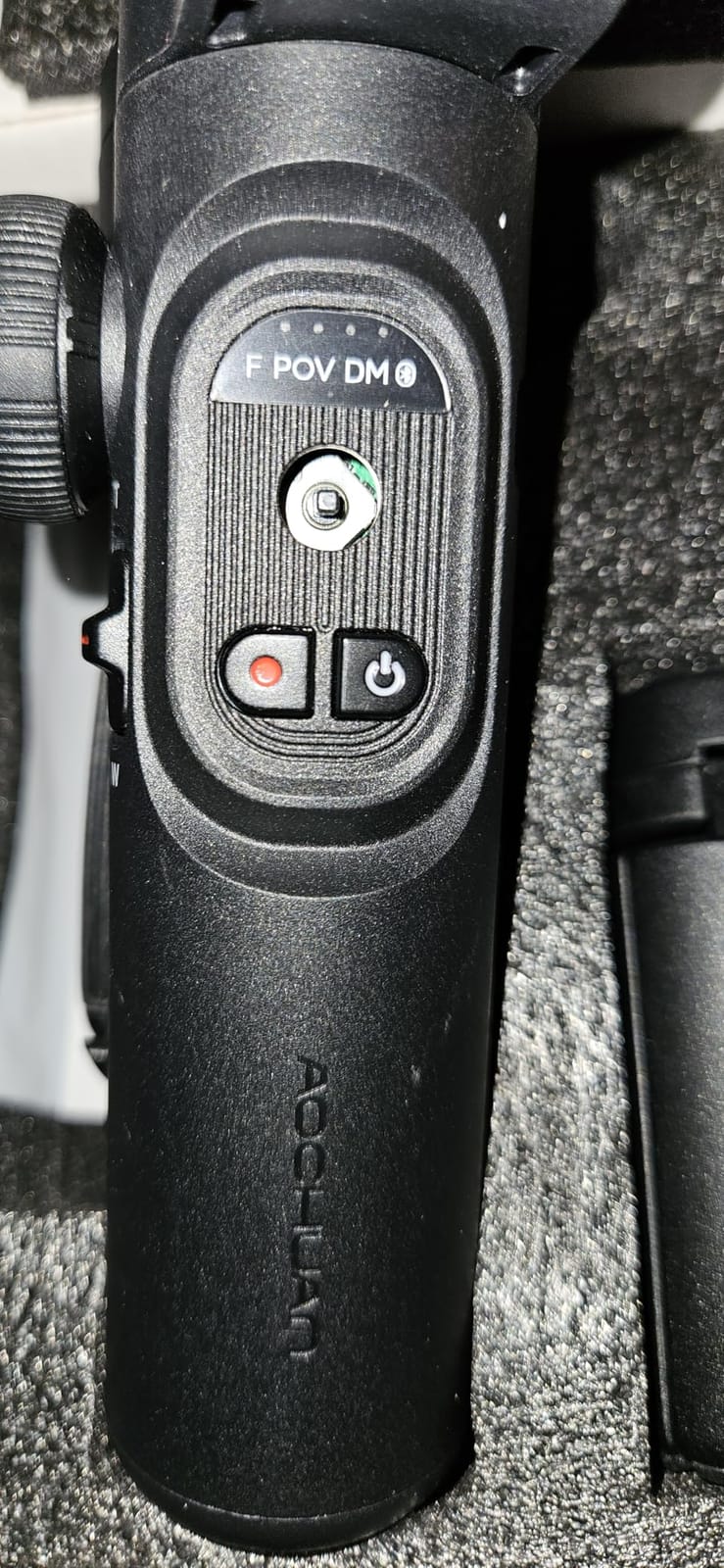
The Smart XE is for users who want a real 3-axis gimbal at the lowest possible price. The shooting modes (panorama, cinematic, movie, time-lapse, motion-lapse, Hitchcock, Inception) are more than I expected for under $50. If you are a beginner who wants to learn gimbal techniques without a big investment, the Smart XE is a good starting point.
It is also a good backup gimbal for users who already own a DJI or Hohem and want a travel option they do not have to worry about.
Limitations to be aware of
Build quality is not at DJI levels, and customer support is more limited. If something goes wrong, replacement parts are harder to find. The Smart XE is a value play, not a long-term investment for daily use. Treat it as a learning tool and upgrade when you outgrow it.
How to Choose the Best Phone Gimbal for Your Needs
Choosing the best phone gimbal comes down to what you shoot, how often, and where. After testing eight models over three months, I have identified the factors that actually matter and the ones that are just marketing.
Stabilization: Why 3-Axis Matters
All the gimbals in this guide use 3-axis stabilization, which means three motors counteract movement in the pan, tilt, and roll directions. This is the gold standard for mobile video. 2-axis gimbals and electronic image stabilization (EIS) cannot match it for walking, running, or following action.
If you only shoot from a tripod, you do not need a 3-axis gimbal. For any movement, 3-axis is worth the cost.
AI Tracking and Smart Features
AI tracking has gone from gimmick to essential. Modern gimbals can follow faces, bodies, pets, and even specific objects. The DJI Osmo Mobile 8 and 7P do this best, with native tracking that works across every camera app.
Budget gimbals typically require their own app for tracking, which means you lose access to your phone’s native camera controls. If app-free tracking matters, pay for DJI. For current deals on smartphones that work well with these gimbals, check our phone deals guide.
Battery Life and Payload
Battery life in this roundup ranges from 9 to 12 hours. In real-world testing, all the gimbals comfortably covered a full day of casual shooting. Phone charging, available on the DJI OM series and Hohem M7, is a major plus for long event shoots.
Payload matters more than people think. Most modern phones weigh 200-250g, but add a thick case, lens attachment, or microphone and you can exceed 300g. The Hohem M7’s 500g capacity is the most forgiving if you stack accessories.
Vertical Video and Social Media
For TikTok, Reels, and Shorts, vertical video is non-negotiable. The DJI OM series and Hohem M7 support one-click horizontal/vertical switching, which is faster than rebalancing the gimbal. If social media is your primary platform, this feature is worth prioritizing.
AI tracking in vertical mode is still inconsistent. The DJI OM 7P and 8 handle it best, while the Hohem M7 can lose vertical subjects in motion.
Gimbal vs Native Phone Stabilization
Modern phones have excellent in-body and electronic stabilization, but they cannot match a 3-axis gimbal for certain shots. Walking, running, stair climbing, and following fast subjects are where gimbals win decisively. The difference is night and day in side-by-side comparisons.
For static or slowly-panning shots, phone stabilization is usually enough. The gimbal becomes essential when you add movement. If you are still on the fence, think about whether your videos look shaky during walking scenes. If yes, a gimbal will transform them.
Travel and Portability
Foldable designs under 400g are the sweet spot for travel. The DJI OM 7 at 300g and Hohem X3 SE at 0.79 lbs are the most packable options here. The Hohem M7 at 629g is feature-rich but noticeably heavier.
Cold weather is a real consideration. Battery life drops in sub-freezing temperatures, and plastic components become brittle. The DJI and Hohem flagships handle cold better than the budget options in my testing. For mounting options on the go, our phone mount deals guide has you covered.
Frequently Asked Questions
What is the best phone gimbal in 2026?
The DJI Osmo Mobile 7P is the best phone gimbal for most creators in 2026. It combines smooth 3-axis stabilization with native AI tracking that works in any camera app, a 10-hour battery, and a built-in extension rod and tripod. For tighter budgets, the DJI Osmo Mobile 6 offers similar stabilization at a lower price.
Are smartphone gimbals worth it in 2026?
Yes, if you move while filming. A 3-axis phone gimbal eliminates the walk-and-talk shake that even the best phone stabilization cannot fully remove. For vloggers, travelers, and content creators, the footage improvement is dramatic. If you only shoot from a tripod or mostly post static clips, your phone’s built-in stabilization is usually enough.
What gimbal works best with iPhone?
The DJI Osmo Mobile 7P and Osmo Mobile 8 are the top picks for iPhone users. Both offer native tracking that works in the iPhone camera app without requiring DJI Mimo, plus magnetic phone clamps designed for iPhone dimensions. The Osmo Mobile 6 is the best value choice for iPhone creators on a budget.
How much should I spend on a phone gimbal?
For most users, $75 to $130 is the sweet spot. Under $75, you sacrifice app-free tracking and build quality. Above $130, you are paying for premium features like the Hohem M7’s 500g payload or DJI OM 8’s advanced AI tracking that casual users do not need. Beginners can start with the AOCHUAN Smart XE or Hohem X3 SE for under $50.
Phone gimbal vs phone stabilization: which is better?
Phone stabilization is better for static or slow-panning shots where convenience matters. A phone gimbal is better for walking, running, and following action because it physically counteracts hand movement with motors. For professional-looking videos that involve motion, a gimbal is the clear winner. For casual clips, your phone’s built-in stabilization is usually good enough.
Final Verdict: Which Phone Gimbal Should You Buy?
The best phone gimbal for most creators in 2026 is the DJI Osmo Mobile 7P. It balances smooth 3-axis stabilization, native AI tracking, and a thoughtful design at a price that is fair for what you get. If you want proven performance with the largest user base and best long-term support, it is the right pick.
For value, the DJI Osmo Mobile 6 remains the smartest buy, with 20k+ reviews backing up its quality. For premium features, the Hohem iSteady M7 is the most capable gimbal in this guide. For budget shoppers, the Hohem iSteady X3 SE delivers 90% of the experience at less than half the price.
Whatever phone gimbal you choose, the upgrade in footage quality is immediate. Your shaky walk-and-talk shots will look like they were filmed on a professional rig, and that is the entire point. Pick the model that matches your shooting style, and start filming.