
The movement toward mindful drinking has transformed the wine industry, making it easier than ever to find quality low alcohol wines to try without sacrificing flavor or experience. Whether you’re participating in Dry January, watching your calorie intake, or simply prefer lighter options during weekday meals, the market now offers impressive alternatives to traditional full-strength wines.
I’ve spent years exploring the world of reduced-alcohol beverages, and the quality jump in the past few years is remarkable. What once felt like a compromise now delivers genuine enjoyment. This guide will help you navigate the expanding landscape of low alcohol wines, understand how they’re made, and discover specific bottles worth seeking out.
For those interested in broader health-conscious drinking options, you might also want to explore low-alcohol wine options for mindful drinking that complement a wellness-focused lifestyle.
Table of Contents
What Are Low Alcohol Wines
Low alcohol wines are beverages with reduced alcohol by volume (ABV) compared to traditional wine, typically ranging from 0.5% to 9% ABV. Standard wines usually fall between 11-15% ABV, so low alcohol options offer a significantly lighter experience while maintaining the wine characteristics we enjoy.
The category breaks down into two main types: naturally low alcohol wines and dealcoholized wines. Naturally low alcohol wines achieve reduced ABV through harvesting grapes earlier in the season when sugar levels are lower, resulting in less alcohol conversion during fermentation. Dealcoholized wines go through full fermentation and then have alcohol removed using specialized technology.
Understanding ABV percentages helps you make informed choices. Non-alcoholic wines contain 0.5% ABV or less, while light wines typically range from 5-9% ABV. Many producers now clearly label their products, making it easier to find options that match your preferences.
How Low Alcohol Wines Are Made
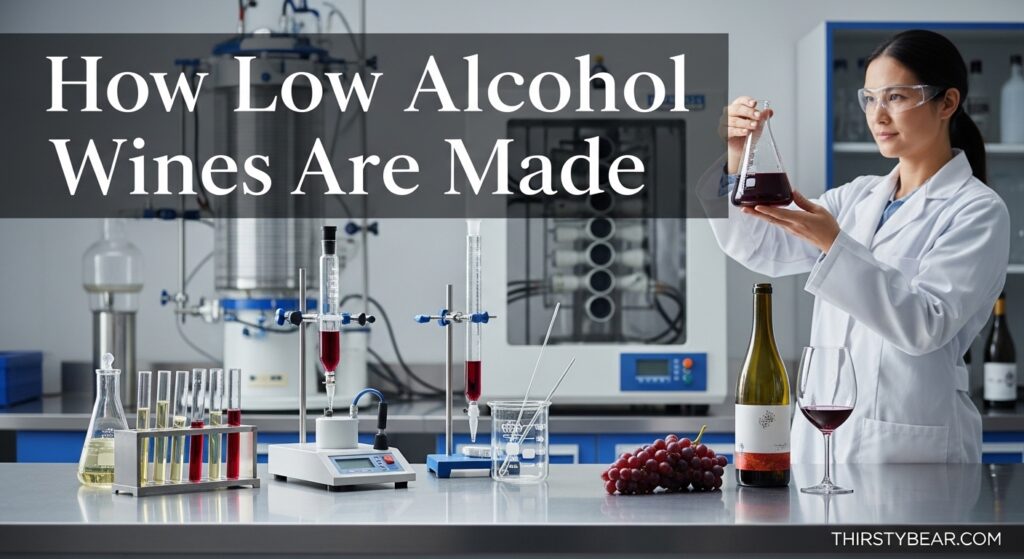
The production of low alcohol wines falls into two distinct approaches: natural methods and technological removal. Natural low alcohol wines come from cooler climates or early-harvested grapes, where lower sugar content naturally limits alcohol production during fermentation. German Pradikat wines, particularly Mosel Rieslings, exemplify this approach with ABVs often between 7-9%.
For dealcoholized wines, producers use sophisticated technology to remove alcohol after fermentation. The spinning cone column method is one of the most advanced techniques. It uses centrifugal force and steam to separate alcohol from wine while preserving aroma compounds. This process happens at low temperatures to protect delicate flavor molecules.
Reverse osmosis is another common method. The wine passes through a membrane that filters out alcohol and water, then the alcohol is separated and the remaining wine concentrate is recombined with water. Vacuum distillation works similarly but uses lower temperatures to evaporate alcohol while minimizing flavor loss. Modern aroma recovery technology helps producers maintain the wine’s essential character throughout these processes.
Low Alcohol Red Wines to Try
Finding quality low alcohol red wines used to be challenging, but several producers now offer excellent options. German Pradikat wines, particularly Spatlese and Kabinett Rieslings, naturally achieve lower alcohol levels while maintaining complexity. These wines typically range from 7-9% ABV and offer crisp acidity with stone fruit and floral notes.
For something different, LO CA wines use innovative winemaking to create red blends around 8-9% ABV. Ventessa offers a Pinot Noir with reduced alcohol that doesn’t sacrifice the classic varietal characteristics. Lindeman’s produces popular Cabernet Sauvignon and Shiraz options with alcohol content around 8-9%, making them accessible choices for casual sipping.
Brancott Estate’s Flight Song line includes a Marlborough Pinot Noir at approximately 9% ABV. These wines maintain New Zealand’s signature bright fruit character while offering a lighter experience. Rawson’s Retreat also produces Cabernet Sauvignon with reduced alcohol, providing an affordable entry point for exploring the category.
When selecting low alcohol reds, look for bottles labeled as “light” or with explicit ABV information. Many restaurant wine lists now include these options, making it easier to try before you buy.
Low Alcohol White Wines to Try
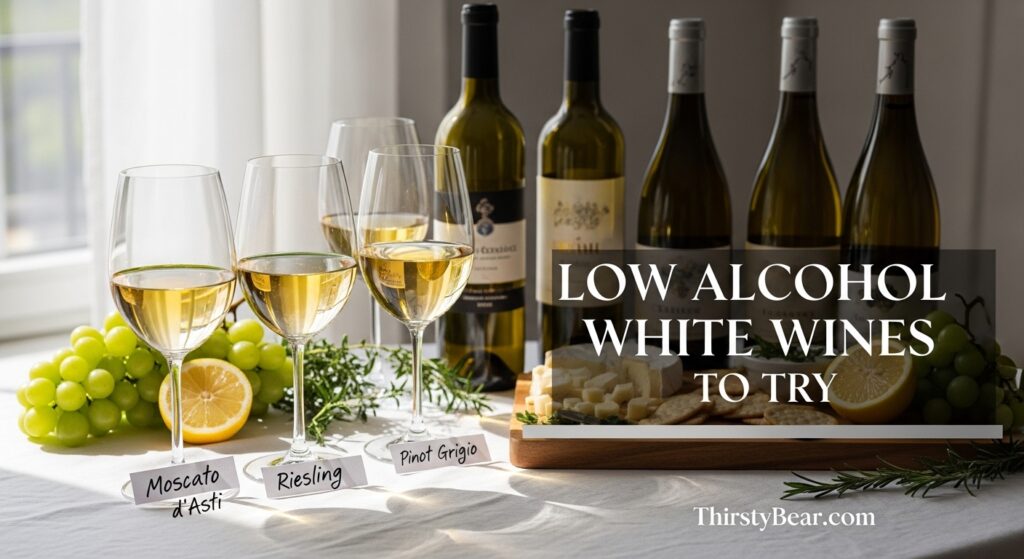
White wine drinkers have perhaps the best selection in the low alcohol category. Mosel Riesling from Germany remains the gold standard for naturally low alcohol wines, with Kabinett and Spatlese classifications typically offering 7-9% ABV. These wines balance residual sugar with crisp acidity, creating food-friendly options that work well with spicy dishes or light appetizers.
Moscato d’Asti from Italy provides another naturally low alcohol option at around 5-7% ABV. Slightly sparkling with sweet stone fruit flavors, it’s an excellent choice for dessert or as an aperitif. The wine’s natural effervescence and lower alcohol make it perfect for brunch or afternoon gatherings.
Brancott Estate Flight Song offers a Sauvignon Blanc at approximately 9% ABV that maintains the variety’s trademark grassy notes and citrus zest. Chateau Ste. Michelle’s LIGHT series includes a Chardonnay with reduced alcohol that still delivers the expected creamy texture and fruit flavors.
For those exploring sugar-free and low-alcohol wine alternatives, many producers now offer dry-style options with minimal residual sugar. Marks and Spencer produces a well-regarded Sauvignon Blanc with reduced alcohol that’s widely available and consistently delivers quality at an affordable price point.
Rose and Sparkling Low Alcohol Options
Rose wines have embraced the low alcohol trend enthusiastically. Arlow produces a Provence-style rose at approximately 9% ABV that captures the region’s signature pale pink color and strawberry notes. Surely Rose offers a dealcoholized option that maintains the classic rose profile while containing less than 0.5% ABV.
For sparkling options, several producers now offer light alternatives. Lindeman’s Chardonnay Pinot Noir Muscat delivers a refreshing sparkling experience with reduced alcohol. Lyre’s Classico provides a non-alcoholic sparkling wine alternative that mimics traditional bubbly with citrus and stone fruit notes.
These options work particularly well for celebrations or as low-alcohol wine for making cocktails. Their versatility makes them excellent choices for mixed drinks where you want flavor without excessive alcohol content.
When shopping for rose and sparkling options, pay attention to whether the wine is naturally low alcohol or dealcoholized. Dealcoholized versions may have slightly different mouthfeel, while naturally low alcohol options maintain traditional wine textures.
Food Pairing Tips for Low Alcohol Wines
Low alcohol wines offer excellent food pairing opportunities, often outperforming their higher-alcohol counterparts in certain situations. Light red wines with 7-9% ABV pair beautifully with grilled vegetables, light pasta dishes, and roasted chicken. Their lower alcohol content means they won’t overpower delicate flavors, making them ideal for lunch or early evening meals.
Crisp low alcohol white wines work exceptionally well with spicy Asian cuisine. The reduced alcohol allows the wine’s acidity to balance heat without intensifying it. Try a low alcohol Riesling with Thai curry or a light Sauvignon Blanc with Vietnamese spring rolls.
Rose wines with lower alcohol content are perfect matches for Mediterranean cuisine, seafood, and charcuterie boards. Their versatility makes them excellent choices for multi-course meals where you want a single wine to pair with various dishes.
Low alcohol sparkling wines shine as aperitifs or with light appetizers. Their effervescence and reduced alcohol create refreshing combinations with oysters, fresh salads, or mild cheeses. These wines also work well for daytime events where you want to maintain clarity and energy.
FAQs
What is a good low alcohol wine?
Good low alcohol wines include German Mosel Riesling (7-9% ABV), Moscato d’Asti (5-7% ABV), and dealcoholized options from brands like Surely, Lyre’s, and Brancott Estate Flight Song. These maintain flavor while offering reduced alcohol content.
What is considered a low alcohol wine?
Low alcohol wines typically contain between 0.5-9% ABV. Non-alcoholic wines have 0.5% ABV or less, light wines range from 5-9% ABV, while standard wines usually contain 11-15% ABV.
How is low alcohol wine made?
Low alcohol wines are made through two main methods: harvesting grapes early for naturally lower alcohol, or removing alcohol after fermentation using spinning cone columns, reverse osmosis, or vacuum distillation technology.
Is low alcohol wine healthier?
Low alcohol wines contain fewer calories than traditional wine and may reduce alcohol-related health risks when consumed in moderation. However, they’re not inherently healthy and should still be consumed as part of a balanced approach to alcohol.
What wine has the lowest alcohol content?
Non-alcoholic wines have the lowest alcohol content at 0.5% ABV or less. Among naturally produced wines, German Kabinett Riesling and Moscato d’Asti typically offer the lowest alcohol levels at 5-7% ABV.
Conclusion
The world of low alcohol wines to try has expanded dramatically, offering quality options for every preference and occasion. Whether you choose naturally low alcohol wines from cooler climates or dealcoholized versions made with advanced technology, you can enjoy the wine experience with reduced alcohol content.
Start by exploring German Rieslings for naturally low alcohol options, or try dealcoholized wines from brands like Surely and Lyre’s for alcohol-free alternatives. The key is finding what works for your palate and lifestyle. With so many quality options now available, there’s never been a better time to explore low alcohol wines.