
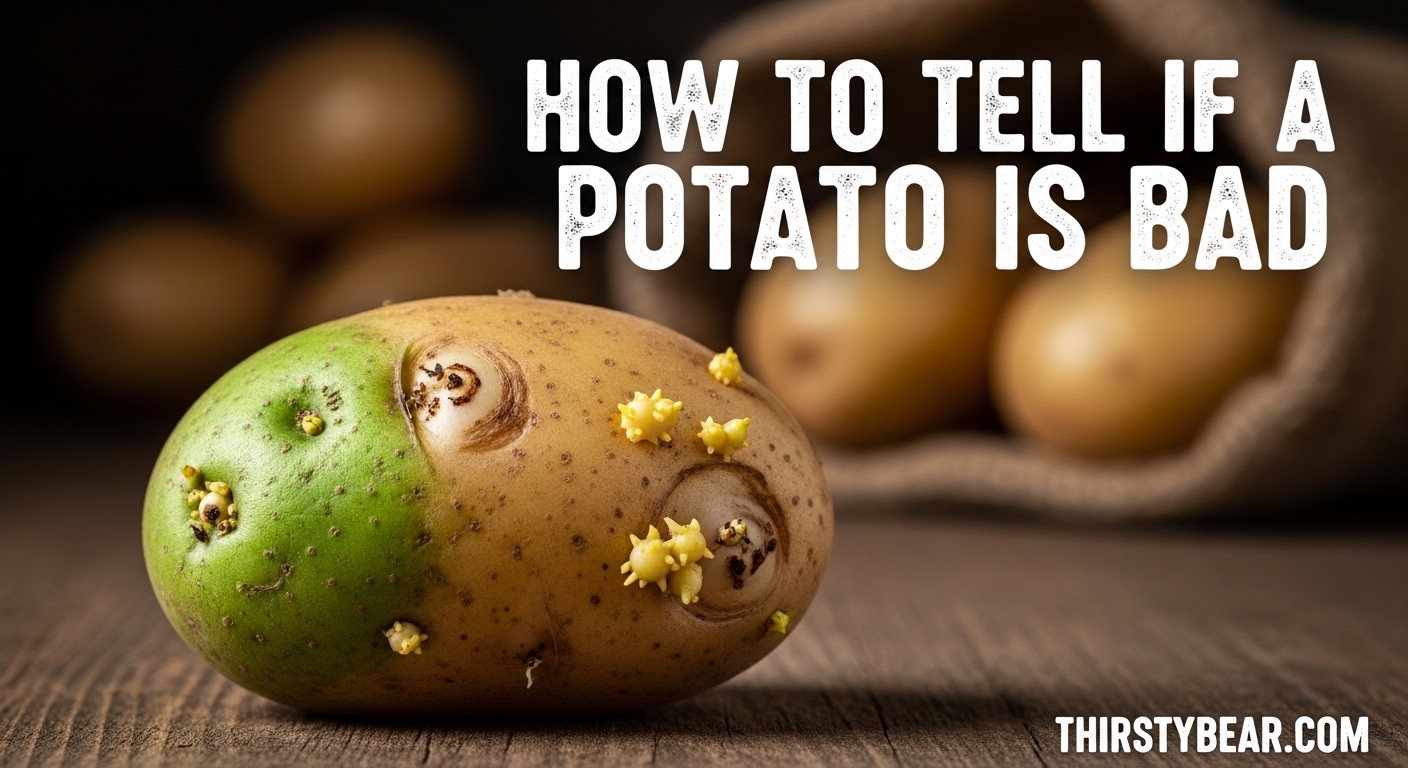
Potatoes are a kitchen staple for many households, but knowing how to tell if a potato is bad can prevent foodborne illness and save you from wasting perfectly good food. I’ve tested countless potatoes over the years and learned that distinguishing between a safe but aged potato and a spoiled one comes down to a few key signs.
Whether you’re checking potatoes you bought weeks ago or ones that have been sitting in your pantry too long, this guide will walk you through every indicator of spoilage.
Table of Contents
How to Tell If a Potato Is Bad: The 9 Critical Signs
A bad potato shows clear warning signs that you can identify through sight, touch, and smell. Here are the nine most common indicators that your potato has gone bad and should be discarded:
- Soft or mushy texture throughout – The potato gives easily when squeezed
- Extensive sprouting – Long, dark sprouts covering multiple eyes
- Green coloration – Green skin or flesh indicating solanine buildup
- Strong rotten smell – A sour, musty odor that’s impossible to miss
- Mold growth – White, black, or green fuzzy patches
- Wrinkled, shriveled skin – Excessive dehydration
- Dark spots or discoloration – Black, brown, or gray areas
- Leaking liquid – Moisture seeping from cracks or eyes
- Hollow or black interior – Rot inside despite normal exterior
Not all signs mean your potato is unsafe to eat. Slight wrinkling or small sprouts often just mean the potato is past its prime but still usable. Understanding the difference between minor aging and dangerous spoilage is key to food safety.
When to Discard Immediately
Some signs are non-negotiable. If your potato is soft and mushy throughout, has a strong rotten smell, or shows visible mold, throw it away immediately. These indicate bacterial or fungal growth that can cause food poisoning.
Community cooking forums consistently report that a truly rotten potato has an unforgettable smell described as “terrible” and “really, really bad.” Once you’ve smelled a rotting potato, you’ll never mistake it for anything else.
Texture Assessment: Soft vs Mushy
Texture is one of the most confusing aspects of potato assessment. I’ve seen countless people discard potatoes that were still perfectly edible because they felt slightly soft.
A potato that is slightly soft when you press it is usually fine. This minor softening occurs as the potato loses moisture over time. The key is to check if the potato still feels firm in most areas and if the softness is uniform.
Mushiness is the real warning sign. A mushy potato feels like it might collapse under gentle pressure. You can press an indentation that doesn’t spring back. This texture indicates advanced spoilage from internal rot or bacterial breakdown.
Here’s my simple test: Give the potato a gentle squeeze. If it feels like a fresh apple or peach with slight give, it’s good. If it feels like an overripe banana or a sponge, it’s time to discard it.
What About Slightly Soft Spots?
Sometimes you’ll find a potato that’s mostly firm but has one soft spot. Cut open the potato and examine the soft area. If the flesh beneath is discolored, dark, or has an off smell, discard the entire potato. If the flesh looks normal but just softer, you can cut away the soft portion and use the rest.
Users on cooking forums frequently debate this scenario. The consensus is that isolated soft spots without discoloration or smell are usually safe to remove, but when in doubt, throw it out.
Sprout Safety Guide
Sprouted potatoes are common, but they don’t always mean the potato is bad. Sprouts form as the potato tries to grow new plants, and small sprouts are generally safe to remove before cooking.
Small white sprouts that are less than an inch long can be simply broken off and the potato used normally. The potato itself remains safe to eat, though its quality may have declined slightly.
Long, dark sprouts are cause for concern. When sprouts become extensive and have turned dark green or purple, the potato has been using its energy to grow rather than maintaining its nutritional content. At this point, the potato is likely past its prime and may have higher levels of glycoalkaloids.
When to Discard Sprouted Potatoes
Discard the entire potato if sprouts are numerous (covering multiple eyes), long (over an inch), dark in color, or if the potato feels soft or shriveled. These are signs that the potato has been sprouting for an extended period and its quality has significantly declined.
The potato’s “eyes” (the small indentations where sprouts emerge) can also tell you a lot. If the eyes are deeply sunken and the surrounding skin is wrinkled, the potato is dehydrated and past its best quality, even if it hasn’t sprouted significantly.
Green Potatoes and Solanine Toxicity
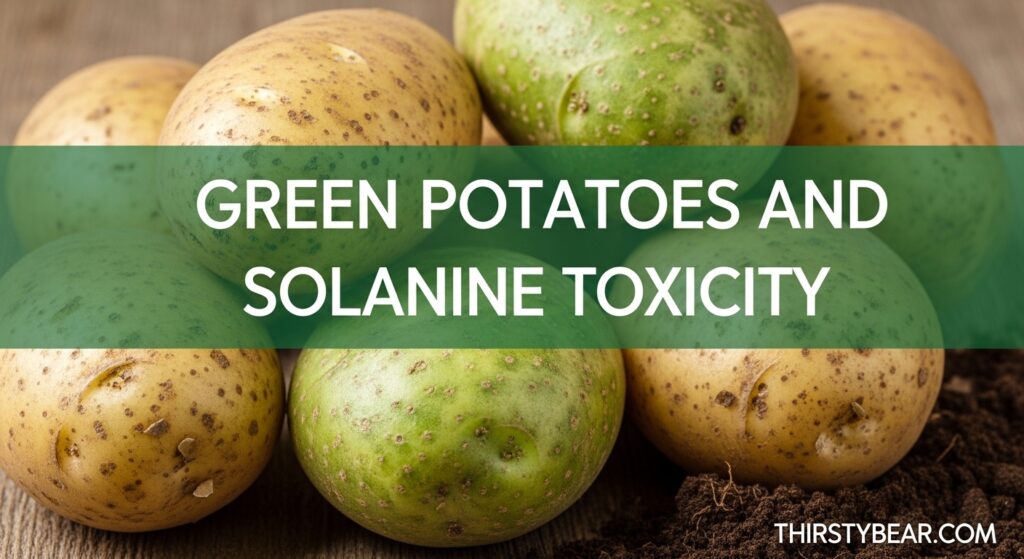
A green potato contains solanine, a natural toxin that develops when potatoes are exposed to light. Solanine is the potato’s defense mechanism against pests, but it’s also harmful to humans in large amounts.
The green color itself comes from chlorophyll, which indicates light exposure. Chlorophyll itself isn’t harmful, but it appears alongside solanine buildup, making it a useful warning sign.
Solanine poisoning symptoms include nausea, vomiting, diarrhea, headache, and in severe cases, neurological effects. Most healthy adults would need to eat a significant amount of green potato to experience severe symptoms, but children and people with sensitivities are at higher risk.
Can You Eat Green Potatoes?
Small green spots are generally safe if cut away completely. The bitter taste associated with solanine is a natural deterrent – if a potato tastes bitter, spit it out immediately.
If more than half the potato is green or the green extends deep into the flesh, discard the entire potato. Peeling removes some solanine, but it can penetrate deeper than the skin layer.
Forum users often report that small green spots can be cut away with no ill effects, but they universally agree that heavily greened potatoes should be discarded entirely.
How Much Green Is Too Much?
A safe rule of thumb: if the green area is small (less than the size of a quarter) and surface-level, cut it away deeply and cook the remaining potato. If the green is widespread, deep, or the potato tastes bitter, don’t take the risk.
Smell Indicators
A fresh potato has a mild, earthy smell. As a potato begins to spoil, this scent changes dramatically.
A sour, musty, or rotten odor is a definitive sign that the potato has gone bad. This smell comes from bacterial breakdown and is unmistakable once you’ve experienced it. Cooking will not make a smelly potato safe to eat.
Sometimes a potato will smell perfectly fine on the outside but have rot inside. This is why it’s important to cut open suspicious potatoes before cooking, even if they seem okay initially.
The “Rotten Potato Smell”
Forum users consistently describe the smell of a rotten potato as unforgettable. Once you’ve smelled it, you’ll never forget it. It’s distinctly different from the earthy scent of a fresh potato and indicates advanced spoilage.
If you detect any unusual or unpleasant odor when handling your potatoes, trust your nose and discard them. The risk of foodborne illness isn’t worth a single potato.
Mold and Internal Rot
Mold on potatoes is always a sign to discard. Visible mold can be white, black, green, or gray, and it may appear as fuzzy patches or slimy areas. Mold produces spores that can spread throughout the potato even if they’re not visible.
Never attempt to cut away mold from a potato and eat the rest. Unlike some foods where you can cut away moldy portions, potatoes are porous and mold can penetrate deeper than you can see.
Internal rot is trickier to detect. A potato may look perfect on the outside but be completely rotten inside. This is why it’s important to cut open potatoes that seem questionable, even if the exterior appears normal.
Signs of Internal Rot
When you cut into a potato, look for dark, black, or discolored areas inside. A healthy potato has uniform creamy white or yellow flesh throughout. Any dark streaks, black spots, or unusual colors indicate internal spoilage.
Hollow areas inside the potato are another sign of rot. These hollows occur when the potato’s internal structure breaks down from fungal or bacterial activity. If you encounter empty space inside a potato, discard it entirely.
Storage Tips to Prevent Spoilage
Proper storage extends the shelf life of your potatoes significantly. I’ve kept potatoes fresh for months by following these simple storage guidelines.
Store potatoes in a cool, dark, well-ventilated place. A pantry or basement is ideal. Avoid direct sunlight, which causes greening, and avoid warm temperatures that accelerate sprouting and spoilage.
Avoid storing potatoes in the refrigerator. Cold temperatures convert the potato’s starch to sugar, altering taste and texture. However, once cooked, potatoes should be refrigerated promptly.
Never store potatoes near onions. Onions release gases that cause potatoes to sprout and spoil faster. Keep them in separate areas of your pantry.
How Long Do Potatoes Last?
When stored properly, potatoes can last 2-3 weeks at room temperature and up to 2-3 months in ideal cool, dark conditions. Check your stored potatoes weekly and remove any that show signs of spoilage – one bad potato can cause others to spoil more quickly.
Forum users who buy in bulk recommend storing potatoes in burlap or paper bags rather than plastic. These materials allow air circulation while protecting from light, extending shelf life compared to plastic containers.
Different Potato Types and Their Bad Signs
While the general signs of spoilage apply to all potatoes, some varieties show them differently:
- Russet potatoes – The rough, netted skin can hide mold and spots. Check eyes carefully and look for dark depressions that indicate rot beneath the skin.
- Red potatoes – Their thinner skin makes spoilage more visible. Green coloration stands out clearly against red skin, making them easier to assess.
- Sweet potatoes – These show spoilage differently than regular potatoes. Look for dark, soft spots and a fermented smell. White milky liquid is a sign of internal breakdown.
Final Safety Checklist
Before cooking any potato, give it this quick assessment:
- Look: Check for mold, green color, dark spots, or extensive sprouts
- Feel: Squeeze gently – firm is good, mushy is bad
- Smell: Should be earthy and mild, not sour or rotten
- Cut: Open questionable potatoes to check the interior
When in doubt, throw it out. A single potato isn’t worth the risk of foodborne illness. Our team always follows this rule in our kitchen, and we recommend you do the same.
FAQs
How do you know if a potato has gone bad?
A potato has gone bad if it’s soft or mushy throughout, has a strong rotten smell, shows visible mold, has extensive green coloration, or has dark spots inside. Wrinkled skin alone doesn’t mean it’s bad, but combined with other signs, it indicates spoilage.
Are potatoes ok if a little soft?
Yes, potatoes that are slightly soft are usually fine to eat. Minor softening occurs naturally as potatoes lose moisture over time. The potato should still feel firm in most areas and show no other signs of spoilage like smell or discoloration.
Is it okay to eat sprouted potatoes?
Small white sprouts under an inch long are generally safe – simply remove them before cooking. However, long dark sprouts covering multiple eyes indicate the potato is past its prime and should be discarded, especially if the potato also feels soft or shriveled.
What happens if you eat bad potatoes?
Eating spoiled potatoes can cause food poisoning with symptoms like nausea, vomiting, diarrhea, and stomach pain. Green potatoes contain solanine, which can cause additional symptoms including headache and in rare cases, neurological effects.
What are the symptoms of eating a bad potato?
Symptoms of solanine poisoning from bad or green potatoes include nausea, vomiting, diarrhea, abdominal pain, headache, dizziness, and in severe cases, fever or low blood pressure. Symptoms typically appear within a few hours of eating.
Can you eat potatoes with green spots?
Small green spots can be cut away if they’re surface-level and cover a tiny area. However, if more than half the potato is green or the green penetrates deeply, discard the entire potato. A bitter taste when eating indicates solanine presence.
Conclusion
Knowing how to tell if a potato is bad is an essential kitchen skill. By checking texture, appearance, and smell, you can confidently decide which potatoes are safe to eat and which should go in the compost.
The key signs to remember are soft mushy texture, extensive sprouting, green coloration, mold, strong rotten smell, dark spots, leaking liquid, and internal rot. Most potatoes showing these signs should be discarded for safety.
Proper storage in a cool, dark place away from onions extends potato shelf life and prevents many of these spoilage issues from developing in the first place.
When in doubt about any potato’s condition, our team always recommends discarding it rather than risking illness. Food safety should always come before saving a single ingredient.