
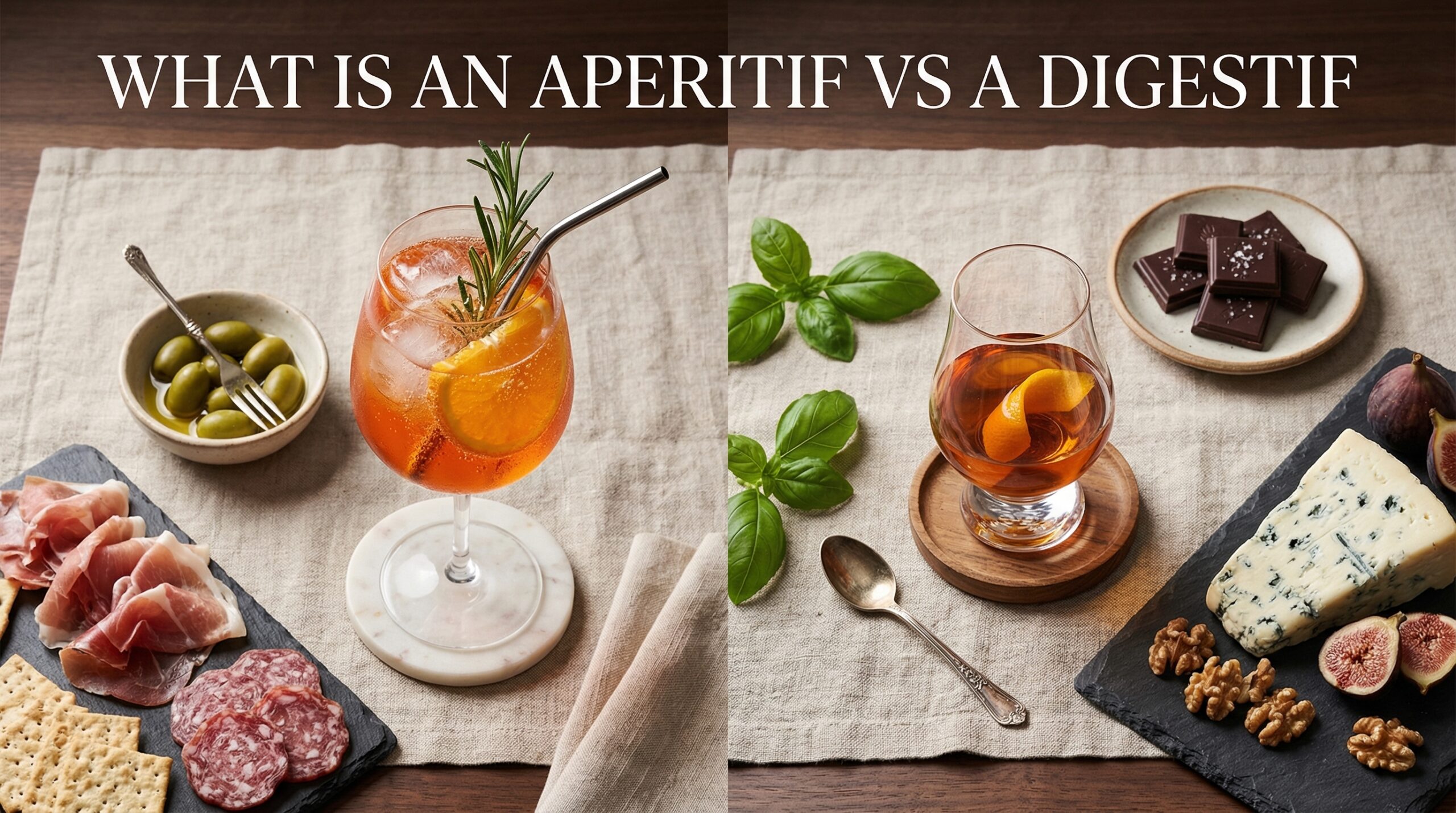
If you have ever wondered what sets an aperitif apart from a digestif, you are not alone. These two terms describe drinks that bookend a meal, yet most people use them interchangeably without knowing the distinction. Understanding the difference between an aperitif and a digestif can elevate your hosting game and enrich your dining experience in ways you never imagined.
Pronounced uh-PER-ih-tif for aperitif and dee-ZHES-tif for digestif, these drinks have deep roots in European culinary tradition spanning centuries. Our team spent months exploring bars, restaurants, and historical texts to bring you the complete guide to understanding these essential drink categories that have shaped social dining across multiple cultures.
Table of Contents
What Is an Aperitif?
An aperitif is a drink served before a meal to stimulate the appetite and prepare the digestive system for food. The word comes from the Latin “aperire,” meaning “to open” – which perfectly describes what these drinks do for your palate and your dining experience. Aperitifs are designed to awaken your taste buds, trigger saliva production, and activate digestive enzymes in anticipation of the meal to come.
These drinks tend to be lighter in body and lower in alcohol by volume (ABV), typically ranging from 5% to 15%. The lower alcohol content is intentional; higher ABV would dull the appetite rather than stimulate it. The flavor profile usually features bright, bitter, or herbaceous notes that clean the palate and make you look forward to the first course.
You will often find carbonated options like spritzes among aperitif choices. The carbonation adds a refreshing quality that lightens the mood and prepares the stomach for food. Many bartenders recommend sipping your aperitif slowly over 20 to 30 minutes rather than gulping it down quickly.
Common examples of aperitif drinks include vermouth (fortified wine infused with botanicals and herbs), Champagne (the classic bubbly choice that has graced European tables for centuries), Aperol Spritz (the bitter-sweet Italian favorite that became globally popular in the 2000s), Campari (intensely bitter Italian liqueur with a distinctive red color), and prosecco (Italian sparkling wine offering a softer alternative to Champagne). These drinks are typically enjoyed on their own or with light bites like olives, nuts, or charcuterie boards.
For cocktail enthusiasts, our Sidecar cocktail recipe demonstrates how classic cocktails can serve as excellent aperitifs. The Sidecar balances cognac’s warmth with citrus notes, creating a sophisticated way to open a dinner party that impresses guests while preparing their palates for the meal ahead.
What Is a Digestif?
A digestif is a drink served after a meal to help settle the stomach and aid digestion, or at least to signal the transition from eating to relaxation. While the scientific evidence for significant digestive benefits remains limited, the tradition persists as a meaningful way to conclude the dining experience on a contemplative note. The name comes from the French word “digérer,” meaning “to digest.”
Digestifs typically have higher ABV than aperitifs, often ranging from 15% to 40% or more. The higher alcohol content provides warmth and a sense of satisfaction after a substantial meal. The flavor profile leans toward sweet, rich, herbal, and sometimes medicinal notes that many find soothing after eating.
Many digestifs contain carminative herbs believed to have soothing properties for the digestive system. Herbs like fennel, anise, and peppermint have long been associated with digestive comfort, and many digestif liqueurs incorporate these ingredients. However, it is worth noting that much of the digestive benefit may come from the ritual and social aspect rather than any pharmacological effect.
Popular digestif drinks include amaro (Italian herbal liqueurs like Fernet, Averna, and Campari’s more bitter cousins), brandy and cognac (aged grape brandy with rich complexity and warming character), grappa (Italian pomace brandy with intense flavors and high alcohol content), Chartreuse (monastic herbal liqueur made with 130 botanicals by Carthusian monks), and port wine (fortified wine from Portugal often enjoyed after dinner in smaller glasses). These drinks are traditionally served neat (without ice or mixers) in smaller, more concentrated pours.
The Manhattan cocktail recipe is a perfect example of a versatile drink that bridges both categories. Made with whiskey, sweet vermouth, and bitters, the Manhattan can work as either an aperitif or digestif depending on how you serve it and what accompanies it.
Key Differences: Aperitif vs Digestif
While both aperitifs and digestifs are meant to enhance the dining experience, they serve opposite purposes in the meal structure. Here are the five key differences that set them apart and help you understand when to serve each type.
- Timing: Aperitifs are served before the meal begins, typically during the first 30 to 60 minutes of gathering. This gives guests time to relax, socialize, and prepare their appetites. Digestifs are served after the main course and dessert, concluding the meal on a relaxed note while helping guests wind down from the experience.
- Alcohol Content: Aperitifs generally stay in the 5% to 15% ABV range to avoid dulling the appetite or causing early intoxication. Digestifs range from 15% to 40% or higher, providing warmth and satisfaction after the body has processed food. The higher ABV in digestifs feels more appropriate after eating because the body metabolizes alcohol differently when there is food present.
- Flavor Profile: Aperitifs emphasize brightness, bitterness, and refreshment to stimulate the palate and increase saliva production. Common flavor notes include citrus, botanical herbs, quinine (in tonic water), and light fruits. Digestifs feature richness, sweetness, herbal complexity, and sometimes bitterness from aged botanicals. The flavors tend to be more intense and layered because they are meant to be savored slowly after the meal.
- Serving Style: Aperitifs often come as spritzes (mixed with soda water or sparkling wine), mixed with tonic or soda, or served over ice with citrus garnishes. The larger serving sizes encourage pacing over an extended period. Digestifs are typically served neat in smaller, more concentrated pours (often 1 to 2 ounces) in appropriate glassware like snifters or small tulip glasses that concentrate the aromas.
- Purpose: The aperitif prepares your body for food by stimulating digestive enzymes and creating anticipation for the meal. It also serves a social function, giving guests something to hold and discuss while they mingle. The digestif helps signal completion of the meal and provides a moment of reflection and contentment. Many diners appreciate the pause that a digestif creates between the end of food service and the return to other activities.
A Brief History of Aperitifs and Digestifs
The tradition of drinking before and after meals dates back to ancient Rome, where guests would be offered wine infused with herbs to stimulate appetite before banquets. The Romans believed that certain botanicals could prepare the body for heavy meals, and this practice laid the groundwork for later developments in European drinking culture.
However, the formal aperitif and digestif traditions as we know them today developed much later in history. In 18th century Italy, the aperitivo became a daily ritual in cities like Turin, where bartenders began mixing vermouth with soda water and various botanicals. This innovation created a new category of drinks that were light enough to enjoy before meals but flavorful enough to be interesting. The tradition spread throughout Italy and eventually became known internationally as the aperitif.
The famous Campari emerged in 1860, created by Gaspare Campari in Novara, Italy. This intensely bitter liqueur became a cornerstone of Italian aperitivo culture and inspired countless copycat products. Aperol, with its milder and sweeter profile, followed in 1919 and would eventually become the basis for the globally popular Aperol Spritz.
The French embraced their own version called “apéro,” which combines the pre-dinner drink tradition with social gathering in a uniquely French way. French apéros often feature Kir (white wine with crème de cassis), pastis (anise liqueur from Provence that turns milky when mixed with water), Pineaudes Charentes (grape brandy from the Charentes region), or simple glasses of pastis diluted with water. The French apéro ritual emphasizes conversation and relaxation over formal dining, often lasting an hour or more.
The digestif tradition evolved alongside the aperitif, with European monasteries developing herbal liqueurs believed to aid digestion. Monks in the French Alps created Chartreuse using a secret recipe of 130 herbs and botanicals that dates to the 18th century. Italian amari (plural of amaro) became popular digestifs in the 19th century, with each region developing its own recipes featuring local botanicals.
Regional Variations in Aperitif and Digestif Traditions
Different cultures have developed unique approaches to aperitifs and digestifs that reflect local ingredients, climate, and social customs. Understanding these regional variations can help you appreciate the diversity within these categories.
In Italy, the aperitivo is almost a daily institution, particularly in cities like Milan where the “apericena” (combination of aperitivo and cena/dinner) has become popular among young professionals. Many bars offer complimentary buffets with the purchase of an aperitivo drink, turning the pre-dinner drink into a light meal replacement. Italian aperitivos typically feature Campari, Aperol, vermouth, or refreshing Spritz cocktails made with prosecco.
Spain has its own tradition called “aperitivo,” particularly in Andalusia where sherry wine plays a central role. Fino and Manzanilla sherries are dry, low-ABV fortified wines that make excellent aperitifs, often enjoyed with olives, almonds, and tapas. The Spanish approach tends to be more casual and social than the Italian tradition.
In Germany and Austria, the aperitif tradition often centers on light beers, sekt (German sparkling wine), or white wines like Riesling. The digestif tradition includes herbal liqueurs like Jägermeister and Underberg, which are taken as shots or with beer after substantial meals.
The United States adopted many European traditions but developed its own variations. American whiskey, particularly bourbon, has become associated with the digestif role, often served after dinner in restaurants and homes. Craft cocktail bars have revived interest in classic aperitif cocktails like the Negroni, which balances gin, Campari, and sweet vermouth.
Food Pairing Suggestions
Pairing drinks with food enhances both elements, and this holds especially true for aperitifs and digestifs. The right combination can elevate your entire dining experience from ordinary to extraordinary.
For aperitifs, think light and stimulating rather than heavy and filling. The goal is to prepare your palate for the meal, not to fill up before the first course arrives. Olives, roasted almonds, cured meats like prosciutto, soft cheeses such as burrata or fresh mozzarella, and seafood like oysters or shrimp cocktail make excellent companions for aperitif drinks.
The bright flavors of an Aperol Spritz pair beautifully with prosciutto and melon or figs. Champagne and other sparkling wines complement oysters and light appetizers perfectly, with the carbonation cutting through the brininess. Vermouth shines alongside marinated artichokes, aged cheese, or Spanish tapas. Lillet (French fortified wine) pairs well with smoked salmon and cream cheese.
Digestifs call for richer, more decadent pairings that can stand up to the intensity of the drinks. Aged cheeses like aged Gouda, Parmesan, or Roquefort complement the complex flavors of brandy and cognac. The sweetness and bitterness in these pairings create interesting contrasts that evolve as you sip and taste.
Dark chocolate brings out the fruity notes in cognac and enhances the warmth of aged whiskey. Grappa pairs surprisingly well with almond-based desserts, hard cheeses, or citrus desserts. Chartreuse is traditionally paired with chocolate or vanilla desserts, though it also works with strong blue cheeses. Amaro liqueurs can be paired with bitter desserts like tiramisu or citrus tarts.
Scientific Basis: Do Aperitifs and Digestifs Actually Work?
You might wonder whether there is scientific evidence supporting the claims that aperitifs stimulate appetite and digestifs aid digestion. The truth is more nuanced than you might expect.
Research suggests that bitter flavors, commonly found in aperitifs like Campari and vermouth, can indeed trigger increased saliva production and stimulate digestive enzyme release. This response is partly evolutionary; bitter plants often contain beneficial compounds, and our bodies have developed responses to prepare for their ingestion. However, the appetite-stimulating effects are modest and can be overwhelmed by other factors like stress or illness.
For digestifs, the evidence is even less clear. While herbal liqueurs containing ingredients like fennel, anise, and ginger may have mild carminative properties (reducing gas and bloating), the primary benefits of digestifs appear to be social and psychological rather than physiological. The ritual of slow sipping a small amount of flavorful liquid after a meal can be calming and satisfying, which may indirectly support digestion through stress reduction.
What we do know is that the timing and pace of drinking matter significantly. Consuming alcohol too quickly, regardless of whether it is an aperitif or digestif, can irritate the stomach lining and actually impede digestion. The traditional approach of sipping slowly and moderately is more likely to support healthy digestion than heavy consumption.
Common Questions About Aperitifs and Digestifs
What are 5 examples of aperitifs?
Five popular aperitif drinks include: (1) Vermouth – fortified wine with botanical flavors, (2) Champagne – bubbly and light, (3) Aperol Spritz – bitter-sweet Italian spritz, (4) Campari – bitter Italian liqueur, (5) Prosecco – Italian sparkling wine.
Is prosecco an aperitif or digestif?
Prosecco is typically served as an aperitif. Its light, bubbly character and lower alcohol content make it ideal for stimulating the appetite before a meal. However, it can also be enjoyed throughout a meal or as a refreshing drink on its own.
Is bourbon a digestif or aperitif?
Bourbon is generally considered a digestif due to its higher ABV and rich, warming character. However, it can be served before a meal as an aperitif in certain contexts, especially when seeking something more robust and full-bodied to open the palate.
Is red wine a digestif or aperitif?
Red wine can serve as both, though it most commonly functions as a digestif, especially fuller-bodied varieties enjoyed after dinner. Lighter red wines like Pinot Noir may be served as aperitifs with appetizers or during the main course.
What is the difference between aperitivo and aperitif?
Aperitivo is the Italian term for the pre-dinner drink tradition, while aperitif is the French term. Both refer to similar concepts but aperitivo often implies a more comprehensive social ritual that may include light food, while aperitif is more specifically about the drink itself.
Final Thoughts on Aperitif vs Digestif
Understanding the difference between an aperitif and a digestif adds depth to your appreciation of drinks and dining traditions that have developed over centuries. The aperitif opens the meal, stimulates your appetite, and sets a social tone that welcomes guests and creates anticipation. The digestif closes the experience, offering warmth and reflection after the food is finished.
While the scientific claims about digestion benefits remain debated among researchers, the cultural and social value of these traditions is undeniable. These rituals help structure the dining experience, creating natural transitions that separate the stress of daily life from the pleasure of shared meals.
Whether you are hosting a dinner party or simply exploring new drink experiences, incorporating aperitifs and digestifs into your routine can transform ordinary meals into memorable occasions. The next time you reach for a drink before dinner, consider choosing an Aperol Spritz or a glass of vermouth to truly embrace the aperitif tradition.
After dessert, explore the world of amaro or a fine cognac to see how digestifs can conclude your meal on a sophisticated note. The aperitif vs digestif distinction gives you a framework for structuring your entire dining experience around drinks that serve a purpose beyond simple refreshment.
We hope this guide helps you navigate your next dinner party or bar visit with confidence. Understanding when to serve an aperitif and when to offer a digestif demonstrates knowledge that your guests will appreciate, and the traditions behind these drinks add richness to any dining experience.