
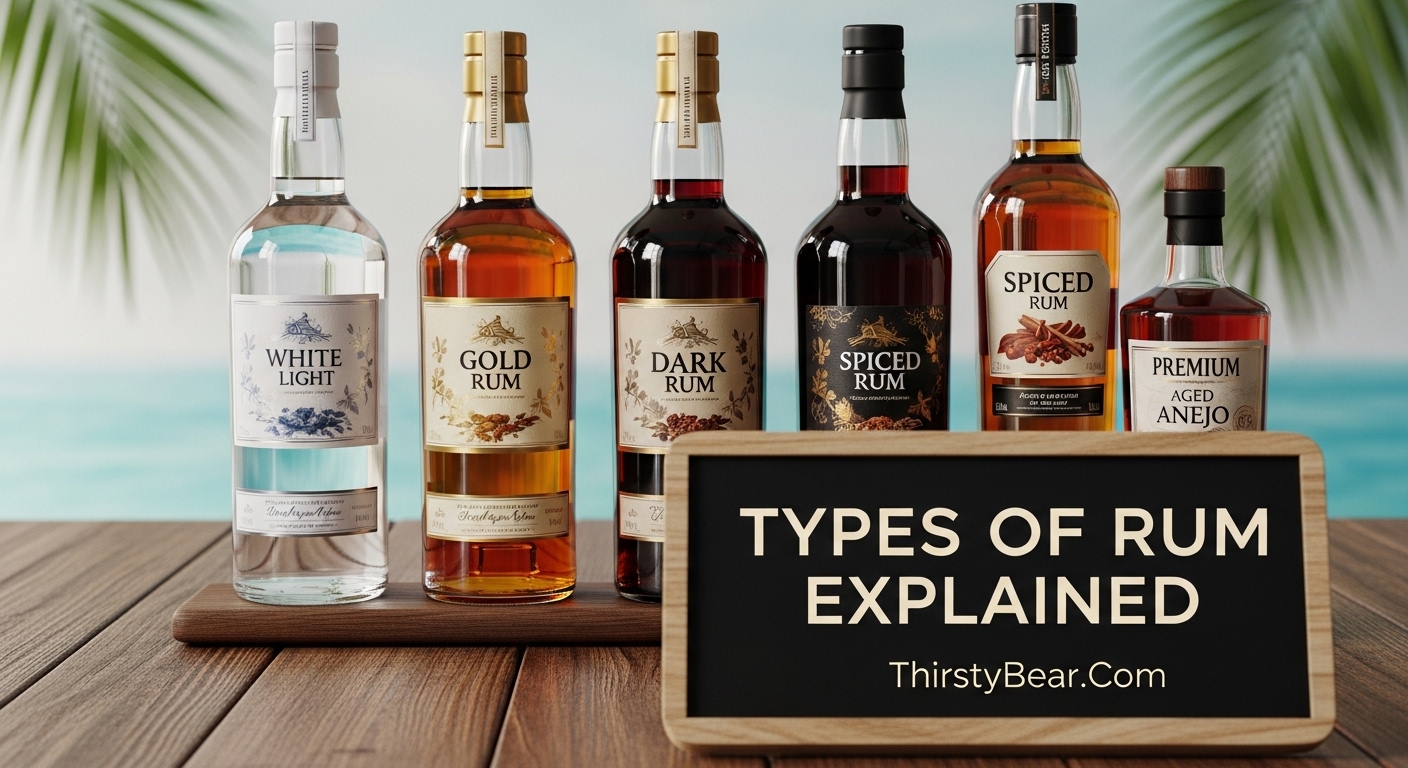
If you have ever stood in the liquor aisle wondering why there are so many different bottles of rum, you are not alone. I spent years mixing drinks before I realized that understanding the types of rum explained in this guide would completely change how I approach cocktails, cooking, and even sipping spirits neat. This comprehensive guide covers everything from the basics of white rum to the intricacies of premium aged varieties, so you can navigate the rum section with confidence.
Rum is one of the most diverse spirits in the world. Unlike whiskey or brandy, which have strict regulations governing their production, rum producers have much more freedom. This lack of rigid rules means that rum styles can vary dramatically between countries, regions, and even individual distilleries. That freedom is precisely why rum offers such incredible variety, but it also makes understanding the different types more challenging.
In this guide, I will break down each major rum category, explain how it is made, describe its flavor profile, and share which cocktails and uses work best with each type. Whether you are a bartender building your knowledge, a home cook exploring new flavors, or someone who just wants to understand what you are ordering at a bar, this article will give you the confidence to explore rum without hesitation.
Table of Contents
How Rum is Classified
Before diving into specific types, you need to understand how rum classification works. The truth is, there is no universal standard for naming or categorizing rum. Different countries and regions use different systems, which creates much of the confusion around this spirit.
The most common approach is color-based classification: white rum, gold rum, dark rum, and black rum. This system groups rums by their appearance, which is determined partly by aging and partly by the addition of caramel coloring. However, color alone tells you very little about the flavor, production method, or quality of the rum inside the bottle.
Experienced rum enthusiasts know that production-based classification is often more useful. This approach considers the source material (molasses versus sugarcane juice), the distillation method (pot still versus column still), the aging process, and the region of origin. These factors have a much greater impact on flavor than color alone.
The three major rum-producing regions each have distinct styles. Spanish-speaking Caribbean countries like Cuba, Puerto Rico, and the Dominican Republic tend to produce lighter, smoother rums. British-style rums from Jamaica, Barbados, and Guyana are often more full-bodied with stronger flavor compounds. French Caribbean islands, particularly Martinique, specialize in agricultural rums made from fresh sugarcane juice rather than molasses.
Understanding these regional differences helps explain why a Jamaican rum and a Cuban rum can taste so dramatically different despite both being called “gold rum.” The fermentation process, distillation equipment, aging conditions, and local ingredients all contribute to the final product.
White Rum
White rum, also known as clear rum, silver rum, or light rum, is the most versatile and widely used type of rum in cocktails. It is typically unaged or minimally aged, which gives it a clean, crisp character that lets other ingredients in a cocktail shine.
Most white rums are made from molasses and distilled in column stills, which produce a lighter, more neutral spirit. Some premium white rums use pot stills for more character, then age them briefly in stainless steel or neutral oak barrels to maintain clarity. The result is a spirit with subtle sweetness and gentle notes of tropical fruit, vanilla, or coconut depending on the brand.
White rum is the backbone of classic cocktails like the Mojito, Daiquiri, and Piña Colada. Its neutral character makes it perfect for mixed drinks where you want the rum to blend seamlessly with other flavors rather than dominate. You will also find white rum in Cuba Libre, Mai Tai (as the light rum component), and countless tropical tiki drinks.
For cooking, white rum works well in seafood dishes, Caribbean-inspired recipes, and any application where you want a hint of sweetness without dark color. It is also the rum of choice for flambé techniques in desserts because the clear color looks more appealing and the flavor is less pronounced than darker varieties.
Popular white rum brands include Bacardi Superior, which is one of the most recognized names in rum and a staple in bars worldwide. Havana Club Añejo 3 Años offers a bit more complexity while remaining versatile. For those seeking higher quality, brands like Plantation 3 Stars deliver excellent flavor without the premium price tag.
Gold Rum
Gold rum, sometimes called amber rum, occupies the middle ground between white and dark varieties. The golden color comes from aging in oak barrels, typically for two to five years, though some brands use shorter aging periods combined with added caramel coloring for consistency.
The aging process imparts richer flavors than white rum, with notes of vanilla, caramel, toast, and sometimes tropical fruits or spices. Gold rum has more body and warmth, making it feel more substantial in cocktails without overwhelming them. The exact flavor profile depends heavily on where the rum was produced and how it was aged.
Spanish-style gold rums, such as those from Puerto Rico and the Dominican Republic, tend to be lighter and sweeter. They often undergo filtration that removes some of the darker pigments while retaining flavor from the oak. These rums blend beautifully in cocktails and are extremely approachable for beginners.
British-style gold rums from Jamaica or Barbados are typically richer and more flavorful, with stronger notes of molasses, dried fruits, and spices. These rums work well in more complex cocktails where you want the rum character to come through more prominently.
Gold rum is excellent in cocktails that benefit from more rum presence, such as the Mai Tai, Rum Old Fashioned, or Tropical Itinerary. It also works well as a sipping rum for those new to rum appreciation, offering enough complexity to be interesting without the intensity of dark rums.
Brands to look for include Don Q Añejo, which offers excellent value and versatility, Mount Gay Eclipse for a classic Barbados style, and Zacapa Sistema Solera for a premium Guatemalan rum that has won numerous awards.
Dark Rum
Dark rum brings significant depth and intensity that lighter rums cannot match. The dark color comes from longer aging periods, often five years or more, in charred oak barrels that impart rich, complex flavors. Some dark rums also contain added caramel coloring, though the best examples rely solely on the aging process.
The flavor profile of dark rum includes notes of molasses, caramel, toffee, dark chocolate, coffee, dried fruits, and warm spices like cinnamon and clove. These rums have substantial body and a lingering finish that makes them satisfying to sip neat after dinner.
Dark rum is the traditional choice for the Dark and Stormy cocktail, where its rich flavor stands up to the bold ginger beer. It also shines in Rum Old Fashioneds, Rum Swizzles, and other cocktails where you want the rum to be the star. Tiki drinks frequently use dark rum as their backbone, providing the complex, layered flavors that make those cocktails so intriguing.
When cooking with dark rum, you get incredible depth for dishes like rum-glazed ribs, rum-soaked fruitcake, or rum-based sauces for desserts. The dark rum adds not just sweetness but genuine flavor complexity that enhances both sweet and savory dishes.
My personal favorite dark rums include Coruba Jamaican Rum, which has an authentic funky richness that serious rum lovers appreciate. Appleton Estate Reserve is a more approachable Jamaican dark rum with lovely tropical fruit notes. For cooking, I often reach for Cruzan Black Strap Rum, which offers intense flavor at an affordable price point.
Black Rum
Black rum takes the intensity of dark rum to another level. The deep, almost opaque color comes from added molasses or sugar syrup coloring, which creates that characteristic black appearance. The term “black rum” is sometimes used interchangeably with dark rum, but true black rum has that distinct midnight color from added ingredients rather than extended aging alone.
The flavor is bold and assertive, with heavy notes of molasses, burnt sugar, espresso, and dark chocolate. Black rums often have a syrupy quality and a warming sensation that spreads through your chest. These are not subtle spirits; they demand attention and respect.
Black rum is traditional in Navy-style cocktails and many classic British rum drinks. It works exceptionally well in tiki cocktails where you want dramatic rum flavor. Some enthusiasts use black rum as a “floater” on top of other cocktails, adding both visual appeal and an extra punch of rum intensity.
Goslings Black Seal Rum is perhaps the most famous black rum, essential for making a proper Dark ‘N’ Stormy. It has that perfect balance of sweetness, intensity, and complexity that makes black rums so compelling. Another excellent option is The Scarlet Lady Rum, which offers rich flavor at a reasonable price.
Spiced Rum
Spiced rum has become one of the most popular rum categories in recent decades, particularly in North America. These rums start as regular rum (usually gold or dark) and are then infused with various spices and flavorings. The result is a ready-to-drink spirit that requires no mixing to be enjoyable.
Common spices include cinnamon, vanilla, clove, nutmeg, cardamom, and pepper. Some brands also add fruit flavors like orange, coconut, or cherry. The exact recipe varies by brand, which means spiced rums can range from subtly flavored to intensely spiced.
Captain Morgan is the dominant brand in this category, known for its sweet, approachable character with prominent cinnamon and vanilla notes. Sailor Jerry offers a more authentic, slightly drier spiced rum with stronger spice presence. For premium options, Dead Man’s Fingers provides unique flavors like saffron, mango, and passionfruit.
The beauty of spiced rum lies in its simplicity. You can drink it neat, on the rocks, or with a simple mixer like cola or ginger ale. Spiced rum also works in cocktails where you want the spice notes to complement other ingredients. It is particularly good in Hot Toddies during cold weather, providing soothing warmth from the spices combined with the rum’s comfort.
When cooking, spiced rum adds convenient flavor to desserts and breakfast dishes. Think rum-spiked French toast, spiced rum bread pudding, or rum-spiked whipped cream for pancakes. The pre-spiced nature means you get flavor without having to add multiple individual spices.
Overproof Rum
Overproof rum packs significantly higher alcohol content than standard rum varieties, typically ranging from 57% to 75% alcohol by volume (ABV). Standard rum usually falls between 40% and 45% ABV, so overproof varieties deliver nearly double the alcohol punch. The term “Navy strength” refers specifically to rum at 57% ABV, the traditional strength used by the British Royal Navy.
The high alcohol content means overproof rum delivers intense, concentrated flavor. You use less of it in cocktails, but what you add brings tremendous rum character. Many overproof rums are unaged or lightly aged, giving them a raw, powerful rum essence that lighter rums cannot match.
The most famous overproof rums include Pusser’s Rum, which was the actual rum served to British Navy sailors until 1970. It has that authentic Navy strength punch and a rich, complex flavor from pot still distillation. Another staple is Plantation OFTD (Old Fashioned Traditional Dark), which was specifically designed by cocktail historians to recreate the overproof rums used in classic tiki cocktails.
Demerara Rum 151 from El Dorado is another excellent option, offering intense Caribbean flavor at high proof. Worthy Park Estate Overproof provides Jamaican funk and flavor at strong ABV levels. Hampden Estate Overproof Rum is highly sought after by enthusiasts for its authentic Jamaican pot still character.
When using overproof rum, a little goes a long way. In tiki cocktails, a small amount adds tremendous depth without making the drink overly strong. Some bartenders use overproof rum as a “float” on top of cocktails, adding aromatic alcohol vapor that you smell before tasting. You can also add a few drops to regular cocktails to boost the rum character without significantly increasing alcohol content.
Navy Rum
Navy rum carries centuries of maritime history in every bottle. The British Royal Navy has a tradition of issuing daily rum rations to sailors that dates back to the 17th century. This tradition continued for over 300 years until July 31, 1970, a date now known as Black Tot Day, when the Navy officially ended the rum ration.
Authentic Navy rum is produced to exacting standards that distinguish it from regular overproof rum. It must be pot still distilled for full flavor and bottled at Navy strength (57% ABV). The flavor profile tends toward rich, dark, and full-bodied with notes of molasses, oak, dried fruits, and warm spices.
Pusser’s Rum is the quintessential Navy rum, claiming to use the same specifications as the rum once served on British warships. The company was founded by survivors of the last Royal Navy rum issue and maintains that traditional character. Many bartenders consider Pusser’s the benchmark for Navy-style rum.
The history of Navy rum adds a fascinating dimension to drinking it. When you pour a glass of Pusser’s or another authentic Navy rum, you are connecting to a tradition that spans centuries of seafaring history. Sailors aboard HMS Victory at the Battle of Trafalgar in 1805 were drinking rum very similar to what you can buy today.
Navy rum works exceptionally well in rum-forward cocktails where you want substantial flavor and that historical connection. It shines in the Navy Rum Old Fashioned, in tiki drinks, or simply sipped neat with a bit of water to open up the flavors. The high proof also makes it excellent for cocktails where you want the rum character to dominate.
Rhum Agricole
Rhum Agricole represents a distinct category that breaks from the molasses-based tradition most people associate with rum. Instead, it is made from fresh sugarcane juice, similar to how some brandies are made from wine grapes rather than dried fruit. This difference in source material creates a fundamentally different flavor profile that many enthusiasts consider more complex and interesting.
The birthplace of Rhum Agricole is the French Caribbean island of Martinique, where it has been granted AOC (Appellation d’Origine Contrôlée) status similar to French wine. This designation means that only rum from Martinique made from sugarcane juice according to specific methods can legally be called Martinique Rhum Agricole. The AOC requirements ensure traditional production methods and authentic character.
The flavor of Rhum Agricole is often described as fresher, grassier, and more vegetal than molasses-based rums. You get distinct notes of sugarcane itself, tropical flowers, herbs, and citrus peel. The aroma is more complex and aromatic, with less of the heavy sweetness found in many dark rums.
Martinique produces both white and aged Rhum Agricole. The white version is crisp and aromatic, excellent in cocktails where you want that unique agricultural character. Aged versions spend years in oak barrels, developing additional complexity while retaining that distinctive fresh sugarcane essence.
Outside Martinique, other Caribbean islands produce agricultural rum from sugarcane juice, though they cannot use the Martinique AOC designation. Guadeloupe, Haiti, and other French-speaking Caribbean nations have their own traditions of cane juice rum production.
The classic way to enjoy white Rhum Agricole is in a Ti’ Punch, the unofficial national drink of Martinique. This simple cocktail combines Rhum Agricole with fresh lime juice and cane sugar syrup, letting the rum’s unique character shine through. You can also use it in any cocktail calling for white rum, adding a distinctive French Caribbean twist.
For sipping, seek out aged Rhum Agricole like Clément VSOP or Neisson Réserve Spéciale, which offer the complexity of fine cognac with distinctly Caribbean character. These rums reward contemplation and demonstrate why agricultural rum has earned its premium reputation.
Cachaça
Cachaça is Brazil’s national spirit, made from sugarcane juice rather than molasses, which technically makes it a type of rum in many classifications. However, Brazilians are quite particular about this distinction, considering cachaça a unique spirit in its own right rather than simply another rum variety. If you have experienced rum but not cachaça, you are missing an essential category.
Unlike Rhum Agricole, which uses similar production methods but carries French Caribbean cultural associations, cachaça is deeply Brazilian. It is produced primarily in Brazil’s northeastern state of Bahia and in the southern state of Rio Grande do Sul, each region producing distinct styles. The spirit appears in countless Brazilian cocktails and social traditions.
The flavor profile of cachaça varies dramatically based on production methods. Industrial cachaça tends to be lighter and cleaner, often compared to white rum with a slightly herbal quality. artisanal cachaça can be incredibly complex, with notes of tropical fruits, herbs, honey, and earthy undertones. Some artisanal producers use copper pot stills and age the spirit in various wood barrels, creating depth comparable to fine whiskey.
The Caipirinha is Brazil’s most famous cocktail and the best introduction to cachaça. This simple drink combines cachaça with fresh lime juice and sugar, creating an incredibly refreshing beverage that has become popular worldwide. The cocktail showcases how cachaça’s unique character transforms simple ingredients into something special.
Other cachaça cocktails include the Caipiroska (cachaça with vodka-style fruit variations), the Batida (cachaça with fruit juice and condensed milk), and various tropical creations. Aged cachaça can be sipped neat, similar to premium rum or cognac, offering rich complexity for those willing to explore.
When buying cachaça, look for artisanal brands like Salinas, which produces excellent aged and unaged options, or Leblon, which offers a smooth, accessible style popular in bars worldwide. For serious exploration, track down single-barrel artisanal cachaças from small Brazilian producers.
Premium Aged Rum
Premium aged rum represents the evolution of rum from a utilitarian spirit into a sophisticated sipping beverage. These rums spend years, often decades, in oak barrels, developing complex flavors and smooth character that rival fine cognac or whiskey. The aging process transforms young, sometimes harsh spirit into elegant liquid worth savoring.
Aged rums use various aging techniques. The solera system, popularized by brands like Zacapa and Botran, layers rums of different ages together, creating consistency and complexity in each bottle. Single-barrel aging produces more variable but sometimes exceptional results, with each cask contributing unique characteristics. Tropical aging, where rum ages in hot, humid climates, accelerates the interaction between spirit and wood, developing flavor more quickly than temperate aging environments.
The flavor profile of premium aged rum includes notes of dried fruits, vanilla, caramel, chocolate, tobacco, leather, and warm spices. The best examples offer incredible complexity with layers of flavor that unfold over time. The texture becomes silky and full-bodied, coating your palate in a way that mass-market rums simply cannot match.
XP (Extra Old) and XO (Extra Old) designations indicate minimum aging periods, though these vary by country. In most markets, XP requires at least six years of aging, while XO typically requires at least twelve years. These classifications help identify premium products, though some exceptional rums are aged far beyond these minimums.
Zacapa Sistema Solera 23 is perhaps the most recognizable premium rum, offering exceptional quality at a reasonable price point. For luxury sipping, look to Appleton Estate 21 Year Old, which represents the pinnacle of Jamaican rum craftsmanship. Mount Gay Eclipse Maat is another excellent option offering sophisticated character for the price.
When building a rum collection, start with one premium aged rum that you can sip and appreciate. This gives you a benchmark for quality and demonstrates what makes aged rum special. Over time, you can add more rums to explore different styles and regions.
Aguardiente
Aguardiente occupies a unique position in the rum family, combining characteristics of rum with distinctly South American flavor profiles. Despite the name (which means “fire water” in Spanish), it is not a true aguardiente in the European sense but rather a sugarcane-based spirit specific to Colombia and neighboring Andean countries.
The defining characteristic of Colombian aguardiente is anise, which gives it a distinctive black licorice flavor and aroma. This anise note comes from the addition of aniseed or aguardiente de anís during production. The result is a spirit that is simultaneously sweet, herbal, and slightly spicy, with that characteristic anise bite on the finish.
Aguardiente is clear in its unaged form, though some aged versions exist with golden color from wood contact. The alcohol content typically ranges from 29% to 53% ABV, depending on the brand and market. The lower alcohol options are designed for social drinking and casual consumption, while higher proof versions appeal to those seeking more intensity.
In Colombia, aguardiente is woven into the social fabric. It appears at celebrations, gatherings, and everyday moments. The phrase “a la aguardiente” captures a particular mindset of relaxed enjoyment and social connection. Sharing a bottle of aguardiente with friends represents a tradition of hospitality and community.
The flavor takes some getting used to for those unfamiliar to anise-flavored spirits. Think of what happens when you combine rum with black licorice, add some herbal complexity, and create something completely unique. The anise provides a cooling sensation that balances the alcohol’s warmth, making the spirit surprisingly smooth despite its strength.
If you encounter aguardiente, try it in small sips to appreciate its unique character. It is typically consumed neat, sometimes slightly chilled. You can also use it in cocktails where you want that distinctive anise flavor to add complexity. Brands like Cristal and Antioqueño represent the classic Colombian style.
Production Methods: Pot Still vs Column Still
Understanding how rum is distilled significantly affects your appreciation of different styles. The choice between pot stills and column stills creates the fundamental divide between heavier, more flavorful rums and lighter, more neutral ones. Most rum-producing countries use both methods, sometimes in the same distillery.
Pot stills are traditional batch distilling equipment that produces rum with more character, flavor compounds, and congeners. The flavor comes from the “heads,” “hearts,” and “tails” of the distillation run, with skilled distillers selecting which portions to include. Pot still rum tends to be fuller-bodied with richer flavors and often what enthusiasts call “funk” or “rumminess.”
Jamaican rums are famous for their pot still character, often containing high levels of esters and flavor compounds that create distinctive aromatic profiles. These rums can smell almost funky or sour, with intense tropical fruit notes. Not everyone appreciates this character, but those who do consider it essential to the rum experience.
Column stills produce continuous distillation that creates lighter, more consistent, and more neutral spirit. The tall column design separates alcohol from impurities with remarkable efficiency, resulting in clean, smooth rum that works beautifully in cocktails. Most mass-market rums use column stills for their consistency and efficiency.
The choice between pot and column still rum affects your cocktails significantly. Light column still rums blend seamlessly with other ingredients, letting cocktail components shine. Heavy pot still rums dominate cocktails with their powerful character, which can be wonderful or overwhelming depending on what you are making.
Many premium rums blend both pot still and column still components, seeking to balance flavor and smoothness. This approach lets producers create rums with enough character to be interesting while remaining approachable and mixable. When reading tasting notes, you will often see mentions of pot still influence in full-bodied rums and column still influence in lighter expressions.
FAQ: Types of Rum Questions
What are the 7 types of rum?
What are the 4 main types of rum?
What are five types of rum?
Is rum a good drink for diabetics?
Building Your Rum Collection
Armed with this knowledge of the types of rum explained above, you can now approach building your own rum collection with confidence. Start with versatile options that work in multiple applications, then branch into specialty rums as your appreciation develops.
For beginners, I recommend starting with three core rums: a quality white rum like Bacardi Superior or Havana Club for mixing; a gold rum like Don Q Añejo or Mount Gay Eclipse for cocktails and light sipping; and a dark rum like Appleton Estate Reserve or Cruzan Black Strap for cooking and bold cocktails. These three cover most needs without overwhelming your bar.
As you progress, add an overproof rum like Plantation OFTD for tiki cocktails and experimentation. A spiced rum like Captain Morgan or Sailor Jerry offers easy drinking for casual occasions. If you want to explore premium sipping, Zacapa Sistema Solera 23 delivers exceptional quality at a reasonable price.
For enthusiasts seeking advanced exploration, track down single-origin rums from specific distilleries, aged Rhum Agricole from Martinique, or artisanal cachaça from Brazil. These specialty spirits offer unique flavors and experiences unavailable in mass-market products. Visiting rum-focused bars or tastings can help you discover which styles appeal most before investing in full bottles.
The world of rum rewards curiosity and experimentation. Do not be afraid to try new styles, ask questions at liquor stores, or explore unfamiliar regions. Each rum type has its own personality and place in cocktails, cooking, and sipping. Understanding these types of rum explained in this guide gives you the foundation to explore with confidence.
Conclusion
This comprehensive guide to types of rum explained has covered everything from everyday white rum to rare premium aged varieties. You now understand how rum is classified, why production methods matter, and which rum types work best in different applications.
The key takeaway is that rum is far more diverse than most people realize. That diversity comes from minimal regulations, creative producers, and traditions spanning centuries and continents. Whether you want light, refreshing cocktails or rich, complex sippers, there is a rum type designed for exactly that purpose.
Start your exploration with the basics, experiment with different styles, and pay attention to what you enjoy. Build your collection gradually, trying new rums in familiar cocktails to understand how each type contributes. Over time, you will develop preferences and appreciation that make you a more knowledgeable rum enthusiast.
Rum has something for everyone, from the casual Rum and Coke drinker to the collector seeking rare vintage bottles. Understanding the different types transforms your relationship with this spirit from simple consumption to genuine appreciation. Now that you have this foundation, your journey into the world of rum can truly begin.