
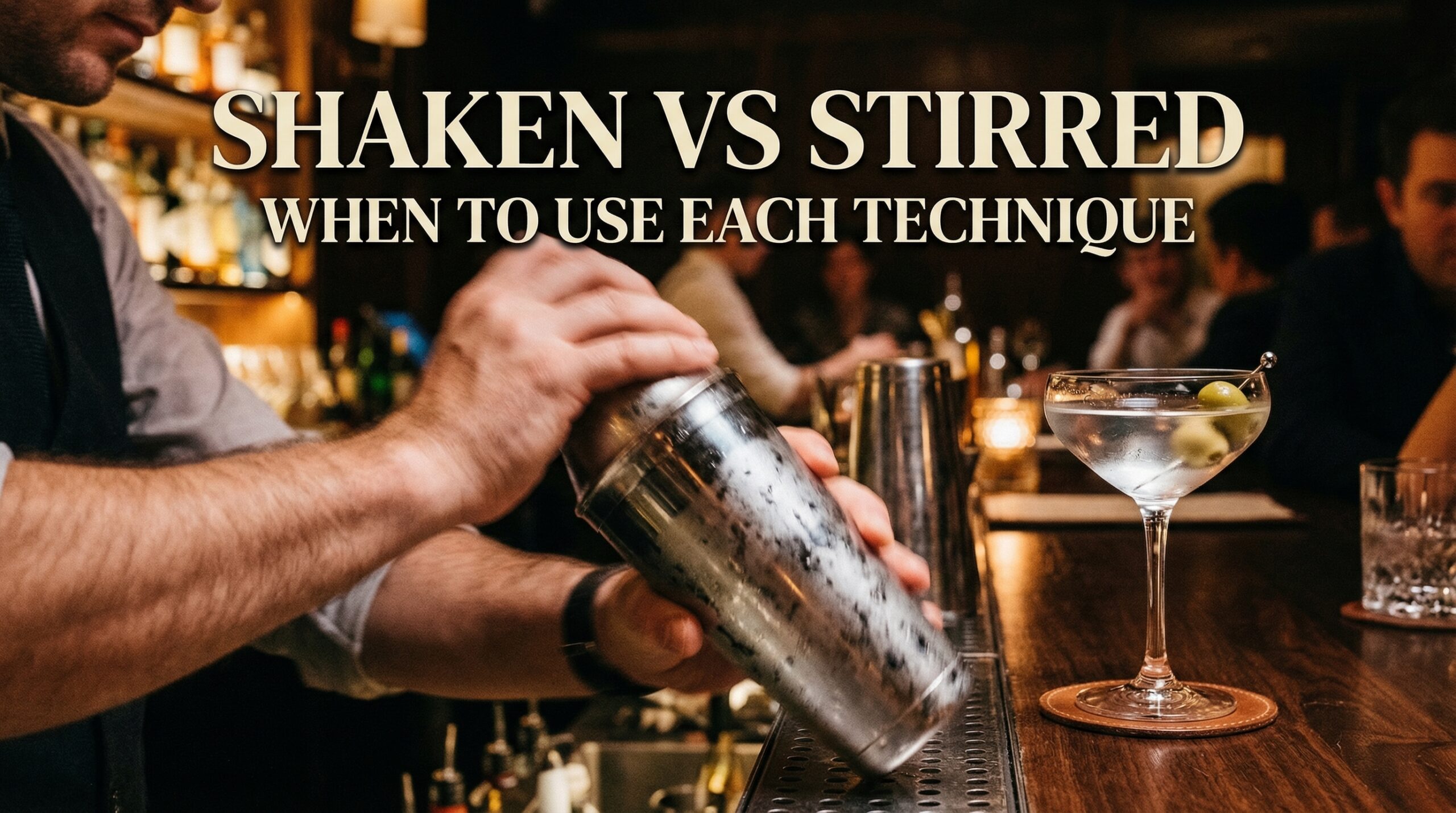
Few phrases in cocktail culture are as famous as “shaken, not stirred.” James Bond made this order iconic, but the truth is more nuanced than his preference suggests.
As someone who has spent years behind a home bar, I have learned that choosing between shaking and stirring is one of the most important decisions you can make when mixing cocktails. The technique you use affects not just temperature, but also texture, dilution, and even the visual appeal of your drink.
In this guide, I will walk you through exactly when to use each method, explain the science behind them, and give you step-by-step instructions so you can master both techniques. By the end, you will know precisely when to shake a Cosmopolitan and when to stir a Negroni.
Table of Contents
Why Mixing Method Matters
The difference between shaking and stirring goes far beyond simple aesthetics. Both methods chill your cocktail, but they achieve that goal in very different ways, with distinct results.
Chilling: Shaking with ice can chill a drink to serving temperature in just 10 to 15 seconds. Stirring takes longer, typically 20 to 30 seconds, because the gentle motion extracts cold more slowly from the ice.
Dilution: This is where the methods diverge most dramatically. Shaking introduces more water faster due to the vigorous agitation. Stirring dilutes the cocktail more gradually and with greater control. According to bartender forums, dilution control is often the top concern for professionals when choosing a technique.
Texture: Shaking forceably incorporates air into the liquid, creating tiny bubbles that give drinks a lighter, frothy texture. This aeration can make certain cocktails feel more refreshing and visually interesting. Stirring keeps the liquid smooth and silky, preserving the original character of each ingredient.
Clarity: Stirred cocktails remain crystal clear. Shaken drinks become noticeably cloudy, which is fine for some cocktails but undesirable for others. If you want to see light through your drink, stirring is the answer.
The golden rule I follow is simple: if the cocktail contains anything other than spirits, liqueurs, and bitters, you probably want to shake it. Spirit-only drinks that emphasize clarity and subtle flavor interplay should almost always be stirred.
When to Shake a Cocktail
Shaking is your go-to technique whenever you are working with ingredients that need extra help incorporating, or when you want that characteristic light, frothy texture. Here is exactly when to reach for your shaker tin.
Citrus Cocktails
Any cocktail containing lemon juice, lime juice, or orange juice demands shaking. These juices are naturally opaque and need vigorous agitation to blend properly with the spirit base. Without shaking, you will end up with sips that swing between too sour and too sweet, with the citrus never fully integrated.
The acid in citrus also interacts with the spirits differently when aerated, creating a brighter, more vibrant flavor profile. This is why drinks like the Daiquiri, Margarita, and Lemon Drop Martini are always shaken.
Egg White Cocktails
Egg white cocktails require shaking more than any other type of drink. The protein in egg white needs vigorous agitation to denature and create that signature silky foam on top of your drink. A gentle stir will leave you with flat, separated egg white floating in clumps.
For egg white drinks, I recommend a “dry shake” first without ice to properly emulsify the egg white, then add ice and shake again. Classic examples include the Whiskey Sour, Pisco Sour, and Clover Club.
Dairy Cocktails
Cream, milk, and other dairy products need shaking to fully incorporate. Without proper agitation, these ingredients will separate and float on top of your drink, creating an unpleasant texture and appearance.
The Alexander, White Russian, and various cream-based digestifs fall into this category. A thorough shake ensures the dairy emulsifies with the spirits for a smooth, consistent texture throughout.
Opaque Ingredients
Some liqueurs, syrups, and fruit juices are naturally cloudy or thick. Shaking helps these ingredients blend into the cocktail rather than sitting in layers. Agave nectar, certain cream liqueurs, and pomegranate juice all benefit from the vigorous mixing that shaking provides.
When in doubt, think about whether the ingredients in your cocktail would naturally blend on their own or need help coming together. If they need help, shake it.
When to Stir a Cocktail
Stirring is the technique of choice when you want to preserve the integrity of your spirits, maintain clarity, and control dilution precisely. Here is when stirring makes all the difference.
Spirit-Forward Drinks
When a cocktail is primarily alcohol with only small amounts of other ingredients, stirring is essential. These spirit-forward drinks feature the nuanced flavors of gin, vodka, or whiskey, and shaking would literally beat the personality out of them.
The dilution that comes with stirring actually opens up the spirit flavors rather than overwhelming them. A stirred cocktail feels more refined on the palate because the gentle motion extracts just enough water to soften the alcohol bite without diluting the character.
If you want to taste the subtle botanical notes of a good gin or the complexity of a well-aged whiskey, reach for your bar spoon instead of your shaker.
Clarity-Focused Cocktails
Some cocktails are meant to be seen through. The Martini, with its crystal-clear appearance, is the quintessential example. When you order a Martini up, you expect to see through it like window glass.
Shaking a Martini would cloud it irreparably. The small ice shards and air bubbles introduced by shaking remain suspended in the drink, destroying that iconic visual effect. The same applies to the Manhattan and other cocktails where appearance matters.
When Subtle Flavors Matter
Bitter liqueurs, vermouth, and other ingredients with delicate flavor profiles deserve gentle treatment. Shaking can mask these subtle notes with excessive dilution and aeration. Stirring lets each ingredient speak for itself.
This is why cocktails like the Negroni, Bijou, and Sazerac are always stirred. The interplay between gin, Campari, and sweet vermouth in a Negroni is a delicate conversation that shaking would turn into a shouting match.
If you are making a classic martini recipe, stirring is the traditional and technically correct approach. The gin and vermouth deserve the respect that gentle stirring provides.
Built Cocktails: The Third Category
While the shaken versus stirred debate dominates cocktail conversations, there is actually a third technique that professionals use regularly. Built cocktails skip the mixing entirely.
What Are Built Cocktails?
A built cocktail is made directly in the serving glass. You add ingredients over ice, give it a light stir with a bar spoon, and serve. This technique is perfect for cocktails that need carbonation or that contain effervescent ingredients.
When to Build
Use this technique when your cocktail contains club soda, tonic water, sparkling wine, or champagne. The carbonation would be destroyed by shaking, and stirring in a shaker would lose the precious bubbles. Building preserves that effervescence.
Gin and tonic, gin and soda, vodka soda, and champagne cocktails are all built directly in the glass. Even a simpleRum and Coke works better when built, not shaken or stirred.
How to Build
Start with ice in your serving glass. Add spirits and non-carbonated ingredients first. Give a gentle stir to combine. Top with your carbonated beverage and stir very briefly, just enough to integrate without losing too many bubbles. Serve immediately with a straw so the drinker can mix as they sip.
Classic Cocktails: Shake vs Stir Examples
Let me give you a concrete reference guide with real cocktails you probably already know. Understanding why these classics use their respective techniques will help you make the right call with any drink.
Always Shake These
- Daiquiri: Rum, lime juice, and simple syrup. The citrus demands shaking to integrate properly and create that refreshing, slightly frothy texture that makes this drink so appealing.
- Margarita: Tequila, lime juice, and orange liqueur. Again, the citrus is the key. A properly shaken Margarita has a brightness that stirred versions simply cannot match.
- Whiskey Sour: Whiskey, lemon juice, simple syrup, and egg white. The egg white absolutely requires shaking, and the citrus benefits from it. This is one of the most technique-demanding classic cocktails.
- Mai Tai: Rum, lime juice, orange liqueur, orgeat, and absinthe. Multiple juices and syrups need vigorous agitation to blend into a cohesive whole.
Always Stir These
- Martini: Gin and dry vermouth. Spirit-only, clarity matters, subtle flavors deserve respect. This is the textbook example of why stirring exists.
- Manhattan: Whiskey, sweet vermouth, and bitters. The aromatic complexity of these ingredients would be lost under aggressive dilution and aeration.
- Negroni: Gin, Campari, and sweet vermouth. Equal parts of three equally important ingredients should mingle gently, not battle it out in a shaker.
- Sazerac: Rye whiskey, absinthe, sugar, and bitters. This historic New Orleans cocktail is traditionally stirred with a cube of sugar that dissolves slowly as you drink.
How to Shake a Cocktail Properly
Shaking seems straightforward, but there is an art to it that affects the final result. Here is exactly how to shake a cocktail for the best outcome.
Step 1: Gather Your Equipment
You will need a shaker tin (Boston shaker or Cobbler), fine mesh strainer, Hawthorne strainer if using a mixing glass, and plenty of ice. Fill your shaker tin about two-thirds full of ice. Larger ice cubes melt slower and give you better control over dilution.
Step 2: Add Ingredients
Pour your spirits and mixers into the shaker over the ice. If your cocktail includes egg white, add it last. For egg white drinks, perform a dry shake first: seal the shaker without ice and shake vigorously for 15 seconds to emulsify the egg white.
Step 3: Seal and Shake
Lock the shaker together firmly. Grip it with both hands, one on each side, and shake with energy from your arms and shoulders, not just your wrists. The shaker should move through a full arc, going up and over your shoulders if you have the room.
Step 4: Time Yourself
Shake for 10 to 15 seconds. This is long enough to chill the drink thoroughly without over-diluting it. Experienced bartenders say you should shake until your shaker starts to frost on the outside. Stop immediately when you hear the ice settle rather than rattling.
Step 5: Strain and Serve
Open the shaker and press your strainer firmly over the opening. Pour into your chilled cocktail glass. If you are serving on the rocks, simply pour directly over fresh ice in a rocks glass.
How to Stir a Cocktail Properly
Stirring requires more patience and a different kind of attention than shaking. Here is how to stir cocktails that come out perfectly chilled and balanced.
Step 1: Use a Mixing Glass
A mixing glass is preferable to a shaker tin for stirring because you can see what is happening inside. Add ice to fill the mixing glass about two-thirds full. The ice should be fresh, not already melting from a previous use.
Step 2: Add Your Spirits
Pour your spirits and other ingredients directly over the ice. Use a measuring jigger to ensure proper proportions. The typical ratio for stirred cocktails is 2 parts spirit to 1 part other ingredients, though this varies by drink.
Step 3: Stir with Purpose
Insert your bar spoon with the handle resting against the edge of the glass. Rotate the spoon slowly around the inside of the glass, using a gentle folding motion. Do not stir in circles that splash up the sides. The goal is to chill the drink while minimally agitating it.
Step 4: Count the Seconds
Stir for 20 to 30 seconds. This seems longer than shaking, but the gentle motion extracts cold more slowly. Your cocktail should reach approximately 20 degrees Fahrenheit below room temperature. You will feel the glass start to get cold to the touch.
Step 5: Strain Precisely
Use a fine mesh strainer to pour from the mixing glass into your cocktail glass. For up drinks, strain into a chilled coupe or martini glass. For rocks drinks, strain over a large ice cube in a rocks glass. The strainer catches ice chips that would ruin the texture.
Common Mistakes to Avoid
After years of practice and watching others mix drinks, I have identified the mistakes that happen most often. Here is how to avoid them.
Over-Shaking
The biggest mistake beginners make is shaking too long. More than 15 seconds introduces excessive dilution, and the ice breaks down into shards that water down your drink. You can actually hear when shaking is complete: the sound changes from loud rattling to a quieter settling. Stop when you hear that settling sound.
Under-Stirring
On the flip side, some people give up on stirring too quickly. Twenty to 30 seconds of proper stirring is necessary to reach proper serving temperature. A drink that is still warm has not been properly stirred, and worse, it will dilute faster as the ice melts during service.
Wrong Technique for Spirit-Forward Drinks
Putting a Martini in a shaker is almost criminal in bartender circles. The aeration and aggressive dilution from shaking completely destroys what makes a Martini worth drinking. If someone orders a spirit-forward cocktail, they want the character of those spirits preserved. That means stirring.
Using the Wrong Strainer
Hawthorne strainers have a spring that fits inside the shaker rim, while julep strainers have holes and sit on top of mixing glasses. Using the wrong strainer results in ice chips in your drink or spilled liquid. Match your strainer to your vessel.
The James Bond Debate
No discussion of shaken versus stirred would be complete without addressing the famous Bond order. “Vodka martini, shaken not stirred” is perhaps the most recognized cocktail order in the world.
From a technical standpoint, most bartenders will tell you Bond was wrong. A Martini should be stirred because it is a spirit-forward drink that benefits from gentle dilution and should remain crystal clear. Shaking introduces unnecessary dilution and cloudiness to a drink that does not need texturizing.
However, there are counterarguments worth considering. First, Bond’s order became famous when the movie “Dr. No” came out in 1962. Preferences have evolved since then. Second, some argue that the slight additional dilution from shaking actually helps vodka integrate with the vermouth. Third, it simply does not matter because Bond can order whatever he wants.
What I tell home bartenders is this: order your martini the way you enjoy it. If you prefer the traditional stirred version, you are in good company with cocktail historians. If you genuinely prefer the texture of a shaken vodka martini, that is your prerogative. The beauty of making cocktails at home is that you get to decide.
For what it is worth, when I make myself a martini, I stir it. The classic martini recipe was designed for stirring, and I think the result speaks for itself.
Frequently Asked Questions
What’s the difference between shaking and stirring a cocktail?
When should a cocktail be shaken instead of stirred?
What cocktails should be stirred instead of shaken?
Does shaking a cocktail actually make it better?
Why does James Bond order his martini shaken?
Conclusion
Mastering the choice between shaking and stirring will immediately elevate your home bartending. The golden rule is straightforward: shake when you have citrus, egg, dairy, or opaque ingredients that need help blending. Stir when your drink is primarily spirits and you want to preserve clarity and subtle flavors.
Built cocktails round out your toolkit for drinks that contain carbonation, giving you three techniques to handle any cocktail recipe. With practice, choosing the right method will become second nature.
I encourage you to try both techniques and taste the difference yourself. Make a Daiquiri both ways if you want to understand why citrus drinks demand shaking. Stir a Martini next to a shaken version and compare them side by side. Your palate will teach you what no article can.
The next time someone asks you whether to shake or stir, you will have a confident answer backed by technique and taste. Cheers to better cocktails.