
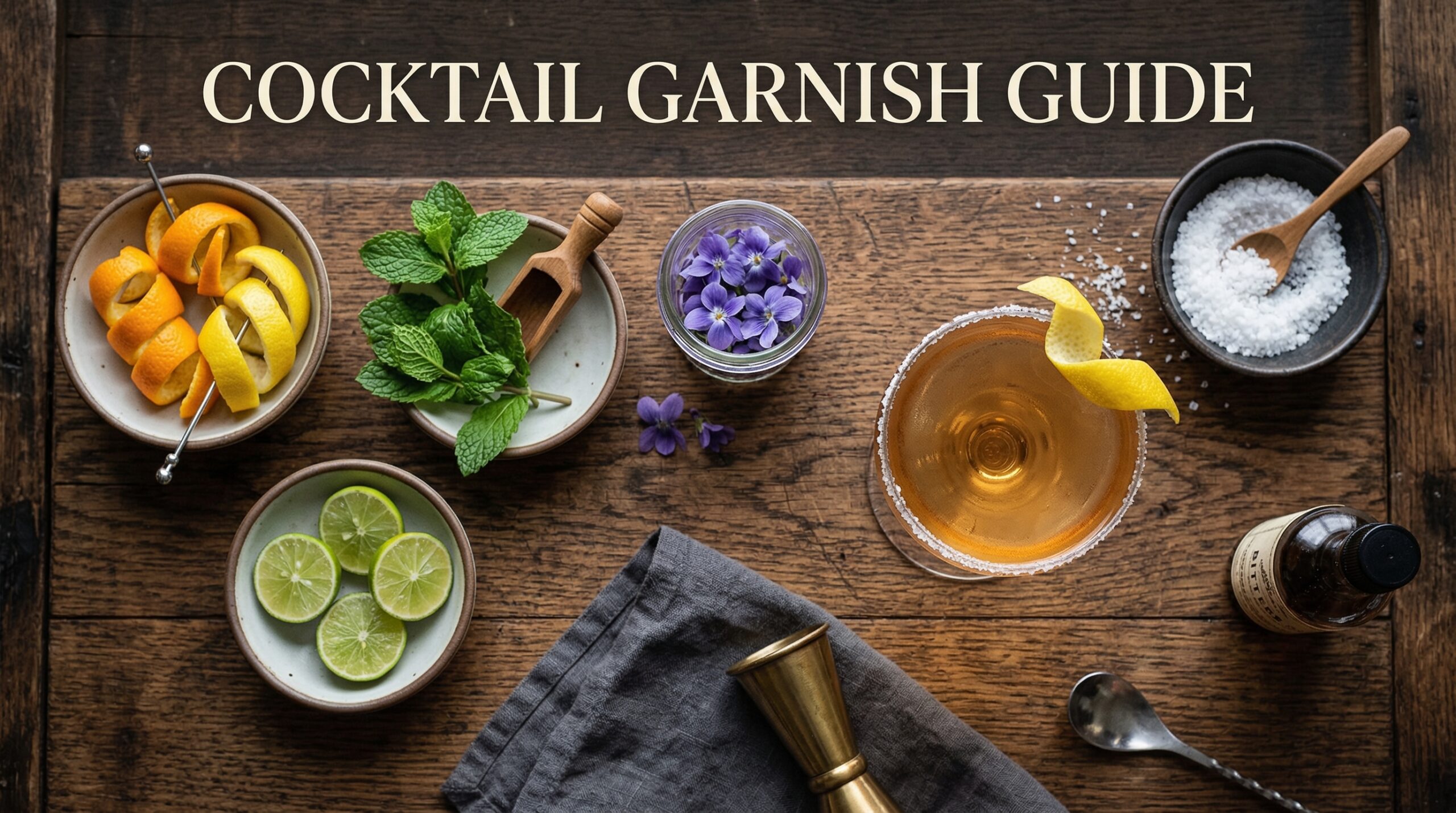
A cocktail garnish does more than make your drink look pretty in a photo. It engages your senses before the first sip even touches your lips. The aroma from an expressed citrus peel, the visual appeal of a mint sprig, the delicate flavor hint from an edible flower: these elements transform a simple mixed drink into a complete sensory experience. This cocktail garnish guide covers everything you need to know, from basic citrus twists to edible flower arrangements.
Table of Contents
Citrus Garnishes
Citrus fruits are the workhorses of cocktail garnishing. Their peels contain essential oils that, when properly expressed, release bright aromatic compounds into the drink. According to bartenders on Reddit, aroma comes first, then color, then flavor. That priority order explains why citrus remains the dominant garnish choice across cocktail programs worldwide.
Twists
A citrus twist is a strip of peel cut to showcase the colorful zest layer while minimizing the bitter white pith underneath. To make one, use a channel knife or vegetable peeler to cut a strip from your citrus fruit. Hold the strip over your drink with the zest-side facing down. Give it a gentle squeeze to express the oils in an arc over the surface, then drop the twist into the cocktail or rest it on the rim. Learn how to express citrus peels in our Negroni guide for a step-by-step demonstration of this fundamental technique.
The key is quick motion: a fast, confident express releases more oil than a slow squeeze. Practice with oranges, lemons, and limes to understand how each fruit behaves differently. Thin twists work better for spirit-forward drinks like gin or vodka martinis, while thicker twists stand up to the ice and dilution in longer cocktails.
Wheels and Wedges
Citrus wheels are cross-sectional slices typically reserved for Collins-style drinks and highball cocktails. A wheel fits perfectly on the rim of a tall glass and adds visual drama. Cut your citrus into rounds about one-quarter inch thick, then score the wheel along the rim edge so it sits flush against the glass.
Wedges are half-moons that work best for drinks served over crushed ice, like a Moscow Mule or Paloma. The larger surface area means more juice can squeeze into the drink, adding both flavor and visual appeal. Insert a bar straw through the wedge to make it easy for guests to squeeze without touching the fruit directly.
Zest and Peel Strips
Fine zest strips come from using a microplane or fine grater directly over the drink. This technique distributes citrus oil in a mist rather than a stream, creating immediate aroma without the chewable peel piece. Use this method when you want citrus presence without altering the mouthfeel of your drink.
Long peel strips, sometimes called channel peels, involve cutting a continuous spiral of citrus peel using a channel knife. These decorative strips curl beautifully and are often draped over the rim or hung inside the glass. They take practice to master but elevate the presentation of any cocktail.
Herb Garnishes
Fresh herbs bring green, organic visual contrast to cocktails and offer aromatic complexity that citrus alone cannot achieve. The key is understanding how to prepare herbs so they complement rather than overpower your drink. Our team has tested dozens of herb combinations over the years, and the principle holds: gentle handling preserves aroma better than aggressive bruising.
Mint
Mint is the most recognizable herb garnish, appearing in mojitos, juleps, and tropical drinks. The classic preparation involves a mint sprig with four to six leaves, gently slapped in your palm before garnishing. This slap releases essential oils without crushing the delicate cell structures that would make the herb turn bitter.
For darker spirits like rum or whiskey, consider pairing with spearmint, which has a sweeter, softer flavor profile. Use peppermint for lighter spirits and citrus-forward cocktails where a sharper menthol note works better.
Basil and Rosemary
Basil garnishes work exceptionally well with tomato-based cocktails, gin drinks, and fruit-forward spirits. Like mint, basil should be handled gently. A single large leaf or a small sprig provides enough aromatic presence without overwhelming the drink.
Rosemary is robust enough to stand up to aged spirits like whiskey, brandy, and mezcal. A short sprig with the needles intact adds forest-like aroma that pairs beautifully with the vanilla and oak notes in barrel-aged spirits. Light the tip of a rosemary sprig with a match for a smoky garnish effect in professional settings.
Other Fresh Herbs
Thai basil offers an anise-tinged alternative to sweet basil. Lavender adds floral notes perfect for champagne cocktails and gin-based drinks. Thyme works with almost any spirit but especially shines with gin and citrus combinations. Experiment with seasonal herbs from your local market to find unique flavor pairings.
Edible Flowers
Edible flowers provide dramatic visual impact and delicate flavor notes that other garnishes cannot match. They require more care in selection and preparation, but the results are worth the effort when you want to create an Instagram-worthy presentation or elevate a special occasion cocktail.
Choosing Safe Flowers
Only use flowers specifically sold as edible. Common safe options include violets, pansies, nasturtiums, marigolds, and chamomile. Avoid flowers from florists, garden centers, or any source that may have been treated with pesticides not labeled for food use. When in doubt, do not use the flower.
Source edible flowers from reputable suppliers who specialize in culinary-grade blooms. Many high-end cocktail suppliers now carry pre-washed, food-safe edible flowers specifically formatted for beverage garnishing. These are worth the premium for peace of mind.
Preparation Tips
Rinse edible flowers gently in cold water and pat dry with paper towels immediately before use. Store them on a damp paper towel in the refrigerator for up to twenty-four hours. Add flowers to drinks just before serving to prevent wilting from ice melt or prolonged contact with liquid.
Freeze edible flowers into ice cubes for a stunning visual effect in Collins glasses or large-format drinks. Simply place the flower in each cube compartment, fill with water, and freeze. Use spherical or large-format ice to minimize dilution while maximizing visual impact.
Rimming Techniques
A properly executed rim adds texture, flavor, and visual appeal to cocktails. The rim creates an expectation of what the drink will taste like before the first sip. Matching your rim to your cocktail flavor profile is one of the easiest ways to elevate your home bartending.
Salt Rims
Salt rims pair naturally with tequila-based cocktails like margaritas and palomas. Use flake sea salt or coarse kosher salt rather than fine table salt for better visual presentation and textural contrast. Moisten the rim of your glass with a citrus wedge, then dip the glass into a plate of salt at a forty-five-degree angle for an even coating.
For an advanced technique, combine salt with other ingredients like chili powder, Tajin, or even smoked paprika to create flavored rims that complement specific cocktail profiles. Our Bloody Mary recipe guide explores elaborate rim combinations including celery salt, bacon salt, and everything bagel seasoning.
Sugar Rims
Sugar rims belong on sweeter cocktails and brunch drinks. Vanilla sugar, lavender sugar, and regular white sugar each add distinct character. Dip a citrus-moistened rim into superfine sugar for the clearest, most professional presentation. Large crystal sugars create more dramatic texture but can feel gritty if not matched to the right drink.
Spice Rims
Spice rims work best with whiskey cocktails and autumn seasonal drinks. Combine cinnamon sugar for an old fashioned, pumpkin spice blend for fall libations, or cardamom sugar for gin-based drinks. The key is balancing sweetness with the spice intensity so neither overwhelms the palate.
Basic Techniques: Expressing, Peeling, Trimming
Mastering the fundamentals of garnish preparation separates casual home bartenders from those who take their craft seriously. These core skills apply across all garnish types and will improve your drink presentation overnight. Reddit discussions confirm that garnish skills often lag behind drink-making skills for most home bartenders, making this section particularly valuable.
How to Express Citrus
Expressing citrus means releasing the essential oils from the peel through pressure. Hold the peel between your thumb and forefinger with the zest-side facing down, positioned about two inches above your drink. Bend the peel in a U-shape, then snap it outward quickly to release an arc of oil mist onto the surface of the drink. The sound of the oils hitting the liquid is called the aromatization, and experienced bartenders consider it essential to the cocktail experience.
Never skip the expressing step when a recipe calls for citrus. Dropping a twist into the drink without expressing releases only a fraction of the available aroma compounds. The twist adds visual appeal, but the expression adds the sensory element that makes garnishing worthwhile.
Peeling Basics
Good peeling technique minimizes pith, the bitter white layer between the zest and fruit flesh. Hold your fruit at a slight angle and use smooth, continuous strokes with your peeler to create long strips. Rotate the fruit as you go to maintain even thickness. For twists, aim for strips about one-quarter inch wide and two to three inches long.
A vegetable peeler creates wider strips ideal for single twists. A channel knife creates decorative spirals with built-in grooves. A Y-peeler gives you more control for curved surfaces. Start with a basic vegetable peeler and add specialty tools as your technique improves.
Trimming Perfection
Trimming refers to shaping your peel into specific forms. For a simple twist, trim any remaining pith from the back of your peel strip with small scissors. For more advanced garnishes like fans or rosettes, score the peel carefully with a sharp paring knife while it lies flat on a cutting board. Practice these advanced cuts on fruit scraps before attempting them on prepared garnishes.
Garnish Pairing Guide
Choosing the right garnish for your cocktail involves understanding how aroma, flavor, and visual presentation work together. How garnish choice defines a cocktail’s character becomes clear when you understand the principles behind successful pairings.
Spirit-Based Pairings
Gin pairs naturally with citrus, mint, basil, cucumber, and lavender. Whiskey welcomes lemon or orange peels, cherries, and rosemary. Rum works with mint, lime, tropical fruits, and edible flowers. Tequila demands lime, salt, and increasingly, chili and tropical fruit combinations. Vodka, being neutral in flavor, accepts almost any garnish but benefits from subtle aromatic additions like cucumber or elderflower.
Cocktail Family Pairings
Sour cocktails like the daiquiri and margarita need citrus wedges or twists that echo their flavor profile. Spirit-forward drinks like the Manhattan and Negroni need minimal garnish, often just a single cherry or expressed orange peel. From cherry to citrus: garnish variety in classic cocktails demonstrates how the same garnish family can work across multiple drink styles.
Tiki cocktails embrace elaborate garnishes including fruit skewers, paper parasols, and fresh tropical fruits. Highball cocktails look best with citrus wheels, herb sprigs, and ice accessories. Champagne cocktails benefit from lemon twists or a single berry to complement the bubbles without overwhelming the delicate base spirit.
Troubleshooting and Make-Ahead Tips
Forum discussions consistently highlight wilted garnishes and preparation time as common pain points. This section addresses those concerns with practical solutions tested in real home bar environments.
Keeping Garnishes Fresh
Store prepared garnishes in ice water in the refrigerator for up to four hours before service. Change the water every two hours to maintain crispness. Citrus twists can be prepared up to twenty-four hours in advance and stored in airtight containers at room temperature, but only if completely dry. Moisture causes mold and wilting.
Fresh herbs wilt within thirty minutes at room temperature. Keep herb sprigs submerged in cold water until just before serving. For extended storage, wrap herbs in damp paper towels and store in a sealed plastic bag in the refrigerator. Mint and basil will stay fresh for two to three days using this method.
Common Mistakes to Avoid
Over-garnishing is the most common error. One mint sprig is enough. One citrus twist is sufficient. Adding too many garnishes muddles the presentation and can interfere with drinking. Professional bars often have strict garnish protocols requiring exactly one sprig of rosemary or exactly two cherries, regardless of glass size.
Using non-food-safe decorations is a mistake that could ruin someone’s evening. Never add fake flowers, plastic picks, or any decoration not specifically designed for food contact. Even natural elements like wooden sticks should be food-grade and sanitized.
Forgetting to express the garnish is perhaps the gravest mistake. A twist placed in a drink without expression provides visual value only. The aroma compounds that make the garnish worth including remain locked in the peel. Always express, then garnish.
FAQs
How to garnish with edible flowers?
Choose only flowers sold specifically as edible. Rinse gently in cold water and pat dry. Add flowers to drinks just before serving to prevent wilting. For ice cubes, place the flower in each cube compartment, fill with water, and freeze. Popular edible flowers include violets, pansies, nasturtiums, and marigolds.
What is the 2:1:1 rule for cocktails?
The 2:1:1 rule refers to a classic cocktail proportion framework. While garnish-specific standards vary, the principle means two parts spirit, one part modifier, one part sour. For garnishing specifically, a common interpretation is two drops citrus oil expressed, one garnish element (twist, herb, flower), one minute of aroma exposure before first sip.
How to do a citrus twist garnish?
Use a channel knife or vegetable peeler to cut a strip of peel from citrus fruit with minimal pith. Hold the strip over your drink with the zest-side facing down. Bend into a U-shape and snap outward to express the oils in an arc over the drink. Drop the twist into the cocktail or rest it on the rim. Quick, confident motion releases more oil than slow squeezing.
What cocktail garnishes from citrus fruit?
Citrus fruits yield several garnish types: twists (long peel strips), wheels (cross-sectional slices), wedges (half-moons), zest (fine gratings), and peel strips (using channel knives for decorative spirals). Each type suits different glassware and drink styles. Oranges and lemons are most common, but limes, grapefruits, and even blood oranges offer unique visual and flavor profiles.
Conclusion
This cocktail garnish guide has covered the essential techniques and knowledge you need to elevate your home bartending. Whether you are expressing citrus peels over a Negroni, adding a mint sprig to a mojito, or preparing edible flower ice cubes for a celebration, the principles remain the same: aroma first, visual appeal second, and flavor enhancement third.
Start with the fundamentals: practice your citrus expressing technique until it becomes second nature. Build from there by experimenting with herb garnishes in different cocktail families. Soon you will be creating garnishes that transform ordinary drinks into memorable experiences. The classic martini showcases the art of proper garnishing, and those skills transfer to every cocktail you make.
The best garnish is one that enhances the drinking experience without requiring a tutorial to understand. Keep it simple at first, master the basics, and then experiment with advanced techniques as your confidence grows. Your cocktails deserve the same attention to detail you already apply to selecting quality spirits and balancing flavors.