
If you have ever wondered what separates a crisp Pilsner from a hoppy Pale Ale, you are not alone. Understanding the difference between lager and ale is one of the most fundamental concepts in beer, and it all comes down to two tiny organisms: yeast. This guide breaks down exactly what a lager is, how it differs from ale, and why these differences matter for your next pint.
Table of Contents
What Is a Lager and How It Differs from Ale at Its Core
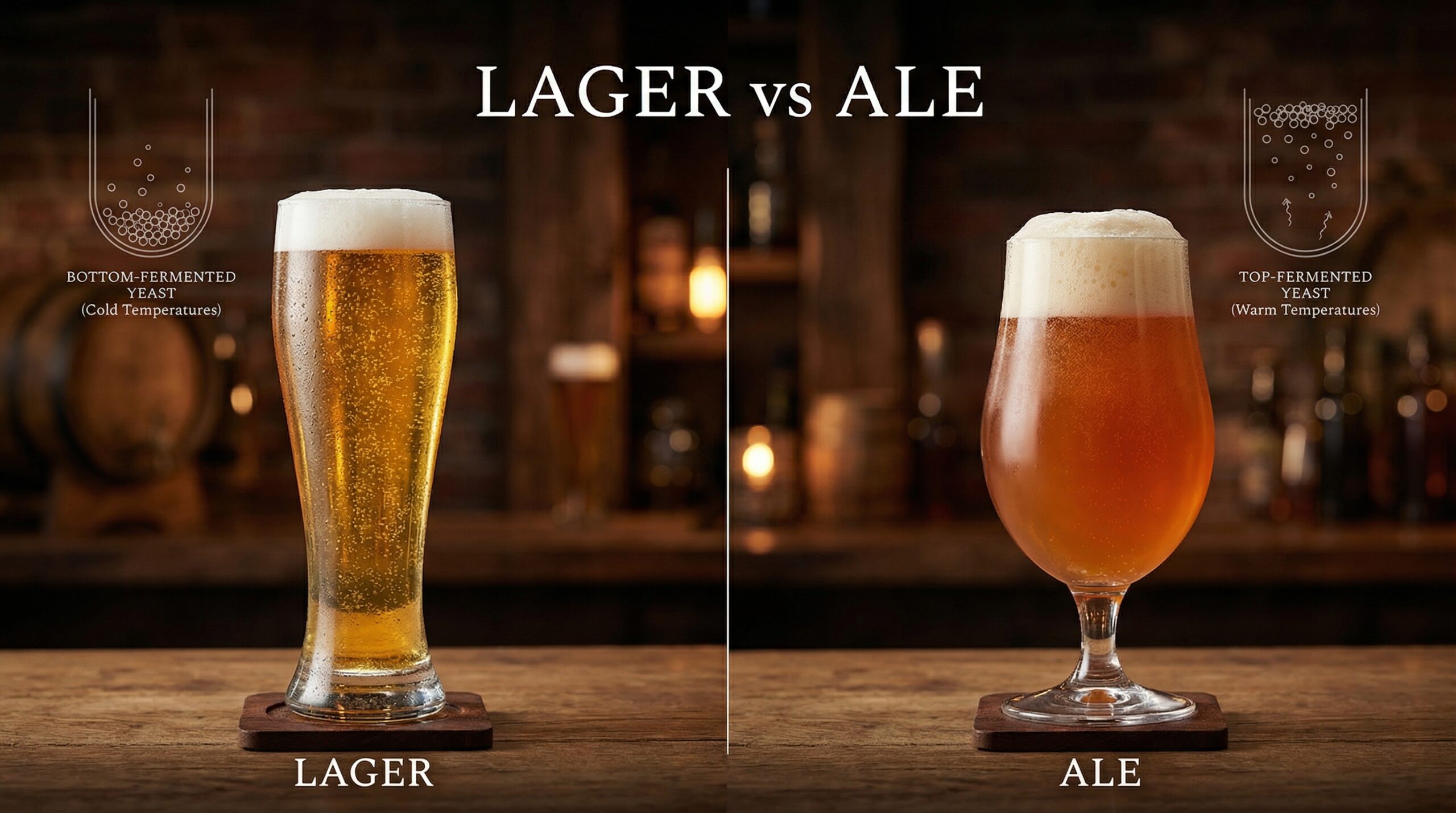
A lager is a type of beer fermented using bottom-fermenting yeast at cool temperatures, resulting in a crisp, clean-flavored beverage. The word “lager” comes from the German word “lagern,” which means “to store” – a reference to the extended cold-aging process that defines this style.
The main difference between ale and lager lies in the yeast used and the fermentation conditions. Ales use top-fermenting yeast and ferment at warmer temperatures, while lagers use bottom-fermenting yeast at much cooler temperatures. This seemingly small difference creates dramatically different flavor profiles and brewing timelines.
For beer lovers, understanding these distinctions helps you navigate menus, brewery tours, and bottle shops with confidence. Whether you prefer the fruity complexity of an ale or the refreshing smoothness of a lager, knowing how these beers differ enhances your appreciation of each pour.
Understanding Yeast: The Foundation of Beer
Before diving deeper into lager versus ale, we need to talk about yeast – the microscopic workhorses that make beer possible. Yeast consumes sugars from fermented grains and produces alcohol and carbon dioxide as byproducts. Without yeast, there would be no beer.
The Two Primary Beer Yeasts
Two species of yeast dominate the beer world: Saccharomyces cerevisiae and Saccharomyces pastorianus.
Saccharomyces cerevisiae, often called “ale yeast,” is a top-fermenting species. During fermentation, this yeast rises to the surface of the brewing vessel, forming a thick, foamy layer called krausen. This yeast strain thrives at warmer temperatures between 60-75°F (15-24°C) and produces compounds called esters during fermentation, which contribute fruity and sometimes spicy flavors to the beer.
Saccharomyces pastorianus, formerly known as S. carlsbergensis, is the yeast used in lager production. This bottom-fermenting species prefers cooler temperatures between 42-55°F (6-13°C) and tends to sink to the bottom of the fermentation tank. Unlike ale yeast, S. pastorianus produces fewer esters, resulting in cleaner, less fruity flavors that let other ingredients like malt and hops shine through.
Interestingly, researchers discovered that S. pastorianus is a hybrid organism, likely created when S. cerevisiae mated with another yeast species called Saccharomyces eubayanus. This genetic combination gave lager yeast its unique ability to ferment at cold temperatures.
What Is a Lager? The Bottom-Fermenting Process
A lager is made using bottom-fermenting yeast (Saccharomyces pastorianus) that works at cold temperatures, typically between 42-55°F (6-13°C). The fermentation process is slower and more gradual than ale production, often taking several weeks to complete.
The Lagering Process Explained
After the initial fermentation, lagers undergo a secondary process called lagering – extended cold aging that can last anywhere from a few weeks to several months. During lagering, the beer conditions at near-freezing temperatures, allowing flavors to mellow and develop smoothness.
The cold temperatures cause proteins and hop compounds to settle out more completely, resulting in the crystal-clear appearance characteristic of well-made lagers. This extended timeline is why traditional lagers were historically associated with caves and cold cellars – the cool environments naturally facilitated the aging process.
Flavor Profile of Lagers
Lagers typically present with crisp, clean flavors that emphasize malt sweetness balanced against hop bitterness. Because lager yeast produces minimal esters, you will not find the fruity banana or clove notes common in many ales. Instead, lagers showcase the pure expressions of malt and hops without yeast-derived complications.
The profile varies by style: a German Pilsner might offer grassy hops and biscuit malt, while a Czech Dark Lager presents rich roasted chocolate notes. Yet all share that signature smoothness and drinkability that makes lagers so refreshing.
What Is an Ale? The Top-Fermenting Approach
An ale is brewed using top-fermenting yeast (Saccharomyces cerevisiae) at warmer temperatures between 60-75°F (15-24°C). This faster, more active fermentation typically completes within 7-14 days and creates a completely different character than lagers.
How Ale Fermentation Differs
The warmer fermentation temperatures cause ale yeast to work more aggressively, rising to the surface and creating the characteristic krausen foam. This vigorous fermentation produces heat, and brewers must manage temperatures carefully to prevent off-flavors.
During fermentation, ale yeast generates metabolic byproducts called esters. These compounds create the fruity signatures associated with many ales – everything from citrus and tropical fruit notes in American Pale Ales to the banana and clove character of German Hefeweizens.
Flavor Profile of Ales
Ales generally offer more complex, substantial flavors than lagers. The presence of esters, combined with often higher gravity brewing, creates beers with deeper malt characters, more pronounced hop presence, and broader flavor diversity overall.
From the piney bitterness of an IPA to the roasted richness of a Stout, ales demonstrate remarkable variety. The top-fermenting process allows for more creative expression, which partly explains the explosion of craft ale styles in recent decades.
Key Differences Between Lager and Ale
While both lagers and ales share the basic building blocks of water, malt, hops, and yeast, the differences in yeast and fermentation create distinct categories of beer. Here is a side-by-side comparison:
| Characteristic | Ale | Lager |
|---|---|---|
| Yeast Type | Saccharomyces cerevisiae | Saccharomyces pastorianus |
| Fermentation Method | Top-fermenting | Bottom-fermenting |
| Temperature | 60-75°F (15-24°C) | 42-55°F (6-13°C) |
| Fermentation Time | 7-14 days | 14-28+ days |
| Aging Time | Short to none | Weeks to months (lagering) |
| Flavor Profile | Fruity, complex, substantial | Crisp, clean, smooth |
| Esters (fruit compounds) | Prominent | Minimal |
| Appearance | Often hazy, robust head | Crystal clear |
The brewing timeline difference is substantial. Ales can be ready to drink within two to three weeks of brewing. Lagers require patience – the total production time from grain to glass often stretches to two months or longer. This extended process contributes to the smooth, refined character that lager enthusiasts prize.
Hybrid Styles: Where Lager and Ale Overlap
Not all beers fit neatly into the lager or ale category. Hybrid styles blur the lines and showcase the flexibility of brewing science.
Kolsch, brewed in Cologne Germany, uses ale yeast but fermented at lager-like temperatures, creating a crisp, delicate beer that bridges both categories. California Common, famously exemplified by Anchor Steam Beer, uses a special yeast strain that tolerates warmer fermentation while producing lager-like characteristics. Baltic Porter represents another hybrid approach, using lager yeast to ferment a strong, rich beer that would typically be an ale in most other traditions.
Common Lager Styles and Examples
Lager styles span a wide range from light and refreshing to dark and robust. Understanding these varieties helps you explore the lager world beyond the standard American pale lagers.
Pale Lagers and Pilsners
The pale lager category includes some of the world’s most popular beers. German Pilsner, originating in the city of Pilsen (now Plzen, Czech Republic), sets the standard with its straw-gold color, pronounced hop bitterness, and crisp finish. Czech Premium Pale Lager (often called Czech Pilsner) offers a more malt-forward experience with a honey-like sweetness.
American lagers like Budweiser and Coors represent the lighter end of the spectrum – highly carbonated, mild in flavor, and designed for maximum drinkability during hot weather. These beers prioritize refreshment over complexity.
Amber and Dark Lagers
Vienna Lager presents attractive amber-copper hues with biscuit malt character and moderate hop presence. German Oktoberfest (Märzen) embodies Bavarian brewing tradition with rich Vienna malt, toasted bread notes, and moderate sweetness.
Dark lagers including Schwarzbier (black beer) and Munich Dunkel offer roasted flavors without the heaviness typically associated with dark ales. These beers prove that depth and drinkability can coexist.
Bock and Strong Lagers
Bock styles range from traditional MaiBock (light bock) to Doppelbock (double bock), a strong, rich beer originally brewed by monks as “liquid bread” to sustain them during fasting periods. Eisbock, created by freezing Doppelbock and removing ice crystals, concentrates the flavors to create an intense beverage weighing in at 10% ABV or higher.
Common Ale Styles and Examples
Ale styles perhaps show even greater diversity, with categories spanning fruit beers to massive barrel-aged behemoths. Here are some essential styles to know.
Pale Ales and IPAs
The American Pale Ale helped launch the craft beer revolution with its citrus and pine hop character. The India Pale Ale (IPA) pushed hop additions further, creating intensely bitter and aromatic beers that have become the defining style of modern craft brewing.
British Pale Ales present more restrained hopping with earthy, floral notes. The hop-forward American IPA continues evolving with sub-styles like New England IPA (hazy, juicy) and West Coast IPA (bitter, clear).
Wheat Beers
Wheat beers divide into two main categories. German Hefeweizen showcases banana and clove esters from a distinctive yeast strain, served cloudy with a thick white head. Belgian Witbier (like Blue Moon) adds orange peel and coriander to wheat malt, creating a spiced, refreshing experience.
Porters and Stouts
Porter, originally created for London’s dockworkers, offers chocolate and roasted malt flavors in a medium-bodied package. Stout takes these roasted notes further with additions of roasted barley, creating the iconic creamy, coffee-like character of Guinness Draught.
If you want to explore more beer styles, check out our guide to non-alcoholic beer options which includes examples of both ale and lager styles available without alcohol.
Frequently Asked Questions About Lager and Ale
Is Corona a lager or an ale?
Is Blue Moon an ale or lager?
Blue Moon is an ale, specifically a Belgian-style white ale. It uses top-fermenting yeast and is brewed with orange peel and coriander, creating its characteristic fruity and spiced flavor profile.
Is Budweiser a lager or an ale?
Budweiser is a lager, specifically an American pale lager. Like all lagers, it uses bottom-fermenting yeast and undergoes cold fermentation and lagering, resulting in its clean, crisp taste.
Which is better, ale or lager?
Neither ale nor lager is objectively better – it depends on personal preference. Ales tend to offer more complex, fruity flavors from top-fermenting yeast. Lagers provide crisp, clean, and refreshing characteristics. Many beer enthusiasts enjoy both depending on the occasion and food pairing.
Conclusion: Exploring Both Beer Families
Understanding what a lager is and how it differs from ale opens up a richer appreciation of beer. The distinction between these two categories – driven by yeast choice, fermentation temperature, and aging process – creates the fundamental diversity that makes beer such a fascinating beverage.
Lagers offer precision, refinement, and refreshment through their cold-fermented, patiently aged approach. Ales provide complexity, creativity, and bold expression through warmer fermentation and quicker turnaround. Neither approach is superior; both represent valid paths to delicious beer.
Next time you raise a glass, you will know exactly what makes your beer tick – whether it is a bottom-fermented lager patiently aged in cold storage or a top-fermented ale bursting with yeast-derived character. Here is to exploring both worlds.