
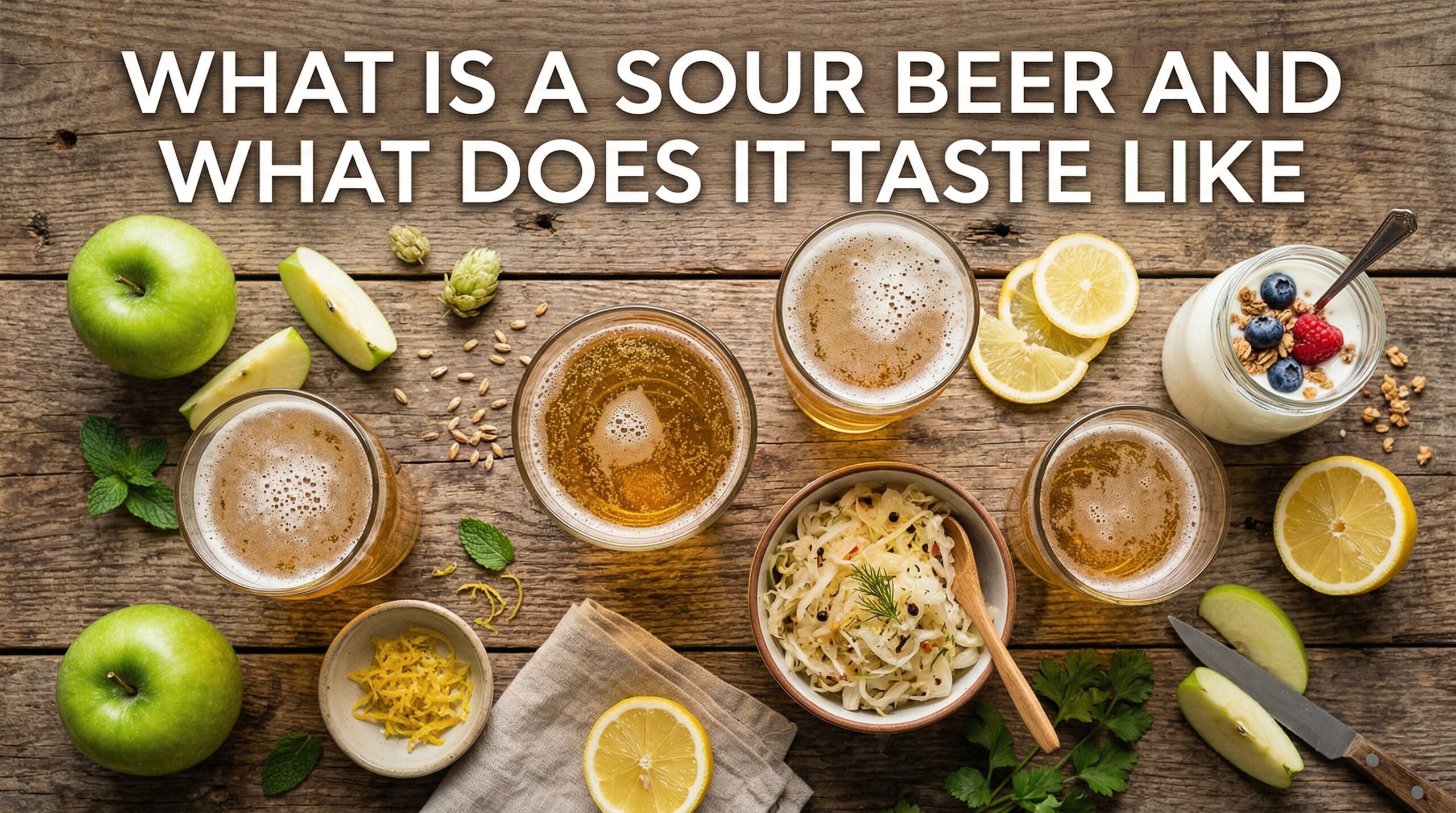
If you have walked through a craft beer aisle recently, you have probably noticed a section packed with bright, tangy brews that look nothing like your typical lager or ale. Those are sour beers, and they have been stealing taps and pleasing adventurous drinkers for good reason. This guide answers exactly what sour beer is, how it gets that unmistakable tartness, and what you can expect when you take your first sip.
Table of Contents
What Is Sour Beer?
Sour beer is any brew intentionally crafted to have a tart, acidic, or puckering quality. Unlike standard beers that rely on hops or malt for their primary flavors, sour beer gets its signature brightness from microorganisms. These tiny helpers, primarily bacteria like Lactobacillus and wild yeast strains like Brettanomyces, produce organic acids during fermentation. The result is a beer that makes your mouth water and leaves you reaching for another sip.
The style is not new. Belgian brewers have been making sour beers for centuries, particularly in regions like the Pajotten Valley where spontaneous fermentation was discovered almost by accident. Traditional methods involved letting wort cool in open vessels called coolships, where wild yeast and bacteria from the local environment would innoculate the beer naturally. Modern craft breweries have since refined these techniques while keeping that core unpredictability alive.
The sour beer category includes well-known styles like Belgian Lambics, German Gose, and Berliner Weisse. Each has its own character, but all share that distinctive tartness that sets them apart from mainstream beers. You might hear people describe sour beer as “funky,” “tart,” or “puckering,” but those descriptors only scratch the surface of what this diverse category offers.
What Does Sour Beer Taste Like?
Here is the honest answer newcomers want: yes, sour beer absolutely tastes like beer. It is not some fruit-flavored soda pretending to be craft brew. The base beer foundation remains, complete with alcohol warmth and carbonation bite. What changes is how your palate experiences each sip.
A well-made sour beer greets you with bright acidity on the front of your tongue. Think of biting into a green apple or sipping fresh lemon water. That tartness then mingles with the beer’s underlying malty backbone, creating layers of flavor that can include citrus, stone fruit, barnyard earthiness, or even a mild funkiness reminiscent of aged cheese.
The intensity varies dramatically between styles and brands. Some sours offer a gentle nudge of tartness, barely different from a crisp wheat beer. Others deliver a full-on pucker that makes your eyes widen. Breweries like 3 Fonteinen and Boon in Belgium produce sours with complex, almost wine-like depth. American craft producers like Russian River Brewing have earned devoted followings for balance rather than just shock value.
If you have ever tried yogurt, kombucha, or sauerkraut, your palate already knows something about lactobacillus-created flavors. Sour beer uses similar science to create that same refreshing tang you find in fermented foods. The connection is not coincidental since the same bacterial strains appear across the fermented food world.
Forum discussions among sour beer enthusiasts consistently highlight balance as the key quality marker. An overly sour beer without complexity is often seen as poorly made. The best examples layer acidity with fruit notes, malt sweetness, and subtle funk to create something genuinely interesting.
How Is Sour Beer Made?
The magic behind sour beer lies in specific brewing techniques that introduce acid-producing microorganisms. Traditional brewing yeast (Saccharomyces cerevisiae) cannot create the tartness in sour beers. Instead, brewers introduce other microbes to do the heavy lifting. Here are the primary methods breweries use today.
Kettle Souring
This modern approach gives brewers precise control over sourness levels. The process involves adding Lactobacillus bacteria to the wort (unfermented beer) and letting it sour at warm temperatures for a day or two. Once the desired acidity is reached, the brew is boiled to kill the bacteria before adding traditional brewing yeast. The result is a clean, predictable tartness without funky complexity. Many craft breweries favor this method for consistency and faster production times.
Spontaneous Fermentation
Traditional Belgian Lambic production relies entirely on naturally occurring yeast and bacteria. After the wort is boiled, it is transferred to open cooling vessels called coolships, where it sits overnight. Ambient wild yeast and bacteria from the brewery environment settle into the wort and begin fermentation. This method produces deeply complex flavors but requires patience and sanitation expertise. Cantillon in Brussels remains famous for this approach, producing beers that can age for decades.
Barrel Aging with Mixed Cultures
Many American craft breweries age their sour beers in oak barrels previously used for wine or whiskey. The barrels harbor resident microorganisms that contribute unique flavors over months or years of aging. Brettanomyces wild yeast consumes sugars slowly, producing dry, funky notes alongside lactic acid from Lactobacillus. Russian River’s Consecration (with brown ale aged on raspberries and cocoa) and Temptation exemplify this labor-intensive style. The waiting game is real, but the results can be extraordinary.
Brettanomyces Fermentation
Brettanomyces, often called Brett, is a wild yeast strain that produces distinctive flavors ranging from fruity to barnyard earthy. Unlike standard brewing yeast, Brett works slowly and can metabolize sugars that regular yeast cannot. Many sour beer styles use Brett alongside Lactobacillus for layered complexity. The yeast also contributes to bottle conditioning, creating natural carbonation over time. Some beer enthusiasts specifically seek out Brett-forward beers for their wild, unpredictable character.
The Role of Lactic Acid
Lactic acid is the primary source of tartness in most sour beers. Lactobacillus bacteria produce this acid during fermentation, just as they do in yogurt and sourdough bread. The amount of lactic acid determines how puckering the final beer tastes. Brewers can measure acidity using pH levels, though experienced producers rely on taste to determine when the balance is right. Higher acidity does not always mean better beer; finding the sweet spot matters most.
Popular Sour Beer Styles
Sour beer encompasses several distinct styles, each with its own origin story and flavor profile. Here are the most recognized varieties you should know before exploring your first sour.
Belgian Lambic
Originating from the Pajotten Valley southwest of Brussels, Lambic is the grandfather of sour beers. This style uses spontaneous fermentation and is typically aged in oak barrels for extended periods, sometimes several years. Producers often blend multiple years to create consistent products. Fruit Lambics like Kriek (with cherries) or Framboise (with raspberries) are sweetened and bottled under carbonation. Gueuze is a blend of young and old Lambics that undergoes natural carbonation in the bottle, creating a Champagne-like effervescence.
Highly regarded Lambic producers include 3 Fonteinen, Boon, Tilquin, and Cantillon. These breweries take pride in traditional methods passed down through generations. If you see a Belgian Lambic on tap at a craft beer bar, it is worth trying even if you think you do not like sour beers.
Berliner Weisse
This lightweight German wheat beer delivers gentle tartness alongside fruity or floral notes. Despite low alcohol content (typically around 3% ABV), the style was once Napoleon’s troops’ favorite in Berlin. The story goes that Napoleon’s soldiers nicknamed it “the Champagne of the North” after encountering it during occupation. Modern versions often receive flavored syrups to balance the acidity. The style serves as an excellent entry point for sour beer newcomers who want to explore without overwhelming their palates.
Gose
Gose originated in Goslar, Germany, though craft brewers worldwide now produce their own interpretations. This style features moderate tartness complemented by salt (yes, salt) and coriander spice. The combination sounds unusual but works remarkably well, especially with light seafood or salads. The salt enhances perceived sweetness and balances acidity, creating a refreshing summer sipper. Commonwealth Brewing’s Melon Ball and Victory Brewing’s Sour Monkey have introduced many American drinkers to the style.
Flanders Red Ale
Produced primarily in West Flanders, Belgium, this style ages for extended periods in oak barrels, sometimes exceeding two years. The result is a complex beer with tangy acidity, dark fruit flavors (think cherries and plums), and mild vinegar notes. The acidity is often described as Bordeaux-like, with a winiky quality that evolves in the glass. Land Van de Graaff and Roman breweries keep this style alive with traditional methods that trace back generations.
Oud Bruin
Also called Flemish Brown Ale, Oud Bruin presents a darker, maltier profile compared to Flanders Red. The style blends aged and fresh batches to balance sourness with caramel and chocolate notes. It often finishes sweeter despite the acidic backbone, making it approachable for beer drinkers who find intense tartness challenging. Petrus Brewery is known for producing excellent examples of this underrated style.
Sour IPA
This American innovation crosses sour brewing techniques with hoppy IPA recipes. Breweries add fruit or use kettle souring before dry-hopping for citrus and tropical hop aromatics. The style appeals to fans of both sour beers and IPAs, offering tartness with familiar hop character. Dogfish Head’s Seaquench Ale and Russian River’s Temptation (a blonde ale with added Brettanomyces) bridge this hybrid territory. The combination of fruity hops and lactic acid creates something genuinely unique.
Sour Beer Food Pairings
The bright acidity in sour beer makes it remarkably versatile at the dinner table. The same qualities that make lemonade refreshing also make sour beer an excellent food partner. Here is how our team matches sours with food when we pour them at our brewery.
- Cheese: Aged gouda, blue cheese, and fresh chèvre pair beautifully with medium-tart sours. The acidity cuts through fat while complementing savory, umami-rich flavors. A sharp aged cheddar alongside a Flanders Red Ale creates one of those combinations where the whole becomes greater than the sum of parts.
- Seafood: Oysters, shrimp ceviche, and light fish dishes shine alongside Berliner Weisse or gentle Lambics. The citrusy tartness mirrors lemon juice while carbonation refreshes the palate between bites. If you enjoy oysters with mignonette sauce, you already understand why sour beer and seafood belong together.
- Salads and Vegetables: Vinegar-forward dressings find their match in sour beer. Grilled vegetables, roasted beets, and green salads with citrus vinaigrette all benefit from the flavor echo. The beer essentially acts as a liquid version of the dressing you might use on the same salad.
- Desserts: Fruit tarts, sorbet, and cheesecake work with fruit-forward sours. The beer acidity balances sweetness while berry notes in the beer complement the dish. A Kriek Lambic alongside a cherry tart creates a harmony that dessert wine often struggles to achieve.
- Cured Meats and Charcuterie: Prosciutto, salami, and pâtés gain brightness when paired with moderately sour beers. The salt in charcuterie amplifies the beer’s refreshing quality, making each bite feel lighter. This pairing works exceptionally well at summer gatherings where heavy foods might feel overwhelming.
Tips for Getting Started With Sour Beer
If you are new to sour beers, starting slowly makes sense. The flavor profile is genuinely different from what most people expect from beer, and jumping into the most extreme examples first may create a negative impression that is hard to overcome.
Begin with Berliner Weisse or a fruit-forward Lambic. These styles offer approachable tartness combined with familiar flavors. Let the beer warm slightly from refrigerator temperature so the complexity can emerge. Swirl the glass to release carbonation and aromas before diving in.
Consider sourcing sours from reputable craft breweries rather than mass-market versions. Craft producers tend to pay closer attention to balance, ensuring the sourness enhances rather than overwhelms. Reading reviews from beer communities like Beer Advocate or checking forum discussions can help identify well-made examples worth seeking out.
Freshness matters with wild ales. Unlike certain styles that improve with age, many sour beers peak within months of bottling. Check dates when available and avoid older bottles of fruit sours unless you specifically want the funkiness that develops over time.
Join us at our brewery to explore these styles with guidance from our team. We love helping newcomers discover why sour beer has captured the hearts of adventurous drinkers everywhere.
Frequently Asked Questions About Sour Beer
What is considered a sour beer?
Any beer brewed with intentional tartness from organic acids qualifies as sour beer. This includes styles like Belgian Lambics, Berliner Weisse, Gose, Flanders Red Ale, Oud Bruin, and modern Sour IPAs. The defining characteristic is acidity produced by Lactobacillus bacteria, Brettanomyces wild yeast, or both.
Does sour beer taste like beer?
Absolutely. Sour beer retains the fundamental characteristics of beer: alcohol content, carbonation, and a malt or grain base. What adds to the experience is bright acidity that creates a refreshing, puckering sensation different from the bitterness of IPAs or the sweetness of malty lagers. It is an acquired taste for some, but the beer foundation remains unmistakable.
What are the most popular sour beers?
Belgian Lambics (especially fruit varieties like Kriek and Framboise), Gose, and Berliner Weisse rank among the most recognized styles. American craft sour IPAs have also gained massive popularity in recent years. Highly regarded producers include 3 Fonteinen, Boon, Tilquin, and Russian River for traditional styles; Dogfish Head and Victory for American interpretations.
Which beer is best for gastritis?
This question requires nuance. Sour beers contain organic acids that may irritate sensitive stomachs. However, some people find moderate consumption of low-alcohol sours like Berliner Weisse more tolerable than heavy, high-alcohol beers. If you have gastritis or stomach sensitivities, consult your healthcare provider before trying sour beers. The gentlest entry point would be low-ABV Berliner Weisse-style brews consumed with food.
Ready to Explore Sour Beers?
Sour beer represents one of craft brewing’s most exciting frontiers. Whether you are drawn to the funky complexity of Belgian Lambics or the bright, hop-forward appeal of a Sour IPA, there is a tart creation waiting for you. Start with a gentle Berliner Weisse if you are new to the style. Work toward bolder expressions as your palate adjusts. If you want to learn more about different beer styles, check out our guide to Japanese beer brands for another perspective on global brewing traditions.
The next time you see a sour beer on tap, consider giving it a chance. Your palate might surprise you with how quickly that first pucker becomes something you crave.