
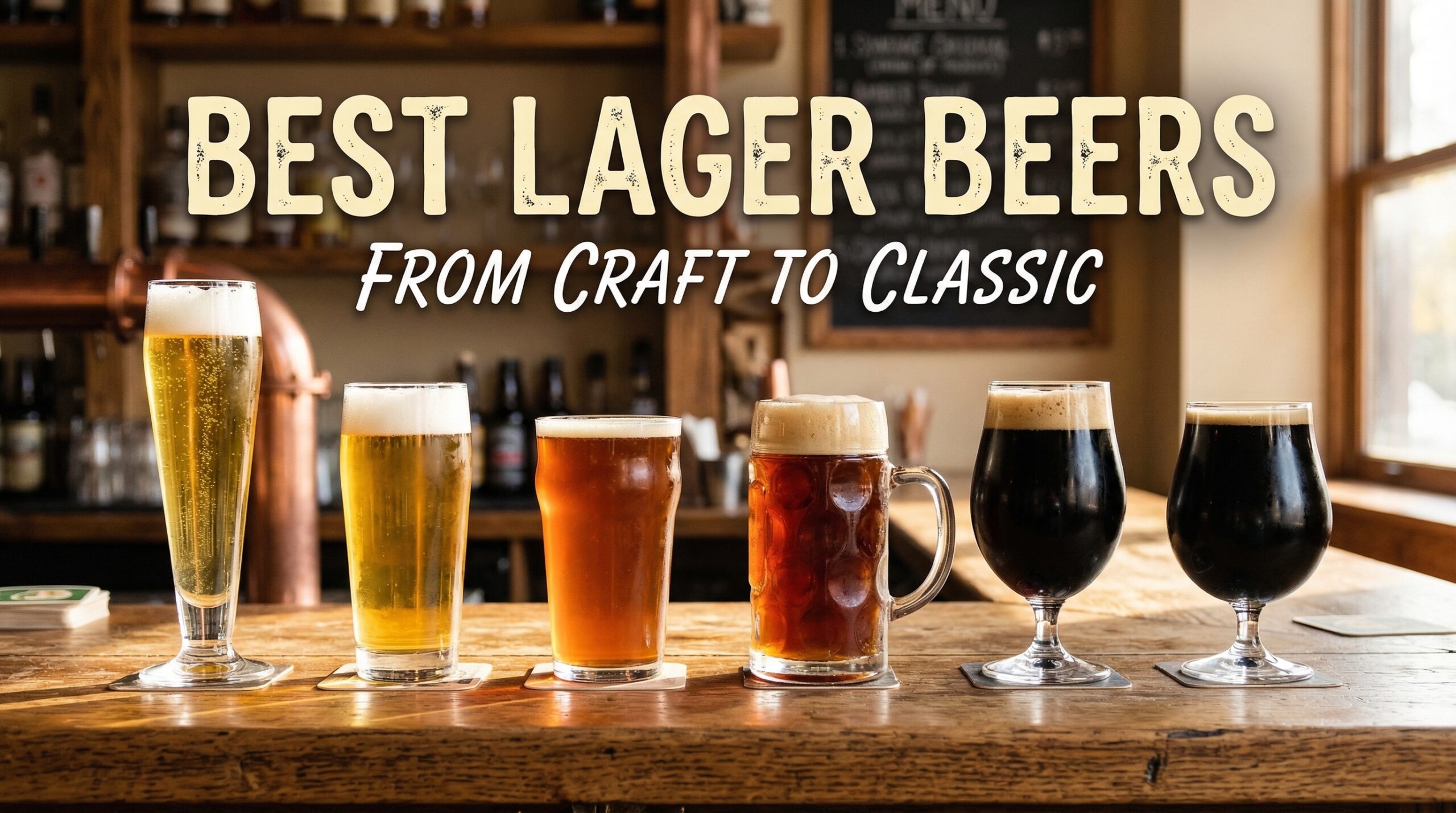
Lagers dominate the world of beer. They account for the vast majority of beer consumed globally, from the light, refreshing bottles at your local barbecue to the rich, complex pints poured in Munich beer halls. If you have ever wondered what makes these golden beers so different from their ale cousins, or which ones actually taste remarkable rather than just being cold and fizzy, you are in the right place.
Our team has spent years exploring the spectrum of lager beers, from mass-market classics to small-batch craft creations. We have gathered insights from brewers, studied the history, and most importantly, tasted our way through hundreds of options. This guide covers everything you need to know about finding the best lager beers for your palate.
You will learn about the history that shaped these styles, the brewing techniques that make them unique, and practical recommendations for every occasion. Whether you are a craft beer newcomer or a seasoned enthusiast looking to expand your horizons, there is something here for you.
Table of Contents
The Rich History of Lager: From European Origins to American Revival
Understanding where lagers come from helps explain why they taste the way they do. The story begins in Central Europe, specifically in the region that is now the Czech Republic.
Lager’s Birth in Bohemia
The first true lager beer emerged in the city of Plzen (Pilsen) in 1842. Before this innovation, most European beers were darker, cloudier affairs due to the use of top-fermenting yeast. A local brewer named Josef Groll introduced bottom-fermenting yeast that worked best at cold temperatures, creating a beer that was paler, clearer, and crisper than anything before it.
This style, now called Pilsner or Czech Pale Lager, quickly spread across the German-speaking regions of Europe. Each area adapted it to local tastes and ingredients. Munich developed its maltier Helles style, while Berlin produced its sour, light-weight Weizenbier. The fundamental technique of cold fermentation and extended aging, called lagering, became the defining characteristic of these beers.
The word “lager” actually comes from the German word “Lagern,” meaning “to store.” This refers to the extended aging period that gives lagers their smooth, clean character. Traditional lagers might age for weeks or even months, compared to the days or hours that ales require.
The German Migration and American Innovation
German immigrants brought their brewing traditions to America in the mid-1800s. They established breweries in cities like Milwaukee, St. Louis, and Cincinnati, where they produced European-style lagers that appealed to both immigrant communities and native-born Americans.
Prohibition from 1920 to 1933 devastated the American lager industry. When it ended, breweries faced a changed landscape. They needed to produce beer that could be consumed quickly, at lower quality, and distributed across vast distances. This led to the development of American Adjunct Lagers, using rice and corn to lighten body and reduce cost.
The craft beer movement of the 1980s and 1990s initially focused on ales, particularly hop-forward IPAs. Lagers remained largely in the domain of macro breweries. However, that has changed dramatically in recent years. Dedicated lager breweries and craft lager programs have emerged across the country, bringing traditional European techniques back to American soil.
Understanding Lager Styles: From Pale Gold to Deep Black
The world of lager beers encompasses a wide range of styles, each with distinct characteristics. Here is your guide to the major categories you will encounter.
Pilsner: The Classic Gold Standard
The Pilsner originated in Plzen, Czech Republic, and has become the most influential beer style worldwide. True Czech Pilsners feature a golden color, pronounced hop bitterness, and a rich, bready malt backbone. The hopping rates are higher than most other lagers, with distinctive Czech Saaz hops providing floral and spicy notes.
German Pilsners, while similar in appearance, tend toward a drier finish and more crisp bitterness. They showcase German noble hops like Hallertau Mittelfruh, Tettnang, and Saaz, offering delicate floral and herbal aromatics. The best examples are incredibly refreshing with a clean, satisfying finish.
American craft breweries have embraced Pilsners, with many treating them as showcases for local hop varieties. The style has become a canvas for innovation while maintaining its traditional character. If you want to explore the Japanese beer brands ranked scene, you will find similar respect for clean, hop-forward lagers in that tradition.
Munich Helles: The Malty Delight
Munich Helles (which means “light” in German, referring to color rather than alcohol) emerged in the 1870s as a response to the popularity of Pilsner. Munich brewers wanted to create a lighter-colored beer that matched their maltier, more subtle flavor preferences.
The result is a golden beer with prominent malt sweetness, low to moderate hop bitterness, and exceptional drinkability. Helles is meant to be balanced toward the malt, with a bready, slightly honey-like character that makes it dangerously easy to drink.
True Munich Helles is hard to find outside Germany, but American craft breweries have made excellent versions. The style requires skill to balance because the malt character can easily become cloying without enough hop presence to counter it.
Dunkel: Munich’s Dark Treasure
Dunkel (German for “dark”) is the traditional Munich beer, predating the lighter Helles style. It features deep amber to brown color, with rich Munich malt flavors of chocolate, caramel, and bread crust. The hopping is modest, allowing the malt to shine.
Dunkels are smooth and full-bodied without being heavy. They offer the complexity of darker beers while maintaining the clean fermentation character that defines lagers. This makes them excellent choices for transitioning ale drinkers into the lager world.
Schwarzbier: The Black Lager
Schwarzbier (German for “black beer”) proves that lagers can be dark without being stouts or porters. These beers appear nearly black in the glass but taste surprisingly light and smooth, with roast chocolate and coffee notes balanced by moderate hopping.
The style originates from eastern Germany, particularly the regions around Berlin and Dresden. Unlike stouts that derive their dark color from roasted barley, Schwarzbiers get theirs from carefully kilned Munich malts that add depth without harshness.
Czech Dark Lager: The Original Dark Lager
While Schwarzbier is German, the Czech Republic has its own dark lager tradition. Czech Dark Lager (also called Tmavy) offers a different take on dark lagers, with more pronounced malt sweetness and less roast character than their German cousins.
The style showcases the Czech brewing philosophy of malt-forward flavors with restrained hopping. These are smooth, drinkable beers that pair excellently with hearty Czech cuisine like roast pork and dumplings.
Other Notable Styles
Mexican Lager gained popularity through brands like Corona and Dos Equis. These are light-bodied lagers, often served with lime, that emphasize refreshment over complexity. Craft versions often add specialty malts or local ingredients for more character.
Kölsch occupies a unique position, technically an ale fermented at lager temperatures. However, the resulting flavor profile closely resembles light lagers. It originates from Cologne, Germany, and is traditionally served in small cylindrical glasses.
American Light Lager represents the mass-market tradition in the United States. These beers use rice or corn as adjuncts to lighten body and flavor, resulting in highly attenuated, crisp, and refreshing beers with very subtle hop character.
Craft Lagers vs. Macro Lagers: What Really Sets Them Apart
The distinction between craft and macro lagers goes beyond just size and marketing. Here is what actually differs when you pour them side by side.
Ingredients and Brewing Philosophy
Macro lagers prioritize consistency, shelf stability, and cost efficiency. They commonly use rice, corn, or other adjunct grains to reduce malt costs and lighten body. The hopping is minimal and often done with hop extracts or pellets for stability rather than whole hops.
Craft lagers typically use premium two-row barley malt, often pilsner malt for lighter styles. They favor whole cone hops and frequently use traditional noble varieties. Some craft brewers use organic ingredients, following organic brewing practices that further differentiate their products.
Time and Technique
The most significant difference is time. Macro lagers are designed for throughput, with fermentation cycles measured in days rather than weeks. Craft lagers often undergo extended lagering periods of four to eight weeks or longer, developing smoother, more refined flavors.
Craft brewers are also more likely to employ traditional techniques like decoction mashing, which extracts more flavor from the malt through careful temperature steps. These techniques require more labor and tank time but produce more complex results.
Flavor and Character
Macro lagers are designed to be inoffensive to the widest possible audience. They taste clean and refreshing but can seem thin or bland to those accustomed to full-flavored beers. The use of adjuncts can add a subtle sweetness or grain character.
Craft lagers showcase the ingredients. You will find distinct hop varieties shining through, malt flavors that range from bready to chocolatey, and a overall sense of balance that rewards attention. The carbonation is often finer, creating a softer mouthfeel rather than the aggressive fizz of mass-market beers.
If you are exploring alternatives to alcoholic options, our guide to non-alcoholic beer options covers how craft techniques apply to low and no-alcohol beers.
The Brewing Process: Why Lagers Taste Different
Understanding how lagers are made helps explain their distinctive character. The process involves several key elements that differ fundamentally from ale production.
Bottom-Fermenting Yeast
Lagers use Saccharomyces pastorianus, a species of yeast that operates at cooler temperatures and tends to settle at the bottom of the fermentation vessel rather than rising to the top. This yeast produces fewer fruity and estery compounds than ale yeast, resulting in a cleaner flavor profile.
The clean character of lagers means you taste more of what the malt and hops contribute, without yeast-derived flavors competing for attention. This makes lagers excellent vehicles for showcasing quality ingredients.
Cold Fermentation
Lager fermentation typically occurs between 45 and 55 degrees Fahrenheit, significantly cooler than ale fermentation. The cold temperatures slow yeast activity, requiring longer fermentation times but producing cleaner results.
This temperature range is not natural for most environments, requiring breweries to invest in glycol chillers and temperature-controlled fermentation tanks. This is why lager brewing historically required caves or cellars in colder climates.
The Lagering Process
After primary fermentation, lagers undergo a secondary aging period called lagering. This involves storing the beer at near-freezing temperatures for weeks or months. During this time, the yeast continues to clean up compounds produced during fermentation, and the beer mellows and clarifies.
Lagering is what gives traditional lagers their characteristic smoothness. The cold temperatures cause proteins and yeast cells to settle out, creating a brilliantly clear beer with a soft, refined carbonation.
Decoction Mashing
Traditional European breweries often use decoction mashing, a technique where portions of the grain bed are removed, boiled, and returned to raise the temperature. This extracts more color and flavor from the malt, contributing to the rich character of authentic European lagers.
Modern craft breweries may use this technique to add depth to their lagers, though it requires more skill and time than simpler infusion mashing. The results justify the effort, producing beers with more malt complexity and a fuller body.
October 2026 Food Pairing with Lagers: Matching Beer to Plate
Lagers are incredibly versatile at the table, with different styles complementing different foods. Our complete beer styles and food pairing guide covers this in depth, but here are the key principles for lagers.
Light Lagers and Pilsners
The crisp, refreshing character of light lagers and Pilsners makes them natural partners for summer salads, grilled seafood, and lightly seasoned chicken. Their carbonation cuts through fat and cleanses the palate between bites.
Mexican lagers pair exceptionally well with spicy food, as the light body and subtle malt sweetness cool the heat without overwhelming the palate. This is why they are the traditional accompaniment to Mexican cuisine.
Malt-Forward Styles
Dunkels and other malt-forward lagers match beautifully with roasted meats, particularly pork and poultry. Their caramel and chocolate notes complement savory, well-browned proteins. German cuisine with its focus on sausages, sauerkraut, and roasted dishes finds ideal partners in these styles.
The rich but not overwhelming character of Helles makes it excellent with creamy dishes, nutty cheeses, and bread-based foods. It can handle more seasoning than you might expect, making it a reliable choice for varied menus.
Dark Lagers
Schwarzbiers and Czech dark lagers surprise many people with their food pairing versatility. The roast character works with grilled meats and vegetables, while the smooth finish handles richer dishes like stews and braised meats.
Dark lagers also pair well with desserts featuring chocolate or caramel. Their lower carbonation compared to pale lagers creates a softer mouthfeel that complements rather than overwhelms sweet flavors.
Lagers in Cooking
Do not forget that lagers are excellent for cooking. Their carbonation helps tenderize meat, while the malt adds subtle sweetness and the hops provide aromatic complexity. A simple beer bread recipe demonstrates how lagers can transform baking.
When cooking with lagers, match the beer character to the dish. Use light lagers for delicate foods, and reserve darker styles for hearty, savory preparations.
Seasonal Lager Guide: Finding the Right Beer for Every Time of Year
Different lager styles suit different seasons and occasions. Here is how to match your beer to the calendar.
Spring Lagers
As winter fades, reach for Czech Pilsners and German Pilsners. Their hoppy bite provides energy after months of heavier winter beers, while their refreshment suits warming weather. Kölsch is another excellent spring choice, with its light body and subtle fruitiness matching the season’s new growth.
Summer Lagers
Summer is peak lager season. American Light Lagers, Mexican Lagers, and similar easy-drinking styles are ideal for hot days, backyard barbecues, and outdoor activities. Their low alcohol content allows for extended consumption without overheating, and their crisp character quenches thirst effectively.
For those seeking something with more character, sessionable Pilsners work well. They provide the refreshment of light lagers while offering the flavor complexity that craft beer enthusiasts appreciate.
Fall Lagers
As temperatures cool, transition to maltier styles. Munich Helles and Vienna Lager offer the bready, malty richness that matches changing leaves and harvest foods. Their moderate alcohol content provides warmth without the heaviness of autumn ales.
Dunkels also come into their own in fall. Their rich malt flavors complement the season’s bounty of apples, pears, and root vegetables, as well as heartier grilled and roasted dishes.
Winter Lagers
Winter lagers should provide warmth and comfort. Schwarzbiers are excellent choices, with their deep color and rich flavor matching cozy evenings and holiday gatherings. The smooth, roast-forward character satisfies without overwhelming.
Bock styles, including Doppelbock and Eisbock, represent the strongest lager tradition for cold weather. These high-alcohol beers were originally brewed by monks as liquid bread substitutes during fasting periods. They require savoring slowly, making them perfect for fireside contemplation.
Frequently Asked Questions About Lager Beers
What is considered the best lager beer?
The best lager beer depends on personal preference, but Czech-style Pilsners like Plzensky Prazdroj and German Helles lagers are widely considered exceptional. For craft options, breweries like Live Oak, Bierstadt, and Jack’s Abby produce highly rated examples that showcase what modern craft lager brewing can achieve.
What’s the difference between ale and lager?
The main difference is the yeast type and fermentation temperature. Ales use top-fermenting yeast at warmer temperatures (60-75°F), producing fruitier, more complex flavors. Lagers use bottom-fermenting yeast at cold temperatures (45-55°F), resulting in a cleaner, crisper taste with less yeast-derived character.
Which beer is good for acid reflux?
Lower-alcohol, easy-drinking lagers like American Adjunct Lagers or Mexican lagers are generally gentler on acid reflux due to their light body and reduced hop bitterness. However, individual tolerances vary, and craft Pilsners with higher quality ingredients may be better tolerated than mass-market alternatives.
What is the most popular lager?
American Adjunct Lagers like Budweiser, Miller Lite, and Coors Light dominate global consumption due to their aggressive distribution and marketing. However, in the craft beer world, Pilsners and German-style lagers have seen the fastest growth in popularity over the past decade.
What makes craft lager special?
Craft lagers stand apart through their attention to quality ingredients, longer aging times, and traditional brewing methods like decoction mashing and natural carbonation. Craft brewers typically use premium malts and noble hops, avoiding adjuncts like rice or corn that mass-market breweries use to reduce costs.
Conclusion: Your Journey with the Best Lager Beers
Lager beers offer something for everyone, from the crisp refreshment of a well-made Pilsner on a hot summer day to the rich complexity of a properly aged Doppelbock by the fire. The best lager beers are not necessarily the most expensive or obscure but rather those that demonstrate craftsmanship in every aspect, from ingredient selection through the extended lagering process.
The craft lager movement has made exceptional examples more accessible than ever. Regional breweries across the country now produce styles that would have been impossible to find a generation ago. Take advantage of this abundance by seeking out local producers and comparing their interpretations with traditional European benchmarks.
Do not be afraid to explore beyond your comfort zone. If you typically reach for light American lagers, try a craft Pilsner and notice the difference that quality ingredients and technique make. If you usually drink hoppy IPAs, a clean German Helles might reveal new dimensions of malt character you have been missing.
The world of lagers rewards curiosity and patience. These beers are made to be sipped slowly, appreciated for their subtlety and nuance. Next time you are looking for something refreshing yet satisfying, remember that the best lager beer for you is the one that matches your moment, your mood, and your palate.