
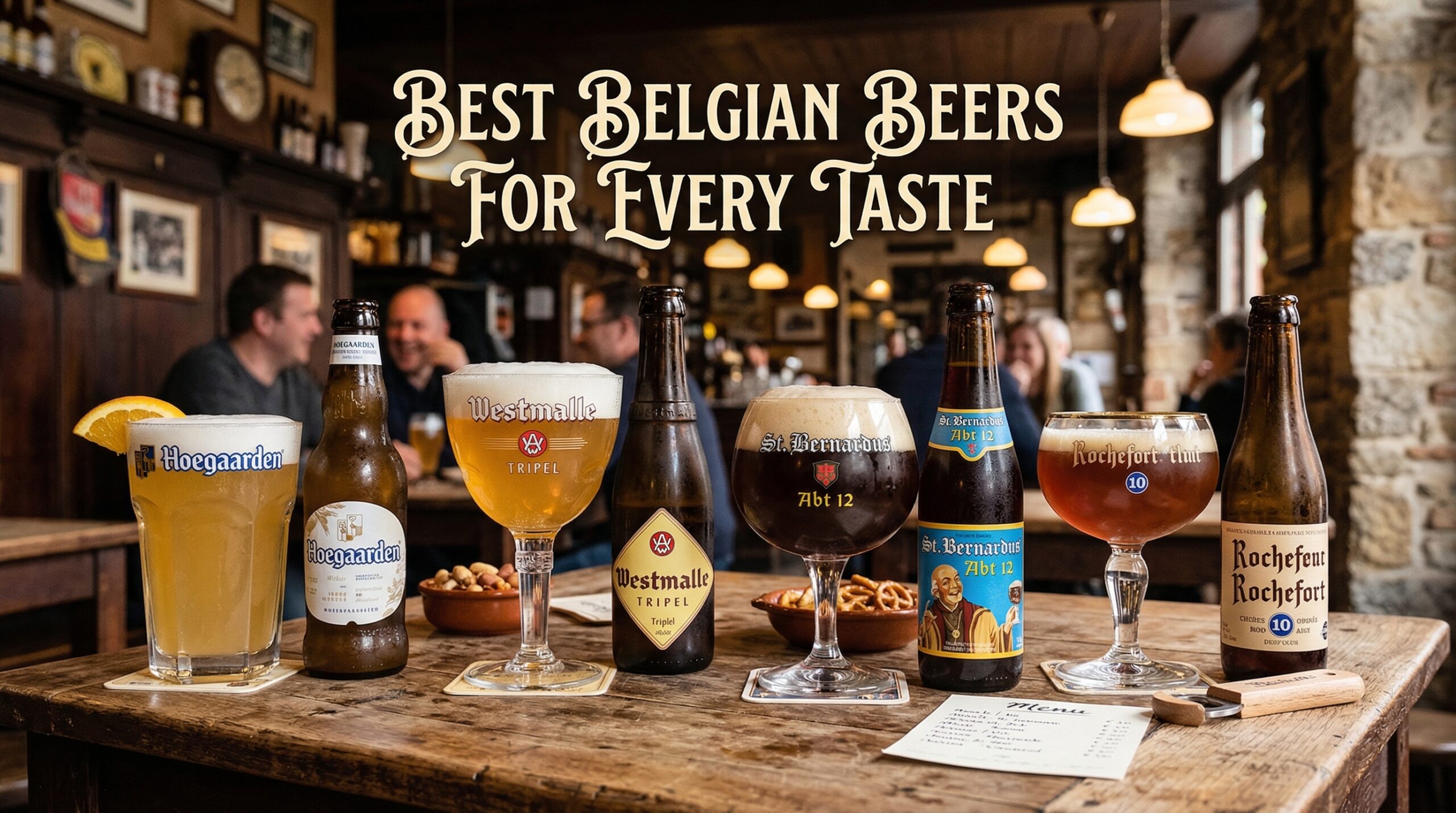
Belgium might be a small country, but its influence on the beer world is nothing short of monumental. When I first visited Brussels years ago, I expected to find good beer. What I discovered was a complete obsession with brewing that dates back centuries. The Belgians have perfected dozens of distinct beer styles, from the towering Abbey ales to the wild fermented Lambics of the Pajotten Valley.
Whether you are new to Belgian beer or have been drinking Trappist ales for years, there is always something new to discover. This guide covers the best Belgian beers organized by style, with real tasting notes and recommendations you can actually find in the United States. I have focused on beers that are worth your money and time, not just marketing hype.
Our team has spent considerable time exploring Belgian beer culture firsthand, visiting breweries, and comparing hundreds of bottles to bring you this guide. We will break down everything from the powerful Quadrupels that warm you from the inside to the crisp and refreshing Witbiers perfect for summer afternoons.
Table of Contents
Understanding Belgian Beer Styles
Before we jump into specific recommendations, you need to understand what makes Belgian beer different from anything else in the world. The answer lies in three key factors: the yeast, the brewing traditions, and the diversity of styles that have evolved over hundreds of years.
Belgian brewers use specialized yeast strains that produce distinctive flavor compounds. These yeasts create fruity esters reminiscent of bananas and strawberries, spicy notes like clove and pepper, and sometimes a distinctive “funky” character that develops in spontaneously fermented beers. American craft breweries have tried to replicate these flavors, but the authentic versions remain in Belgium.
What Makes Belgian Beer Unique
Several factors set Belgian beer apart from other brewing traditions. First, many Belgian breweries still use traditional techniques like beer styles guide methods passed down through generations. Some breweries even ferment their beers in oak barrels, allowing wild yeast and bacteria to contribute complex flavors over months or years of aging.
Second, Belgian brewers commonly use candi sugar in their recipes. This caramelized sugar adds body without heaviness, helps achieve higher alcohol levels, and contributes subtle notes of caramel or toffee. You will find this ingredient in everything from golden Duvel to the dark Rochefort beers.
Third, the diversity of Belgian beer styles is unmatched. Where Germany might have a handful of recognized styles, Belgium has dozens. From the pale, highly carbonated Witbiers to the dark, rich Quadrupels weighing in at over 12% ABV, there is a Belgian beer for every palate and occasion.
Trappist vs Abbey: Understanding the Labels
You will often see beers labeled as “Trappist” or “Abbey” when shopping for Belgian beer. These terms are not interchangeable, and the distinction matters if you care about authenticity.
Trappist beers are brewed by or under the direct supervision of Trappist monks in one of the 11 remaining Trappist monasteries worldwide. These beers must meet strict criteria set by the International Trappist Association. The monks brew beer to support their monasteries and charitable work, not to maximize profits. Examples include Chimay, Westmalle, Orval, and Rochefort.
Abbey beers, on the other hand, are brewed by secular breweries that may or may not have historical ties to monasteries. Many Belgian breweries adopted the “Abbey” name in the 20th century when interest in monastic brewing traditions revived. These beers follow similar recipes to Trappist styles but lack the authentic monastic connection. Brands like Leffe and Affligem fall into this category.
Key Belgian Beer Styles Explained
Belgian beer styles can be grouped into several categories based on their characteristics. Here is a quick reference guide:
- Tripel: Strong golden ales with high alcohol (7-10% ABV), fruity esters, spicy yeast character, and a dry finish. Westmalle Tripel set the modern template for this style.
- Dubbel: Dark copper to brown ales with moderate alcohol (6-8% ABV), caramel and chocolate notes, and a rich malty body. Westmalle Dubbel is the benchmark example.
- Quadrupel: The strongest Belgian ales (10-14% ABV), dark fruit flavors, warming alcohol, and complex layered brewing processes. Often called “Belgian Strong Dark Ale” in some markets.
- Lambic: Spontaneously fermented beers from the Pajotten Valley region. These sour ales can be straight (Lambic), blended (Gueuze), or fruit-infused (Kriek, Framboise).
- Saison: Originally farmhouse ales brewed for summer workers. These are dry, highly carbonated, and often have peppery or citrusy yeast notes.
- Witbier: Crisp, unfiltered wheat beers brewed with orange peel and coriander. Light and refreshing with a cloudy appearance.
Trappist Beers: The Cream of the Crop
When discussing the best Belgian beers, we must start with Trappist beers. These monastery-brewed ales represent the pinnacle of Belgian brewing tradition. The Trappist designation ensures authenticity, quality, and a brewing philosophy that prioritizes the craft over commercial considerations.
What Makes a Beer Trappist
The Authentic Trappist Product logo guarantees that the beer was brewed within the walls of a Trappist monastery by monks or under their supervision. The proceeds support the monastery and charitable causes. This is not just marketing; it is a way of life for these monks, who view brewing as a form of prayer and hospitality.
There are currently 11 Trappist breweries worldwide, with 6 in Belgium: Westvleteren, Westmalle, Chimay, Orval, Rochefort, and Achel. Each produces distinctive beers that reflect their monastery character and brewing philosophy.
Westvleteren 12: The Holy Grail
Westvleteren 12 regularly tops lists of the world’s best beers, and for good reason. Brewed at the Sint-Sixtusabdij monastery in Westvleteren, this Quadrupel-style beer offers incredible depth. Notes of dark fruit (prunes, figs), caramel, and a warming alcohol presence build into a remarkably complex finish.
The catch is availability. Unlike most beers, you cannot simply walk into a bottle shop and buy Westvleteren 12. You must visit the monastery in person or order through their website, and quantities are strictly limited. Despite these restrictions, dedicated beer lovers make the pilgrimage regularly.
Rochefort 10: Dark and Powerful
If Westvleteren 12 is the holy grail, Rochefort 10 is its more accessible cousin. Brewed by monks at the Abbaye de Rochefort, this dark brown beer delivers intense flavors of malt, dark fruit, and caramel with a warming 11.3% ABV. The brewery produces three versions: 6, 8, and 10, with 10 being the strongest and most complex.
Unlike Westvleteren, Rochefort beers are widely exported and can be found in specialty beer shops throughout the United States. This makes them an excellent choice when you want to experience authentic Trappist quality without the pilgrimage.
Chimay Blue: Accessible Excellence
Chimay Blue, also known as Grande Reserve, is another widely available Trappist beer that punches well above its weight. This dark strong ale offers rich flavors of dried fruit, caramel, and chocolate with a smooth, almost wine-like quality. At 9% ABV, it is potent but drinkable.
What makes Chimay Blue particularly appealing is its packaging. It is available in 750ml bottles with a cork and cage, making it perfect for sharing at dinner parties or special occasions. The Red (7% ABV) and White (8% ABV) varieties offer lighter options for everyday drinking.
Orval: The Dry-Hopped Exception
Orval stands apart from other Trappist beers in several ways. First, it is the only Trappist brewery that uses dry hopping, adding Cascade hops to their Ambrée ale for a distinctive floral aroma. Second, its recipe includes a touch of syrup that ferments completely, leaving a very dry finish.
The resulting beer is amber-colored with a complex interplay of malt, hops, and yeast character. Orval’s Brettanomyces character develops over time, making aged bottles particularly interesting. This beer is perfect for those who want something different from the typical Belgian strong ale profile.
Westmalle Tripel: The Style Benchmark
Westmalle Tripel is considered the definitive example of the Tripel style. Brewed at the Abdij van Westmalle, this golden ale delivers everything you expect from a Tripel: high carbonation, fruity yeast notes, spicy phenols, and a dry finish at 9.5% ABV.
What sets Westmalle Tripel apart is its balance. Many Tripels lean too heavily toward sweetness or alcohol heat, but Westmalle threads the needle perfectly. It is both refreshing and complex, making it suitable for both warm-weather sipping and contemplative winter drinking.
Belgian Tripel: Golden Strong Ales
The Tripel style has become synonymous with Belgian beer in many minds. These golden strong ales showcase the best of what Belgian yeast strains can do: producing massive flavor while remaining surprisingly drinkable despite their alcohol content.
Characteristics of Tripel
A proper Belgian Tripel should be pale gold to deep gold in color, with excellent clarity despite its strength. The aroma is dominated by Belgian yeast character: fruity esters (banana, apple), spicy phenols (clove, pepper), and sometimes a hint of hop floral notes. The flavor follows the aroma, with a notable dryness on the finish that makes these beers dangerously drinkable.
The alcohol warmth should be present but not harsh, integrating smoothly with the other flavors. High carbonation lifts the beer and helps carry the aromatics. Tripels can be enjoyed young but often benefit from some cellaring, which rounds off rough edges and allows flavors to meld.
La Chouffe: The Friendly Giant
La Chouffe is often recommended as an entry point for Belgian beer enthusiasts because it delivers so much character at an approachable price. This golden Tripel from Brasserie d’Achouffe in the Ardennes region offers bright fruit flavors (citrus, tropical), spicy yeast notes, and a clean finish.
At 8% ABV, it is strong enough to feel special but mild enough for most drinkers to enjoy several bottles. The brewery’s gnome mascot has become iconic in Belgian beer culture, and the beer inside matches the playful branding with serious brewing quality.
Duvel: The Devil of a Beer
Duvel is called “the Devil” in Flemish, supposedly because it is so easy to drink that the devil would need to watch over you to prevent you from finishing the bottle. At 8.5% ABV, this is no light beer, yet its refined carbonation and delicate balance make it dangerously sessionable.
The beer pours pale gold with a massive fluffy white head that lingers forever. Duvel’s flavor profile emphasizes the yeast character: fruity esters, spicy notes, and a dry, clean finish. It is widely available in the United States and represents an excellent introduction to Belgian strong ales.
Tripel Karmeliet: Smooth and Sophisticated
Tripel Karmeliet from Brouwerij Bosteels is noteworthy for its recipe, which uses three grains (barley, wheat, and oats) to create an exceptionally smooth, full-bodied Tripel. The oats contribute a creamy mouthfeel that softens the alcohol warmth.
This beer offers classic Belgian yeast character with notes of citrus, vanilla, and spice, all wrapped in a silky texture that makes each sip feel luxurious. Tripel Karmeliet has won numerous awards and remains a favorite among Belgian beer enthusiasts.
Victory Golden Monkey: American Craftsmanship
Victory Golden Monkey proves that excellent Belgian-style Tripels can be brewed outside Belgium. This Pennsylvania brewery’s offering matches the style perfectly: golden color, bright fruit and spice from Belgian yeast, and a warming 9.5% ABV.
For those in areas where imported Belgian Tripels are expensive or hard to find, Golden Monkey provides an excellent domestic alternative that does not compromise on quality. It demonstrates how American craft brewers have absorbed and mastered European brewing traditions.
Belgian Dubbel: Rich and Malty
If Tripels represent the lighter side of Belgian strong beers, Dubbels show the darker, more decadent side. These copper-to-brown ales emphasize malt richness, caramel sweetness, and chocolate notes while maintaining the distinctive Belgian yeast character.
Characteristics of Dubbel
A Dubbel should present as reddish-brown to dark brown with a thick, persistent tan head. The aroma combines Belgian yeast character with prominent malt notes: caramel, toffee, chocolate, and sometimes dark fruit. The flavor follows, with the malt sweetness balanced by the dryness typical of Belgian ales.
Dubbels typically range from 6-8% ABV, making them more moderate than Tripels or Quadrupels. They are excellent choices for cooler weather and pair wonderfully with roasted meats, rich stews, and chocolate desserts.
Westmalle Dubbel: The Benchmark
Westmalle Dubbel set the modern standard for the style in 1856, and while many breweries have attempted to replicate it, few have succeeded. This dark brown beer offers a complex nose of dark fruit, caramel, and chocolate with a rich, malty palate and dry finish.
At 7% ABV, it is approachable yet substantial. The monastery sells this beer in its cafe adjacent to the brewery, where it pairs perfectly with their monks’ simple but satisfying meals. If you visit Westmalle, do not miss this experience.
Chimay Red: Accessible Monastic Quality
Chimay Red, also called Premiere, is the lightest of the Chimay offerings at 7% ABV. Despite being the “smallest” Chimay, it delivers excellent Dubbel character: malty sweetness, dark fruit notes, and a smooth finish that invites another sip.
The Red is widely available in bottles and on draft, making it an excellent introduction to Chimay’s offerings. It pairs well with roasted poultry, mushroom dishes, and aged cheeses. The distinctive red label has become iconic in the beer world.
St. Bernardus Prior 8: Belgian Excellence
St. Bernardus Prior 8 is brewed in Watou, not far from where the original St. Bernardus brewery supplied Trappist monks. While no longer officially connected to the Trappist order, the brewery maintains the same recipes and high standards.
This Dubbel offers rich malt character with notes of caramel, chocolate, and dark fruit. At 8% ABV, it has enough weight to stand up to substantial dishes while remaining balanced enough for casual sipping. It is often cited as an excellent alternative to Westvleteren beers at a fraction of the price.
Gulden Draak: A Dragon of a Beer
Gulden Draak (Golden Dragon) from Brouwerij Van Honsebrouck is technically a Tripel that has been aged, giving it more complexity than typical examples. The brewery recommends serving it from a white wine glass to appreciate its complex aromatics fully.
This beer pours deep gold with a massive head and offers layered flavors of fruit, spice, caramel, and malt. At 10.5% ABV, it is one of the stronger Dubbel-style offerings. The distinctive dragon bottle has become a collector’s item in some circles.
Belgian Quadrupel: Big and Bold
Quadrupels represent the pinnacle of Belgian strong ale brewing. These dark, potent beers offer remarkable complexity and aging potential. If you want to experience the full range of Belgian brewing artistry, Quadrupels are where you should focus your attention.
Characteristics of Quadrupel
The Quadrupel style typically ranges from 10-14% ABV, making these beers some of the strongest in the world. The dark color comes from roasted malts, which contribute flavors of dark fruit (prunes, raisins, figs), chocolate, caramel, and sometimes a vinous quality reminiscent of red wine.
Quadrupels are brewed with more malt than other styles, and brewers often add candi sugar to boost alcohol without adding heaviness. The result is a beer that is full of flavor yet surprisingly smooth, with alcohol warmth that builds gradually. These beers age remarkably well, developing additional complexity over years of cellaring.
St. Bernardus Abt 12: The People’s Champion
St. Bernardus Abt 12 is frequently cited as the best Belgian beer available in the United States, and it is certainly one of the most beloved. This dark beauty offers layers of fruit, caramel, chocolate, and spice that unfold with each sip.
At 10% ABV, it is strong but not overwhelming. The brewery uses a recipe similar to what Westvleteren once used when it contracted with St. Bernardus, which explains the remarkable similarity in flavor profiles. For beer lovers who cannot obtain Westvleteren, St. Bernardus Abt 12 is a more than worthy substitute.
Rochefort 12: Deep and Dark
Rochefort 12 is the strongest and most complex of the Rochefort offerings. This dark brown beer pours with a thick, creamy head and delivers intense flavors of dark fruit, malt, and chocolate with a warming alcohol presence that builds pleasantly.
Like its siblings, Rochefort 12 benefits from a slow pour into a wide-mouth glass to appreciate its full aromatic complexity. The brewery recommends serving it at cellar temperature (50-55F) rather than refrigerator cold, which allows the flavors to open up properly.
La Trappe Quadrupel: Dutch Monastery Quality
La Trappe Quadrupel comes from the Koningshoeven brewery in the Netherlands, which is operated by Trappist monks. While technically in the Netherlands, the brewery follows Belgian brewing traditions and has earned the Authentic Trappist Product designation.
This beer offers excellent value compared to Belgian Trappist Quadrupels while matching or exceeding their quality. The flavor profile includes dark fruit, caramel, chocolate, and a warming alcohol presence. At 10% ABV, it is substantial but not punishing.
Lambic and Gueuze: Wild Fermented Treasures
Lambic represents perhaps the most unusual brewing tradition in the world. Unlike conventional ales, which use cultivated yeast strains, Lambic relies on spontaneous fermentation: wild yeasts and bacteria from the environment enter the cooling wort through open-air exposure in the Senne Valley region.
Understanding Spontaneous Fermentation
The process begins with cooling wort in a shallow vessel called a koelschip, where it is exposed to the ambient yeast and bacteria of the Pajotten Valley. Over the next three days to a week, these wild organisms begin fermentation, creating a base beer that is acidic and funky.
Brewers then blend young Lambic (several months old) with aged Lambic (one to three years old) to create Gueuze. The carbonation in Gueuze comes from the fermentation that occurs in the bottle, similar to the traditional method for sparkling wine. This labor-intensive process produces beers of remarkable complexity.
3 Fonteinen: The Gueuze Specialist
3 Fonteinen is revered among sour beer enthusiasts for its traditional Gueuze and Lambic offerings. The brewery sources its ingredients locally and uses traditional techniques, including open fermentation and barrel aging, to create beers of exceptional quality.
Their flagship Gueuze is a blend of Lambics aged from one to three years, producing a tart, funky, and complex beer that rewards patient drinking. Other offerings include pure Lambic and fruit-infused versions like Kriek (cherry) and Framboise (raspberry). These beers can be hard to find outside Belgium but are worth seeking out.
Boon: Traditional Lambic Quality
Boon is one of the few remaining traditional Lambic breweries that produces unblended, straight Lambic alongside their Gueuze. Their street corner store in Lembeer offers a glimpse into traditional Belgian beer culture, with casks stacked high and locals drinking straight from the tap.
Their Geuze Mariage Parfait is an excellent introduction to the style, offering the expected tartness and funk balanced by subtle fruit notes. Boon also produces fruit Lambics that are slightly sweeter and more accessible for newcomers to the style.
Lindemans: Accessible Entry Point
Lindemans has become synonymous with fruit Lambics in the United States, and while some purists turn up their noses at their approach, their beers serve an important function: introducing new drinkers to sour beer in an approachable format.
Their Framboise (raspberry) and Kriek (cherry) offerings are slightly sweeter than traditional examples, making them more accessible to those who find straight Lambic too tart. These are excellent gateway beers for developing your palate before moving to more traditional offerings.
Hanssens: Traditional Blending
Hanssens is a smaller Lambic brewery that focuses on traditional Gueuze and Oude Gueuze, which is the unblended version. Their beers tend toward the funky and sour end of the spectrum, appealing to enthusiasts who appreciate maximum wild character.
Finding Hanssens in the United States can be challenging, but specialty bottle shops and beer bars with extensive sour programs often carry their offerings. If you see one, grab it, as production is limited and the quality is exceptional.
Flanders Red Ale: Tangy Complexity
Flanders Red Ale occupies a unique place in Belgian brewing. These wines of beer combine the malt backbone of Belgian dark ales with the tart acidity of acetic and lactic acid bacteria, creating something entirely unique in the beer world.
The Art of Blending
Flanders Red Ales are typically aged in oak barrels for extended periods, sometimes exceeding two years. During aging, acetic and lactic bacteria contribute tartness while the oak adds vanilla and tannic structure. Brewers then blend different aged batches to achieve the right balance of flavor.
The result is a beer that combines malty sweetness, dark fruit notes, and a wine-like tartness. The acidity makes these beers incredibly food-friendly, pairing well with everything from rich stews to sharp cheeses. They are also excellent as digestifs after a large meal.
Rodenbach Grand Cru: The Benchmark
Rodenbach Grand Cru is widely considered the finest example of the Flanders Red style. This beer is a blend of young and aged Rodenbach (up to two years in oak), producing a complex interplay of malt, fruit, and acidity.
The flavor profile includes notes of cherry, balsamic, oak, and a pleasant tartness that cleans the palate. At 6% ABV, it is moderate in strength but maximum in complexity. Rodenbach is widely available in the United States and represents an excellent entry point to the style.
Duchesse de Bourgogne: Flanders Brown Excellence
Duchesse de Bourgogne is a Flanders Brown Ale from Brouwerij Verhaeghe, a related but distinct style from the red ales. Where reds emphasize tartness, brown ales lean more toward malt sweetness with mild acidity. Think of it as a more complex, Belgian take on an English brown ale.
This beer offers flavors of caramel, chocolate, and dark fruit with a subtle tartness in the finish. At 6.2% ABV, it is approachable and easy to drink. Duchesse de Bourgogne has developed a devoted following among Belgian beer enthusiasts.
Petrus: Dutch Flanders Quality
Petrus is another Dutch brewery producing excellent Flanders-style ales under theugas brand. Their offerings include both aged and young versions, with the aged versions being more complex and tart. The brewery’s location near the Belgian border means their techniques are essentially identical to Flemish producers.
Saison and Farmhouse Ales: Rustic Charm
Saison represents the working-class brewing tradition of the French-speaking Wallonia region of Belgium. Originally brewed by farmers for field workers during the summer months, these beers needed to be refreshing, nutritious, and relatively light in alcohol to avoid impairing workers in the heat.
From Farm to Glass
Modern Saisons have evolved considerably from their humble origins. Contemporary examples are often stronger (6-8% ABV), more hoppy, and more complex than their ancestors. However, they retain the core characteristics: high carbonation, dry finish, and a peppery, citrusy yeast character that makes them incredibly refreshing.
The Saison yeast strain produces distinctive flavors that have influenced a whole category of American craft beers. If you have enjoyed “Belgian-style Saison” from American breweries, the authentic Belgian versions offer even more depth and character.
Fantome Saison: The Collector’s Choice
Fantome Saison from Brasserie Fantome has achieved near-legendary status among Belgian beer enthusiasts. Brewed in the Ardennes region by a former dairy farmer turned brewer, these beers are made in small batches with seasonal ingredients.
The flavor profile changes with each batch, but expect notes of citrus, spice, funk, and fruit with a dry, refreshing finish. The brewery’s whimsical labeling and mysterious production methods have only increased its allure. Finding Fantome in the United States requires visiting the best bottle shops or beer bars.
Saison Dupont: The Style Definitive
Saison Dupont is widely considered the definitive example of the style. This golden farmhouse ale offers a perfect balance of citrusy hops, peppery yeast, and a dry finish that makes it incredibly drinkable. At 6.5% ABV, it is substantial but not heavy.
The brewery offers tours and tastings at their facility in Tourpes, where you can sample the beer fresh from the source. This is one of the most enjoyable brewery visits in Belgium, combining excellent beer with beautiful countryside.
Storage: Cellar and Brettanomyces
Some Saison producers, particularly those focused on wild fermentation, add Brettanomyces yeast to their beers. This “funk” yeast creates additional complexity over time, developing notes of barnyard, leather, and horse blanket that many enthusiasts crave.
Storage (French for “cellar”) refers to Saisons that have been aged with Brettanomyces. These beers are not for everyone, but for those who appreciate wild, funky flavors, they represent some of the most exciting beers in the world. Russian River Consecration and Supplication from California have influenced this style significantly.
Witbier: Crisp and Refreshing
Witbier (white beer) is one of the most approachable Belgian styles. These unfiltered, wheat-heavy beers are light, refreshing, and flavored with orange peel and coriander, making them perfect warm-weather beers or introductions to Belgian brewing.
Belgian White Beer
Traditional Witbiers use a significant proportion of unmalted wheat in the grist, which contributes a hazy appearance and light body. The addition of curaçao orange peel and coriander spice distinguishes Witbier from other light Belgian ales and gives them a distinctive character.
The style nearly disappeared in the mid-20th century but was revived by Pierre Celis in Hoegaarden, whose success inspired large breweries to produce their own versions. Today, Witbier is one of the most popular Belgian styles in export markets.
Hoegaarden: The Revival
Hoegaarden is the beer that saved the Witbier style. Pierre Celis founded the brewery in 1966 specifically to revive traditional white beer brewing. The clear bottles and distinctive spice character quickly caught on, eventually drawing the attention of multinational breweries.
InBev acquired Hoegaarden and expanded production globally, which some argue has diluted quality. Nevertheless, the beer remains widely available and introduces many drinkers to Belgian beer for the first time. Look for the Original (5% ABV) rather than the sweeter Rosie or Fruit versions.
Allagash White: American Craftsmanship
Allagash White from Portland, Maine is widely considered one of the finest Witbier interpretations outside Belgium. Brewed with traditional ingredients including orange peel and coriander, it offers excellent balance and complexity in a very drinkable package.
This beer demonstrates how American craft brewers have mastered European brewing traditions. Allagash is particularly well-suited for those who want quality Witbier without importing from Belgium, and it is widely distributed throughout the United States.
Blue Moon Belgian White: Mass Market Success
Blue Moon Belgian White from MillerCoors is perhaps the most widely available Witbier-style beer in the United States. While not technically Belgian-brewed, it follows the traditional recipe and has introduced millions of American drinkers to the style.
The beer is often served with an orange slice, which enhances the citrus notes and makes it more visually distinctive. Critics argue Blue Moon is too sweet and lacks the complexity of authentic Belgian Witbiers, but it serves its purpose as an accessible introduction to the style.
Belgian Blonde Ale: Approachable Elegance
Belgian Blonde Ale serves as an excellent entry point for those new to Belgian beer. These golden ales are lighter and less complex than Tripels but still offer the distinctive Belgian yeast character that makes these beers special.
Entry-Level Belgian
Belgian Blonde Ales typically range from 6-7.5% ABV, making them moderate in strength. The flavor profile emphasizes fruity esters and spicy yeast notes without the intensity of Tripels. The finish is relatively dry, and the body is medium-light.
These beers are excellent choices for those who find typical American lagers too boring but are not ready for the alcohol and complexity of stronger Belgian styles. They pair well with a wide range of foods and work well as session beers for longer drinking sessions.
Leffe Blonde: Accessible Abbey
Leffe Blonde is one of the most recognizable Belgian Blonde Ales in the world. Originally brewed by monks at the Abbaye de Leffe in the 13th century, the brand is now owned by AB InBev but maintains traditional recipes and brewing methods.
This golden ale offers pleasant fruit notes, light spice, and a smooth finish at 6.6% ABV. It is widely available in bottles and on draft throughout the United States and represents an excellent introduction to Belgian beer in general.
Affligem Blonde: Under the Radar
Affligem Blonde is a Belgian Blonde Ale from the Affligem brewery that often flies under the radar despite excellent quality. The beer offers a nice balance of fruit, spice, and malt with a clean finish at 6.8% ABV.
The brewery also produces red and dark versions, and all are worth exploring. Affligem is widely available in the United States and represents excellent value for the quality offered.
Maidens: Scottish-Belgian Hybrid
Maidens from BrewDog is an interesting cross between Scottish and Belgian brewing traditions. This golden ale offers the clean malt character of Scottish ales with the fruity fermentation character of Belgian strains.
At 6.9% ABV, it is substantial enough to make an impression while remaining approachable. BrewDog’s Belgian connections run deep, and this beer reflects their appreciation for both traditions.
Best Belgian Beers for Beginners
If you are new to Belgian beer, the sheer variety can feel overwhelming. Here are our recommendations for building your palate and developing an appreciation for what Belgian brewing has to offer.
Start Here: Our Top Recommendations
For complete beginners, we recommend starting with La Chouffe or Duvel. Both offer the classic Belgian yeast character in an accessible format without the intensity of stronger styles. They provide an excellent foundation for understanding what makes Belgian beer special.
If you prefer darker beers, try Chimay Red (Dubbel) or Affligem Blonde. These offer maltier flavors that may appeal to those coming from brown ale or porter backgrounds. The alcohol is moderate, and the flavors are balanced.
For adventurous beginners interested in sour beers, Rodenbach Grand Cru offers a perfect entry point. The tartness is present but not overwhelming, and the underlying malt provides balance. It is one of the most food-friendly beers in the world.
Building Your Palate
As you develop your Belgian beer palate, work your way through the styles systematically. Start with Belgian Blonde, then move to Dubbel, then Tripel, and finally Quadrupel. This progression will help you appreciate how Belgian brewers build complexity through brewing techniques.
Do not rush the process. Each style has dozens of excellent examples, and you will find personal favorites as you explore. Take notes on what you like and why, and use those observations to guide future purchases. Many Belgian beer enthusiasts keep detailed records of their tasting experiences.
Pairing Belgian Beer With Food
Belgian beer and food pairing is an art form that has been refined over centuries. The diversity of Belgian beer styles means there is a perfect match for almost any dish. Here is our guide to getting the most from these combinations.
Cheese Pairings
Belgium produces some of the world’s finest cheese, and the country’s beers are naturally suited for pairing. Here are our top recommendations:
Cheddar and aged Gouda pair wonderfully with Quadrupels and dark Belgian ales. The rich, nutty cheese complements the dark fruit and caramel flavors while standing up to the alcohol warmth. Try Chimay Blue with a sharp aged cheddar for an unforgettable combination.
Blue cheese, with its intense flavor, needs a beer that can match its strength. Try Saint-Nectaire or other washed-rind French cheeses with Trappist beers. The yeast character and carbonation cut through the fat while complementing the funky notes.
Soft, creamy cheeses like Brie and Camembert work well with lighter Belgian styles. Belgian Blonde and Witbier offer enough character to stand up to the cheese without overwhelming its delicate flavor. Add some fruit preserves to bring out the fruity yeast notes.
Chocolate Pairings
Belgian chocolate is world-famous, and pairing it with Belgian beer creates match made in heaven. Dark chocolate with 70%+ cacao pairs wonderfully with Quadrupels and strong dark ales. The bitterness of the chocolate complements the rich malt flavors while the fruit notes in the beer enhance the chocolate’s complexity.
Milk chocolate and caramel chocolates pair better with Dubbels and Belgian Strong Dark Ales. The sweetness in these chocolates balances the malt and caramel flavors in the beer. Avoid overly sweet chocolates, which can make the beer taste thin and bitter by comparison.
Seafood and Lighter Fare
Belgian Witbiers and Saisons are incredibly versatile with food, particularly lighter dishes. Their carbonation and citrus notes make them natural matches for seafood: oysters, shrimp, crab, and grilled fish all work beautifully.
Witbier’s orange and coriander notes complement Thai, Vietnamese, and other Asian cuisines that feature similar flavors. Try Hoegaarden with spring rolls, satay, or green curry for a surprising but successful combination.
Hearty Belgian Cuisine
Belgian beer deserves Belgian food, and fortunately, traditional Belgian dishes are as satisfying as the beers themselves. Moules-frites (mussels and fries) is a national dish that pairs perfectly with lambic or Witbier. The acidity in the beer cuts through the richness of the mussels while the carbonation refreshes the palate between bites.
Carbonade flamande (Flemish beef stew) is a hearty dish that demands a Flanders Red or Dubbel. The sweet, sour, and savory notes in the stew complement the complex flavors in these beers. Alternatively, try it with a Quadrupel for a truly indulgent experience.
Finding Belgian Beers in the USA
While Belgium remains the ultimate destination for Belgian beer enthusiasts, excellent options are available throughout the United States. Here is how to find the best Belgian beers near you.
Specialty Bottle Shops
Specialty beer retailers offer the best selection of imported Belgian beers. Look for shops with dedicated Belgian sections, knowledgeable staff, and proper storage conditions. Avoid stores where bottles have been sitting in warm stockrooms, as heat damages beer quality.
Quality specialty shops will often hold bottles in refrigerated cases and rotate stock regularly. Build relationships with the staff, who can provide personalized recommendations based on your preferences. Many shops host tasting events featuring Belgian breweries. If you are interested in exploring more about organic and artisanal brewing approaches, the staff at these shops can often point you toward Belgian-inspired examples.
Online Retailers
Online beer retailers have expanded access to Belgian beers dramatically over the past decade. Websites like Craft Beer Universe, BeerMith, and others ship temperature-controlled packages throughout the United States. This is an excellent option if you live far from specialty retailers.
Be aware that shipping costs can add up, and you may face quantity limits on rare beers. However, the selection available online often exceeds what is available in any physical store. For hard-to-find releases like Westvleteren or Fantome, online auctions and specialty retailers are your best options.
What to Look For: Freshness and Storage
Belgian beers, particularly bottle-conditioned ones, are more resilient than most. However, they can still suffer from improper storage. Always check the bottle date if visible, and avoid any bottles that show signs of damage or has been stored in warm conditions.
Look for bottles with intact corks and proper fill levels. If the liquid appears darker than expected or shows signs of particles floating, the beer may have aged beyond its prime. For best results, store Belgian beers in a cool, dark place and consume within the recommended timeframe.
Budget-Friendly Options
Belgian beer does not have to break the bank. Many excellent options cost between $5-15 per bottle, including Leffe, Affligem, Hoegaarden, and Chimay. These offer authentic Belgian quality at accessible prices.
American craft breweries have also embraced Belgian-inspired brewing, offering domestic alternatives at lower prices. Brands like Allagash, Boulevard, and Victory produce excellent Belgian-style beers that often cost less than imported equivalents. To learn more about our brewing philosophy and approach, visit our story page.
FAQs
What is the best tasting Belgian beer?
Westvleteren 12 is widely considered the best Belgian beer, though St. Bernardus Abt 12 and Rochefort 10 are excellent alternatives more readily available in the US.
What is the most popular beer in Belgium?
Jupiler is the most consumed beer in Belgium, but for craft and specialty beers, Duvel, Chimay, and Leffe are among the most popular and widely recognized.
What are the main Belgian beer styles?
The main styles include Trappist, Abbey, Tripel, Dubbel, Quadrupel, Lambic, Gueuze, Flanders Red, Saison, Witbier, and Belgian Blonde Ale.
What does Tripel mean in Belgian beer?
Tripel refers to a strong golden ale, historically using triple the amount of malt. Modern Tripels are typically pale, high in alcohol, with fruity and spicy yeast character.
What is a Trappist beer?
A Trappist beer is brewed by or under the supervision of Trappist monks in one of the 11 remaining Trappist monasteries worldwide. Only these beers can bear the Authentic Trappist Product logo.
Why is Belgian beer so special?
Belgian beer stands out due to unique yeast strains that produce distinctive fruity and spicy flavors, traditional brewing methods including spontaneous fermentation, high carbonation, and a wide variety of styles from crisp witbiers to complex barrel-aged sours.
Conclusion: Your Belgian Beer Journey Starts Now
Belgian beer represents one of the world’s most rich and diverse brewing traditions. Whether you are drawn to the powerful Quadrupels from Trappist monasteries, the refreshing crispness of Witbier, or the wild complexity of Lambic, there is a Belgian beer perfectly suited to your palate.
Start your journey with the accessible favorites like La Chouffe and Duvel, then gradually explore stronger and more complex styles. Pay attention to how the different brewing techniques (yeast strains, fermentation methods, aging) influence the final product. Before long, you will develop an appreciation for what makes Belgian beer unlike anything else in the world.
For more beer recommendations by country, explore our complete guides to brewing traditions around the world. And if you are ever in Belgium, make time to visit some of the incredible breweries and cafes that have made this small country a giant in the beer world. Proost!