
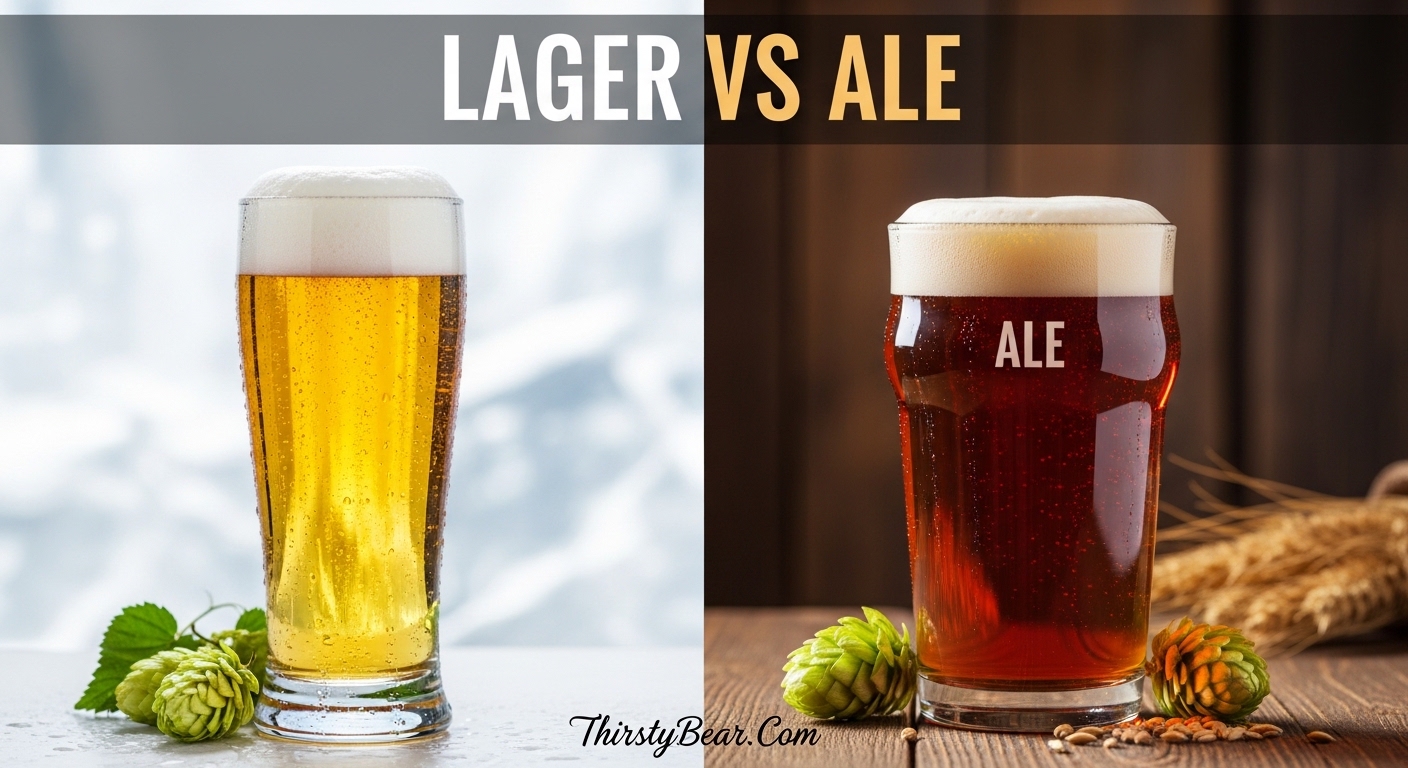
If you have ever stood in the beer aisle wondering what actually separates a lager from an ale, you are not alone. Our team has spent years exploring craft breweries and homebrewing setups, and we still meet people who mix up these two fundamental beer categories. The difference comes down to one essential ingredient: the yeast.
In this complete breakdown, you will learn exactly how lagers and ales differ, from the specific yeast strains used to the temperatures at which they ferment. We will cover taste profiles, popular styles, serving recommendations, and even food pairings. By the end, you will be able to walk into any brewery or taproom and order with confidence.
Table of Contents
What is Yeast and Why Does It Matter?
Yeast is a single-celled organism that consumes sugar and produces alcohol and carbon dioxide as byproducts. Without yeast, there would be no beer. Every single beer falls into one of two main categories based on which yeast strain the brewer uses during fermentation.
The two categories are ale and lager, and the distinction comes from centuries of brewing tradition. Ale yeast was discovered first and exists naturally on ripe fruits, which is why wild fermentation was possible before humans understood the science. Lager yeast, Saccharomyces pastorianus, is actually a genetic hybrid that emerged later, combining ale yeast with a cold-tolerant wild yeast species found in Patagonia.
This yeast difference determines everything else about the brewing process and the final flavor of the beer.
What is Ale?
Ale is beer fermented with Saccharomyces cerevisiae, a top-fermenting yeast species. The name top-fermenting comes from how this yeast behaves during fermentation. The yeast cells rise to the surface of the brewing vessel and form a thick layer of foam called the krausen.
Ale Yeast: Saccharomyces cerevisiae
Saccharomyces cerevisiae ferments best at warmer temperatures between 60 and 75 degrees Fahrenheit. This warm fermentation produces a faster metabolism in the yeast, which generates more complex flavor compounds as byproducts. These compounds include esters, which create fruity flavors like banana, strawberry, and apple. Phenols add spicy notes reminiscent of clove and black pepper.
The warmer fermentation also allows ales to develop richer, more complex flavor profiles. Our team has tasted ales with distinct banana clove characteristics from Belgian witbiers, citrus-forward notes from American pale ales, and earthy pine flavors from IPAs. All of these variations come from how different yeast strains express themselves during fermentation.
Ale fermentation typically completes within 7 to 14 days, making it a faster process than lager production.
What is Lager?
Lager is beer fermented with Saccharomyces pastorianus, a bottom-fermenting yeast. Unlike ale yeast, lager yeast prefers cold temperatures and works slowly over weeks or even months. The yeast remains suspended at the bottom of the fermentation vessel rather than rising to the surface.
Lager Yeast: Saccharomyces pastorianus
Saccharomyces pastorianus thrives at temperatures between 45 and 55 degrees Fahrenheit. This cold environment slows the yeast metabolism considerably, which means fewer flavor byproducts are created. The result is a cleaner, crisper taste that lets the malt and hop characteristics shine through without interference.
After primary fermentation, lagers undergo a conditioning process called lagering. This involves storing the beer at near-freezing temperatures for weeks or months. During lagering, the yeast continues to clean up off-flavors and the beer develops a smoother, more refined character. This extended timeline is why traditional lagers take so much longer to produce than ales.
The cold fermentation and extended conditioning create that distinctive refreshing quality you notice in a well-made pilsner or a clean German helles.
Yeast Type Comparison
The table below shows the fundamental differences between ale and lager yeast strains.
| Feature | Ale | Lager |
|---|---|---|
| Yeast Species | Saccharomyces cerevisiae | Saccharomyces pastorianus |
| Fermentation Type | Top-fermenting | Bottom-fermenting |
| Temperature Range | 60–75°F (15–24°C) | 45–55°F (7–13°C) |
| Fermentation Time | 7–14 days | 4–8 weeks (plus lagering) |
| Flavor Byproducts | High esters and phenols (fruity, spicy notes) | Minimal byproducts (clean, crisp profile) |
| Carbonation Level | Moderate, softer carbonation | Higher carbonation, more effervescent |
The genetic difference between these yeasts is significant. Saccharomyces pastorianus contains DNA from both Saccharomyces cerevisiae and a wild yeast called Saccharomyces eubayanus, which was only discovered in Patagonia in 2011. This hybrid nature gives lager yeast its unique ability to ferment at cold temperatures that would kill ale yeast.
Taste and Flavor Differences
When we ask people to describe the difference between ales and lagers, the most common answers involve taste. Our team has conducted blind tastings at several craft breweries, and the patterns are consistent.
Ales typically present more complex, layered flavors. The esters produced during fermentation create fruity characteristics that many drinkers describe as banana, bubblegum, apple, or citrus. Belgian-style ales often showcase distinct clove and pepper spice from phenols. American craft ales frequently emphasize hop-derived fruit flavors like grapefruit, mango, and tropical fruits.
Lagers taste cleaner and more refreshing by comparison. The cold fermentation process minimizes those fruity and spicy byproducts, allowing the malt backbone and hop additions to take center stage. A well-made pilsner might show subtle biscuit malt notes with a crisp, dry finish. German doppelbocks offer richer malt character but still maintain that clean lager profile without the ester-driven complexity of an ale.
One common question we hear is whether ale is less gassy than lager. The answer is not straightforward. Both styles can have varying carbonation levels depending on the brewing recipe. However, lagers tend to be served with higher carbonation to enhance their refreshing quality, which some people perceive as more bubbles. Ales often have moderate carbonation that complements their complex flavors rather than competing with them.
Neither style is universally stronger. Both ales and lagers can range from session beers at 3-4% ABV to strong beers exceeding 10% ABV. A pale ale and a pilsner might both weigh in at 5%, while barrel-aged stouts and doppelbocks can both reach 8-12% alcohol by volume.
Common Beer Styles
Understanding the difference between ale and lager becomes easier when you see specific examples. Breweries have developed hundreds of styles within each category.
Popular Lager Styles
Pilsner is the most famous lager style, originating in Plzen, Czech Republic. This golden beer features Saaz hops with a distinctive floral, spicy character balanced against a crisp, bready malt foundation.
German Pilsner varies from its Czech cousin by emphasizing cleaner fermentation and more pronounced hop bitterness. Many craft breweries produce their own pilsner interpretations using locally sourced ingredients.
Bock and doppelbock represent stronger lager styles. Traditional bock beers were brewed for Lenten fasting periods when monks needed caloric sustenance. Doppelbock, meaning double bock, pushes the malt richness and alcohol content even higher.
Märzen and Oktoberfest lagers emerge from Bavarian brewing tradition. These amber to copper-colored beers feature toasted malt sweetness and moderate hop bitterness.
American light lagers dominate the mass-market beer scene. These extremely clean, highly carbonated beers prioritize drinkability over flavor complexity.
Popular Ale Styles
Pale Ale stands as the foundational American craft beer style. Characterized by moderate malt presence and prominent hop bitterness, pale ales showcase citrus, pine, and floral hop aromas.
India Pale Ale (IPA) exploded in popularity over the past two decades. The aggressive hopping rates and high alcohol content originally served to preserve beer during long voyages to British colonies. Modern IPAs include juicy, hazy New England variations and bitter West Coast interpretations.
Stout and porter represent dark ale categories. Guinness, perhaps the world’s most recognized beer, technically falls outside both ale and lager categories as a stout. Stouts use roasted barley that imparts chocolate, coffee, and espresso flavors.
Wheat beers including Belgian witbier and German weissbier use significant portions of wheat malt. These refreshing ales often display orange peel and coriander spice alongside banana and clove yeast character.
Belgian dubbels and tripels offer complex ester profiles with rich malt sweetness. These beers pair remarkably well with food and showcase how ale yeast can generate intricate flavor layers.
Hybrid and Exception Styles
Not every beer fits neatly into the ale or lager category. Brewers have created hybrid styles that borrow techniques from both traditions.
Kolsch originates in Cologne, Germany, where it undergoes ale fermentation followed by cold lagering. The result is a pale, hop-forward beer with the clean finish of a lager but some ester character from ale yeast.
California Common uses a unique hybrid approach. Brewers traditionally fermented this style at cool ale temperatures using ale yeast, then exposed the fermenting beer to cold ocean breezes. Modern versions often use specially cultivated yeast strains that perform well in these transitional conditions.
Cold IPA represents a newer hybrid innovation. By using lager yeast at ale fermentation temperatures, brewers create IPAs with huge hop expression but a surprisingly clean malt backbone.
These exception styles prove that brewing tradition continues to evolve while respecting the foundational principles of yeast behavior and fermentation science.
Serving Temperature Guide
Temperature dramatically affects how beer tastes. Serving beer too cold mutes flavors and aromas, while serving too warm can emphasize alcohol heat and off-flavors.
Ales generally taste best between 45 and 55 degrees Fahrenheit. Stronger ales like barleywines and imperial stouts can benefit from slightly warmer service around 55-60F, which allows their complex malt and alcohol flavors to open up. Lighter ales like pale ales and wheat beers shine at the cooler end around 45-50F.
Lagers reach their peak around 38 to 45 degrees Fahrenheit. The clean, crisp characteristics that define good lagers express themselves fully when served cold. Pilsners and German helles specifically benefit from serving temperatures in the 40-45F range.
Use a thermometer to check your refrigerator temperature. Most home refrigerators run around 35-38F, which is actually slightly too cold for many lagers. Allow your beer to warm slightly after removing it from the refrigerator for a few minutes before pouring.
Proper glassware matters too. Wide-mouthed glasses like pint glasses work well for aromatic ales. Narrower pilsner glasses help maintain carbonation and concentrate aromas for crisp lagers.
Food Pairing Recommendations
Matching beer with food follows similar principles to wine pairing, but beer offers greater flexibility due to the wider flavor range found across styles.
Ales pair exceptionally well with bold, flavorful foods. The fruity and spicy ester profiles in many ales complement roasted meats, burgers, and barbecue. IPAs stand up to spicy Thai or Indian cuisine thanks to hop bitterness that refreshes the palate between bites. Belgian-style ales, particularly dubbels and tripels, pair beautifully with strong aged cheeses and rich desserts like chocolate cake.
Lagers excel with lighter dishes where their clean profile does not overpower the food. Seafood dishes, especially grilled fish and shrimp, pair naturally with crisp pilsners. Chicken wings, pizza, and sandwiches find their ideal companion in American pale lagers or Mexican lagers. The malt sweetness in darker lagers like doppelbocks complements roasted vegetables and caramelized dishes.
When in doubt, match intensity levels. A delicate helles pairs poorly with heavy barbecue, while a bold imperial stout overwhelms delicate sushi. The goal is harmony where both the food and beer enhance each other.
Do not forget about non-alcoholic beer alternatives when planning food pairings. The market for non-alcoholic beers has grown significantly, with many craft breweries now offering hoppy pale ales and crisp pilsners that perform identically to their alcoholic counterparts at the dinner table.
Conclusion
The difference between lager and ale comes down to yeast. Ale uses Saccharomyces cerevisiae, a top-fermenting yeast that works at warm temperatures and creates fruity, complex flavors. Lager uses Saccharomyces pastorianus, a bottom-fermenting hybrid yeast that operates in the cold and produces clean, crisp beers.
Understanding this fundamental distinction helps you navigate any beer menu or bottle shop with confidence. Whether you prefer the fruity complexity of an American pale ale or the refreshing clarity of a German pilsner, knowing what you like and why enhances every pint.
Our team encourages you to explore both categories. Visit local breweries, attend tasting events, and experiment with different styles. Beer offers infinite variety, and the journey from crisp lager to complex ale reveals something new with every glass.
FAQs
What is the main difference between ale and lager?
The main difference is the yeast type. Ales use Saccharomyces cerevisiae (top-fermenting yeast) while lagers use Saccharomyces pastorianus (bottom-fermenting yeast). Ale yeast ferments at warmer temperatures (60-75F) and creates fruity, complex flavors. Lager yeast ferments cold (45-55F) and produces cleaner, crisper beers.
Is ale less gassy than lager?
Not necessarily. Both styles can have varying carbonation levels based on the recipe. However, lagers are often served with higher carbonation to enhance their refreshing quality, which some people perceive as more bubbles. Ales typically have moderate carbonation that complements their complex flavors.
Is Guinness an ale or a lager?
Guinness is neither an ale nor a lager. It is a stout, which is a separate category of beer that uses roasted barley and has its own fermentation characteristics. Stouts are fermented with ale yeast but produce a distinctly different flavor profile characterized by chocolate, coffee, and roasted notes.
Is Blue Moon an ale or lager?
Blue Moon is an ale. It is a Belgian-style witbier fermented with top-fermenting ale yeast (Saccharomyces cerevisiae), which produces the fruity and spicy characteristics typical of wheat beers. Despite its light golden color, it does not fit the lager category.