
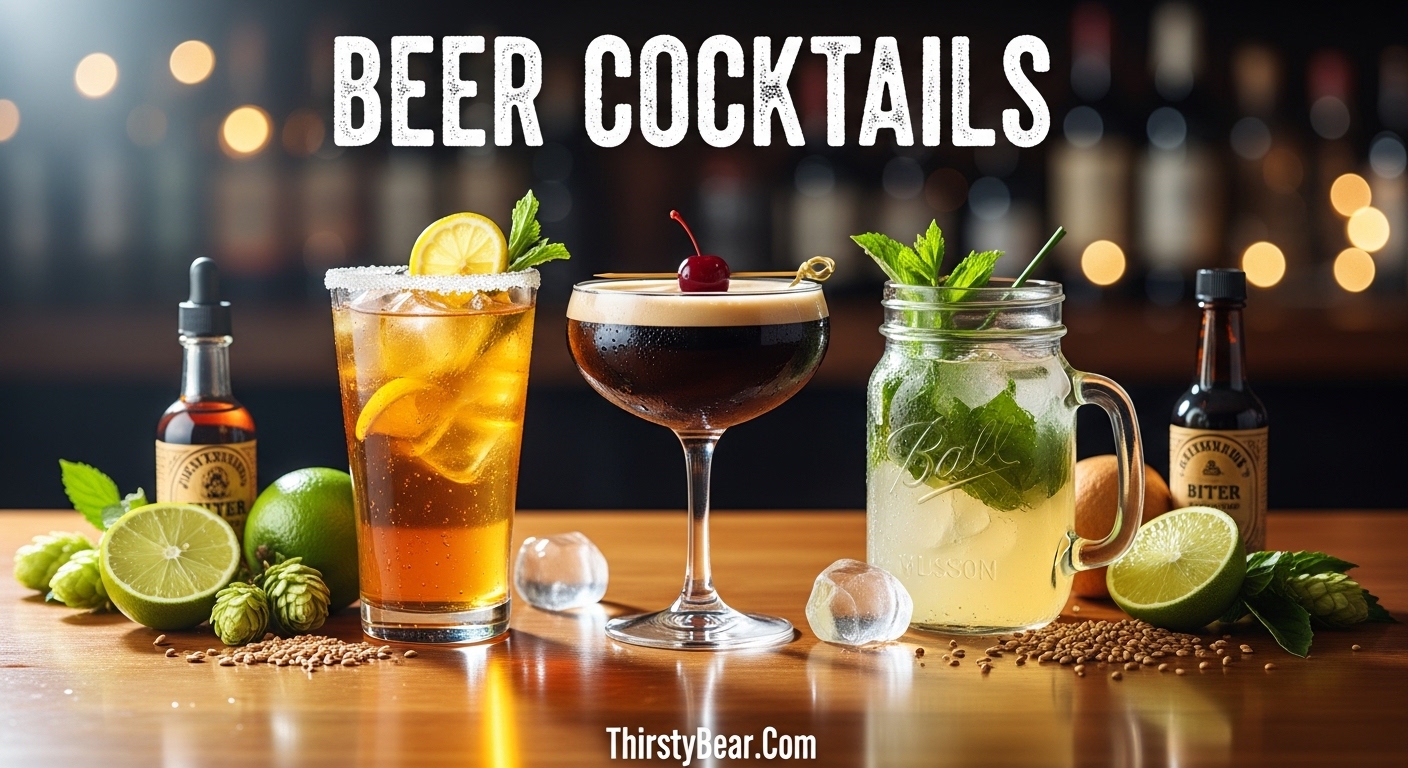
If you have ever found yourself staring at a fridge full of beer and wishing for something a little more exciting, beer cocktails might be exactly what you need. These drinks combine beer with other ingredients to create refreshing, complex beverages that work equally well at summer barbecues, weekend brunches, or just a casual evening on the patio.
Beer cocktails span a wide range of flavors, from the savory and spicy Michelada to the light and citrusy Shandy. Some use beer mixed with non-alcoholic ingredients like lemonade or tomato juice. Others blend two different beers together for a layered drinking experience. The category has grown far beyond the basics, with bartenders nationwide experimenting with craft beers and creative mixers to develop modern twists on classic recipes.
In this guide, our team covers four crowd-pleasing beer cocktails you need to try: the Mexican Michelada, the British Shandy, the Bavarian Radler, and the Irish-inspired Black and Tan. We break down what makes each one unique, share tips for making them at home, and answer the questions our readers ask most often.
Table of Contents
What is a Beer Cocktail?
A beer cocktail is any mixed drink that combines beer with other ingredients. The category splits into two main approaches. The first mixes beer with non-alcoholic beverages like lemonade, tomato juice, or citrus soda. The second blends two different beers together, using their contrasting flavors to create something new.
These drinks have been around for centuries. The British have enjoyed Shandy since at least the 1800s, while the Black and Tan emerged in 19th-century Ireland as a way to combine the characteristics of different brewing traditions. The Michelada has roots in Mexican culture dating back generations, though its exact origins remain debated among historians and cocktail enthusiasts alike.
One practical guideline that bartenders use is the 3:30-300 rule for beer. This rule suggests that beer tastes best when consumed within 3 hours of pouring at a temperature around 30-35 degrees Fahrenheit, and you should aim to finish a glass within 30 minutes before the carbonation fades significantly. This principle helps explain why beer cocktails, which often use fresh mixers to brighten the flavor, can sometimes taste better than flat, warm beer on their own.
Michelada: The Mexican Beer Cocktail
The Michelada is a savory, spicy beer cocktail that originated in Mexico. It is often described as a Bloody Mary made with beer instead of vodka. The drink typically combines light beer, fresh lime juice, tomato juice or Clamato, hot sauce, Worcestershire sauce, and various spices. The rim of the glass is often coated with salt, Tajin, or even chamoy for an extra flavor boost.
Authentic Mexican Micheladas start with a good Mexican lager. The lime and citrus notes found in beers like Modelo or Victoria hold up well against the bold flavors of the mixer. Avoid overly hoppy IPAs, as they can clash with the savory tomato and spice elements.
While the Michelada has a reputation as a hangover cure, this is more folklore than science. The combination of electrolytes from tomato juice, hydration from the liquid, and the familiar comfort of cold beer may help some people feel better after a night out. Whether it actually “cures” a hangover is debatable, but many swear by it as their go-to recovery drink.
Chelada vs Michelada: What is the Difference?
Many people confuse the Chelada with the Michelada, but they are distinct drinks. A Chelada is simply beer mixed with lime juice and salt. It is straightforward, refreshing, and lets the beer flavor shine through. The Michelada, by contrast, is a complex cocktail that adds tomato juice, hot sauce, Worcestershire, and often additional spices. Think of the Chelada as the simple cousin to the more elaborate Michelada.
Traditional Michelada Ingredients
- 12 ounces light Mexican lager (Modelo, Corona, or Victoria)
- 2-3 tablespoons fresh lime juice
- 2-4 tablespoons tomato juice or Clamato
- 3-5 dashes hot sauce (Cholula, Tapatio, or Valentina)
- 2-3 dashes Worcestershire sauce
- Salt to taste
- Tajin or chamoy for rim (optional)
- Lime wedge and celery stalk for garnish
Shandy: Beer Meets Lemonade
The Shandy is a British classic that combines beer with lemonade. The drink traces its roots to 19th-century England, where workers would ask pubs to mix their beer with ginger beer or lemonade to make it more refreshing during long shifts. Today, the Shandy remains a staple of British pubs and has gained popularity worldwide as a light summer drink.
Traditional Shandy uses equal parts beer and lemonade, though many people adjust this ratio to taste. The beer of choice is typically a blonde lager or wheat beer, which provide enough flavor to stand up to the sweet lemonade without overwhelming it. Some modern variations add a splash of gin or vodka for extra complexity.
The appeal of the Shandy lies in its balance. The beer provides depth and a hint of bitterness, while the lemonade adds sweetness and citrus brightness. Together, they create something far more interesting than either ingredient alone. If you want to explore beyond the basic recipe, try substituting grapefruit soda for a French 75-style variation, or add a twist of lemon peel to enhance the citrus notes.
Radler: The Bavarian Summer Sipper
The Radler originated in early 20th-century Bavaria, Germany. The name translates to “cyclist,” and legend has it that a brewery owner mixed beer with lemonade when supplies ran low during a busy summer day, creating the drink to quench the thirst of cyclists passing through the region. The refreshing combination quickly became a summer tradition.
While the Shandy typically uses lemonade, the Radler traditionally uses citrus soda like Sprite or 7-Up. This subtle difference gives the Radler a brighter, more effervescent character compared to the slightly sweeter Shandy. The beer base is usually a light blond lager or pilsner that complements rather than competes with the soda.
The standard Radler ratio is about 50:50 beer to soda, though some prefer a more beer-forward version at 60:40. The key is maintaining enough carbonation from both the beer and the soda while allowing the grain flavors to come through. Radlers are best consumed immediately after mixing to enjoy their full effervescence.
Black and Tan: Layered Beer Perfection
The Black and Tan is a two-beer cocktail that layers a pale ale on top of a stout. The drink originated in 19th-century Ireland as a way to combine the copper-colored warmth of Irish ale with the dark richness of stout. Today, the classic combination uses Guinness stout and pale ale, though other regional styles work well too.
The traditional ingredients are simple: half pale ale (the “tan”) and half stout (the “black”). The visual appeal comes from the two layers that remain separate when poured correctly. This is harder to achieve than it sounds, and the technique is where most people struggle.
To pour a Black and Tan, you pour the tan (pale ale) first into a glass. Then, using the back of a spoon held just above the surface of the beer, slowly pour the black (stout) on top. The spoon breaks the fall of the stout and allows it to float gently on the pale ale without mixing. With practice, you can achieve a clean line between the two layers.
Do You Pour the Black or Tan First?
For a Black and Tan, you always pour the tan (pale ale) first, then gently add the black (stout) on top. Pouring in this order allows the lighter-colored beer to form the base while the denser stout floats. If you reverse the order, the stout will sink into the pale ale and create a murky mess instead of the distinctive layered look.
Tips for Building Beer Cocktails at Home
Our team has tested dozens of beer cocktail combinations over the years, and a few principles consistently produce better results. First, temperature matters more than most people realize. Beer cocktails taste best when the beer is cold but not freezing cold, around 35-40 degrees Fahrenheit. Too cold and the flavors mute; too warm and the carbonation fades quickly.
Fresh ingredients make a significant difference, especially for cocktails like the Michelada. Fresh-squeezed lime juice tastes dramatically better than bottled juice. Real tomato juice outperforms V8 in side-by-side tests. When a recipe calls for citrus, take the extra minute to squeeze fresh limes or lemons rather than reaching for a jar.
Glassware matters too. Micheladas look great in a salt-rimmed pint glass or a stemmed Michelada glass. Shandies and Radlers shine in tall Collins glasses that show off their color and carbonation. Black and Tans are traditionally served in a pint glass or specialized half-and-half glass designed to showcase the layers.
When selecting beer styles for cocktails, remember that lighter beers work better with delicate mixers, while darker beers can hold their own against stronger flavors. Wheat beers and blonde lagers are versatile choices for Shandy and Radler. For Michelada, stick with Mexican lagers or other clean, crisp styles. The Black and Tan demands a quality pale ale and stout, preferably from the same brewery or at least complementary regional styles.
If you want to experiment further, try building your own beer syrups by reducing craft beer with sugar over low heat. These syrups add complex beer flavor to cocktails without the carbonation issues that come with mixing beer directly. Some bartenders also recommend thinking of beer as a source of acidity and bitterness rather than just a base liquid, which opens up creative possibilities for unexpected combinations.
For more inspiration, explore how other cocktails use beer as an ingredient. The Dark and Stormy Cocktail Recipe on our site demonstrates how ginger beer can anchor a drink, while our Bellini Cocktail Recipe shows the brunch cocktail potential that beer cocktails like Michelada also tap into.
Frequently Asked Questions
What is the 3:30-300 rule for beer?
The 3:30-300 rule is a guideline suggesting beer tastes best when consumed within 3 hours of pouring at 30-35 degrees Fahrenheit, with the goal of finishing each glass within 30 minutes before carbonation fades significantly.
What’s the difference between a Chelada and a Michelada?
A Chelada is simply beer mixed with lime juice and salt, offering a straightforward, refreshing taste. A Michelada adds tomato juice, hot sauce, Worcestershire sauce, and spices for a more complex, savory cocktail.
Which beer do you pour first for a Black and Tan?
For a Black and Tan, pour the pale ale (tan) first, then gently add the stout (black) on top using the back of a spoon to create the layered effect.
Is a Michelada a hangover cure?
While many people claim Micheladas help them feel better after drinking, there is no scientific evidence that they cure hangovers. The electrolytes from tomato juice and hydration from the liquid may provide some relief.
What beer do real Mexicans drink for Michelada?
In Mexico, Micheladas are typically made with Mexican lagers like Modelo, Corona, Victoria, or Pacifico. These light, crisp beers balance well with the savory and spicy mixers.
Start Exploring Beer Cocktails
Beer cocktails offer a fantastic way to expand your drinking repertoire beyond standard beer, wine, or spirits. The Michelada brings savory, spicy complexity perfect for brunch or Hair of the Dog moments. The Shandy and Radler provide light, refreshing options for hot summer days. The Black and Tan showcases the art of layering two beers for visual and flavor impact.
The barrier to entry is low. Most beer cocktails require nothing more than a good beer, a few simple mixers, and a willingness to experiment. Start with the classics we have covered here, then branch out based on your preferences. If you enjoy the citrus notes in Michelada, try Ranch Water as another tequila-based option with similar bright flavors.
For more cocktail inspiration, browse our collection of cocktail recipes including the Sidecar Cocktail Recipe, or explore the full Food and Drinks category for recipes, guides, and tips covering beer, spirits, and everything in between.