
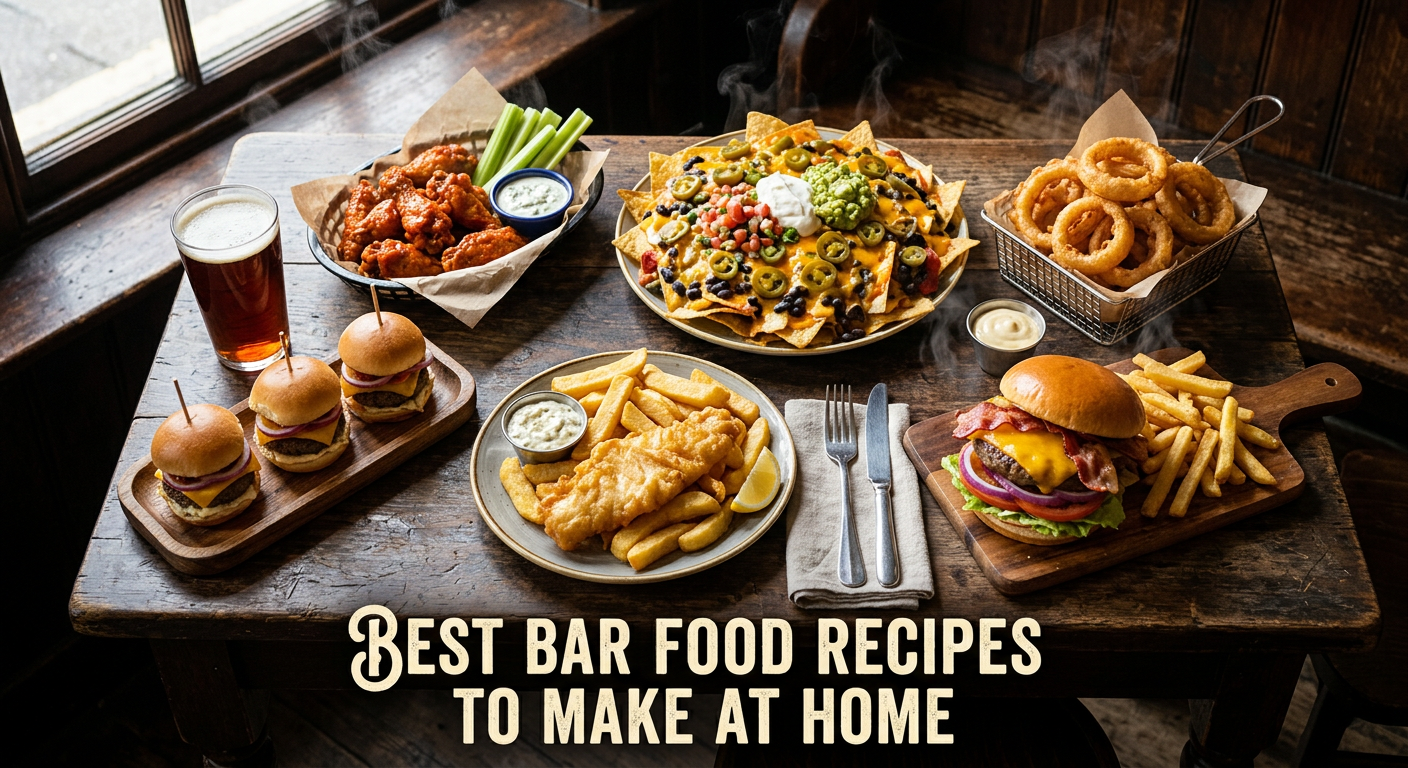
There is something undeniably appealing about pub food. The crispy wings, the loaded fries, the hearty burgers dripping with cheese. For years, I thought you needed to head to a neighborhood bar to get that authentic pub grub experience. That changed when I started experimenting in my own kitchen. I discovered that with simple fresh ingredients and a few key techniques, you can recreate those bar food favorites right at home. This guide brings together the best bar food recipes to make at home, from classic pub snacks to hearty meals that will impress your guests.
What makes bar food special is its soul. Pub grub is comfort food at its finest, designed to be shared, enjoyed with friends, and paired with a cold drink. Whether you are hosting a game day gathering, planning a happy hour at home, or simply craving those bold flavors on a weeknight, these recipes have got you covered. We will walk through classic bar snacks, hearty pub meals, game day favorites, and even vegetarian options. You will learn time-saving techniques, get air fryer adaptations, and discover how to pair your creations with the perfect beverage. If you are looking for drinks to complement your bar food spread, check out our Perfect Bloody Mary to pair with your bar food for an excellent starting point.
Table of Contents
What Defines Bar Food?
Bar food, often called pub grub, encompasses the casual yet flavorful dishes served in pubs, taverns, and bars around the world. These foods share certain characteristics that make them perfect for washed-down drinks and social eating.
The best bar food recipes share common traits. They are meant to be shared, they use simple fresh ingredients that pack bold flavors, and they are designed to be eaten with your hands while watching sports or chatting with friends. Most importantly, bar food is forgiving. You do not need professional equipment or culinary training to make it. A solid skillet, an oven, or an air fryer is enough to get started.
Making bar food at home offers real advantages. You control the quality of ingredients, you can customize flavors to your preferences, and you save money compared to bar prices. Our team has tested these recipes in home kitchens with standard equipment, so every recipe here works without professional-grade tools.
Classic Bar Snacks You Can Master at Home
No bar food spread is complete without the classics. These recipes represent the foundation of pub culture, the dishes that have graced counters and tables for generations.
Buffalo Chicken Wings
Buffalo wings are the crown jewel of bar food. My first attempt at making wings at home produced something that tasted nothing like what I craved. The problem was simple: I was not using the right technique. Real buffalo wings are not baked until crispy, they are fried.
To make authentic buffalo wings at home, start with whole wings split into flats and drumettes. Pat them completely dry, then fry at 375 degrees Fahrenheit for 12-15 minutes until golden and crispy. The sauce is a simple combination of melted butter and hot sauce, typically Frank’s RedHot. Toss the fried wings in the sauce and serve immediately with ranch or blue cheese dressing.
Want an easier approach? Air fryer wings have become a game-changer for home cooks. Set your air fryer to 400 degrees, cook for 25-30 minutes, flipping halfway through. The skin gets remarkably crispy without the mess of frying. You can toss them in the same buffalo sauce afterward. This method has saved me on countless game days when I wanted wings without dealing with a pot of hot oil.
The origin of buffalo wings traces back to Buffalo, New York, where they were first created at Anchor Bar in 1964. Today, they are a universal symbol of bar food culture, appearing on menus from casual sports bars to upscale gastropubs.
Loaded Nachos Supreme
Nachos represent bar food at its most communal. A big platter of loaded nachos disappears quickly at any gathering, making them perfect for parties. The key to exceptional nachos is layering, not just dumping everything in one pile.
Start with quality tortilla chips as your foundation. Add a layer of seasoned black beans, then a generous amount of shredded cheese. Bake at 400 degrees until the cheese melts completely, about 8-10 minutes. Pull them out and add your toppings: diced jalapenos, fresh pico de gallo, sour cream, guacamole, and sliced olives. If you want protein, seasoned ground beef, shredded chicken, or even carnitas work wonderfully.
One lesson I learned the hard way: adding tomatoes and sour cream before baking makes the chips soggy. Always add fresh toppings after the cheese has melted. For a twist, try switching to pepper jack or using different cheese blends. A mix of cheddar and Monterey Jack gives you that perfect melt.
Nachos originated in northern Mexico and southern Texas, but they have become a staple in bars worldwide. The beauty of nachos lies in their flexibility. You can customize toppings based on preference or whatever you have in your refrigerator.
Crispy Onion Rings
Onion rings achieve that perfect combination of crispy exterior and tender, sweet onion inside. They require a specific batter technique that separates great onion rings from mediocre ones.
Slice sweet onions into thick rings, about half an inch. Separate the rings and set them aside. The batter is crucial: mix flour with paprika, garlic powder, and salt. Add beer to create a thin, smooth batter. The carbonation in beer creates lighter, crispier results. Dip each ring into the batter, letting excess drip off, then fry in oil at 375 degrees until golden brown, about 2-3 minutes per side.
For a lighter version without deep frying, coat the rings in breadcrumbs mixed with Parmesan and air fry at 390 degrees for 10-12 minutes, turning halfway. While the texture differs slightly from traditional fried rings, the convenience makes this technique worthwhile for weeknight cravings.
The sweetness of properly cooked onion rings comes from caramelization. Slicing the rings thick ensures they soften without burning. If your onions are particularly potent, a quick soak in ice water for 15 minutes before battering helps mellow their sharpness.
Soft Pretzels with Cheese Sauce
Soft pretzels are a beloved bar snack that might seem intimidating to make at home. I was surprised to discover they are actually straightforward, requiring only basic dough ingredients and a quick baking soda bath.
Mix flour, yeast, sugar, and salt with warm water to create a smooth dough. Let it rise for about an hour, then divide into small balls. Roll each ball into a long rope and shape into a pretzel. Before baking, dip each pretzel in a solution of boiling water and baking soda for about 30 seconds. This step is what gives pretzels their distinctive brown, chewy crust. Bake at 425 degrees for 12-15 minutes until deeply golden.
The cheese sauce brings everything together. A simple cheese sauce uses milk, shredded sharp cheddar, and a touch of mustard powder. Heat gently while stirring until smooth and creamy. One thing users consistently mention in forums is how soft pretzels do not leave grease on glasses like potato chips do, making them ideal for gatherings where drinks are being held.
Pretzels have a surprisingly ancient history, dating back to medieval Europe where monks shaped dough to resemble crossed arms for prayer. The bar snack version we know today features soft, chewy interiors with crisp, slightly browned exteriors.
Hearty Pub Meals That Satisfy
Bar food extends beyond snacks into genuinely satisfying meals. These hearty pub dishes represent the comfort food heritage that makes pub grub so beloved.
Classic Beef Burger with Pub Sauce
The pub burger stands apart from typical backyard burgers through specific techniques and the signature sauce. A great pub burger starts with the right beef blend. We prefer 80/20 ground beef for optimal flavor and moisture. Form patties slightly larger than your bun since they shrink during cooking.
Season generously with salt and pepper just before cooking. Cook over high heat, either on a cast iron skillet or grill, for about 4-5 minutes per side for medium doneness. The key moment comes when you add a slice of cheese in the last minute of cooking and cover to melt.
The pub sauce differentiates your burger. Mix mayonnaise, ketchup, mustard, pickles, and a touch of Worcestershire sauce. Toast your brioche bun lightly in the burger fat remaining in the pan. Layer the sauce on both halves, add your patty, and finish with fresh lettuce, tomato, and onion. A cast iron skillet creates that crispy edge that bar burgers are known for.
The pub burger tradition in Britain developed as pubs sought to offer heartier food beyond simple snacks. Today, the British pub burger has evolved into something distinct, often featuring higher-quality beef and creative topping combinations.
Beer Battered Fish and Chips
Fish and chips represents the pinnacle of pub food tradition. The dish traces its roots to British taverns, where it became a staple for workers seeking hearty, affordable meals. At home, recreating this classic requires attention to the batter and cooking method.
Select firm white fish like cod or halibut, cut into strips. The batter makes the dish: mix flour with baking powder, salt, and your favorite beer. A lager works well, giving the batter light, crispy texture. The batter should be cold and slightly lumpy. Dip fish pieces and fry immediately at 365 degrees for about 4-5 minutes until golden.
The fries, or chips, should be thick-cut and double-fried for optimal texture. First fry at 325 degrees for about 5 minutes to cook through, then rest. Before serving, fry again at 375 degrees until crispy and golden. Serve with malt vinegar and homemade tartar sauce. A Dark and Stormy cocktail, with its ginger beer foundation, complements fish and chips exceptionally well.
Traditional fish and chips uses haddock or cod, but any firm white fish works. The key is ensuring your oil temperature stays consistent throughout frying. A thermometer is worth the small investment for achieving that perfect crispy batter.
Steak and Ale Pie
The steak and ale pie represents British pub cooking at its most comforting. This dish requires patience, but the hands-on time is minimal, making it perfect for weekend cooking.
Cut beef chuck into large chunks and brown in batches in a Dutch oven. Remove the beef and saute onions until softened. Add tomato paste, beef broth, and a dark ale. Return the beef, cover, and braise low and slow for 2-3 hours until fork-tender. Add frozen peas and carrots in the last 30 minutes.
Transfer to a pie dish and top with store-bought or homemade puff pastry. Brush with beaten egg for a glossy finish. Bake at 400 degrees for 25-30 minutes until the pastry is deep golden and the filling bubbles through the edges. The slow cooking creates incredibly tender meat, while the ale adds depth that makes this pie special.
The key to a great steak and ale pie lies in the gravy. It should be rich, slightly sweet from the ale, and thick enough to cling to the meat without being gluey. Reducing the braising liquid before adding it back to the pie ensures proper consistency.
Bangers and Mash with Onion Gravy
Bangers and mash showcases British pub fare simplicity. Quality sausages, fluffy mashed potatoes, and rich onion gravy combine into something greater than the sum of its parts.
For the mash, russet potatoes work best. Peel and quarter them, then boil until fork-tender. Drain and mash with butter and warm milk until smooth and creamy. Season with salt and white pepper. Keep warm while you prepare the sausages and gravy.
Pan-fry banger sausages until browned on all sides and cooked through, about 15 minutes total. For the onion gravy, slice onions thin and cook slowly in butter until deeply caramelized, about 20 minutes. Add flour to create a roux, then beef broth and a splash of Worcestershire. Simmer until thickened. Plate the mash, top with split sausages, and finish with generous onion gravy.
Bangers got their name because butchers used to bind sausages with breadcrumbs and rusk to help them hold together. Today, the term simply refers to quality British sausages, typically made with pork and natural casings.
Game Day and Party Bar Food
Entertaining calls for recipes that travel well, serve crowds easily, and can be prepared ahead of time. These dishes have proven themselves at countless gatherings.
Loaded Potato Skins
Potato skins deliver everything you want in party food: they are crispy, loaded with toppings, and perfectly portable. The key is achieving maximum crispiness on the exterior while keeping the inside tender.
Bake large russet potatoes until completely cooked through, about 45 minutes at 425 degrees. Cut in half lengthwise and scoop out the inside, leaving a thin shell. Brush both sides with oil and season well. Place cut-side down on a baking sheet and roast again at 450 degrees for 15 minutes, then flip and roast 10 more minutes until crispy.
Fill each skin with shredded cheddar and crumbled bacon. Return to the oven until the cheese melts, about 5 minutes. Top with sour cream and chives before serving. One tip from forum discussions: you can prepare the empty shells a day ahead and store them in the refrigerator, then fill and bake when ready to serve.
The scooped potato insides do not need to go to waste. They make excellent mashed potatoes, or you can freeze them for later use in soups and casseroles.
Cheesy Chicken Wing Dip
Chicken wing dip transforms the flavors of buffalo wings into a crowd-pleasing dip. This recipe has become a party staple because it feeds a crowd and requires minimal last-minute preparation.
Mix softened cream cheese with shredded chicken, buffalo sauce, ranch dressing mix, and shredded cheddar. Transfer to a baking dish and top with additional cheese. Bake at 350 degrees for 25-30 minutes until bubbly and golden. Serve with tortilla chips or celery sticks.
The advantage of this dip is its make-ahead friendly nature. You can assemble it the night before and bake when your guests arrive. Leftovers reheat well in the microwave, though I doubt you will have many.
This dip works beautifully for game day parties where you want to focus on watching the action rather than constantly reheating and refilling platters.
Barbecue Pulled Pork Sliders
Pulled pork sliders offer that perfect combination of tender, smoky meat with sweet, tangy barbecue sauce on soft slider buns. Using a slow cooker makes this recipe practically foolproof.
Season a pork shoulder with your favorite rub and place in the slow cooker with a cup of apple juice. Cook on low for 8 hours until the meat falls apart easily. Shred with two forks and mix with your preferred barbecue sauce. Pile onto slider buns and top with coleslaw.
Forum users consistently praise recipes that can be made ahead, and pulled pork excels in this regard. You can cook the pork a day or two before and simply reheat with fresh sauce. The flavor actually improves as it sits. Leftovers also freeze well for future gatherings.
The slow cooking process breaks down the tough muscle fibers in pork shoulder, transforming what would be a chewy cut into something tender enough to pull apart with a fork.
Mini Meatballs with Barbecue Glaze
Meatballs have earned their reputation as one of the most versatile bar foods. They are easy to make in large batches, travel well to parties, and accept countless flavor variations. Users consistently recommend meatballs in forum discussions as the ultimate easy bar food.
Mix ground beef with breadcrumbs, egg, garlic, and your choice of herbs. Roll into small balls, about 1 inch in diameter. Bake at 400 degrees for 20 minutes until cooked through, or brown in a skillet. Toss with barbecue sauce and serve on toothpicks.
The key to great meatballs is not overmixing the meat. Mix until just combined, then bake or fry immediately. Overworking the meat leads to dense, tough meatballs rather than tender ones.
Vegetarian Bar Food Options
Bar food does not have to center on meat. These vegetarian alternatives deliver the same bold flavors and satisfying textures that make pub grub great.
Buffalo Cauliflower Wings
Buffalo cauliflower wings have won over even dedicated meat-eaters in my experience. The florets develop a crispy coating when prepared correctly, then get tossed in that same buffalo sauce.
Cut cauliflower into bite-sized pieces and toss with a batter made from flour, almond milk, garlic powder, and paprika. Spread on a baking sheet and roast at 450 degrees for 20 minutes until the coating sets. Toss with buffalo sauce and return to the oven for 10 more minutes. Serve with ranch dressing and celery sticks.
The air fryer works exceptionally well for this recipe, reducing cooking time to about 15 minutes total at 400 degrees. The result is crispier than oven baking, with the interior staying tender while the exterior develops that satisfying crunch.
Seasoned olives with cinnamon, orange, or mint are an underrated bar snack that works perfectly alongside buffalo cauliflower for those seeking something different.
Loaded Sweet Potato Fries
Sweet potato fries offer a sweeter counterpart to traditional fries while allowing creative toppings. The natural sweetness pairs well with savory additions and spicy elements.
Cut sweet potatoes into uniform sticks and toss with oil, salt, and a touch of cinnamon. Bake at 425 degrees on a parchment-lined sheet for 25-30 minutes, turning halfway through. For extra crispiness, let them rest uncovered in the refrigerator for 30 minutes before baking.
Load them up with black beans, corn, jalapenos, cheese, and a drizzle of chipotle aioli. The combination of sweet potato and spicy toppings creates that perfect bar food balance of flavors.
Sweet potatoes contain more fiber and nutrients than white potatoes, making this a slightly healthier alternative while still delivering that satisfying crispy-on-outside, tender-on-inside texture.
Mushroom Swiss Sliders
Mushroom Swiss sliders prove that vegetarian bar food can be just as hearty and satisfying. Portobello mushrooms have a meaty texture that holds up well in slider format.
Marinate sliced Portobello mushrooms in balsamic vinegar, olive oil, garlic, and herbs for 30 minutes. Saute until tender and caramelized. Layer on small slider buns with Swiss cheese and caramelized onions. Toast until the cheese melts.
The key is getting the mushrooms properly caramelized rather than just wilted. High heat and patience create depth of flavor that makes these sliders genuinely satisfying.
Cremini or shiitake mushrooms work as alternatives to Portobello, offering slightly different flavor profiles while maintaining that umami-rich, meaty character.
Vegan Nachos with Cashew Cheese
Plant-based bar food continues gaining popularity, and vegan nachos demonstrate how to create crowd-pleasing snacks without dairy products. Cashew cheese provides the creamy element that makes traditional nachos so satisfying.
Soak raw cashews for several hours, then blend with nutritional yeast, garlic powder, and lemon juice until completely smooth. This creates a versatile cheese substitute that melts surprisingly well. Spread over tortilla chips with black beans, jalapenos, and your favorite salsa.
The beauty of vegan nachos lies in their customizability. Add whatever fresh vegetables you have on hand, from diced bell peppers to avocado slices.
Cooking Tips and Techniques
Mastering bar food at home requires understanding a few key techniques that professionals use. These methods will elevate your cooking regardless of which recipe you tackle.
Air Fryer vs Deep Frying
Air fryers have revolutionized home bar food preparation. They deliver crispy results with minimal oil, making them ideal for those who want bar food without the mess and danger of deep frying.
For most breaded or coated items, air fry at 375-400 degrees. The key is arranging food in a single layer with space between pieces for air circulation. Overcrowding steams rather than crisps. Shake the basket halfway through cooking for even browning.
Traditional deep frying still produces superior results for certain items like onion rings and wings. If you prefer deep frying, maintain consistent oil temperature using a thermometer and never fill the pot more than halfway. Safety remains paramount: keep a pot lid nearby and never leave hot oil unattended.
The air fryer works by rapidly circulating hot air around food, simulating the results of deep frying with up to 80% less oil. This makes it an excellent option for health-conscious home cooks who still crave that crispy texture.
Cast Iron Cooking
Cast iron skillets are invaluable for bar food preparation. They retain heat exceptionally well, creating the perfect sear for burgers and steaks. Once properly seasoned, they develop a natural non-stick surface that improves with use.
Always preheat your cast iron thoroughly before adding food. A properly heated pan creates the Maillard reaction that produces that deep brown crust on burgers and steaks. After cooking, clean with hot water and a stiff brush, then dry immediately to prevent rust.
Many forum users share that their cast iron skillets have become their most-used piece of cookware for bar food preparation. The versatility of cast iron allows you to go from stovetop to oven seamlessly.
Dutch Oven Techniques
A Dutch oven transforms braising from a restaurant technique into an accessible home cooking method. These heavy pots distribute heat evenly and retain moisture, making them perfect for pub pies and stews.
The enamel coating in modern Dutch ovens eliminates the need for seasoning and allows you to cook acidic ingredients like tomatoes without concern. For bar food applications, a Dutch oven excels at slow-cooked dishes like pulled pork and beef stews.
Make-Ahead Strategies
Successful entertaining relies on preparation. Many bar food recipes can be partially or fully prepared ahead of time, reducing stress when guests arrive.
Components that work well ahead include burger patties (freeze with parchment between), fully cooked bacon, caramelized onions, and sauces. The night before a party, you can prep potato skins through the baking stage and refrigerate. On game day, just fill and bake for quick results.
Forum discussions consistently highlight that make-ahead recipes reduce host stress and allow you to enjoy your gathering rather than work it. Planning your menu around prep-ahead items ensures you spend time with guests, not trapped in the kitchen.
Batch cooking also saves money. When you prepare bar food ahead, you can buy ingredients in bulk and spread the cost across multiple meals throughout the week.
Beer and Cocktail Pairings
Bar food achieves its full potential when paired with the right beverage. These classic combinations have stood the test of time for good reason.
Buffalo wings demand an IPA. The hoppy bitterness cuts through the fatty richness and spicy heat, creating a perfect balance. If you prefer something lighter, a pilsner or lager works well too. Our team found that the carbonation in beer helps refresh your palate between bites of rich bar food.
Beef burgers pair beautifully with amber ales or brown ales. The malty sweetness complements the savory beef while standing up to strong cheddar. For fish and chips, you cannot beat a cold pilsner or a crisp lager. The light, refreshing qualities prevent the dish from feeling heavy.
Loaded nachos and other Tex-Mex bar foods pair wonderfully with Mexican lagers or pilsners. The clean, crisp finish of these beers prevents the palate from becoming overwhelmed by the rich toppings.
Looking for cocktail options? A perfectly made Dark and Stormy cocktail with its ginger beer base complements spicy bar foods remarkably well. The spice and sweetness balance rich, fatty dishes. For something more sophisticated, a Classic Negroni offers bitter complexity that matches well with hearty pub fare.
A Classic Martini also pairs elegantly with lighter bar snacks like potato skins and nachos. The gin-forward character provides a refreshing counterpoint to rich, cheesy toppings.
Frequently Asked Questions
What is the best simple fresh ingredients bar-style food to make at home?
The best simple bar food using fresh ingredients includes buffalo chicken wings (just wings, butter, and hot sauce), loaded nachos (tortilla chips, cheese, beans, and fresh toppings), and soft pretzels (flour, yeast, and beer cheese). These recipes use basic ingredients available at any grocery store while delivering authentic pub flavors.
What are classic pub food recipes?
Classic pub food recipes include beer battered fish and chips, steak and ale pie, bangers and mash with onion gravy, classic beef burgers with pub sauce, and buffalo chicken wings. These dishes form the foundation of pub grub culture and are found in bars across the English-speaking world.
What bar snacks can I make at home?
You can make numerous bar snacks at home including buffalo wings, loaded nachos, crispy onion rings, soft pretzels with cheese sauce, loaded potato skins, cheese dips, and chicken wing dip. All of these require only basic kitchen equipment and simple ingredients.
How to make pub food at home?
Making pub food at home requires three key elements: quality simple ingredients, proper cooking techniques (like achieving crispy skin on wings or proper browning on burgers), and the right tools (cast iron skillet, Dutch oven, or air fryer). Most pub food can be made with standard home kitchen equipment without professional-grade tools.
What are easy bar food recipes for a party?
Easy bar food for parties includes make-ahead options like pulled pork sliders, chicken wing dip, loaded potato skins, and nachos. These recipes either require minimal last-minute preparation or can be assembled ahead of time and baked when guests arrive. Meatballs are also highly recommended as versatile, easy-to-serve party food.
Bringing the Bar Home
Creating bar food at home opens up possibilities that going out simply cannot match. You customize flavors to your exact preferences, control ingredient quality, and save significantly compared to bar prices. The satisfaction of serving restaurant-quality pub grub to friends and family brings a special joy that makes the effort worthwhile.
Start with one or two recipes that appeal to you most. Master those techniques, build your confidence, and expand from there. The best bar food recipes to make at home become family traditions over time. Soon you will have your own signature dishes that guests anticipate and request.
For more inspiration on pairing options and drink recipes to serve with your bar food spread, explore our collection of food and drink recipes that complement pub fare perfectly. From classic cocktails to creative non-alcoholic options, you will find everything you need to complete your home bar experience.
The world of bar food at home is waiting for you. Fire up that air fryer, preheat your cast iron, and get cooking. Your perfect bar food creation is closer than you think.