
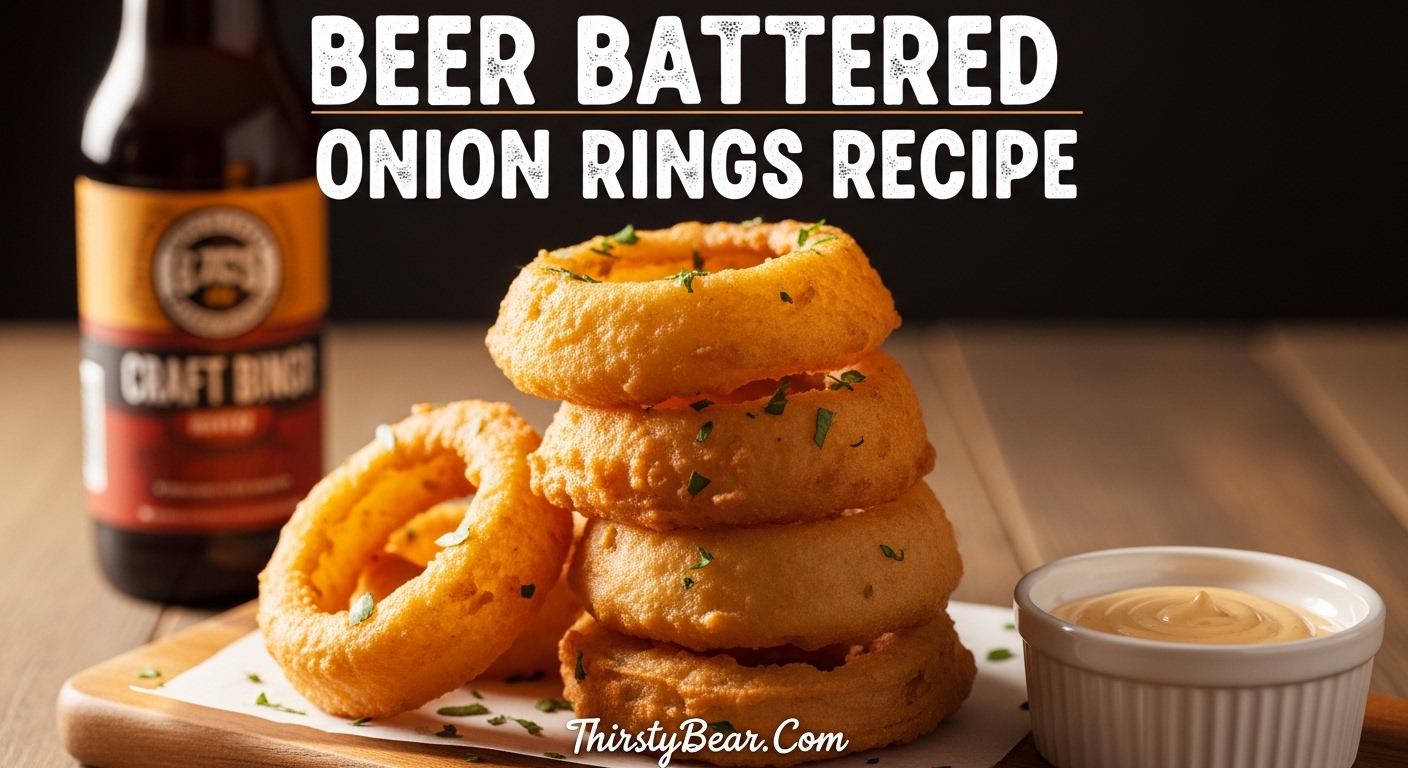
There is something deeply satisfying about biting into a perfectly crispy beer battered onion ring. The golden shell shatters with each bite, revealing a sweet, tender onion inside. I have spent years testing and tweaking this beer battered onion rings recipe, and I am excited to share exactly what works and why.
This recipe delivers restaurant-quality results in your own kitchen. The key lies in understanding how beer carbonation creates that signature light, airy coating. Whether you are planning a party spread, game day snacks, or just want to elevate your weeknight dinner, these onion rings will disappear fast.
By the end of this guide, you will know exactly how to select the right onions, choose the perfect beer, master the frying temperature, and avoid the common mistakes that lead to soggy, greasy results. Let us get started.
Table of Contents
Why This Beer Battered Onion Rings Recipe Works
The magic behind these crispy beer battered onion rings lies in the science of carbonation. When you add cold beer to the batter, the carbon dioxide bubbles create tiny air pockets throughout the mixture.
Those bubbles expand rapidly when they hit the hot oil, causing the batter to puff up and create that characteristic light, crispy shell. This is why beer batter produces such noticeably lighter results compared to batter made with water or milk.
The combination of flour and cornstarch in this recipe is intentional. Flour provides structure and browning, while cornstarch absorbs excess moisture and promotes crispiness. Adding a small amount of baking powder gives the batter an extra lift.
Cold ingredients are crucial. The temperature difference between the cold batter and hot oil creates more dramatic puffing. I keep my beer refrigerated until ready to use.
Ingredients
Before you start, gather all your ingredients. Having everything measured and ready ensures smooth execution once you begin frying.
For the Onion Rings:
- 2 large sweet onions (Vidalia or Walla Walla recommended)
- 1 1/2 cups all-purpose flour
- 1/2 cup cornstarch
- 1 teaspoon baking powder
- 1/2 teaspoon salt
- 1/4 teaspoon black pepper
- 1/2 teaspoon garlic powder (optional)
- 1 cup cold light beer (lager, pale ale, or pilsner)
- Ice water as needed
For Frying:
- 4 cups vegetable oil, canola oil, or peanut oil
- Additional flour for dredging
- Ice water for soaking the onions
The beer you choose matters less than you might think, but light-colored beers deliver the best results. Avoid dark stouts or porters, as they can make the batter heavy and bitter.
Step-by-Step Instructions
Follow these steps carefully for the best possible results. Each stage is important, so resist the urge to rush through the process.
Step 1: Prepare the Onions
Slice the onions into 1/2-inch thick rounds. Separate these into individual rings, keeping only the largest rings for frying. Place the rings in a bowl of ice water and let them soak for at least 30 minutes and up to 1 hour.
This soaking step serves multiple purposes. It cools the onions so they cook evenly, it helps them release excess moisture, and it makes the sugars more concentrated for a sweeter bite.
Step 2: Make the Beer Batter
While the onions soak, whisk together the flour, cornstarch, baking powder, salt, pepper, and garlic powder in a large bowl. Gradually pour in the cold beer, stirring constantly until you achieve a smooth consistency.
The batter should be thin, similar to pancake batter. If it seems too thick, add ice water one tablespoon at a time. If too thin, add a small amount of flour. The key is consistency because thick batter creates heavy, doughy rings while thin batter runs off.
Let the batter rest for 10-15 minutes at room temperature. This allows the gluten to relax and the bubbles to stabilize, resulting in a smoother coating.
Step 3: Heat the Oil
Pour the oil into a deep pot or Dutch oven. Attach a deep-fry thermometer and heat the oil to 350-375F. The ideal range is 350F for slightly thicker rings and 375F for thinner rings.
Do not skip the thermometer. Guessing the temperature is the most common cause of poor results. Oil that is too cool leads to greasy, soggy rings, while oil that is too hot burns the exterior before the inside cooks through.
Step 4: Prepare for Frying
Drain the onion rings and pat them completely dry with paper towels. Any excess moisture causes dangerous splattering and creates steam that makes the batter soggy.
Spread a layer of flour on a plate or baking sheet. Working with one ring at a time, dredge the onion in flour, shaking off any excess. This flour layer helps the beer batter adhere better.
Step 5: Dip and Fry
Submerge the floured ring in the beer batter, turning to coat evenly. Lift it out and let excess batter drip off for a moment. The coating should be thin and even with no bare spots.
Carefully lower the battered ring into the hot oil. Fry in batches of 3-4 rings maximum. Crowding the pot lowers the oil temperature too quickly and results in uneven cooking.
Fry each ring for 2-3 minutes per side until deep golden brown. The total time depends on the thickness of your rings and your oil temperature. Watch for an even golden color throughout.
Step 6: Drain and Season
Remove the finished rings with a slotted spoon or spider utensil and place them on a wire rack set over paper towels. This allows air circulation so steam escapes and the rings stay crispy.
Immediately season with a small amount of salt while still hot. Let the rings rest for 2-3 minutes before serving. They continue cooking slightly from residual heat.
Frying Temperature and Technique
The temperature range of 350-375F is critical for achieving that perfect crispy texture. Here is a breakdown of what happens at different temperatures.
At 325F and below, the oil is not hot enough to set the batter quickly. The rings absorb more oil and turn out greasy and soft. You will notice they feel heavy and look pale rather than golden.
Between 350-375F, the exterior sets almost instantly, creating a barrier that prevents excess oil absorption while the inside finishes cooking. This produces that characteristic crunch.
Above 400F, the exterior burns before the interior cooks through. You will see dark brown or black spots while the onion remains raw.
Maintaining consistent temperature is essential. If you add too many cold rings at once, the temperature drops dramatically. I fry only 3-4 rings per batch and let the oil recover between batches.
A Dutch oven or cast iron pot works best because they distribute heat evenly. Avoid non-stick pots for deep frying because the coating can break down at these high temperatures.
Tips for Perfect Crispy Results
These tips come from testing and from what works best according to forum discussions among home cooks and professionals alike.
Keep everything cold. The temperature differential between the batter and the oil is what creates the puffing effect. I chill my mixing bowl and even add an ice cube to the batter.
Do not skip the cornstarch. This ingredient is the secret many restaurant kitchens use. It promotes browning and creates a more delicate, crispy texture that flour alone cannot achieve.
Rest your batter. After mixing, let it sit for 15-20 minutes. This allows the gluten to relax and the leavening agents to activate fully. The result is a smoother, more even coating.
Dry the onions thoroughly. Even a small amount of moisture on the rings causes the batter to slide off or become soggy. I pat each ring with paper towels before flouring.
Do not crowd the pan. I cannot stress this enough. Overcrowding lowers the oil temperature, creates uneven cooking, and results in soft spots rather than consistent crunch.
Use a spider or slotted spoon rather than tongs. Metal tongs can damage the delicate coating. The spider allows you to lower rings gently without disturbing the batter.
Season immediately after frying. Salt adheres best to hot, freshly fried surfaces. Add it right away rather than waiting until serving time.
Best Beer for Onion Rings
The beer you choose affects both flavor and texture. Understanding your options helps you make the best choice for your preferences.
Light lagers like Coors Light, Budweiser, or Corona provide a clean, mild backdrop that lets the onion sweetness shine. These are foolproof choices that work well every time.
Pale ales add a subtle hoppy bitterness that some people love. The flavor is more pronounced than with lagers but still complements rather than dominates.
Pilsners offer a slightly more complex malt flavor while remaining light enough for crispy results. Many professional kitchens prefer pilsners for their balanced profile.
Beer Substitutes
If you need to avoid alcohol, club soda works surprisingly well. The carbonation creates similar puffing effects, though the flavor profile changes slightly.
Mix 1 cup of club soda with your dry ingredients and proceed as normal. The results are nearly identical in terms of crispiness. You lose the subtle beer flavor, but the texture remains excellent.
Ginger ale is another option for a sweeter profile. Some users report success with sparkling cider as well.
Non-alcoholic beer also works if you want to maintain the beer flavor without the alcohol content. This is particularly useful if children will be eating the rings.
What About Alcohol Content?
A common concern is whether beer battered foods contain alcohol after cooking. The good news is that the high frying temperature (350F+) causes nearly all alcohol to evaporate.
Studies show that after 10-15 seconds of exposure to temperatures above 350F, the alcohol content drops to trace levels. By the time your rings finish frying for 2-3 minutes per side, virtually no alcohol remains.
People often worry unnecessarily about this. The batter’s alcohol evaporates almost completely during the frying process, leaving only the flavor contribution behind.
Best Onions for Onion Rings
Not all onions produce equal results. The sugar content and cell structure affect both flavor and how well the batter adheres.
Vidalia onions are the top choice for their exceptional sweetness and thin cell walls. They caramelize beautifully inside the batter and provide that signature sweet-onion flavor.
Walla Walla onions offer similar sweetness and work equally well. They are slightly more available in some regions compared to Vidalia onions.
Yellow onions are the most accessible option and still produce good results. They have more pungency than sweet onions, which some people actually prefer for the flavor contrast.
White onions tend to be too sharp and lack the sweetness needed for great onion rings. Red onions are too delicate and break apart easily during frying.
Size matters. Larger onions provide bigger rings that are easier to handle and more satisfying to eat. Look for onions that are at least 3 inches in diameter.
Serving Suggestions and Dipping Sauces
Perfect crispy beer battered onion rings deserve excellent dipping companions. Here are some options that pair beautifully.
Classic ketchup is always welcome, but elevate it with a splash of Worcestershire sauce or a pinch of cayenne pepper for extra depth.
Ranch dressing provides a cool, creamy counterpoint to the crunchy, savory rings. The tanginess cuts through the richness beautifully.
Spicy mayo combines mayonnaise with sriracha or chipotle sauce. The creaminess tempers the heat while complementing the savory coating.
Blue cheese dip matches particularly well if you are serving these alongside burgers or BBQ. The sharp, pungent cheese is a natural partner for fried onions.
Lime crema adds a bright, tangy element that brightens the entire experience. Mix sour cream with lime juice and a hint of cilantro.
Food Pairings
These onion rings shine as a side dish with burgers, grilled chicken, or BBQ. They also work as a standalone appetizer with any of the sauces above.
For game day spreads, they complement wings, sliders, and nachos perfectly. Their shareable nature makes them ideal for casual entertaining.
Try them alongside sandwiches, particularly deli-style sandwiches or philly cheesesteaks. The crunch adds textural contrast to softer sandwich components.
Storage and Reheating
Leftover onion rings can be stored, though fresh ones are always best. Here is how to handle them properly.
Allow the rings to cool completely on a wire rack. Do not stack them or they will become soggy from trapped steam.
Store in an airtight container with paper towels to absorb excess moisture. Place the rings in a single layer if possible. They will keep for 2-3 days in the refrigerator.
The freezer is an option but expect some texture loss. Flash freeze the cooled rings on a baking sheet for 1 hour, then transfer to freezer bags. Use within 1 month for best quality.
Reheating for Best Results
The air fryer produces the best reheated results. Set it to 375F and heat for 3-4 minutes until warmed through and crispy again.
The oven works well as an alternative. Arrange rings on a baking sheet and heat at 400F for 5-7 minutes. Flip halfway through for even browning.
Avoid the microwave if possible. It creates steam that makes the coating soft and chewy rather than crispy.
If you must use the microwave, place the rings on a paper towel and heat in short 30-second intervals. Add a cup of water to the microwave to create steam that might help maintain some crispness.
Troubleshooting Common Problems
Even experienced cooks encounter issues with onion rings. Here are solutions to the most frequent problems based on forum discussions and testing.
Batter Not Sticking
If your batter slides off the onions, the likely causes are wet onions, too much batter, or batter that is too thick. Dry the onions thoroughly and ensure your batter runs off the whisk in a steady stream rather than clinging.
The flour dredge step is essential. Some cooks skip it to save time, but this flour layer creates the bond between the onion and the beer batter. Do not skip it.
Soggy or Greasy Rings
Soggy results usually indicate oil temperature that is too low. The batter absorbs oil rather than setting quickly. Always use a thermometer and maintain 350-375F throughout frying.
Another cause is adding too many rings at once. Each ring lowers the oil temperature significantly. Keep batches small and give the oil time to recover between batches.
The onions themselves might be releasing excess moisture. Soaking in ice water helps, and thorough drying before battering is essential.
Batter Falling Off During Frying
This happens when the oil temperature is inconsistent or the rings are moved too soon after adding them to the pot. Let the batter set for 30-60 seconds before attempting to flip.
Moving the rings too roughly can also cause the coating to separate. Use a spider or slotted spoon and lower rings gently rather than dropping them.
Rings Not Crisping
If your rings are cooked through but not crispy, the batter ratio might be off. Too much liquid in the batter creates a dense coating. Ensure your measurements are accurate and the batter is thin like pancake batter.
Cornstarch is critical for crispiness. Some recipes omit it, but the difference in results is significant. Keep the full amount in the recipe.
Onions Breaking Apart
Onions that fall apart during frying are usually cut too thin or are too mature. Cut rings at least 1/2 inch thick for structural integrity.
Use fresh, firm onions rather than older ones that have started to soften. The cell structure of fresher onions holds together better during frying.
Air Fryer Adaptation
If you prefer to avoid deep frying, the air fryer produces surprisingly good onion rings with significantly less oil.
Preheat your air fryer to 375F for 3-4 minutes. Brush the battered rings lightly with oil on both sides using a pastry brush.
Arrange the rings in a single layer in the air fryer basket. Do not overlap them. Cook for 8-10 minutes, flipping halfway through, until they reach your desired level of crispiness and golden color.
The texture differs slightly from deep-fried versions. Air fryer rings tend to be slightly denser with less dramatic puffing, but the convenience factor makes this method worthwhile for many cooks.
Results vary by air fryer model. Newer machines with powerful fans tend to produce crispier results. Keep an eye on your first batch to gauge timing for your specific appliance.
FAQs
What kind of beer is best for beer battered onion rings?
Light-colored beers work best for beer battered onion rings. Lagers, pale ales, and pilsners are ideal choices because they have a mild flavor that complements rather than overpower the onions. Avoid dark beers or stouts as they can make the batter too heavy.
How do I make beer batter onion rings?
To make beer batter onion rings, whisk together flour, cornstarch, baking powder, salt, and seasonings. Gradually add cold beer until you achieve a thin pancake consistency. Dip prepared onion rings in the batter, letting excess drip off, then deep fry at 350-375F for 5 minutes until golden brown.
Why soak onions in ice water before making onion rings?
Soaking onion slices in ice water for 30-60 minutes before battering helps them release their natural sugars and moisture. This results in a sweeter, more tender onion center and helps the batter adhere better to the rings.
What is the best batter for onion rings?
The best onion ring batter combines flour and cornstarch for maximum crispiness, along with baking powder for lightness and cold beer for carbonation. The carbonation creates tiny bubbles that make the coating light and airy rather than dense and heavy.
Conclusion
This beer battered onion rings recipe delivers everything you want in a crispy, golden appetizer. The combination of cold beer, proper technique, and attention to temperature produces restaurant-quality rings at home.
The key points to remember are keeping ingredients cold, maintaining oil temperature between 350-375F, not crowding the pan, and using a combination of flour and cornstarch for maximum crispiness.
Whether you serve these at a party, game day gathering, or alongside your favorite burger, they will disappear quickly. The beer flavor is subtle but present, enhancing rather than dominating the sweet onion flavor.
Give this recipe a try and experience the difference that proper technique makes. Once you taste truly crispy beer battered onion rings made correctly, you will never settle for soggy restaurant versions again.