
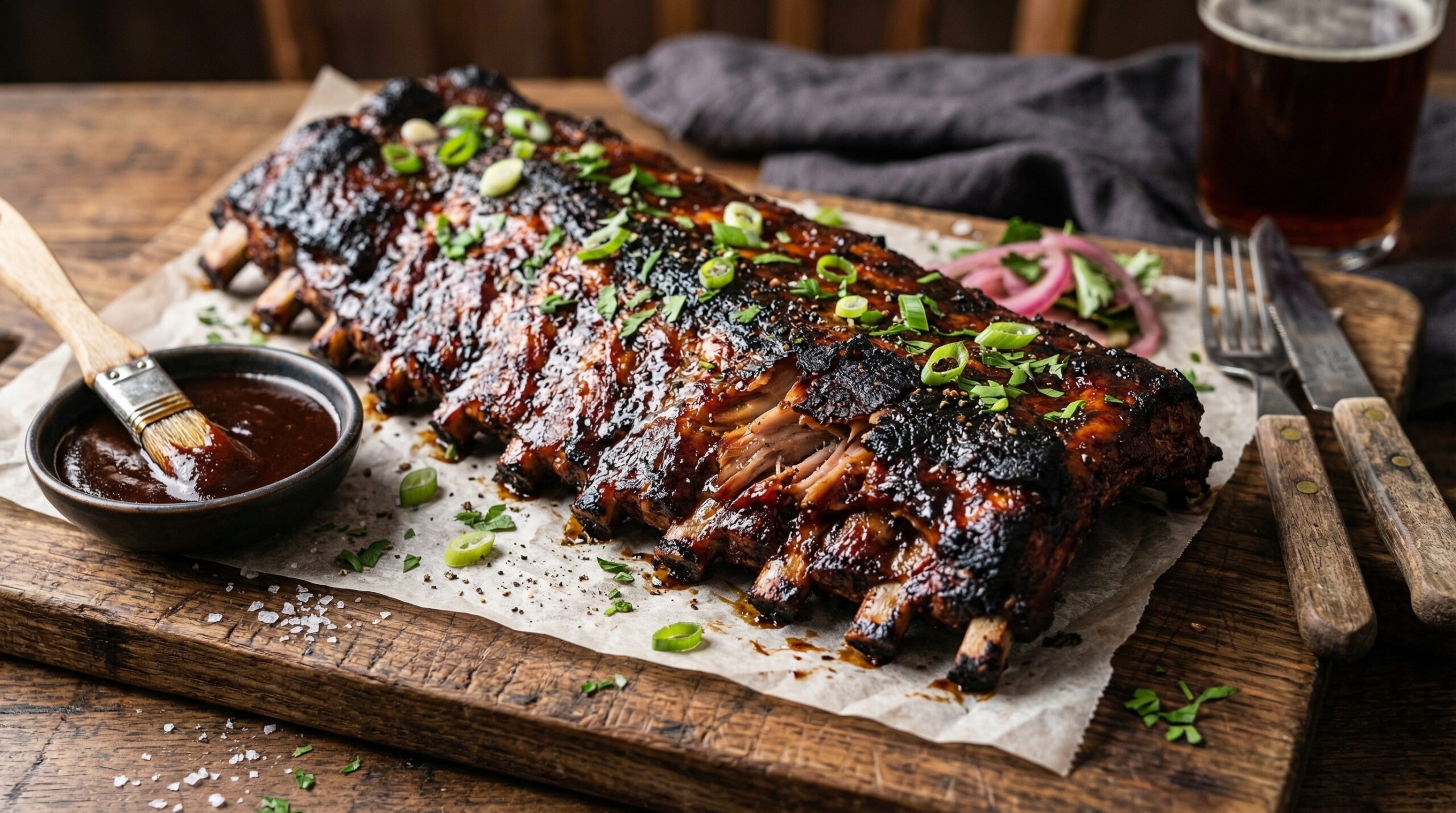
There is something deeply satisfying about pulling a rack of ribs from the oven, watching the meat effortlessly slide away from the bone with just a gentle tug. After years of experimenting with different techniques, I finally cracked the code to consistently tender, juicy BBQ ribs that melt in your mouth. The secret is not complicated: patience, the right temperature, and understanding what makes meat truly tender.
This recipe delivers fall-off-the-bone ribs every single time. Whether you are cooking for a summer backyard gathering, a game day crowd, or a cozy family dinner, you will have people begging for seconds. Best of all, you can achieve restaurant-quality results in your home oven with minimal equipment.
Table of Contents
Ingredients You’ll Need
Before we get into the technique, let us talk ingredients. The quality of your ribs matters, but you do not need to hunt down anything exotic. A standard rack of baby back ribs from your local grocery store works perfectly for this recipe.
For the ribs themselves, you will need one full rack of baby back ribs, about 3-4 pounds. If you prefer meatier ribs, spare ribs or St. Louis-style ribs work equally well, though you will need to adjust cooking time by 30-60 minutes. The key difference is fat content: baby backs are leaner and cook faster, while spare ribs have more connective tissue that breaks down into incredible flavor.
The dry rub brings everything together. You will need 1/4 cup brown sugar, 2 tablespoons paprika, 1 tablespoon garlic powder, 1 tablespoon onion powder, 1 teaspoon cayenne pepper (adjust to taste), 2 teaspoons kosher salt, and 1 teaspoon black pepper. Mix these in a bowl and you have enough rub to generously coat two racks of ribs. I recommend making extra because the leftovers pair wonderfully with chicken wings.
For the BBQ sauce, gather 1 cup ketchup, 1/4 cup apple cider vinegar, 1/4 cup brown sugar, 2 tablespoons Worcestershire sauce, 1 teaspoon smoked paprika, and a pinch of salt. This creates a balanced sweet and tangy sauce that caramelizes beautifully without burning.
Understanding Ribs and the Membrane
Here is where many home cooks run into trouble. Every rack of ribs comes with a thin, translucent membrane on the bone side. This membrane, technically called the peritoneum, stays tough and rubbery no matter how long you cook the ribs. Skip removing it and you will fight against that unpleasant chewiness the entire meal.
Removing the membrane is simpler than it sounds. Place the rack bone-side up on a cutting board. Slide your fingers under one edge of the membrane near a bone to loosen it. Once you have a good grip, pull firmly and steadily. The membrane should peel away in one piece or a few large pieces. If it tears, just grab another section and keep pulling. Some people prefer using a paper towel for a better grip since the membrane can be slippery.
After removing the membrane, use a paper towel to pat the bone side dry. You might notice a slight silvery layer still attached; that is called silver skin and it should also be scraped off with a sharp knife or the edge of a spoon. Taking these two steps ensures your dry rub and sauce make direct contact with the meat.
The Perfect Dry Rub Recipe
My dry rub formula has evolved over countless batches of ribs. The brown sugar creates the caramelized crust we all love, while paprika provides that gorgeous color and smoky undertone. Garlic and onion powder build savory depth, and cayenne adds just enough heat to make you reach for another bite.
Apply the rub generously on all sides of the ribs. Do not be shy here. Press the rub into the meat so it adheres properly. I like to apply the rub the night before and let the ribs rest uncovered in the refrigerator. This dry cure method pulls moisture to the surface and allows the flavors to penetrate deeper. If you are short on time, even 30 minutes of resting at room temperature makes a difference.
The key insight from forum discussions and professional pitmasters alike: more rub is better than less. You want a visible layer on the meat, not a dusty whisper. The sugar in the rub creates the bark that forms during cooking, and that bark carries immense flavor.
Oven Method: Low and Slow
The oven method produces remarkably consistent results with zero grill anxiety. Set your oven to 275°F and let it fully preheat. This temperature sits in the sweet spot where collagen breaks down into gelatin without the meat drying out. It is the foundation of true fall-off-the-bone texture.
Step one involves preparing your baking sheet. Place the seasoned ribs bone-side down on a large piece of heavy-duty aluminum foil. You want enough foil to wrap the ribs completely with room to spare. Some cooks prefer the meatier-side down for the first hour, which keeps the top surface from drying out during initial cooking.
Step two is the wrap. Add a drizzle of apple juice or beer to the foil packet, then wrap the ribs tightly. The liquid creates steam inside the packet, and that steam is what tenderizes the meat. Bake the wrapped ribs for 2 hours at 275°F. After 2 hours, carefully unwrap the foil and check the meat. It should be starting to pull away from the bone but still have some resistance.
Step three extends the cooking. Wrap the ribs back up and return them to the oven for another 30-60 minutes. Total oven time for baby back ribs typically lands between 2.5 and 3.5 hours. Spare ribs may need 3.5 to 4 hours. Use a meat thermometer to check internal temperature; you want to see 200°F for that fall-off-the-bone pull.
Step four creates the caramelized finish. Unwrap the ribs completely and brush generously with BBQ sauce. Switch your oven to broil and place the ribs on the top rack. Broil for 3-5 minutes, watching carefully. The sugar in the sauce can go from perfectly caramelized to burnt in seconds. You want darker patches of BBQ sauce forming bubbles and charring slightly at the edges. Remove from oven and let rest for 10 minutes before slicing.
Grill Method: Indirect Heat Alternative
Grilling adds a smoky dimension that ovens simply cannot replicate. The setup matters more than anything else. Create two-zone heat by placing charcoal or wood chips on one side of your grill and leaving the other side empty. For gas grills, turn on only half the burners.
Maintain your grill at 275°F, which requires adjusting vents on charcoal grills or monitoring gas burners. This temperature is lower than most people expect for direct grilling, but remember: we are not searing here, we are slowly rendering connective tissue. Place the ribs bone-side down on the cool side of the grill, away from direct heat.
Close the lid and maintain that 275°F temperature for the cooking duration. Check every 30 minutes to ensure consistent heat and add charcoal or wood chips as needed. Spritz the ribs with apple juice or apple cider vinegar every hour to keep them moist. After 2.5-3 hours, the ribs should easily bend when lifted with tongs and show good pull-away from the bones.
For the finishing step, brush with sauce and move the ribs directly over the heat source for 3-5 minutes to caramelize. Alternatively, use the same broiling method from the oven approach by finishing them on a sheet pan under your broiler. Either way, let the ribs rest before cutting.
Homemade BBQ Sauce Recipe
Skip the bottles for this one. Our homemade BBQ sauce comes together in 15 minutes and tastes immeasurably better than anything store-bought. The combination of ketchup, brown sugar, and apple cider vinegar creates balance, while Worcestershire sauce adds that umami depth you find in great BBQ joints.
Combine all ingredients in a small saucepan over medium heat. Stir occasionally as the sauce comes to a gentle simmer. Let it bubble for 10-12 minutes until it thickens to your desired consistency. The sauce should coat the back of a spoon. Remove from heat and let cool completely before using. Stored in a jar, this keeps in the refrigerator for two weeks.
Apply the sauce only during the final stages of cooking. If you add it too early, the sugars will burn before the meat finishes cooking. Brush on during the last broiling or grilling minutes, then again right before serving for extra gloss and flavor.
Beer Pairing for BBQ Ribs
Since you are visiting thirstybear.com, let us talk about what brew pairs beautifully with fall-off-the-bone ribs. This is where our brewery site brings unique value to this recipe. Beer and BBQ share a natural harmony: the carbonation cuts through fatty richness, while the malt sweetness complements caramelized sauces.
For sweeter rib preparations with heavy brown sugar rubs, reach for a light lager or pilsner. The crisp finish prevents the palate from becoming overwhelmed and refreshes your mouth between bites. Avoid overly hoppy beers with sweeter sauces because the bitterness competes rather than complements.
When your dry rub leans toward spicy with more cayenne or chili powder, an amber ale or Oktoberfest-style malt provides excellent balance. The caramel malt flavors echo the brown sugar in your rub while the moderate bitterness handles the heat. These medium-bodied beers also stand up to charred edges.
Smoky, bark-heavy ribs from the grill call for something bold. An IPA or double IPA might seem intense, but the citrus and pine hop aromas cut through smoked meat beautifully. The high carbonation scrubs your palate between rich bites. For the most adventurous, a barrel-aged stout creates an unexpected but delightful pairing with heavily caramelized ribs.
Troubleshooting Common Issues
Even with perfect instructions, things sometimes go sideways. Here is how to handle the most common rib-cooking problems based on what real cooks experience and discuss in BBQ communities.
Your ribs are not becoming tender no matter how long you cook them. Nine times out of ten, this traces back to the membrane. Did you remove it completely? Sometimes small pieces remain, especially near the ends of the rack. Also check your temperature with an oven thermometer. If your oven runs cool, the ribs simply will not reach that collagen-breaking threshold. A thermometer removes the guesswork.
The sauce burns before the meat finishes. This is perhaps the most common complaint in forums. The solution is straightforward: keep the sauce off during the long, slow cook. Apply it only in the final 5-10 minutes under high heat. If you want extra sauce layers, apply, let it set for a minute, then apply again. Never layer sauce on cold ribs and immediately blast with heat.
Dry ribs ruin an otherwise great cook. Moisture retention comes down to a few factors. Never skip the foil wrap during the initial cook. The steam inside is what keeps the meat juicy. Also, let the ribs rest after cooking. Cutting immediately lets all those precious juices escape onto your cutting board. A 10-minute rest lets the meat relax and reabsorb moisture.
Texture debates rage in BBQ circles. Some purists argue that true BBQ should offer resistance, requiring a firm bite. Others, like myself, find fall-off-the-bone tenderness incredibly satisfying. The truth is, both are valid. If you prefer slightly more toothsome ribs, pull them at 190°F internal instead of 200°F. The extra 10 degrees make all the difference between tender and falling apart.
Storage and Reheating Tips
BBQ ribs actually taste better the next day as the flavors continue to meld. Store leftover ribs in an airtight container with a splash of extra BBQ sauce. They keep in the refrigerator for 3-4 days without significant quality loss.
For longer storage, freeze the ribs in freezer-safe containers or heavy-duty freezer bags. Remove as much air as possible and label with the date. Frozen ribs maintain good quality for 2-3 months. Beyond that, they remain safe but the texture gradually degrades.
Reheating requires gentleness to avoid drying out the meat. My preferred method wraps the ribs in foil with a tablespoon of apple juice or broth, then reheats in a 250°F oven for 25-30 minutes. This steam-recovery approach brings back that just-cooked moisture. Alternatively, a low microwave setting works in a pinch, though the oven method produces superior results.
FAQs
How do you make your ribs fall off the bone tender?
The key is low temperature (275°F) and extended cooking time (2.5-3.5 hours). Remove the membrane before cooking, apply a dry rub generously, and wrap the ribs in foil for the first part of cooking to retain moisture. The collagen breaks down at these temperatures, creating that fall-off-the-bone texture.
How long do ribs have to cook to fall off the bone?
Plan for 2.5 to 3.5 hours at 275°F for baby back ribs. Spare ribs may need 3-4 hours. The internal temperature should reach 200°F for true fall-off-the-bone tenderness. Always use a meat thermometer for accuracy.
How to barbecue ribs so they are tender?
Use the low and slow method: cook at 275-300°F with indirect heat. Keep the ribs covered or wrapped in foil for most of the cooking time to trap steam and moisture. Remove the foil for the last 20-30 minutes and brush with sauce to caramelize.
Why are Texas Roadhouse ribs so tender?
Texas Roadhouse uses a dedicated slow-cooking process for 4+ hours at controlled low temperatures. They remove the membrane, apply a seasoning blend, and cook with moisture-retaining techniques. The result is consistently tender ribs that easily pull from the bone.
Conclusion
Making fall-off-the-bone tender ribs is not about secret ingredients or mystical techniques. It comes down to understanding what makes meat tender: low heat over extended time, moisture retention through foil wrapping, and patience during the final caramelization. Remove that membrane, apply a generous dry rub, and trust the process.
Practice makes perfect with this recipe. Your first attempt might need adjustment based on your oven, your ribs, or your altitude. Do not get discouraged. Each batch teaches you something new about your equipment and preferences. Before long, you will have your timing dialed in and produce consistent results every single time.
Next time you fire up the grill or preheat your oven for a rib cook, consider grabbing a variety pack from our taproom to find your perfect beer pairing. The right brew transforms already delicious ribs into an unforgettable meal. Cheers to good eating and great beer.