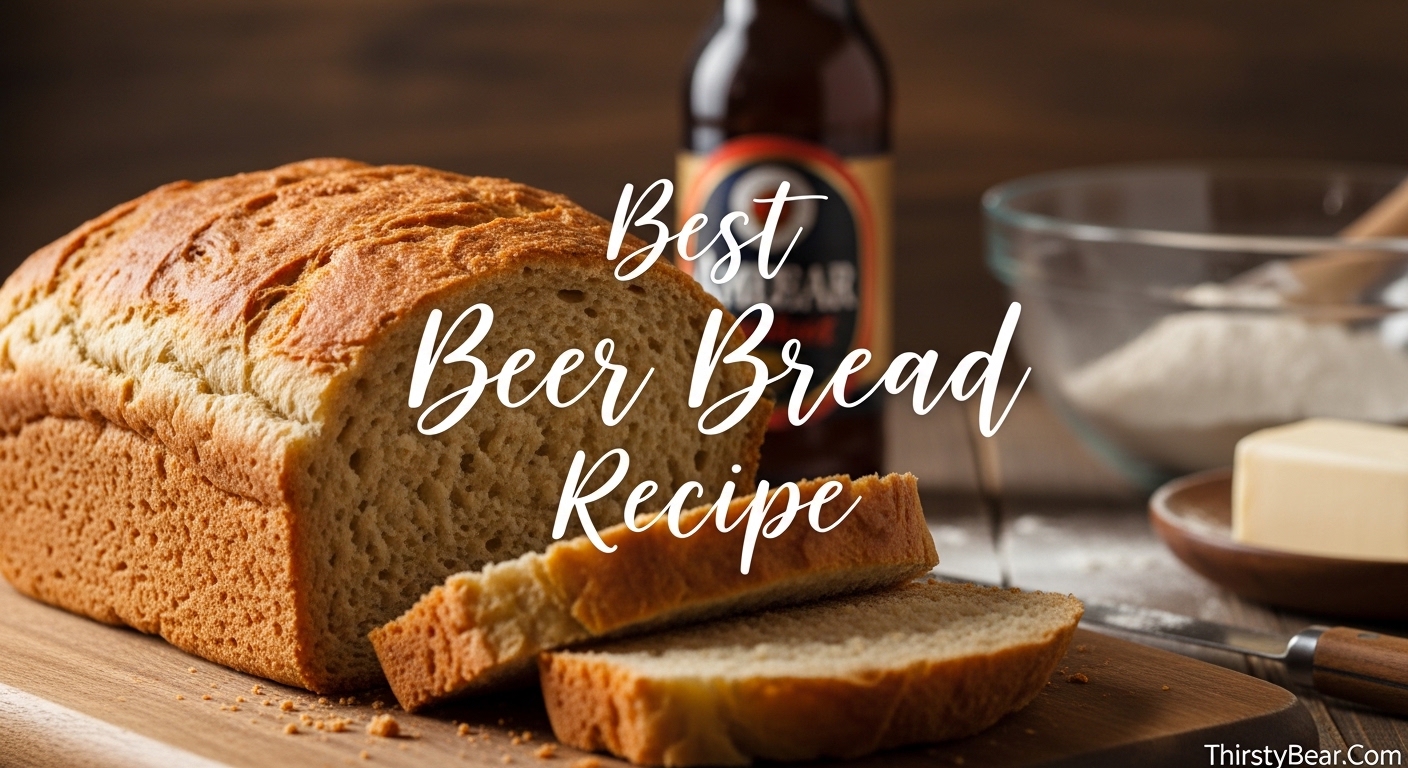
This beer bread recipe is the ultimate hack for homemade bread without yeast, kneading, or rising time. It relies on pantry staples and the carbonation in beer to create a warm, crusty loaf in under an hour.
In this article, you will learn:
- The exact ratio of flour to beer for the perfect texture.
- Which beers taste best (and which ones to avoid).
- How to fix common issues like dense or gummy bread.
- Delicious flavor variations like cheddar and garlic.
- Pro tips for storing and freezing your loaf.
Let’s be real for a second. I used to be terrified of baking bread. The whole process seemed like a science experiment I was destined to fail. There was the yeast—making sure the water wasn’t too hot or it would die—then the kneading, the proofing, the waiting… I just wanted a slice of warm, buttery bread without the drama. That’s why I fell in love with beer bread. It’s the “cheat code” of the baking world. If you can stir a spoon, you can make this. I’m going to walk you through my tried-and-true method that has saved dinner parties and quiet Sunday nights more times than I can count.
Why I Love This Beer Bread Recipe
There are a few reasons why this specific beer bread recipe has become a staple in my kitchen, and honestly, it’s mostly about the effort-to-reward ratio. We’re talking about a “dump and stir” method. You don’t need a stand mixer, you don’t need to proof yeast, and you certainly don’t need to knead dough until your arms hurt.
The magic here is in the ingredients. The beer acts as the leavening agent. The carbonation in the beer—those bubbles you see rising—does the work that yeast usually does, creating little air pockets inside the dough. This gives the bread a lovely lift without the wait.
Plus, the flavor profile is unmatched. Unlike plain white bread, beer bread has a depth of flavor that changes depending on the brew you choose. It’s dense, hearty, and has a crust that sings when you tap it.
The Secret Science Behind the Rise
Before we get to the mixing, I want to quickly explain why this works, because understanding the science makes you a better baker.
Most breads use yeast to create carbon dioxide gas, which gets trapped in the gluten network of the flour. In this beer bread recipe, we cheat the system. The beer already has carbon dioxide bubbles in it. When you mix the beer with the flour, those bubbles get trapped.
However, beer bubbles aren’t usually strong enough to lift heavy bread dough on their own. That’s why we add baking powder. It gives the bread an extra chemical boost to ensure it rises properly in the oven. It’s a double-action lift: the beer bubbles start the work, and the heat of the oven activates the baking powder for the final rise.
Beer Bread Recipe Ingredients
One of the things I appreciate most about this recipe is that I usually have all these ingredients in my pantry already. You don’t need to make a special trip to the store—unless you want to grab a specific craft beer, which I totally encourage.
Here’s your shopping list:
- All-Purpose Flour (3 cups): This is your base. I’ve tried it with bread flour, but honestly, all-purpose works best for that tender crumb we want.
- Sugar (3 tablespoons): This isn’t just for sweetness. The sugar helps the top get that gorgeous golden-brown crust, and it feeds the fermentation process slightly if you’re using a highly fermented beer.
- Baking Powder (1 tablespoon): Make sure yours isn’t expired! This is crucial for the lift.
- Salt (1 teaspoon): Don’t skip this. Bread needs salt to balance the flavors.
- Beer (12 ounces): One standard can or bottle. We will talk about which kind to pick in a second.
- Butter (1/4 cup, melted): We pour this over the top before baking. It creates that crackly, buttery crust that makes this beer bread recipe addictive.
Choosing the Right Beer
This is the fun part, but it can also be the trickiest part. The beer you choose dictates the final flavor of the bread.
- Go for Ales and Lagers: A light lager (think standard domestic beer) will give you a mild, slightly sweet flavor. This is great if you want a neutral bread that goes with everything. Amber ales or brown ales are my personal favorites. They add a rich, malty, almost caramel-like undertone to the bread.
- Watch Out for IPAs: I love a hoppy IPA on a hot day, but in bread? It can be risky. Hops get bitter when concentrated and baked. If you use a super bitter IPA, your bread might taste like you’re chewing on a hop pellet. If you want to use an IPA, stick to a session IPA or one with citrus notes to balance the bitterness.
- Stouts and Porters: Want a dark, dense bread that tastes like a bakery treat? Use a stout. It will turn the bread a lovely deep brown and give it notes of coffee and chocolate. This is amazing with a smear of honey butter.
Beer Bread Recipe Step-by-Step Instructions
Alright, let’s get our hands floury. Preheat your oven to 350°F (175°C).
Step 1: Prep the Pan
Grab a 9×5 inch loaf pan. Grease it well with butter or non-stick spray. I like to smear a little extra butter in the corners because that’s where the bread loves to stick.
Step 2: Mix the Dry Ingredients
In a large bowl, whisk together the flour, sugar, baking powder, and salt. I used to just dump everything in at once, but I learned the hard way that if your baking powder has clumps, you’ll get bitter spots in your bread. Whisking takes ten seconds and saves you from a mouthful of baking powder later.
Step 3: Add the Beer
Open your beer and pour it in. Now, here is my number one tip: do not overmix. This is the most common mistake people make with a beer bread recipe.
Pour the beer in and stir gently just until the flour is moistened. You want a shaggy, thick batter. If there are a few small streaks of flour, that’s okay. If you mix too much, you develop the gluten, and your bread will turn out rubbery and tough. Think “lazy stirring,” not “vigorous beating.”
Step 4: Into the Pan
Scoop the dough into your prepared loaf pan. Use a spatula to smooth the top out slightly. It doesn’t have to be perfect—bread has a mind of its own in the oven.
Step 5: The Butter Bath
Pour the melted butter over the top of the dough. Just pour it right on. Some of it will run down the sides into the pan (which creates an amazing crispy edge), and some will soak into the top. This step is non-negotiable. It’s the difference between a dry top and a crunchy, buttery masterpiece.
Step 6: Bake
Bake for 50 to 60 minutes. The top should be a deep golden brown. To check if it’s done, insert a toothpick into the center. If it comes out clean, you’re good to go. I usually tap the top of the loaf—if it sounds hollow, it’s done.
Step 7: Cool (Briefly)
Let the bread cool in the pan for about 10 to 15 minutes. This is the hardest part—waiting. But if you try to cut it while it’s piping hot, the steam hasn’t set the crumb yet, and it might fall apart. After 15 minutes, run a knife around the edges and turn it out onto a wire rack.
Common Mistakes to Avoid in Beer Bread Recipe
I’ve made this bread probably a hundred times, and I’ve messed it up in almost every way possible. Here’s how to avoid my past failures when you try this beer bread recipe for yourself.
1. Using Cold Beer: While you can use cold beer, I find that room temperature beer mixes a little easier. If the beer is ice cold, the melted butter you pour on top can solidify quickly upon contact, which looks weird. Let the beer sit on the counter for 15 minutes before you start.
2. Overmixing the Dough: I know I said this already, but it bears repeating. This isn’t a cake batter. You want to stir it about 10-12 times max. Once the flour disappears, stop. Walk away from the spoon.
3. Not Checking the Baking Powder: Baking powder loses its punch after about 6 months. If your bread comes out looking like a dense brick, it’s usually because the baking powder was dead. Test a teaspoon in hot water first—if it bubbles, it’s good to go.
4. Slicing Too Soon: I get it, the smell is intoxicating. But cutting into steaming hot bread releases all the moisture that keeps the bread soft. Give it that 15-minute rest.
Delicious Variations to Try
Once you master the basic beer bread recipe, you can start getting creative. This dough is like a blank canvas. Here are a few variations my family asks for on repeat:
- Cheddar Jalapeño Beer Bread: Add 1 cup of shredded sharp cheddar cheese and 1-2 diced jalapeños (seeds removed if you don’t like heat) to the dry ingredients. Use a pale ale or a lager for the liquid. It’s basically a companion to chili.
- Garlic Herb: Mix 1 teaspoon of garlic powder and 2 tablespoons of dried rosemary or Italian seasoning into the flour. I like to sprinkle a little extra garlic powder on top with the butter. This is perfect for dipping in olive oil.
- Honey Whole Wheat: Substitute half of the all-purpose flour for whole wheat flour for a nuttier taste. Add 2 tablespoons of honey to the melted butter before pouring it over the top. This version is fantastic for breakfast toast.
- Cinnamon Raisin: Use a darker beer like a stout. Add 1/3 cup of sugar instead of 3 tablespoons, plus 1 teaspoon of cinnamon and 1/2 cup of raisins. Serve it warm with butter for a sweet treat.
Serving Suggestions
So you’ve baked the loaf. Now, what do you eat it with? Because this bread is denser than a fluffy sandwich loaf, it’s best suited for dipping and sopping up sauces.
My favorite way to serve this beer bread recipe is alongside a big bowl of hearty soup. Potato soup, beef stew, or a spicy chili are classic pairings. The density of the bread holds up perfectly when dunked into thick broths.
It’s also a star at barbecues. I’ll slice it up and serve it with pulled pork or brisket instead of a standard bun. The malty flavor of the bread pairs incredibly well with smoky meats.
And if you have leftovers (which rarely happens in my house), toast a slice the next morning and put a fried egg on top. Trust me, it’s a game-changer.
Storing and Freezing Instructions
If you actually have leftovers, you’ll want to store them properly to keep that crust fresh.
- Room Temperature: Keep the bread in an airtight container or a Ziploc bag at room temperature for up to 3 days. If you leave it out uncovered, it will dry out fast. To bring the crust back to life, pop a slice in the toaster or oven for a few minutes.
- Freezing: This beer bread recipe freezes beautifully. I like to slice the whole loaf before freezing. That way, I can pull out just one or two slices when I want them. Wrap the slices in plastic wrap and then put them in a freezer-safe bag. It will keep for up to 3 months. Thaw on the counter or throw it straight into the toaster.
Troubleshooting Your Loaf
Sometimes, despite our best efforts, things go sideways. Here are a few questions I often get from readers who run into issues.
Why is my bread gummy in the middle?
This usually means one of two things: either you didn’t bake it long enough, or there was too much moisture. Make sure to measure your flour correctly—scoop and level, don’t pack it down. And definitely let it cool fully before slicing so the center sets.
Why didn’t my bread rise?
Check your baking powder! Also, make sure you used self-rising flour or added the leavening agents. If you used self-rising flour by accident and added baking powder, you might have too much salt, but the rise should actually be fine. Usually, a flat loaf means dead leavening power.
Can I use self-rising flour?
Yes, you can. If you use self-rising flour, omit the baking powder and the salt from the recipe. Just mix the self-rising flour, sugar, and beer. The texture will be slightly different—usually a bit lighter—but still delicious.
Frequently Asked Questions (FAQ)
Can I make this beer bread recipe gluten-free?
Absolutely. You can swap the all-purpose flour for a 1:1 gluten-free baking flour blend. I’ve had great success with brands like King Arthur or Bob’s Red Mill. The texture might be slightly crumblier, but adding a teaspoon of xanthan gum (if your blend doesn’t include it) helps bind it together. Just ensure your beer is also gluten-free, like a cider or a GF lager.
Do I have to use butter on top?
No, you don’t have to, but I highly recommend it. If you want to make it dairy-free or vegan, you can brush the top with olive oil or melted coconut oil. It still gives you a nice crust, though the flavor profile will shift slightly.
Why is my beer bread bitter?
If your bread turned out bitter, you likely used a very hoppy beer, like a double IPA. The baking process concentrates those bitter hop oils. Next time, stick to a maltier beer like a brown ale or a lager. You can also increase the sugar by a tablespoon to counteract the bitterness.
Can I use flat beer?
Believe it or not, yes! While fresh carbonated beer helps with the lift, the primary leavening agent here is the baking powder. I’ve used leftover flat beer from a party the night before, and the bread still rose just fine. The texture was maybe a tiny bit denser, but it was still totally edible.
Final Thoughts on This Loaf
There is something deeply satisfying about pulling a golden loaf of bread out of the oven, especially when you didn’t have to plan for it 12 hours in advance. This beer bread recipe is for the busy weekdays, the unexpected guests, and the craving for carbs at 9 PM.
It’s forgiving, it’s versatile, and it makes your kitchen smell like a bakery. I really hope this becomes a go-to in your home just like it is in mine. Don’t be afraid to experiment with different brews—you might just discover your new favorite flavor combination.
Enjoyed this recipe? Save this page to your browser bookmarks so you can find it easily next time you have a spare can of beer!