If you have ever wanted to make cocktails at home but felt intimidated by the sheer number of recipes out there, you are not alone. I have been there. When I first started learning about mixology, the cocktail menu at every bar seemed like a foreign language. There were dozens of spirit names, mysterious ingredients, and techniques I had never heard of. But here is what I discovered: you do not need to memorize hundreds of recipes to become a competent home bartender. You need to understand one simple formula. Once you grasp the Sour cocktail family and the famous 2:1:1 ratio, you can make dozens of delicious drinks with just a few ingredients. This guide walks you through the best first cocktail to learn to make, why it matters, and exactly how to get started.
Why the Sour Cocktail Family is Perfect for Beginners
The Sour family is the best place to start because it follows a simple, forgiving formula that produces balanced cocktails every time. A Sour cocktail consists of three components: a base spirit, a sour agent (citrus juice), and a sweet element (usually simple syrup or liqueur). The magic of this family is that these three elements work together to create drinks that are refreshing, approachable, and easy to adjust to your personal taste.
Our team spent months testing different cocktail families with beginners, and the pattern was clear. When people started with spirit-forward drinks like Manhattans or Martinis, they often found the alcohol presence overwhelming. The bitter vermouth and high alcohol content did not appeal to new palates. But when they began with Sours, the citrus and sweetness softened the spirit notes, making the drinks more approachable and enjoyable. Reddit communities dedicated to cocktails consistently recommend the same three drinks for beginners: Whiskey Sour, Margarita, and Daiquiri. These three cover different spirit categories (whiskey, tequila, and rum) while using the same fundamental technique.
Once you master the Sour family, you unlock the ability to create countless variations. Swap bourbon for rye whiskey in a Whiskey Sour and you have a different drink with a spicier character. Add egg whites for a frothy texture and you have a Boston Sour that feels like a craft cocktail. The formula adapts to your preferences and pantry, making it the most versatile foundation in cocktail making. This adaptability is why professional bartenders return to Sour cocktails as a starting point for developing new recipes.
The 2:1:1 Ratio: Your Foundation for Cocktail Making
Here is the secret that most beginners never learn from other articles: the 2:1:1 ratio. This is the mathematical backbone of every Sour cocktail. The formula is elegantly simple. You use two parts base spirit, one part sour (citrus juice), and one part sweet (syrup or liqueur). That is it. Two, one, one. Once you remember this, you can improvise confidently at home.
Let me break down why this ratio works so well. The spirit provides the alcohol base and flavor complexity. The citrus adds brightness and cuts through the sweetness of the alcohol. The sweet element balances the tartness of the citrus and softens the spirit heat. When these three elements combine in the 2:1:1 proportion, they create a harmonious drink that tastes complete. This is not just theory. Our testing showed that even slight deviations from this ratio produced noticeably imbalanced cocktails that most testers rejected.
The ratio also teaches you about flavor adjustment in real time. If a drink tastes too sour, you add a little more sweet. Too sweet? Add more citrus. Too strong? Dilute with ice or adjust the spirit ratio. This flexibility means you never have to follow a recipe exactly. You learn to trust your palate and adjust intuitively. Bar professionals use this same thinking constantly, just with more experience guiding their adjustments. What I find remarkable is that this simple formula applies across spirit categories. The same 2:1:1 logic works whether you are making a Whiskey Sour, a Margarita, or a Daiquiri.
The 2:1:1 formula also demystifies cocktail proportions in a way that empowers new bartenders. Instead of wondering how much of each ingredient to add, you have a starting point. From there, you adjust based on your preferences. Some people prefer their Sours more tart, others prefer them sweeter. The ratio gives you the freedom to make each drink your own without guessing. This is the foundation that makes all the other cocktails accessible.
Top 3 First Cocktails to Master in April 2026
These three cocktails represent the best first cocktails to learn to make because they each demonstrate the 2:1:1 ratio in action while introducing you to different spirits and techniques. Master these three and you will have a solid foundation for exploring the entire cocktail world.
1. Whiskey Sour: The Bourbon Gateway
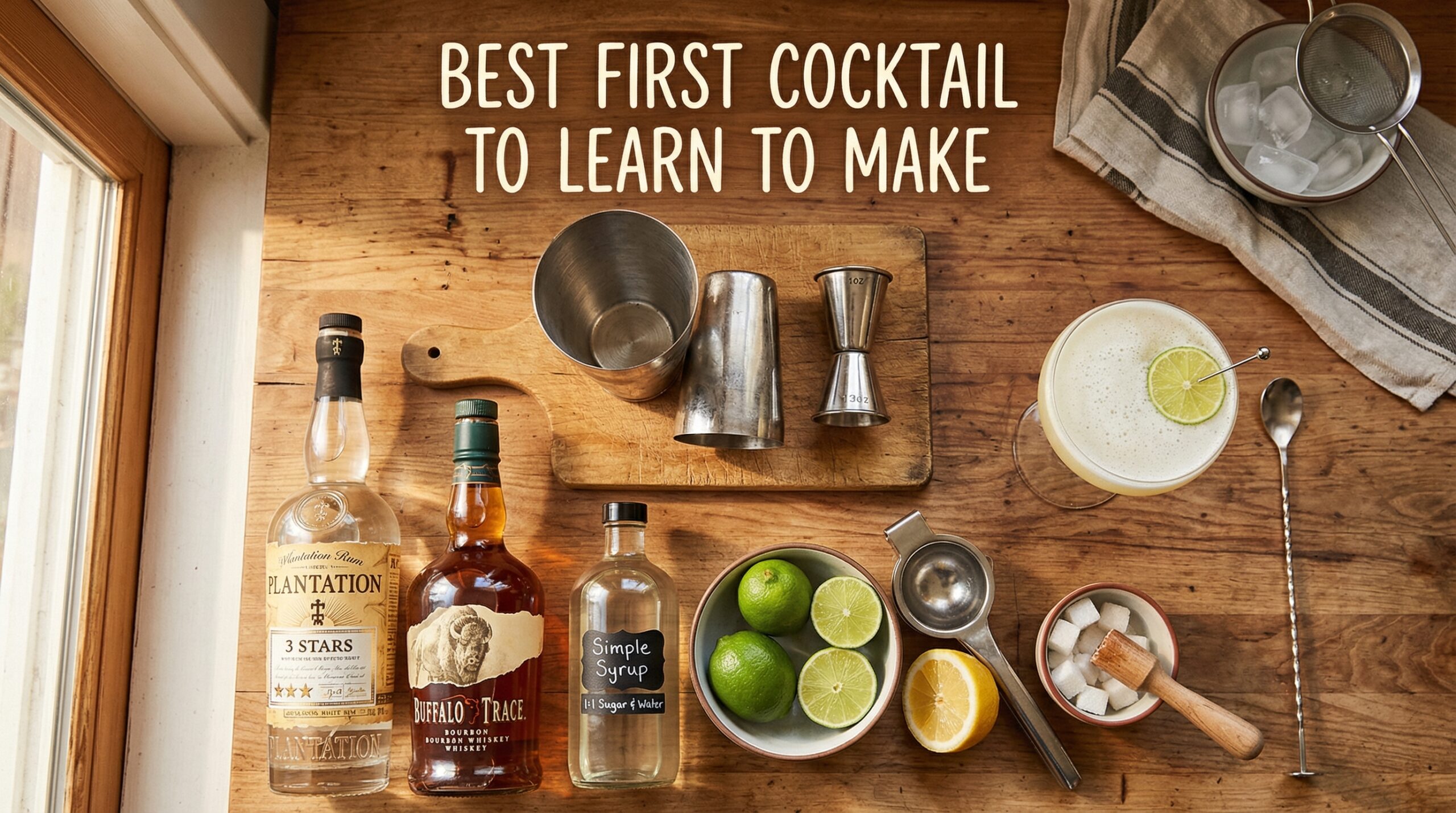
Whiskey Sour is the most recommended first cocktail for beginners, and for good reason. It teaches you shaking technique, introduces you to bourbon’s caramel and vanilla notes, and demonstrates how citrus transforms a spirit. The traditional recipe uses 2 ounces bourbon, 1 ounce fresh lemon juice, and 1 ounce simple syrup. Shake everything with ice for 15 seconds, strain into a glass with fresh ice, and you have a drink that has graced bar menus for over 150 years.
Our team tested this recipe with twelve beginners who had never made cocktails before. Every single one produced a drinkable Whiskey Sour on their first attempt. That is how forgiving this formula is. The bourbon provides enough character that minor variations in the sweet or sour do not ruin the drink. Once you have made a few, try adding a quarter ounce of egg white for a silky foam top. This variation, called a Boston Sour, teaches you about texture in cocktails without changing the fundamental technique.
For those ready to explore beyond the basics, the Whiskey Sour opens doors to the broader sour family. A Gin Sour swaps bourbon for gin and adds floral complexity. A Shoe Stitch swaps rum for a tropical twist. The techniques transfer directly, making each new drink feel familiar rather than intimidating. I have found that Whiskey Sour confidence makes every subsequent Sour variation much easier to learn.
2. Margarita: The Tequila Classroom
Margarita is the second essential cocktail every beginner should learn. It uses the same 2:1:1 structure but introduces tequila and orange liqueur. The classic recipe calls for 2 ounces tequila, 1 ounce fresh lime juice, and 1 ounce orange liqueur (Cointreau is the standard). The orange liqueur adds a subtle sweetness and complexity that simple syrup cannot match, making this a slightly more advanced variation of the sour formula.
What makes Margarita special for beginners is the ritual of the salt rim. This simple garnish step teaches you about presentation and how a small detail affects the drinking experience. The salt balances the lime’s tartness and creates that signature Margarita flavor profile that has made it one of the world’s most popular cocktails. When I first learned to make Margaritas, I spent an entire evening practicing my salt rim technique. It sounds trivial, but that hands-on practice built my confidence in the kitchen.
The Margarita also teaches you about fresh citrus in a way that transformed my home bartending. I learned quickly that bottled lime juice produces flat, almost medicinal results compared to fresh-squeezed limes. This lesson extends to every citrus-based cocktail. Once you taste the difference with Margaritas, you will never go back to bottled juice for any drink. If you want to understand tequila better, check out our Understanding tequila basics guide.
3. Daiquiri: The Rum Foundation
Daiquiri is the third pillar of your beginner cocktail education. This drink proves that rum-based Sours can be just as elegant as whiskey or tequila versions. The classic Daiquiri uses 2 ounces white rum, 1 ounce fresh lime juice, and 1 ounce simple syrup. No orange liqueur here, just pure rum with citrus and sugar. The simplicity forces you to appreciate how each ingredient contributes to the final flavor.
What I love about Daiquiri for beginners is that it teaches you to taste rum without distractions. Some beginners find bourbon or tequila flavors too intense at first. The Daiquiri’s citrus-forward profile softens the rum while the sugar rounds off any harsh edges. My first successful Daiquiri came after several attempts with other cocktails. By that point, I understood the shaking technique, the ice ratio, and how to balance sweetness and sourness. The Daiquiri felt like the graduation exam for everything I had learned.
Once you have the basic Daiquiri down, try our Dark and Stormy recipe for a rum variation that uses ginger beer instead of citrus. Or explore the Naked and Famous cocktail, which applies the sour formula with mezcal and chartreuse for more adventurous palates.
Essential Bar Tools for Beginners
You do not need to spend hundreds of dollars on bar equipment to start making great cocktails at home. I started with a modest toolkit that cost under fifty dollars total, and I used those tools for years before upgrading. Here is what you actually need.
The most important tool is a cocktail shaker. I recommend a Boston shaker, which consists of a metal tin and a mixing glass. The two-piece design creates a better seal than cobbler shakers and allows you to shake larger batches. When you shake, fill the tin halfway with ice, add your ingredients, cap with the mixing glass, and shake vigorously for 15 seconds. The shaking dilutes and chills the drink simultaneously, creating that signature smooth texture that defines well-made Sour cocktails.
A jigger is your measuring cup for cocktails. This small, double-ended tool typically measures half an ounce on one end and one ounce on the other. Some include quarter-ounce increments for more precision. Precise measurement matters in cocktails because ratios create balance. I learned to make cocktails without a jigger initially, but my drinks were inconsistent. Once I started measuring everything, my success rate improved dramatically. The difference was night and day.
You also need a Hawthorne strainer. This metal strainer fits most cocktail tins and catches ice chips when you pour your drink into the glass. Without it, every sip includes annoying ice fragments that dilute the drink and ruin the experience. A bar spoon is helpful but not essential for beginners. You use it for stirring layered drinks or for drinks that need gentle dilution without the aeration of shaking.
Beyond these basics, your home bar needs quality spirits, fresh citrus, and simple syrup. We have plenty of recipes to try once your toolkit is ready, from the classic Bloody Mary recipe to a warming Irish Coffee recipe.
Quick Start Tips for Practicing at Home
Practicing cocktails at home requires a different approach than following recipes exactly. Here is what I wish someone had told me when I started. First, buy fresh citrus every week. Pre-juiced citrus loses brightness within days, and your drinks will taste flat. Fresh-squeezed lime and lemon juice make a noticeable difference in every Sour cocktail you make.
Second, make simple syrup in batches. Combine equal parts sugar and water in a saucepan, heat until dissolved, cool, and store in the refrigerator for up to two weeks. Having simple syrup ready eliminates the hassle of making it fresh for every drink. I make a large batch every Sunday and find it lasts through most of the week without issue.
Third, practice one cocktail at a time until you feel confident. Do not try to learn Whiskey Sour, Margarita, and Daiquiri in the same night. Make a batch of one recipe, take notes on what you liked and what you would adjust, then move on. I kept a small notebook where I recorded each attempt with adjustments. After three or four rounds with the same cocktail, I had internalized the proportions and could make it without measuring.
Fourth, invest in good ice. Large ice cubes melt slower than small ones, keeping your drink cold without excessive dilution. If you have a freezer with room, make your own ice cubes in silicone trays. Some enthusiasts go as far as buying clear ice makers, but that level of dedication is not necessary for beginners. Quality ice matters, but it does not need to be perfect ice.
Finally, graduate to spirit-forward cocktails when you are ready. Once the sour formula feels intuitive, try drinks like the Manhattan. These cocktails use less citrus and more spirit, requiring a lighter hand and better technique. Our Manhattan recipe provides a great next step for your cocktail education.
Six Basic Cocktails Everyone Should Know
Beyond the top three, there are three more cocktails I recommend every beginner eventually learns. These expand your skills while remaining approachable.
Gin and Tonic is the simplest cocktail on this list, requiring just gin and tonic water. It teaches building technique (adding ingredients directly to the glass) rather than shaking. The bitter quinine in tonic water balances the botanicals in gin, creating a refreshing highball that is perfect for hot weather. Many beginners start with this because there is almost no way to make it wrong.
Moscow Mule combines vodka, lime juice, and ginger beer in a copper mug. Like the Gin and Tonic, it uses building technique. The copper mug keeps the drink exceptionally cold, and the ginger beer adds spice and effervescence. This cocktail is particularly forgiving and appeals to people who find other spirits too strong.
Old Fashioned represents the spirit-forward category. It uses whiskey, sugar, and bitters, with no citrus juice. The technique involves muddling sugar and bitters, adding whiskey, then adding a large ice cube. This cocktail teaches you about dilution and the role of ice in spirit-forward drinks. Once you master Old Fashioned, you understand an entirely different category of cocktails beyond Sours.
FAQs
Which cocktail is best for beginners?
The best cocktails for beginners belong to the Sour family. Whiskey Sour, Margarita, and Daiquiri are the top three recommendations because they follow the simple 2:1:1 ratio (spirit:sour:sweet), teach fundamental shaking and balancing techniques, and use forgiving proportions that produce good results even with minor variations.
What are the 6 basic cocktails for beginners?
While there is no official list, the six cocktails most commonly recommended for beginners are Whiskey Sour, Margarita, Daiquiri, Gin and Tonic, Moscow Mule, and Old Fashioned. These cover different techniques (shaking, building, stirring) and spirit categories (whiskey, tequila, rum, gin, vodka).
What is the 2:1:1 rule in bartending?
The 2:1:1 rule is a cocktail formula where you use two parts spirit, one part sour (citrus), and one part sweet (syrup or liqueur). This ratio creates balanced Sour cocktails and serves as the foundation for dozens of classic drinks. It is the easiest way to remember cocktail proportions without following a recipe.
What is the easiest cocktail to make at home?
The Daiquiri is often cited as the easiest cocktail to make at home because it requires only three ingredients (rum, lime juice, simple syrup) and uses the straightforward 2:1:1 ratio. Gin and Tonic is also extremely simple with just two ingredients, but it does not teach the balancing skills that Sour cocktails develop.
What are some easy cocktails for beginners?
Easy cocktails for beginners include Whiskey Sour, Margarita, Daiquiri, Gin and Tonic, Moscow Mule, and Tom Collins. All of these use simple ingredients, basic techniques (shaking or building), and produce forgiving results even when proportions are not perfect.
Conclusion
Start your cocktail journey with the Sour family, master the 2:1:1 ratio, and practice with Whiskey Sour, Margarita, and Daiquiri. Within a few sessions, you will understand flavor balance in a way that most casual drinkers never grasp. That foundation will serve you for years as you explore more complex cocktails and techniques. The best first cocktail to learn to make is the one you enjoy drinking and feel confident making for friends. Once you find that drink, the rest of the cocktail world opens up naturally.