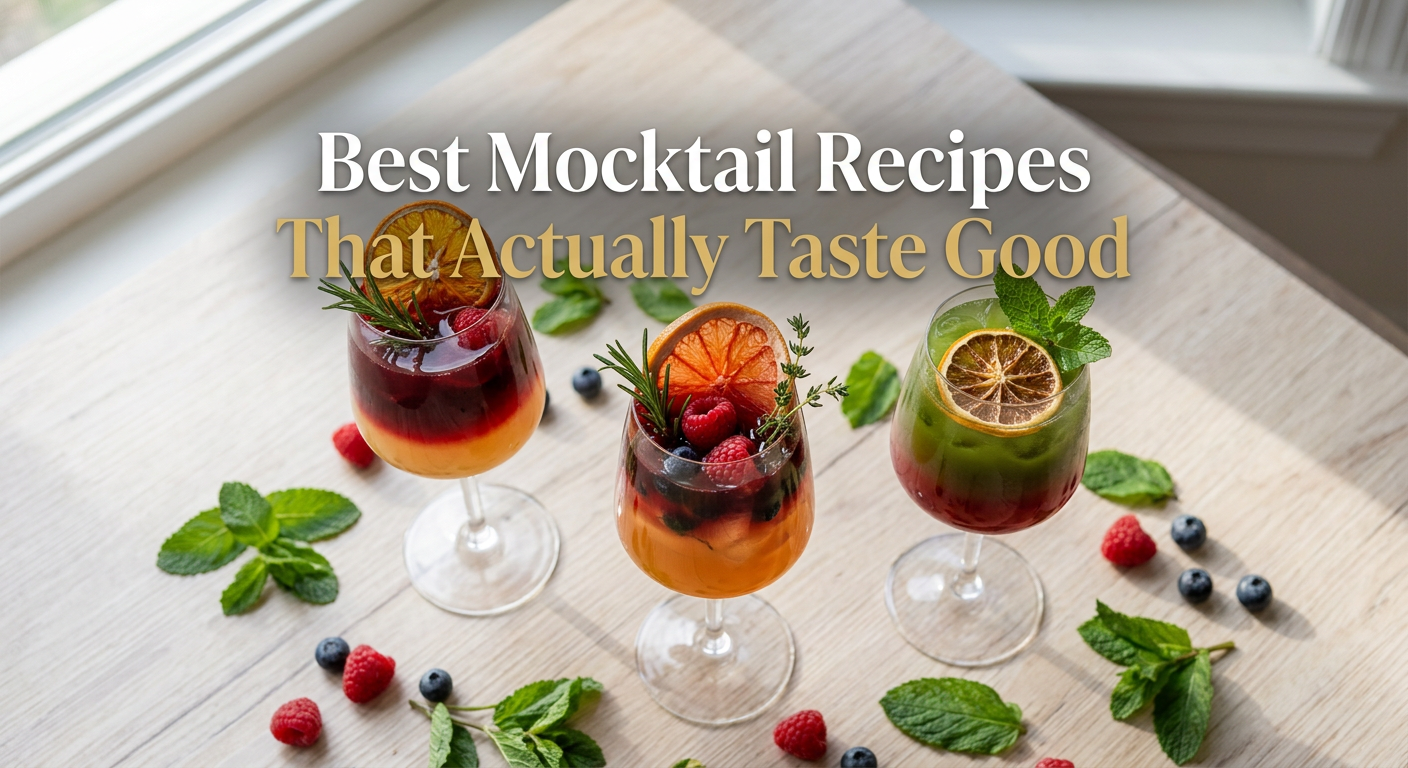
Let me be honest with you: most mocktails are terrible. They taste like sweet juice in a fancy glass, missing the complexity and depth that makes a real cocktail satisfying. But here is the truth our team discovered after testing dozens of recipes over the past year: with the right techniques and ingredients, non-alcoholic drinks can be just as interesting and delicious as their boozy counterparts. This guide to the best mocktail recipes that actually taste good comes from testing recipes in our own kitchen and learning what works from bartenders who take zero-proof drinks seriously.
If you are exploring the world of non-alcoholic options, you might also enjoy our guide to the best non-alcoholic beers for another perspective on sophisticated zero-proof choices. The same principles of balance and quality ingredients that make a great NA beer apply directly to crafting exceptional mocktails.
What Makes a Mocktail Actually Taste Good
The secret to a mocktail that does not taste like diluted juice comes down to one principle: you need to build complexity without alcohol. That means balancing four key elements in every drink you make.
First, there is sweet. Simple syrup, honey, or agave provide the base sweetness that rounds out sharp flavors. Second, you need tart. Fresh citrus juice is non-negotiable here because it adds brightness and cuts through sweetness. Third, bitter is essential. Non-alcoholic bitters or tonic water provide that grown-up edge that makes a drink feel sophisticated. Fourth, aromatic components like fresh herbs, citrus peels, or spices give your mocktail its signature character.
Forum discussions among professional bartenders consistently confirm this approach. One bartender described the winning combination as grapefruit juice plus vanilla simple syrup plus muddled basil plus soda water. Another highly rated combination uses ginger beer with pomegranate juice and rosemary simple syrup. These recipes work because they address every flavor element your palate craves.
Skip the bottled cocktail mixes and pre-made sweet-and-sour solutions. Fresh ingredients and homemade syrups make an enormous difference in both taste and quality. When you control the sweetness level and use real citrus, your mocktails immediately taste more refined.
Simple Syrup Recipes Every Mocktail Needs
Simple syrup is the foundation of most great mocktails, and making it from scratch takes about five minutes. The basic ratio is equal parts sugar and water, heated until dissolved. But once you master the classic version, you can create flavored variations that transform your drinks.
Classic Simple Syrup
Combine one cup of sugar with one cup of water in a small saucepan. Heat over medium heat, stirring until the sugar completely dissolves. Let cool and store in a glass jar in the refrigerator for up to two weeks. This neutral sweetener works in virtually any mocktail calling for sweetness.
Honey Lavender Syrup
Add one cup of honey, one cup of water, and two tablespoons of dried lavender to a saucepan. Heat and stir until the honey dissolves. Remove from heat, cover, and let steep for 30 minutes. Strain out the lavender and cool completely. This syrup pairs beautifully with citrus drinks and adds an elegant floral note to sparkling water.
Ginger Basil Syrup
Slice a four-inch piece of fresh ginger and add it to a saucepan with one cup of sugar and one cup of water. Bring to a boil, then reduce heat and simmer for ten minutes. Add a handful of fresh basil leaves, remove from heat, and steep for 15 minutes. Strain and cool. This versatile syrup works in both refreshing summer drinks and warming winter beverages.
Mocktail Recipes That Actually Taste Good
Now for the main event. These mocktail recipes come from testing dozens of variations, keeping only the ones that genuinely impressed our team. Each one addresses the balance principles we discussed earlier.
Sparkling Grapefruit Refresher
This drink converts skeptics every time. The key is using fresh grapefruit juice rather than bottled, and adding just enough simple syrup to soften the bitterness without making it cloyingly sweet.
Ingredients:
Two ounces of fresh grapefruit juice, one ounce of fresh lime juice, half an ounce of simple syrup, three ounces of sparkling water, and a sprig of fresh rosemary for garnish.
Combine the grapefruit juice, lime juice, and simple syrup in a shaker with ice. Shake vigorously for fifteen seconds. Strain into a glass filled with fresh ice and top with sparkling water. Garnish with the rosemary sprig and a thin grapefruit slice.
Cranberry Rosemary Fizz
This sophisticated mocktail works beautifully for holiday gatherings. The tartness of cranberry pairs perfectly with the herbal notes of rosemary, while tonic water adds the bitter element that makes it feel like a proper drink.
Ingredients:
Two ounces of cranberry juice ( unsweetened preferred ), half an ounce of rosemary simple syrup, one ounce of fresh lime juice, three ounces of tonic water, and fresh cranberries with a rosemary sprig for garnish.
Shake the cranberry juice, rosemary simple syrup, and lime juice with ice. Strain into a glass with fresh ice and top with tonic water. Garnish generously with cranberries and rosemary.
Virgin Mary Mocktail
The Virgin Mary is the non-alcoholic version of the classic Bloody Mary, and it deserves the same respect. Our Virgin Mary recipe follows the traditional approach with savory spices and fresh vegetables.
Ingredients:
Four ounces of tomato juice, half an ounce of fresh lemon juice, quarter ounce of Worcestershire sauce ( verified non-alcoholic ), dash of hot sauce, quarter teaspoon of celery salt, quarter teaspoon of black pepper, and garnishes including celery stalk, lemon wedge, and pickled vegetables.
Combine all liquid ingredients in a shaker with ice. Roll gently between two shakers ( do not shake to avoid over-diluting ). Strain into a highball glass filled with ice. Garnish generously and serve immediately.
Ginger Mint Mule
The Moscow Mule is one of the most popular cocktails in the world, and the mocktail version holds up remarkably well. The key is using quality ginger beer that actually has bite.
Ingredients:
Two ounces of ginger beer ( not ginger ale ), one ounce of fresh lime juice, half an ounce of simple syrup, eight to ten fresh mint leaves, plus extra mint and lime wheel for garnish.
Muddle the mint leaves gently with the simple syrup in the bottom of a shaker. Add the lime juice and ginger beer, then fill with ice. Stir gently to combine without bruising the mint. Strain into a copper mug or glass filled with crushed ice. Garnish with mint and lime.
Pomegranate Spritzer
Elegant enough for a wedding reception but simple enough for a weeknight, this spritzer hits every note. The pomegranate provides tart sweetness, while the rosemary adds aromatic complexity.
Ingredients:
Two ounces of pomegranate juice, half an ounce of fresh lemon juice, quarter ounce of rosemary simple syrup, three ounces of sparkling water, and pomegranate arils with rosemary sprig for garnish.
Shake the pomegranate juice, lemon juice, and rosemary simple syrup with ice. Strain into a wine glass filled with ice and top with sparkling water. Garnish with pomegranate arils and rosemary.
Cucumber Chile Agua Fresca
When summer temperatures climb, this refreshing agua fresca keeps you cool while waking up your palate. The cucumber provides hydration and mild sweetness, while the chile adds exciting heat.
Ingredients:
Half of one English cucumber roughly chopped, one ounce of fresh lime juice, half an ounce of simple syrup, a thin slice of serrano chile ( remove seeds for less heat ), and salt for the rim.
Blend the cucumber with lime juice and simple syrup until smooth. Strain through a fine mesh sieve for a clearer drink, or serve unstrained for more texture. Rim a glass with salt and fill with ice. Add the serrano slice and stir. Taste and adjust sweetness if needed.
Blood Orange Shrub
Shrubs are drinking vinegars that add incredible depth to mocktails. This blood orange version is bright, tangy, and complex enough to sip on its own over ice.
For the shrub: Combine one cup of blood orange juice ( about four blood oranges ) with half a cup of raw apple cider vinegar and half a cup of sugar in a jar. Shake daily until the sugar dissolves, about two to three days. Store in the refrigerator for up to one month.
For the drink: Combine two ounces of blood orange shrub with three ounces of sparkling water in a glass filled with ice. Stir gently and garnish with a blood orange wheel.
Honey Berry Kombucha Cooler
Kombucha adds probiotic benefits and natural effervescence to mocktails. This berry version is refreshing and slightly tangy, making it perfect for health-conscious drinkers.
Ingredients:
Two ounces of mixed berry kombucha, one ounce of blueberry juice, half an ounce of honey lavender syrup, half an ounce of fresh lemon juice, and fresh berries with mint for garnish.
Combine the blueberry juice, honey lavender syrup, and lemon juice in a shaker with ice. Shake and strain into a glass filled with ice. Top with the kombucha and garnish with fresh berries and mint.
Classic Mojito Mocktail
The mojito is a perfect template for mocktail conversion because the original relies heavily on fresh herbs and citrus rather than the rum for its character.
Ingredients:
Eight to ten fresh mint leaves, one ounce of fresh lime juice, half an ounce of simple syrup, three ounces of sparkling water, plus extra mint sprigs for garnish.
Gently muddle the mint leaves with the simple syrup in the bottom of a glass. Add the lime juice and stir. Fill the glass with ice and top with sparkling water. Garnish with a generous mint sprig and sip through the herbs to release their aroma.
Tropical Sunset
For those craving something fruity and vibrant, this tropical creation delivers without being overly sweet or tasting like children’s juice.
Ingredients:
One ounce of pineapple juice, one ounce of mango juice, half an ounce of fresh lime juice, quarter ounce of simple syrup, two ounces of coconut water, and a pineapple wedge with maraschino cherry for garnish.
Shake all liquid ingredients with ice. Strain into a glass filled with ice and garnish with pineapple and cherry. The coconut water adds subtle sweetness without extra sugar.
Dark and Stormy Mocktail
Our Dark and Stormy with ginger beer is a natural fit for mocktail conversion since ginger beer is already non-alcoholic. The deep, warming flavors translate beautifully.
Ingredients:
Three ounces of quality ginger beer, one ounce of lime juice, half an ounce of molasses simple syrup ( combine simple syrup with a small amount of molasses to taste ), and a lime wheel for garnish.
Build the drink in a glass with ice. Add the molasses simple syrup and lime juice, then top with ginger beer. Stir gently and garnish with lime.
Bellini Mocktail
The Bellini is classically a peach puree with prosecco, and our non-alcoholic version substitutes sparkling grape juice for that same elegant touch. Check out our full non-alcoholic Bellini recipe for detailed instructions.
Ingredients:
Two ounces of fresh peach puree ( from ripe peaches ), three ounces of sparkling grape juice, half an ounce of fresh lemon juice, and a thin peach slice for garnish.
Shake the peach puree and lemon juice with ice. Strain into a champagne flute and top with sparkling grape juice. Garnish with peach slice and serve immediately.
Garnish Techniques That Elevate Mocktails
Never underestimate the power of a proper garnish. In mocktails specifically, garnishes do more than just look pretty. They add aromatic elements that enhance the drinking experience, and they signal to your guests that this is a seriously crafted beverage.
Citrus twists work by expressing the oils over the drink. Hold a lemon or orange peel cut-side down an inch above your drink and give it a sharp twist. The oils will spray across the surface, adding incredible aroma without any actual pulp. This technique works best with wide-rimmed glasses.
Fresh herb sprigs like mint, basil, and rosemary should be gently slapped before adding to your drink. Slapping bruises the herbs slightly and releases their aromatic oils. For mint specifically, avoid just dropping leaves in. Instead, clap them between your palms and place them immediately on the drink.
Dehydrated fruit slices look impressive and add subtle visual appeal. You can dehydrate citrus wheels, apple slices, or pineapple in an oven set to its lowest temperature for several hours. These last much longer than fresh fruit garnishes and make any mocktail look restaurant-quality.
For savory drinks like the Virgin Mary, vegetable garnishes make sense. Celery stalks, pickle spears, olives, or even grilled shrimp show that you are taking the drink seriously. These also give your guest something to nibble on while drinking.
Classic Cocktail to Mocktail Conversions
One of the easiest ways to build your mocktail repertoire is learning how to adapt classic cocktails. The basic template is identifying what flavors define the original drink and finding non-alcoholic substitutes that provide similar characteristics.
Margarita to Virgin Margarita
The Margarita is built on sour ( lime ), sweet ( agave or orange liqueur ), and the herbal notes of tequila. For the mocktail version, use fresh lime juice, a splash of orange juice for the orange element, agave syrup for sweetness, and a salt rim. The result captures the essence without the alcohol.
Negroni to Zero-Proof Negroni
The Negroni relies on bitter ( Campari ), sweet ( vermouth ), and botanical notes ( gin ). Non-alcoholic versions substitute Ritual Zero Proof Gin Alternative and Ritual Aperitif Alternative, or use a combination of non-alcoholic bitters, grape juice, and tonic water for similar complexity.
Mojito to Non-Alcoholic Mojito
As covered in the recipe section, the Mojito translates exceptionally well because the rum is not the dominant flavor. Fresh mint, lime, sugar, and soda water create the same refreshing profile.
Daiquiri to Virgin Daiquiri
The Daiquiri is simply rum, lime juice, and simple syrup. Substituting the rum with a quality non-alcoholic rum alternative or simply omitting it and adding a touch more citrus works perfectly for a Virgin Daiquiri.
Common Mocktail Mistakes to Avoid
Our testing revealed several pitfalls that consistently produce disappointing results. Avoiding these mistakes will dramatically improve your mocktail-making success.
The biggest mistake is adding too much sweetness without balancing it with acid. If your mocktail tastes like flat soda, you likely have too much simple syrup or fruit juice and not enough citrus. Always add acid to balance sweetness.
Skipping non-alcoholic bitters is another common error. Bitters provide the complexity that mimics the bite of alcohol. A few dashes of orange bitters or aromatic bitters in drinks like the Virgin Mary or zero-proof Negroni make an enormous difference.
Using bottled juices instead of fresh is an easy trap. Bottled tomato juice for Virgin Mary tastes tinny and flat compared to fresh-squeezed. Similarly, fresh-squeezed citrus always outperforms shelf-stable alternatives. This is where investment in a decent citrus juicer pays off.
Finally, ignoring ice ratios ruins otherwise good recipes. Cocktails are diluted by ice as you drink them. If you make a strong drink with minimal ice, it becomes undrinkable as the ice melts. Match your dilution to your glass size and expected drink time.
Frequently Asked Questions
What makes a good mocktail?
A good mocktail achieves balance across four elements: sweet (from syrups or sweet juices), tart (fresh citrus), bitter (NA bitters or tonic), and aromatic (fresh herbs or citrus peels). Using fresh ingredients and homemade components instead of bottled mixes makes a significant difference in quality.
How do you make a mocktail that doesn’t taste like juice?
Use NA bitters for complexity that mimics the bite of alcohol. Balance sweetness with citrus acid. Add sparkling water or club soda for proper dilution. Employ cocktail techniques like shaking with ice and muddling herbs. The goal is building layers of flavor rather than just mixing sweet ingredients together.
What are simple syrup variations for mocktails?
Beyond classic 1:1 simple syrup, popular variations include honey lavender (adding dried lavender to heated honey and water), ginger basil (simmering sliced ginger with sugar and water, then steeping fresh basil), and maple cinnamon (substituting maple syrup for sugar with a cinnamon stick). Each adds distinctive flavor that transforms your drinks.
Final Thoughts
Great mocktails are absolutely achievable in your home kitchen. The key is treating them with the same seriousness you would a regular cocktail. Use quality ingredients, pay attention to balance, and do not skip the techniques that create complexity.
Start with one or two recipes from this guide and practice until you nail the balance. Then experiment by swapping ingredients within the same flavor families. Once you understand how sweet, tart, bitter, and aromatic elements work together, you can create your own signature mocktails.
For more inspiration, browse our archive of more drink recipes including cocktail classics with mocktail variations. Whether you are hosting a party, designated driving for the evening, or simply exploring sobriety, these recipes prove that you do not need alcohol for a truly satisfying drink.