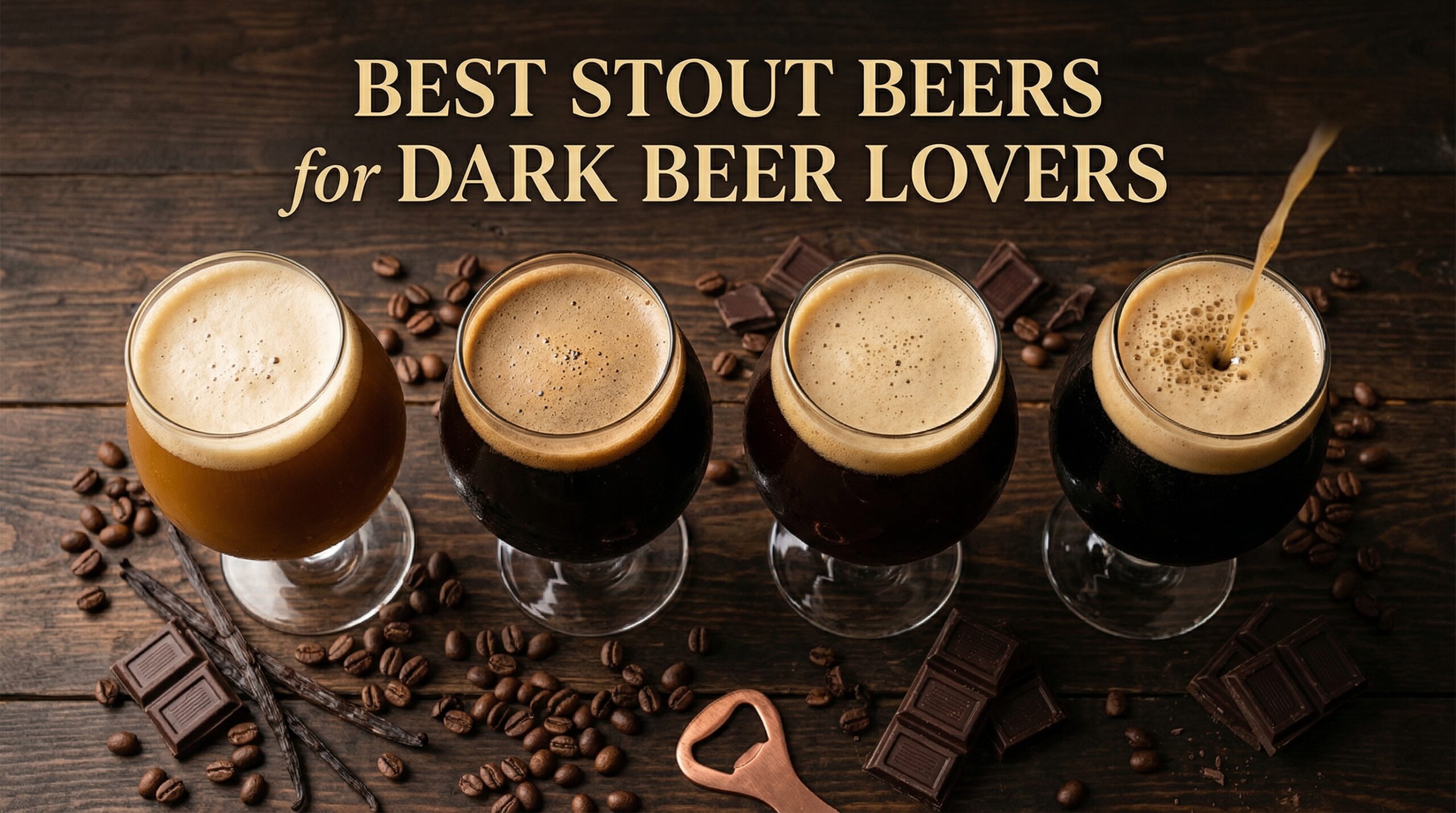
If you love dark, rich beers with layers of roasted flavor, you are not alone. Stout beers have become a cornerstone of craft beer culture, offering everything from sessionable pub pours to decadent barrel-aged sippers. Our team has spent years exploring the stout aisle, tasting through Irish classics, creamy milk stouts, and bold imperials to bring you this comprehensive guide to the best stout beers for dark beer lovers.
In this article, you will learn what makes stouts unique, how different styles vary in flavor and strength, and which bottles and cans deserve a spot in your fridge. We will cover everything from the nitro-poured perfection of Irish dry stouts to the bourbon-kissed complexity of barrel-aged giants. Whether you are a Guinness regular or someone curious about what the dark beer world has to offer, we have got something here for you.
We also share real experiences from beer communities, highlight award-winning brews, and give you a practical buying guide so you can pick the right stout for any occasion. Our goal is to help you discover your next favorite dark beer, with honest recommendations and zero pretension. At our brewing story, we believe great beer brings people together, and that is exactly what this guide is designed to do.
What Is a Stout Beer?
A stout is a dark, roasty beer style known for its rich flavors of coffee, chocolate, and caramel. The darkness comes from roasted barley, which gives stouts their signature black or deep brown color. Unlike lighter beers, stouts pack serious flavor into every sip, making them a favorite for anyone who wants more than just refreshment from their pint.
The main difference between stout and porter lies in the grain bill and the intensity of roast. Stouts typically use more roasted barley and often feature a drier, more bitter finish. Porters tend toward sweeter, more chocolate-forward profiles. Both are dark beers, but stouts generally offer more complexity and a wider range of styles to explore.
Stouts range from low-ABV session beers you can drink all evening to massive imperial stouts that demand slow sipping. This versatility is part of why dark beer lovers keep coming back. Our team has found that the best stout for you depends entirely on your flavor preferences, tolerance for alcohol heat, and whether you want something quick and refreshing or complex enough to savor.
Understanding Stout Beer Styles
The stout family branches into several distinct styles, each with its own personality. Knowing the differences helps you choose beers that match your taste.
Irish or Dry Stout
Irish stouts, like Guinness, are the quintessential pub beers. They feature a dry, roasty character with notes of coffee and toast. Nitro carbonation gives them a creamy, smooth mouthfeel that pours with a lasting tan head. These stouts are sessionable, typically sitting around 4-5% ABV, making them perfect for long evenings at the bar without the alcohol punch of stronger styles.
Milk Stout or Sweet Stout
Milk stouts add lactose, an unfermentable sugar, which creates a sweeter, creamier profile. The sweetness balances the roasted bitterness, resulting in flavors of chocolate, caramel, and sometimes peanut butter or vanilla. These stouts often land around 5-7% ABV and appeal to beer newcomers who want something approachable yet flavorful.
Imperial Stout
Imperial stouts push everything to the extreme. Higher alcohol content, intense roasted flavors, and complex aging potential define this style. Expect notes of dark fruit, espresso, dark chocolate, and sometimes oxidation or wood influence. These beers often exceed 8% ABV and can be aged for years, developing new layers of complexity over time.
Barrel-Aged Stout
Barrel-aged stouts spend months or years in wooden barrels that previously held spirits like bourbon, whiskey, or wine. The wood imparts vanilla, oak, and additional alcohol warmth while the base stout provides a rich canvas. These limited releases command attention and often become collector items for serious dark beer fans.
Oatmeal Stout
Oatmeal stouts use oats in the grain bill, adding a velvety, smooth mouthfeel that enhances drinkability. The oats temper the roastiness and add a subtle sweetness, making these a wonderful middle ground between dry Irish stouts and sweet milk stouts. Samuel Smith Oatmeal Stout is a classic example that many beer enthusiasts recommend over Guinness for beginners.
Irish Stouts: Roasty Pub Classics
Irish stouts represent the gateway to dark beer for millions of people worldwide. The standard-bearer is Guinness, which remains the most recognizable stout globally despite being produced in multiple countries. Our team finds that Guinness Draught offers a consistently smooth experience with its nitro pour, though the flavor profile has become somewhat basic for seasoned dark beer lovers seeking more complexity.
If you want something closer to what you would find in an Irish pub, look for Murphy’s or Beamish. Both offer that authentic Irish experience with roasted barley forward flavors and a dry finish. The differences between the three major Irish stouts are subtle but noticeable to trained palates, with Murphy’s showing slightly more chocolate notes and Beamish leaning toward a richer mouthfeel.
For dark beer lovers who find standard Guinness too basic, we recommend exploring Guinness Foreign Extra Stout. This variant uses more hops and has a higher ABV around 7.5%, delivering bolder roasted flavors with a hint of sweetness that the standard Draught lacks. It remains widely available and offers a significant step up in complexity without venturing into imperial territory.
Forum discussions consistently highlight that real beer enthusiasts often view Guinness as the “starting point” rather than the destination. As one Reddit user put it, “Guinness is what you drink before you learn what good stout is.” We agree, though we respect its role as the introduction to dark beer for countless people.
Milk Stouts: Sweet, Creamy, and Decadent
Milk stouts occupy a special place in the stout family because they appeal to a broader audience. The lactose adds body and sweetness that counteracts the natural bitterness of roasted barley, creating something almost dessert-like in a glass. Our team has found these stouts particularly enjoyable when you want flavor without the alcohol intensity of imperials.
Left Hand Nitro Milk Stout is a benchmark of the style, famous for its cascading nitro pour that creates a creamy, latte-like appearance. The flavors mirror the look, with prominent notes of chocolate and coffee balanced by just enough sweetness. At 6% ABV, it remains sessionable while delivering premium flavor.
Belching Beaver Peanut Butter Milk Stout has developed a cult following for its bold peanut butter presence. If you enjoy sweet, nutty flavors, this beer delivers without feeling gimmicky. The peanut butter integrates well with the underlying stout rather than overpowering it, making each sip taste like liquid Reese’s cups.
Odell Lugene Crackerjack Barrel-Aged Milk Stout represents the upper echelon of the style. Aged in whiskey barrels, it combines the comfort of milk stout with the complexity of barrel influence. Vanilla and oak notes emerge alongside the chocolate, creating something truly special for special occasions.
For those who want milk stout but prefer something less sweet, look for Choc Milk varieties or craft versions that use cocoa nibs rather than chocolate malts. The cocoa approach adds depth without excessive sugar, appealing to dark beer purists who still want some sweetness.
Imperial Stouts: Bold, Strong, and Built to Age
Imperial stouts demand attention. These beers pack high alcohol content, intense roasted flavors, and complex aromatic profiles that reveal new details with every sip. Our team has aged imperial stouts for several years, and the transformation can be remarkable, with youthful roast bitterness mellowing into layers of dark fruit, leather, and vinous complexity.
Old Rasputin Imperial Stout from North Coast Brewing is a staple that consistently appears in beer community discussions. At 9% ABV, it delivers reliable quality with notes of espresso, dark chocolate, and a warming alcohol presence. Thebeeradvocate rates it consistently above 90, and Untappd users praise its availability and price-to-quality ratio.
Narwhal Imperial Stout from Sierra Nevada is another nationally distributed option that receives frequent recommendations. It features a rich, velvety mouthfeel with flavors of roasted barley, chocolate, and dark fruit. At 10.2% ABV, it sits at the higher end of accessible imperials, offering serious intensity without requiring a road trip to a specialty bottle shop.
Toppling Goliath Ten FIDY has become a legendary imperial stout among craft beer enthusiasts. At 10.5% ABV with an extremely dark, thick body, it delivers notes of espresso, dark chocolate, and roasted malts. The brewery has built a devoted following by consistently producing outstanding stouts, though Ten FIDY remains a limited release that sells out quickly.
Deschutes Obsidian Stout offers a more affordable alternative in the Pacific Northwest, showcasing roasted coffee and chocolate flavors with a drier finish than some competitors. Our team considers it an underrated gem that deserves more national attention, especially for those who enjoy the roasty profile without excessive sweetness.
Beer forums consistently recommend Old Rasputin and Narwhal as reliable national options that balance quality, availability, and price. As one user noted, “When I cannot find local fresh stouts, I default to Rasputin or Narwhal because they never disappoint.” We find this advice sound for anyone building a stout collection.
Barrel-Aged Stouts: When Stout Meets Spirit
Barrel-aged stouts represent the pinnacle of craft brewing ambition. These beers require significant investment in time, equipment, and cellar space, which explains their premium pricing and limited availability. The reward is a sensory experience that combines the rich foundation of imperial stout with the complex influence of wood and spirit.
Parabola from Firestone Walker has become synonymous with exceptional barrel-aged stout. Aged in a variety of whiskey barrels, it offers layers of vanilla, oak, dark chocolate, and bourbon that build with each sip. At 13% ABV, it demands respect and slow sipping, rewarding patience with extraordinary complexity.
Bourbon County Stout from Goose Island sparked the modern barrel-aged stout craze when it launched in the mid-2000s. The annual release draws lines of enthusiasts willing to wait hours for bottles. The 2024 edition featured rich chocolate, vanilla, and bourbon notes with a thick, almost syrupy mouthfeel that lingers long after the final sip.
Dragon’s Milk from New Holland has become more widely available while maintaining quality. This 11% ABV stout spends four months in wooden barrels, developing notes of oak, vanilla, and caramel that complement the chocolate and coffee base. It serves as an accessible entry point for anyone curious about barrel-aged stouts without committing to the rarity hunt.
Forum discussions highlight that these premium stouts often fall into the “special occasion” category. “I save Bourbon County for birthdays and holidays,” one Reddit user shared. “Dragon’s Milk I keep around for more casual sipping when I want something impressive without going full疯了 mode.” The practical advice resonates with our experience.
Availability remains the biggest challenge with barrel-aged stouts. Specialty bottle shops, craft beer retailers, and brewery taprooms represent the primary sources. Online ordering through services like BeerAdvocate’s marketplace or local delivery apps can help, though freshness should always be verified before purchase.
Quick Picks: Top Stout Recommendations
If you need a quick reference before diving into detailed sections, here are our top recommendations across key stout categories. These picks reflect community consensus, our tastings, and broad availability.
- Best Irish Stout: Guinness Draught (availability), Samuel Smith Oatmeal Stout (flavor complexity)
- Best Milk Stout: Left Hand Nitro Milk Stout (classic), Belching Beaver Peanut Butter Milk Stout (flavor bomb)
- Best Imperial Stout: Old Rasputin (value), Narwhal (balance), Ten FIDY (intensity)
- Best Barrel-Aged Stout: Parabola (quality), Bourbon County (prestige), Dragon’s Milk (accessibility)
These recommendations cover the range from everyday options to special occasion splurges. Every beer on this list has earned its reputation through consistent quality and broad accessibility across the United States.
How to Choose the Right Stout for You
With so many stout styles available, finding the right one requires considering a few personal factors. Our team recommends starting with these questions before making your selection.
What Is Your Alcohol Tolerance?
If you want to enjoy multiple beers over an evening, stick with sessionable options like Irish stouts (4-5% ABV) or standard milk stouts (5-6% ABV). These allow you to savor several pints without feeling the effects too quickly. Imperial stouts and barrel-aged varieties should be treated as standalone sippers, one of which may equal two or three standard beers in alcohol content.
How Sweet Do You Prefer Your Beer?
Dry stouts like Guinness offer minimal sweetness, letting the roasted barley bitterness take center stage. Milk stouts provide noticeable sweetness that appeals to those who enjoy dessert-like beverages. Imperial stouts can swing either direction depending on the brewing recipe, though most lean toward bittersweet complexity rather than outright sugar.
What Flavors Appeal to You?
Stouts offer a flavor wheel spanning from coffee and espresso (common in Irish and imperial styles) to chocolate and caramel (typical of milk stouts) to vanilla, oak, and bourbon (hallmarks of barrel-aged variants). If you enjoy coffee, try an Irish dry stout. If you prefer chocolate, reach for a milk stout. If you love whiskey, barrel-aged stouts will speak to you.
Consider the Occasion
A backyard barbecue calls for something different than a fireside reading session. Lighter stouts work well outdoors and pair with grilled foods. Heavy imperials demand slow sipping indoors, perhaps alongside a book or good conversation. Barrel-aged stouts make excellent after-dinner drinks, replacing dessert with liquid indulgence.
Freshness Matters
Stouts age differently than hop-forward beers like IPAs. While hops degrade quickly, the roasted malts in stouts hold up well over months. However, oxidation can introduce cardboard or papery flavors that detract from freshness. Our team always checks the bottle date when available and prefers locally brewed stouts that have spent less time in distribution.
Beer forums consistently reinforce this advice. “I always look for the freshest stuff I can find,” one homebrewer noted. “Local breweries often have stouts that taste completely different from the same style shipped across the country.” This principle aligns with our experience, especially for hop-sensitive styles.
Glassware Recommendations
The glass shape influences your stout experience. A classic pint glass works well for sessionable stouts where you want volume. A snifter or tulip glass concentrates the aromatics of imperial and barrel-aged stouts, enhancing your sensory experience. Some breweries recommend a specific glass for their creations, and following that guidance often improves the enjoyment significantly.
If you want to replicate the nitro pour of Irish stouts at home, consider purchasing nitrogenated cans designed for this purpose. The widget inside the can creates the characteristic cascading pour that transforms the appearance and mouthfeel. Standard CO2 carbonation simply cannot match this effect.
Food Pairing Suggestions
Stouts pair wonderfully with rich, hearty foods. The roasted flavors complement grilled meats, aged cheeses, and chocolate desserts. An Irish stout works beautifully with fish and chips or shepherd’s pie. Milk stouts shine alongside chocolate cake, ice cream, or peanut butter treats. Imperial stouts can stand up to bold cigars, aged cheeses, or simply a quiet moment of reflection.
If you enjoy cooking with beer, stouts make exceptional additions to stews, braised meats, and baking. Our beer bread recipe demonstrates how stout’s rich flavors can transform simple bread into something memorable. Similarly, Spanish cuisine and beer pairings show how versatile dark beer can be at the table.
GABF Award Winners: Medals for Stout Excellence
The Great American Beer Festival represents the gold standard for American craft beer recognition. Medal winners undergo rigorous blind tasting by industry professionals, making GABF awards a trustworthy signal of quality. Several stouts have earned consistent recognition over the years.
Looking at GABF records, milk stouts and imperial stouts have dominated the medal categories. Younger than traditional Irish styles, American craft stouts have evolved rapidly, with brewers pushing boundaries in recipe development and ingredient sourcing. The result is an impressive range of styles that now rival European traditions.
When building your stout collection, including a few GABF medalists provides a baseline of proven quality. These beers have satisfied the挑剔 palates of professional judges, making them safer selections if you are uncertain about lesser-known options. Browse current GABF winners on their official website to find fresh additions to your shopping list.
Regional breweries often dominate GABF categories, with Pacific Northwest and Colorado producers earning particular recognition. If you travel to these regions, seeking out local GABF winners provides an opportunity to taste stouts at their freshest, direct from the source.
Frequently Asked Questions About Stout Beers
What are some dark stout beers?
Dark stout beers include Irish dry stouts like Guinness and Murphy’s, milk stouts like Left Hand and Belching Beaver, imperial stouts like Old Rasputin and Narwhal, and barrel-aged stouts like Parabola and Bourbon County. Each style offers different flavor profiles from roasty and dry to sweet and creamy to bold and bourbon-kissed.
What are the most popular stout beers?
The most popular stout beers include Guinness Draught for Irish stout fans, Left Hand Nitro Milk Stout for sweet stout lovers, Old Rasputin Imperial Stout for high-ABV seekers, and Bourbon County Stout for barrel-aged enthusiasts. These beers have earned their popularity through consistent quality and wide availability across the United States.
What pairs well with a dark beer?
Dark beers pair well with grilled meats, aged cheeses, chocolate desserts, peanut butter treats, and coffee-flavored dishes. Irish stouts complement fish and chips or shepherd’s pie, while imperial stouts stand up to bold cigars and aged parmesan. Milk stouts pair excellently with chocolate cake or vanilla ice cream.
What kind of beer is best for someone who doesn’t like beer?
Milk stouts and sweet stouts often win over non-beer drinkers because the sweetness masks the bitter roasted flavors typical of darker styles. Samuel Smith Oatmeal Stout and Left Hand Nitro Milk Stout are frequently recommended as gateway stouts. The creamy mouthfeel from nitro carbonation also makes these styles more approachable.
Which stout is closest to Guinness?
Murphy’s and Beamish offer the closest alternatives to Guinness among widely available Irish stouts. For a more accessible option, Guinness Draught itself remains the standard. Samuel Smith Oatmeal Stout provides more flavor complexity while maintaining the dry, roasty character that defines Irish-style stouts.
What is the difference between stout and porter?
Stouts typically use more roasted barley and have a drier, more bitter finish compared to porters. Porters tend toward sweeter, more chocolate-forward profiles with a lighter body. Both are dark beers, but stouts generally offer more variety, from sessionable Irish pours to massive barrel-aged sipping beers, while porters usually stay in a narrower flavor range.
Final Thoughts on Finding Your Perfect Stout
The world of stout beers offers something for every dark beer lover, from the simple pleasure of a perfectly poured Guinness to the complex joy of aged Parabola. Our team hopes this guide has helped you understand the breadth of what stouts can offer and pointed you toward some new experiences to try.
Start with styles that match your flavor preferences, whether you enjoy dryness, sweetness, or bold intensity. Build from there, exploring different breweries and regional specialties. Most importantly, seek out freshness and support local breweries when possible. The best stout experience often comes from a fresh pint at a local taproom rather than a shipped bottle.
If you are curious about expanding beyond stouts, explore our guides to best non-alcoholic beers or Japanese beer brands for different perspectives on the craft beer world. For more about our brewing philosophy, visit our brewery and learn what drives our approach to creating memorable beer experiences.
Cheers to your dark beer journey. May your pints be full, your stouts be fresh, and your discoveries be delicious.