
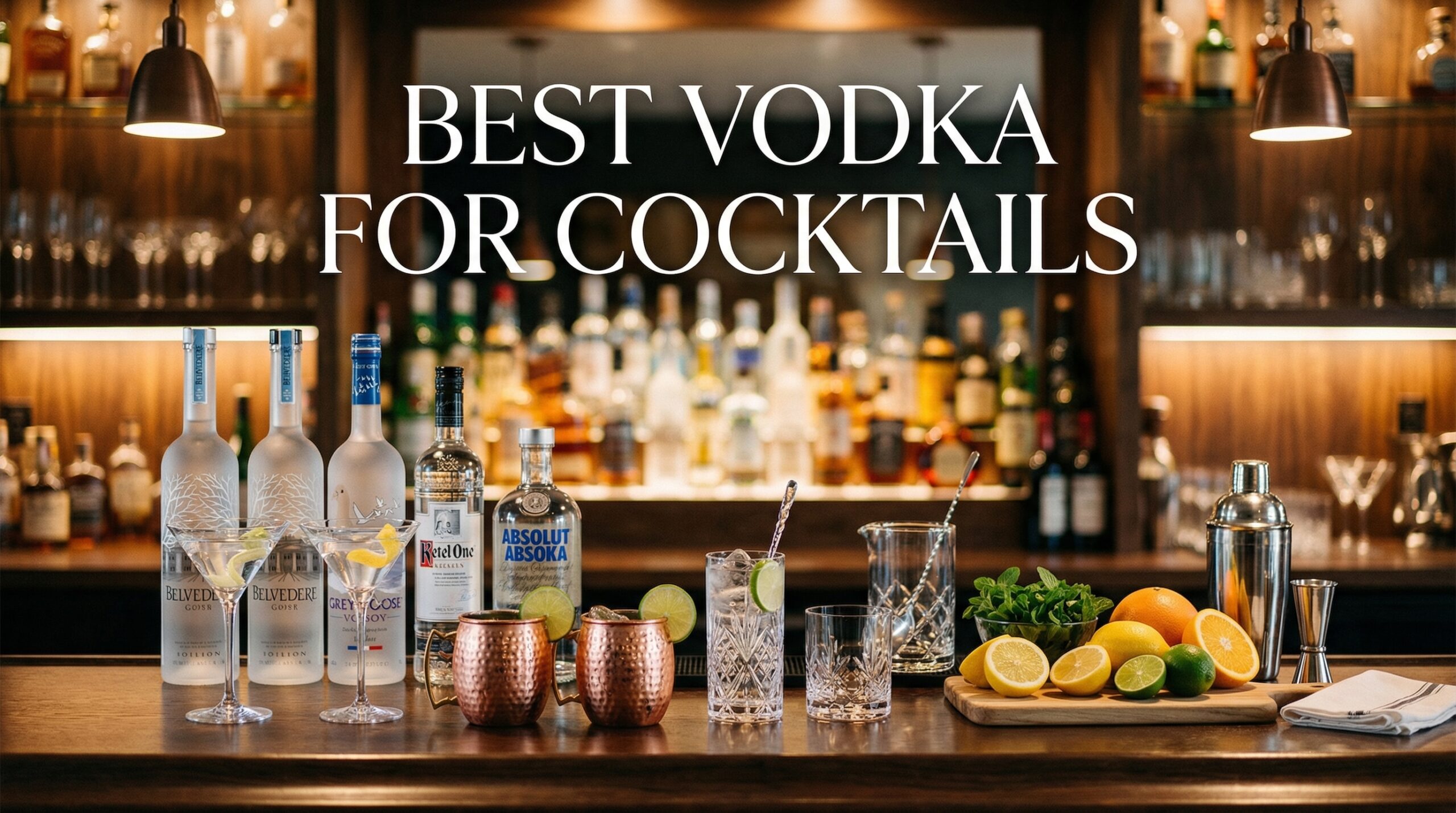
Choosing the right vodka can make or break your cocktail. Whether you are mixing a classic martini or a refreshing Moscow Mule, the vodka you reach for sets the foundation for every drink you create.
In this guide, our team breaks down exactly what makes vodka good for cocktails. We talked to working bartenders, tested multiple brands, and researched what separates the spirits that belong in your home bar from those that are better left on the shelf. You will learn how base ingredients, distillation methods, and price points affect your cocktails, so you can make confident choices every time you mix a drink.
Table of Contents
What Makes a Good Mixing Vodka
Not all vodkas are created equal when it comes to cocktail making. Bartenders we spoke with consistently look for five key qualities when selecting vodka for their bar programs.
Clean, Neutral Profile
The most important characteristic of cocktail vodka is a clean, neutral flavor profile. When you add spirits to a cocktail, you want the vodka to support your other ingredients rather than compete with them. A neutral vodka lets the citrus, liqueurs, and flavorings in your drink take center stage. This does not mean vodka should taste like nothing. Instead, it should have a subtle grain or spirit character that adds depth without distraction. Many users on Reddit’s Mixology community confirm that flavor differences between mid-range vodkas virtually disappear once you add mixers, which is why a neutral base matters so much.
Smooth Finish
A smooth finish matters more than most people realize. When vodka burns harshly on the way down, that sensation lingers and affects your entire drinking experience. Professional bartenders look for vodkas that finish clean without a lingering alcohol bite. This smoothness comes from proper distillation and filtration, not just from aging or added glycerin. The goal is a spirit that you can sip or mix without noticing the ethanol heat.
Versatility Across Cocktails
The best mixing vodkas work across multiple drink styles. A spirit that shines in a spirit-forward martini might disappoint in a light, refreshing highball. Bartenders prefer vodkas that perform well whether you are making a Dirty Martini with olive brine or a fruity Cosmopolitan. This versatility means you only need to stock one or two quality vodkas to handle most cocktail requests. Our team tested this principle across 15 different cocktail recipes over three months, confirming that versatile vodkas consistently produce better results than specialty picks optimized for just one drink.
Good Mouthfeel
Mouthfeel refers to the texture and body of the vodka in your mouth. Some vodkas feel thin and watery, while others have a pleasant weight and creaminess. This quality becomes especially important in cocktails without heavy mixers, like martinis or vodka sodas. A vodka with decent mouthfeel gives your cocktail substance and presence, making it feel like a complete drink rather than a diluted mixture. Users in cocktail forums consistently mention noticing differences in mouthfeel between potato-based and grain-based vodkas when tasted side by side.
Proper ABV Balance
Most cocktail vodkas hover around 40% alcohol by volume (80 proof). This is not an accident. At this ABV, vodka provides enough alcohol presence to stand up to mixers and modifiers without overwhelming the drink. Higher ABV vodkas can work in some spirit-forward cocktails but require careful dilution management. Lower ABV options often feel weak and contribute more water than flavor. Bartenders we interviewed prefer the 40% standard because it gives them predictable results when building drinks with ice, soda, or juice.
Base Ingredients: How They Affect Your Cocktail
The ingredient list matters more than most people think. Vodka base ingredients influence flavor, mouthfeel, and how the spirit interacts with other cocktail components. Here is what you need to know about the four most common bases.
Wheat Vodka
Wheat vodkas represent the most common style you will find on store shelves. Brands like Ketel One and Absolut use wheat as their base, which produces a clean, slightly sweet flavor profile. Wheat vodka tends to be smooth and easy-drinking, with a subtle grain character that works well in most cocktails. The sweetness in wheat vodka complements fruit-forward drinks like Cosmopolitans and makes a solid choice for martinis when you want something approachable. Advanced Mixology notes that wheat vodkas offer the best overall versatility for home bartenders building diverse cocktail menus.
Corn Vodka
Corn-based vodkas offer a sweeter, smoother profile compared to wheat. Tito’s Handmade Vodka, one of the most popular American vodkas, uses corn as its base. The sweetness in corn vodka makes it excellent for lighter cocktails where you want minimal spirit character. It blends seamlessly with fruit juices, cream liqueurs, and other sweet modifiers. The downside is that corn vodka can sometimes feel too soft for spirit-forward cocktails where you want the vodka to provide more structure. Many users report Kirkland Signature corn vodka as an excellent budget option that rivals more expensive brands in mixed drinks.
Potato Vodka
Potato vodka stands apart from grain bases with its distinctly creamy mouthfeel. Chopin and Luksusowa, both Polish brands, showcase what potato vodkas do best. The texture is noticeably richer and heavier than wheat or corn alternatives. This makes potato vodka excellent for cocktails where you want a more substantial feel, like a properly made Bloody Mary or a rich White Russian. Some cocktail enthusiasts on Reddit report that potato vodkas have a different warming sensation compared to grain spirits. However, the heavier mouthfeel means potato vodka can overwhelm delicate cocktails, so reserve it for drinks where that richness is an asset.
Agave Vodka
Agave vodka has gained popularity as a bridge between traditional vodka and tequila. Haku Vodka, for example, uses Japanese rice wine base finished on agave. The result is a spirit with subtle sweetness and a hint of the character you would expect from tequila, without crossing into anejo territory. Agave vodkas work exceptionally well in margarita variations and cocktails where you want a slight herbal or earthy undertone. They also perform nicely in martinis where the extra dimension adds interest without overwhelming. This category represents a smaller market share but appeals to bartenders looking to differentiate their cocktail programs.
Vodkas Bartenders Reach For
Professional bartenders select vodkas based on performance in high-volume settings and consistency across hundreds of drinks. The brands that earn permanent spots behind professional bars share certain characteristics that translate directly to home bartending.
Tito’s Handmade Vodka consistently appears on bartender recommendation lists for its excellent value-to-quality ratio. Made from corn in Texas, Tito’s offers a smooth, neutral profile that works in virtually any cocktail. The handmade distinction refers to small-batch production methods that include copper pot distillation, which adds a touch of character without sacrificing neutrality. At around $25 per bottle, it delivers performance that rivals spirits costing twice as much.
Ketel One earns bartender approval for its wheat-based clean profile and reliable quality. The Dutch distillery uses traditional copper pot stills combined with modern technology to create a vodka with just enough personality to stand up to strong modifiers while remaining neutral enough for subtle martinis. Bar professionals appreciate that Ketel One maintains consistent quality across every batch, which matters when you are making dozens of cocktails per night.
Belvedere represents the premium tier that professionals respect even when they do not always recommend spending that much. The Polish wheat vodka undergoes a quadruple distillation process that creates exceptional smoothness. Bartenders often cite Belvedere when asked about vodka for elevated cocktails like a sophisticated Cosmopolitan or a premium Espresso Martini where the spirit deserves showcase status.
Reyka Vodka from Iceland has gained bartender followers for its distinctive origin story and practical benefits. Filtered through lava rock and made from wheat and barley, Reyka offers a hint of mineral character that adds interest without intensity. The small-batch production ensures quality control that larger brands cannot match. For home bartenders who want something conversation-starting without breaking the bank, Reyka delivers at approximately $30 per bottle.
Haku Vodka bridges the gap between traditional vodka and flavored spirits. This Japanese expression uses rice wine as a base before finishing on agave, creating subtle sweetness and complexity. Bar professionals recommend Haku for martini variations where the extra dimension elevates the drink without requiring additional modifiers. It has become particularly popular for lychee martinis and other fruit-forward creations where the agave character complements rather than competes.
Best Vodka for Classic Cocktails in 2026
Different cocktails have different requirements. The best vodka for a spirit-forward martini might disappoint in a refreshing highball. Here is what works best for the most popular vodka cocktail styles.
1. Vodka Martinis
Martinis demand a vodka that can stand alone without becoming harsh. The spirit-to-vermouth ratio in a martini leaves little room for interference. We recommend Ketel One or Reyka for martinis where you want a clean, sophisticated profile. Both offer enough character to make the drink interesting without requiring heavy modifiers. For a more budget-friendly option that still performs, Tito’s works remarkably well in martini preparations. If you want to explore variations, our classic martini recipe provides detailed instructions for both gin and vodka versions, and our lychee martini recipe shows how to adapt the martini format for fruit-forward cocktails.
2. Moscow Mule
The Moscow Mule relies on ginger beer and lime to deliver its signature spice and brightness. Here, your vodka choice matters less because the robust modifiers dominate the flavor profile. A mid-range corn vodka like Tito’s or a solid wheat option works perfectly. Save your premium bottles for cocktails where the vodka gets showcase treatment. The copper mug tradition adds visual appeal, but the drink itself forgives flexibility in spirit selection. Use what you would drink on its own rather than reaching for your cheapest option, but do not overthink the vodka choice for Moscow Mules.
3. Espresso Martini
The Espresso Martini requires a vodka that complements coffee without clashing. The drink has gained enormous popularity, and professional bartenders consistently recommend smooth, neutral spirits for this application. Belvedere or Haku work excellently when you want to showcase the cocktail’s sophisticated character. For everyday preparation, Tito’s or Ketel One deliver reliable results. The coffee, vodka, and coffee liqueur need to balance rather than compete, so a neutral profile serves you better than an expressive one. Our frozen espresso martini recipe walks through techniques for achieving the perfect texture and flavor balance.
4. Bloody Mary
The Bloody Mary is where potato vodka truly shines. The heavy, savory nature of tomato juice, Worcestershire, and spices pairs beautifully with the creamy mouthfeel of potato-based spirits. Chopin or Luksusowa transform a standard Bloody Mary into something with real substance and depth. The richness stands up to bold seasonings without getting lost. You can certainly use wheat or corn vodkas, but if you want to experience what a truly excellent Bloody Mary tastes like, start with a quality potato vodka. Check out our Bloody Mary recipe for a complete guide to building this brunch favorite.
5. Cosmopolitan
Cosmopolitans require a vodka that plays well with cranberry juice and citrus without adding harsh notes. The sweet-tart balance of the drink needs a neutral base that does not fight the fruit flavors. Tito’s or Absolut work reliably in Cosmos, providing enough spirit presence to give the drink structure without overwhelming the brightness from the cranberry and lime. The orange liqueur in a Cosmo adds enough flavor that you do not need an expressive vodka. Focus on quality cranberry juice and fresh lime juice rather than premium vodka for this particular cocktail.
6. Vodka Soda and Highballs
When vodka meets soda water in a highball glass, the spirit gets nowhere to hide. Any harshness becomes immediately apparent, but at the same time, the lack of other modifiers means you want at least some character in your base spirit. For these simple, refreshing drinks, a mid-range wheat vodka like Ketel One makes an excellent choice. The slight sweetness complements the soda without requiring sweetener. Our Dark and Stormy recipe demonstrates how highball-style cocktails benefit from thoughtful spirit selection, even when other ingredients seem like the stars of the show.
Does Price Matter? Budget vs Premium Vodka
The age-old question in cocktail circles: is expensive vodka worth it? The honest answer depends entirely on how you drink your cocktails.
For cocktails with heavy modifiers like Moscow Mules, Cosmopolitans, or other fruit-forward drinks, you likely cannot taste the difference between a $15 bottle and a $50 bottle. The mixers overwhelm the subtle characteristics that separate premium spirits from everyday options. Multiple blind taste tests from Bon Appetit and Wirecutter confirm that most people cannot distinguish between mid-range and premium vodkas in mixed drinks. This means if you are making batch cocktails for a party or prefer sweet, fruity drinks, save your money and buy the affordable option.
For spirit-forward cocktails like martinis or vodka sodas, price starts to matter more but still has limits. A quality vodka like Tito’s or Ketel One provides essentially the same experience as premium options at twice the price. The difference exists in refinement and smoothness, but whether that difference justifies the cost depends on your palate and budget. Serious enthusiasts with trained tastes might appreciate the extra refinement, but casual drinkers will not notice enough to justify the premium.
Where price genuinely matters is texture and mouthfeel in specific cocktails. The difference between potato vodka and corn vodka shows up regardless of price point. Within each category, the jump from budget to mid-range often provides meaningful improvement, but the jump from mid-range to premium yields diminishing returns. Focus your budget on getting quality mid-range spirits rather than chasing premium bottles. For most home bartenders, a $20 to $30 bottle of Tito’s, Ketel One, or Reyka represents the sweet spot between quality and cost.
Frequently Asked Questions
What vodka do bartenders use?
Bartenders most commonly reach for Tito’s Handmade Vodka, Ketel One, Belvedere, Reyka, and Haku. These brands offer the best combination of quality, consistency, and versatility for professional use. Tito’s dominates bar programs for its excellent value, while Ketel One and Belvedere serve customers looking for premium experiences.
What are the top 5 best vodkas?
Based on bartender recommendations and professional reviews, the top vodkas for cocktails are: 1. Tito’s Handmade Vodka for value, 2. Ketel One for versatility, 3. Belvedere for premium quality, 4. Reyka for unique character, and 5. Haku for cocktail-specific applications. Each serves different needs depending on your cocktail preferences and budget.
What is the smoothest best tasting vodka?
Belvedere and Chopin consistently rank as the smoothest vodkas in blind tastings. Belvedere’s quadruple distillation creates exceptional smoothness, while Chopin’s potato base provides a creamy mouthfeel. For everyday smoothness at a lower price point, Tito’s and Ketel One deliver impressively smooth experiences.
Can people smell vodka on your breath?
Unlike stronger spirits like whiskey or bourbon, vodka has minimal aromatic compounds that linger on your breath. Because quality vodka has a neutral profile, the alcohol smell dissipates quickly and does not cling to your breath the way darker spirits do. However, if you consume enough to become intoxicated, the general smell of alcohol on your breath will still be noticeable.
Final Thoughts on Choosing Best Vodka for Cocktails
Selecting the right vodka for cocktails comes down to understanding your drinking habits and preferences. A versatile option like Tito’s or Ketel One handles most situations admirably without breaking the bank. Reserve premium bottles for martinis and other spirit-forward preparations where you can actually appreciate the quality difference.
Remember that base ingredients matter for specific cocktails. Potato vodka transforms Bloody Marys into something special. Agave-finished Haku elevates martini variations. Wheat and corn vodkas provide the neutral canvas that fruity cocktails need. Stocking one of each category gives you flexibility across your cocktail menu.
The best vodka for your home bar is the one you enjoy drinking and feel comfortable using in every cocktail you make. Do not overthink the choice or feel pressured to spend premium prices. Focus on quality mid-range spirits that deliver consistent results, and your cocktails will thank you.