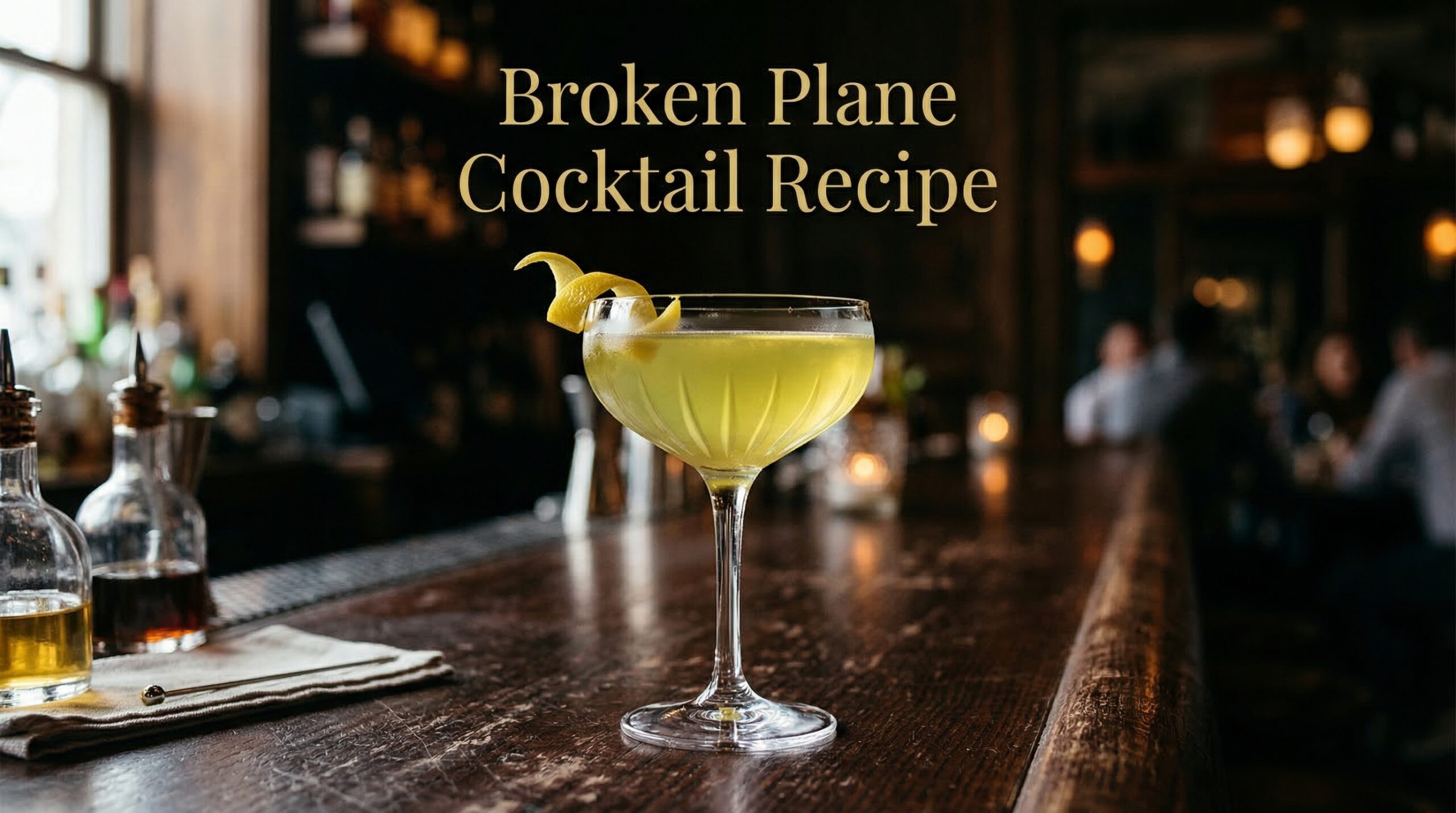
Looking for a sophisticated yet simple cocktail that impresses every time? The Broken Plane Cocktail Recipe delivers a perfectly balanced, floral gin-based drink that’s become my go-to for entertaining. This modern classic swaps bourbon for gin and Aperol for elderflower, creating something lighter and more refreshing than its inspiration. If you enjoy a floral gin cocktail like our Lychee Martini, you’ll love this elegant variation.
The best part? It uses the equal-parts formula, which means no complex measuring. Just pour equal amounts of four ingredients, shake, and serve. I’ve made this drink dozens of times, and it consistently wins over people who claim they don’t like gin.
What Is a Broken Plane Cocktail?
The Broken Plane is a floral, gin-based riff on the Paper Plane cocktail that originated in the late 2010s. While the Paper Plane (created by bartender Sam Ross in 2008) uses bourbon and Aperol, the Broken Plane makes two key substitutions: gin replaces bourbon, and elderflower liqueur takes the place of Aperol.
What makes this drink special is its equal-parts formula. Every ingredient uses the same measurement, typically 0.75 ounces each. This simplicity means you can easily scale up for a party or make a single serving without pulling out measuring tools.
The result? A bright, botanical cocktail with a beautiful chartreuse color. Home bartenders on cocktail forums frequently mention that it has a “slightly grapefruit” quality without containing any actual grapefruit. That’s the magic of combining elderflower’s honeyed floral notes with Amaro Nonino’s bittersweet complexity and fresh lemon juice.
Many people I’ve served this to describe it as “classy” and “refreshing.” It’s less boozy-tasting than the bourbon-based Paper Plane, making it an excellent choice for warm-weather entertaining or anyone who prefers a lighter, more botanical cocktail.
Broken Plane Cocktail Ingredients
Here’s what you’ll need to make this Broken Plane Cocktail Recipe. The measurements below make one drink, but since everything is equal parts, you can easily multiply for batching.
Core Ingredients (0.75 oz each)
- Gin: Choose a good-quality gin for the best results. London Dry gins like Tanqueray or Beefeater provide a classic juniper backbone. For something more floral that complements the elderflower, try Hendrick’s (my personal favorite for this drink) or another New Western style gin. Avoid heavily spiced or navy-strength gins, which can overpower the delicate balance.
- Elderflower Liqueur: St-Germain is the original and most widely available option. It’s sweet, floral, and adds a honeyed quality that ties the drink together. Alternatives include Giffard Elderflower or St-Elder, though St-Germain’s distinctive flavor is worth seeking out.
- Amaro Nonino Quintessentia: This Italian herbal liqueur provides bittersweet depth and complexity. It’s aged in barrique barrels, giving it notes of orange, caramel, and bitter herbs. Yes, it’s expensive (typically $40-50 per bottle), but cocktail enthusiasts consistently say it’s worth the investment. I’ve tested substitutes, and nothing quite matches Nonino’s unique profile.
- Fresh Lemon Juice: Always use freshly squeezed juice. Bottled lemon juice has preservatives and lacks the bright, aromatic oils that make this drink sing. One medium lemon yields about 1 ounce of juice, so you’ll get roughly one drink plus a bit extra from each lemon.
Optional Additions
Orange Bitters (2 dashes): Some recipes include orange bitters for extra aromatic complexity. I add them when I want a slightly more sophisticated profile, but they’re completely optional.
Ingredient Substitutions
Can’t find Amaro Nonino? Here are some alternatives I’ve tested:
- Averna: Darker and more bitter, but works in a pinch. Use slightly less (0.5 oz) and add a tiny extra splash of elderflower to balance.
- Montenegro: Sweeter and lighter than Nonino. A decent substitute, though you lose some complexity.
- Cynar: Some forum users swear by this artichoke-based amaro for a more savory Broken Plane. It’s interesting but creates a very different drink.
For elderflower substitutes, try elderflower syrup (reduce the amount slightly and add a dash more lemon) or lychee liqueur for a different floral profile.
How to Make a Broken Plane Cocktail: Step-by-Step
Follow these steps for a perfect Broken Plane every time. The entire process takes about 5 minutes.
Step 1: Chill Your Glass
Place a coupe glass or cocktail glass in the freezer for at least 5 minutes before making your drink. A chilled glass keeps your cocktail at optimal temperature longer. If you’re short on time, fill the glass with ice water while you prepare the drink, then dump it out before straining.
Step 2: Measure Your Ingredients
Add the following to your cocktail shaker:
- 0.75 oz (22 ml) gin
- 0.75 oz (22 ml) elderflower liqueur
- 0.75 oz (22 ml) Amaro Nonino
- 0.75 oz (22 ml) fresh lemon juice
- 2 dashes orange bitters (optional)
Use a jigger for accurate measurements. The equal-parts formula makes this easy to remember: just match each pour.
Step 3: Add Ice and Shake
Fill your shaker with ice cubes. Not crushed ice, which melts too quickly and dilutes the drink. Use solid ice cubes for proper chilling and dilution.
Shake vigorously for 15 seconds. You want to hear the ice rattling against the shaker walls. Proper technique: hold the shaker with both hands, one on each end, and shake hard from your shoulders, not your wrists. The shaker should frost over on the outside when you’ve shaken enough.
Step 4: Strain and Serve
Remove your chilled glass from the freezer. Strain the cocktail through a fine-mesh strainer into the glass. The fine strainer catches any ice chips or lemon pulp, ensuring a clean, elegant presentation.
Step 5: Garnish
Traditional garnishes include:
- Lemon twist: Express the oils over the drink, then drop it in
- Lemon verbena leaf: For an aromatic, herbal touch
- Thyme sprig: Adds earthy complexity that complements the botanicals
I prefer a simple lemon twist for most occasions. It adds brightness without competing with the drink’s flavors.
What Does a Broken Plane Cocktail Taste Like?
The Broken Plane delivers a complex yet approachable flavor profile. On first sip, you get bright citrus from the lemon juice, followed quickly by elderflower’s honeyed floral sweetness. The gin’s botanicals (juniper, coriander, citrus peel depending on your brand) provide a crisp backbone.
Mid-palate, the Amaro Nonino adds bittersweet complexity with notes of orange zest, caramel, and gentle herbs. The finish is clean and slightly tart, with many drinkers noting a grapefruit-like quality that emerges from the combination of ingredients.
The overall impression is “refreshing” and “sophisticated.” It’s less boozy-tasting than many cocktails, with an ABV around 18-20% (compared to 25%+ for a Manhattan or Negroni). This makes it an excellent aperitif or warm-weather sipper.
The chartreuse color adds visual appeal. It’s a drink that looks as elegant as it tastes, which explains why it’s become popular for weddings, dinner parties, and New Year’s Eve celebrations.
Broken Plane vs Paper Plane: What’s the Difference?
Understanding the Paper Plane helps you appreciate what the Broken Plane brings to the table. Sam Ross created the Paper Plane in 2008 at The Violet Hour in Chicago, and it quickly became a modern classic. The original uses:
- Bourbon (instead of gin)
- Aperol (instead of elderflower liqueur)
- Amaro Nonino
- Fresh lemon juice
Both drinks share the equal-parts formula and Amaro Nonino, but the base spirit and secondary liqueur create distinctly different experiences.
Flavor Comparison
Paper Plane: Warm, spicy, and slightly more aggressive. The bourbon brings caramel and vanilla notes, while Aperol adds bitter orange and a reddish hue. It’s a “cozier” drink that works well in cooler weather.
Broken Plane: Bright, floral, and refreshing. The gin provides crisp botanicals, while elderflower adds delicate sweetness. It’s a “lighter” drink that shines in spring and summer.
Strength Comparison
Is a Paper Plane a strong drink? The Paper Plane is slightly stronger due to bourbon’s higher proof, but both are moderate-strength cocktails. The Broken Plane feels less boozy because gin and elderflower create a lighter mouthfeel. If you’re sensitive to strong drinks or want something easy-drinking for a party, the Broken Plane is the better choice.
When to Choose Each
Choose the Paper Plane when you want something warming, when you’re serving whiskey lovers, or when the weather calls for a heartier cocktail.
Choose the Broken Plane when you want something refreshing, when you’re serving gin enthusiasts or people who claim they don’t like strong drinks, or when you want a cocktail that pairs well with lighter foods.
Tips, Variations, and Common Mistakes
After making countless Broken Planes, here are my hard-earned tips for success.
Tips for Success
1. Use fresh lemon juice. This is non-negotiable. Bottled juice has a flat, metallic taste that ruins the drink’s bright character. Fresh lemons cost pennies per drink and make a massive difference.
2. Don’t skip the chilling. A warm glass or under-shaken drink will be disappointing. That 15-second shake isn’t optional; it’s essential for proper dilution and temperature.
3. Invest in good ice. Cloudy, freezer-burned ice adds off-flavors. Use fresh ice from an ice maker, or make your own with filtered water in silicone molds.
4. Taste your ingredients. Different gins and amari have varying sweetness levels. If your drink tastes off, adjust your next attempt accordingly.
Common Mistakes to Avoid
Using cheap gin: This drink has only four ingredients, so each one matters. A rough, unbalanced gin will dominate the delicate elderflower and amaro.
Over-shaking: More than 15-20 seconds over-dilutes the drink. The goal is proper chilling, not turning everything to water.
Skip the fine strainer: Those tiny ice chips in your drink? They melt quickly and water down your carefully balanced cocktail.
Variations to Try
Cynar Broken Plane: Replace Amaro Nonino with Cynar for a more savory, herbaceous version. Some cocktail enthusiasts prefer this variation.
Rosemary Broken Plane: Add a rosemary sprig to the shaker for piney complexity that works beautifully with gin.
Berry Broken Plane: Muddle a few raspberries in the shaker before adding other ingredients for a fruity, pink-tinted variation.
Batching for Parties
Want to serve Broken Planes at your next gathering? Here’s how to batch:
- Mix all ingredients except ice in a large pitcher or bottle. Scale up by however many servings you need.
- Refrigerate for at least 2 hours (the mixture keeps for up to a week).
- When serving, pour 3 oz of the mixture per person into a shaker with ice, shake, and strain.
This method lets you shake individual servings for proper dilution without measuring each time.
Serving Suggestions and Food Pairings
The Broken Plane’s versatility makes it an excellent choice for various occasions and food pairings.
Glassware
Serve in a coupe glass for classic elegance. Nick and Nora glasses work beautifully too. Avoid rocks glasses; this drink deserves to be served up (without ice) for the best experience.
Occasion Ideas
- Aperitif hour: Serve before dinner to stimulate the appetite
- Summer entertaining: Perfect for outdoor parties and BBQs
- Dinner parties: An elegant start to any meal
- Wedding cocktails: The beautiful color and easy-drinking profile make it a crowd-pleaser
- New Year’s Eve: Sophisticated celebration in a glass
Food Pairings
The Broken Plane pairs well with:
- Appetizers: Bruschetta, goat cheese crostini, shrimp cocktail
- Light proteins: Grilled fish, chicken salad, prosciutto-wrapped melon
- Cheese: Fresh cheeses like burrata, goat cheese, or mild cheddar
- Desserts: Lemon tart, berry-based sweets, light sorbet
Avoid pairing with heavy, rich dishes. The cocktail’s delicate balance gets lost next to fatty meats or heavily spiced foods.
For more inspiration, explore more cocktail recipes on our site.
FAQs
What’s in a Broken Plane cocktail?
A Broken Plane cocktail contains four equal parts: gin (typically 0.75 oz), elderflower liqueur like St-Germain (0.75 oz), Amaro Nonino (0.75 oz), and fresh lemon juice (0.75 oz). Some recipes also include 2 dashes of orange bitters for extra complexity.
What does a Broken Plane cocktail taste like?
The Broken Plane tastes bright, floral, and refreshing. You get citrus from the lemon, honeyed floral sweetness from elderflower, crisp botanicals from gin, and bittersweet complexity from Amaro Nonino. Many people notice a slight grapefruit-like quality, even though no grapefruit is in the drink.
Can I make a Broken Plane without Amaro Nonino?
Yes, you can substitute Amaro Nonino with Averna (use slightly less and add more elderflower to balance), Montenegro (sweeter and lighter), or Cynar (creates a more savory, herbaceous drink). None match Nonino exactly, but they create interesting variations.
Is the Broken Plane a strong drink?
The Broken Plane is a moderate-strength cocktail with an ABV around 18-20%. It’s less boozy-tasting than many classic cocktails like the Manhattan or Negroni. The gin and elderflower create a lighter mouthfeel, making it easy-drinking and approachable.
What glass should I serve a Broken Plane in?
Serve the Broken Plane in a chilled coupe glass or Nick and Nora glass. These elegant, stemmed glasses showcase the drink’s beautiful chartreuse color and keep it cold by holding it by the stem. Serve it up (without ice) for the best experience.
Conclusion
The Broken Plane Cocktail Recipe proves that simple can be sophisticated. With just four equal parts, you create a drink that’s visually stunning, complex in flavor, and universally appealing. Whether you’re hosting your first dinner party or adding to your home bartending repertoire, this floral gin-based Paper Plane variation deserves a permanent spot in your rotation.
Remember the essentials: fresh lemon juice, a quality gin you enjoy, and proper shaking technique. The Amaro Nonino investment pays off across dozens of drinks, and the elderflower liqueur adds magic that no substitute quite matches.
Give this Broken Plane recipe a try, and you’ll understand why so many home bartenders consider it their “house cocktail.” Cheers to your new favorite drink!