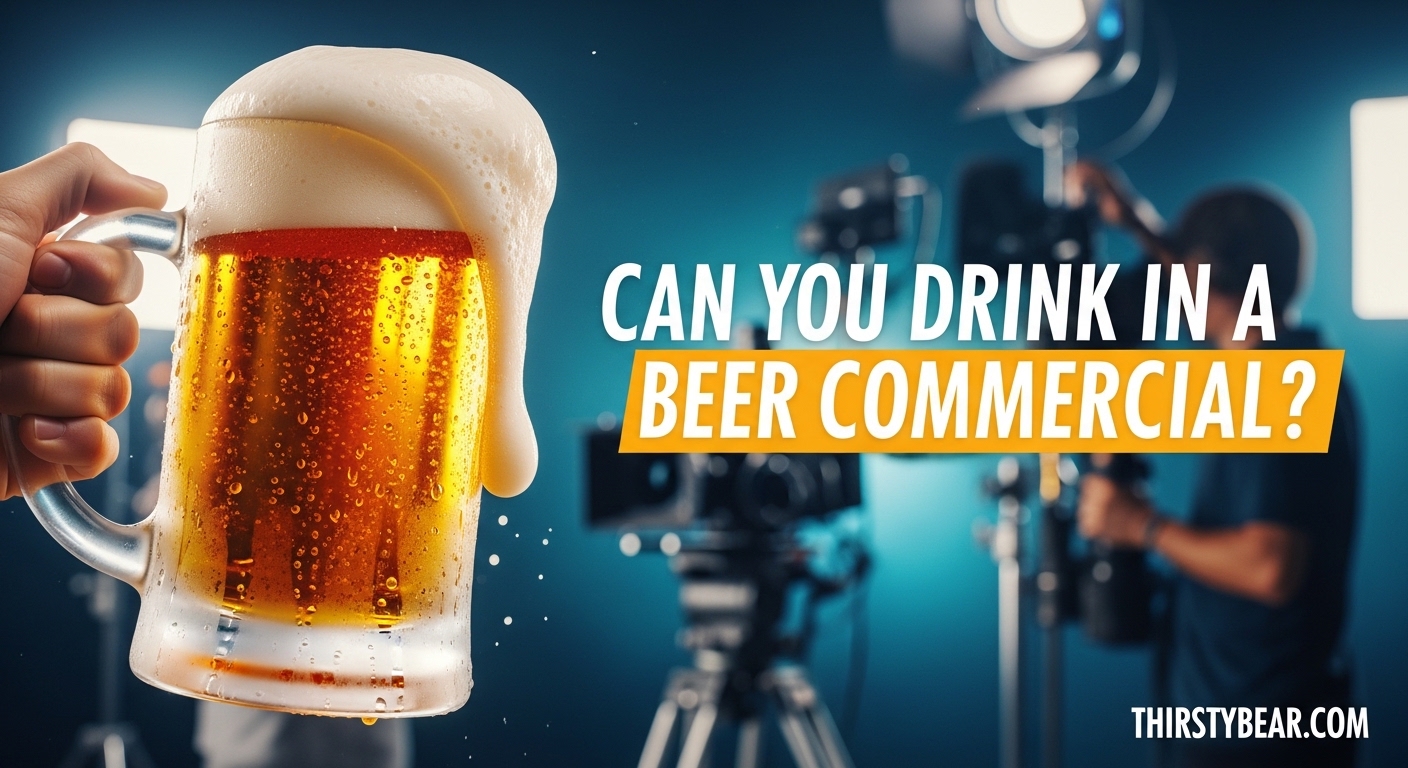
No, actors are not allowed to drink beer in beer commercials. While there’s no federal law prohibiting alcohol consumption on television, the beer advertising industry follows strict self-imposed guidelines that ban showing actual drinking.
The practice is so universal that you’ll never see someone take an actual sip of beer in a commercial. Actors hold the bottles, pour the beer, toast with friends, and stare longingly at their drinks—but the camera always cuts before consumption happens.
Can You Drink in a Beer Commercial?
Actors cannot drink beer in beer commercials due to industry self-regulation through the Beer Institute Code and network broadcasting guidelines. This is a voluntary standard followed by all major beer brands, not a legal requirement.
The Beer Institute Code specifically advises against showing alcohol consumption because it could get advertisements banned from certain networks. Networks like ABC, NBC, and CBS have policies against showing drinking on camera, so beer brands comply to ensure their ads can air across all major television outlets.
When you watch a beer commercial, you’re seeing carefully choreographed scenes where everything about drinking is displayed except the actual consumption. Actors hold, pour, and toast—but never sip. This creates the universal “beer commercial weirdness” that many viewers notice.
Is It Illegal to Show Drinking in Beer Commercials?
No federal law prohibits showing alcohol consumption in beer commercials. This is a common misconception. The FCC does not have regulations banning drinking on television advertisements.
The confusion often stems from historical context. After Prohibition ended with the 21st Amendment in 1933, alcohol advertising faced significant restrictions. Hard liquor ads were banned from television until 1996, and even then, networks maintained strict guidelines about what could be shown.
However, beer advertising has never faced federal restrictions on showing consumption. The ban is entirely self-imposed by the beer industry and television networks as a proactive measure to avoid criticism and potential regulatory scrutiny.
Why Networks Don’t Allow Drinking in Beer Ads
The National Association of Broadcasters guidelines discourage showing alcohol consumption in commercials. While these aren’t legally binding, networks like ABC, NBC, and CBS have adopted them as standard practice.
Networks take a conservative approach to alcohol advertising to avoid public criticism. The logic is simple: showing people actually drinking might encourage excessive consumption, which could lead to negative publicity or calls for government regulation.
Beer brands comply because they need access to all major networks. If a commercial showed actual drinking, ABC, NBC, and CBS could refuse to air it. This would cost the brand millions in lost advertising reach during prime events like the Super Bowl or NFL games.
Notable Examples and Exceptions
The Bud Light 2025 Super Bowl ad featuring Post Malone is a perfect example of these rules in action. The commercial shows Post Malone and other celebrities holding Bud Light cans and appearing at a party, but they never actually drink from them. The ad even includes a moment where someone is about to take a sip, but the camera cuts away before it happens.
A famous anecdote involves John Wayne filming a Coors Light commercial. According to the story, Wayne took a drink between takes, not realizing the cameras were still rolling. The footage had to be scrapped because it showed actual consumption—a violation of the unwritten rules.
Neil Patrick Harris once mocked this practice in a Heineken commercial, where he explicitly stated “we can’t drink on TV” while holding a beer. This meta-humor acknowledged the industry standard while still following the rule of not showing consumption.
Beer Commercial Filming Rules
Actors on beer commercial sets follow strict protocols. They’re instructed to hold the beer as naturally as possible but never bring it to their lips for consumption. If a scene requires a “drinking action,” the actor mimics the motion without actual liquid entering their mouth.
The beer itself is often non-alcoholic or even colored water, depending on the shoot. This eliminates any concerns about actors consuming alcohol during multiple takes while ensuring the product looks authentic on camera.
Directors and producers work around these limitations by focusing on the social aspects of drinking—the gathering, the toasting, the enjoyment of company—rather than the physical act of consumption. This creates the warm, social atmosphere beer brands want without violating industry standards.
FAQs
Are you allowed to drink in beer commercials?
No, actors are not allowed to drink in beer commercials. While no federal law prohibits it, industry self-regulation through the Beer Institute Code and network guidelines ban showing actual alcohol consumption on camera.
Has anyone drank in a beer commercial?
There are no documented cases of major beer commercials showing actual consumption. Famous anecdotes, like the John Wayne Coors Light story, describe accidental drinking that resulted in footage being scrapped. The Bud Light 2025 Super Bowl ad featuring Post Malone carefully avoided showing any sipping.
Why don’t actors drink in alcohol commercials?
Actors don’t drink in alcohol commercials because of self-imposed industry standards. The Beer Institute Code advises against showing consumption, and networks like ABC, NBC, and CBS have policies against it. Beer brands comply to ensure their advertisements can air across all major networks.
Conclusion
Can you drink in a beer commercial? No, and this practice continues in 2026 due to industry self-regulation rather than legal requirements. The Beer Institute Code and network guidelines create a universal standard that benefits both brands and broadcasters—brands avoid potential criticism, and networks maintain conservative advertising policies.
The next time you watch a beer commercial and notice no one actually drinks, you’ll know it’s not a coincidence. It’s a carefully maintained industry standard that has persisted for decades, shaping how we see alcohol represented on television.