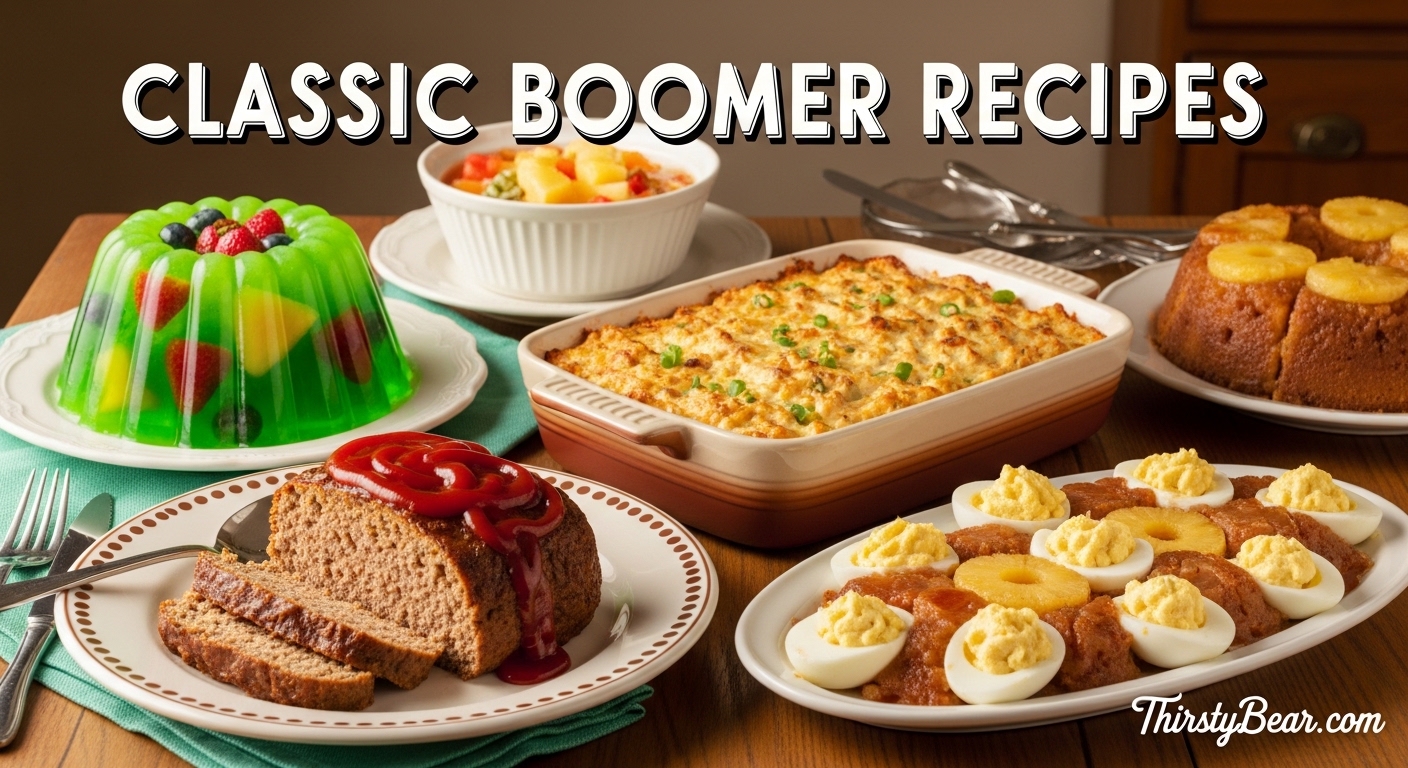
There’s something deeply comforting about classic boomer recipes. These dishes represent more than just food—they’re memories of Sunday family dinners, church potluck suppers, and the simple satisfaction of a home-cooked meal. Whether you grew up in the Baby Boomer era or you’re discovering these vintage recipes for the first time, there’s a reason these comfort food classics have stood the test of time.
Classic boomer recipes emerged during a unique period in American culinary history. The post-WWII era brought unprecedented prosperity, suburban expansion, and a food revolution centered on convenience. Canned soups, frozen vegetables, and instant products became pantry staples, while recipes from community cookbooks and church circles spread across the country. These nostalgic recipes shaped how generations of Americans approached home cooking, family meals, and gathering around the table.
In this guide, I’ve gathered 25 classic boomer recipes that still resonate today. From hearty meatloaf to creamy casseroles, these vintage dinner recipes capture the essence of mid-century American comfort food. Let’s explore the dishes that built family traditions and continue to bring warmth to tables across the country.
What Defines Classic Boomer Recipes?
Classic boomer recipes are comfort food dishes that originated or gained popularity during the Baby Boomer era (1940s-1960s), characterized by hearty ingredients, canned goods, and simple preparation methods. These recipes emerged from a unique convergence of historical factors. After World War II, America experienced an economic boom that transformed how families ate and cooked.
The rise of suburban living meant more families had proper kitchens and dining spaces. Women who had worked during the war effort returned to domestic roles, and convenience became paramount in meal preparation. This era saw the explosion of canned soups (especially cream of mushroom), frozen vegetables, boxed cake mixes, and instant products that made home cooking faster and easier.
Church cookbooks, community recipe exchanges, and brands like Campbell’s and Betty Crocker shaped what families cooked. These classic comfort food recipes prioritized feeding families affordably and efficiently. One-dish meals, casseroles that could be made ahead, and proteins stretched with fillers became the backbone of Boomer cuisine.
Classic Boomer Recipes (2026)
1. Classic Meatloaf with Tomato Glaze
No list of classic boomer recipes would be complete without meatloaf. This humble dish exemplifies Boomer cooking principles—stretching ground beef with breadcrumbs, eggs, and seasonings to feed a family affordably. The signature tomato glaze, made with ketchup, brown sugar, and mustard, creates that familiar sweet and tangy flavor profile that defined countless family dinners.
What makes meatloaf so enduring is its versatility. Every family had their version—some added green peppers, others included oats instead of breadcrumbs, and many wrapped theirs in bacon. Serve it with mashed potatoes and green beans, and you have the quintessential Boomer dinner that still appears on tables across America in 2026.
2. Pot Roast with Root Vegetables
Pot roast represents Sunday dinner at its finest. This slow-cooked beef chuck roast becomes tender after hours in the oven or slow cooker, surrounded by carrots, potatoes, onions, and celery. The cooking liquid—a combination of beef broth, wine, and seasonings—reduces into a rich gravy that ties everything together.
This retro recipe showcases the Boomer era’s love for one-pot meals that could cook unattended while families attended church or went about their day. By dinner time, a complete meal awaited. The vegetables absorb the beef’s flavors while lending sweetness to the gravy, creating a harmonious dish that requires minimal hands-on time.
3. Tuna Noodle Casserole
Tuna noodle casserole might be the most polarizing entry on this list of classic boomer recipes, yet its popularity during the Boomer era cannot be overstated. Canned tuna, egg noodles, cream of mushroom soup, and frozen peas combine in a baking dish, topped with crushed potato chips or buttered breadcrumbs for that essential crunch.
This dish emerged from the convenience food revolution that defined mid-century cooking. Canned tuna was affordable, shelf-stable protein. Cream of mushroom soup became a ubiquitous sauce base. The casserole could be assembled ahead and baked when needed. While some view it as a relic, others remember it fondly as comfort food that warmed many childhood evenings.
4. Salisbury Steak with Mushroom Gravy
Despite its fancy name, Salisbury steak is essentially seasoned ground beef patties served in rich mushroom gravy. This vintage dinner recipe bridges the gap between hamburgers and steak, offering an affordable way to make ground beef feel special. The patties typically include breadcrumbs, onions, and seasonings, while the gravy relies heavily on cream of mushroom soup or beef broth with fresh mushrooms.
Salisbury steak appeared regularly on Boomer-era dinner tables and remains a nostalgic favorite. It’s typically served with mashed potatoes to catch every bit of the savory gravy, along with a green vegetable like green beans or peas. The dish exemplifies how classic boomer recipes transformed humble ingredients into satisfying meals.
5. Spaghetti and Meatballs
Italian-American cuisine heavily influenced Boomer-era cooking, and spaghetti and meatballs became a staple family dinner. The meatballs—usually a mixture of ground beef, breadcrumbs, Parmesan cheese, eggs, and herbs—are browned before simmering in tomato sauce. This allows the sauce to absorb the meat’s flavors while keeping the meatballs moist.
This retro recipe gained popularity through restaurant culture and family traditions. Many Boomer-era home cooks learned their meatball technique from Italian relatives or community cookbooks. Serve with garlic bread and a simple salad, and you have the kind of complete meal that defined family dining in the mid-20th century.
6. Green Bean Casserole
Green bean casserole is perhaps the most iconic holiday dish to emerge from the Boomer era. Created in 1955 by Campbell’s Soup, it combined green beans, cream of mushroom soup, and fried onions into a simple side dish that required minimal preparation. The recipe appeared on soup cans and in advertisements, quickly becoming a Thanksgiving and Christmas tradition.
This classic boomer recipe represents the era’s reliance on canned products but has endured because it simply works. The creamy soup coats the beans while the fried onions provide essential crunch and savory flavor. While many modern versions use fresh green beans and homemade sauce, the original remains a nostalgic favorite that appears on millions of holiday tables each year.
7. Chicken Pot Pie
Chicken pot pie embodies everything comforting about Boomer cuisine. Tender chicken, vegetables like peas, carrots, and celery, and a creamy sauce are enclosed in a flaky pastry crust. Whether homemade from scratch or assembled with convenience products like cream of chicken soup and frozen pie crusts, pot pie was the ultimate cold-weather comfort food.
This vintage recipe exemplifies the Boomer approach of using available ingredients to create something greater than the sum of its parts. Leftover chicken or turkey could be transformed into a completely new meal. Pot pie was also portable and could be made in individual portions, making it perfect for lunchboxes or quick dinners.
8. Sloppy Joes
Sloppy Joes are the definition of fun family food. Ground beef browned with onions, then simmered in a sweet and tangy tomato-based sauce, served on hamburger buns. The sweetness typically comes from brown sugar or ketchup, while mustard and Worcestershire sauce add depth. As the name suggests, these are messy to eat—part of their appeal for children and adults alike.
This retro recipe gained popularity in the 1960s and became a weeknight staple because it was quick, affordable, and universally liked. Sloppy Joes could feed a crowd with minimal expense and effort. They remain popular at parties, potlucks, and family dinners, proving that some classic boomer recipes never go out of style.
9. Beef Stroganoff
Beef Stroganoff represents the slightly more sophisticated side of Boomer cuisine. Tender beef strips are cooked with mushrooms and onions, then finished in a creamy sauce made with sour cream. Serve over egg noodles for a complete meal that feels special while still being approachable.
This vintage dinner recipe gained popularity in America during the mid-20th century, though it originated in Russia. The Boomer-era version often relied on cream of mushroom soup as a sauce base, reflecting the convenience food trends of the time. Despite these adaptations, Beef Stroganoff remained a step up from everyday fare, the kind of dish families might serve for Sunday dinner or special occasions.
10. Shepherd’s Pie
Shepherd’s pie is the ultimate comfort food casserole. Ground lamb (or beef, in the Americanized version) is cooked with vegetables in gravy, then topped with mashed potatoes and baked until golden. This classic boomer recipe originated as a way to use leftover meat and potatoes, but became beloved for its satisfying combination of flavors and textures.
This retro dish exemplifies the Boomer principle of nothing going to waste. Sunday’s leftover roast could become Monday’s shepherd’s pie. The mashed potato topping crisps in the oven while the filling remains creamy and savory. Shepherd’s pie is also a complete meal in one dish, making it efficient for busy families.
11. Pork Chops with Applesauce
The pairing of pork chops with applesauce is so iconic that it became a running joke on television sitcoms, yet it reflects a genuine culinary tradition that emerged during the Boomer era. Pan-fried or baked pork chops served alongside sweet applesauce create a classic sweet and savory combination that defined many family dinners.
This vintage recipe works because the applesauce’s sweetness complements pork’s mild flavor and helps cut through its richness. During the Boomer era, pork was often overcooked (a common complaint about the cooking of the time), but the applesauce helped add moisture. Modern versions keep the pork juicy while maintaining this nostalgic pairing.
12. Swiss Steak
Swiss steak is a classic boomer recipe that transforms tough cuts of beef into tender comfort food. Round steak is cubed (mechanically tenderized), coated in flour, browned, then simmered with tomatoes, onions, celery, and bell peppers until fork-tender. The long cooking time breaks down the connective tissue, while the vegetables create a flavorful sauce.
This vintage dinner recipe represents Boomer-era ingenuity—taking an inexpensive, tough cut of meat and turning it into something delicious through slow cooking. Swiss steak was typically served with mashed potatoes to soak up the rich tomato-based sauce. It’s a dish that rewards patience and exemplifies the satisfaction of slow-cooked comfort food.
13. Tater Tot Casserole
Tater tot casserole is the ultimate expression of Boomer-era convenience food cooking. Ground beef is browned with onions, mixed with cream of mushroom soup, topped with frozen tater tots, and baked until golden and bubbly. Some versions add cheese or vegetables like green beans, but the core combination remains the same.
This retro recipe emerged when tater tots became a freezer staple in the 1950s and has remained popular because kids love it and it’s incredibly easy to assemble. Tater tot casserole represents the height of convenience food cuisine—everything comes from cans, packages, or the freezer, yet the result is undeniably satisfying comfort food.
14. Baked Ziti
Italian-American dishes heavily influenced Boomer cuisine, and baked ziti became a family favorite. Ziti pasta is mixed with marinara sauce and ricotta cheese, then topped with mozzarella and baked until bubbly and golden. This classic boomer recipe could be assembled ahead and baked when needed, making it perfect for busy families.
This vintage dinner recipe appeared regularly at potlucks and church suppers because it travels well and feeds a crowd. The combination of pasta, tomato sauce, and melted cheese is universally appealing. Baked ziti also reheats beautifully, making it ideal for leftovers—a practical consideration for families stretching their food budget.
15. Chicken and Dumplings
Chicken and dumplings is soul-satisfying comfort food that reached peak popularity during the Boomer era. Chicken is simmered with vegetables to create a rich broth, then topped with dumplings—dropped spoonfuls of biscuit dough that steam until fluffy and tender. The result is a dish that’s part soup, part stew, and entirely comforting.
This retro recipe has roots in Southern and rural cooking traditions but became mainstream during the mid-20th century. Chicken and dumplings was an economical way to stretch a single chicken into a meal that could feed an entire family. The dumplings soak up the flavorful broth while adding substance, creating a filling dish that warms from the inside out.
16. Swedish Meatballs
Swedish meatballs offer a slightly different take on the classic meatball. Smaller than Italian meatballs and typically made with a mixture of beef and pork (or just beef), they’re served in a creamy brown gravy rather than tomato sauce. This vintage recipe became popular during the Boomer era as Americans became more interested in international cuisines.
Swedish meatballs are typically served over egg noodles or mashed potatoes, with the creamy gravy tying everything together. The gravy often includes cream or sour cream, giving it richness and a slightly tangy flavor. Lingonberry jam is the traditional accompaniment, adding sweetness that contrasts with the savory meatballs.
17. Macaroni and Cheese
Macaroni and cheese is the ultimate comfort food that gained tremendous popularity during the Boomer era. While versions existed before, the post-WWII period saw the rise of boxed mac and cheese, making this classic boomer recipe accessible to every American household. Whether made from scratch with a cheese sauce or from a blue box, mac and cheese became a staple of childhood.
This retro recipe exemplifies the appeal of simple carbohydrates and melted cheese. Many Boomer-era families ate mac and cheese regularly because it was affordable, quick, and universally liked. Homemade versions might add breadcrumbs on top or include extras like broccoli or tuna, but the core combination of pasta and cheese remains timeless.
18. Beef Barley Soup
Beef barley soup is hearty, nourishing, and represents the Boomer love for substantial soups that could serve as complete meals. Beef is browned with vegetables, then simmered with beef broth and pearl barley until the flavors meld and the barley becomes tender. This classic boomer recipe transforms simple ingredients into something greater than the sum of its parts.
This vintage soup was practical because it could use leftover beef or tougher cuts that became tender through long cooking. The barley adds nutty flavor and substantial texture, making the soup filling enough to be a meal. Beef barley soup also freezes well, allowing families to batch cook and have meals ready for busy days.
19. Chili con Carne
Chili became a Boomer-era staple thanks to its simplicity, affordability, and crowd-pleasing nature. Ground beef is browned with onions, then simmered with tomatoes, beans, and chili powder (and sometimes cumin and other spices). This classic boomer recipe could be made in large batches and was perfect for feeding families or groups.
This retro recipe reflects the Americanization of Mexican cuisine and the growing popularity of Tex-Mex flavors in the mid-20th century. Chili could be served multiple ways—in bowls, over hot dogs, on spaghetti (a Midwestern tradition), or with Fritos. Its versatility and make-ahead potential made it a weeknight favorite.
20. Corned Beef and Cabbage
Corned beef and cabbage is an Irish-American dish that became mainstream during the Boomer era, especially around St. Patrick’s Day. Corned beef is simmered with cabbage, potatoes, and carrots until tender. This classic boomer recipe represents how ethnic foods became part of mainstream American cooking.
This vintage dinner recipe exemplifies the one-pot meals that Boomer-era cooks loved. Everything cooks together, allowing the flavors to meld while requiring minimal active cooking time. The resulting dish is substantial, satisfying, and makes excellent leftovers—important considerations for families stretching their food budget.
21. Fried Chicken
Fried chicken became an American classic during the Boomer era, when restaurant chains and home cooks alike perfected their recipes. Chicken pieces are coated in seasoned flour, then fried until crispy and golden. This classic boomer recipe represents celebration food—Sunday dinner, church suppers, and special occasions.
This retro recipe requires effort but rewards with crispy, juicy chicken that’s hard to resist. The Boomer era saw the rise of fried chicken franchises, but home-cooked versions remained beloved. Fried chicken is typically served with mashed potatoes and gravy, coleslaw, or biscuits—comfort food sides that complement the crispy chicken perfectly.
22. Meatball Subs
Meatball subs take the flavors of spaghetti and meatballs and transform them into portable sandwich form. Meatballs are simmered in tomato sauce, then placed in a hoagie roll with mozzarella cheese and melted until gooey. This classic boomer recipe represents the era’s love for Italian-American flavors and substantial sandwiches.
This retro recipe gained popularity as submarine sandwich shops emerged in the mid-20th century. Meatball subs became a lunch counter favorite and a home-cooking option for using leftover meatballs and sauce. The combination of tender meatballs, tangy tomato sauce, and melted cheese in a soft roll is undeniably satisfying.
23. Baked Ham with Pineapple
Baked ham with pineapple is the quintessential Boomer-era holiday main course. A ham is scored, studded with cloves, and baked with a pineapple glaze that caramelizes into a sweet and savory coating. This classic boomer recipe appeared at Easter, Christmas, and special Sunday dinners across America.
This vintage recipe exemplifies the Boomer love for sweet and savory flavor combinations. The pineapple’s sweetness contrasts with the ham’s saltiness, while cloves add warm spice. Baked ham also provided plenty of leftovers, which could be used for sandwiches, soups, and casseroles—making it practical for families who valued economy.
24. Lasagna
Lasagna became a Boomer-era favorite as Italian-American cuisine went mainstream. Layers of pasta, meat sauce, ricotta cheese, and mozzarella are baked until bubbly and golden. This classic boomer recipe represents the era’s enthusiasm for casseroles and Italian flavors.
This retro recipe requires effort but rewards with a complete meal that feeds a crowd. Lasagna became a potluck staple and a celebration dish for special occasions. It also reheats beautifully, making it practical for make-ahead meals. The Boomer era saw countless variations—adding spinach, using different cheeses, or including vegetables—but the core concept remains timeless.
25. Pot Roast Sandwiches
Pot roast sandwiches represent the Boomer genius for using leftovers creatively. Sunday’s pot roast becomes Monday’s sandwiches—tender beef, onions, and vegetables piled onto rolls with some of the rich gravy. This classic boomer recipe transforms leftovers into something completely new and delicious.
This vintage recipe exemplifies the practical, waste-not approach that defined Boomer cooking. Pot roast sandwiches could be served hot or cold, making them versatile for lunches or quick dinners. The beef’s tenderness and gravy’s richness make these sandwiches substantial and satisfying, a far cry from typical lunch fare.
The Cultural Impact of Boomer Cuisine
Classic boomer recipes didn’t just feed families—they shaped American food culture in ways that persist today. Church cookbooks from the era are treasured heirlooms, filled with handwritten recipes passed between neighbors and friends. These community recipe exchanges created regional variations on national dishes, ensuring that every family’s version of meatloaf or pot roast was slightly different.
Immigrant influences also shaped Boomer cuisine, though they were often adapted to American tastes and ingredients. Italian, German, Irish, and Eastern European dishes became Americanized during this period, creating the fusion cuisine we now think of as classic American comfort food. Recipes that began as ethnic specialties became mainstream favorites.
Perhaps most importantly, classic boomer recipes created shared food experiences across generations. When you make meatloaf or tuna noodle casserole today, you’re participating in a culinary tradition that connects you to millions of families who cooked the same dishes in their mid-century kitchens. These retro recipes represent more than just food—they’re memories, traditions, and a connection to a simpler time.
FAQs
What food did baby boomers eat?
Baby Boomers grew up eating comfort food classics centered on meat, potatoes, and casseroles. Common dinners included meatloaf, pot roast, Salisbury steak, spaghetti and meatballs, tuna noodle casserole, and chicken pot pie. Their meals relied heavily on convenience foods like canned soups (especially cream of mushroom), frozen vegetables, and boxed mixes. Sunday dinners often featured roasts or special dishes, while weekdays called for quick, economical meals that could feed the whole family.
What’s on a typical retro menu?
A typical retro menu from the Boomer era featured a main protein (meatloaf, pot roast, pork chops, or fried chicken), a starch (mashed potatoes, rice, or pasta), and a vegetable (green beans, peas, or carrots). Casseroles like tuna noodle, green bean, or tater tot casserole were one-dish meal staples. Italian-American dishes like spaghetti, lasagna, and baked ziti became family favorites. Dessert might include fruit cobbler, pudding, or cake from a mix. These menus emphasized hearty, filling food that could feed families affordably.
What did people eat in the 60s and 70s?
The 1960s and 70s saw the rise of convenience foods in American cooking. Families ate meals centered on casseroles made with canned soup, frozen vegetables, and processed meats. Fast food became increasingly popular, with burgers, fries, and pizza becoming regular parts of the diet. Ethnic cuisines like Chinese, Mexican, and Italian became more mainstream, though often Americanized. Fondue parties and Jell-O salads represented the era’s trendier foods. Despite these changes, classic comfort foods like meatloaf, pot roast, and homemade soups remained family dinner staples.
What was a common dinner in the 1950s?
Common 1950s dinners included meatloaf with mashed potatoes and gravy, pot roast with vegetables, fried chicken, Swiss steak, and various casseroles. Tuna noodle casserole, creamed chipped beef, and Salisbury steak appeared regularly on family tables. Spaghetti and meatballs represented the growing popularity of Italian-American cuisine. These meals relied on ingredients available after WWII—canned soups, frozen vegetables, and affordable cuts of meat. Sunday dinners were more elaborate, often featuring roasts or special dishes, while weekday meals emphasized quick, economical preparation to feed growing families.
Conclusion
Classic boomer recipes remain beloved because they represent more than just food—they’re memories of family dinners, simpler times, and the comfort of a home-cooked meal. These vintage recipes emerged from a specific historical moment but have transcended their era to become enduring favorites. Whether you’re recreating dishes from your childhood or discovering these retro recipes for the first time, there’s something deeply satisfying about cooking and eating these comfort food classics.
The 25 classic boomer recipes in this guide showcase the ingenuity, practicality, and hearty flavors that defined mid-century American cooking. From slow-cooked pot roasts to quick casseroles, from Italian-American favorites to church supper staples, these dishes tell the story of how families ate during a transformative period in American food history.
I encourage you to try these classic boomer recipes in your own kitchen. Make meatloaf on a Tuesday, simmer a pot roast for Sunday dinner, or introduce your family to the comforting combination of tuna noodle casserole. These vintage recipes have fed families for generations—they might just become new favorites in your home too.