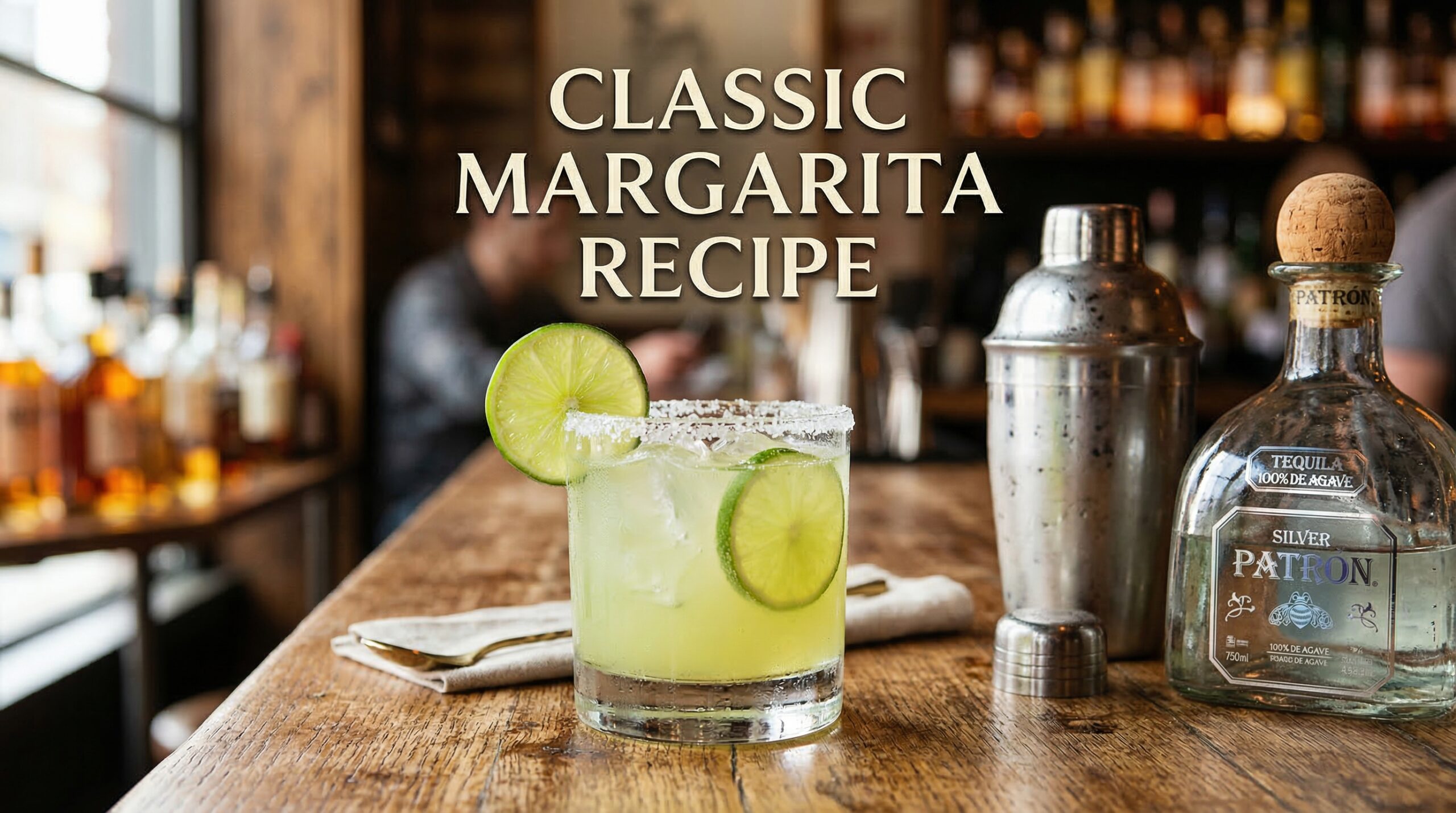
After years of testing margarita recipes at home and sampling countless versions at bars across Mexico and the United States, I’ve landed on what I believe is the perfect classic margarita recipe. This is the one I make for friends who ask, “How do you get it to taste like that?” It comes down to three simple ingredients, fresh lime juice, and understanding why the classic ratio works so well.
A classic margarita combines tequila, orange liqueur, and fresh lime juice in a salt-rimmed glass over ice. That’s it. No neon-green mix, no complicated syrups, and definitely no blender required. When you use quality ingredients in the right proportions, the drink balances itself beautifully. Check out our lychee martini recipe for another sophisticated cocktail option if you enjoy exploring classic drinks with fresh ingredients.
The beauty of this recipe lies in its simplicity. I learned this approach from a bartender in Mexico City who refused to give me a complicated formula. He poured directly from each bottle, counting seconds, and explained that once you understand the ratio, you’ll never need a measuring tool again. This guide will give you that same confidence, plus the science behind why it works and how to adjust it to your taste.
What Is a Classic Margarita?
A classic margarita is a three-ingredient cocktail consisting of tequila, orange liqueur (typically Cointreau or triple sec), and fresh lime juice. It’s traditionally served on the rocks in a salt-rimmed glass, though some prefer it without the salt. The drink balances sweet, tart, and salty elements in a way that has made it one of the most popular cocktails worldwide.
The margarita’s origins are debated, with several stories claiming its invention. Most cocktail historians agree it emerged in the 1930s or 1940s, likely as a variation of the daisy (margarita means “daisy” in Spanish). Regardless of who created it first, the classic margarita recipe has remained largely unchanged for decades because the formula simply works.
What separates a truly great margarita from a mediocre one comes down to ingredient quality and technique. Using fresh-squeezed lime juice instead of bottled makes an enormous difference. Choosing 100% agave tequila over a mixto (which contains up to 49% non-agave sugars) transforms the drink. And understanding the ratio helps you adjust for personal preference without throwing off the balance.
Classic Margarita Ingredients
The classic margarita recipe uses just three core ingredients, plus salt for the rim. Here’s what you need and why each component matters.
Tequila
Tequila provides the base spirit and much of the character in a margarita. Always choose 100% agave tequila for the best flavor. The type of tequila you select will influence the drink’s personality.
Blanco (silver) tequila is unaged or aged less than two months. It has a crisp, agave-forward flavor with citrus and pepper notes. This is the traditional choice for margaritas and what most bartenders recommend. The clean taste lets the lime and orange liqueur shine through without competing flavors.
Reposado tequila is aged two months to one year in oak barrels. It picks up subtle vanilla and caramel notes while retaining agave character. If you prefer a slightly smoother, rounder margarita, reposado works beautifully. Some people find it more approachable than blanco.
Anejo tequila is aged one to three years. It develops significant oak influence with flavors of butterscotch and baking spices. While delicious for sipping, anejo is generally too complex and expensive for mixing into margaritas. Save it for neat pours.
Orange Liqueur
The orange liqueur adds sweetness and citrus depth that bridges the tequila and lime. You have several options here, and the choice significantly impacts the final drink.
Cointreau is a premium orange liqueur made from sweet and bitter orange peels. It’s 40% ABV and has a clean, balanced orange flavor. Most cocktail enthusiasts consider Cointreau the gold standard for margaritas because it adds sweetness without being cloying and contributes depth without overwhelming the other ingredients.
Triple sec is a category of orange liqueur that varies widely in quality. Lower-end triple secs tend to be overly sweet and lack complexity. If you’re using budget triple sec, you may need to adjust the ratio or add a touch of agave to compensate for the lower alcohol content.
Grand Marnier is a blend of Cognac and orange liqueur. It adds richness and a distinctive cognac character that some people love in margaritas. Try it if you enjoy a more complex, spirit-forward drink. The cognac notes pair particularly well with reposado tequila.
Fresh Lime Juice
Fresh lime juice is non-negotiable for a great margarita. Bottled lime juice lacks the brightness and complexity of fresh-squeezed, and it often contains preservatives that affect the flavor. Persian limes (the standard grocery store lime) work perfectly fine. Key limes are more traditional but harder to find and more labor-intensive to juice.
Roll your limes on the counter before cutting to break down the internal membranes and release more juice. A single medium lime typically yields about 1 ounce of juice, which is exactly what you need for one margarita. Always juice fresh for each batch rather than squeezing a large quantity in advance, as lime juice oxidizes and loses its vibrancy within hours.
Salt for the Rim
Kosher salt or coarse sea salt works best for rimming the glass. The large crystals provide texture and a pleasant salty crunch that fine table salt lacks. Avoid iodized salt, which can taste metallic. Some people prefer a mix of salt and sugar for a less aggressive rim, though purists stick with straight salt.
Optional Sweetener
The traditional margarita recipe doesn’t include added sweetener beyond the orange liqueur. However, if you prefer a sweeter drink or your limes are particularly tart, you can add a small amount of agave nectar or simple syrup. Agave nectar is the more authentic choice since it comes from the same plant as tequila, and it dissolves easily in cold liquids.
Understanding Margarita Ratios
The ratio is where the magic happens in a classic margarita recipe. Different ratios produce different results, and understanding them helps you customize the drink to your taste. Here are the three most common approaches.
The 2:1:1 Ratio
This is the most widely taught ratio: two parts tequila, one part orange liqueur, one part lime juice. For a single drink, that translates to 2 ounces tequila, 1 ounce Cointreau, and 1 ounce fresh lime juice. This ratio produces a balanced drink with noticeable tequila presence, moderate sweetness, and a refreshing tartness.
The 2:1:1 ratio is easy to remember and scale. Making four drinks? Use 8 ounces tequila, 4 ounces Cointreau, and 4 ounces lime juice. It’s forgiving enough that slight variations won’t ruin the drink, which makes it perfect for beginners.
The 3:2:1 Ratio
This ratio (three parts tequila, two parts orange liqueur, one part lime juice) creates a more spirit-forward margarita. Using 3 ounces tequila, 2 ounces Cointreau, and 1 ounce lime juice gives you a stronger drink with pronounced orange sweetness. This works well if you enjoy the interplay between tequila and orange liqueur.
The 3:2:1 ratio is sometimes called the “3-2-1 rule” and appeals to people who find the traditional ratio too tart. The higher proportion of sweet orange liqueur offsets the lime’s acidity.
The 1:1:1 Ratio
Equal parts of each ingredient (typically 1.5 ounces each of tequila, orange liqueur, and lime juice) creates a brighter, more citrus-forward drink. Some bartenders prefer this approach because it highlights the lime while still maintaining balance. The equal-parts formula is the easiest to remember and pour without measuring.
My personal preference falls somewhere between 2:1:1 and 1:1:1. I use 2 ounces tequila, 1 ounce Cointreau, and 1 ounce lime juice as my starting point, then add a quarter-ounce of agave nectar if the lime is particularly acidic or if guests prefer a touch more sweetness.
How to Make a Classic Margarita
Now that you understand the ingredients and ratios, here’s the step-by-step method for making a perfect classic margarita every time.
Step 1: Prepare the Salt Rim
Pour a layer of kosher salt or coarse sea salt onto a small plate. Take a lime wedge and run it around the outer rim of your glass. The moisture helps the salt adhere. Invert the glass and gently press it into the salt, rotating to coat the rim evenly. Lift the glass and give it a gentle tap to remove excess salt. Set aside.
Some people prefer to salt only half the rim so they can choose whether each sip includes salt. This is a nice option if you’re serving guests with different preferences. You can also skip the salt entirely, though I find it enhances the other flavors in the drink.
Step 2: Add Ingredients to the Shaker
Place your cocktail shaker on a flat surface. Add 2 ounces of blanco or reposado tequila, followed by 1 ounce of Cointreau (or your preferred orange liqueur), and 1 ounce of fresh lime juice. If you’re adding sweetener, include a quarter-ounce of agave nectar now. The order doesn’t strictly matter, but adding liquids before ice prevents splashing.
Step 3: Add Ice and Shake
Fill the shaker with ice cubes. Use plenty of ice, a full shaker ensures proper chilling and dilution. Secure the lid firmly. Shake vigorously for 15 to 20 seconds. You’ll feel the shaker become frosty cold in your hands, which indicates the drink has reached the proper temperature.
The shaking accomplishes several things: it chills the drink, dilutes it slightly (which is desirable), and aerates the mixture for a lighter mouthfeel. Don’t skimp on the shaking time, as under-shaken margaritas taste flat and overly boozy.
Step 4: Strain and Serve
Fill your prepared glass with fresh ice cubes. Using the strainer built into your shaker (or a separate Hawthorne strainer), pour the margarita into the glass. The drink should be well-chilled and slightly cloudy from the aeration. Garnish with a lime wheel or wedge on the rim of the glass.
Serve immediately while the drink is cold. A properly made margarita should be refreshing, balanced, and smooth, with no harsh alcohol burn or overwhelming tartness.
Classic Margarita Recipe
Here’s the complete recipe in an easy-to-follow format:
Prep time: 5 minutes
Servings: 1 cocktail
Ingredients:
2 ounces blanco or reposado tequila (100% agave)
1 ounce Cointreau or quality triple sec
1 ounce fresh lime juice
Kosher salt for rimming
Lime wedge for garnish
Ice cubes
Instructions:
1. Run a lime wedge around the rim of a rocks glass and dip in kosher salt to coat.
2. In a cocktail shaker, combine tequila, Cointreau, and fresh lime juice.
3. Fill shaker with ice and shake vigorously for 15-20 seconds until frosty.
4. Fill the prepared glass with fresh ice.
5. Strain the margarita into the glass and garnish with a lime wheel.
Bartender Tips for the Perfect Margarita
After making hundreds of margaritas, I’ve learned a few tricks that elevate the drink from good to exceptional. Here are my top tips.
Use Quality Ice
The quality of your ice matters more than you might think. Old ice from your freezer can pick up flavors from other foods, which subtly affects the drink. Fresh ice that’s been made recently tastes cleaner. Large ice cubes melt more slowly than small ones, which means better temperature control and less unwanted dilution.
For the shaker, regular ice cubes work fine. For the serving glass, larger cubes or spheres look more elegant and keep the drink colder longer without watering it down.
Don’t Over-Shake
While you want to shake long enough to chill the drink (15-20 seconds), shaking too long introduces excessive dilution. The ice continues melting the entire time you’re shaking. Stop once the shaker feels frosty cold and you hear the ice moving freely inside.
Taste and Adjust
Professional bartenders taste their drinks before serving. You can do the same by dipping a straw into the shaker before straining. If it’s too tart, add a touch more orange liqueur or a drop of agave. If it’s too sweet, add another squeeze of lime. This small adjustment can make the difference between a good margarita and a great one.
Chill Your Glass
For an extra-cold drink, stick your glass in the freezer for 5-10 minutes before making the margarita. A frosted glass keeps the drink colder longer and feels more pleasant to hold. This is especially nice for warm-weather entertaining.
Common Margarita Mistakes to Avoid
Even experienced home bartenders make mistakes. Here are the most common pitfalls and how to fix them.
Using Bottled Lime Juice
This is the single biggest mistake people make. Bottled lime juice tastes flat, overly acidic, and lacks the aromatic oils that give fresh lime its complexity. Always squeeze fresh limes for your margaritas. The difference is immediately noticeable.
Skimping on the Tequila
Using cheap, non-100% agave tequila results in a harsh, unpleasant drink. Mixto tequilas (those not labeled “100% agave”) can contain up to 49% other sugars, which contributes to hangovers and produces an inferior flavor. Spend a few extra dollars on quality tequila, it’s worth it.
Forgetting to Shake
Stirring a margarita doesn’t achieve the same results as shaking. Shaking chills the drink faster, creates proper dilution, and aerates the mixture for a lighter texture. If you skip the shake, the drink will taste flat and the ingredients won’t fully integrate.
Over-Salting the Rim
A salt rim should enhance the drink, not dominate it. Too much salt overpowers the other flavors and makes each sip aggressively salty. A light, even coating is all you need. If you accidentally get too much salt, wipe some off with your finger or a paper towel.
Troubleshooting Your Margarita
Sometimes a margarita doesn’t turn out quite right. Here’s how to diagnose and fix common issues.
Too Tart
If your margarita tastes too sour, your limes might be particularly acidic or you may have added too much lime juice. Fix it by adding a small amount of agave nectar or simple syrup, about a quarter-ounce at a time. You can also add a touch more orange liqueur, which brings sweetness without changing the character.
Too Sweet
A margarita that’s cloyingly sweet usually has too much orange liqueur relative to lime. Add more fresh lime juice to restore balance. If you added agave or simple syrup, you may need to remake the drink with less sweetener next time.
Too Strong
If the alcohol overpowers everything else, you may have poured heavy-handed on the tequila or used a lower-quality orange liqueur with less alcohol. Add more lime juice and a touch of agave to balance. You can also serve it over more ice, which will dilute it slightly as you drink.
Watery
A watery margarita usually results from using too much ice in the shaker or shaking too long. Use a moderate amount of ice and shake just until the outside of the shaker frosts. Serve immediately after shaking rather than letting it sit.
Margarita Variations
Once you’ve mastered the classic margarita recipe, you can explore variations that put a different spin on the original.
Frozen Margarita
For a frozen margarita, combine the same ingredients in a blender with about a cup of ice. Blend until smooth and slushy. Frozen margaritas are more dilute than shaken ones, so you may want to increase the tequila slightly. They’re perfect for hot summer days but lack the crispness of the on-the-rocks version.
Spicy Margarita
Add a slice of jalapeno to the shaker before adding the other ingredients. The capsaicin infuses into the drink, creating a pleasant heat that complements the citrus. Remove the seeds from the jalapeno for milder heat, or leave them in for more intensity. You can also use jalapeno-infused tequila.
Pitcher Margaritas for a Crowd
Making margaritas for a party? Scale up the recipe and mix everything except the ice in a pitcher. Store it in the refrigerator until ready to serve. When guests arrive, shake individual servings with ice, or serve over ice and let people stir. For a large batch, use 2 cups tequila, 1 cup Cointreau, and 1 cup fresh lime juice as your starting point.
Non-Alcoholic Margarita (Mocktail)
You can create a refreshing alcohol-free version using fresh lime juice, orange juice or orange extract, and a touch of agave nectar. Mix 2 ounces fresh lime juice, 1 ounce fresh orange juice, and a quarter-ounce agave nectar. Shake with ice and serve in a salt-rimmed glass. It captures the tart-sweet-salty profile without the alcohol. Explore our guide to the best non-alcoholic beers for more lighter drinking options.
Serving Suggestions and Pairings
A classic margarita pairs beautifully with Mexican food and other bold-flavored dishes. The acidity and salt cut through rich, fatty foods while the citrus complements spicy flavors.
Tacos of any variety are the classic pairing. Fish tacos, carnitas, carne asada, or vegetarian options all work. The margarita’s brightness balances the richness of the meat and cheese.
Guacamole and chips make an ideal appetizer alongside margaritas. The creamy avocado and salty chips mirror the drink’s texture and salinity.
Grilled seafood like shrimp or fish benefits from the margarita’s citrus notes. The drink almost functions as a liquid version of the lime you’d squeeze over the seafood.
Spicy dishes find relief in the cooling effect of a cold margarita. The drink’s sweetness also helps temper heat, though be careful with extremely spicy foods as the alcohol can amplify the burn.
Glassware Recommendations
While you can serve a margarita in any glass, certain shapes enhance the experience.
- Rocks glass (Old Fashioned): The traditional choice for an on-the-rocks margarita. Its wide mouth allows the aromas to reach your nose, and it holds the right amount of ice and liquid.
- Margarita glass: The distinctive wide, shallow bowl looks festive and is designed for frozen margaritas. It’s less practical for the classic on-the-rocks version but makes a statement at parties.
- Coupe glass: If you prefer your margarita without ice (shaken and strained into a stem glass), a coupe works beautifully. It feels elegant and keeps your hands from warming the drink.
FAQs
What is the original recipe for a margarita?
The original margarita recipe consists of three ingredients: tequila, orange liqueur (Cointreau or triple sec), and fresh lime juice. The classic ratio is 2:1:1, meaning two parts tequila, one part orange liqueur, and one part lime juice. This simple formula has remained largely unchanged since the drink’s creation in the 1930s or 1940s.
What is the 3-2-1 rule for margaritas?
The 3-2-1 rule refers to a margarita ratio of 3 parts tequila, 2 parts orange liqueur, and 1 part lime juice. This creates a stronger, more spirit-forward drink with pronounced orange sweetness. It’s a good option for those who find the traditional 2:1:1 ratio too tart or who prefer a bolder tequila presence.
What is the ratio for classic margaritas?
The most common ratio for classic margaritas is 2:1:1 (two parts tequila, one part orange liqueur, one part lime juice). Alternative ratios include 3:2:1 for a sweeter, stronger drink, or 1:1:1 for equal parts of each ingredient, which produces a brighter, more citrus-forward margarita.
What type of tequila is best for margaritas?
Blanco (silver) tequila is the traditional and most recommended choice for margaritas. It has a crisp, clean agave flavor that lets the lime and orange liqueur shine. Reposado tequila also works well if you prefer a slightly smoother, rounder drink with subtle vanilla notes. Always choose 100% agave tequila for the best flavor and quality.
Do you need simple syrup in a margarita?
No, a traditional margarita does not require simple syrup. The orange liqueur (Cointreau or triple sec) provides enough sweetness to balance the lime juice. However, if you prefer a sweeter drink or your limes are particularly tart, you can add a small amount of agave nectar or simple syrup to taste.
Why use fresh lime juice in margaritas?
Fresh lime juice is essential because it contains aromatic oils and bright acidity that bottled juice lacks. Bottled lime juice tastes flat and overly acidic due to preservatives and pasteurization. Fresh-squeezed lime juice provides the vibrant, complex citrus flavor that makes a margarita exceptional.
Conclusion
The classic margarita recipe proves that the best cocktails don’t need complicated ingredients or techniques. With just tequila, orange liqueur, and fresh lime juice in the right proportions, you can create a drink that rivals anything you’d order at a top cocktail bar. The 2:1:1 ratio gives you a solid foundation, but don’t be afraid to adjust based on your taste and the specific ingredients you have on hand.
I encourage you to experiment with different tequilas and orange liqueurs to find your personal perfect combination. Once you’ve mastered the classic, try the variations, a spicy jalapeno margarita or a batch for your next party. The key is using quality ingredients and understanding how the flavors work together.
Next time someone asks for your margarita recipe, you’ll have one worth sharing. And if you’re looking to expand your home cocktail repertoire beyond margaritas, there’s a whole world of classic drinks waiting to be explored.