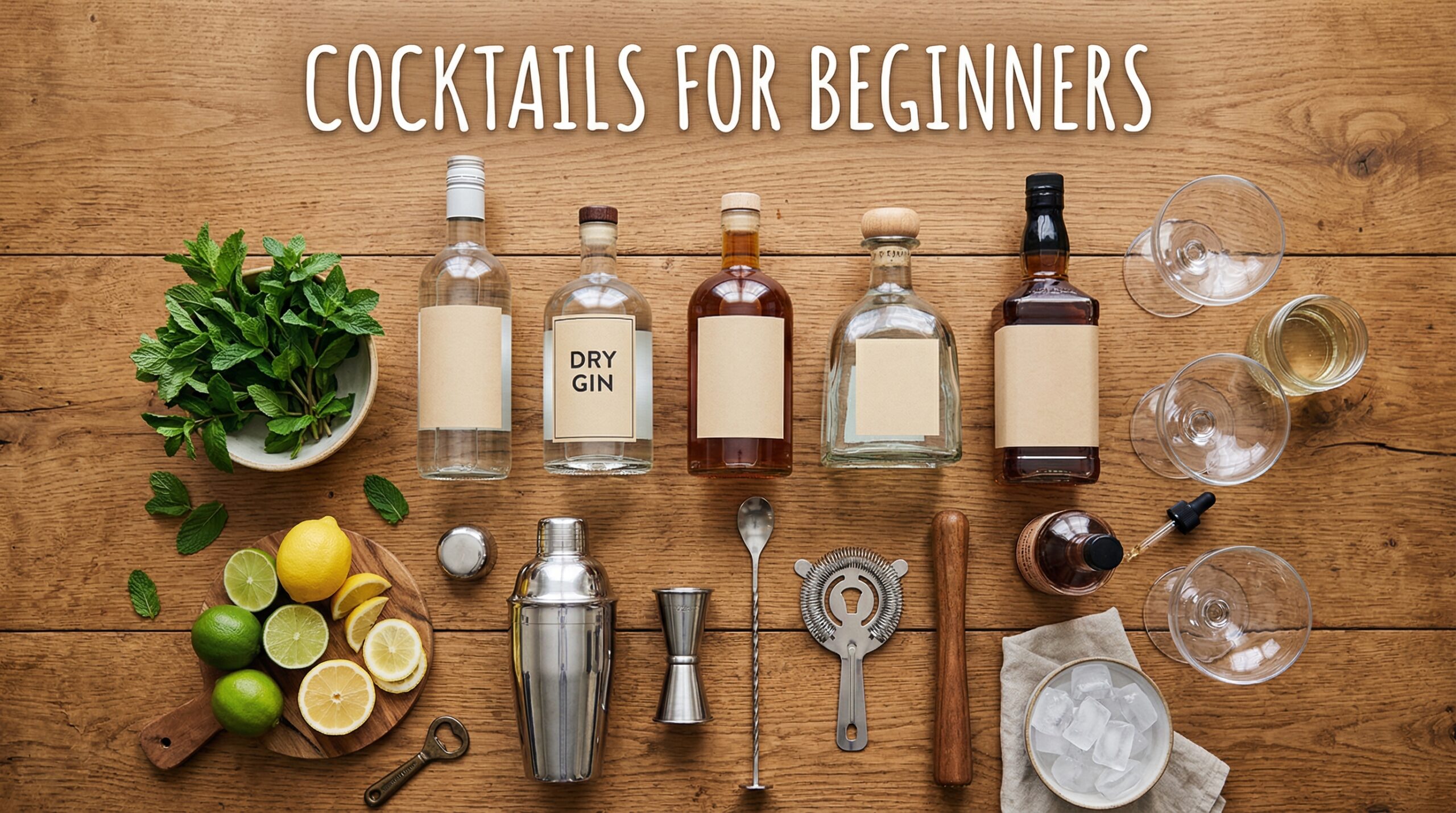
You have decided to start learning about cocktails. Perhaps you have been watching skilled bartenders at your favorite bar and wondering how they create those perfectly balanced, delicious drinks. Maybe you want to save money by mixing cocktails at home instead of paying fifteen dollars per drink at a lounge. Or you might simply be curious about what goes into making a great cocktail beyond just pouring alcohol into a glass.
Whatever brought you here, this guide covers everything you need to start making great cocktails at home with confidence. Our team has spent considerable time researching what actually works for beginners versus what sounds impressive but creates confusion. We have talked to experienced home bartenders and identified what real beginners struggle with most. The good news is that cocktail making is far simpler than it first appears. Once you understand a few core concepts, you can make hundreds of different drinks using just a handful of techniques.
What is a Cocktail?
A cocktail is a mixed drink that combines alcohol with other ingredients to create something greater than the sum of its parts. The word itself has a somewhat disputed origin, but the practical definition is clear. A cocktail has three main components working together: a base spirit, a modifier or modifiers, and a garnish.
The base spirit provides the alcohol foundation and primary flavor character. This is typically vodka, gin, rum, tequila, or whiskey. The modifier is anything that changes or enhances the spirit’s flavor. This category includes sweeteners like simple syrup or honey, acids like citrus juice, bitters, and liqueurs. The garnish serves as the finishing touch, adding aroma and visual appeal. A cocktail without proper balance between these elements will taste disjointed, harsh, or overwhelming.
Understanding this three-part structure is the first step toward making great cocktails. Every drink you encounter can be broken down into these components. Once you see this pattern, cocktail recipes become much easier to understand and modify to your personal taste. You stop following recipes blindly and start understanding why each ingredient is there.
Essential Spirits Every Beginner Needs
You do not need to buy a full liquor cabinet to start making cocktails. In fact, experienced home bartenders strongly recommend starting with just five core spirits. This approach keeps initial costs manageable and helps you learn each spirit’s character before expanding your collection. Forum discussions consistently show that beginners who over-buy spirits first end up confused and waste money on rarely-used bottles.
Vodka is the most versatile beginner spirit. It has a neutral flavor that takes on the characteristics of whatever you mix it with. This makes it perfect for learning because you can taste exactly how other ingredients interact with the spirit. Vodka is the foundation for drinks like the Cosmopolitan, Moscow Mule, and countless other popular cocktails. When you are learning, using vodka lets the modifiers take center stage so you can understand their flavors more clearly.
Gin brings botanical complexity that vodka lacks. London dry gin is the most common style and works surprisingly well as a vodka substitute in most cocktails. Gin is essential for classics like the Negroni, Tom Collins, and Aviation. The botanicals in gin, which typically include juniper, coriander, and citrus peel, add layers of flavor that vodka cannot provide. If you want to understand how different spirits bring unique characteristics to cocktails, consider reading our Tequila vs Mezcal comparison which explores this topic in depth.
White Rum is light and slightly sweet, making it approachable for beginners who find other spirits too harsh. It is the foundation of the Daiquiri, Mojito, and Cuba Libre. Dark rum adds more complexity with notes of caramel and spice, and it appears in cocktails like the Dark and Stormy and various tiki drinks. Once you master white rum cocktails, dark rum opens up a new dimension of flavor to explore.
Tequila (specifically silver or blanco) offers a distinct agave flavor that shines in simple mixed drinks. The Margarita is arguably the most popular tequila cocktail and is an essential recipe for any beginner. Silver tequila keeps the agave character pure and uncomplicated, making it ideal for learning. If you want to expand your tequila repertoire beyond margaritas, a ranch water recipe is another fantastic tequila-based drink to add to your skills.
Bourbon or Whiskey brings warmth and complexity that works beautifully in both spirit-forward and balanced cocktails. Bourbon is slightly sweeter than rye whiskey due to its corn content, and it pairs wonderfully with citrus and sweeteners. These spirits are the foundation of the Old Fashioned, Manhattan, and Whiskey Sour. Whiskey cocktails often become favorites for beginners because the sweetness in bourbon makes them approachable while still delivering real spirit character.
Core Cocktail Techniques: Shaking, Stirring, and Building
The method you use to combine ingredients affects a cocktail’s final texture, temperature, and overall quality. Each technique exists for a specific reason, and choosing the right one is part of understanding how cocktails work. Using the wrong technique can make a perfectly good recipe taste flat or overly diluted.
Shaking involves placing ingredients in a cocktail shaker with ice and shaking vigorously for ten to fifteen seconds. This motion chills the drink quickly and adds air, creating a slightly frothy texture that lighter cocktails benefit from. Shaking is best for cocktails containing citrus juice, egg white, or creamy ingredients. The physical agitation helps emulsify these ingredients and integrates them smoothly with the spirits. When you shake properly, you hear the ice actively hitting the metal shaker. This sound tells you the technique is working and your drink is being properly chilled and diluted.
Stirring is gentler than shaking and preserves clarity and texture. You combine ingredients in a mixing glass with ice and stir slowly with a bar spoon for about thirty seconds. Spirit-forward cocktails like the Martini, Manhattan, and Negroni are stirred because shaking would over-dilute and bruise the delicate botanical flavors. The result should be cold and perfectly diluted without any aeration or froth. Stirred cocktails should look crystal clear, which is part of their elegance.
Building is the simplest technique and requires the least equipment. You combine ingredients directly in the glass they will be served in, typically over ice. Highballs like Gin and Tonic, Rum and Coke, or Tom Collins are built this way. This method works well when you want to minimize cleanup or when serving multiple drinks quickly. The key to building is using the right proportion of ice to liquid so the drink does not dilute too quickly.
Muddling releases flavors from herbs, fruits, or sugar by pressing them against the glass. Mint in a Mojito or Mint Julep requires gentle muddling to extract oils without tearing the leaves and creating bitterness. The technique is to press down firmly once or twice rather than grinding aggressively in a circular motion. Too much muddling releases bitter compounds from plant cell walls, which ruins the drink.
Understanding Cocktail Ratios and Balance
Balance is the foundation of every great cocktail. Without it, drinks taste either too strong, too sweet, too sour, or too bitter. The good news is that balance follows predictable patterns you can learn and apply to any recipe. This is why understanding ratios matters more than memorizing specific recipes.
The most useful formula for beginners is the 1:2:3 ratio. This means one part spirit, two parts modifier, and three parts sweetener. This formula works as a starting point for Sour cocktails. For a Whiskey Sour, you might use two ounces bourbon, three-quarters ounce lemon juice, and three-quarters ounce simple syrup. These proportions create harmonious balance where the spirit’s character comes through while the citrus brightens and the sweetener softens. The math works because the total dilution makes the drink feel complete rather than incomplete.
Modifiers in this context include both acidic elements like citrus and sweet elements like syrup. The modifier category also includes bitters, liqueurs, and fruit juices. Each modifies the spirit’s flavor in specific ways. Citrus adds brightness and cuts through sweetness. Bitters add complexity and help blend flavors. Liqueurs add both sweetness and additional flavor notes from their base ingredients.
Most cocktail problems beginners encounter come down to ratios being off. Too much spirit makes a drink harsh and overwhelming on the palate. Too much sweetener makes it cloying and undrinkable. Too much acid makes it sour and unpleasant. The solution is almost always adjusting one ingredient at a time until the balance feels right. This is why professional bartenders taste as they work and adjust continuously rather than following recipes rigidly.
Start with the recommended proportions in any recipe, then taste and adjust. Maybe you prefer things less sweet, so you reduce the syrup slightly. Perhaps you want more spirit presence, so you add a half-ounce more whiskey. This flexibility is what makes home cocktail making so rewarding. You are not locked into rigid measurements. You are learning to trust your palate and make drinks that match your preferences exactly.
Cocktail Families: Understanding Categories
Cocktails fall into distinct families or categories based on their structure and ingredients. Understanding these categories helps you see patterns across recipes and makes it much easier to invent your own drinks. Each family has a recognizable flavor profile and typically uses a specific technique. Learning these families is like learning the grammar of cocktails. Once you know the rules, you can create your own sentences.
Sour cocktails combine spirit, citrus, and sweetener. The Daiquiri, Margarita, and Whiskey Sour all follow this template. They are refreshing, balanced, and excellent for beginners because the formula is forgiving and adaptable. The basic ratio is spirit plus citrus plus sweetener, and you can adjust each element based on your preferences. If you prefer less sweet, use less sweetener. If you want more brightness, add more citrus. The framework accommodates personal taste easily.
Spirit-forward cocktails minimize or omit other modifiers, letting the base spirit take center stage. The Martini, Manhattan, and Negroni are classic examples. These drinks are typically stirred and served without ice. They showcase the complexity of the spirit itself and require quality ingredients because there is nowhere to hide inferior spirits. If you want to master this category, our classic martini recipe demonstrates the elegance of simplicity and why these drinks have endured for over a century.
Highballs and Collins drinks are tall, refreshing cocktails built over ice with a spirit base and sparkling mixer. Gin and Tonic, Rum and Coke, and Tom Collins fall into this family. They are approachable for beginners because the sparkling water dilutes the alcohol and makes the drink lighter and more refreshing. These are excellent gateway cocktails for someone building their confidence before tackling spirit-forward drinks.
Juleps and muddled drinks feature crushed ice and fresh herbs or fruit. The Mint Julep and Mojito are the most recognizable examples. Muddling releases essential oils from herbs, creating aromatic complexity that fills the glass when you raise it to drink. These drinks require fresh ingredients and are perfect for showcasing seasonal flavors. They also require more technique, making them satisfying to master.
Old Fashioned cocktails represent the original family, using sugar, bitters, and spirit as the foundation. The Sazerac recipe represents this ancestral family and demonstrates how early cocktails were made with just a few simple ingredients. These drinks are spirit-forward but include enough modifier to create balance. They are typically built over ice and sipped slowly, allowing the flavors to develop and change as the ice melts.
Essential Bar Tools for Beginners
You need fewer tools than you might think to start making cocktails at home. In fact, you can assemble a functional starter kit with just four essential items. Buying quality tools from the start saves money compared to replacing cheap equipment that breaks or performs poorly. Resist the temptation to buy everything at once. Add tools as specific recipes require them.
A jigger is essential for measuring. Most jiggers have two sides, typically one ounce and a half ounce, or two ounces and one ounce. Some jiggers have multiple measurements on each side. Consistent measurements are what separate cocktails from random mixtures of alcohol. Without a jigger, your drinks will be inconsistent and much harder to replicate. Pouring freehand might work occasionally, but it prevents you from learning what precise proportions actually taste like.
A cocktail shaker set should include a metal shaker and at least one strainer. Boston shakers, which consist of two pieces, are professional-grade and relatively easy to use at home. One piece is a metal shaker tin, and the other is a mixing glass. The set needs a built-in strainer or you will need a separate Hawthorne strainer for filtering ice when pouring. Shaking creates dilution through contact with ice, and the shaker needs to be airtight to work properly. Test your shaker with water before your first cocktail to make sure it seals.
A long-handled bar spoon is useful for stirring and layering drinks. The length allows you to reach the bottom of tall glasses and stir efficiently without splashing. Many bar spoons have a muddler end, which combines two tools into one and saves counter space. The twisted handle design also makes layering ingredients in cocktails visually impressive, though this is more about presentation than function.
A muddler is necessary if you plan to make juleps, mojitos, or old fashioneds. Wood muddlers are traditional and provide good grip without damaging glassware. Avoid metal muddlers, which can bruise herbs instead of properly releasing their oils. The best muddlers have a textured end for effective pressing without tearing delicate ingredients like mint.
As you expand your skills, consider adding a citrus juicer for extracting maximum juice efficiently, a fine-mesh strainer for catching ice shards in stirred drinks, and a channel knife for creating citrus twists for garnishes. These additions help you create more professional results, but they are not necessary when you are first learning.
5 Essential Cocktails Every Beginner Should Know
These five cocktails represent different families and techniques. Mastering them gives you a foundation for exploring hundreds of variations and understanding how cocktails truly work. These are not arbitrary choices. They are the cocktails that experienced bartenders agree every competent home mixologist should be able to prepare.
The Margarita is the quintessential sour cocktail. It combines tequila, lime juice, and orange liqueur with salt on the rim if desired. The classic ratio is two ounces tequila, one ounce lime juice, and a half ounce orange liqueur. Shake with ice and serve on the rocks or straight up in a coupe glass. This drink teaches you how spirit, acid, and sweetener work together to create balance. It also introduces the technique of shaking, which you will use for most citrus cocktails.
The Daiquiri is rum’s answer to the Margarita. It consists of just three ingredients: white rum, lime juice, and simple syrup. The standard ratio is two ounces rum, one ounce lime juice, and three-quarters ounce simple syrup. This simple construction makes it perfect for learning because you can taste exactly what each ingredient contributes to the final drink. Once you master the Daiquiri, you can easily adapt it to use different rums or try variations with fruit purées.
The Old Fashioned is the starting point for understanding spirit-forward cocktails. Muddle sugar and bitters in a glass, add whiskey and a large ice cube, and stir gently. The drink showcases how minimal ingredients can create complexity when balanced properly. It also teaches the muddling technique and demonstrates why quality ice matters in cocktails. The Old Fashioned is stirred, not shaken, which introduces you to that technique.
The Gin and Tonic is a built highball that could not be simpler in theory. Gin, tonic water, and lime. The trick is proper proportions and using quality tonic. Using a better gin and premium tonic makes a dramatic difference in the result. This drink teaches you that simple does not mean easy or unsophisticated. The best Gin and Tonics are sublime, while poorly made ones are merely mediocre.
The Whiskey Sour combines bourbon with lemon juice and simple syrup. You can add egg white for a frothy texture if you want to practice the dry shaking technique. This drink teaches you that balancing sweet and sour with spirits creates something greater than any individual ingredient. The Whiskey Sour also introduces you to bourbon, which has a sweetness that makes it particularly approachable for beginners.
Once you have these five down, you have a repertoire for most occasions. From there, you can explore variations like swapping rum for vodka in a Daiquiri, or adding bitters to your Old Fashioned for extra complexity. These five recipes are the launchpad for everything else in your cocktail journey.
Common Beginner Mistakes to Avoid
Learning from other peoples mistakes saves you time and money. These are the most common errors that forum discussions reveal beginners make. Avoiding these pitfalls will help you progress faster and enjoy the learning process more.
Buying too many spirits too quickly overwhelms new bartenders. You do not need every liqueur and specialty spirit you see at the liquor store. Start with the five core spirits and master a few recipes before expanding. This approach builds confidence and prevents waste from rarely-used bottles going bad. Most liqueurs last only a few months after opening, so buying them prematurely wastes money.
Ignoring ratio proportions leads to unbalanced cocktails. Newcomers often eyeball measurements or assume more alcohol means a better drink. The opposite is usually true. A well-balanced cocktail with less spirit tastes better than an unbalanced one with more. Use a jigger and follow proportions until your palate trains you to adjust. Trust the process even when the proportions seem surprising.
Using low-quality ice or skipping ice entirely is a mistake that compromises every cocktail. Ice is an ingredient, not just a cooling mechanism. It dilutes the cocktail as it melts, which is essential for achieving proper balance. Use fresh, solid ice cubes rather than old ice from your freezer that may have absorbed odors. For stirred drinks, large ice cubes melt slower and give you more control over dilution. Clear ice made from filtered water looks better and melts more slowly than standard ice.
Skimping on fresh ingredients makes cocktails taste flat and one-dimensional. Bottled lemon and lime juice lack the brightness and complexity of fresh-squeezed juice. The difference in taste is dramatic and immediately noticeable to anyone with a functioning palate. Always juice citrus fruits fresh for cocktails. A simple hand juicer costs almost nothing and makes the process easy. The juice from a single lime or lemon is usually enough for one to three cocktails.
Forgetting the garnish is like leaving a dish unfinished in a restaurant. The garnish contributes aroma and visual appeal that complete the drinking experience. A twist of lemon peel releases aromatic oils over your drink when you run it around the rim. A mint sprig adds fragrance that enhances every sip. These finishing touches elevate your cocktails from good to professional.
FAQs
What are the basic cocktails every beginner should know?
Every beginner should master five foundational cocktails: the Margarita (tequila sour), Daiquiri (rum sour), Old Fashioned (spirit-forward), Gin and Tonic (highball), and Whiskey Sour (bourbon sour). These represent different cocktail families and techniques, giving you a versatile starting point for exploring hundreds of variations.
What spirits do I need to start making cocktails?
Start with five core spirits: vodka (neutral base), gin (botanical complexity), white rum (light and approachable), silver tequila (agave character), and bourbon or whiskey (warmth and depth). These five cover most classic cocktail recipes and provide variety without overwhelming your home bar setup.
How do I balance sweet, sour, and strong in a cocktail?
Balance cocktails using the 1:2:3 principle as a starting point: one part spirit, two parts modifier, three parts sweetener. Taste your creation and adjust one ingredient at a time until no single element overpowers the others. The goal is harmony between the spirit character, acidity, and sweetness.
What is the ratio for a basic sour cocktail?
A standard sour cocktail ratio is 2 ounces spirit, 3/4 ounce lemon or lime juice, and 3/4 ounce simple syrup. Shake all ingredients with ice for 10-15 seconds until well chilled, then strain into a coupe or rocks glass.
What are cocktail families and why do they matter?
Cocktail families are categories based on structure and ingredients: Sours (spirit, citrus, sweetener), Spirit-Forward (minimal modifier, spirit focus), Highballs (spirit with sparkling mixer), Juleps (muddled herbs), and Old Fashioneds (sugar, bitters, spirit). Understanding families helps you see patterns and create your own recipes by understanding how ingredients combine.
Final Thoughts
You now have the foundation to start making cocktails with confidence. The journey from beginner to competent home bartender takes practice, but the core concepts are simpler than most people realize. Master the five spirits, learn the 1:2:3 ratio, practice shaking and stirring, and memorize the five essential cocktails covered in this guide.
The best way to learn is by making drinks. Start with one recipe tonight, taste it, and adjust. Did it need more citrus? Was the sweetness level right for your preferences? These questions train your palate in ways that reading alone never can. Make a Margarita tonight, then try the Daiquiri tomorrow. Each drink teaches you something new about balance and your own taste preferences.
Cocktail making is both a skill and an art. The skill comes from understanding principles and techniques. The art comes from developing your own preferences and personal style. This guide gives you the skill. The rest is up to you and your taste buds. Have fun experimenting, and do not be afraid to make mistakes along the way. Every great bartender started exactly where you are now.