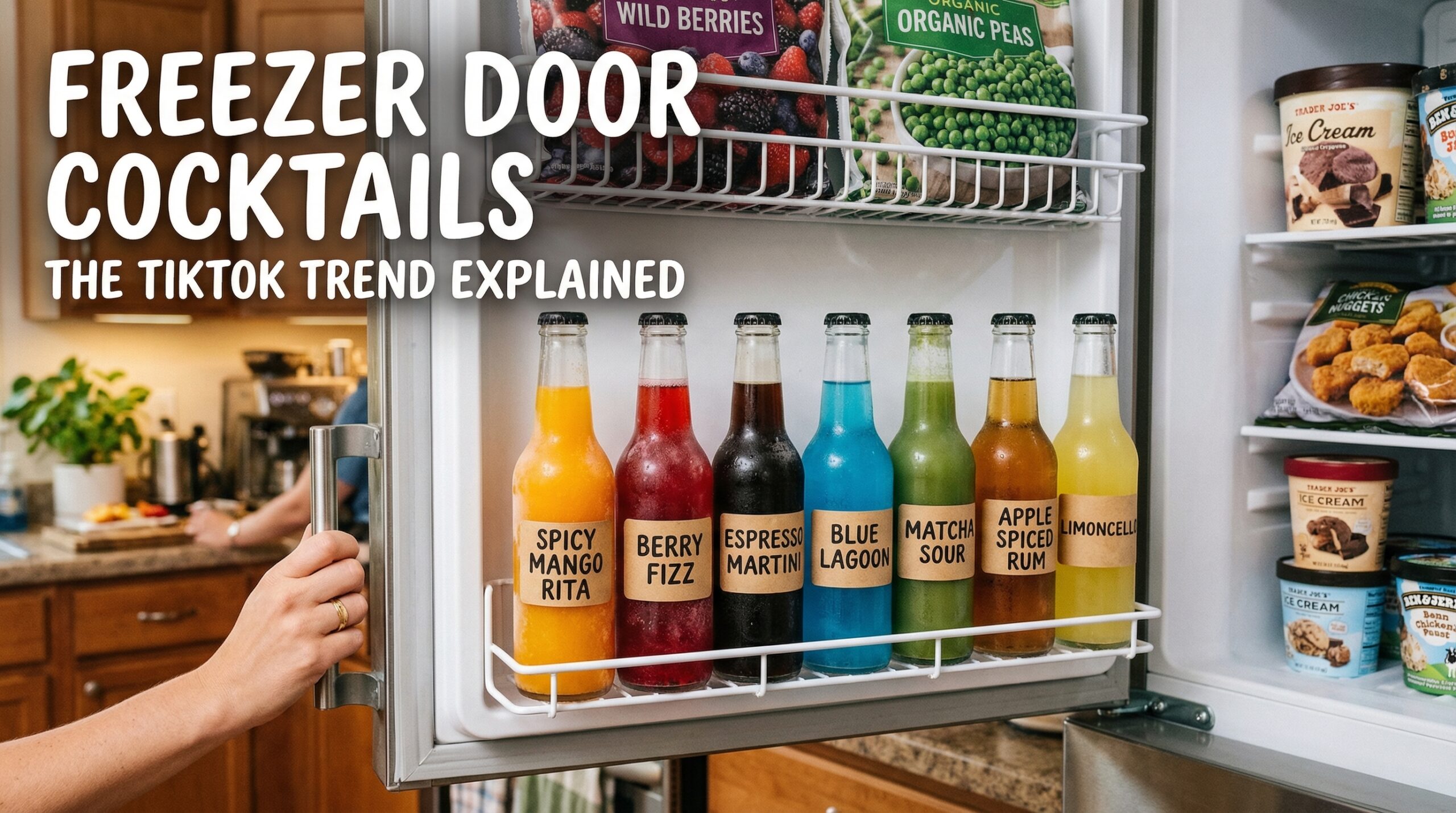
If you have spent any time on TikTok lately, you have probably seen the trend taking over your “For You” page: drinks stacked in the freezer door, ready to pour at a moment’s notice. Freezer door cocktails are the latest hack that promises to eliminate last-minute drink prep during parties while keeping your spirits perfectly chilled. But what exactly are these drinks, and how did they become the viral sensation that has home bartenders everywhere reorganizing their freezers?
This guide breaks down everything you need to know about freezer door cocktails, from the simple science behind why they do not turn into popsicles to step-by-step instructions for making your own batch. Whether you are hosting a gathering or simply want a martini waiting for you after work, this trend has changed the way many people think about cocktail preparation.
What Is a Freezer Door Cocktail?
A freezer door cocktail is a batch cocktail you prepare directly inside a liquor bottle, store on the freezer door, and pour whenever you are ready to drink. The concept is straightforward: instead of mixing drinks one at a time or using a cocktail shaker filled with ice, you combine your spirits and mixers in advance, then let the freezer do the chilling work.
The idea works because high-proof alcohol has a much lower freezing point than water. Standard vodka and gin, which typically contain 40% ABV, will not freeze solid at standard freezer temperatures. By building your cocktail inside the bottle itself, you create a pre-mixed drink that stays liquid, chilled, and ready to serve. The method gained mainstream attention through J.M. Hirsch, author and former Associated Press food editor, who popularized the technique through his Milk Street columns and cookbook.
The beauty of this approach lies in its simplicity. You pour off a small amount of liquor to create room, add your mixers and water for dilution, and place the bottle on the freezer door. When you want a drink, you simply open, pour, and enjoy. There is no need for ice, shakers, or measuring cups. The drinks stay perfectly cold as long as your freezer runs.
The Origin Story: From Milk Street to TikTok
Freezer door cocktails did not start on social media. The technique traces back to Hirsch, who developed the method out of practical necessity. After years of entertaining and searching for ways to simplify drink service during parties, he realized that most cocktail ingredients could be combined in advance and stored in the bottle itself.
Hirsch shared his discovery through Milk Street, explaining that the key was understanding how alcohol behaves at freezing temperatures. His early experiments focused on finding the right balance between spirits, mixers, and water to create drinks that would stay liquid but properly chilled. The method caught on with serious home bartenders who appreciated the make-ahead convenience.
When TikTok creators discovered the hack, everything changed. Videos showing people prepping martinis, old fashioneds, and margaritas directly in liquor bottles racked up millions of views. The visual appeal of neatly organized bottles on a freezer door, combined with the promise of instant gratification, made the trend instantly shareable. By 2026, freezer door cocktails have become a staple in party preparation guides across social media platforms.
How to Make Freezer Door Cocktails
Creating your own freezer door cocktails requires just a few steps and about ten minutes of prep time. The process involves some basic math to ensure your drinks do not freeze solid while maintaining the right flavor balance.
Here is the step-by-step method our team has tested:
Step 1: Choose Your Spirit and Bottle
Select a standard 750ml or 1.75L bottle of your preferred spirit. Gin and vodka work exceptionally well because of their moderate alcohol content and versatility. Dark spirits like whiskey also perform fine, though the freezing dynamics vary slightly based on sugar content and proof. Reddit users who have experimented with this method report that using 1.75L bottles works well for batch cocktails during larger gatherings.
Step 2: Remove Some Liquor to Create Room
Pour out approximately 2 to 4 ounces of spirit, depending on how much mixer you plan to add. This creates space in the bottle for the additional ingredients. The exact amount depends on your recipe, but this step is essential because adding too much volume without removing liquor first will cause overflow when the liquid expands slightly.
Step 3: Add Your Mixers
Add your cocktail ingredients directly to the bottle. For a dirty martini, this means dry vermouth and olive brine. For an old fashioned, you would add sugar syrup and bitters. For margaritas, include lime juice and orange liqueur. The key is pouring these ingredients slowly to avoid too much turbulence.
Step 4: Add Water for Dilution
This step separates successful freezer door cocktails from frozen disasters. Water is critical because it lowers the alcohol concentration to a point where the mixture will not freeze solid. Add roughly 2 to 4 ounces of cold water, depending on your recipe. This replacement dilution mimics what would happen if you were shaking or stirring with ice. Without this step, drinks may not reach the proper consistency or may freeze partially.
Step 5: Seal and Label
Close the bottle tightly and give it a gentle invert or two to combine the ingredients. Label the bottle with the cocktail name and date, since homemade freezer door cocktails will keep for several weeks, though freshness of ingredients like citrus juices may affect longevity.
Step 6: Store on the Freezer Door
Place your prepared bottle on the freezer door, which experiences less temperature fluctuation than the freezer interior. This location keeps your cocktail consistently chilled without risk of partial freezing. Allow at least 4 hours for the drink to reach optimal temperature, though overnight works best.
The Science: Why Drinks Do Not Freeze Solid
The chemistry behind freezer door cocktails explains why this method works without turning your favorite spirit into an ice block. Understanding the basics helps you troubleshoot problems and adjust recipes with confidence.
Water freezes at 32 degrees Fahrenheit, but pure ethanol requires temperatures around -173 degrees Fahrenheit to solidify. Standard spirits fall somewhere in between because they are mixtures of alcohol and water. A typical 80-proof vodka contains about 40% alcohol and 60% water. This blend has a freezing point well below the temperature of a standard home freezer, which typically runs around 0 degrees Fahrenheit.
When you add mixers like vermouth, juice, or syrup, you introduce additional liquids that can affect the freezing point. Sweeteners and fruit juices contain sugars that lower the freezing point somewhat, but the high alcohol content remains the dominant factor keeping your cocktail liquid. The alcohol acts as an antifreeze agent, preventing the water molecules from organizing into a solid crystal structure.
The water addition during preparation serves a dual purpose. First, it provides the dilution that makes cocktails taste balanced rather than harsh. Second, it slightly raises the freezing point while still maintaining enough alcohol content to stay liquid. Community discussions on Reddit reveal that some users have experimented with high-proof rums like 151 to push the freezing point even lower, though standard 80-proof spirits work fine for most recipes.
Popular Freezer Door Cocktail Recipes
The freezer door method works with most classic cocktails, though some adapt better than others. Based on what works consistently, here are the most popular variations.
Freezer Door Martini
The martini is arguably the best candidate for this technique. Simply add 2 ounces of dry vermouth to your vodka or gin bottle after removing the same amount of spirit. Some prefer a ratio of 4 parts gin to 1 part vermouth, while others enjoy a more botanical 3-to-1 blend. A few drops of orange bitters add complexity. The result is a perfectly chilled, ready-to-pour martini that would otherwise require ice and a mixing glass.
Freezer Door Old Fashioned
For whiskey lovers, the old fashioned adapts well to bottle preparation. Add 1 ounce of simple syrup and several dashes of Angostura bitters to your bourbon bottle after removing a small amount. Some enthusiasts also add a thin orange peel or a splash of water. When you are ready to serve, pour over a large ice cube or a few regular cubes for the complete experience.
Freezer Door Margarita
Citrus-based cocktails require slightly more attention because fresh lime juice can lose freshness over time in the freezer. For best results, add 2 to 3 ounces of fresh lime juice and 1 to 2 ounces of orange liqueur like Cointreau or Triple Sec. A small amount of simple syrup balances the tartness. Consider adding a pinch of salt, though some prefer to rim the glass rather than add salt directly to the bottle.
Freezer Door Espresso Martini
This modern classic works surprisingly well with the freezer door method. Add 1 ounce of coffee liqueur and 1 ounce of espresso to your vodka after removing 2 ounces. The coffee notes stay vibrant, and the drink arrives perfectly chilled without the need for a blender or espresso machine at serving time. Community members have confirmed this variation works especially well for dinner parties where you want to offer coffee cocktails without extra equipment.
Tips and Troubleshooting
Even with clear instructions, things can go wrong. Based on real user experiences and common mistakes our team has observed, here is guidance for avoiding problems and fixing them when they occur.
My cocktail froze solid
This happens when the alcohol content drops too low or when too much mixer was added without adequate compensation. If your drink freezes, transfer it to the refrigerator to thaw gradually. Once liquid, you can add a splash of high-proof spirit to raise the alcohol content and prevent future freezing. Some users report that using smaller bottles helps them control proportions more easily.
The taste is off
Quality ingredients make a significant difference in the final result. Several Reddit users emphasized that “quality ingredients, quality drinks” holds true for this method. Fresh citrus juice stored too long can taste flat, and low-quality vermouth oxidizes poorly. Consider using freshly squeezed juice for shorter storage periods and high-proof spirits for better freezing resistance.
Separation occurred
Some ingredients may separate slightly during freezer storage, particularly if they contain oils or particulates. A gentle shake or invert of the bottle redistributes everything before serving. If citrus oils float to the top, this is normal and will mix back in with a simple shake.
Storage duration
Freezer door cocktails keep well for 2 to 4 weeks, though drinks containing fresh citrus juice should be consumed within 1 week for optimal flavor. Spirits without perishable mixers, like martinis made with only gin and vermouth, can last even longer. Always label bottles with preparation dates to track freshness.
Freezer Door Cocktails vs Cortisol Cocktails
You may have encountered the term “cortisol cocktail” while researching freezer door drinks, and these are entirely different things. A cortisol cocktail is a non-alcoholic wellness drink that typically combines ingredients like ashwagandha, collagen, and various supplements marketed for stress reduction and recovery. These drinks have gained their own following on TikTok as part of the wellness influencer space.
Freezer door cocktails, by contrast, are alcoholic beverages made with traditional spirits and mixers. They focus on convenience and temperature rather than wellness benefits. The only similarity is that both trends gained popularity through TikTok, but the content, intent, and ingredients are completely distinct.
FAQs
What is a freezer door cocktail?
A freezer door cocktail is a batch cocktail you prepare directly in a liquor bottle, store on the freezer door, and pour when ready to serve. You remove some spirit to make room, add mixers like vermouth or juice, add water for dilution, and freeze. The high alcohol content prevents freezing solid while keeping the drink perfectly chilled.
Why add water to freezer door cocktails?
Water serves two purposes in freezer door cocktails. First, it provides the dilution that makes cocktails taste balanced rather than overpowering the palate. Second, adding water slightly raises the freezing point while maintaining enough alcohol content to keep the mixture liquid at freezer temperatures. This mimics the dilution that would occur when shaking or stirring with ice.
What is the TikTok cortisol cocktail?
A cortisol cocktail is a non-alcoholic wellness drink popular on TikTok, typically containing supplements like ashwagandha and collagen marketed for stress reduction. This is completely different from freezer door cocktails, which are alcoholic beverages focused on convenience and proper chilling, not wellness benefits.
Do freezer door cocktails freeze solid?
Properly prepared freezer door cocktails do not freeze solid because the alcohol content keeps the freezing point well below standard freezer temperatures. The key is adding enough spirit and controlling the amount of water and mixers added. If a cocktail does freeze, it typically means too much low-alcohol content mixer was added without compensating with additional spirit.
Ready to Try Freezer Door Cocktails?
Freezer door cocktails offer a practical solution for anyone who entertains regularly or simply wants to streamline their drink routine. The method requires minimal equipment, no special skills, and delivers consistent results every time. By understanding the basic science and following the simple steps, you can have perfectly chilled cocktails waiting for you whenever the mood strikes.
The trend continues to evolve as more people experiment with variations and share their discoveries online. Whether you start with a classic martini or try something more adventurous, the freezer door method opens up new possibilities for make-ahead beverage preparation. Give it a try and see how this simple technique can change your approach to serving drinks.
![Pool Party Cocktail Ideas ([nmf] [cy]) Margarita, Rum, Vodka](https://www.thirstybear.com/wp-content/uploads/2026/03/featured-1774296015235-400x300.jpg)