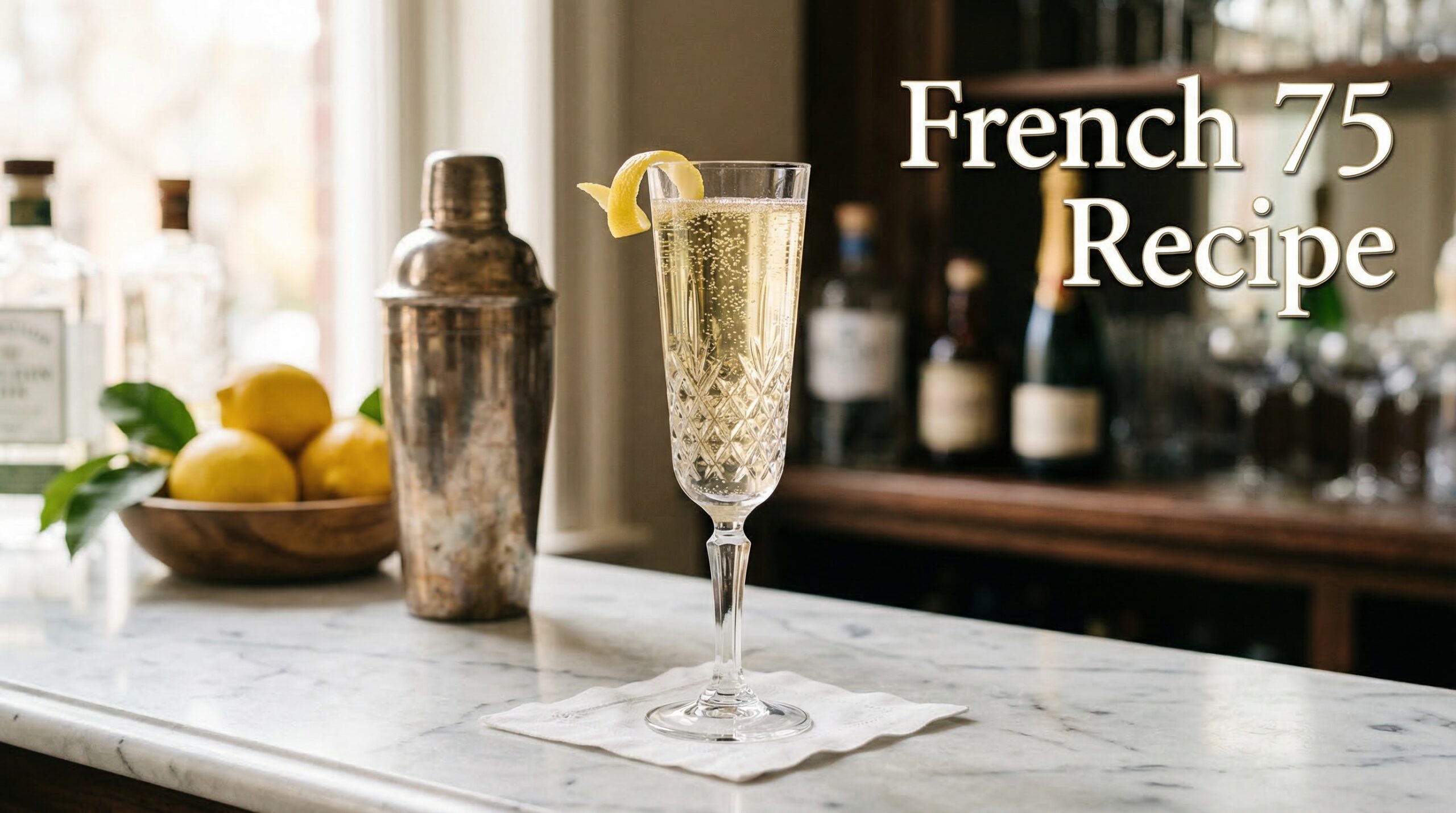
Few cocktails feel as elegant as the French 75. This classic champagne cocktail combines gin, fresh lemon juice, simple syrup, and bubbly into something truly special. In this French 75 recipe guide, I will walk you through everything you need to know to make this iconic drink at home, from the exact ingredients to professional techniques that bartenders use.
Whether you are hosting a New Year’s Eve party, planning a brunch, or simply want to elevate your home bartending skills, the French 75 delivers sophistication without complexity. The best part? You only need four ingredients and about five minutes to make one.
What Is a French 75?
A French 75 is a classic champagne cocktail that balances botanical gin with bright citrus, subtle sweetness, and effervescent sparkling wine. The drink is refreshing, crisp, and surprisingly potent for such an elegant cocktail.
The name comes from the French 75mm field gun used in World War I, known for its powerful kick. Similarly, this cocktail has more strength than its delicate appearance suggests. The combination of spirits and champagne creates a drink that can sneak up on you.
Traditional recipes call for gin, though cognac was the original spirit in early versions. Today, both variations are accepted, with gin being the more common choice in modern bars. The cocktail falls somewhere between a Tom Collins and a champagne cocktail in character.
French 75 Ingredients
Quality ingredients make all the difference in this simple cocktail. Here is what you need for a classic French 75:
- 1 ounce London Dry Gin: A classic London Dry like Tanqueray, Beefeater, or Gordon’s works beautifully. The botanical notes complement the citrus and champagne without overpowering them. If you prefer something softer, try Hendrick’s or a more floral gin.
- 1/2 ounce fresh lemon juice: Fresh is non-negotiable here. Bottled lemon juice lacks the brightness and natural oils that make this cocktail shine. Roll your lemon on the counter before juicing to get the most out of it.
- 1/2 ounce simple syrup: A 1:1 ratio of sugar to water works perfectly. You can make it at home by dissolving equal parts sugar and hot water, then cooling. Some bartenders prefer a slightly richer 2:1 syrup for a silkier texture.
- 3 ounces Champagne or sparkling wine: Brut Champagne is traditional, but Prosecco, Cava, or any dry sparkling wine works well. The wine should be well-chilled before pouring. Save the expensive vintage Champagne for sipping on its own.
- Lemon twist for garnish: Cut a strip of lemon peel, avoiding the bitter white pith. Twist it over the drink to release the oils, then drop it in as garnish.
Champagne vs Prosecco vs Cava
Each sparkling wine brings something different to your French 75:
- Champagne: Offers toasty, brioche-like complexity with bright acidity. The most traditional choice but also the priciest. Best for special occasions.
- Prosecco: Fruitier and softer, with notes of pear and apple. More affordable and widely available. A great everyday choice that many people actually prefer.
- Cava: Spanish sparkling wine with citrus and almond notes. Drier than Prosecco but more affordable than Champagne. An excellent middle ground.
Whatever you choose, make sure it is brut or extra brut. Sweeter sparkling wines will make the cocktail cloying.
How to Make a French 75
Follow these steps for a perfectly balanced French 75 cocktail:
Step 1: Chill your glass. Place a champagne flute or coupe glass in the freezer for at least 5 minutes. A chilled glass keeps your cocktail colder longer and preserves the bubbles.
Step 2: Add ingredients to shaker. Combine the gin, fresh lemon juice, and simple syrup in a cocktail shaker. No need to add the sparkling wine yet.
Step 3: Add ice and shake. Fill the shaker with ice and shake vigorously for 10-15 seconds. You want the outside of the shaker to frost over. This ensures proper dilution and temperature.
Step 4: Strain into glass. Remove your chilled glass from the freezer and strain the shaken mixture into it.
Step 5: Top with champagne. Slowly pour the chilled champagne or sparkling wine over the mixture. Pour gently down the side of the glass to preserve carbonation.
Step 6: Garnish and serve. Twist a strip of lemon peel over the drink to release the aromatic oils, then drop it into the glass. Serve immediately while cold and bubbly.
Flute vs Coupe: Which Glass to Use
Both glasses work, but they offer different experiences:
- Champagne flute: The traditional choice. The narrow shape preserves bubbles longer and looks elegant. Best if you want to savor the drink slowly.
- Coupe glass: The vintage option from the 1930s and 1940s. Wider bowl allows aromas to open up but bubbles dissipate faster. More practical if you do not own flutes.
Use what you have. The cocktail tastes the same either way.
Tips for the Perfect French 75
After making countless French 75 cocktails, here are the tips that make the biggest difference:
- Shake with conviction. A weak shake means insufficient dilution and chilling. Shake until the shaker is frosty cold. This is not the step to rush.
- Use the right gin. London Dry gins provide the classic juniper-forward flavor that balances the sweetness. Avoid heavily flavored gins that might clash with the champagne.
- Measure everything. This cocktail lives or dies on balance. Use a jigger for accurate measurements until you develop a feel for the ratios.
- Chill your ingredients. Cold gin and cold sparkling wine mean a colder final drink. Store your gin in the freezer and keep champagne refrigerated.
- Taste and adjust. If your drink is too tart, add a touch more simple syrup. Too sweet? Add a squeeze more lemon. Personal taste varies.
Common Mistakes to Avoid
- Using bottled lemon juice: This is the fastest way to ruin a French 75. Fresh lemon juice provides brightness and natural oils that bottled versions cannot match.
- Shaking the champagne: Never shake sparkling wine. It creates a mess and destroys the bubbles. Always shake the base mixture first, then top with champagne.
- Skip the simple syrup: Some recipes omit syrup, but the sugar balances the acidity and helps the flavors marry. Start with less if you prefer a drier drink.
- Using warm ingredients: A warm French 75 is a sad French 75. Chill everything beforehand for best results.
French 75 Variations
The classic recipe is just the beginning. Here are variations worth trying:
- French 75 with Cognac: The original spirit in early recipes. Cognac makes the drink richer and smoother, with warming brandy notes. Substitute cognac for gin in equal measure.
- French 76: Replace the gin with vodka for a cleaner, more neutral spirit base. Some prefer this when they want the champagne to take center stage.
- French 77: Uses elderflower liqueur like St-Germain instead of simple syrup. Adds floral complexity that pairs beautifully with champagne.
- French 95: Substitutes bourbon for gin. A surprising twist that works remarkably well, especially in colder months.
- Seasonal variations: Add a splash of cranberry juice for a holiday version, or muddle berries in the shaker for a summer twist. The base recipe adapts well to experimentation.
If you enjoy exploring elegant cocktails, check out our Lychee Martini recipe for another sophisticated option.
The History Behind the French 75
The French 75 emerged during World War I, named after the French 75mm field gun, a rapid-firing artillery piece known for its powerful kick. Soldiers reportedly drank these at Paris bars, though the exact origin remains debated.
The cocktail first appeared in print in the 1920s, with early versions calling for cognac rather than gin. Harry Craddock included a French 75 recipe in his 1930 Savoy Cocktail Book, helping establish it as a classic.
Today, the French 75 remains a staple on cocktail menus worldwide. Its enduring popularity comes from its perfect balance of simplicity and sophistication, a drink that feels special without requiring specialized ingredients or equipment.
FAQs
What are the ingredients in the French 75 drink?
The French 75 contains gin (or cognac), fresh lemon juice, simple syrup, and Champagne or sparkling wine, garnished with a lemon twist. The classic ratio is 1 ounce gin, 1/2 ounce lemon juice, 1/2 ounce simple syrup, and 3 ounces champagne.
What’s the difference between a French 75 and 76?
The French 75 is made with gin, while the French 76 substitutes vodka for the gin. Both use the same proportions of lemon juice, simple syrup, and Champagne. The French 76 has a cleaner, more neutral flavor profile.
Is prosecco or champagne better for French 75?
Both work excellently. Champagne offers more toasty complexity and traditional character, while Prosecco is fruitier, softer, and more affordable. Use brut or extra brut sparkling wine for best results, and serve it well-chilled.
Should a French 75 be shaken or stirred?
A French 75 should always be shaken. Shake the gin, lemon juice, and simple syrup with ice until well-chilled, about 10-15 seconds, then strain into your glass and top with champagne. Never shake the champagne itself.
Now you have everything you need to make an exceptional French 75 at home. Remember to use fresh lemon juice, shake thoroughly, and keep your sparkling wine cold. This French 75 recipe delivers a perfectly balanced cocktail every time, whether you choose gin or cognac, Champagne or Prosecco.
The beauty of this drink lies in its simplicity. With quality ingredients and proper technique, you can create a bar-quality cocktail in minutes. It is perfect for celebrations, brunches, or any occasion that calls for something a little special.
For more cocktail inspiration and beverage guides, explore more recipes on our site. Cheers!