
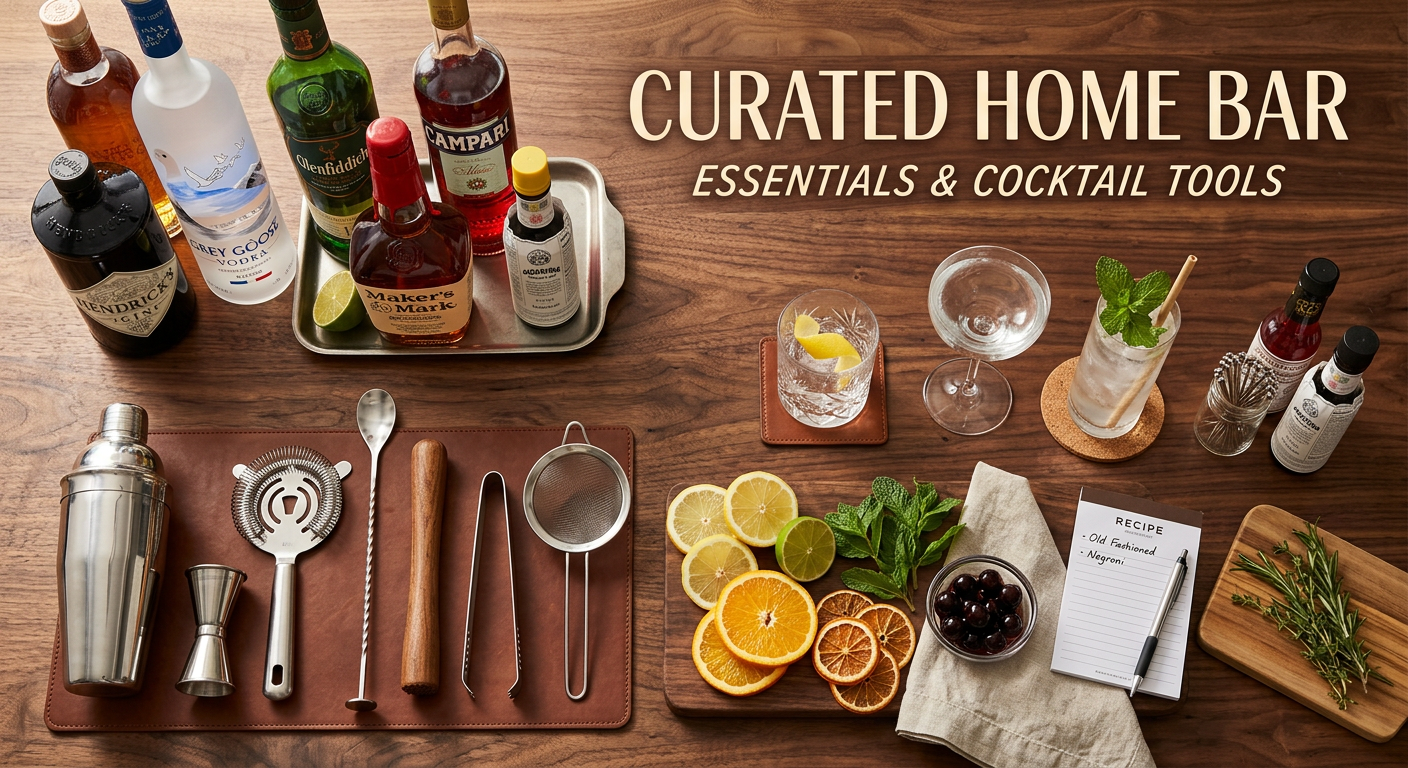
Building a home bar does not have to drain your bank account. I remember spending $300 at a liquor store in my early twenties, walking out with bags I could not even use for half the cocktails I wanted to make. That overbuying taught me a valuable lesson: a well-stocked home bar is about strategic choices, not expensive bottles.
This guide walks you through everything you need to stock a home bar on a budget. You will learn which spirits actually matter, what tools you cannot skip, and how to build your collection gradually so you never feel overwhelmed or broke.
Setting Your Home Bar Budget
Before buying anything, set a realistic budget. Most beginners can start a functional home bar for under $100. That number might sound low, but it works when you focus on versatility rather than variety.
How Much Should You Spend?
Your starting budget depends on what you want to accomplish. For casual entertaining, $75-150 covers the essentials. For someone who loves experimenting with cocktails, you might allocate $200-300 over several months as you build your collection.
Forum discussions reveal that many home bartenders spent $200 or more on their first bulk spirits haul, only to find they use half those bottles once a year. Our team recommends starting smaller and expanding based on what you actually reach for.
The Incremental Approach
One strategy that works brilliantly is building your bar over time. Instead of buying everything at once, start with spirits that cover the most cocktail ground. Add new bottles when you discover a drink you love that requires a specific spirit.
This approach has two benefits. First, you spread the cost across months instead of one large hit to your wallet. Second, you learn what you actually drink before investing in expensive bottles you rarely touch.
Essential Spirits: Your Foundation
The core of any home bar rests on five to six spirits. These bottles should be versatile enough to make dozens of cocktails without requiring rare ingredients.
Vodka and Gin
Vodka serves as the base for countless cocktails, from martinis to Moscow mules. You do not need premium vodka for mixing. Mid-shelf options around $15-20 work perfectly in drinks like the cosmopolitan, mule, or Cape Codder.
Gin opens doors to classic cocktails that vodka cannot touch. The botanical notes shine in gin and tonics, Negronis, and martinis. Look for London Dry gin styles in the $15-25 range. Brands like Beefeater, Gordon’s, or Seagram’s offer solid value for mixing.
Whiskey and Bourbon
Whiskey covers several cocktail styles. For bourbon, look for options around $20-25 that work in old fashioneds, Manhattans, and whiskey sours. Old Overholt and Evan Williams provide excellent value for the price.
If you prefer rye whiskey, it adds a spicier profile to cocktails. Rye works particularly well in Manhattans and sazeracs. Budget around $18-25 for a versatile bottle.
Rum and Tequila
Light rum handles daiquiris, mojitos, and tropical drinks. You do not need aged rum for mixing. A solid light rum around $15 covers most needs.
Tequila serves margaritas and a handful of other cocktails. Blanco tequila in the $15-20 range works fine for mixing. Avoid expensive reposado or anejo tequilas when mixing, since the subtleties get lost in cocktails.
Vermouth and Bitters
These two items separate basic home bars from well-equipped ones. Vermouth is fortified wine that goes bad quickly after opening. Sweet vermouth handles Manhattans and Negronis, while dry vermouth stars in martinis.
Bitters are highly concentrated flavor boosters. Angostura bitters are essential for old fashioneds, Manhattans, and many classic recipes. Orange bitters add complexity when you want to experiment. A small bottle of each costs under $15 combined and lasts for months.
Basic Bar Tools Checklist
You cannot make good cocktails with poor tools. The good news is that basic bartending equipment costs far less than most people expect.
Must-Have Tools
Every home bar needs a cocktail shaker. This tool mixes ingredients while chilling them simultaneously. Cobbler shakers (three-piece) work well for beginners. Metal versions cost $15-25 and last for years.
A jigger measures your pours precisely. Cocktails live or die by proper proportions. Double-sided jiggers in stainless steel cost around $10 and make measuring effortless.
You need a strainer to separate ice and muddled herbs from your finished drink. A hawthorne strainer fits most cocktail shakers and costs $8-12.
A muddler crushes herbs and fruit to release flavors. Look for wooden or stainless steel options around $10-15. Do not substitute a spoon, as proper muddling makes a noticeable difference.
Nice-to-Have Extras
A cutting board and paring knife help with citrus garnishes. A citrus juicer extracts juice efficiently. These items probably already exist in your kitchen.
A mixing glass proves useful for stirred cocktails like martinis and Manhattans. However, you can use any large glass jar if needed. Glass rather than plastic is preferable for appearance, though function remains similar.
Mixers and Garnishes
Spirits and tools form the foundation, but mixers and garnishes complete the cocktail experience. Stocking these strategically keeps costs manageable.
Essential Mixers
Club soda adds fizz and dilutes drinks appropriately. Tonic water pairs with gin and vodka for simple highball drinks. Ginger beer provides the spicy kick for Moscow mules and dark and stormys.
Keep fruit juices on hand: orange, lime, and cranberry juices cover most cocktail needs. Fresh juice tastes better than concentrate, but shelf-stable options work in a pinch.
Simple syrup (one part sugar dissolved in one part water) sweetens drinks without grainy residue. You can make this yourself in minutes using equal parts sugar and hot water. Store it in the refrigerator for up to two weeks.
Basic Garnishes
Lemon and lime wheels or wedges garnish most cocktails. Keep several of each on hand at all times. Olives and cocktail onions serve martini and Gibson variations.
Maraschino cherries add sweetness and visual appeal to many drinks. One jar lasts through dozens of cocktails.
Mint springs elevate juleps, mojitos, and summer drinks. Fresh herbs lose flavor quickly, so buy small quantities frequently rather than large bunches that wilt.
Smart Shopping Strategies (2026)
Where and when you buy matters almost as much as what you buy. Smart strategies can cut your total spending by 20-30% without sacrificing quality.
What to Buy vs Skip
Buy mid-shelf spirits. Budget bottles often taste harsh in cocktails, while premium bottles waste money since mixing dilutes their nuance. The $15-25 range hits the sweet spot for home bar purposes.
Skip pre-made mixer bottles when possible. Fresh citrus juice tastes dramatically better than bottled versions. Simple syrup takes thirty seconds to make. The exception is tonic and ginger beer, which home bartenders rarely make from scratch.
Sales and Discount Strategies
Liquor stores run sales, especially around holidays. Black Friday, New Year’s Eve, and Super Bowl week often feature discounts on spirits and tools. Stock up on staples during these sales.
Warehouse clubs offer decent prices on staples like vodka, gin, and whiskey if you consume them regularly. However, avoid buying specialty items in bulk unless you entertain frequently.
Many regions allow price matching. Call around to local stores to compare prices before purchasing. This strategy works particularly well for expensive bottles where the savings add up quickly.
Storage and Freshness Tips
Proper storage protects your investment and ensures cocktails taste their best. Some items require more care than others.
Shelf-Stable Spirits
Vodka, gin, whiskey, rum, and tequila last indefinitely on a shelf. Exposure to light and heat degrades quality over time, so store bottles away from windows and heating vents. Room temperature is fine for these spirits.
Unopened vermouth keeps for years. Opened vermouth, however, oxidizes and loses flavor within two to three months. Refrigeration extends vermouth life but does not stop eventual degradation. Buy small bottles and use them within a month of opening.
Refrigerated Items
Bitters contain alcohol but benefit from refrigeration for longest shelf life. Some bartenders argue room temperature is fine, but I notice flavor degradation faster without refrigeration.
Fresh citrus juice spoils within three to four days in the refrigerator. Juice only what you need for immediate use, or keep frozen juice concentrate as backup.
Simple syrup keeps for two weeks refrigerated. The refrigerator prevents bacterial growth that would otherwise develop at room temperature.
Building Your Bar Incrementally
The best approach I discovered involves building your bar in stages. Start with spirits that cover the widest range of cocktails, then add specialized bottles based on your drinking preferences.
Phase one includes vodka, whiskey or bourbon, light rum, and dry vermouth. These four bottles let you make dozens of classic cocktails without feeling limited.
Phase two adds sweet vermouth, orange bitters, and Angostura bitters. This addition unlocks Manhattan, Negroni, and improved old fashioned variations.
Phase three introduces gin, tequila, and specialized liqueurs based on what you enjoy. Some people never need phase three items if those spirits do not match their taste preferences.
This gradual approach lets you spread spending across months while building a bar tailored to your actual drinking habits rather than generic recommendations.
FAQs
What is the cheapest way to stock a home bar?
Build your bar incrementally over time. Start with 4-5 versatile spirits that cover most classic cocktails, then add specialized liqueurs and tools as your budget allows. Focus on mid-shelf bottles in the $15-25 range that work well in multiple drinks rather than buying expensive top-shelf options.
How much does it cost to stock a basic home bar?
A functional home bar can start at under $100. Budget approximately $60-80 for 4-5 essential spirits, $20-30 for basic tools, and $15-20 for mixers and garnishes. You can build this collection over several months rather than all at once.
What basics do I need for a home bar?
Start with vodka or gin, a whiskey or bourbon, a light rum, sweet or dry vermouth, and Angostura bitters. Add a cocktail shaker, jigger, and strainer. Keep club soda, tonic, and citrus juices on hand for mixers.
How do I build my bar incrementally?
Begin with spirits that let you make the most cocktails with the fewest bottles. Add new spirits based on cocktails you actually want to make. Seasonally rotate: lighter spirits in summer, darker spirits in fall and winter. This approach lets you expand naturally while learning what you enjoy.
Conclusion
Stocking a home bar on a budget comes down to smart choices rather than expensive purchases. Start with versatile spirits that cover most cocktail needs. Add basic tools that last for years. Build your collection gradually based on what you actually enjoy drinking.
The $75-150 range comfortably covers a functional starting home bar. Spread that spending across a few months if needed. The result is a home bar that serves you well for years without the regret of expensive bottles gathering dust.
Now you have the roadmap. Your first cocktail awaits.