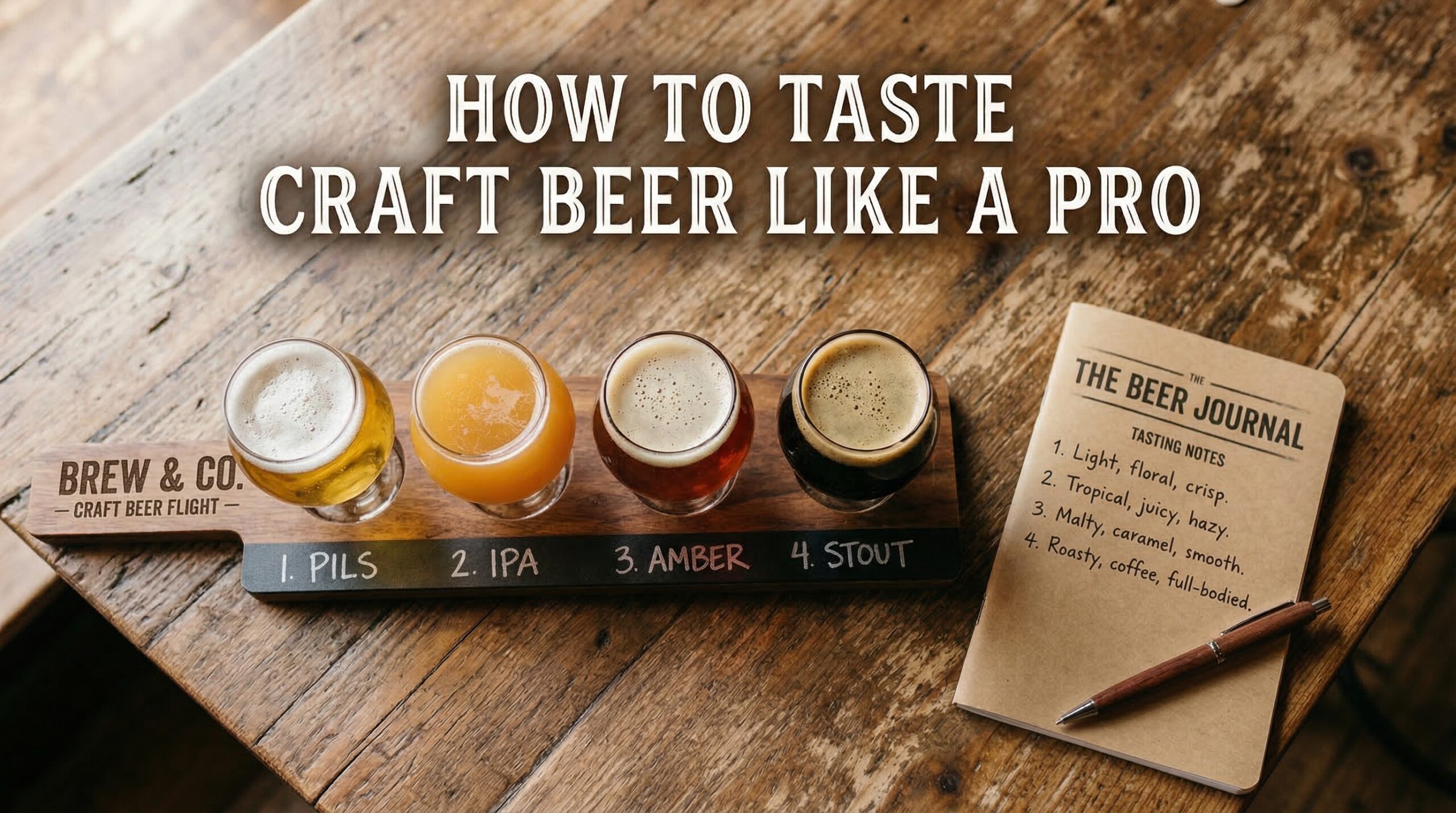
Have you ever watched someone swirl their beer, take a thoughtful sip, and describe flavors you never noticed? That skill isn’t magic. It’s a learnable technique that transforms casual drinking into genuine appreciation. Learning how to taste craft beer like a pro opens up a whole new world of flavors, aromas, and experiences you might have been missing.
Professional beer tasting isn’t about being pretentious or memorizing fancy terms. It’s about paying attention to what’s already in your glass. When you taste intentionally, you start noticing the difference between a citrusy West Coast IPA and a tropical New England version. You pick up on why some stouts taste like chocolate while others lean toward coffee.
In this guide, I’ll walk you through the exact framework professional tasters use. We’ll cover the four stages of sensory evaluation, common mistakes to avoid, and practical exercises to train your palate. Whether you’re a complete beginner or someone looking to refine your skills, you’ll leave with actionable techniques you can use at your next brewery visit. If you want to understand what creates these flavors in the first place, check out our guide to how brewing affects beer flavor.
How to Taste Craft Beer Like a Pro: The 4-Part Framework
Professional beer evaluation follows a structured approach that engages all your senses. The framework breaks down into four distinct stages: visual assessment, aroma evaluation, taste analysis, and mouthfeel examination. Each stage reveals something different about the beer in your glass.
This method isn’t arbitrary. Brewers and certified cicerones use this exact approach when evaluating beer quality. By following these steps, you’ll gather complete information about what you’re drinking and why it tastes the way it does.
Stage 1: Visual Assessment
Before you bring the glass to your lips, look at what’s in front of you. The appearance of a beer tells you a lot about what to expect. Hold your glass up to a light source and observe three key elements: color, clarity, and head.
Color ranges from pale straw to deep black, with countless amber, copper, and ruby shades in between. A golden hue might suggest a pilsner or blonde ale. Deep amber often indicates maltier styles like Oktoberfest or red ale. Dark colors typically come from roasted malts used in porters and stouts.
Clarity describes how clear or hazy the beer appears. Some styles, like German hefeweizen and New England IPA, are intentionally hazy. Others, like pilsners and lagers, should be crystal clear. Haze in the wrong style might indicate a brewing flaw, while crystal clarity in a hazy IPA could mean it’s past its prime.
Head retention refers to the foam layer on top and how long it lasts. A thick, persistent head often indicates quality and can affect how aromas are delivered to your nose. Watch the bubbles rising through the beer and note the foam’s texture. Is it creamy and dense? Large-bubbled and quick to dissipate?
Stage 2: Aroma Evaluation
Here’s something most people don’t realize: about 80% of what we perceive as flavor actually comes from our sense of smell. This makes the aroma stage arguably the most important part of tasting. Your nose can detect thousands of distinct aromas, while your tongue only identifies five basic tastes.
Start by giving your glass a gentle swirl. This releases volatile aromatic compounds into the air. Don’t go overboard, just a few rotations will do. Bring the glass to your nose and take a few short sniffs rather than one long inhale. This technique, called wafting, prevents your olfactory system from getting overwhelmed.
Common aroma categories to look for include hop aromas (citrus, pine, tropical fruit, floral, herbal), malt aromas (bread, caramel, toffee, chocolate, coffee), and yeast characteristics (fruity esters, spicy phenols, barnyard funk). You might also notice additional notes from ingredients like fruit, spices, or barrel-aging.
Take your time here. Many people rush through this stage, but professionals often spend more time smelling than tasting. Try closing your eyes and focusing solely on what you smell. With practice, you’ll start picking out individual notes rather than just “beery” smells.
Stage 3: Taste Assessment
Now for what you’ve been waiting for: actually tasting the beer. But there’s a right way to do this. Take a moderate sip, enough to coat your tongue but not so much that you’re immediately swallowing. Let the beer sit in your mouth for a few seconds.
Your tongue detects five fundamental tastes: bitterness (from hops), sweetness (from malt sugars), sourness (from wild fermentation or added acidity), saltiness (rare, but sometimes present), and umami (savory notes, occasionally found in barrel-aged or high-protein beers).
Notice where on your tongue you perceive each sensation. Bitterness often registers toward the back. Sweetness tends to hit the front. Sourness makes the sides of your tongue tingle. Pay attention to how these tastes interact and which ones dominate.
Also notice the flavor progression. Some beers hit you with immediate flavor that fades quickly. Others start subtle and build complexity over several seconds. The initial taste, mid-palate flavors, and finish all contribute to the complete picture. Our guide on how water quality affects beer taste explains why some of these flavor differences occur based on brewing ingredients.
Stage 4: Mouthfeel Analysis
Mouthfeel refers to the physical sensations a beer creates in your mouth. This often-overlooked aspect separates casual drinkers from serious tasters. Three main elements define mouthfeel: body, carbonation, and texture.
Body describes the weight and thickness of the beer. Light-bodied beers feel thin, almost like water. Full-bodied beers have a substantial, coating quality. Body comes primarily from proteins and unfermented sugars in the beer. A light lager has a thin body, while an imperial stout coats your palate with viscous richness.
Carbonation affects both texture and how flavors are delivered. High carbonation creates a prickly, effervescent sensation. Low carbonation feels softer, sometimes almost flat. Notice whether the bubbles feel sharp and aggressive or soft and creamy.
Finish and aftertaste describe what lingers after you swallow. Does the beer leave a dry sensation that makes you want another sip? Or does it coat your mouth with lingering sweetness? A long, pleasant finish often indicates quality. Short, forgettable finishes might suggest a simpler or less well-crafted beer.
Step-by-Step Beer Tasting Techniques
Understanding the framework is one thing. Putting it into practice is another. Let me walk you through the specific techniques professionals use to get the most out of every tasting experience.
Preparation and Glassware Selection
The glass you use dramatically affects your tasting experience. Different shapes concentrate aromas differently and deliver beer to different parts of your palate. While you don’t need a dozen glass types, using the right glass for your beer makes a real difference.
A tulip glass works beautifully for Belgian ales and IPAs. The bulbous bottom allows swirling to release aromas, while the flared lip directs those aromas to your nose. A snifter suits strong, complex beers like barleywines and imperial stouts. Its shape concentrates intense aromas.
For everyday tasting, a clean shaker pint works adequately, though it’s not ideal. Even better is a simple teku glass or spiegelau-style IPA glass, both designed specifically for craft beer evaluation. Whatever you use, make sure it’s thoroughly clean. Residual soap or dishwasher spots can interfere with head formation and introduce off-flavors.
Temperature matters too. Most craft beer tastes best between 45 and 55 degrees Fahrenheit. Too cold, and you’ll numb your taste buds while suppressing aromatics. Too warm, and alcohol heat becomes overwhelming. A good rule: take your beer out of the fridge 10 to 15 minutes before tasting.
Proper Pouring Technique
How you pour your beer affects everything that follows. A proper pour creates head, releases aromatics, and ensures you’re tasting the beer as the brewer intended.
Hold your glass at a 45-degree angle. Pour slowly down the side until the glass is about half full. Then straighten the glass and pour directly into the center to create a proper head. Aim for about one to two fingers of foam.
Don’t be afraid of the head. Some drinkers try to minimize foam, but that foam is where many aromatic compounds collect. A proper head actually enhances your ability to smell what’s in your glass. If your beer comes in a bottle or can with yeast sediment, stop pouring before you disturb that layer.
Tasting Order: Light to Dark
If you’re tasting multiple beers in one session, the order matters significantly. Your palate can only handle so much before it gets fatigued. Starting with delicate beers and progressing to bold ones ensures you can appreciate each one fully.
Begin with light lagers and pilsners. Their subtle flavors and clean profiles are easily overwhelmed by bolder beers. Move to wheat beers and pale ales. These have more character but won’t obliterate your palate.
Progress to IPAs and amber ales. The hop bitterness in IPAs can linger, so don’t put these too early. Follow with darker, maltier styles like porters and stouts. Save the strongest beers for last: imperial stouts, barleywines, and barrel-aged beers. Their intense flavors and high alcohol content will mask anything that comes after.
Palate Cleansing Between Beers
When tasting multiple beers, you need to reset your palate between samples. This prevents flavors from one beer bleeding into the next. The most effective palate cleanser is surprisingly simple: plain water.
Take a few sips of room-temperature water between beers. Swish it around your mouth and swallow. Avoid ice water, as extreme cold can temporarily numb your taste buds. Some people also use plain crackers or bread, but avoid anything salty or flavored.
If you’re at a brewery or tasting event, take advantage of the dump buckets. You don’t have to finish every sample. Spitting or dumping partially-tasted beers keeps your palate sharp and prevents alcohol from clouding your judgment.
Common Beer Tasting Mistakes to Avoid
Even experienced tasters make mistakes. Here are the most common pitfalls I see and how to avoid them.
Mistake 1: Rushing through the process. Many people swirl, sniff, and sip in rapid succession without giving each stage proper attention. Professional tasters might spend several minutes on a single beer. Slow down and give each stage its due.
Mistake 2: Drinking instead of tasting. There’s a difference. Drinking is about consumption and refreshment. Tasting is about evaluation and appreciation. When you’re tasting, you’re actively analyzing what you’re experiencing, not just enjoying it.
Mistake 3: Ignoring temperature. Ice-cold beer might be refreshing on a hot day, but it suppresses both aroma and flavor. That same beer at 50 degrees will reveal far more character. Let your beer warm up slightly before serious tasting.
Mistake 4: Using dirty glassware. Residual soap, lip balm, or food oils can kill head retention and introduce off-flavors. Rinse your glass with water before pouring. If you’re at a bar, don’t be afraid to ask for a clean glass.
Mistake 5: Tasting in a distracting environment. Strong smells, loud music, and competing conversations all interfere with your ability to focus. Choose a relatively neutral environment when you want to taste seriously.
Keeping a Beer Tasting Journal
One of the best ways to improve your tasting skills is to keep a journal. Writing down what you taste forces you to articulate your observations and creates a reference you can revisit. Many experienced tasters credit journaling as the single most effective way to develop their palate.
Your journal doesn’t need to be complicated. Include the beer’s name, brewery, style, and date tasted. Then note your observations for each of the four stages: appearance, aroma, taste, and mouthfeel. Add an overall impression and any specific flavors or aromas you identified.
Over time, patterns emerge. You’ll notice which styles you gravitate toward and which flavor profiles you find appealing. You’ll also develop a vocabulary for describing what you taste. That vocabulary makes future tastings easier and more precise.
Don’t worry about using “correct” terminology, especially at first. Write what you actually experience. If a beer reminds you of your grandmother’s cookies, write that. Personal associations often help you remember specific beers and develop your palate faster than forcing yourself to use technical terms.
Developing Your Beer Palate
Improving your ability to taste beer takes time and intentional practice. Here’s how to systematically develop your palate.
Flavor Training Exercises
You can train your palate outside of beer tastings. One effective exercise involves tasting individual ingredients that commonly appear in beer. Buy some fresh citrus fruits, tropical fruits, and berries. Smell and taste them individually, focusing on the specific characteristics of each.
Do the same with malt-forward flavors. Taste different breads, caramel, toffee, chocolate, and coffee. These direct experiences give you reference points when you encounter similar notes in beer. You’ll stop saying “it tastes like beer” and start saying “this has notes of grapefruit and pine resin.”
Another powerful exercise is comparative tasting. Get two or more beers of the same style from different breweries. Taste them side by side, noting the differences. This comparison highlights what makes each interpretation unique and trains your palate to pick up subtle variations.
Using the Beer Flavor Wheel
The beer flavor wheel, developed in the 1970s, organizes beer flavors and aromas into a visual reference. It starts with broad categories like “hoppy,” “malty,” and “fruity,” then breaks each down into more specific descriptors.
Using the wheel helps you move beyond vague impressions toward precise language. Instead of “it tastes fruity,” you might identify “citrus,” then narrow further to “grapefruit” or “lemon.” This specificity improves your tasting ability and makes your notes more useful.
You don’t need to memorize the entire wheel. Keep a reference handy when tasting. Over time, you’ll internalize the most common descriptors and reach for them automatically.
Learning Through Tasting Flights
Tasting flights, small samples of multiple beers, offer an efficient way to build experience. Many breweries offer flights of four to six small pours. This format lets you compare several beers in one session without consuming large quantities.
When ordering a flight, ask for the beers to be served in the recommended order. Breweries usually sequence flights from lightest to strongest for the reasons discussed earlier. Take notes on each sample before moving to the next.
Flights also expose you to styles you might not order as a full pint. That maibock or Belgian quad you’ve been curious about? Try it in a flight first. This variety accelerates your learning by introducing you to a broader range of flavors and styles.
Practical Tips for Better Beer Tasting
Here are actionable tips you can implement immediately to improve your tasting skills.
Set up a tasting environment. Choose a space with minimal competing odors. Good lighting helps you assess appearance accurately. A neutral background makes it easier to judge color. Avoid strongly scented candles, air fresheners, or cooking smells.
Taste with others. Group tastings expose you to perspectives you might miss on your own. Someone else might identify an aroma you overlooked or describe a flavor in a way that clicks for you. Plus, discussing beer with other enthusiasts is genuinely fun.
Seek out resources. Podcasts like The Beerists and ABV Chicago feature professional tasters discussing their techniques. Books like Randy Mosher’s “Tasting Beer” provide comprehensive education. The BJCP style guidelines offer detailed descriptions of what to expect from each beer style.
Visit breweries and ask questions. Brewer staff often love talking about their beer. Ask what flavors they intended, what ingredients they used, and what they suggest you look for. This insider perspective enhances your understanding of what you’re tasting.
Be patient with yourself. Palate development takes months and years, not days. Everyone starts somewhere. The goal isn’t perfection but improvement. Enjoy the process of discovery. For more beer-related content to support your journey, explore our collection of beer articles.
FAQs
How do you properly taste craft beer?
To properly taste craft beer, follow the four-stage framework: First, examine the appearance for color, clarity, and head retention. Second, swirl and smell the beer to identify aromas. Third, take a moderate sip and identify the five basic tastes: bitter, sweet, sour, salty, and umami. Fourth, assess the mouthfeel including body, carbonation, and finish. Take your time with each stage and consider writing notes to track your observations.
What are the 4 stages of beer tasting?
The four stages of professional beer tasting are visual assessment (examining color, clarity, and head), aroma evaluation (swirling and smelling to identify aromatic compounds), taste assessment (identifying the five basic tastes and flavor progression), and mouthfeel analysis (evaluating body, carbonation, texture, and finish). These stages engage different senses and together provide a complete picture of the beer’s character.
How can I improve my beer palate?
Improve your beer palate through consistent practice and intentional tasting. Taste a wide variety of beer styles to build experience. Train your palate by tasting individual ingredients like citrus fruits, chocolate, and coffee. Use the beer flavor wheel to develop precise vocabulary. Keep a tasting journal to track your observations. Attend tastings with others to learn from their perspectives. Most importantly, be patient, as palate development takes months of regular practice.
What glassware is best for beer tasting?
For beer tasting, a tulip glass or teku glass works well for most styles because they concentrate aromas and deliver beer effectively to your palate. Snifters suit strong, complex beers like imperial stouts and barleywines. While specialized glassware enhances the experience, any clean glass will work for casual tasting. Avoid glasses with soap residue and rinse with water before pouring.
What order should you taste different beers?
Taste beers from lightest to boldest to prevent strong flavors from overwhelming your palate. Start with light lagers and pilsners, then progress to wheat beers and pale ales. Move to IPAs and amber ales, followed by porters and stouts. Save the strongest beers like imperial stouts, barleywines, and barrel-aged beers for last. Cleanse your palate with water between each beer.
Conclusion
Learning how to taste craft beer like a pro transforms every beer you drink into an opportunity for discovery. The four-part framework of visual assessment, aroma evaluation, taste analysis, and mouthfeel examination gives you a systematic approach to understanding what’s in your glass.
Remember that palate development takes time. Start with the basics covered here: proper glassware, good pouring technique, and thoughtful attention to each stage of tasting. Keep a journal to track your progress. Taste widely across different styles. And most importantly, enjoy the journey.
The best tasters aren’t born with special abilities. They’ve simply practiced more. Every beer you taste with intention makes you slightly better at identifying flavors, aromas, and quality. So grab a glass, pour yourself something interesting, and start tasting. Your next great beer experience is waiting.