
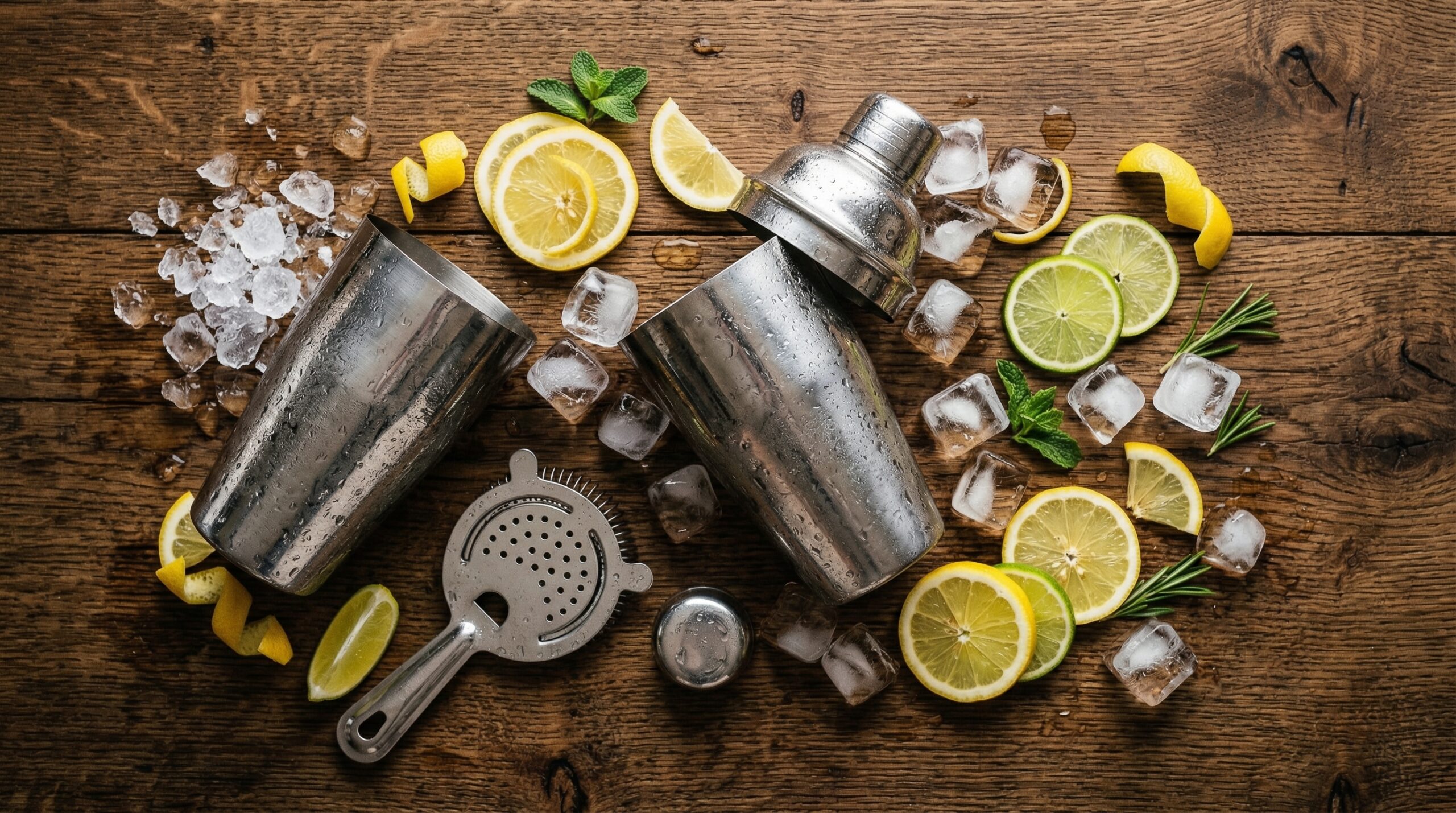
Few things frustrate a home bartender more than a shaker that refuses to cooperate mid-pour. I learned this the hard way during my first attempt at a bloody Mary recipe session, spraying half my mixture across the kitchen counter. That mess taught me that knowing how to use a cocktail shaker properly is less about looking impressive and more about technique.
In this guide, I will walk you through everything you need to become confident with a cocktail shaker. You will learn the step-by-step process, proper shaking motion, timing guidelines, and how to avoid the mistakes that lead to stuck shakers and watery drinks. By the end, you will be shaking cocktails like someone who has done this a thousand times.
Table of Contents
What is a Cocktail Shaker and Why Use One
A cocktail shaker is a sealed bar tool that combines your ingredients with ice to create properly mixed, chilled cocktails. The process accomplishes three things simultaneously: it chills your drink by melting ice, dilutes the spirits to the right balance, and blends all ingredients into a cohesive mixture.
Without a shaker, you end up with a drink where the juice separates from the liquor, or one that is too warm and too strong. The shaking motion increases the surface area of the ice, which accelerates both cooling and dilution. This is why a shaken margarita tastes fundamentally different from one stirred in a glass.
Professional bartenders rely on shakers for any cocktail containing citrus, egg whites, or cream. These ingredients need agitation to combine properly with spirits. Even something as simple as a classic martini recipe benefits from a brief shake if you prefer it chilled and slightly diluted.
Types of Cocktail Shakers: Cobbler, Boston, and French
Before you can use a shaker properly, you need to understand the three main types available. Each has its own strengths and ideal use cases.
Cobbler Shaker
The cobbler shaker is the three-piece design most people picture when they think of a cocktail shaker. It consists of a metal tumbler, a built-in strainer lid, and a small cap that seals the top. This design is beginner-friendly because the strainer is built in, so you do not need a separate tool.
The downside is that the smaller tin on top can sweat and become slippery during vigorous shaking. The seal between the cap and strainer can also fail if you do not twist correctly. I recommend the cobbler for home bartenders who make occasional cocktails and want simplicity.
Boston Shaker
The Boston shaker is a two-piece design with a large metal tumbler and a smaller glass or metal mixing tin. You hold the two pieces together and shake. Unlike the cobbler, the Boston requires a separate Hawthorne strainer to pour without ice chunks.
The benefit of this design is that you can use both hands to grip the shaker firmly. Professional bartenders prefer the Boston because it creates a tighter seal and allows for more powerful shaking. The larger surface area also means faster cooling.
When using a Boston shaker, remember: big tin on bottom, small tin on top. This orientation creates the most stable seal and makes it easier to open when you are done shaking.
French Shaker
The French shaker is a professional-grade option that looks like a cobbler but without the built-in strainer. It consists of a tapered tumbler and a flat cap. Like the Boston, you need a separate strainer to pour.
French shakers are known for creating an exceptionally tight seal. They are popular in European bars and among bartenders who value tradition and precision. The downside is that the seal can become so tight that beginners struggle to open it without practice.
Quick Comparison
- Cobbler: Three-piece, built-in strainer, beginner-friendly, can slip during shaking
- Boston: Two-piece, requires separate strainer, professional favorite, best seal
- French: Two-piece, requires separate strainer, traditional design, tightest seal
How to Use a Cocktail Shaker: Step-by-Step Guide
Now we come to the core technique. Follow these steps to shake any cocktail properly.
Step 1: Add Your Ingredients and Ice
Start with fresh ice. I always use large ice cubes rather than crushed ice. Crushed ice melts too quickly, leading to over-dilution. Fill your shaker about two-thirds full with ice, then add your spirits, mixers, and any citrus or egg whites.
For most cocktails, you add the alcohol first, then the juice or syrups, then the ice last. This order prevents ingredients from freezing to the bottom of the shaker before you begin shaking.
Step 2: Seal the Shaker Properly
With the Boston shaker, place the smaller tin inside the larger one at a slight angle. Press down firmly and twist to lock the seal. You should hear a satisfying click when the seal engages properly.
For a cobbler, screw the strainer lid onto the tumbler firmly, then place the small cap on top. Again, press down and twist until you feel resistance. If the seal feels loose, start over. A loose seal will cause your shaker to come apart mid-shake.
Step 3: Hold the Shaker with the Right Grip
For a Boston shaker, place your hand around the base of the larger tin. Your other hand cups the top of the smaller tin. Some bartenders prefer to interlock their fingers for extra security. Find a grip that feels stable and allows you to apply significant force.
For a cobbler, hold the tumbler with one hand while your other hand supports the cap. Keep your thumbs away from the seam where the pieces connect, as pressure there can break the seal.
Step 4: Shake with Horizontal Motion
Here is the part that separates amateurs from pros. You need to shake horizontally, not up and down. Moving the shaker up and down crashes the ice against the lid but does not circulate the liquid through the shaker effectively.
Hold the shaker at chest height and move it in a back-and-forth motion across your body. Imagine you are playing an invisible musical instrument requiring a wide arm motion. The goal is to send the ice sliding along the walls of the shaker, crashing into the ingredients repeatedly.
Shake for 10 to 15 seconds for most cocktails. You will know you have shaken enough when condensation forms on the outside of the shaker and the metal becomes cold to the touch. This frosty exterior indicates the drink has reached proper temperature.
Step 5: Strain and Serve
Once you have finished shaking, hold the shaker with the strainer side facing your glass. For a cobbler, simply remove the cap and pour. For a Boston or French shaker, place your Hawthorne strainer over the opening before pouring.
Pour steadily until you hear the ice settle in the shaker. Stop before you pour the remaining ice chunks into the glass. If you are using a fine mesh strainer with your Hawthorne strainer, you can pour all the liquid without worry.
Proper Shaking Technique: Horizontal Motion Matters
I want to emphasize the horizontal shaking motion because it is the most commonly misunderstood aspect of using a cocktail shaker properly. When you shake up and down, the ice stays near the lid and does not adequately mix with the liquid at the bottom of the shaker.
Professional bartenders shake parallel to the bar for a practical reason: if any liquid escapes, it goes behind the bar rather than toward customers. This safety consideration matters when you are making drinks for guests.
Watch for visual cues to know when your shake is complete. The outside of the shaker should be frosty and cold. You should hear the ice rattling differently than when you started, indicating it has broken down and mixed with the ingredients. The sound changes from a sharp clinking to a more muffled sloshing.
For egg white cocktails or drinks requiring extra froth, shake for a full 20 seconds. Espresso martinis also benefit from longer shaking to incorporate the coffee properly. Remember that over-shaking causes excess dilution, so there is a point of diminishing returns.
Dry Shake vs Wet Shake: When to Use Each
A dry shake means shaking without ice. You do this specifically when making cocktails with egg whites, cream, or other ingredients that need intense agitation to emulsify properly.
The dry shake technique: add all your ingredients except ice to the shaker. Seal and shake vigorously for 15 to 20 seconds. This whips the egg white into a frothy foam without the buffering effect of ice. After the dry shake, add ice and shake again for a standard 10 to 15 seconds to chill the drink.
Some bartenders prefer a reverse dry shake, which starts with ice and then strains the drink through a fine mesh strainer into another shaker tin without ice for a final burst of shaking. This technique creates an even finer foam for cocktails like the Ramos Gin Fizz.
For standard cocktails containing citrus juice, syrups, or carbonated mixers, always use a wet shake with ice. The ice is essential for proper chilling and dilution that these cocktails require.
Looking for a cocktail that showcases the dry shake technique? Try the Naked and Famous cocktail, which uses egg white for a silky foam topping.
How Long Should You Shake a Cocktail?
The standard answer is 10 to 15 seconds for most cocktails. This duration provides enough time for proper chilling and dilution without over-agitating the ice.
As a general rule, the smaller the shaker and the smaller the ice cubes, the faster your drink will chill. Large ice cubes in a Boston shaker may require the full 15 seconds to reach optimal temperature.
Listen to the sound of your shake. When you start, you hear sharp clinks of ice against metal. As you approach the 10-second mark, the sound becomes duller and more liquid. When you hear this transition, you are close to done.
Over-shaking dilutes your cocktail too much and can bruise delicate ingredients. If your drink tastes watery after straining, you likely shook for more than 20 seconds. With practice, you will develop an intuition for timing without watching the clock.
Common Mistakes and How to Avoid Them
After years of shaking cocktails and watching others struggle, I have compiled a list of the most common mistakes and how to fix them.
Shaker Comes Apart During Shaking
This happens when the seal is not properly engaged. Always press down firmly and twist until you feel resistance before shaking. With a Boston shaker, make sure the smaller tin sits inside the larger one, not the other way around.
Shaking Up and Down Instead of Horizontally
Up-and-down shaking does not properly circulate the ingredients. Practice the horizontal motion by starting slowly and building speed. Your arm should move from your chest to fully extended and back, keeping the shaker parallel to the ground throughout.
Using Crushed Ice Instead of Cubes
Crushed ice melts four times faster than cubes. This rapid melting over-dilutes your cocktail before you even finish drinking it. Always use large, solid ice cubes for shaking.
Over-Dilution from Shaking Too Long
Set a mental timer for 12 to 15 seconds. If you need to shake longer for texture, use fresh ice for the second half of your session. Old ice has already partially melted and will dilute your drink faster.
Shaking Toward Guests
Always shake parallel to your bar surface, away from where people are standing. This prevents accidents if the seal fails. It also looks more professional and controlled.
How to Open a Stuck Cocktail Shaker
Every bartender encounters a stuck shaker eventually. Temperature changes cause the metal to contract, creating a vacuum seal. Here is how to open it safely.
First, tap the edge of the shaker firmly against the counter. Angle the shaker so the edge hits the counter at a slight diagonal. The vibration often breaks the seal. Do not tap the glass or tin directly in the center, as this can damage the shaker.
If tapping does not work, try twisting. Grip the base firmly and twist the top half in the opposite direction you used to seal it. Sometimes a gentle twist is all that is needed to release the vacuum.
As a last resort, run the stuck seam under warm water for 10 seconds. The metal expands slightly with heat and may release the seal. Never use hot water or a microwave, as extreme temperature changes can damage the shaker or cause burns.
Which Cocktails to Shake vs Stir
Not every cocktail belongs in a shaker. Understanding which method to use is essential for proper dilution and texture.
Shake these cocktails: Any drink containing citrus juice, egg whites, cream, or coconut cream needs shaking. These include margaritas, daiquiris, sours, and lychee martini variations. Shaking emulsifies these ingredients and incorporates air for the right texture.
Stir these cocktails: Spirit-forward drinks like the martini, negroni, and manhattan contain no mixers that need emulsifying. Stirring chills these drinks with minimal dilution and creates a silky, crystal-clear appearance.
The 2:1:1 rule in bartending refers to a standard sour cocktail ratio. Two parts spirit, one part citrus, one part syrup. This proportion creates a balanced sweet-tart flavor. The sidecar cocktail recipe follows this formula perfectly.
When in doubt, shake if the cocktail has any juice, dairy, or egg. The vigorous agitation ensures all ingredients combine into a homogeneous mixture rather than separating in the glass.
FAQ
How to use a cocktail shaker for beginners?
How to properly shake a cocktail shaker?
What is the 2:1:1 rule in bartending?
How long should you shake a cocktail?
Conclusion
Using a cocktail shaker properly comes down to three things: a good seal, horizontal motion, and correct timing. Practice the grip and sealing technique until it becomes second nature. Focus on the back-and-forth shaking motion rather than the up-and-down movement most beginners default to.
Start with 10 to 15 second shakes and adjust based on the cocktail type and your taste preferences. Over time, you will develop a feel for when a drink is properly shaken just by listening to the sound and watching the condensation appear on the shaker.
Now you have the knowledge to shake any cocktail with confidence. Pick a recipe from this site and start practicing.