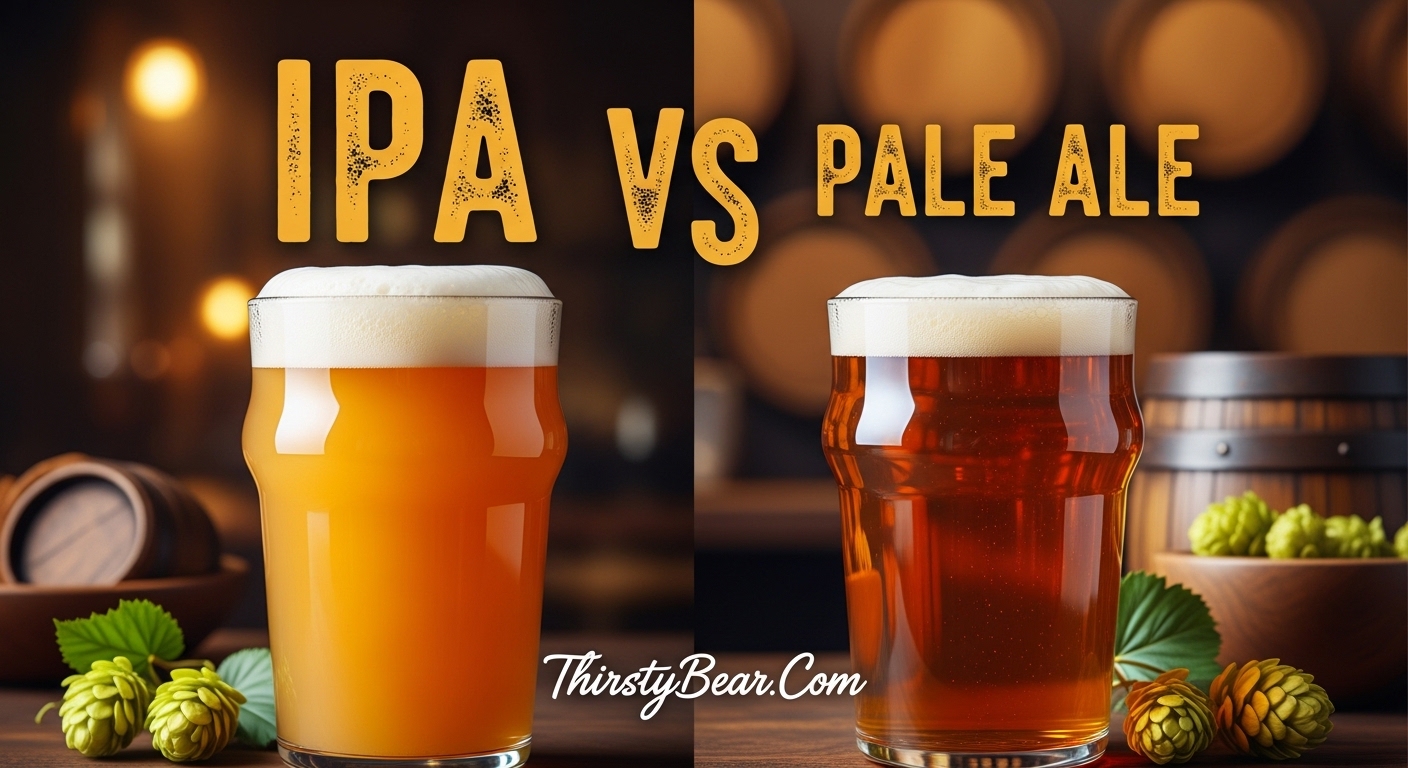
If you have ever stood in front of a beer menu feeling confused by the words “IPA” and “Pale Ale,” you are not alone. These two styles sit side by side on tap handles and bottle lists at craft breweries, yet their differences remain a mystery to many drinkers. This guide breaks down everything you need to know about IPA vs Pale Ale so you can walk into any brewery with confidence.
Over my years brewing at our organic brewery, I have answered this question hundreds of times. The short answer is that IPAs are typically more hop-forward with higher alcohol content, while pale ales offer a more balanced, malt-driven experience. But there is much more nuance to explore, and understanding these styles will make you a more informed craft beer drinker.
What Is Pale Ale?
Pale ale is a broad category of beer that gets its name from the pale color of the malt used to brew it. The “pale” refers specifically to the light-colored malt, which replaced the darker malts commonly used in older English brewing. This lighter malt base gives pale ales their golden to amber hue and a cleaner, more refined flavor profile compared to darker beers of the era.
History of Pale Ale
Pale ale traces its roots to England in the early 18th century when maltsters began using new kilnning techniques to produce lighter-colored malt. Before this innovation, most English beers were dark and often hazy due to the roasted barley used in production. The development of pale malt revolutionized English brewing and eventually gave birth to what we now call pale ale.
By the mid-1800s, pale ale had become a staple in England, with the style evolving to include distinctive regional variations. The term “bitter” was often used alongside “pale ale” in England, referring to the hop bitterness that balanced the sweet malt character. Today, English pale ale remains a respected style known for its drinkability and balanced approach.
Pale Ale Characteristics
What sets pale ale apart is its malt-forward character with moderate hop presence. A typical pale ale features:
- ABV range of 4.4% to 5.5%
- IBU range of 20 to 40
- Golden to deep amber color
- Bready, caramel, or biscuit malt flavors
- Balanced hop bitterness
- Medium body with moderate carbonation
The beauty of pale ale lies in its versatility. At our organic brewery, we craft pale ales that showcase the harmony between malt sweetness and hop character without either element overwhelming the other.
What Is IPA?
IPA stands for India Pale Ale, and it is one of the most popular craft beer styles in the world today. The name comes from the historical connection to British trade routes heading to India. IPAs are characterized by their aggressive hop bill, which delivers prominent bitterness, intense aroma, and bold flavor.
History of IPA
The story of IPA begins in 18th century Britain when brewers discovered that adding extra hops helped preserve beer during long sea voyages to colonial India. Hops act as a natural preservative, and the higher alcohol content also helped the beer survive the months-long journey around the Cape of Good Hope.
When these hoppy pale ales arrived in India, they became instant hits with British soldiers and colonists who craved the familiar bitter bite of English beer in the sweltering heat. The style evolved over time, eventually returning to Britain and later exploding in popularity during the American craft beer revolution of the 1980s and 1990s.
IPA Characteristics
Modern IPAs share several defining characteristics that set them apart from pale ales:
- ABV range of 5.5% to 7.5% (sometimes higher)
- IBU range of 40 to 70 or more
- Golden to deep orange color
- Intense hop aroma from dry hopping
- Prominent bitter finish
- Lighter body with higher carbonation
The hop intensity in IPAs comes from both the quantity of hops used and techniques like dry hopping, which adds aromatic compounds without excessive bitterness. This creates the bold, floral, citrus, and pine notes that IPA lovers seek out.
Key Differences Between IPA and Pale Ale
While both styles share common ancestry and ingredients, several key differences separate IPAs from pale ales. Understanding these distinctions will help you choose the right beer for any occasion.
ABV Levels
IPAs generally have higher alcohol content than pale ales. Standard IPAs typically range from 5.5% to 7.5% ABV, while pale ales sit comfortably between 4.4% and 5.5%. This difference is not massive, but it can affect how quickly you feel the effects after a few pints.
The higher ABV in IPAs is a result of using more fermentable sugars from malt to balance the intense hop character. If you want something lighter for a long afternoon session, pale ale is usually the better choice.
Hop Intensity
This is where the biggest difference emerges. IPAs are built around hops, using significantly more in the brewing process. The hop bill in an IPA can be two to three times higher than what you would find in a pale ale recipe.
At our organic brewery, we source premium organic hops to create those bold, distinctive flavors. Whether it is the citrus notes of cascade hops or the piney character of centennial hops, IPA showcases hops as the star of the show rather than a supporting actor.
Bitterness (IBU)
IBU, or International Bitterness Units, measures the iso-alpha acids from hops in a beer. Higher numbers mean more bitter beer. Pale ales typically fall in the 20 to 40 IBU range, while IPAs often exceed 40 to 70 IBU or more.
It is worth noting that perceived bitterness does not always match IBU measurements. The malt sweetness in pale ales can balance out the bitterness, making IPAs taste more bitter even if the difference in IBU is not as dramatic as the numbers suggest.
Malt Character
Pale ales showcase their malt backbone more prominently. You will often detect notes of biscuit, bread, caramel, or even toffee in a well-crafted pale ale. The malt provides balance and body that supports the moderate hop presence.
IPAs, on the other hand, use malt primarily as a canvas for hops. The malt character is there but often overshadowed by hop flavors and aromas. This creates a drier, more bitter finish characteristic of the style.
Body and Mouthfeel
Pale ales tend to have more body and a fuller mouthfeel compared to IPAs. The higher carbonation in many IPAs creates a lighter, crisper sensation on the palate. IPAs also often finish drier, which makes them seem less filling despite the higher alcohol content.
Flavor Profiles: What Do They Taste Like?
Understanding the flavor differences between IPA and pale ale helps you choose a beer that matches your palate preferences.
Pale Ale Flavor Notes
A well-made pale ale delivers a balanced experience where malt and hops share the stage. Common flavor notes include:
- Biscuit and bread from pale malt
- Caramel and toffee undertones
- Light floral or citrus hop character
- Clean, dry finish
- Low to moderate fruity esters
Pale ales are incredibly drinkable and work well in social settings where you might enjoy multiple beers without overwhelming your palate.
IPA Flavor Notes
IPAs offer an explosion of hop-derived flavors that vary depending on the hop varieties used. Common flavor notes include:
- Citrus (grapefruit, orange, lemon)
- Tropical fruit (mango, passionfruit, pineapple)
- Pine and resin
- Floral and herbal notes
- Grassy or melon characteristics
The diversity of IPA substyles means there is an IPA for every palate. From the juice-bomb haze of New England IPAs to the piney bitterness of West Coast IPAs, the hop world offers endless variety.
Popular Substyles of Each
Both IPA and pale ale have evolved into several distinct substyles, each with its own character and fanbase.
Pale Ale Substyles
- English Pale Ale: The original. Biscuity malt, mild hops, and a fruity yeast character define this sessionable style. Perfect for relaxed drinking.
- American Pale Ale: A brighter, more hop-forward take on the English original. Cascade hops often bring citrus notes to the party.
- Blonde Ale: Even lighter and more approachable than pale ale. Smooth, mild, and great for beer beginners.
IPA Substyles
- American IPA: The classic craft beer style. Bold hops, high bitterness, and a clean malt backbone.
- Hazy IPA (New England IPA): Cloudy, juicy, and packed with tropical hop flavors. Low bitterness despite the name. The most popular style in many breweries today.
- West Coast IPA: Crystal clear, heavily hopped, and intensely bitter. A throwback to the original American craft beer explosion.
- Double IPA (Imperial IPA): Everything amplified. Higher ABV (often 8% or more), more hops, and maximum flavor impact.
- Session IPA: Lower ABV (around 4% to 5%) with hoppy character. The bridge between pale ale and IPA for those wanting something lighter.
IPA vs Pale Ale: Which Should You Choose?
Choosing between IPA and pale ale depends on what you are looking for in a beer. Here is a simple guide to help you decide:
Choose Pale Ale if:
- You prefer balanced, malt-forward beers
- You want lower alcohol for extended sessions
- You are new to craft beer
- You enjoy drinkability over intensity
Choose IPA if:
- You love bold, hoppy flavors
- You enjoy exploring diverse hop varieties
- You prefer higher alcohol content
- You want something more challenging and complex
There is no wrong answer. Both styles have earned their place in the craft beer world, and many drinkers eventually enjoy both depending on mood and setting. Pairing craft beer with food is another great way to explore these styles, as pale ales complement different dishes than IPAs do.
Frequently Asked Questions
Is IPA stronger than pale ale?
Yes, IPAs typically have higher alcohol content, ranging from 5.5% to 7.5% ABV, compared to pale ales which usually fall between 4.4% and 5.5% ABV. The difference is moderate but noticeable after a few drinks.
Is IPA more bitter than pale ale?
Generally yes. IPAs usually have higher IBU ratings (40 to 70+) compared to pale ales (20 to 40). However, perceived bitterness depends on malt balance. Hazy IPAs can taste less bitter than their IBU numbers suggest due to the juicy, low-bitterness hop varieties used.
Which came first, pale ale or IPA?
Pale ale came first. The style developed in England during the early 1700s when maltsters began using new kilnning techniques. IPA evolved later in the 1700s as a variant with extra hops and higher alcohol to survive long voyages to India.
Is pale ale easier to drink than IPA?
Most people find pale ales more approachable due to their balanced malt-forward character and lower alcohol content. IPAs require a palate accustomed to hoppy bitterness, making pale ales an excellent starting point for craft beer beginners.
Which has more hops: pale ale or IPA?
IPAs have significantly more hops than pale ales. The hop bill in an IPA is typically two to three times higher than a pale ale recipe. This extra hopping creates the bold flavors, aromas, and bitterness that define the IPA style.
Is an American pale ale the same as an IPA?
No. While both are hoppy American beers, American pale ales are more balanced with moderate hop character, while American IPAs are hop-dominant with significantly more bitterness and alcohol. The styles share ancestry but have diverged into distinct categories.
Final Thoughts
The difference between IPA and pale ale comes down to hop intensity, alcohol content, and overall balance. Pale ales offer a harmonious blend of malt and hops that prioritizes drinkability. IPAs celebrate hops in their most bold and expressive form, delivering intense flavors and aromas that have conquered the craft beer world.
Whether you reach for a balanced pale ale or an hop-forward IPA, both styles represent the creativity and passion of craft brewing. At our organic brewery, we believe in letting quality ingredients shine through every pint we produce. Now that you understand the differences, your next trip to the taproom will be that much more enjoyable.