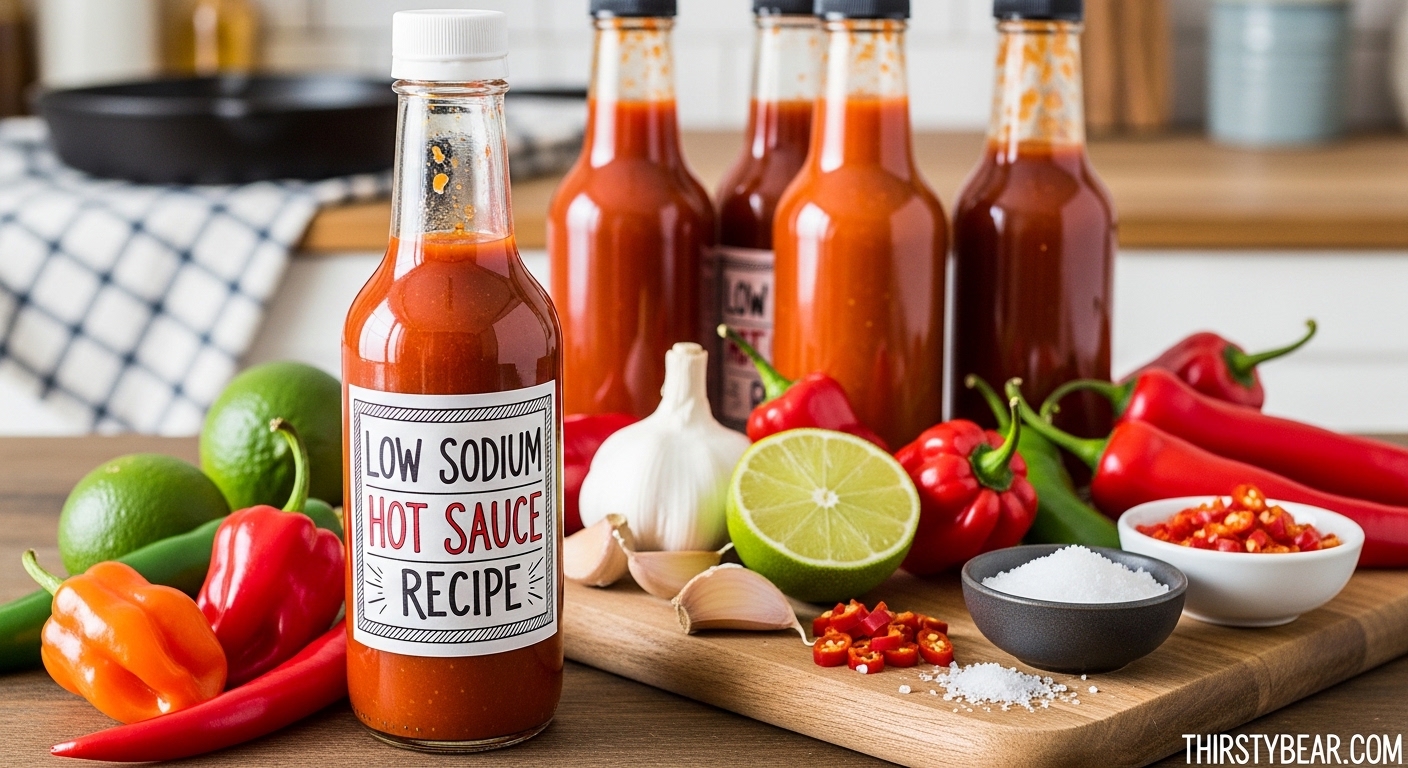
If you love spicy food but need to watch your sodium intake, this low sodium hot sauce recipe is about to become your kitchen staple. Most commercial hot sauces pack between 150-200mg of sodium per serving, but this homemade version delivers all the heat and flavor with just 1mg. I developed this recipe over countless batches, adjusting ratios until I found the perfect balance of spicy, tangy and garlicky without relying on salt.
Why This Low Sodium Hot Sauce Recipe Works
The secret to making delicious hot sauce without salt lies in using the right combination of fresh ingredients. Chili peppers provide natural flavor complexity that salt usually masks. Vinegar acts as both a flavor enhancer and preservative, eliminating the need for salt for shelf stability. Garlic and onion powder add depth without the sodium spike.
Most store-bought hot sauces contain added salt because it’s a cheap flavor booster and preservative. Frank’s RedHot Original has 190mg per teaspoon. Tabasco has 35mg. This homemade version contains just 1mg per serving while delivering more complex flavor profiles than anything you can buy. The key is using ripe, flavorful peppers and letting the sauce simmer to develop depth.
This recipe takes just 10 minutes of active prep time. You can make a batch on Sunday and have flavorful, salt-free hot sauce ready for the whole week. I’ve tested this with various pepper combinations and the basic formula works with almost any fresh chili variety.
Low Sodium Hot Sauce Ingredients
This recipe uses simple, accessible ingredients you probably already have. The key components work together to create a balanced sauce that rivals anything from the store shelf.
1. Fresh Fresno or jalapeño peppers: 6-8 peppers, about 1 cup chopped
Fresno peppers offer a moderate heat level (2,500-10,000 Scoville units) with bright, fruity notes. Jalapeños work great too and are easier to find in most grocery stores. The freshness of the peppers makes a huge difference in final flavor.
2. White vinegar: 1/2 cup
White distilled vinegar provides the tangy backbone and acidity needed for preservation. Apple cider vinegar works too and adds a slightly fruity complexity. The vinegar’s acidity (5% acidity is standard) does the work that salt would normally do in hot sauce.
3. Garlic cloves: 3 cloves, peeled
Fresh garlic adds pungent depth. You can use garlic powder in a pinch, but fresh cloves give the sauce that restaurant-quality complexity. Roast the garlic first for a mellower, sweeter flavor profile.
4. Water: 1/4 cup
Water helps achieve the right consistency. You can adjust this amount based on how thick or thin you like your hot sauce. Less water makes a thicker sauce similar to sriracha, more water creates a thinner, Tabasco-style consistency.
5. Optional: Smoked paprika: 1/2 teaspoon
This adds a smoky depth without any sodium. It’s especially good if you want a chipotle-style flavor without the actual chipotle peppers. The paprika also gives the sauce a richer, redder color.
How to Make Low Sodium Hot Sauce
Follow these steps to create your homemade salt-free hot sauce. The process is straightforward but requires attention to detail for the best results.
- Step 1: Prepare your work area and put on gloves. Capsaicin, the compound that makes peppers spicy, can irritate your skin and eyes. Even mild jalapeños can cause discomfort if you touch your face after handling them. I learned this the hard way after my first batch left my hands burning for hours.
- Step 2: Wash the peppers thoroughly and remove the stems. Cut the peppers in half lengthwise. For a milder sauce, remove the white membrane and seeds – this is where most of the heat lives. Leave the membranes intact if you want maximum spice. The seeds themselves contribute some heat, but the membrane is the real powerhouse.
- Step 3: Add the peppers, garlic cloves, vinegar, and water to a small saucepan. Bring the mixture to a simmer over medium heat. Reduce the heat to low and let it cook for 10 minutes. The peppers should be soft and the garlic tender. This cooking step mellows the harsh raw pepper flavors and helps the ingredients meld together.
- Step 4: Remove the saucepan from the heat and let it cool slightly. Transfer everything to a blender or use an immersion blender directly in the pot. Blend until smooth. The sauce should have a uniform consistency without large chunks. If you prefer a smoother sauce, strain it through a fine-mesh sieve to remove any remaining solids.
- Step 5: Taste and adjust. If you want more heat, add another pepper. If it’s too spicy, add a bit more water. The beauty of homemade hot sauce is that you can customize every batch to your exact preference. This is the step where I always sample with a spoon and make final tweaks.
- Step 6: Pour the sauce into a clean bottle or jar. A repurposed hot sauce bottle works perfectly. Seal tightly and store in the refrigerator. The sauce will continue to develop flavor over the first few days as the ingredients meld.
Tips, Substitutions and Variations
These tips will help you customize the recipe and avoid common pitfalls. I’ve gathered these through making dozens of batches and learning from each one.
Always wear gloves when handling hot peppers. Even jalapeños can cause irritation. Disposable nitrile gloves are inexpensive and save you from potential discomfort. Wash your hands thoroughly after removing the gloves, just in case. I keep a box of gloves in my kitchen specifically for hot sauce making.
For a milder sauce, remove all seeds and white membranes from the peppers. You can also substitute bell peppers for up to half of the hot peppers. This reduces heat while maintaining volume and texture. The sauce will still be flavorful but much more family-friendly.
Experiment with different pepper varieties. Habaneros create a fruitier, more complex sauce. Serranos offer a bright, grassy heat. Cayenne peppers pack a punch and dry well for making your own cayenne powder later. Each pepper variety brings unique flavor notes to the final sauce.
Try smoked paprika or a pinch of liquid smoke for a smoky variation without adding any sodium. Smoked garlic also works well and can be made by roasting garlic cloves until golden and soft before adding to the sauce. The smoky notes pair perfectly with grilled meats and vegetables.
Add a tablespoon of tomato paste for body and richness. This also introduces lycopene, a beneficial antioxidant. The tomato paste makes the sauce slightly thicker and adds a subtle sweetness that balances the acidity of the vinegar. It’s a trick I discovered when trying to replicate the texture of commercial sauces.
Storage and Shelf Life
Proper storage ensures your hot sauce stays fresh and safe to eat. The vinegar in this recipe acts as a natural preservative, but you still need to follow some basic guidelines.
Store your low sodium hot sauce in the refrigerator. It will keep for 4-6 weeks when properly refrigerated. The high acidity from the vinegar helps preserve the sauce, but without salt for additional preservation, refrigeration is essential. Always use a clean spoon when serving to avoid introducing contaminants.
For longer storage, freeze the sauce in ice cube trays. Once frozen, transfer the cubes to a freezer bag. They’ll keep for up to 6 months in the freezer. Thaw individual cubes as needed – this is perfect if you don’t use hot sauce daily but want to have it available.
Signs your sauce has gone bad include mold growth, off smells, or significant color changes. If you see any mold, discard the entire batch. The high acidity makes spoilage rare, but it can happen if the sauce wasn’t bottled cleanly or if it’s been kept too long.
Label your bottles with the date made. This helps you track freshness and rotate through your stock. I keep a small piece of masking tape on each bottle with the preparation date. It’s a simple habit that prevents using sauce that’s past its prime.
Health Benefits of Low Sodium Hot Sauce
This recipe isn’t just about reducing sodium – it’s about adding beneficial compounds to your diet. The peppers themselves offer several health advantages beyond just flavor.
Capsaicin, the compound that makes peppers spicy, has been shown to boost metabolism and may help with weight management. It activates brown fat, which burns calories to generate heat. Some studies suggest capsaicin can increase metabolic rate by up to 8% for several hours after consumption.
Hot sauce may help support healthy blood sugar levels. Research indicates that capsaicin can improve insulin sensitivity and help regulate blood glucose after meals. This makes it a particularly good condiment choice for those managing diabetes or pre-diabetes concerns.
Low sodium intake supports healthy blood pressure. Most Americans consume far more sodium than recommended, which can contribute to hypertension. By making your own hot sauce without salt, you can enjoy spicy flavors without the sodium impact. Even small reductions in sodium intake can make a meaningful difference in cardiovascular health.
If you add tomato paste to your sauce, you’ll benefit from lycopene, a powerful antioxidant. Lycopene has been linked to reduced risk of certain cancers and supports heart health. Cooking tomatoes actually makes lycopene more bioavailable, so the simmering step in this recipe is nutritionally beneficial.
What to Serve With Low Sodium Hot Sauce
This versatile sauce works on almost anything that needs a spicy kick. I’ve found countless ways to use it beyond the obvious applications.
Eggs are an obvious pairing. Drizzle it over scrambled eggs, omelets, or poached eggs for breakfast that wakes up your taste buds. The acidity cuts through rich egg dishes beautifully. A few drops transform plain eggs into something special.
Chicken wings become restaurant-quality with this sauce. Toss baked or air-fried wings in the sauce right before serving. The vinegar helps the sauce cling to the wings while the heat provides that classic buffalo wing flavor without the sodium overload of commercial wing sauces.
Tacos and burritos benefit from the bright, tangy flavor. It works especially well with fish tacos where the acidity complements the seafood. I also love it on breakfast burritos where it adds complexity without overwhelming the other ingredients.
Use it as a marinade for chicken, pork or shrimp. The vinegar helps tenderize meat while the peppers add flavor. Let meats marinate for at least 30 minutes, or overnight for deeper penetration. This works great for grilled dishes where the sauce caramelizes slightly on the heat.
Mix it into plain Greek yogurt or cottage cheese for a spicy dip. The cool dairy balances the heat perfectly. Serve with raw vegetables or whole grain crackers for a healthy snack that satisfies cravings without the sodium of typical chip dips.
Stir a spoonful into soups, stews or chili for extra depth. It’s especially good in bean soups where the vinegar brightens the earthy flavors. A little goes a long way – start with a small amount and adjust to taste.
FAQs
Can I have hot sauce on a low sodium diet?
Yes, you can have hot sauce on a low sodium diet. Most commercial hot sauces contain significant sodium, but this homemade version contains just 1mg per serving. The vinegar preserves the sauce without the need for salt, making it safe for low sodium diets when consumed in moderation.
What hot sauce has the least amount of sodium?
Homemade hot sauce without added salt has the least sodium – typically 0-1mg per serving. Among commercial brands, Tabasco has 35mg per teaspoon, while many others contain 150-200mg or more. Making your own gives you complete control over sodium content.
Can you make hot sauce without salt?
Yes, you can make hot sauce without salt. The vinegar in hot sauce acts as a natural preservative, eliminating the traditional need for salt. This recipe uses fresh peppers, vinegar and garlic to create flavorful hot sauce with zero added salt. Refrigeration is important since salt isn’t present as a preservative.
How long does homemade low sodium hot sauce last?
Homemade low sodium hot sauce lasts 4-6 weeks in the refrigerator when stored properly. For longer storage, freeze the sauce in ice cube trays for up to 6 months. Always use clean utensils and store in a sealed container to extend shelf life.
Is fermentation required for hot sauce flavor?
No, fermentation is not required for delicious hot sauce. This recipe uses a quick-cooking method that takes just 15 minutes. Fermented hot sauce develops different, complex flavors over weeks, but fresh hot sauce offers bright, immediate flavor. Both methods work well for low sodium recipes.
Conclusion
This low sodium hot sauce recipe proves you don’t need salt to create delicious, crave-worthy flavor. With just a few simple ingredients and 15 minutes of active time, you can make a sauce that outperforms commercial options in both taste and health profile. The 1mg sodium per serving compared to the 150-200mg found in most store brands makes a real difference for anyone watching their sodium intake.
I encourage you to experiment with different pepper varieties and find the combination that works best for your taste preferences. Once you start making your own hot sauce, you’ll wonder why you ever settled for the high-sodium versions from the store. Your blood pressure and your taste buds will thank you.